2026, 48(8): 3229-3246.
doi: 10.11999/JEIT260189
Abstract:
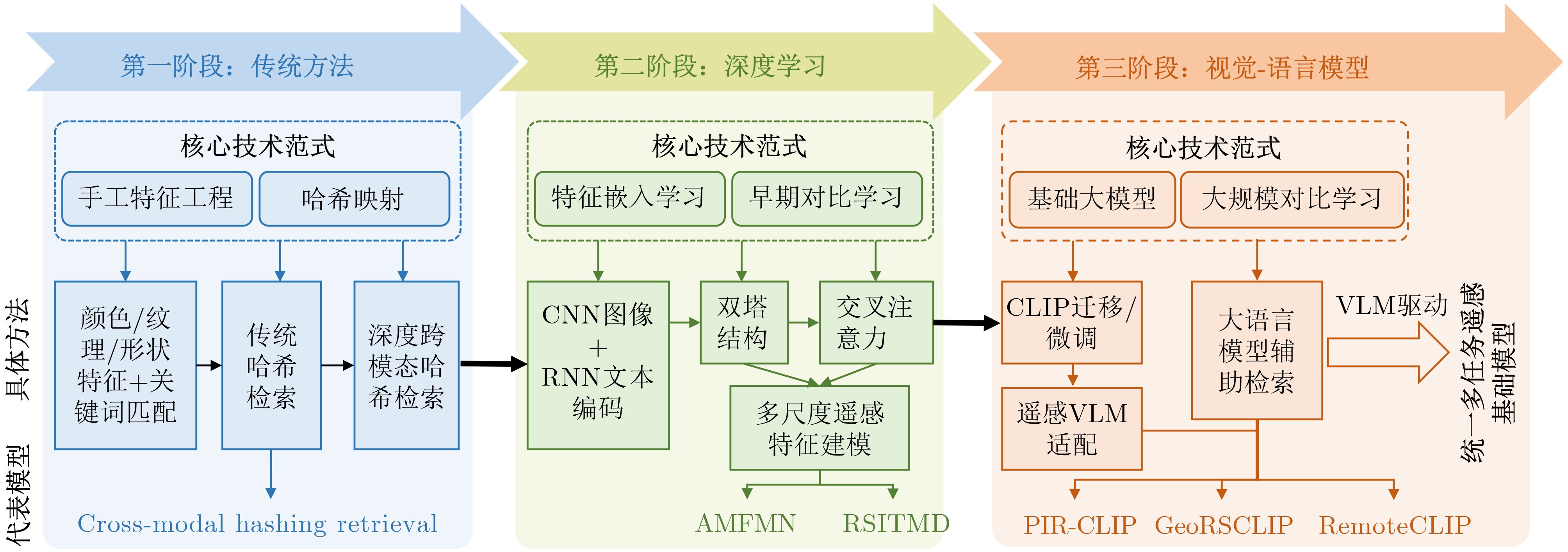
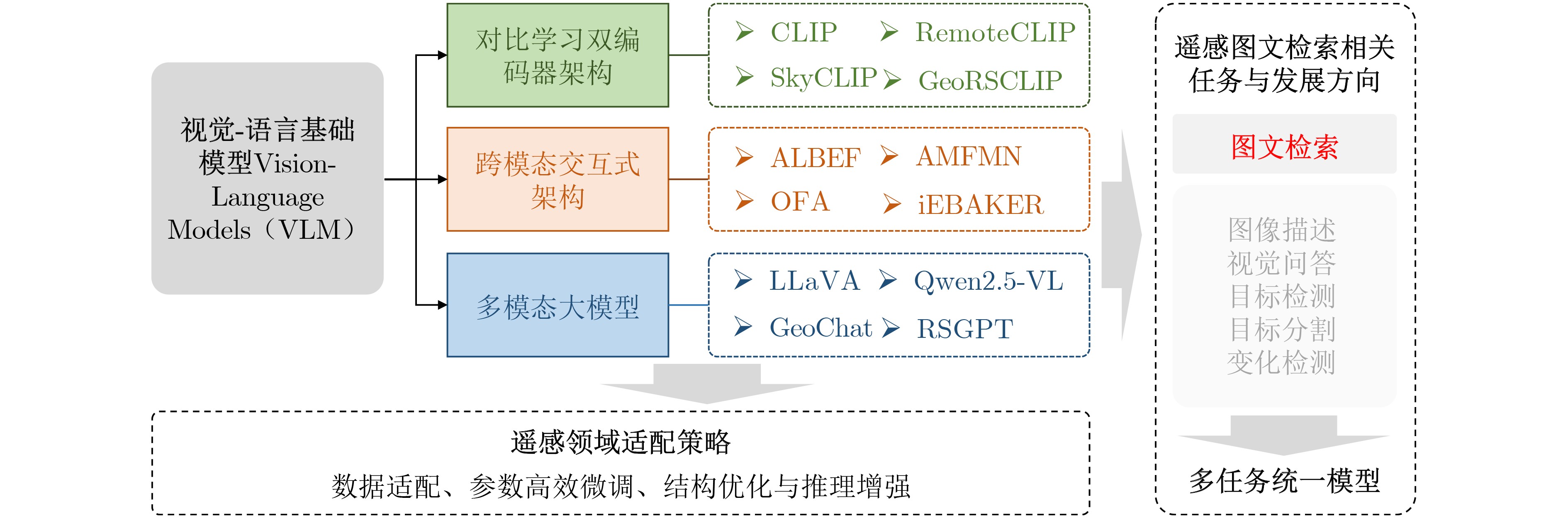
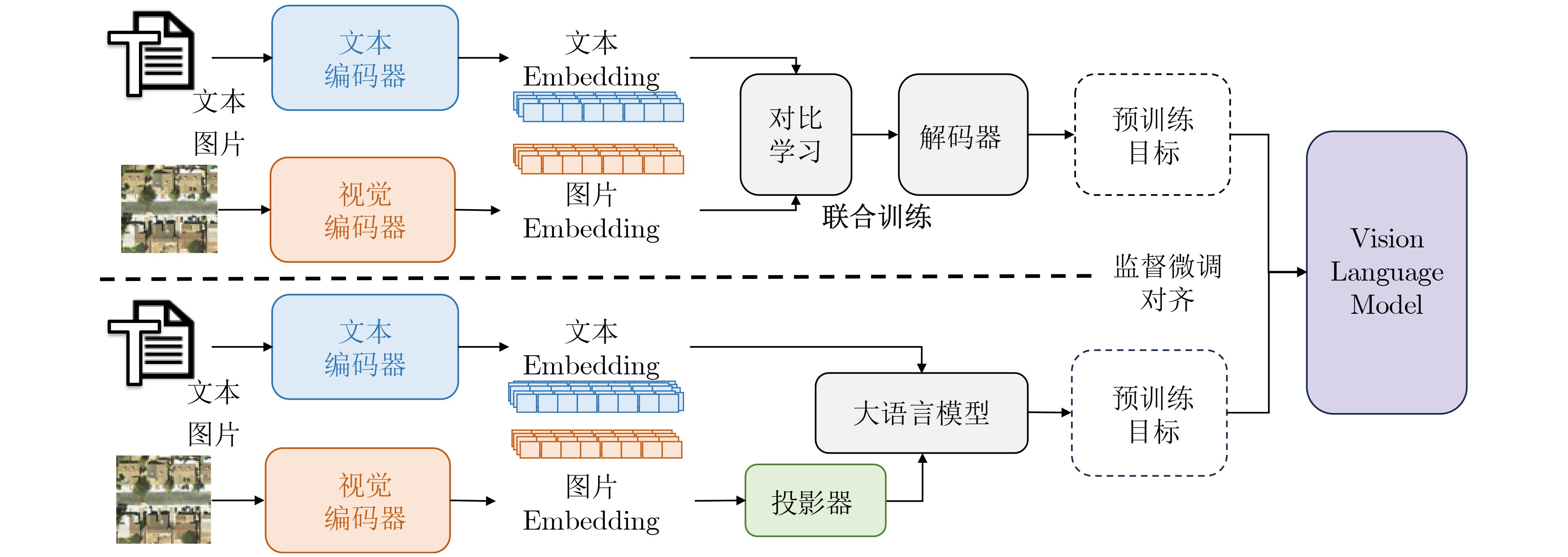
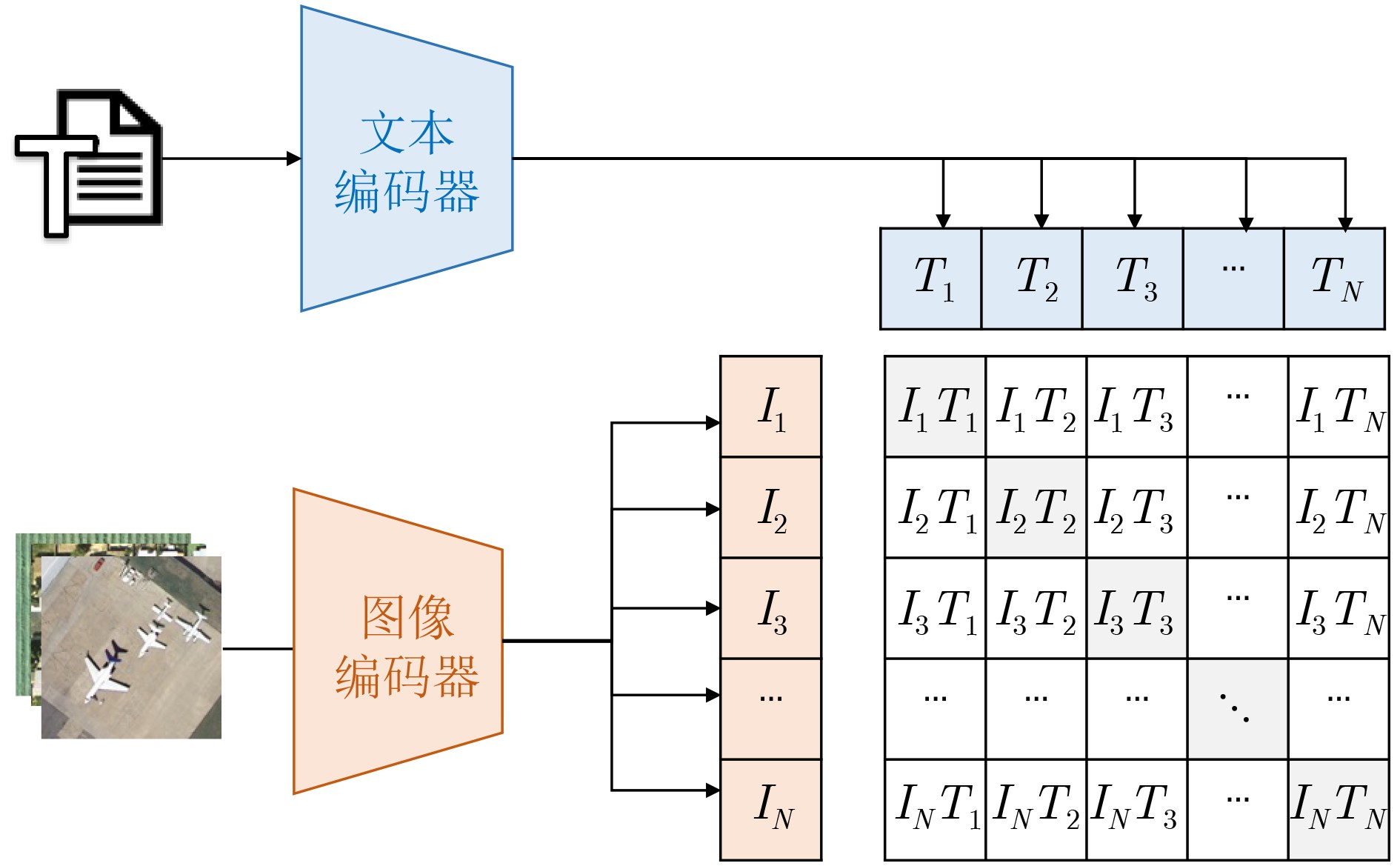
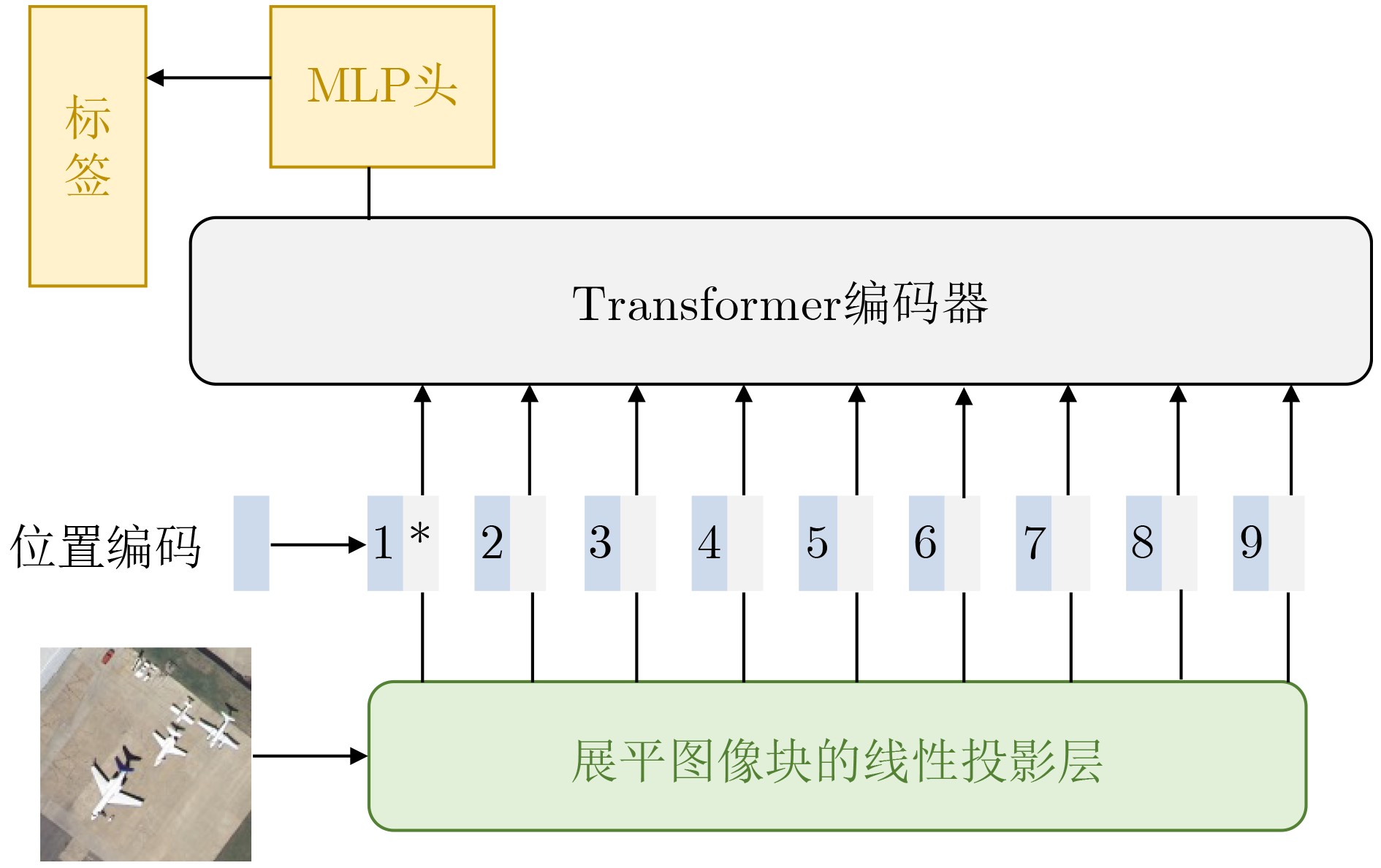
Significance Remote Sensing Image-Text Retrieval (RS-TIR) connects large-scale Earth observation imagery with natural-language queries and has become an important interface for geospatial intelligence systems. Compared with conventional content-based retrieval, RS-TIR allows users to search for scenes, objects, spatial layouts, and functional regions through semantic descriptions rather than handcrafted visual cues. This capability is increasingly needed in natural resource monitoring, urban governance, disaster response, environmental assessment, and on-demand retrieval from rapidly growing satellite archives. However, RS-TIR remains challenging. Remote sensing imagery is captured from nadir or near-nadir perspectives, shows strong rotation invariance, and contains extreme scale variation, ranging from tiny vehicles to large airports. It also requires domain-specific semantic descriptions, such as land-use attributes, spatial distributions, and geoscientific relations. Meanwhile, high-quality image-text annotations remain limited relative to the scale of remote sensing data. These properties widen the cross-modal semantic gap between images and language and limit the generalization ability of traditional cross-modal retrieval methods. Against this background, this review examines how Vision-Language Foundation Models (VLMs) reshape RS-ITR through large-scale contrastive pre-training, stronger transferable representations, and more flexible multimodal interaction mechanisms. It also explains why remote sensing adaptation is needed and why a focused synthesis of architectures, datasets, alignment mechanisms, and future directions is timely for this field. Progress The technical development of RS-ITR is reviewed from three complementary perspectives. First, this review summarizes the domain-specific challenges that shape the task, including visually isotropic topology with extreme scale variation, professional and fine-grained textual semantics, and the compounded cross-modal semantic gap between overhead imagery and natural-language descriptions (Fig. 3). The overall survey structure is then presented to show the logical progression from task formulation to future challenges (Fig. 1). From a methodological perspective, RS-ITR has evolved from handcrafted visual descriptors and shallow semantic mapping to deep representation learning, and then to VLM-driven paradigms with stronger generalization and zero-shot transfer capability (Fig. 4, Table 2). Early methods rely on color, texture, shape, and hash-based retrieval. However, they struggle to model high-level geospatial semantics and complex scene composition. Deep learning methods improve retrieval by learning joint embedding spaces, adopting dual-encoder or interaction-based architectures, and using multi-scale feature fusion and region-aware matching. These methods improve semantic consistency, but they still depend heavily on labeled data and often show limited robustness in open or cross-sensor scenarios. Second, this review summarizes the benchmark ecosystem used to evaluate these methods. Representative datasets range from small-scale test sets, such as Sydney-Caption and UCM-Caption, to mainstream benchmarks, such as RSICD and RSITMD, and recent large-scale training resources, such as RS5M and SkyScript (Table 1). These datasets show a clear transition from small manually annotated corpora to web-scale or automatically generated image-text pairs. This transition supports domain pre-training and large model adaptation. Third, this review analyzes the core VLM techniques that now drive progress in RS-ITR. The model spectrum and representative architecture families are systematically summarized, including contrastive dual-encoder models, multimodal interaction models, and remote sensing foundation models integrated with large language models (Fig. 5, Fig. 6, Table 3). Domain adaptation routes are further grouped into continued remote sensing pre-training, parameter-efficient transfer learning, adapter-based tuning, prompt learning, and instruction tuning. At the semantic alignment level, this review focuses on contrastive joint embedding, fine-grained multi-scale alignment, and the use of remote sensing priors, such as spatial topology and geolocation. Performance comparisons on RSICD and RSITMD show that remote sensing VLMs, especially RemoteCLIP, GeoRSCLIP, iEBAKER, and LRSCLIP, yield consistent gains in mean Recall (mR) and overall retrieval robustness (Table 4). In parallel, this review tracks the extension of retrieval capability into unified multi-task remote sensing models, in which retrieval, grounding, segmentation, and reasoning begin to share a common multimodal representation space. Conclusions Several conclusions are drawn from the comparative analysis. First, VLMs establish a dominant paradigm for RS-ITR because they narrow the cross-modal semantic gap and improve transferability across datasets and scenes. Second, no single architecture is universally optimal. Dual-encoder models remain attractive for large-scale retrieval because of their efficiency, whereas interaction-based or instruction-enhanced models provide finer semantic alignment at a higher computational cost. Third, domain adaptation is indispensable. Continued pre-training on remote sensing image-text corpora, parameter-efficient tuning, and prompt-based adaptation consistently outperform direct reuse of internet-trained VLMs. This finding indicates that remote sensing imagery differs too strongly from natural-image distributions for generic pre-training alone to be sufficient. Fourth, the most effective recent methods do not improve performance through scale alone. They also exploit remote sensing-specific information, including multi-scale structures, foreground objects, explicit keyword reasoning, and spatial priors. Finally, this review shows that the field is shifting from isolated retrieval models toward more general geospatial multimodal systems. Retrieval is no longer treated only as a matching task. It is also becoming a key capability that supports question answering, instruction following, knowledge augmentation, and coordinated reasoning in remote sensing applications. Prospects Future research is expected to advance in four closely related directions. The first direction is the unified representation of multi-source heterogeneous data, especially the integration of optical imagery with Synthetic Aperture Radar (SAR), hyperspectral data, thermal infrared observations, and multi-temporal acquisitions. The second direction is knowledge-enhanced retrieval, in which geospatial priors, land-use rules, remote sensing terminology, and external knowledge bases are incorporated into multimodal alignment and retrieval-augmented reasoning. The third direction is lifelong and open-world learning. Real deployment requires models to remain reliable under seasonal variation, sensor updates, regional domain shifts, cloud contamination, and newly emerging categories, while avoiding catastrophic forgetting. The fourth direction is efficiency and deployability. Practical remote sensing systems often operate under tight computational budgets. Therefore, lightweight tuning, sparse computation, token reduction, model compression, and on-orbit and edge inference will become increasingly important. Interactive and explainable retrieval is also likely to gain importance. It allows analysts to refine queries through dialogue and inspect the image regions or semantic cues that support retrieval decisions. Overall, continued progress in data construction, domain adaptation, semantic alignment, and efficient multimodal modeling is expected to make RS-ITR a more robust infrastructure capability for Earth observation applications.