Advanced Search
Turn off MathJax
Article Contents
JING Chuanfang, ZHU Xiaorong. Routing and Resource Scheduling Algorithm Driven by Mixture of Experts in Large-scale Heterogeneous Local Power Communication Network[J]. Journal of Electronics & Information Technology. doi: 10.11999/JEIT251176
Citation: JING Chuanfang, ZHU Xiaorong. Routing and Resource Scheduling Algorithm Driven by Mixture of Experts in Large-scale Heterogeneous Local Power Communication Network[J]. Journal of Electronics & Information Technology. doi: 10.11999/JEIT251176

Routing and Resource Scheduling Algorithm Driven by Mixture of Experts in Large-scale Heterogeneous Local Power Communication Network

doi: 10.11999/JEIT251176 cstr: 32379.14.JEIT251176
Funds:  The National Science and Technology Major Project (No.2024ZD1300400), The Natural Science Foundation of China (No.92367102), The Postgraduate Research & Practice Innovation Program of Jiangsu Province (No.KYCX22_0944)
  • Accepted Date: 2026-01-22
  • Rev Recd Date: 2026-01-22
  • Available Online: 2026-02-01
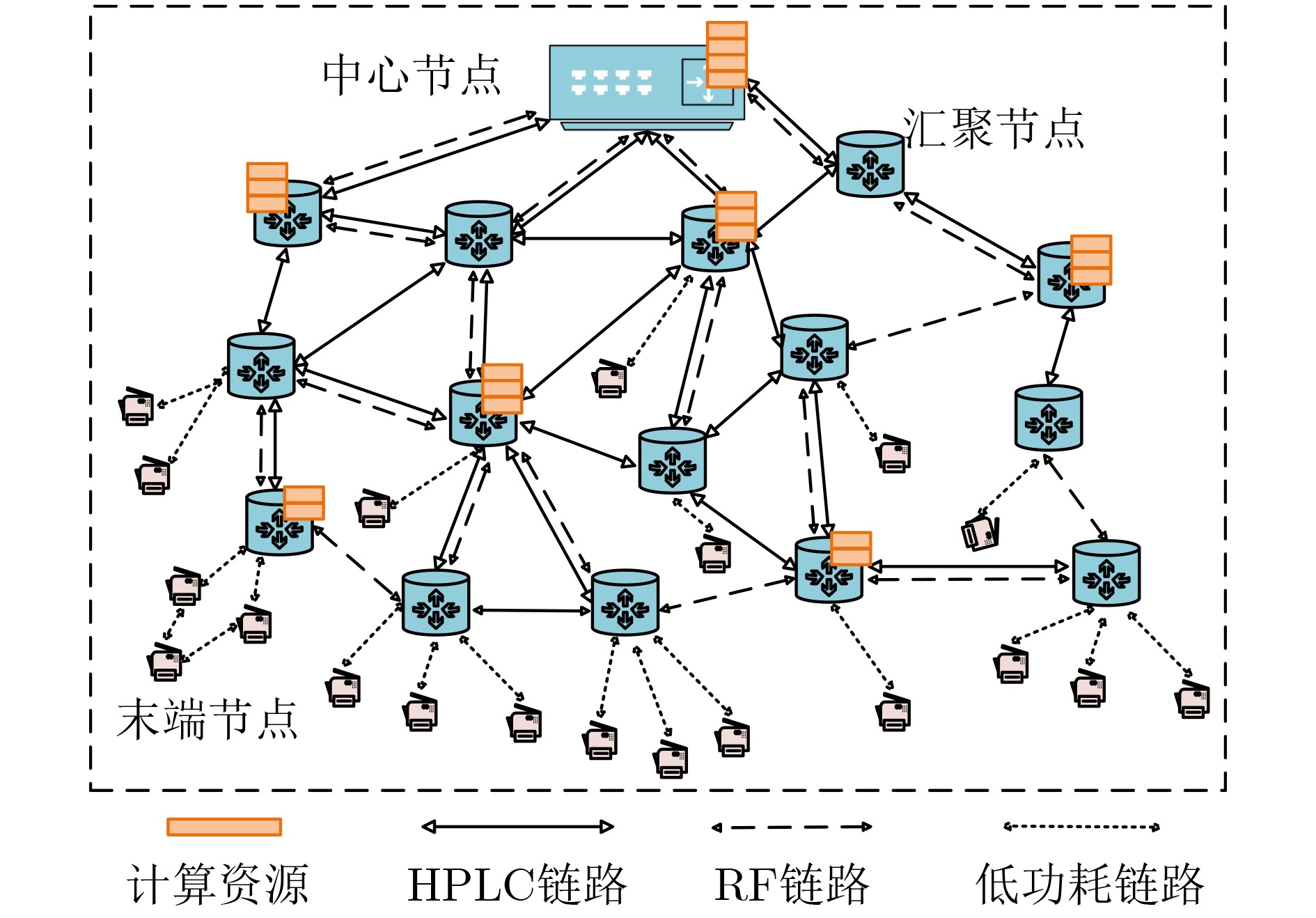
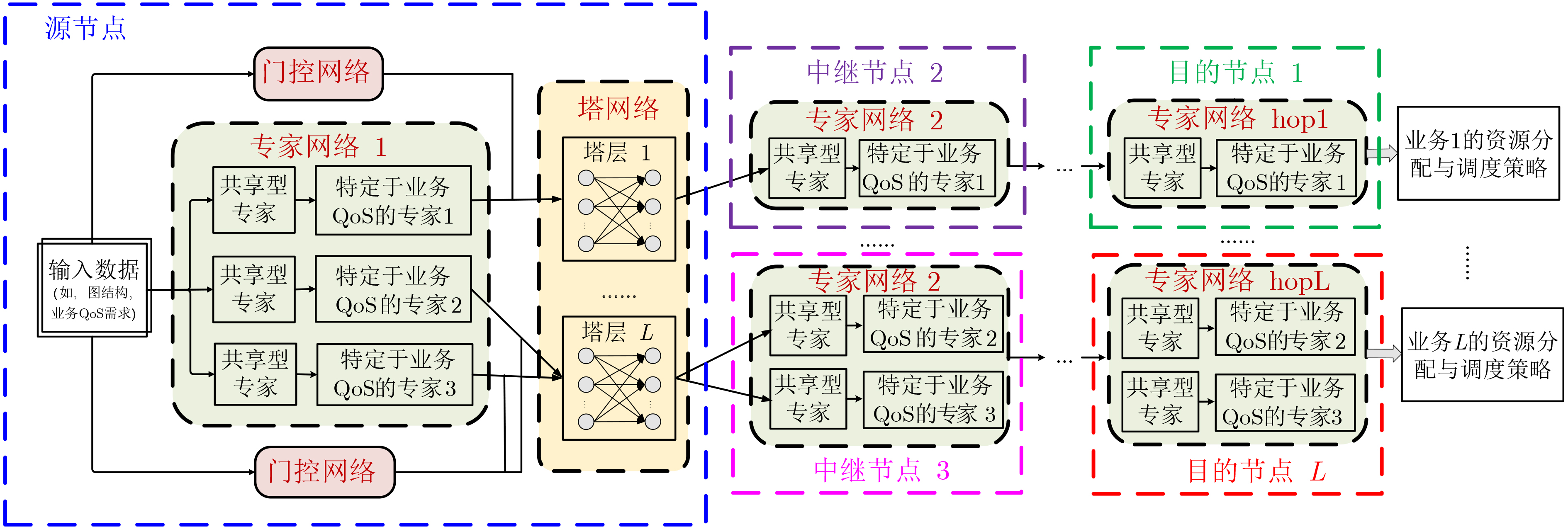
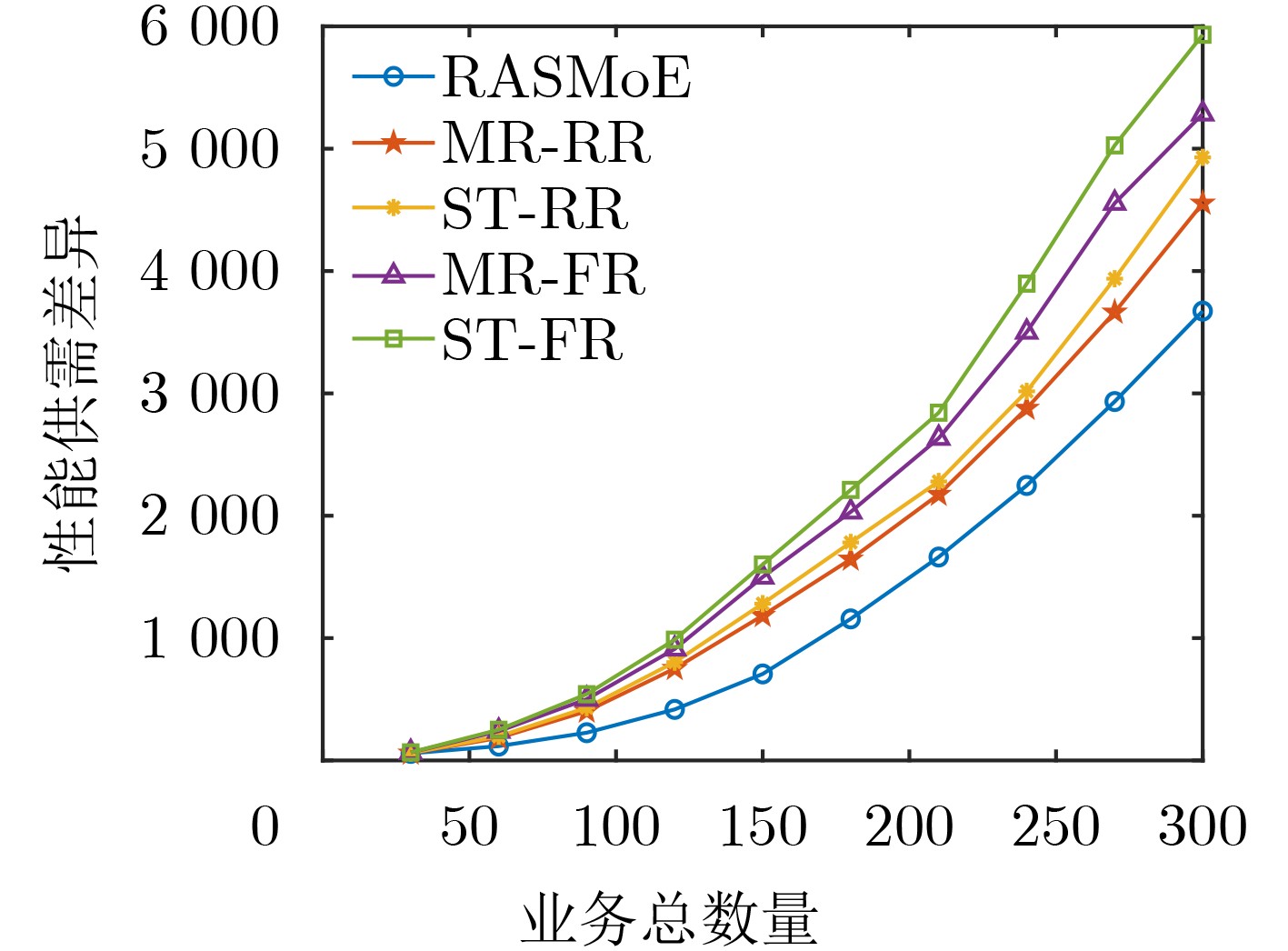
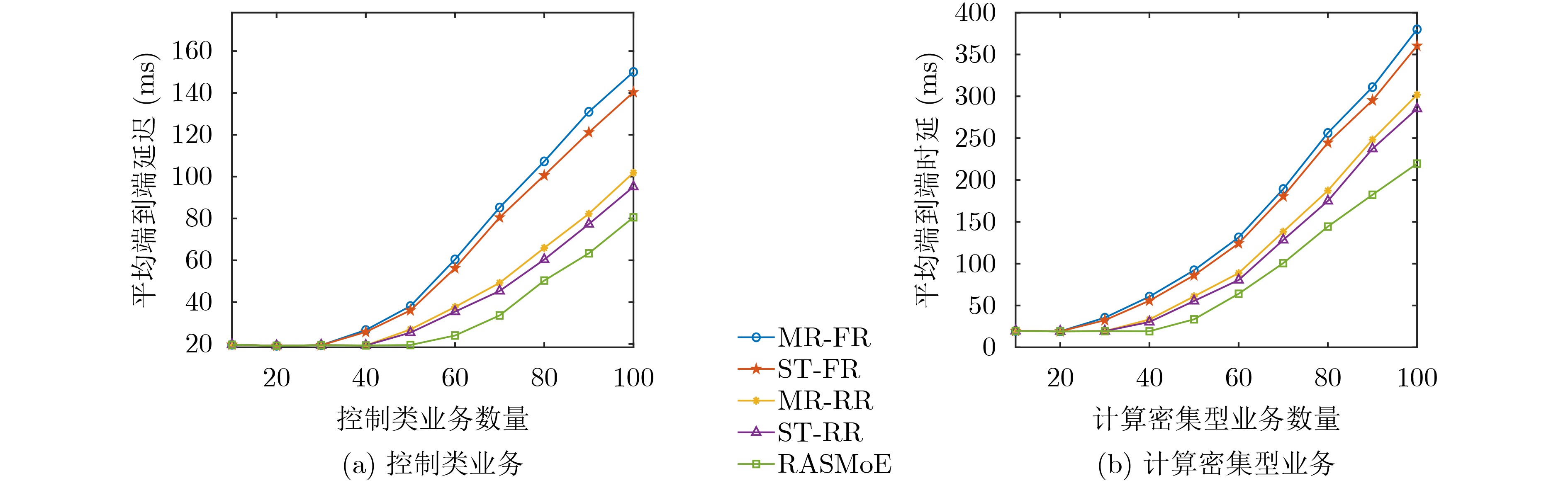
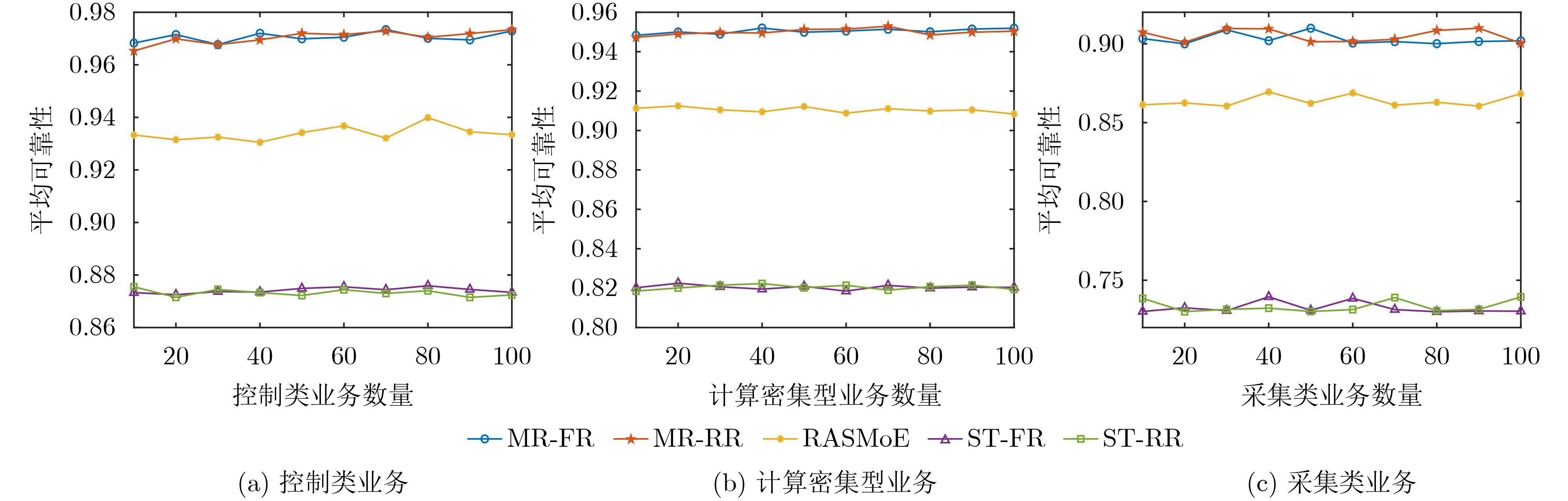
  •   Objective  Emerging power services, such as distributed energy consumption, impose more stringent requirements on the performance of large-scale heterogeneous local power communication networks (LHLPCNs). Given the limited communication resources and rising service demands, providing on-demand services and enhancing network capacity while guaranteeing Quality of Service (QoS) presents a major challenge for LHLPCNs. Conventional routing and resource scheduling algorithms based on optimization or heuristics depend on precise mathematical models and parameters. As network scales and optimization variables increase, these algorithms become computationally expensive, hindering their effective adaptation to the growing variety of power application scenarios. Recent advances in mixture of experts (MoE) frameworks offer a promising solution, which greatly reduces the need to train individual task-specific model by employing an ensemble of AI models as specialized experts. Motivated by these challenges and the potential of MoE, this paper proposes a MoE-based routing and resource scheduling algorithm (RASMoE) tailored for LHLPCNs integrating High Power Line Carrier (HPLC) and Radio Frequency (RF). RASMoE can efficiently meet the personalized QoS requirements of diverse services and accommodate more power services within limited resources.  Methods  Firstly, considering the multi-modal links, channels and data modulation methods, the optimization problem of minimizing the difference between QoS supply and demand in LHLPCNs is established, which conforms to a 0-1 integer linear programming model. Then, to solve this NP-hard problem, a novel MOE framework comprising expert networks and gated networks is designed. This framework is capable of meeting the personalized demands of diverse services in terms of data transmission rate, delay and reliability, while achieving faster convergence. The expert networks, which include both shared and QoS-specific experts, are responsible for generating the optimal next hop and computing the efficient allocation strategies of links, channels and data modulation modes between node pairs. Meanwhile, the gated networks dynamically combine and reuse these experts to efficiently accommodate both known and unforeseen service types. Finally, extensive comparative experiments validate the effectiveness of the proposed algorithm. Compared with many baselines, RASMoE shows better performance in terms of resource utilization, delay and Reliability.  Results and Discussions  The difference between the performance supply and demand of five algorithms under varying service numbers is compared ( Fig. 3 ) . Simulation results show that RASMoE consistently exhibits the smallest performance supply-demand differences across all scenarios. This advantage stems from its gating network, which dynamically combines QoS-specific experts to precisely match resource allocation with service requirements. Given that control and computing-intensive services have strict delay requirements, the average end-to-end (E2E) latency of these two service types under different service numbers is compared ( Fig. 4 ) . It can be observed that the proposed algorithm achieves the lowest average E2E latency. This is because its expert networks, enhanced by Graph Attention Networks (GATs), efficiently extract node load states and interact with the network environment in real-time via a Multi-Armed Bandit (MAB) mechanism. This enables RASMoE to learn adaptive resource allocation strategies. Moreover, the average reliability of the E2E paths by the five algorithms for different numbers of control, compute-intensive, and acquisition services is illustrated (Fig. 5).  Conclusions  This paper proposes a MoE-driven routing and resource scheduling algorithm for LHLPCNs. The proposed framework comprises two core components: expert networks and a gating network. The expert networks include shared experts based on GATs and service QoS-specific experts based on MAB. The former are responsible for E2E path selection by analyzing node characteristics, while the latter focuses on adaptively allocating and scheduling links, channels, and modulation schemes according to distinct QoS requirements and link conditions. The gated networks dynamically orchestrate and reuse these expert models to efficiently serve services with single or multiple QoS demands, including previously unseen service types. Theoretical analysis validates that the proposed method enhances resource utilization of LHLCPNs, with its advantages being particularly pronounced in multi-service scenarios characterized by diverse QoS requirements. Future work will explore the integration of the MoE framework with domain-specific models (e.g., for power load forecasting) and predictive analytics, aiming to optimize the integration and utilization of renewable energy sources, such as wind and solar power.
  • loading
  • [1]
    CALERO F, CAÑIZARES C A, BHATTACHARYA K, et al. A review of modeling and applications of energy storage systems in power grids[J]. Proceedings of the IEEE, 2023, 111(7): 806–831. doi: 10.1109/JPROC.2022.3158607.
    [2]
    WU Dan, SEO G S, XU Lie, et al. Grid integration of offshore wind power: Standards, control, power quality and transmission[J]. IEEE Open Journal of Power Electronics, 2024, 5: 583–604. doi: 10.1109/OJPEL.2024.3390417.
    [3]
    LI Yuanzheng, YU Chaofan, SHAHIDEHPOUR M, et al. Deep reinforcement learning for smart grid operations: Algorithms, applications, and prospects[J]. Proceedings of the IEEE, 2023, 111(9): 1055–1096. doi: 10.1109/JPROC.2023.3303358.
    [4]
    LI Jun, SUN Haiyang, DENG Xiumei, et al. Mobility-aware user scheduling in wireless federated learning with contextual multi-armed bandit[J]. China Communications, 2025, 22(11): 256–272. doi: 10.23919/JCC.fa.2023-0427.202511.
    [5]
    LI Hongbo and DUAN Lingjie. Competitive multi-armed bandit games for resource sharing[J]. IEEE Transactions on Mobile Computing, 2025, 24(9): 8393–8404. doi: 10.1109/TMC.2025.3555971.
    [6]
    SALAH M M, SAAD R S, ZAKI R M, et al. Multi-armed bandits for resource allocation in UAV-assisted LoRa networks[J]. IEEE Internet of Things Magazine, 2025, 8(2): 40–45. doi: 10.1109/IOTM.001.2400088.
    [7]
    GALLI A, MOSCATO V, ROMANO S P, et al. Playing with a multi armed bandit to optimize resource allocation in satellite-enabled 5G networks[J]. IEEE Transactions on Network and Service Management, 2024, 21(1): 341–354. doi: 10.1109/TNSM.2023.3302064.
    [8]
    朱晓荣, 贺楚闳. 基于强化学习的大规模多模Mesh网络联合路由选择及资源调度算法[J]. 电子与信息学报, 2024, 46(7): 2773–2782. doi: 10.11999/JEIT231103.

    ZHU Xiaorong and HE Chuhong. Joint routing and resource scheduling algorithm for large-scale multi-mode mesh networks based on reinforcement learning[J]. Journal of Electronics & Information Technology, 2024, 46(7): 2773–2782. doi: 10.11999/JEIT231103.
    [9]
    LI Guiyi, OUYANG Yuxiang, and LINLONG Siyu. En route congestion prediction method for air route network based on spatiotemporal graph convolution network and attention[J]. IEEE Intelligent Transportation Systems Magazine, 2025, 17(3): 33–57. doi: 10.1109/MITS.2024.3450953.
    [10]
    JI Han, WU Xiping, ZENG Zhihong, et al. Graph attention networks-enabled load balancing for 6G heterogeneous networks with parallel transmission[J]. IEEE Transactions on Vehicular Technology, 2025, 1–14. Early Access. doi: 10.1109/TVT.2025.3636175. (查阅网上资料,未找到本条文献卷期号,请确认).
    [11]
    CHEN Chongpu, CHEN Xinbo, YANG Yi, et al. Sparse attention graph convolution network for vehicle trajectory prediction[J]. IEEE Transactions on Vehicular Technology, 2024, 73(12): 18294–18306. doi: 10.1109/TVT.2024.3443850.
    [12]
    PARK J and LIM S. LEHAN: Link-feature enhanced heterogeneous graph attention network[J]. IEEE Access, 2022, 10: 86248–86255. doi: 10.1109/ACCESS.2022.3198941.
    [13]
    LI Chenxu, FENG Lei, LI Wenjing, et al. Long-term traffic flow prediction: A knowledge-driven graph attention spatio-temporal network[J]. IEEE Transactions on Network and Service Management, 2025, 22(5): 4206–4221. doi: 10.1109/TNSM.2025.3595919.
    [14]
    ZHOU Jingxuan, XIAO Wenhua, ZHANG Dayu, et al. Multi-task model fusion with mixture of experts structure[C]. 2023 9th International Conference on Big Data and Information Analytics (BigDIA), Haikou, China, 2023: 387–391. doi: 10.1109/BigDIA60676.2023.10429752.
    [15]
    CHENG Guangran, DONG Lu, CAI Wenzhe, et al. Multi-task reinforcement learning with attention-based mixture of experts[J]. IEEE Robotics and Automation Letters, 2023, 8(6): 3812–3819. doi: 10.1109/LRA.2023.3271445.
    [16]
    YUAN Renteng, ABDEL-ATY M, XIANG Qiaojun, et al. A temporal multi-gate mixture-of-experts approach for vehicle trajectory and driving intention prediction[J]. IEEE Transactions on Intelligent Vehicles, 2024, 9(1): 1204–1216. doi: 10.1109/TIV.2023.3336310.
    [17]
    RAMBABU R, VADAKKEPAT P, TAN K C, et al. A mixture-of-experts prediction framework for evolutionary dynamic multiobjective optimization[J]. IEEE Transactions on Cybernetics, 2020, 50(12): 5099–5112. doi: 10.1109/TCYB.2019.2909806.
    [18]
    DU Hongyang, LIU Guangyuan, LIN Yijing, et al. Mixture of experts for intelligent networks: A large language model-enabled approach[C]. 2024 International Wireless Communications and Mobile Computing (IWCMC), Ayia Napa, Cyprus, 2024: 531–536. doi: 10.1109/IWCMC61514.2024.10592370.
    [19]
    YANG Liang, YAN Xiaoqin, LI Sai, et al. Performance analysis of dual-hop mixed PLC/RF communication systems[J]. IEEE Systems Journal, 2022, 16(2): 2867–2878. doi: 10.1109/JSYST.2021.3088096.
    [20]
    JING Chuanfang, ZHU Xiaorong, and LIU Xu. Data/model jointly driven routing and resource allocation algorithms for large-scale self-organizing networks for new power systems[C]. 2nd Future Industrial Internet (FII 2024), Shenzhen, China, 2024: 55–76. doi: 10.1007/978-981-96-6736-9_5.
  • 加载中

Catalog

    通讯作者: 陈斌, bchen63@163.com
    • 1. 

      沈阳化工大学材料科学与工程学院 沈阳 110142

    1. 本站搜索
    2. 百度学术搜索
    3. 万方数据库搜索
    4. CNKI搜索

    Figures(5)  / Tables(1)

    Article Metrics

    Article views (36) PDF downloads(3) Cited by()
    Proportional views
    Related

    /

    DownLoad:  Full-Size Img  PowerPoint
    Return
    Return