Advanced Search

Current Issue

2026 Vol. 48, No. 8

2026, 48(8)
Abstract:
2026, 48(8): 1-4.
Abstract:
Excellence Action Plan Leading Column
Efficient and Verifiable Ciphertext Retrieval Scheme Based on Trusted Execution Environment
WU Axin, FENG Dengguo, ZHANG Min, CHI Jialin, YI Yuling
2026, 48(8): 3213-3228. doi: 10.11999/JEIT251358
Abstract:
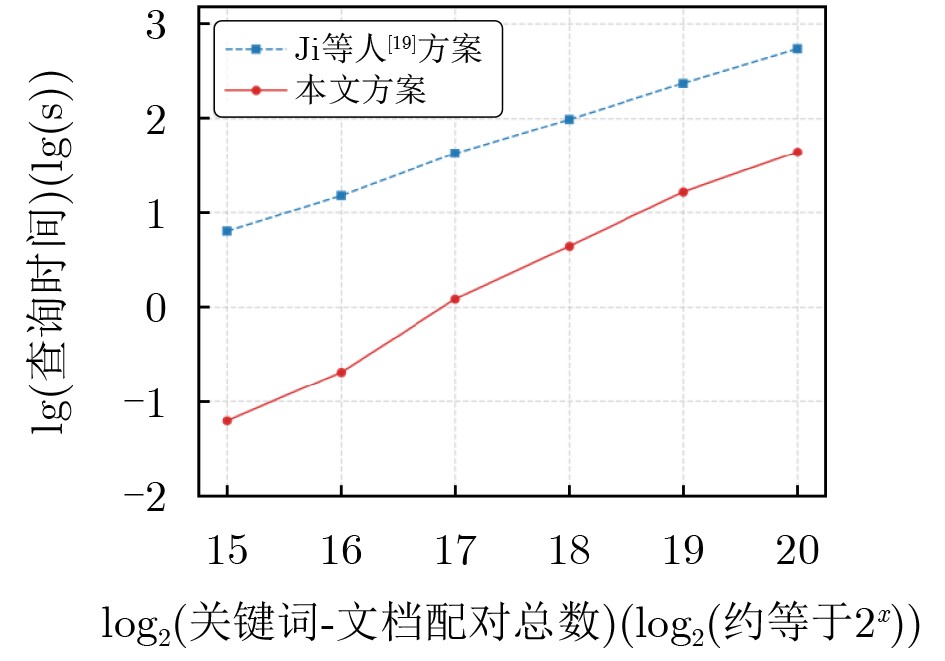
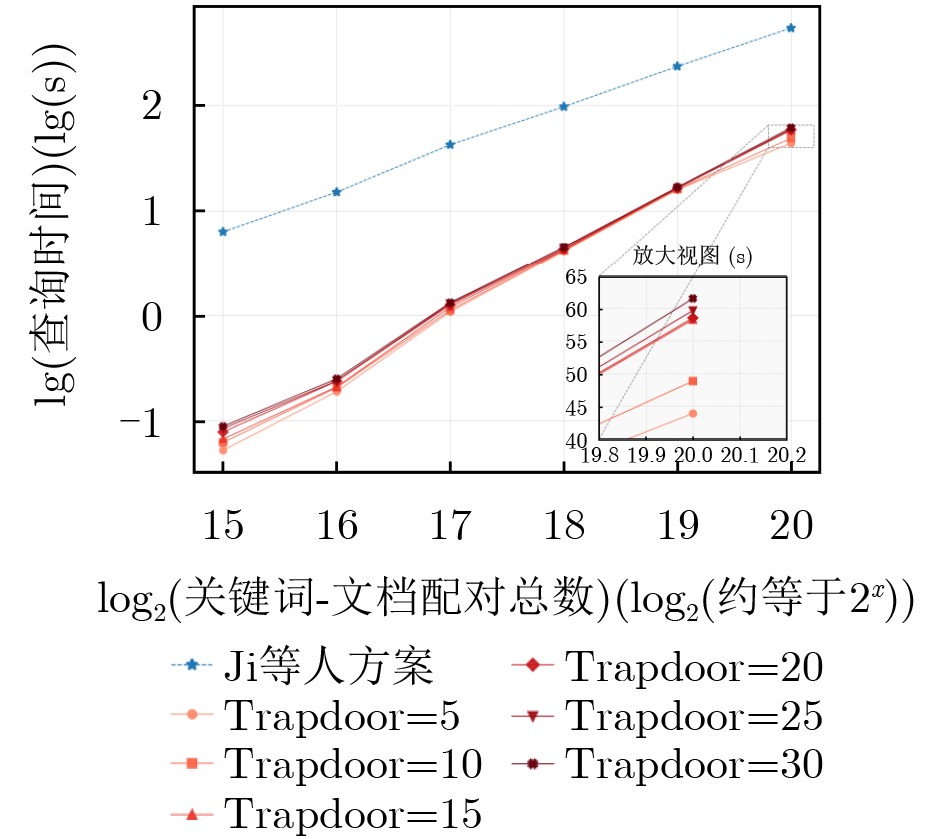
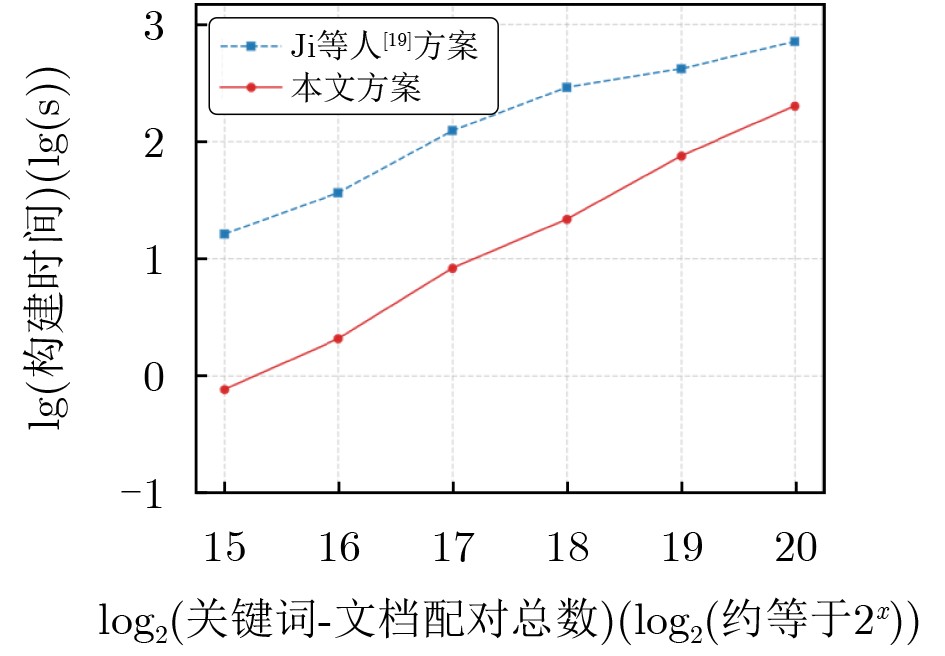
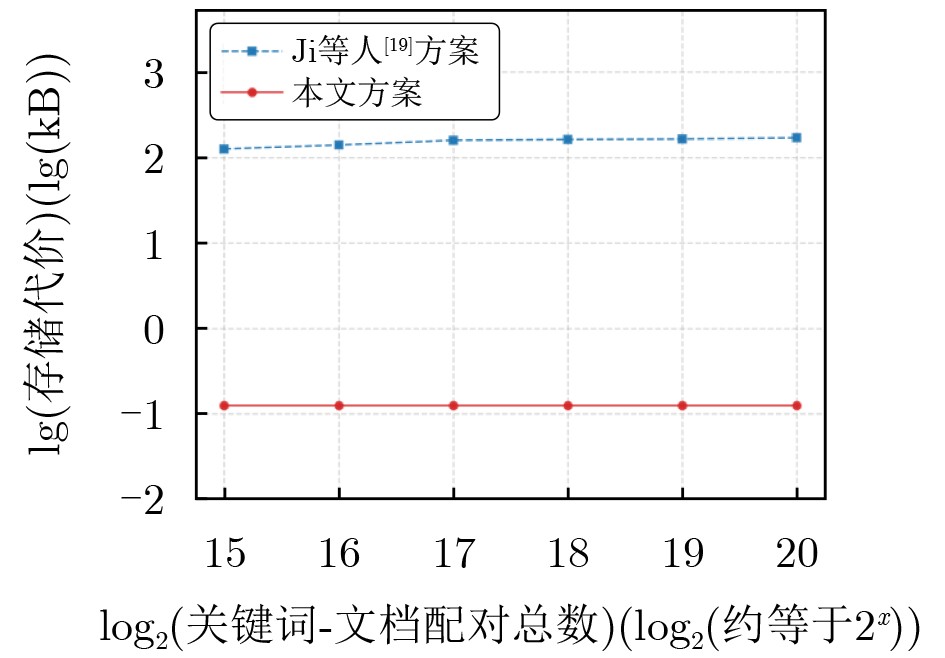
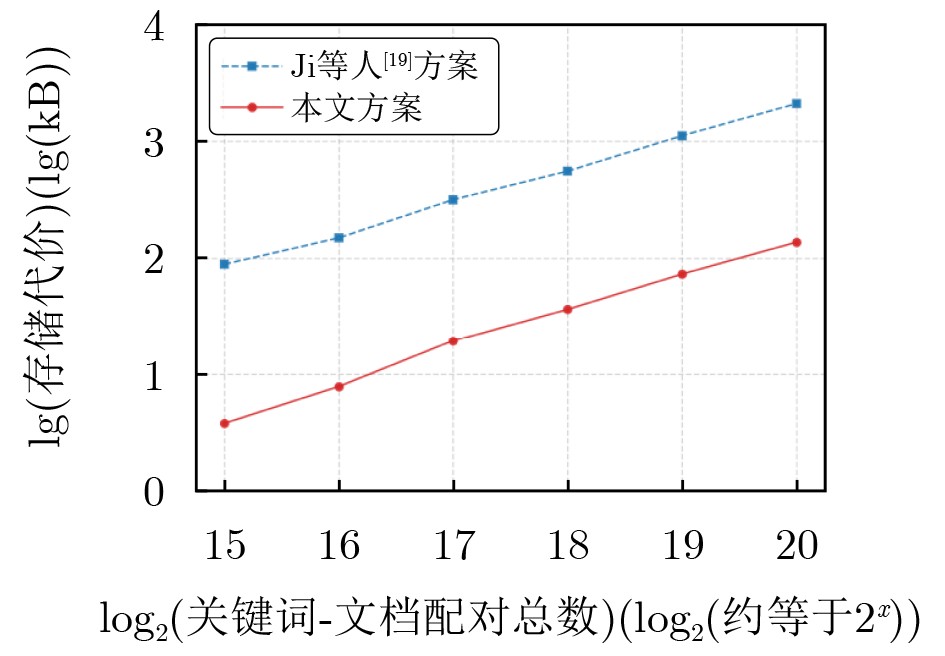
  Objective   Ciphertext retrieval enables searching over encrypted data. Symmetric Searchable Encryption (SSE) constitutes a critical branch of ciphertext retrieval. However, cloud servers may return incorrect or incomplete results to conserve computational resources. Furthermore, adversaries may exploit information leaked from search and access patterns to recover keyword details, which introduces severe privacy risks. Therefore, preserving the privacy of search and access patterns while guaranteeing result verifiability is both necessary and meaningful. Nevertheless, existing verifiable SSE schemes supporting search and access pattern privacy generally adopt keyword traversal mechanisms with inefficient verification procedures. This imposes heavy computational and communication overhead on data users and fails to satisfy the requirements for efficient and secure ciphertext retrieval.  Methods   To tackle the above performance bottlenecks, this paper proposes an efficient verifiable ciphertext retrieval mechanism based on the Trusted Execution Environment (TEE) and Oblivious Random Access Machine (ORAM). The data user transmits keyword trapdoors to the Enclave inside TEE via a secure channel. The cloud server regards the Enclave as a client and leverages Path ORAM to implement oblivious access to the ciphertext database. This mechanism eliminates multi-round interactions and redundant information transmission between the Enclave and the user, rendering the size of keyword trapdoors independent of the scale of the keyword dictionary. To achieve verifiability of search results, the data user embeds a designated random number during polynomial construction and blinds the polynomial’s constant term using the output of a hash function. Upon receiving the search results, the user deblinds the blinded polynomial returned by the cloud server to reconstruct the complete polynomial, and validates the correctness of the search procedure and the integrity of search results by checking whether this designated random number is a root of the polynomial.  Results and Discussions   Benefiting from the above designs, significant efficiency improvements are achieved. Specifically, the scheme ensures that the size of keyword trapdoors depends only on the number of query keywords, rather than the size of the global keyword dictionary, which effectively cuts communication and computational costs. Moreover, the scheme requires merely two random numbers to realize the verifiability of search results, substantially reducing the user-side local storage overhead. In addition, techniques including single-server single-round result retrieval and symmetric homomorphic encryption are adopted to further boost operational efficiency. Experimental results demonstrate that, under equivalent functionality, the proposed scheme achieves performance gains of several times or even orders of magnitude in query efficiency, database construction overhead, user-side local storage, and communication overhead. The proposed scheme achieves prominent advantages in ciphertext retrieval efficiency and overhead optimization, yet it has certain application limitations. The scheme is mainly designed for static ciphertext datasets and lacks adequate adaptability to dynamic ciphertext environments with frequent data insertion, deletion and update operations. Besides, we only optimize the performance for single-user search scenarios. For complex data-sharing scenarios such as multi-user concurrent search, the concurrent processing capability and permission isolation mechanism remain to be improved.  Conclusions   This paper proposes an efficient verifiable ciphertext retrieval scheme based on TEE. Combining hardware-level security isolation with oblivious data rearrangement, the scheme decouples keyword trapdoor size from the scale of the keyword dictionary. It verifies search result correctness via random number embedding and blinding of polynomial constant terms. With a single-round user-server interaction architecture and symmetric homomorphic encryption, the scheme further improves search efficiency. Comprehensive experiments show that this scheme substantially outperforms equivalent competing schemes in overall execution efficiency.
Recent Advances in Remote Sensing Image-Text Retrieval Driven by Vision-Language Foundation Models
WU Hui, ZHAO Yan, ZHANG Peirong, HOU Yingyan, QI Xiyu, WANG Lei
2026, 48(8): 3229-3246. doi: 10.11999/JEIT260189
Abstract:
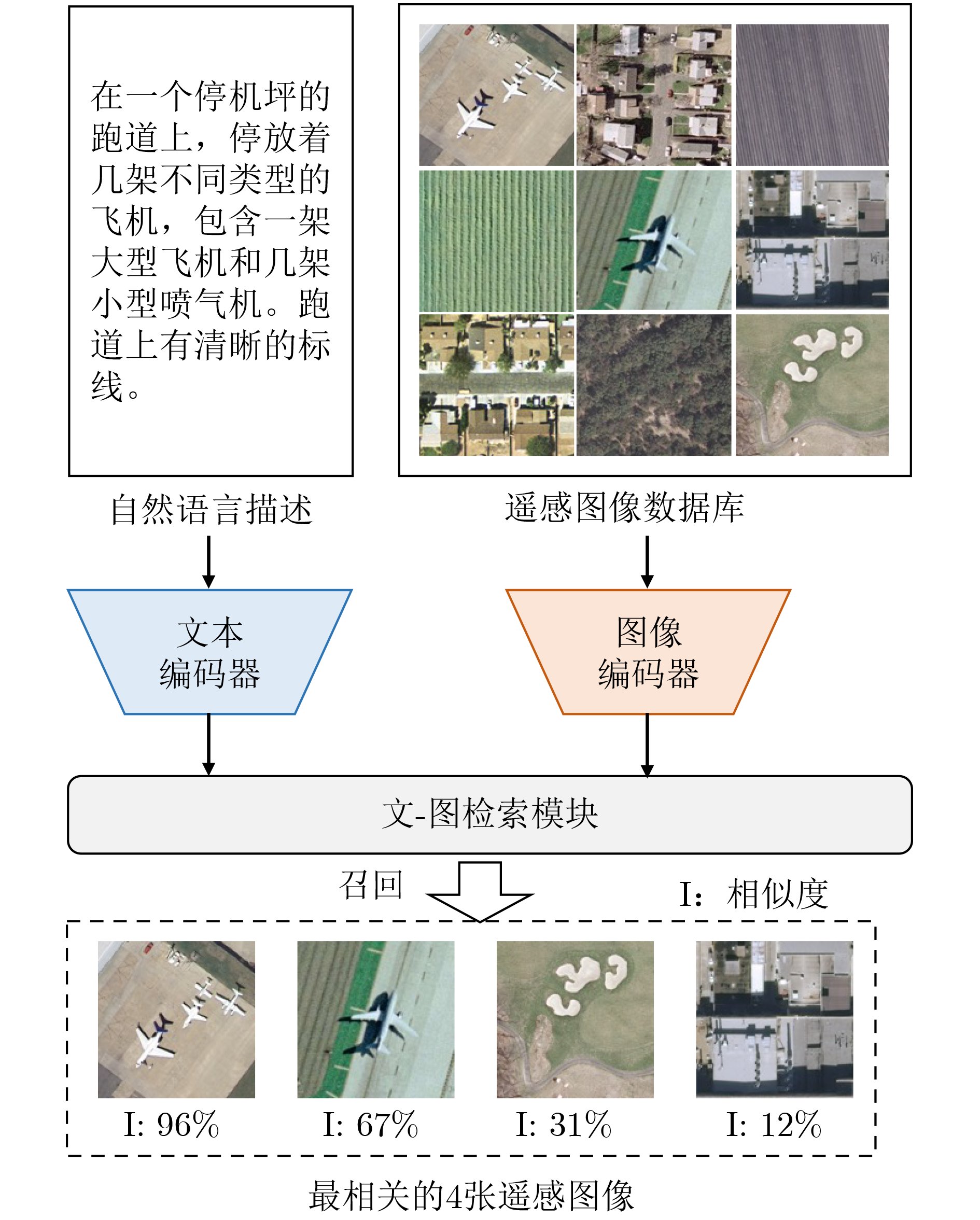
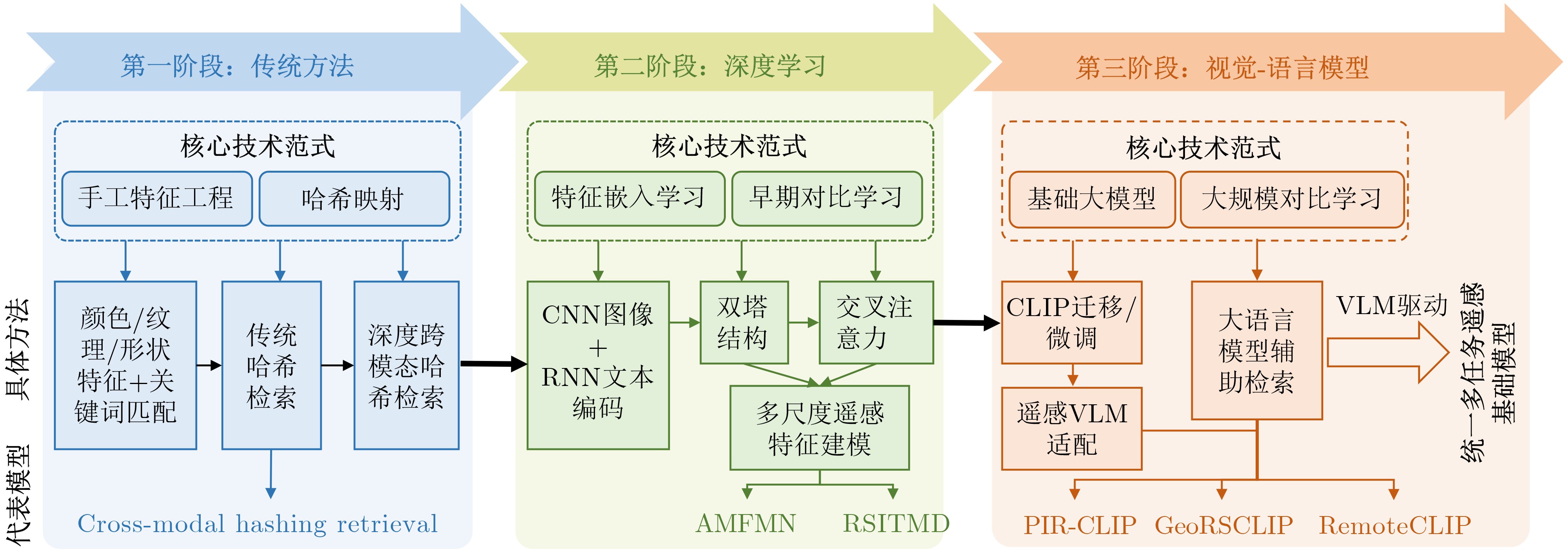
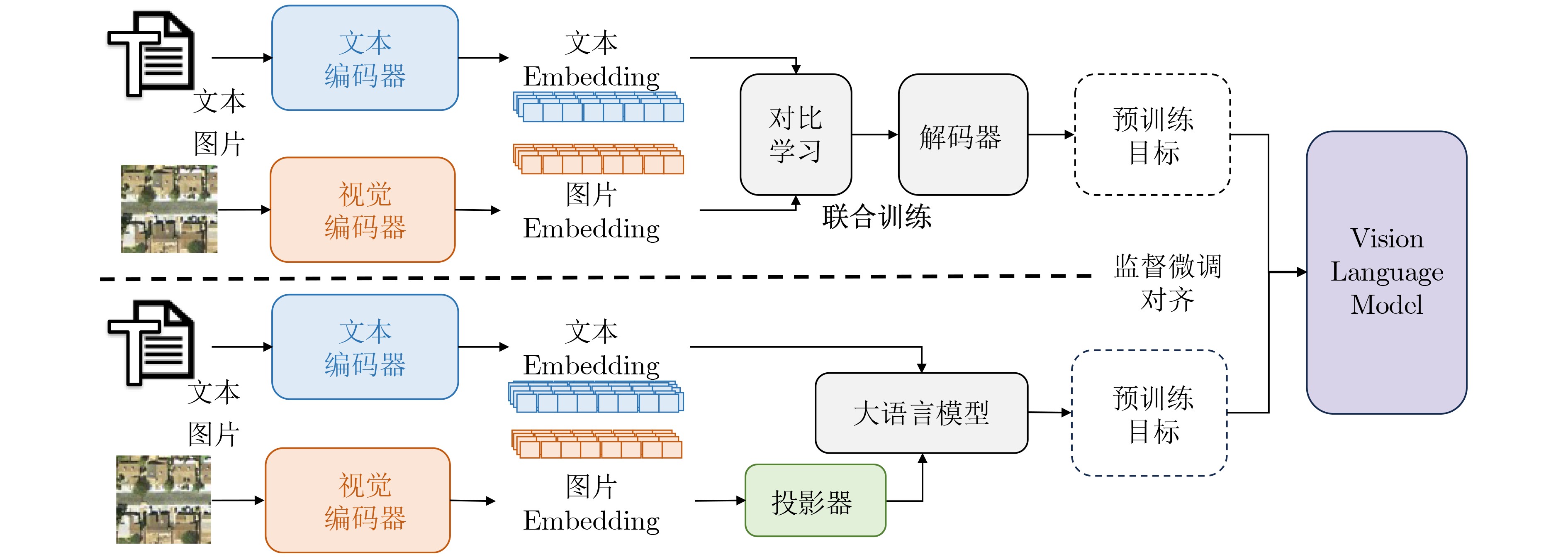
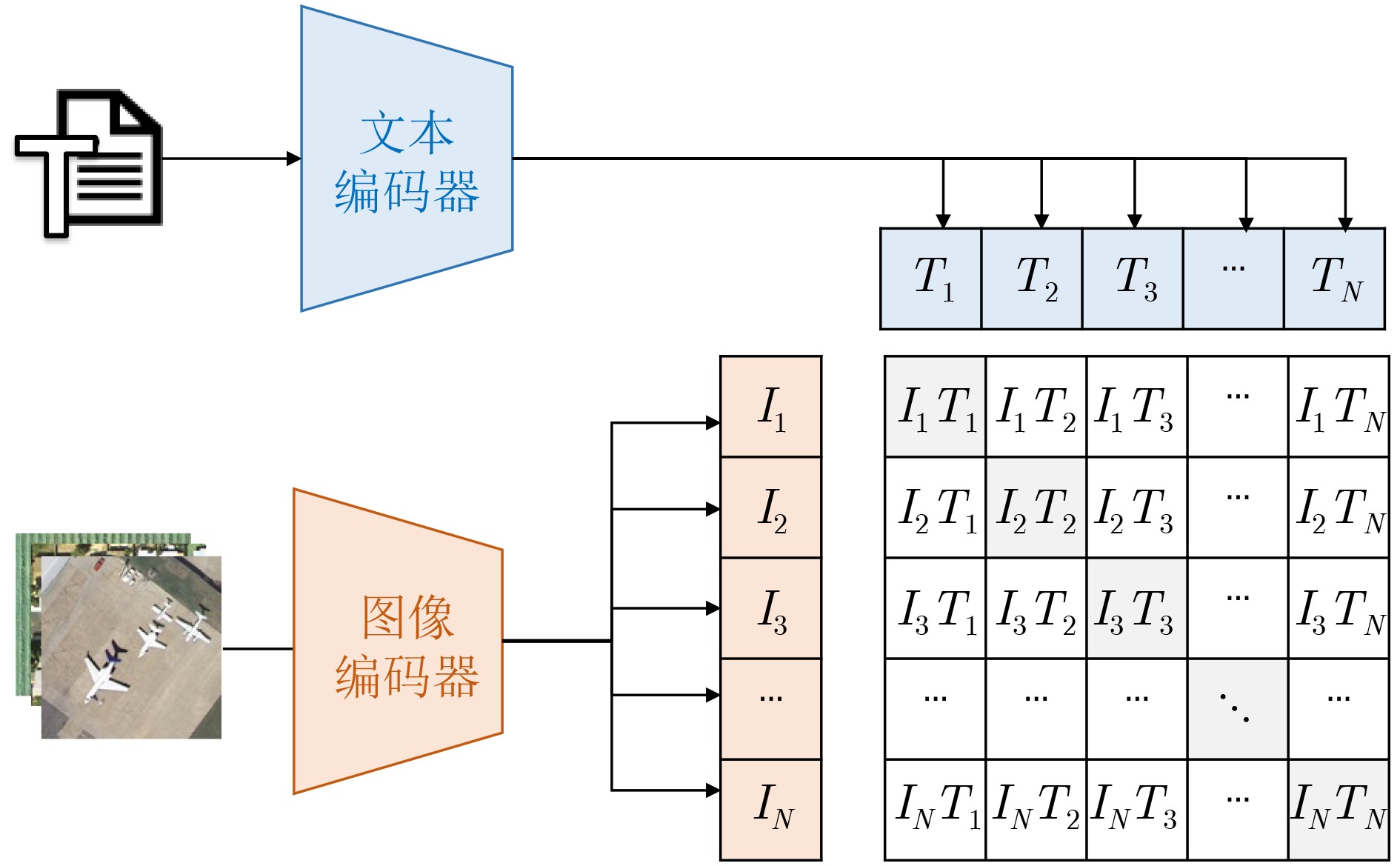
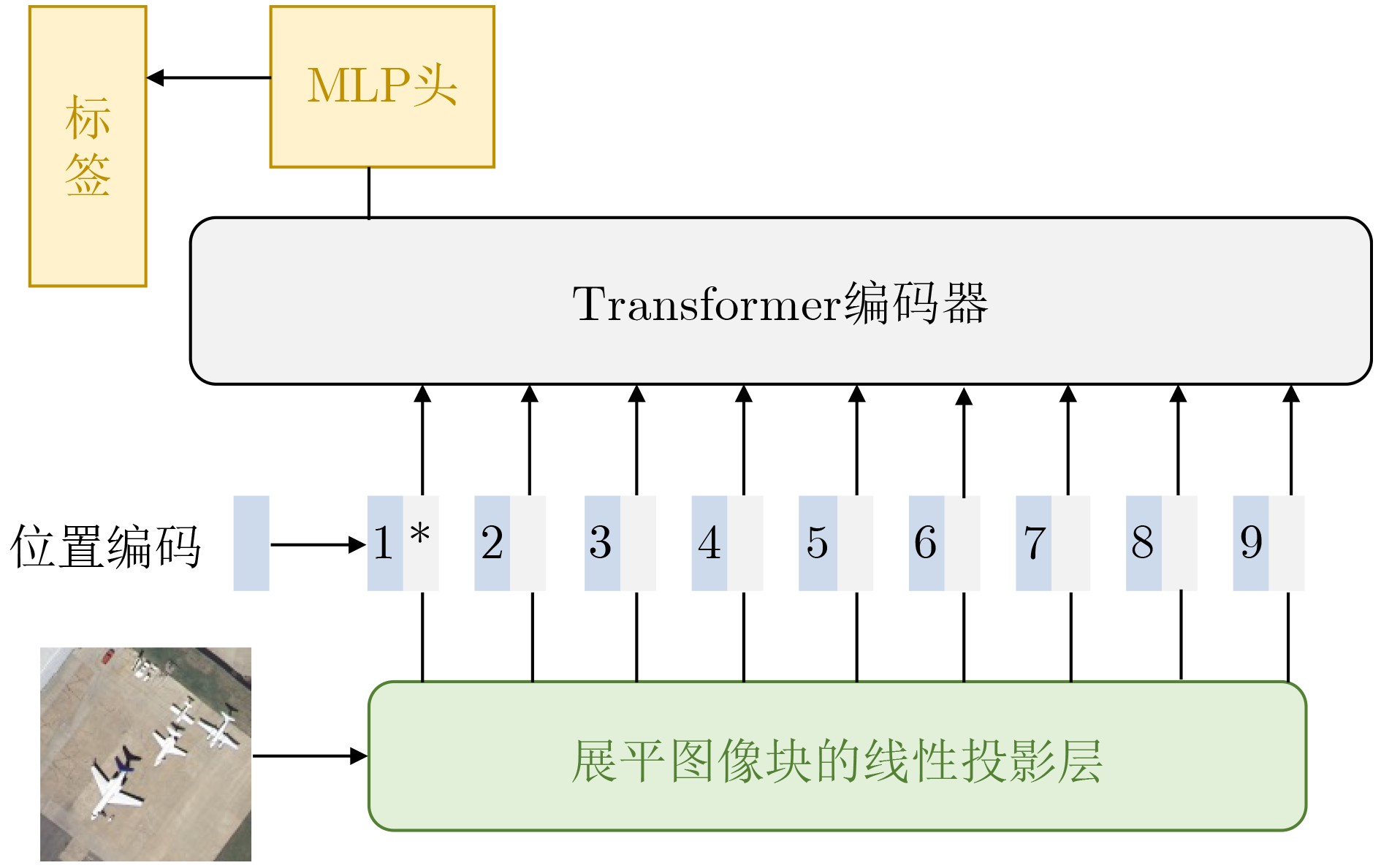
  Significance  Remote Sensing Image-Text Retrieval (RS-TIR) connects large-scale Earth observation imagery with natural-language queries and has become an important interface for geospatial intelligence systems. Compared with conventional content-based retrieval, RS-TIR allows users to search for scenes, objects, spatial layouts, and functional regions through semantic descriptions rather than handcrafted visual cues. This capability is increasingly needed in natural resource monitoring, urban governance, disaster response, environmental assessment, and on-demand retrieval from rapidly growing satellite archives. However, RS-TIR remains challenging. Remote sensing imagery is captured from nadir or near-nadir perspectives, shows strong rotation invariance, and contains extreme scale variation, ranging from tiny vehicles to large airports. It also requires domain-specific semantic descriptions, such as land-use attributes, spatial distributions, and geoscientific relations. Meanwhile, high-quality image-text annotations remain limited relative to the scale of remote sensing data. These properties widen the cross-modal semantic gap between images and language and limit the generalization ability of traditional cross-modal retrieval methods. Against this background, this review examines how Vision-Language Foundation Models (VLMs) reshape RS-ITR through large-scale contrastive pre-training, stronger transferable representations, and more flexible multimodal interaction mechanisms. It also explains why remote sensing adaptation is needed and why a focused synthesis of architectures, datasets, alignment mechanisms, and future directions is timely for this field.  Progress   The technical development of RS-ITR is reviewed from three complementary perspectives. First, this review summarizes the domain-specific challenges that shape the task, including visually isotropic topology with extreme scale variation, professional and fine-grained textual semantics, and the compounded cross-modal semantic gap between overhead imagery and natural-language descriptions (Fig. 3). The overall survey structure is then presented to show the logical progression from task formulation to future challenges (Fig. 1). From a methodological perspective, RS-ITR has evolved from handcrafted visual descriptors and shallow semantic mapping to deep representation learning, and then to VLM-driven paradigms with stronger generalization and zero-shot transfer capability (Fig. 4, Table 2). Early methods rely on color, texture, shape, and hash-based retrieval. However, they struggle to model high-level geospatial semantics and complex scene composition. Deep learning methods improve retrieval by learning joint embedding spaces, adopting dual-encoder or interaction-based architectures, and using multi-scale feature fusion and region-aware matching. These methods improve semantic consistency, but they still depend heavily on labeled data and often show limited robustness in open or cross-sensor scenarios. Second, this review summarizes the benchmark ecosystem used to evaluate these methods. Representative datasets range from small-scale test sets, such as Sydney-Caption and UCM-Caption, to mainstream benchmarks, such as RSICD and RSITMD, and recent large-scale training resources, such as RS5M and SkyScript (Table 1). These datasets show a clear transition from small manually annotated corpora to web-scale or automatically generated image-text pairs. This transition supports domain pre-training and large model adaptation. Third, this review analyzes the core VLM techniques that now drive progress in RS-ITR. The model spectrum and representative architecture families are systematically summarized, including contrastive dual-encoder models, multimodal interaction models, and remote sensing foundation models integrated with large language models (Fig. 5, Fig. 6, Table 3). Domain adaptation routes are further grouped into continued remote sensing pre-training, parameter-efficient transfer learning, adapter-based tuning, prompt learning, and instruction tuning. At the semantic alignment level, this review focuses on contrastive joint embedding, fine-grained multi-scale alignment, and the use of remote sensing priors, such as spatial topology and geolocation. Performance comparisons on RSICD and RSITMD show that remote sensing VLMs, especially RemoteCLIP, GeoRSCLIP, iEBAKER, and LRSCLIP, yield consistent gains in mean Recall (mR) and overall retrieval robustness (Table 4). In parallel, this review tracks the extension of retrieval capability into unified multi-task remote sensing models, in which retrieval, grounding, segmentation, and reasoning begin to share a common multimodal representation space.  Conclusions  Several conclusions are drawn from the comparative analysis. First, VLMs establish a dominant paradigm for RS-ITR because they narrow the cross-modal semantic gap and improve transferability across datasets and scenes. Second, no single architecture is universally optimal. Dual-encoder models remain attractive for large-scale retrieval because of their efficiency, whereas interaction-based or instruction-enhanced models provide finer semantic alignment at a higher computational cost. Third, domain adaptation is indispensable. Continued pre-training on remote sensing image-text corpora, parameter-efficient tuning, and prompt-based adaptation consistently outperform direct reuse of internet-trained VLMs. This finding indicates that remote sensing imagery differs too strongly from natural-image distributions for generic pre-training alone to be sufficient. Fourth, the most effective recent methods do not improve performance through scale alone. They also exploit remote sensing-specific information, including multi-scale structures, foreground objects, explicit keyword reasoning, and spatial priors. Finally, this review shows that the field is shifting from isolated retrieval models toward more general geospatial multimodal systems. Retrieval is no longer treated only as a matching task. It is also becoming a key capability that supports question answering, instruction following, knowledge augmentation, and coordinated reasoning in remote sensing applications.  Prospects   Future research is expected to advance in four closely related directions. The first direction is the unified representation of multi-source heterogeneous data, especially the integration of optical imagery with Synthetic Aperture Radar (SAR), hyperspectral data, thermal infrared observations, and multi-temporal acquisitions. The second direction is knowledge-enhanced retrieval, in which geospatial priors, land-use rules, remote sensing terminology, and external knowledge bases are incorporated into multimodal alignment and retrieval-augmented reasoning. The third direction is lifelong and open-world learning. Real deployment requires models to remain reliable under seasonal variation, sensor updates, regional domain shifts, cloud contamination, and newly emerging categories, while avoiding catastrophic forgetting. The fourth direction is efficiency and deployability. Practical remote sensing systems often operate under tight computational budgets. Therefore, lightweight tuning, sparse computation, token reduction, model compression, and on-orbit and edge inference will become increasingly important. Interactive and explainable retrieval is also likely to gain importance. It allows analysts to refine queries through dialogue and inspect the image regions or semantic cues that support retrieval decisions. Overall, continued progress in data construction, domain adaptation, semantic alignment, and efficient multimodal modeling is expected to make RS-ITR a more robust infrastructure capability for Earth observation applications.

A Survey of Cooperative Mission Planning for Imaging Satellites Observing Moving Targets
XU Zhuo, FAN Shenghua, YUE Haitao, QU Tao, WANG Dingwen, SUN Shilei
2026, 48(8): 3247-3262. doi: 10.11999/JEIT260133
Abstract:
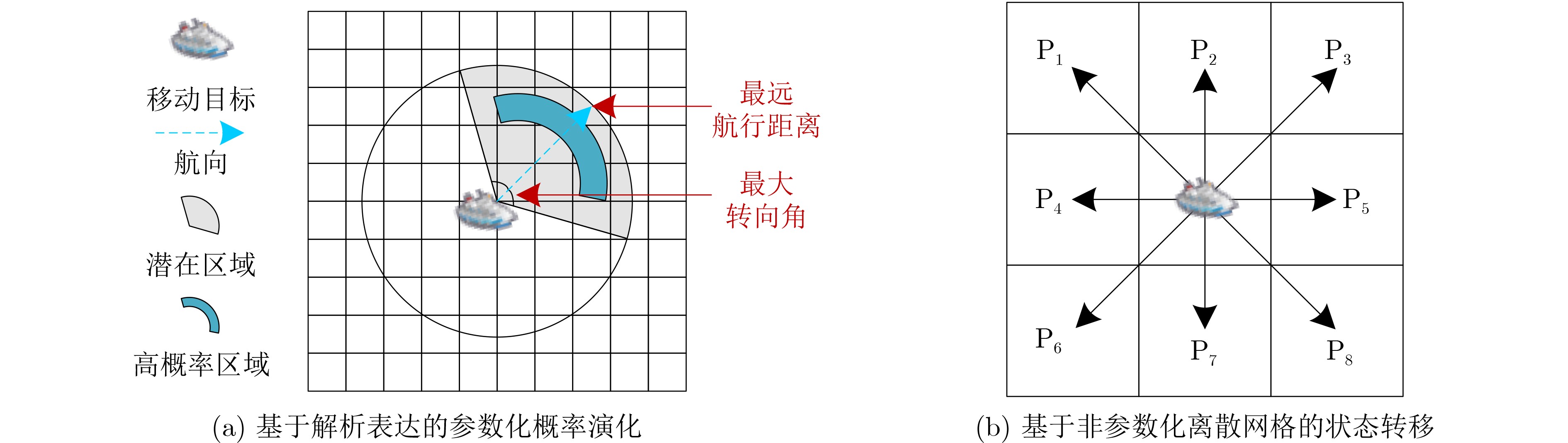
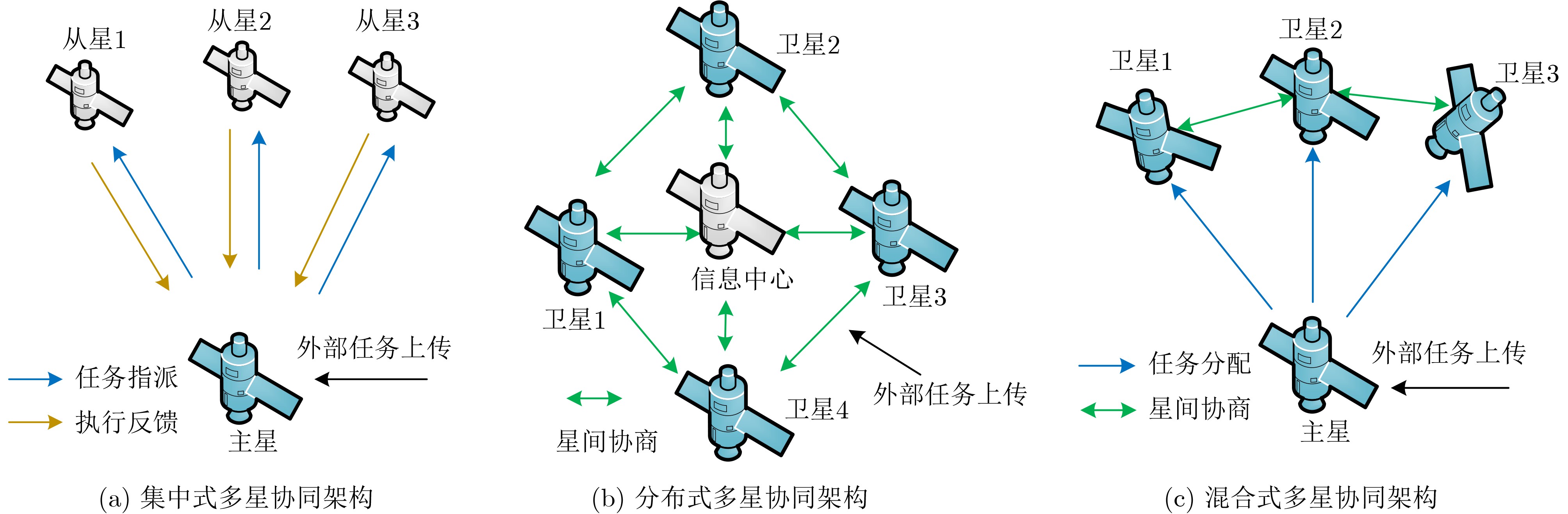
  Significance   Cooperative mission planning for imaging satellites observing moving targets is a key technique that supports the transition of space-based Earth observation systems from static regional coverage to a dynamic closed-loop paradigm consisting of wide-area search, dynamic tracking, and feedback-guided supplementary search. It plays an important role in emergency response, maritime monitoring, wide-area situational awareness, and persistent observation of high-value moving targets. The primary challenge arises from the conflict between uncertainty in future target states and the reliance of conventional mission planning models on deterministic inputs. Unlike static targets, moving targets have neither fixed locations nor fixed visibility windows. Their future states are generally represented by probability distributions, confidence regions, or grid-based target existence probabilities. Effective mission planning therefore requires not only accurate target motion prediction but also systematic integration of uncertainty into planning objectives, constraints, and replanning triggers. A comprehensive review from an uncertainty-driven perspective is therefore needed.  Progress   This survey reviews cooperative mission planning for imaging satellites observing moving targets from an uncertainty-driven perspective. Typical moving targets are classified into maritime moving targets, highly time-sensitive aerospace targets, and ground moving targets according to their operating environments, dynamic characteristics, and observation requirements. Although these target categories differ in maneuverability, prior constraints, and observation windows, they share a common planning challenge: coupling uncertain target motion with deterministic satellite observation actions under stringent platform and resource constraints. Methods for target motion prediction and spatiotemporal uncertainty representation are first reviewed. Physics-based methods characterize target state evolution using kinematic constraints, dynamic models, covariance propagation, reachable sets, and Markov state transition models. Data-driven methods learn motion patterns from historical trajectories, Automatic Identification System (AIS) data, remote sensing observations, meteorological information, and geographic constraints. From the perspective of mission planning, the utility of these methods depends on whether outputs such as covariance, target existence probability, confidence regions, and information gain can be directly incorporated into planning models. Observation task modeling, cooperative planning architectures, optimization algorithms, and closed-loop replanning mechanisms are then analyzed. Deterministic task models simplify uncertainty into trajectory points, visibility windows, or fixed geographic regions, while probabilistic task models incorporate target existence probability, belief states, and information gain into objective functions, constraints, and state transition models. Centralized, distributed, and hybrid planning architectures are compared with respect to global optimization capability, onboard autonomy, communication overhead, and response timeliness. Exact optimization methods, heuristic methods, metaheuristic algorithms, Deep Reinforcement Learning (DRL), and Large Language Model (LLM)-assisted solution strategies and algorithm design are also reviewed. Finally, state-triggered replanning, Receding Horizon Optimization (RHO), and Model Predictive Control (MPC) are summarized as representative approaches for closed-loop dynamic scheduling.  Conclusions  The reviewed studies indicate that cooperative mission planning is evolving from open-loop static scheduling to closed-loop dynamic planning. Nevertheless, several challenges remain. First, uncertainty information generated during target prediction is not fully exploited in planning decisions. Rich probabilistic information is frequently reduced to deterministic time windows, discrete trajectory points, or geometric regions, thereby limiting risk-aware task allocation. Second, distributed cooperation lacks reliable belief-state consistency. Differences in local observations may lead satellites to maintain inconsistent estimates of the same target state, resulting in redundant observations, task conflicts, and inefficient resource utilization. Third, dynamic replanning lacks unified benefit-cost criteria for determining replanning triggers. Excessively frequent replanning increases attitude maneuver time, energy consumption, and onboard storage resource use, whereas delayed replanning may fail to respond to actual target maneuvers. Fourth, LLMs have demonstrated potential for task requirement parsing, constraint modeling, heuristic generation, and algorithm design for satellite scheduling, but their application to cooperative mission planning for moving targets remains limited.  Prospects   Future research should focus on developing a more robust closed-loop planning framework. Prediction uncertainty should be incorporated directly into planning models through chance-constrained planning, belief-state planning, or Partially Observable Markov Decision Processes (POMDPs), enabling covariance, target existence probability, and information entropy to be integrated into planning objectives, constraints, and replanning triggers. Bayesian updating or sequential Bayesian filtering should use both successful detections and missed detections to continuously refine the prediction layer. Distributed cooperation requires lightweight state synchronization and belief fusion supported by compact state-sharing descriptors and event-triggered communication. Replanning decisions should be guided by information gain and benefit-cost evaluation. In addition, LLMs should be developed as verifiable auxiliary tools rather than direct replacements for optimization solvers. They can assist with task requirement structuring, constraint modeling, heuristic generation, and algorithm component design, whereas feasibility verification, solution refinement, and performance evaluation should remain the responsibility of formal verification methods, conventional optimization algorithms, and simulation environments. These research directions are expected to improve the robustness and uncertainty awareness of mission planning for satellite observation of moving targets.
Advances and Challenges in Intelligent Damage Assessment of Objects in Remote Sensing Imagery
ZHANG Yidan, FENG Yingchao, WANG Tianqi, LIU Yu, WANG Mengyu, HOU Zhongyan
2026, 48(8): 3263-3278. doi: 10.11999/JEIT251297
Abstract:
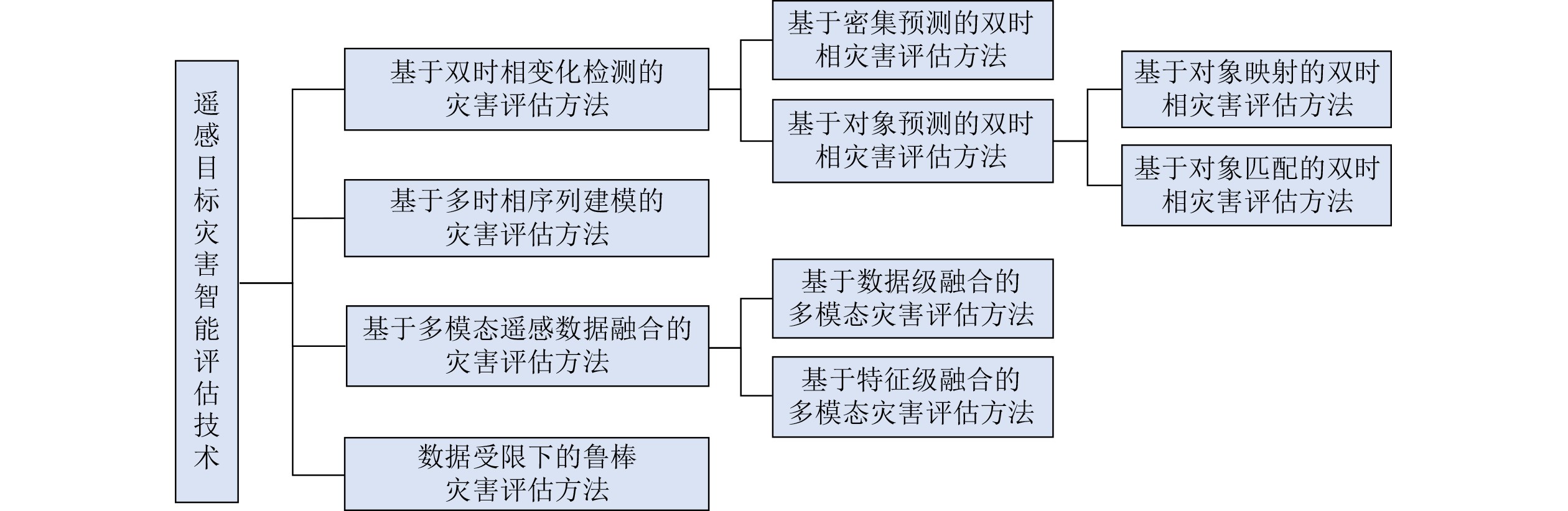
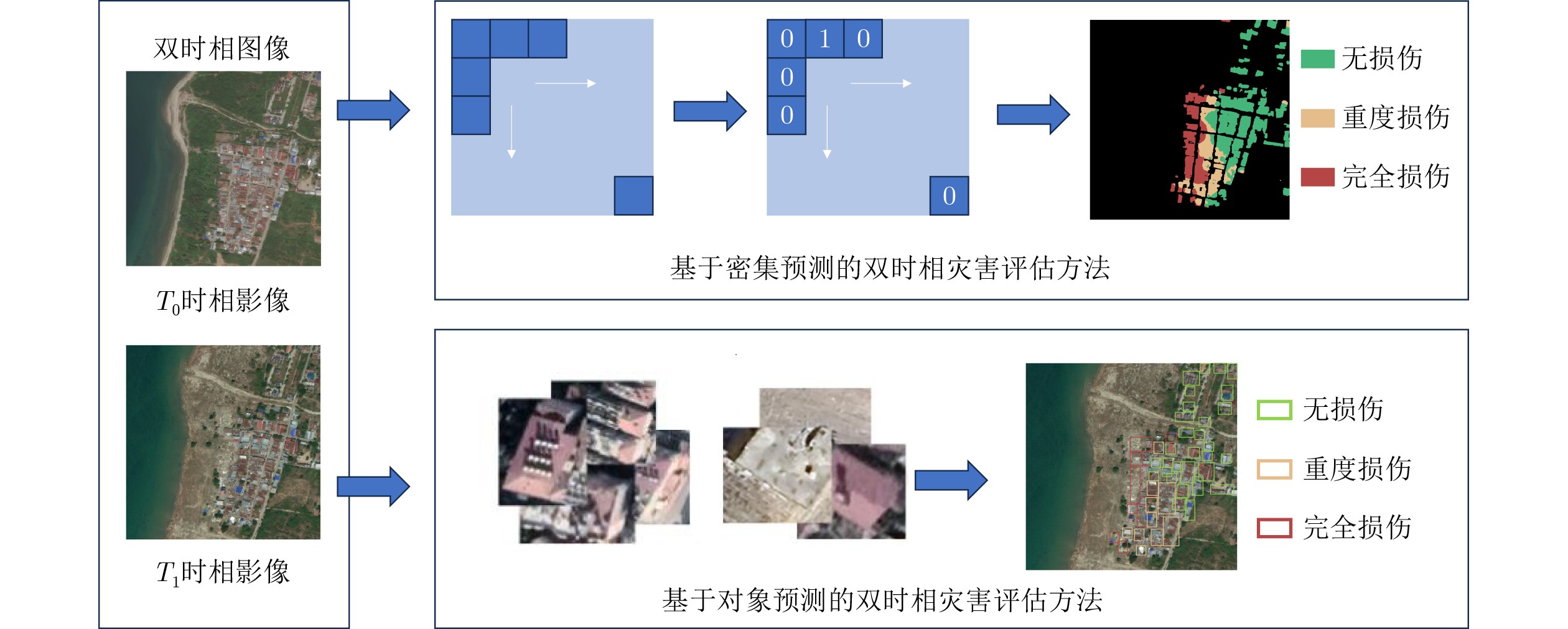
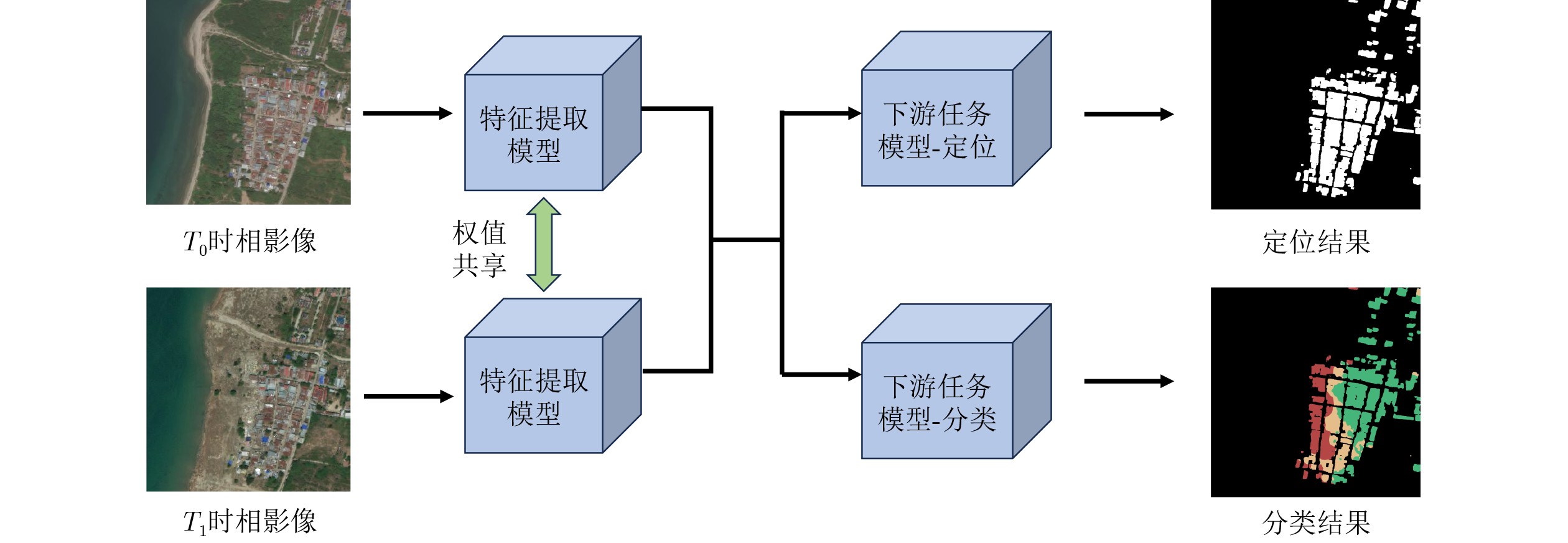
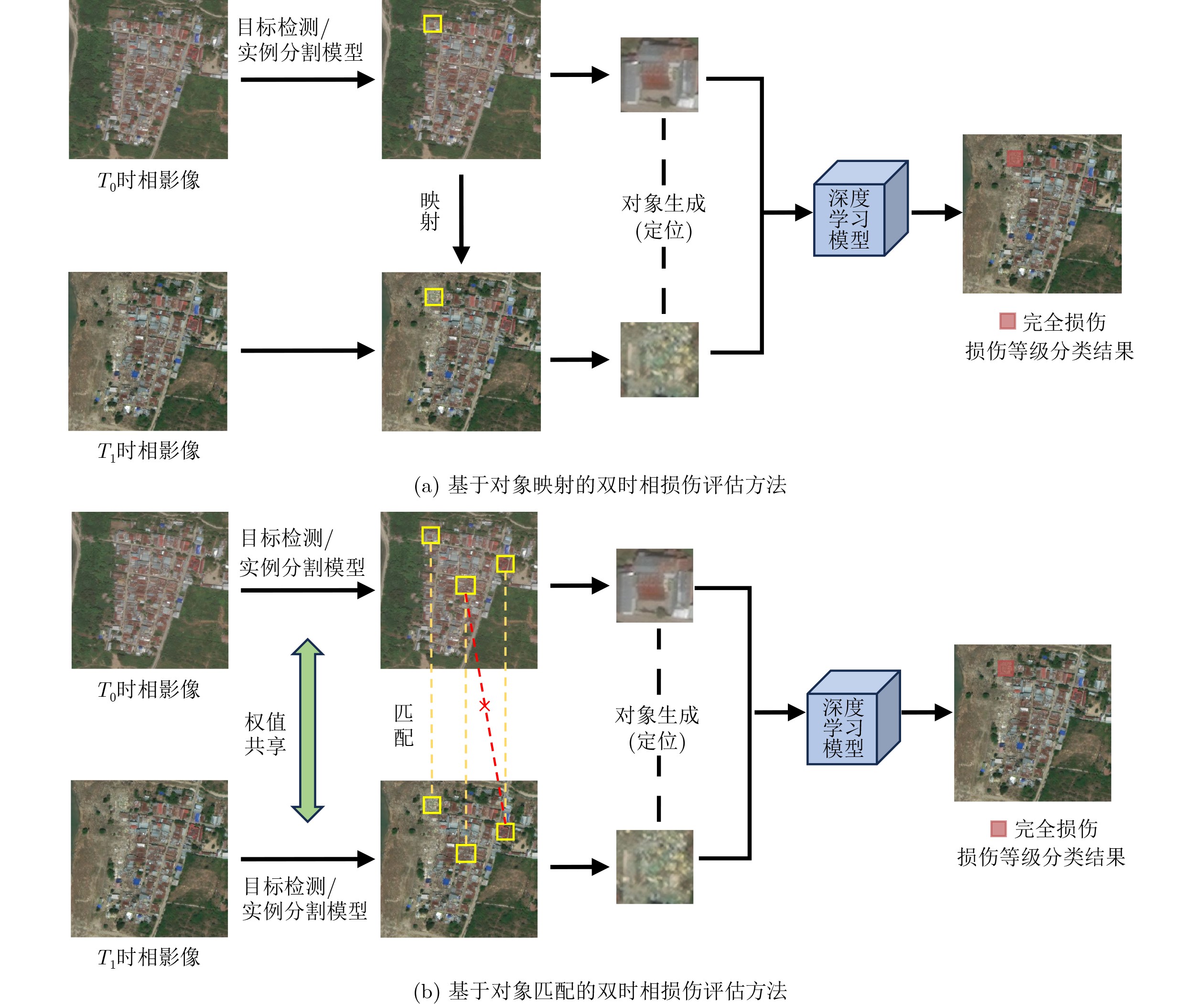
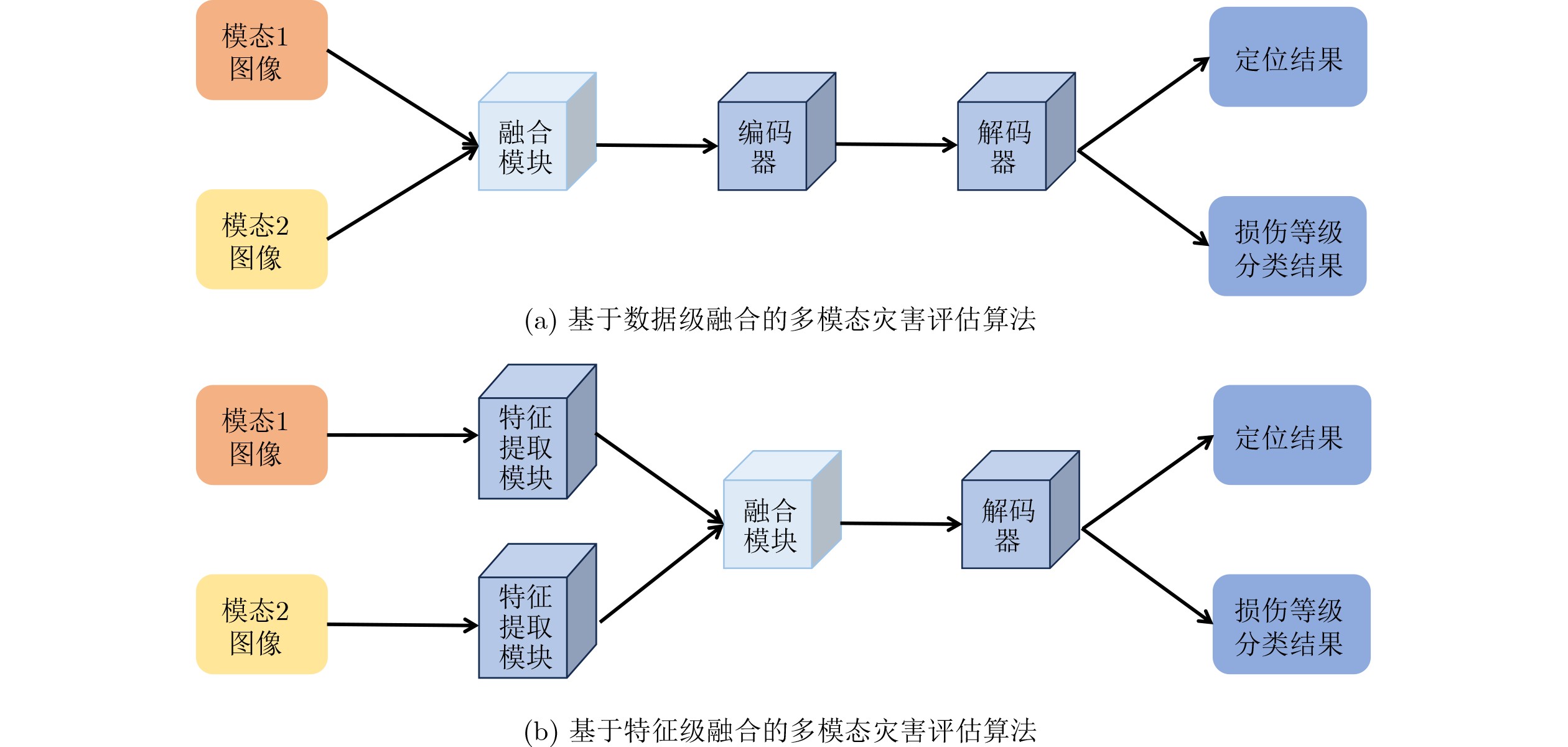
  Significance   Rapid and accurate damage assessment of high-value objects following disasters is essential for effective emergency response and post-disaster recovery. Deep learning-enabled remote sensing provides a scalable, objective, and efficient approach for assessing disaster damage over large and complex environments, including densely populated urban areas, transportation hubs, and critical infrastructure. By exploiting high-resolution satellite and aerial imagery, these methods provide timely situational awareness to support rescue prioritization and recovery planning. Despite substantial advances in algorithms and applications, the field still lacks a comprehensive review, leading to fragmented technical development and inconsistent evaluation practices. This paper systematically reviews the technical foundations of intelligent damage assessment in remote sensing, including damage classification standards, publicly available datasets, evaluation metrics, and representative deep learning methods. The review aims to facilitate the practical deployment of intelligent remote sensing technologies for disaster response under increasing natural and human-induced hazards.  Progress   Deep learning-based damage assessment methods for remote sensing imagery have advanced rapidly, with substantial improvements in assessment accuracy, automation, and scalability. Representative developments include Bi-temporal Change Detection methods, which identify damage by comparing pre-disaster and post-disaster imagery, and Multi-temporal Sequence Modeling methods, which characterize the temporal evolution of damage using image sequences. Multi-modal Data Fusion methods that integrate optical imagery, Synthetic Aperture Radar (SAR), and Light Detection And Ranging (LiDAR) data further improve damage assessment under complex imaging conditions by exploiting complementary information from multiple sensors. In addition, methods designed for data-constrained scenarios, including transfer learning, semi-supervised learning, self-supervised learning, and domain adaptation, improve model robustness and generalization when labeled data are limited. These advances substantially improve the efficiency, reliability, and applicability of intelligent damage assessment systems for emergency response and resource allocation.  Conclusions  This paper systematically summarizes the technical landscape of deep learning-based damage assessment of high-value objects in remote sensing imagery. Existing methods are categorized into four major groups: Bi-temporal Change Detection, Multi-temporal Sequence Modeling, Multi-modal Data Fusion, and methods for Data-Constrained Scenarios. Their technical characteristics, strengths, and limitations are systematically analyzed and compared. Although these methods have demonstrated promising performance in post-disaster damage assessment, several challenges remain, including limited robustness across diverse environments, insufficient exploitation of temporal and multimodal information, and inadequate generalization under limited training data. In addition, unified damage classification standards and comprehensive evaluation frameworks remain unavailable, limiting the consistency, comparability, and practical applicability of current assessment systems.  Prospects   Future research should focus on developing hierarchical collaborative frameworks for damage assessment across multiple object types, spatial scales, and functional levels to characterize both direct physical damage and cascading functional degradation. Complex environments, including airports, industrial facilities, and ports, contain static infrastructure, moving objects, and highly interconnected functional units, requiring hierarchical scene understanding and object-level reasoning. Physics-informed and hybrid learning frameworks that integrate structural mechanics, material degradation mechanisms, and domain knowledge are expected to improve model interpretability and generalization. Furthermore, lightweight model architectures and edge deployment strategies will be essential for real-time damage assessment on unmanned aerial vehicles and satellite platforms. Standardized evaluation systems that jointly consider physical damage and functional degradation will further facilitate practical deployment in emergency response and post-disaster recovery.
Special Topic on Advanced Technologies of Optoelectronic Information
Research Status and Prospects of Mid-Wavelength Infrared Superlattice Detector Technology
LIU Ming, ZHAO Yaqi, GUAN Xiaoning, ZHANG Fan, LU Pengfei
2026, 48(8): 3279-3295. doi: 10.11999/JEIT260083
Abstract:
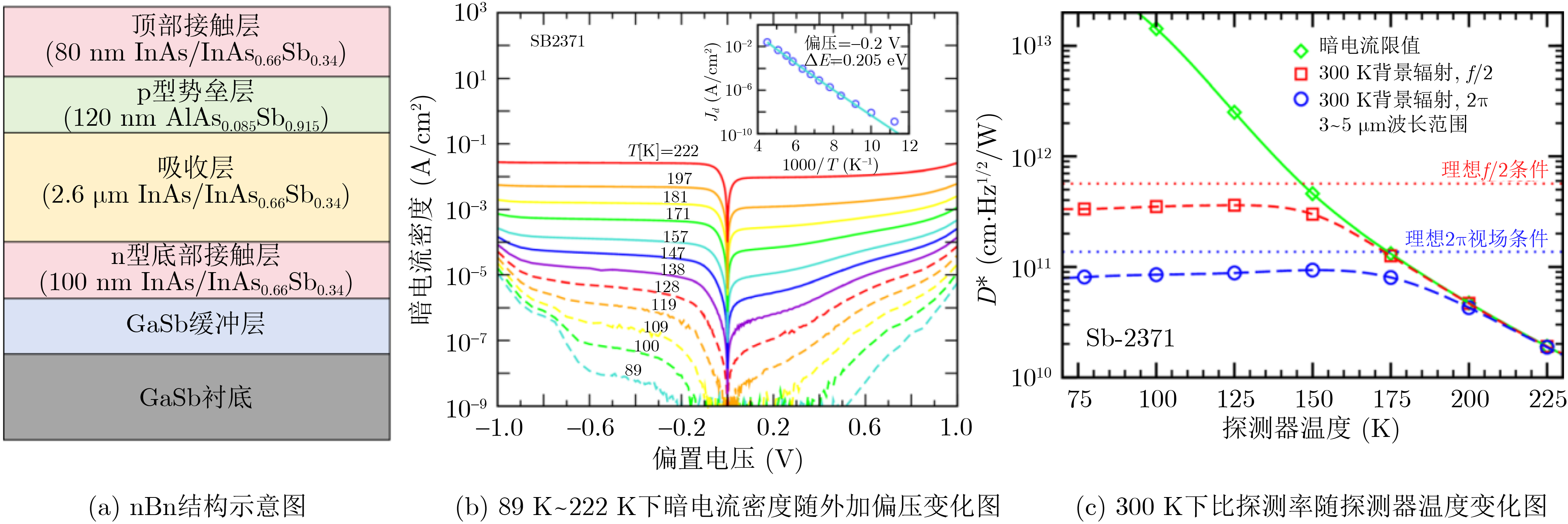
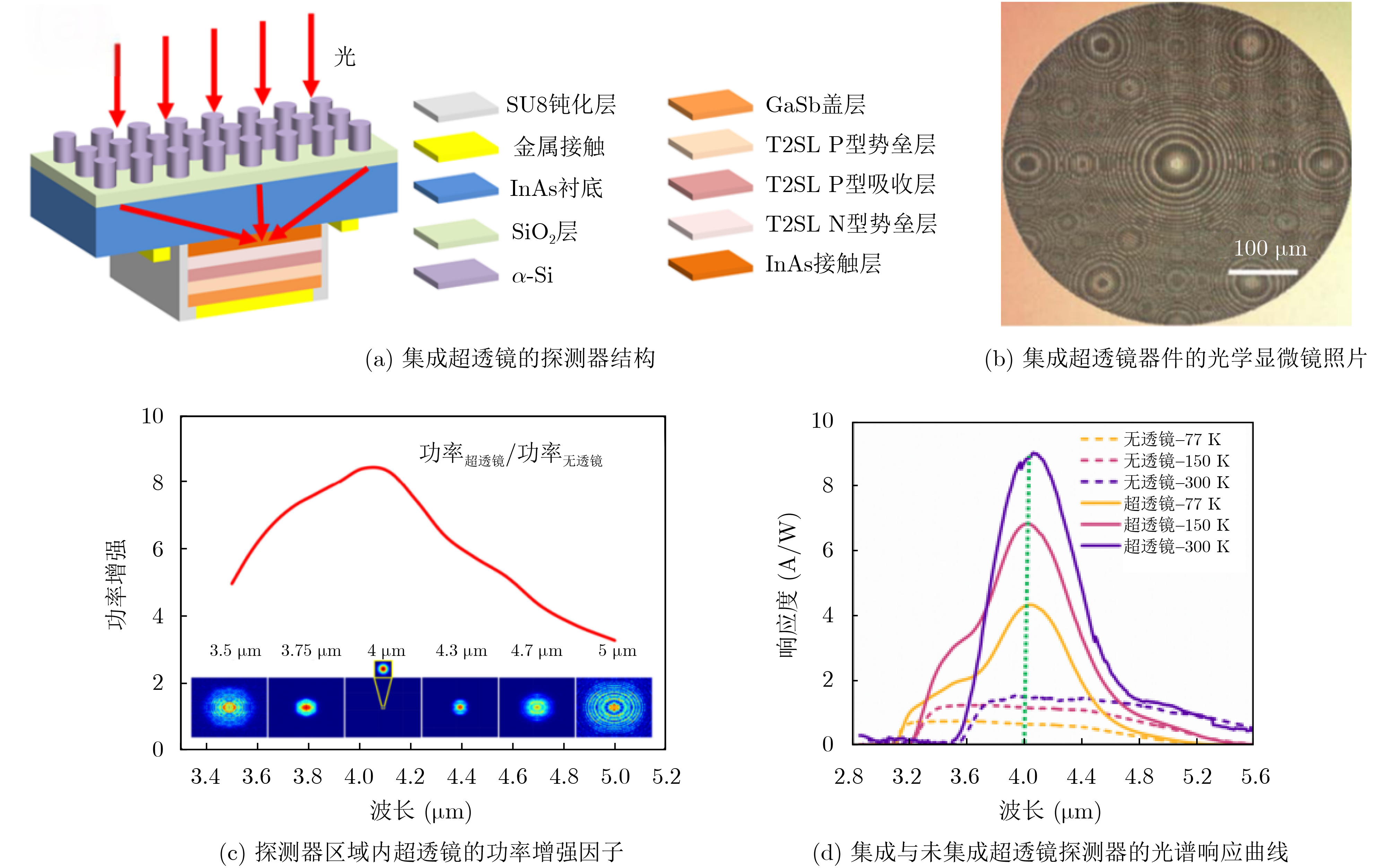
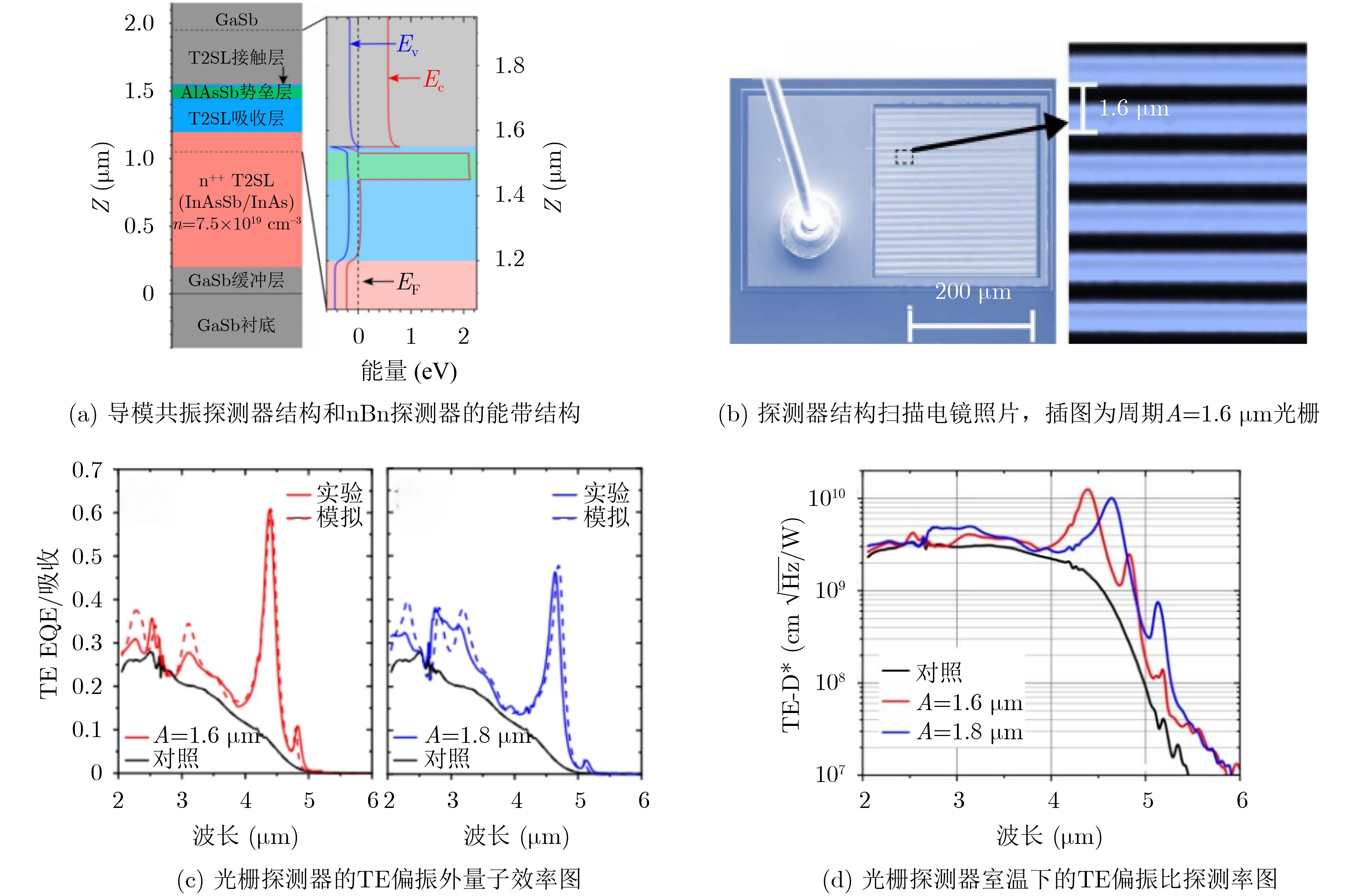
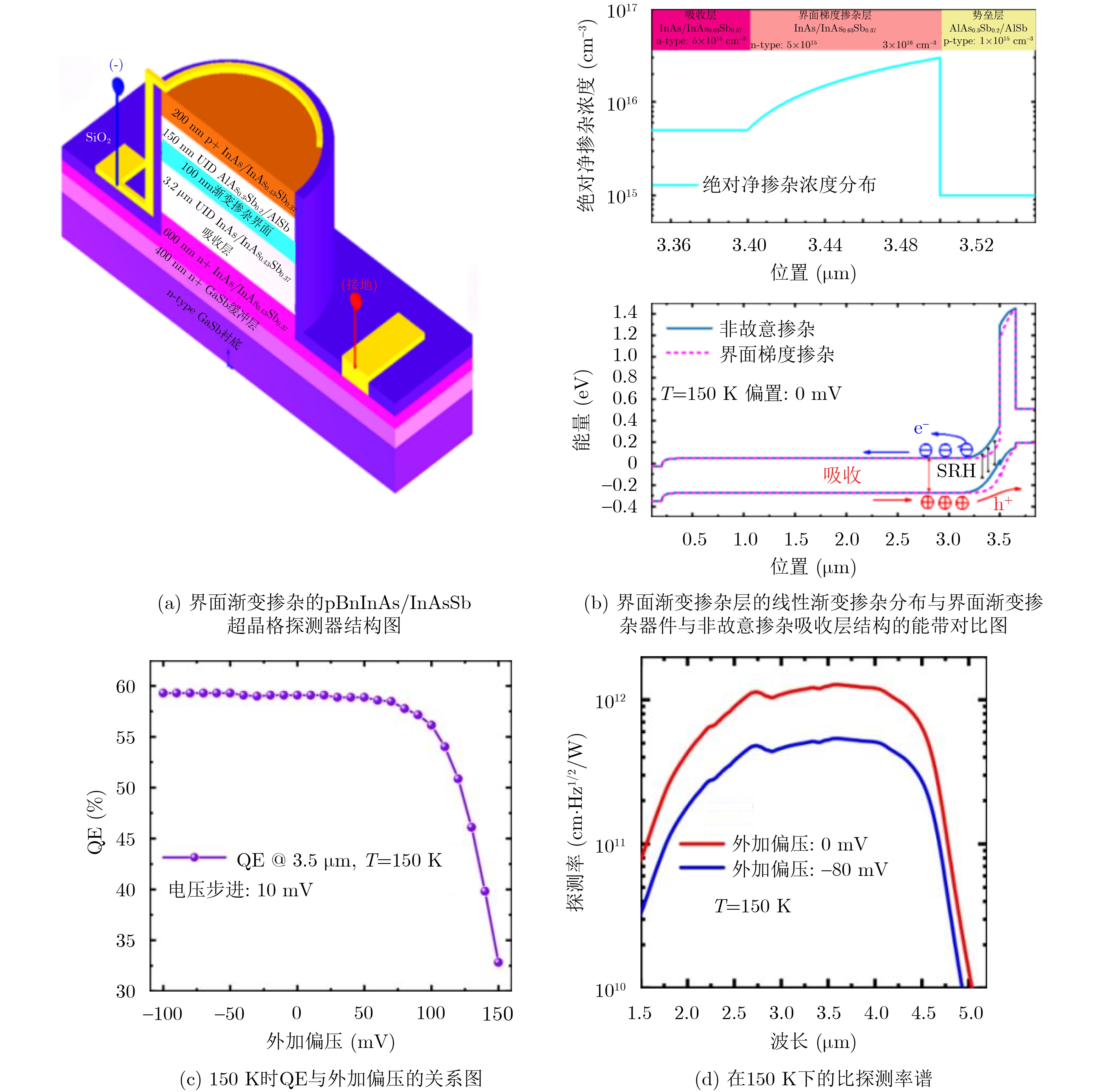
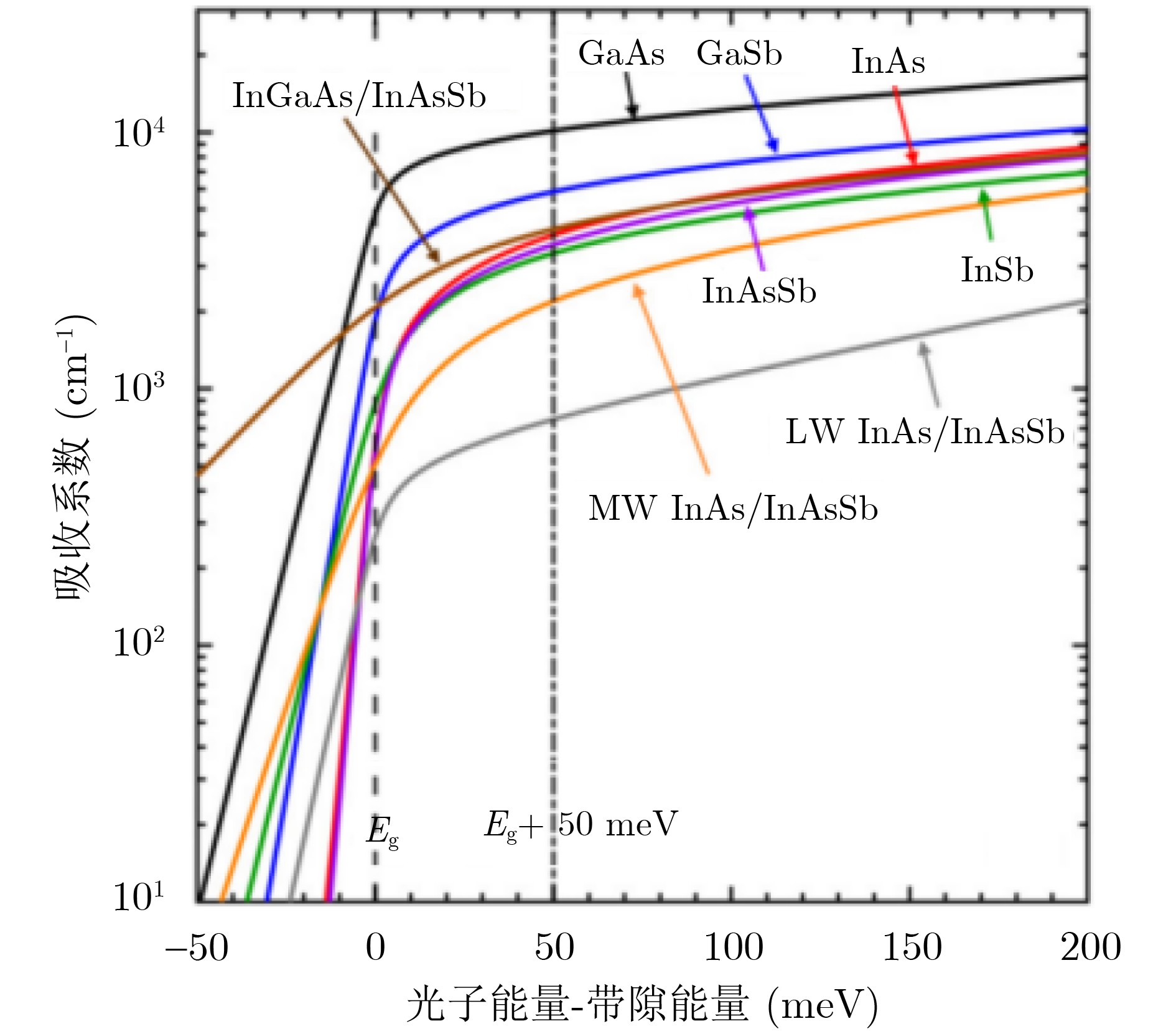
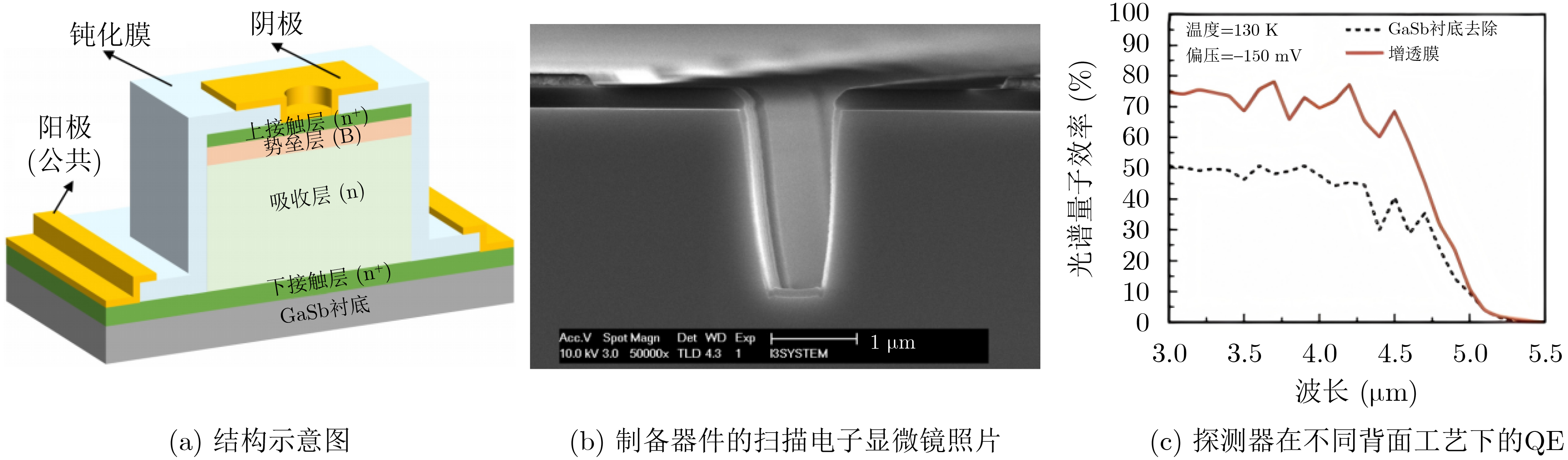
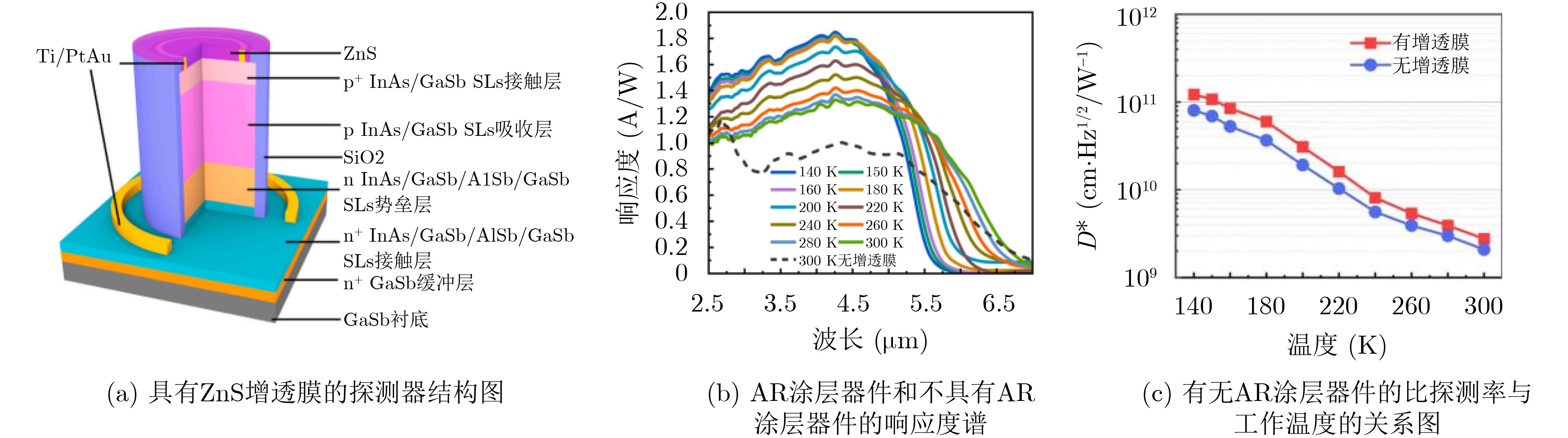
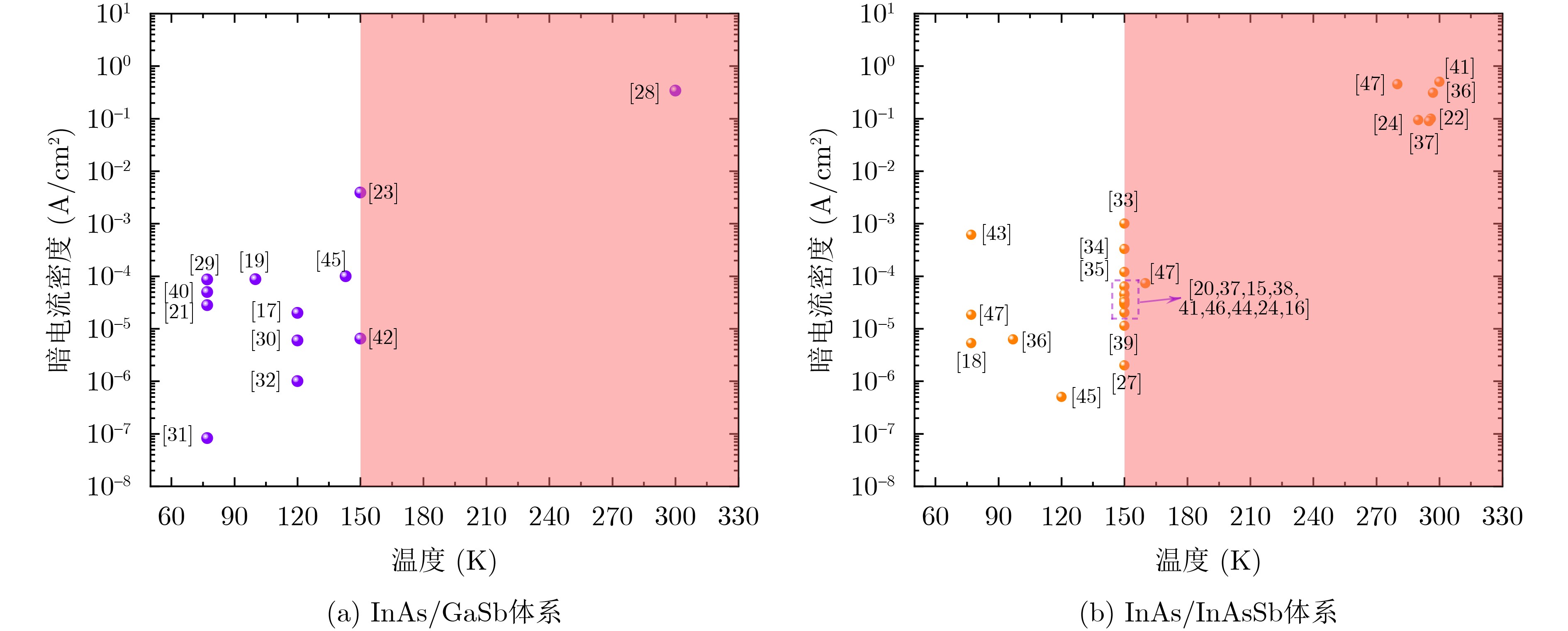
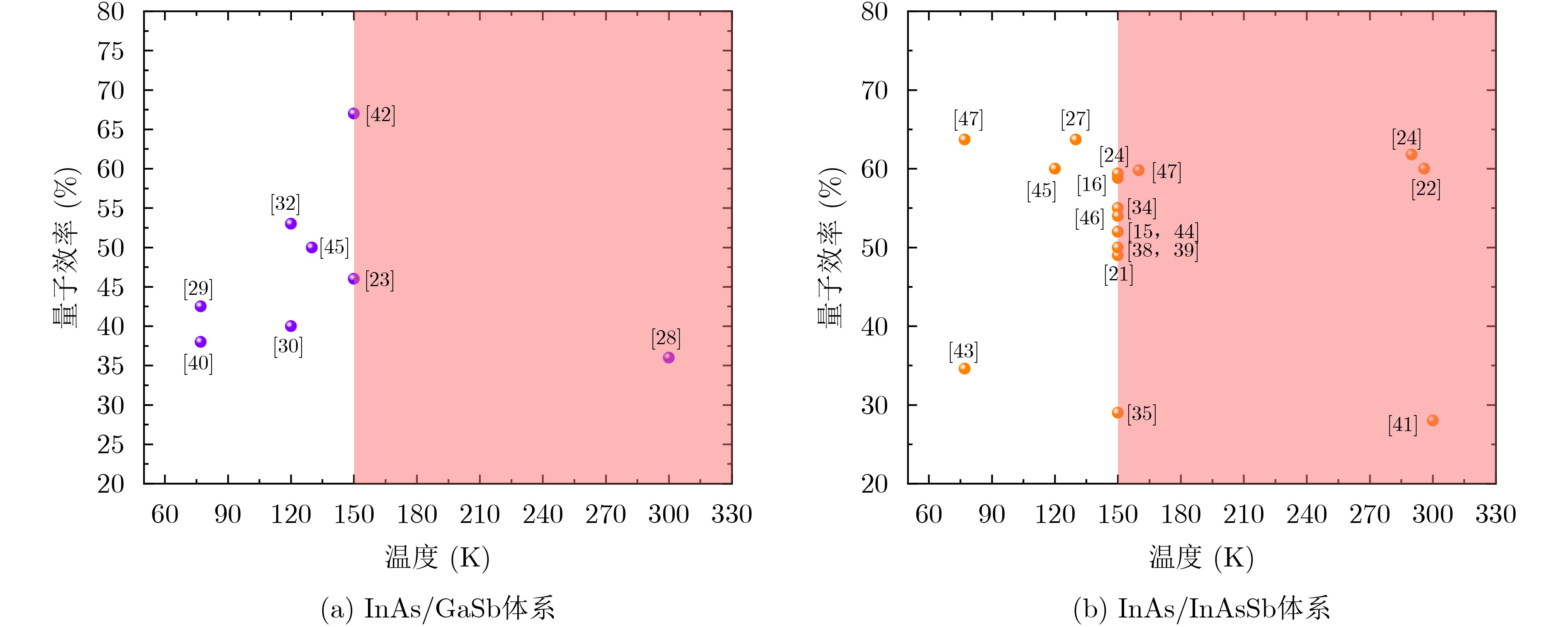
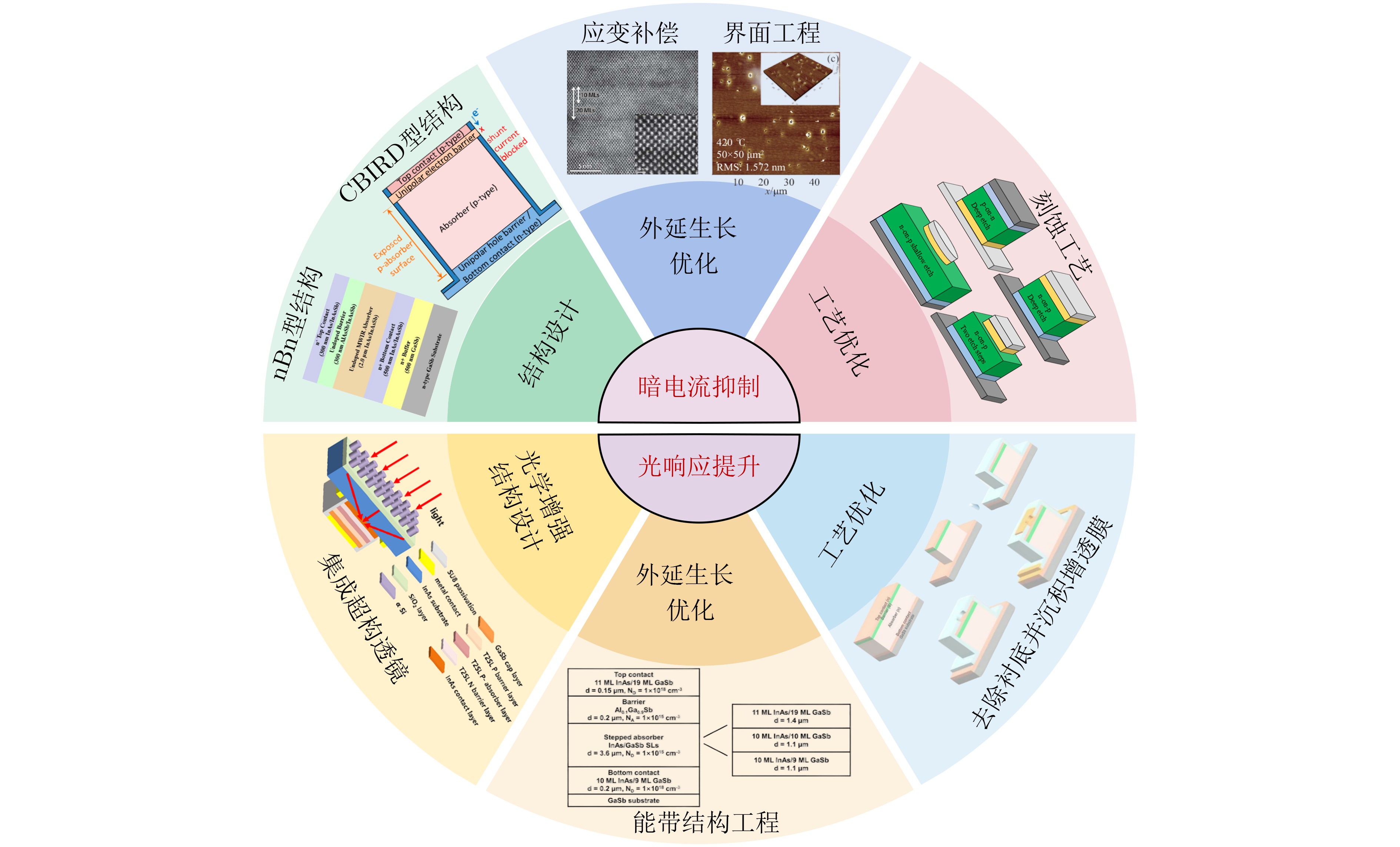
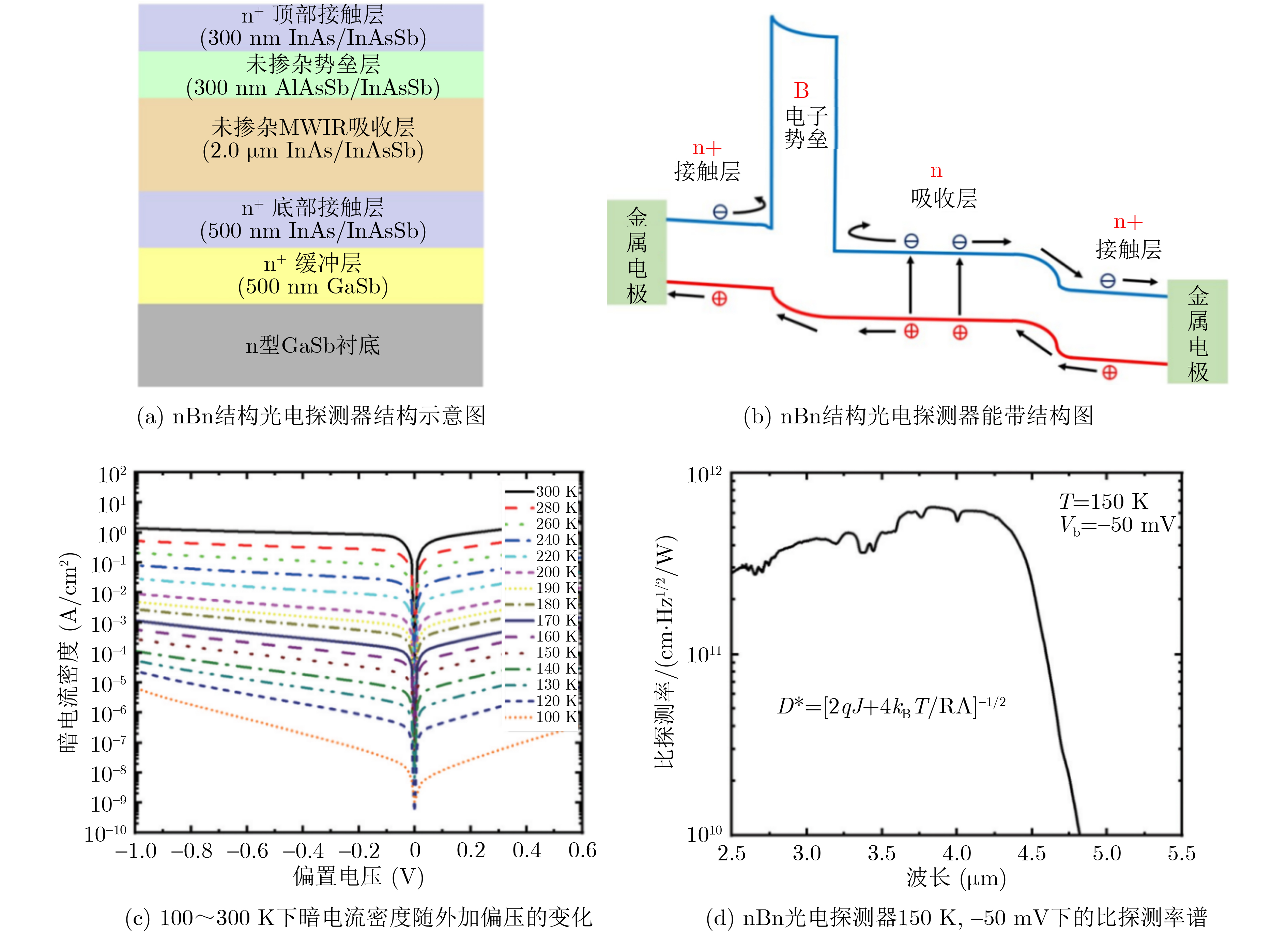
  Significance   Mid-Wavelength Infrared (MWIR) detectors are widely used in civilian and military applications because of their high sensitivity and excellent temperature discrimination. Type-II SuperLattice (T2SL) materials, especially the InAs/GaSb and InAs/InAsSb systems, have become promising candidates for third-generation infrared photodetectors. This review systematically analyzes the research status and future trends of MWIR T2SL detector technology. It focuses on key photoelectric parameters, including Quantum Efficiency (QE), dark current density, and Specific Detectivity (D*). This work provides a reference for material selection and performance optimization in this rapidly developing field.  Progress   Considerable progress has been made in dark current suppression and photoresponse enhancement for MWIR T2SL detectors. For dark current suppression, advanced barrier structures, such as nBn, XBn, and M-structures, are designed through band-structure engineering. These structures effectively block majority-carrier transport while allowing efficient collection of photogenerated carriers. For instance, an nBn device with an AlAsSb/InAsSb superlattice barrier shows a dark current density of 2.01×10⁻⁵ A/cm2 at 150 K (Fig. 2(c)). Strain compensation and optimized epitaxial growth further reduce bulk dark current. One device achieves a dark current density of 4.5×10⁻⁷ A/cm2 at 140 K (Fig. 4(f)). Device process optimization, including two-step etching and Zn-diffusion-based planar junction formation, also reduces surface leakage current (Fig. 5, Fig. 6). For photoresponse enhancement, the main strategies include micro/nano-optical structure integration, epitaxial growth optimization, and device process improvement. Monolithically integrated metalenses increase the peak responsivity to 9.01 A/W at 300 K (Fig. 7(d)). Guided-mode resonance architectures enable a room-temperature External Quantum Efficiency (EQE) of approximately 60% (Fig. 8(c)). Epitaxial optimization, including stepped absorption layers and interfacial graded doping, increases the QE to 59.4% at 150 K (Fig. 10(c)). Device process optimization, such as substrate removal and Anti-Reflection (AR) coating deposition, also improves QE. An average QE of 63.7% is reported in the 3.7~4.8 μm range (Fig.13(c)). Comparative analysis shows that InAs/GaSb detectors are mainly reported at 77~150 K, whereas InAs/InAsSb detectors show stronger potential for higher-temperature operation, especially near 150 K (Fig. 15, Fig. 16). Overall, at 150K, dark current densities are generally suppressed below 10–4 A/cm2, and peak QEs approach 70%.  Conclusions  T2SL materials, with tunable band structures and low Auger recombination rates, have become a core material platform for high-performance MWIR detection. Current studies have addressed key challenges in dark current suppression and photoresponse enhancement. Through advanced barrier design and device process optimization, dark current densities have been suppressed to the 10–6 A/cm2 level at approximately 150 K. Through optical and epitaxial engineering, QEs have been increased to approximately 60% or higher. The InAs/InAsSb material system is particularly promising for High-Operating-Temperature (HOT) applications.  Prospects  Future development will focus on four main directions. First, the HOT limit should be further increased, with the goal of maintaining diffusion-limited performance at 180 K or higher. Second, large-format Focal Plane Arrays (FPAs) should be developed based on highly uniform material growth through mature Molecular Beam Epitaxy (MBE), aiming for pixel operability higher than 99%. Third, multicolor and multispectral detection should be expanded by precisely tuning superlattice periods, enabling integrated dual-band or multiband MWIR detection with reduced crosstalk. Fourth, new device architectures and coupled physical mechanisms should be explored to extend detector performance and application boundaries.
CRLB Optimization for O-RIS-Assisted VLP Systems
ZHANG Zengjie, WU Qi, ZHANG Jian, DUAN Ruijie, FENG Yunhan
2026, 48(8): 3296-3305. doi: 10.11999/JEIT260120
Abstract:
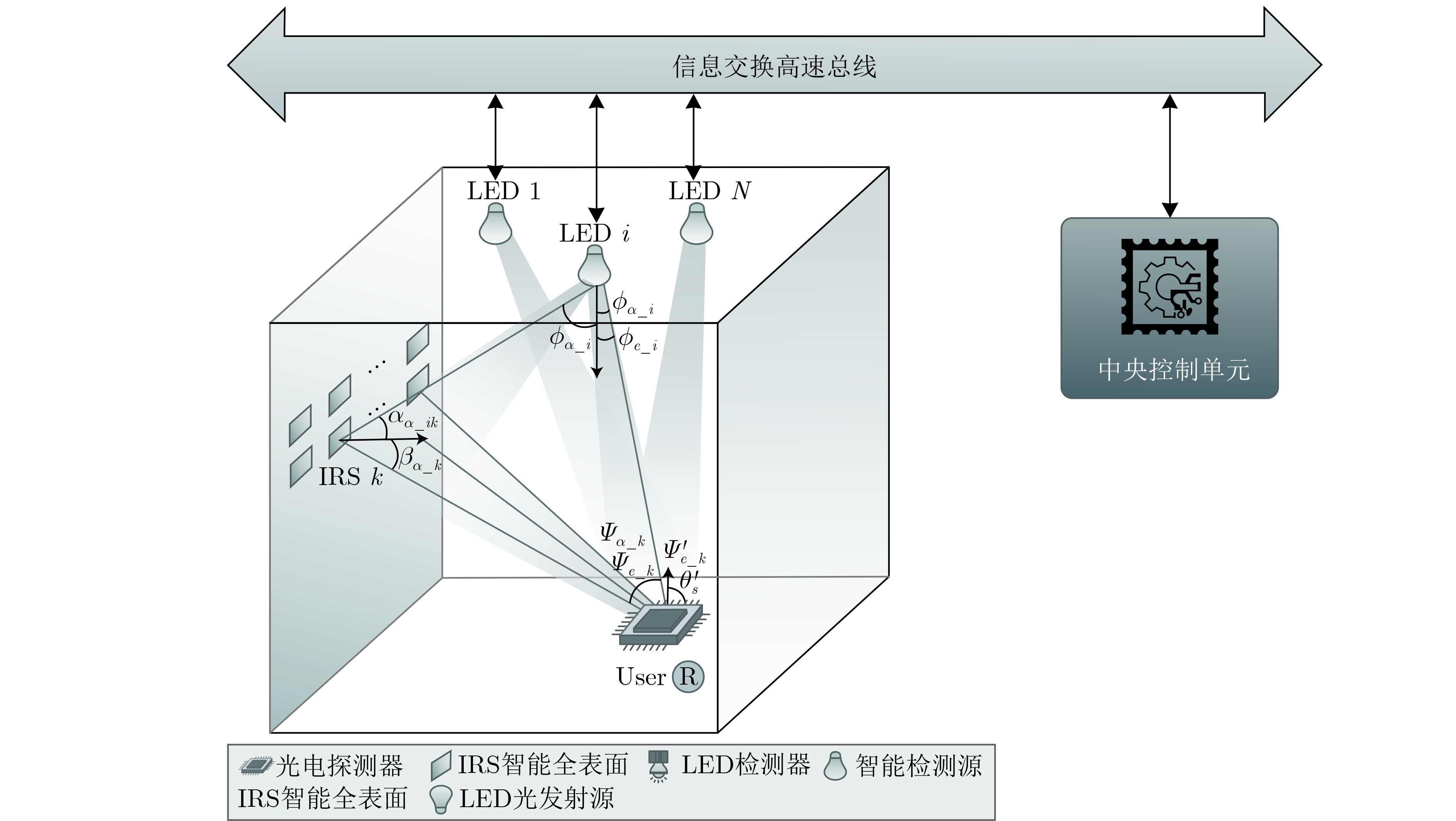
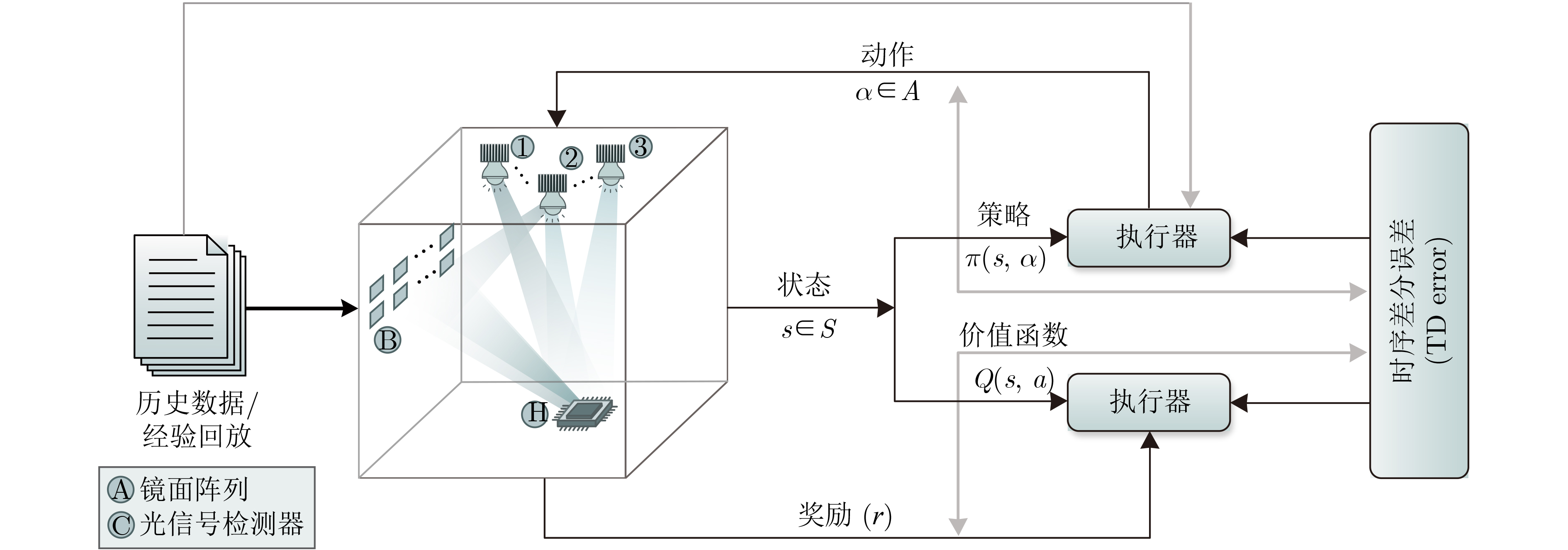
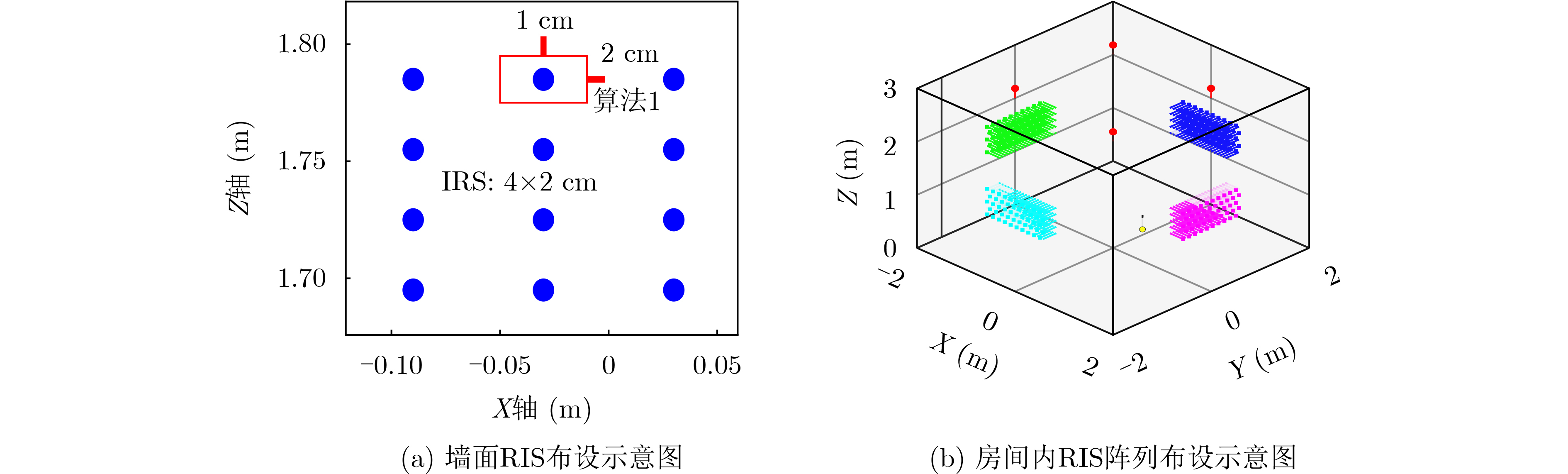
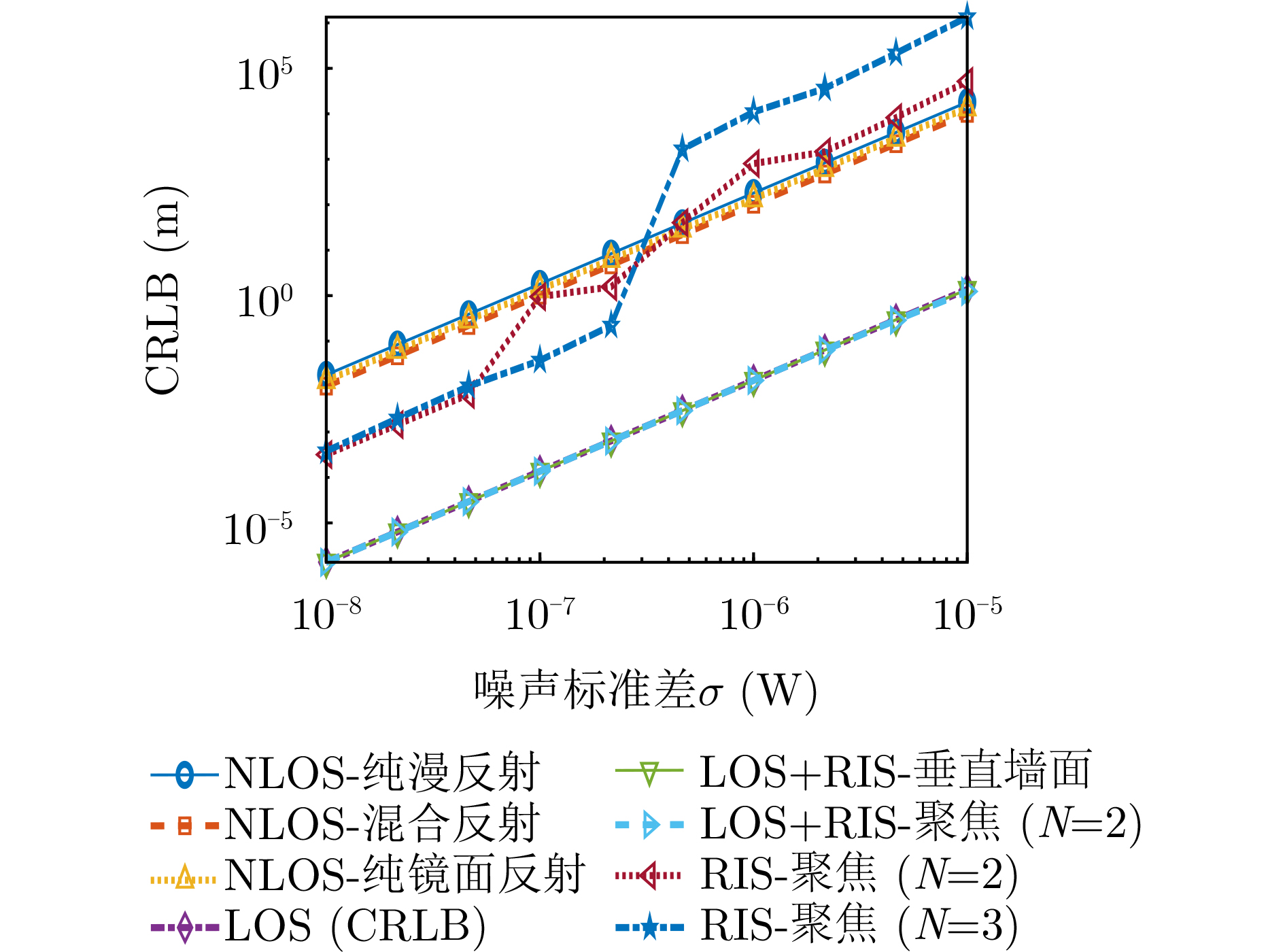
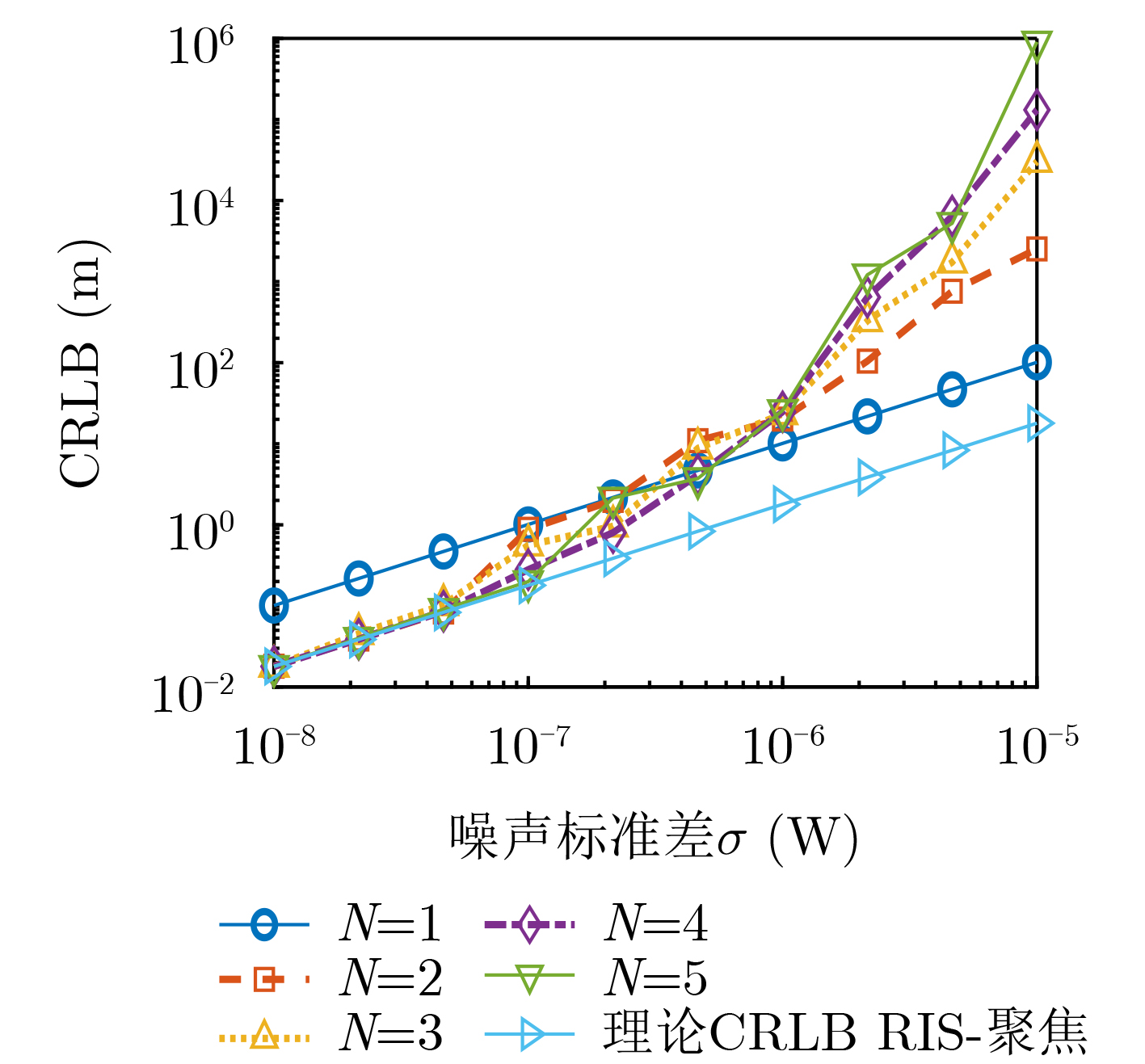
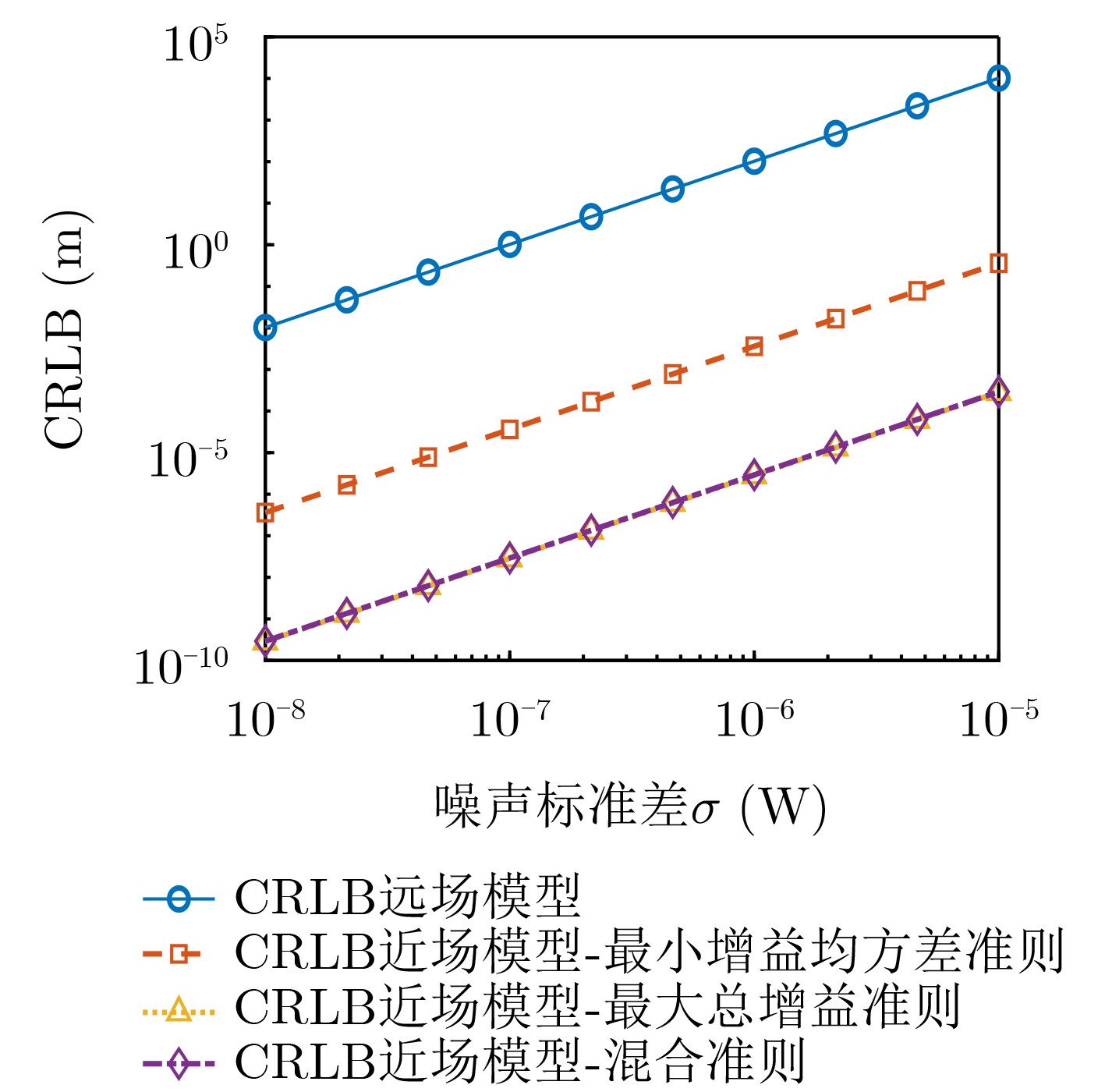
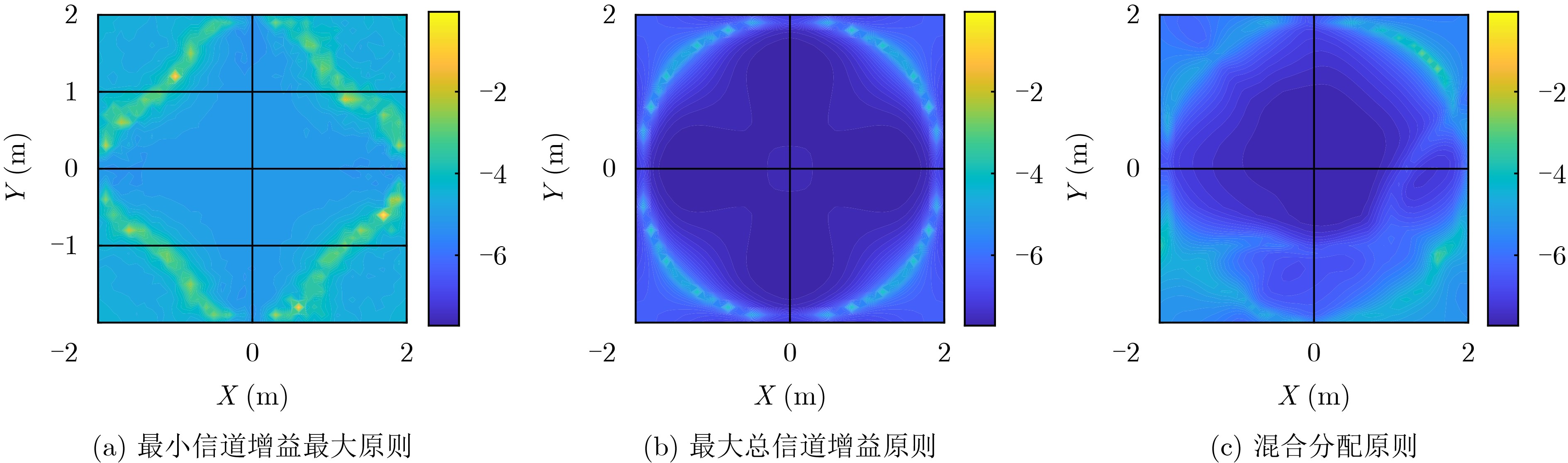
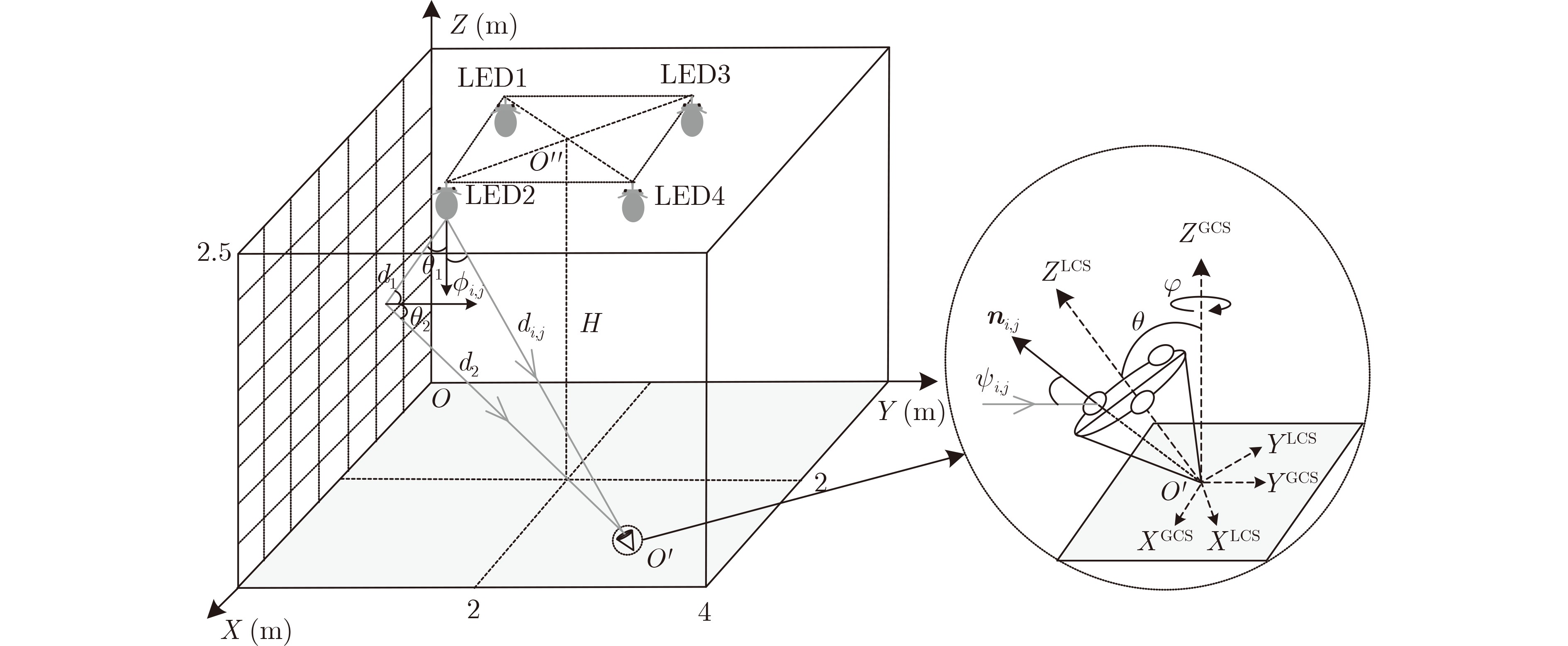
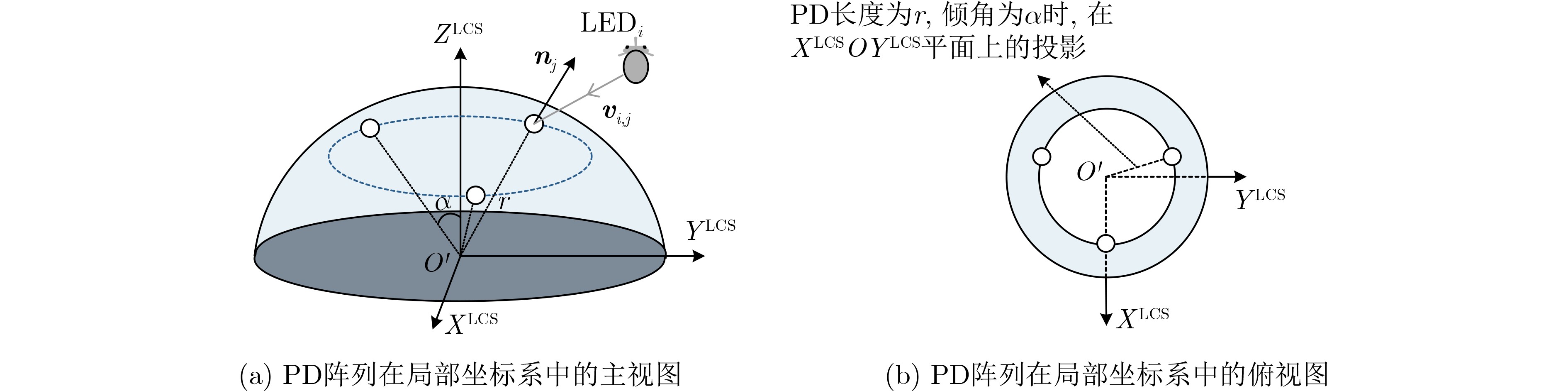
  Objective  Visible Light Positioning (VLP) has become a promising high-accuracy technology for indoor location-based services. Optical Reconfigurable Intelligent Surface (O-RIS) technology can improve signal coverage and positioning performance in VLP systems. However, positioning accuracy and spatial fairness remain difficult to optimize in O-RIS-assisted VLP systems. This study optimizes the Cramer-Rao Lower Bound (CRLB) under both near-field and far-field channel models. The aim is to improve overall positioning accuracy and regional fairness through O-RIS configuration.  Methods  Under the far-field channel model, O-RIS orientation optimization is formulated as a received-power maximization problem. A positioning algorithm that combines Particle Swarm Optimization (PSO) with the N-step positioning algorithm is proposed. This method dynamically adjusts O-RIS orientation without prior knowledge of the receiver position. Under the near-field channel model, the allocation problem between O-RIS elements and Light-Emitting Diodes (LEDs) is formulated as a Markov Decision Process (MDP). A reinforcement learning method based on experience replay and knowledge use is designed to solve this problem. The method minimizes the CRLB while maintaining positioning fairness for users in different regions.  Results and Discussions  Simulation results show that the proposed algorithms improve positioning performance under both channel models. In the far-field model, the PSO-based iterative algorithm dynamically optimizes O-RIS orientation and improves positioning accuracy. The convergence behavior of the N-step positioning algorithm further shows that the method approaches the theoretical CRLB under high signal-to-noise ratios (Fig. 4, Fig. 5). In the near-field model, the reinforcement learning method reduces the CRLB and improves positioning fairness across the whole area. It also reduces performance differences among users in different regions (Fig. 6, Fig. 7, Fig. 8). The MERAC-based reinforcement learning procedure for intelligent resource allocation is summarized in Algorithm 1.  Conclusions  CRLB optimization methods for O-RIS-assisted VLP systems are investigated under near-field and far-field channel models. In the far-field scenario, a PSO-based iterative algorithm is proposed to optimize O-RIS orientation and improve positioning accuracy without prior receiver-location information. In the near-field scenario, a reinforcement learning-based method is designed to optimize O-RIS element-LED allocation. This method minimizes the CRLB and improves regional positioning fairness. Simulation results verify the effectiveness of the proposed algorithms under both models. Future work may consider more practical channel impairments and multi-user scenarios to improve system robustness and scalability.
Finite-time Adaptive Sliding Mode Control of Servo Motors Considering Frictional Nonlinearity and Unknown Loads
ZHANG Tianyu, GUO Qinxia, YANG Tingkai, GUO Xiangji, MING Ming
2026, 48(8): 3306-3316. doi: 10.11999/JEIT250521
Abstract:
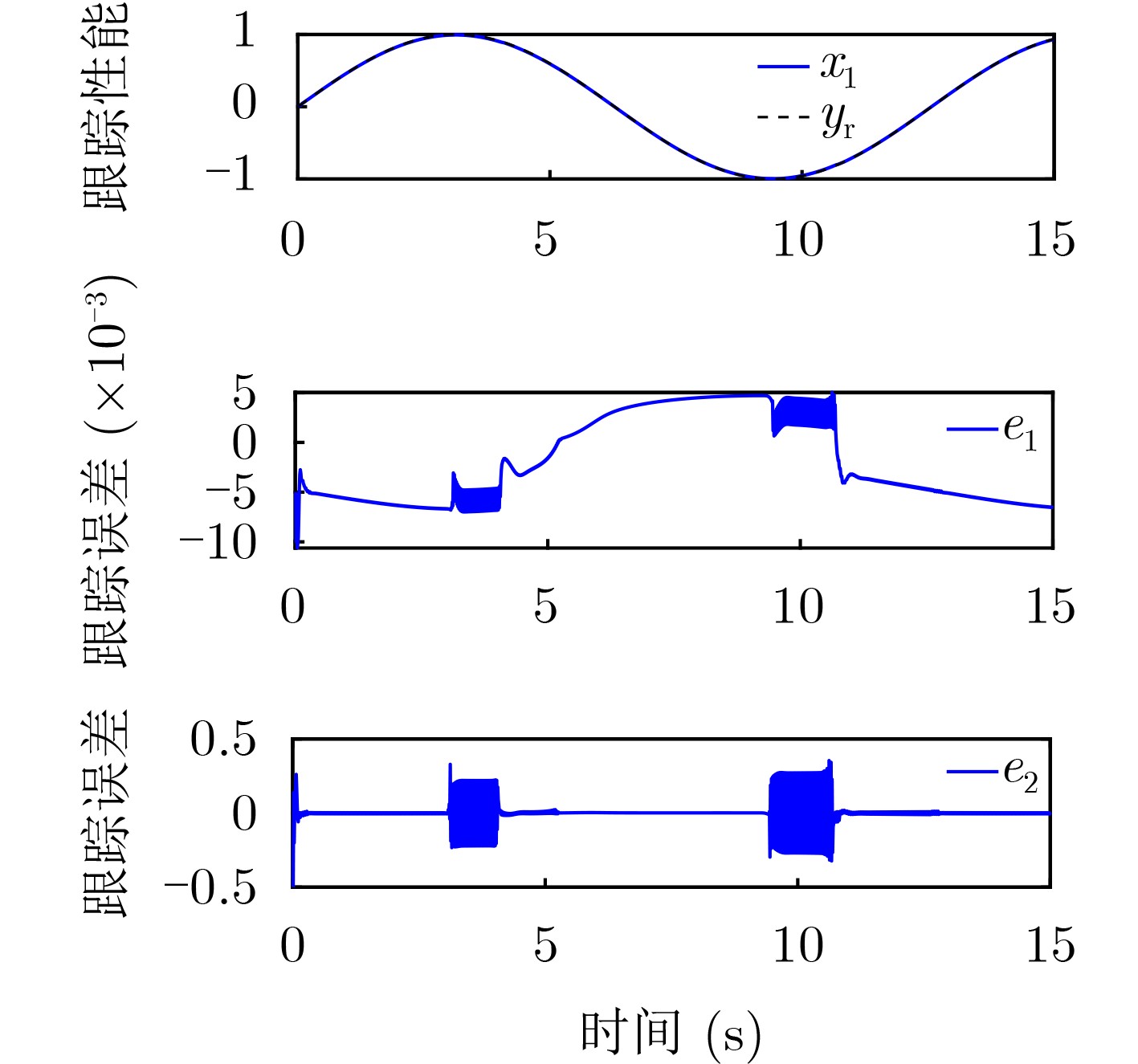
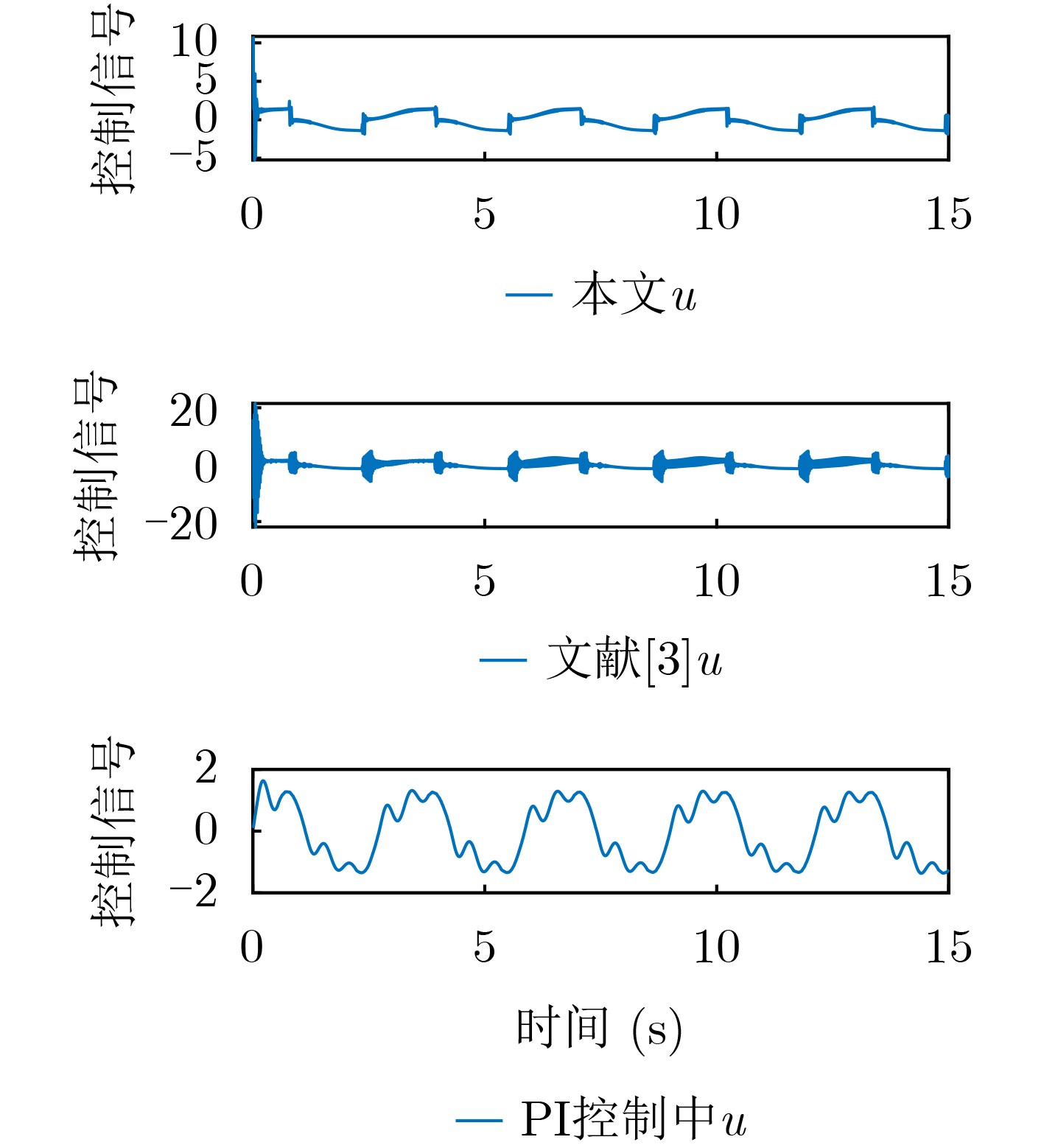
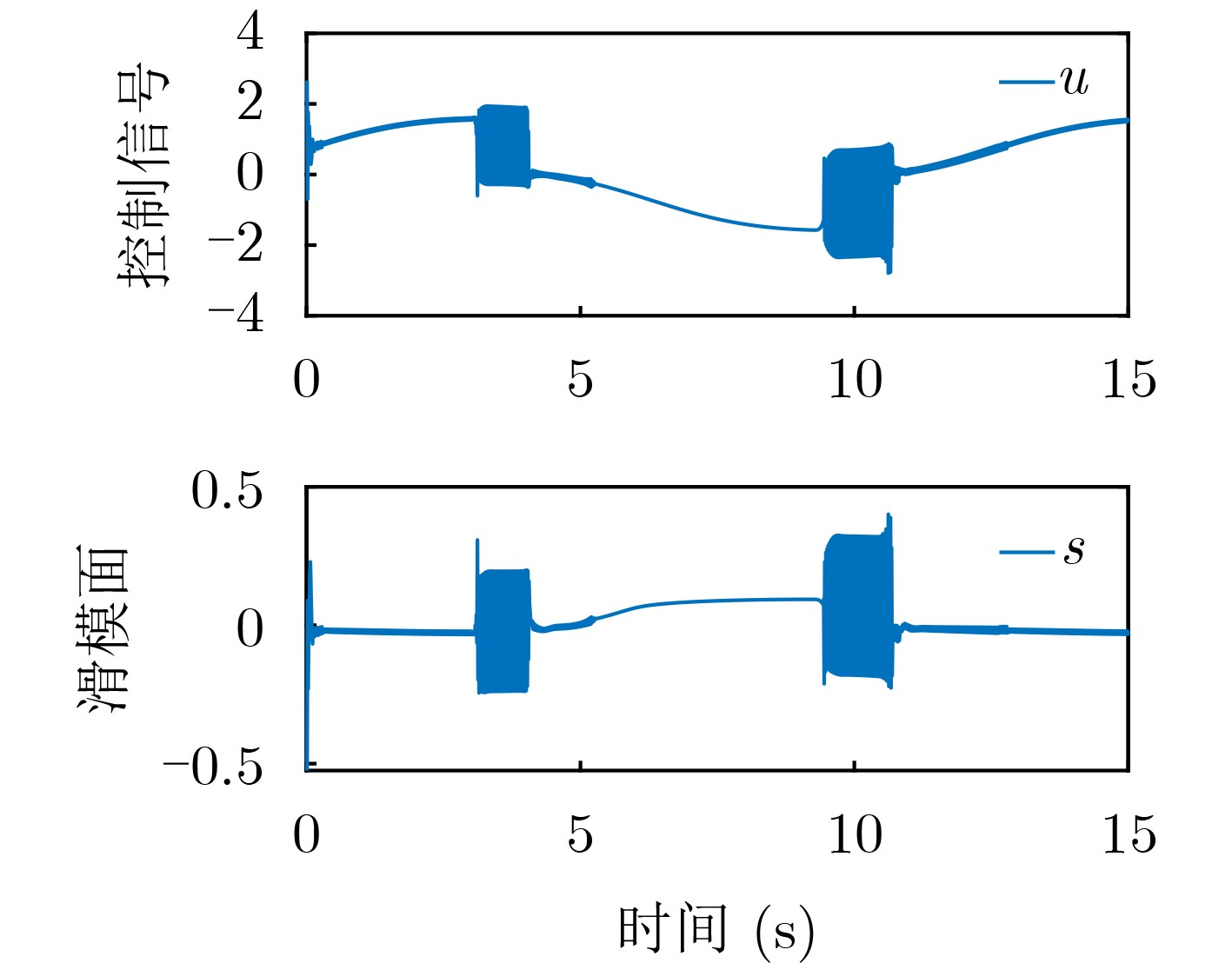
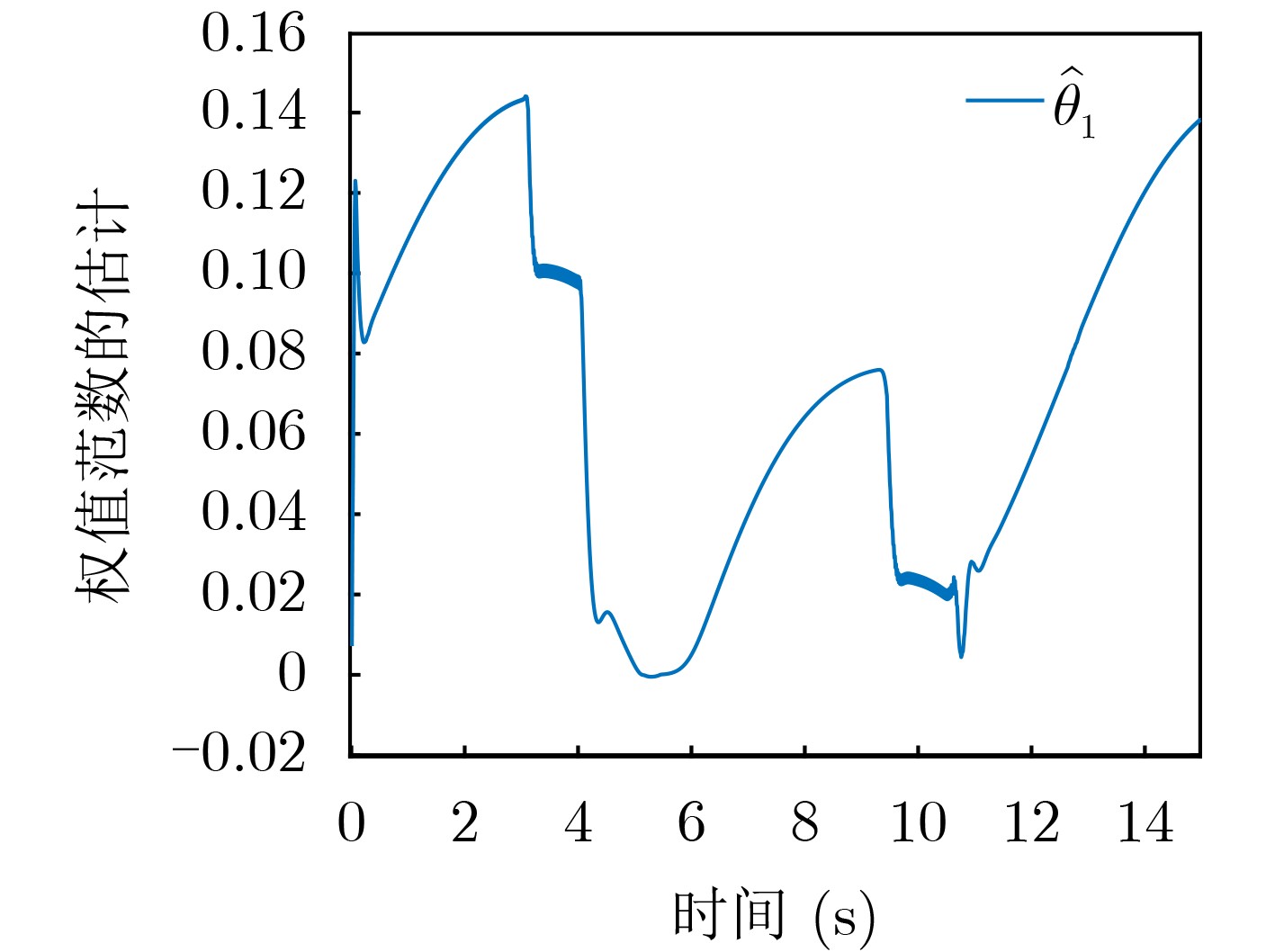
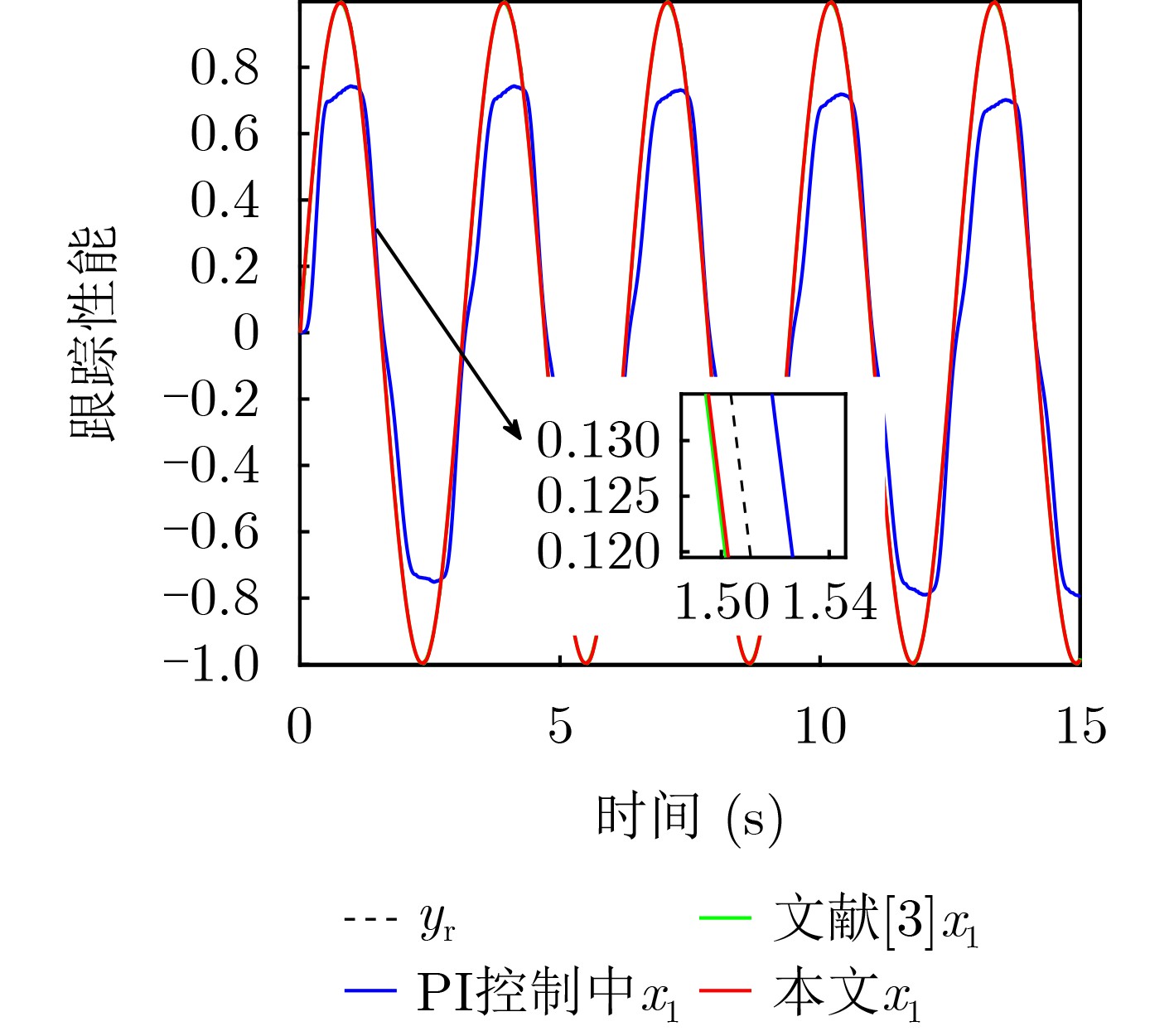
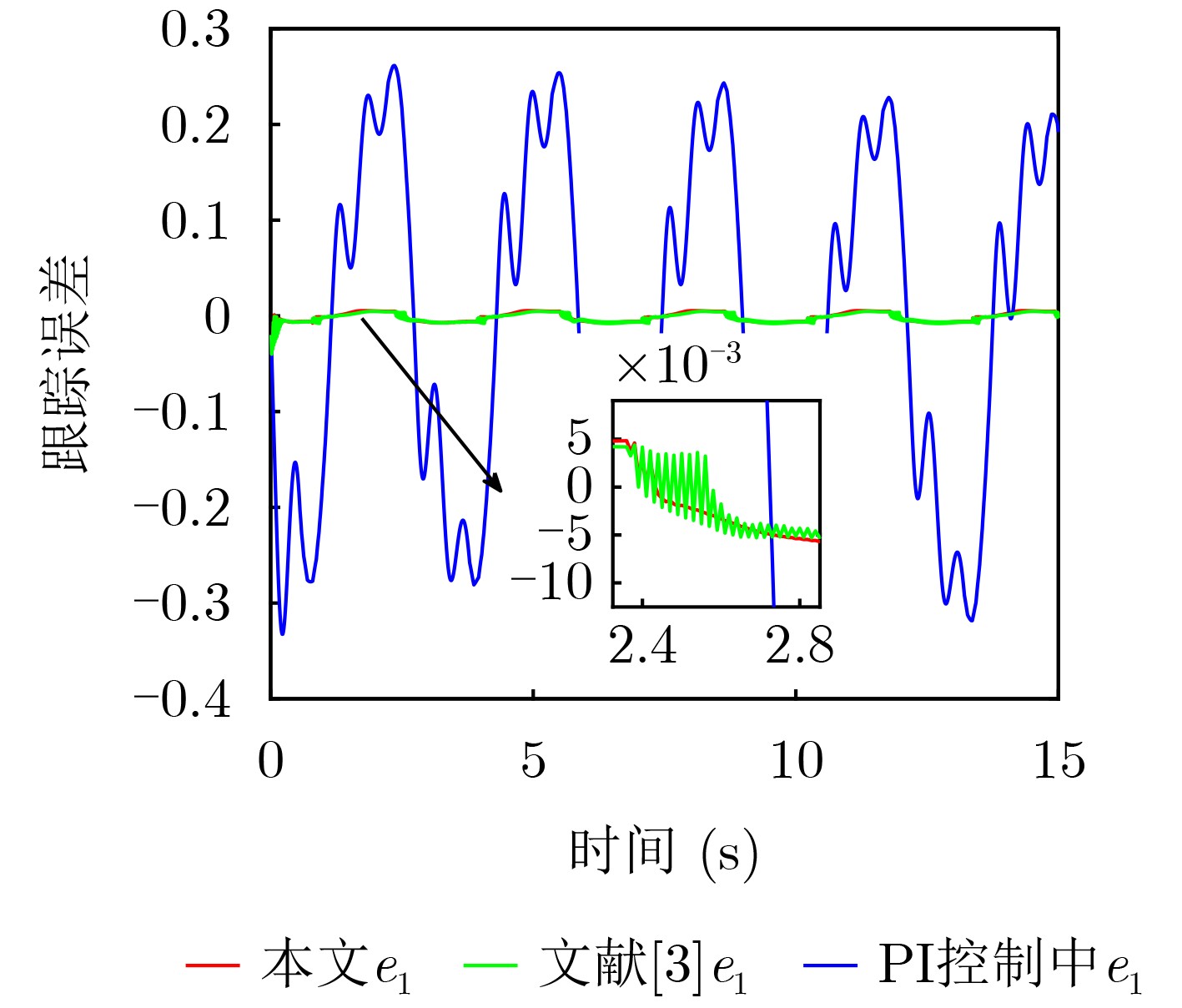
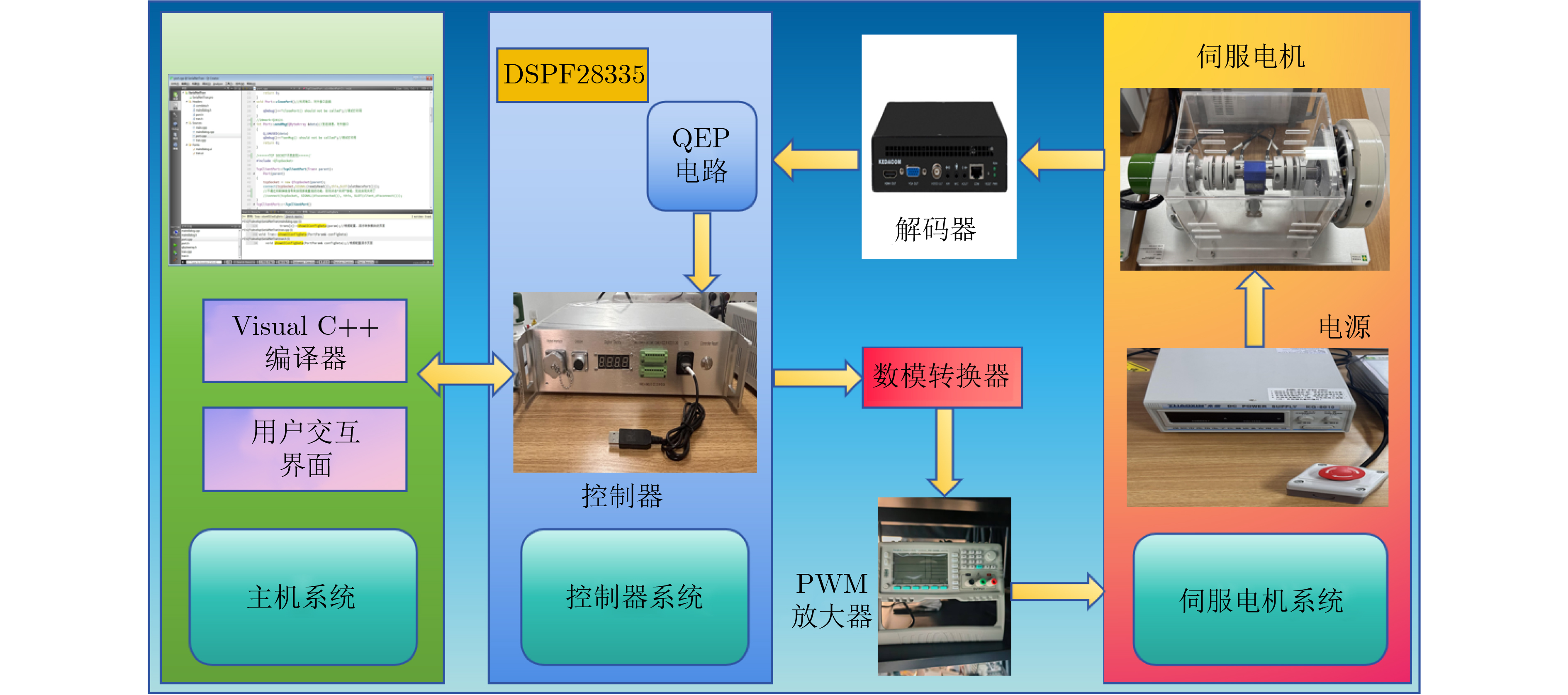
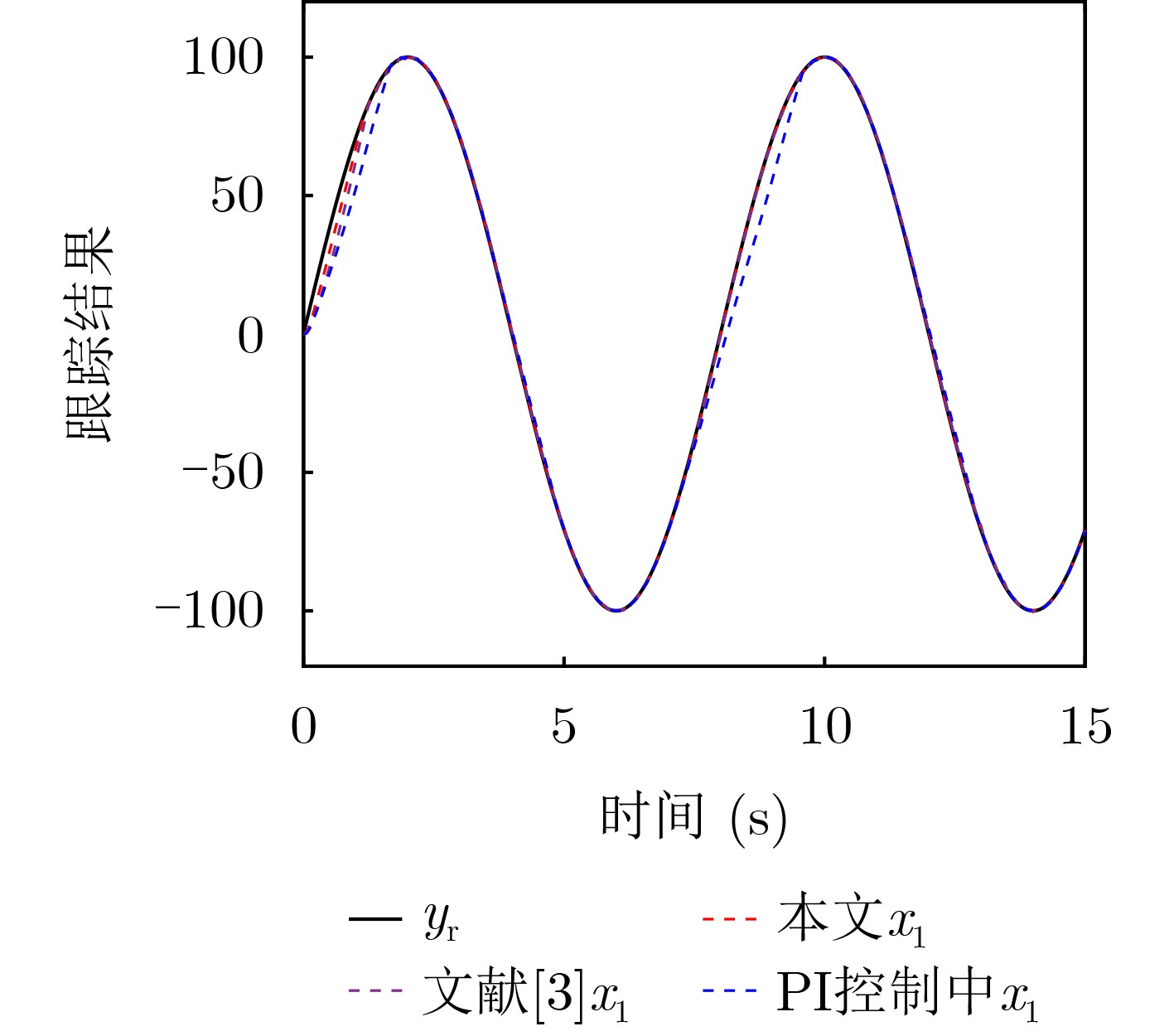
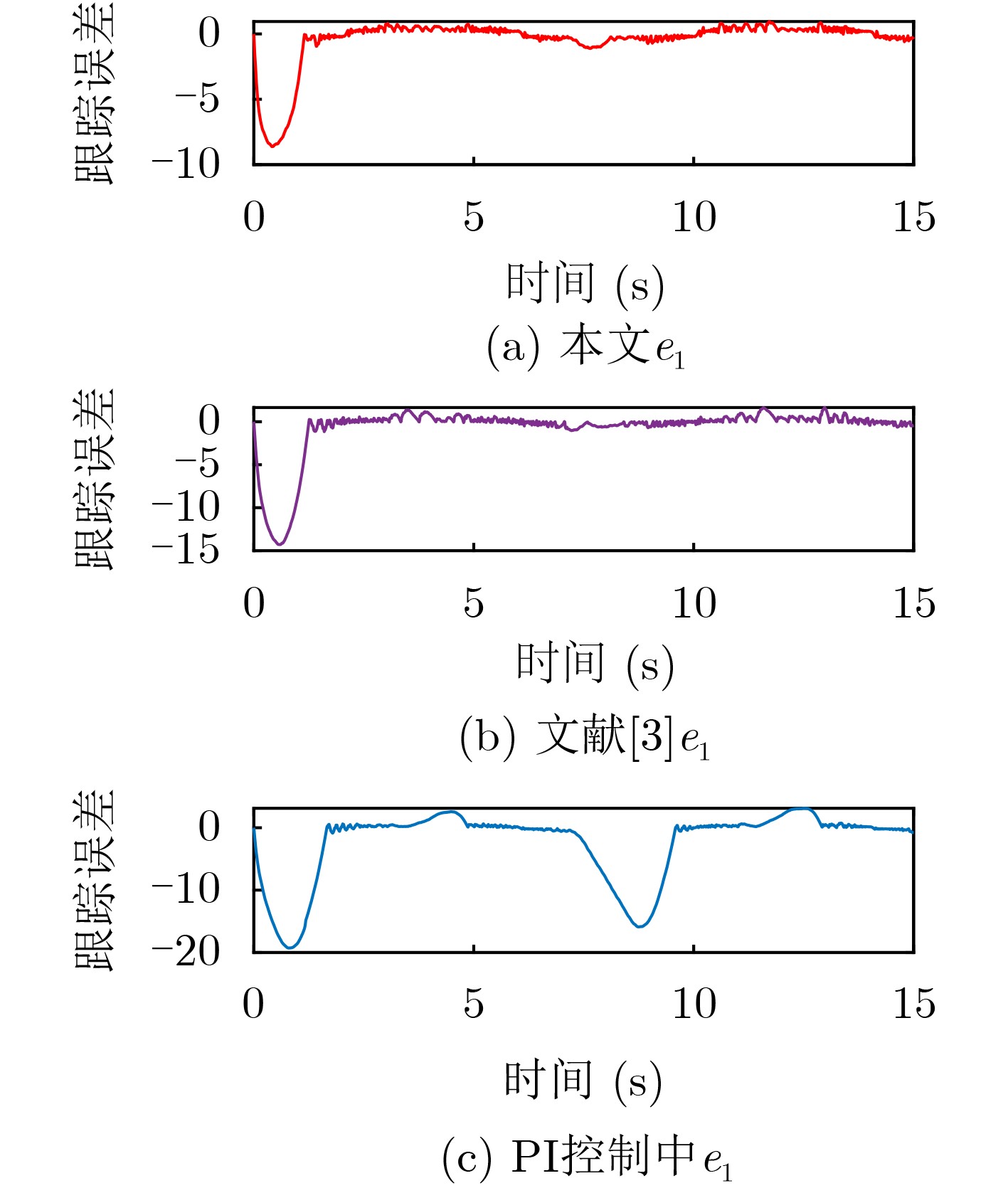
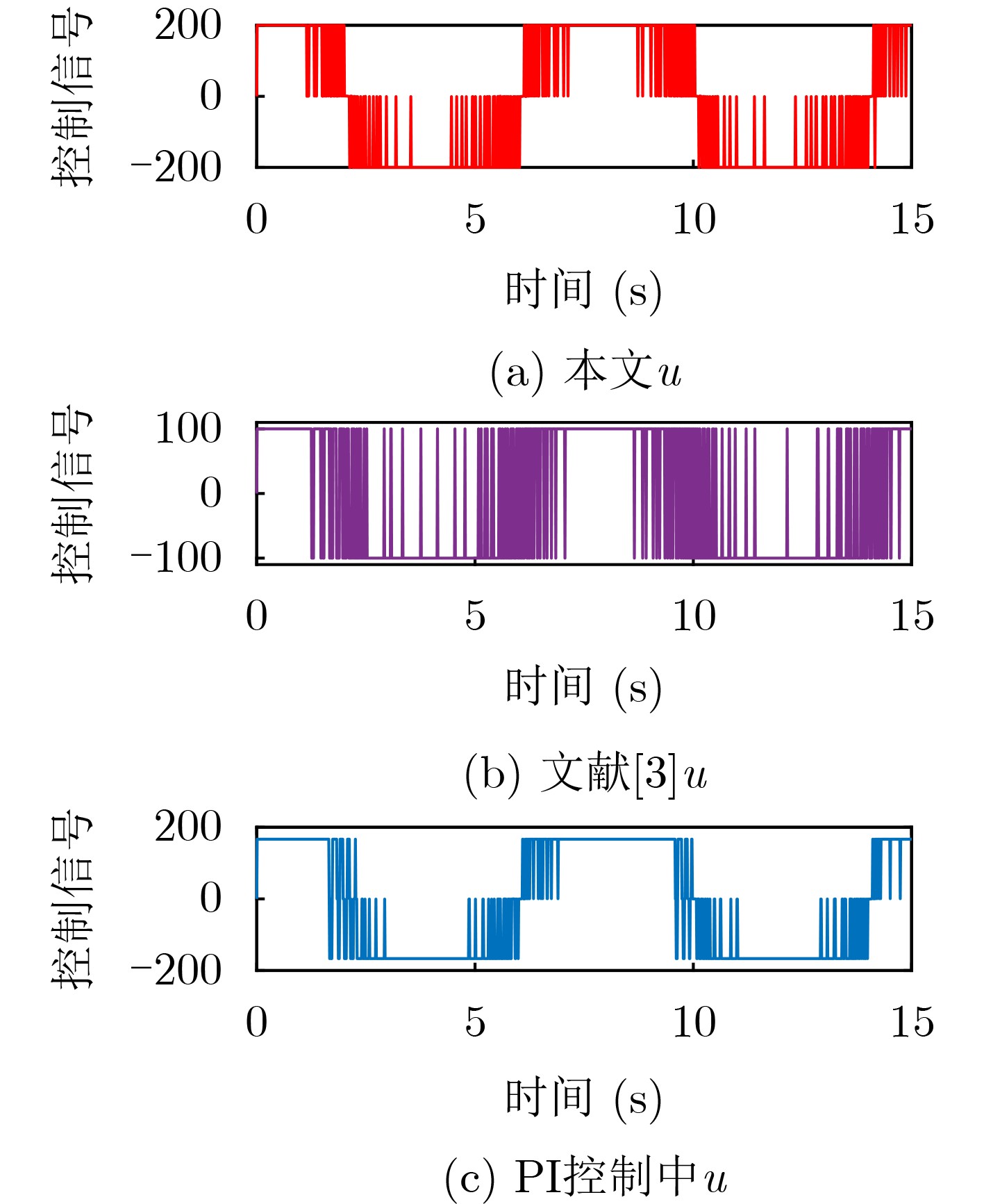
  Objective  Ultra-fast laser processing with an infinite field of view requires servo motor systems with superior tracking accuracy and robustness. However, such systems are highly nonlinear and affected by coupled unknown load disturbances and complex friction, which constrain the performance of conventional controllers. Although Sliding Mode Control (SMC) exhibits inherent robustness, traditional SMC and observer designs cannot achieve accurate finite-time disturbance compensation under strong nonlinearities, thus limiting high-speed and high-precision trajectory tracking. To address this limitation, a novel finite-time adaptive SMC approach is proposed to ensure rapid and precise angular position tracking within a finite time, satisfying the stringent synchronization requirements of advanced laser processing systems.  Methods  A novel control strategy is developed by integrating an adaptive disturbance observer fused with a Radial Basis Function Neural Network (RBFNN) and finite-time SMC. First, the unknown load disturbance and complex frictional nonlinear dynamics are combined into a unified "lumped disturbance" term, improving model generality and the ability to represent real operating conditions. Second, a finite-time adaptive disturbance observer is constructed to estimate this lumped disturbance. The observer utilizes the universal approximation capability of the RBFNN to learn and approximate the dynamic characteristics of unknown disturbances online. Simultaneously, a finite-time adaptive law based on the error norm is introduced to update the neural network weights in real time, ensuring rapid and accurate finite-time estimation of the lumped disturbance while reducing dependence on precise model parameters. Based on this design, a finite-time SMC is developed. The controller uses the observer’s disturbance estimation as a feedforward compensation term, incorporates a carefully formulated finite-time sliding surface and equivalent control law, and introduces a saturation function to suppress control input chattering. A suitable Lyapunov function is then constructed, and the finite-time stability theory is rigorously applied to prove the practical finite-time convergence of both the adaptive observer and the closed-loop control system, guaranteeing that the system tracking error converges to a bounded neighborhood near the origin within finite time.  Results and Discussions  To verify the effectiveness and superiority of the proposed control strategy, a typical Permanent Magnet Synchronous Motor (PMSM) servo system model is constructed in the MATLAB environment, and a simulation scenario with desired trajectories of varying frequencies is established. The proposed method is comprehensively compared with the widely used Proportional–Integral (PI) control and the advanced method reported in reference[7]. Simulation results demonstrate the following: (1) Tracking performance: Under various reference trajectories, the proposed controller enables the system to accurately follow the target trajectory with a tracking error substantially smaller than that of the PI controller. Compared with the method in reference[7], it achieves smoother responses and smaller residual errors, effectively eliminating the chattering observed in some operating conditions of the latter. (2) Disturbance rejection and robustness: The adaptive disturbance observer based on the RBFNN rapidly and effectively learns and compensates for the lumped disturbance composed of unknown load variations and frictional nonlinearities. Even in the presence of these disturbances, the proposed controller maintains high-precision trajectory tracking, demonstrating strong disturbance rejection and robustness to system parameter variations. (3) Control input characteristics: Compared with the reference methods, the control signal of the proposed approach quickly stabilizes after the initial transient phase, effectively suppressing chattering caused by high-frequency switching. The amplitude range of the control input remains reasonable, facilitating practical actuator implementation. (4) Comprehensive evaluation: Based on multiple error performance indices, including Integral Squared Error (ISE), Integral Absolute Error (IAE), Time-weighted Integral Absolute Error (ITAE), and Time-weighted Integral Squared Error (ITSE), the proposed controller consistently outperforms both PI control and the method in reference[7]. It demonstrates comprehensive advantages in suppressing transient errors rapidly and reducing overall error accumulation. The method also improves steady-state accuracy and achieves a balanced response speed with effective noise attenuation. (5) Observer performance: The RBFNN weight norm estimation converges rapidly and stabilizes at a low level after initial adaptation, confirming the effectiveness of the proposed adaptive law and the learning efficiency of the observer.  Conclusions  A finite-time sliding mode control strategy with an adaptive disturbance observer is proposed for servo systems used in ultra-fast laser processing. The method models unknown load disturbances and frictional nonlinearities as a lumped disturbance term. An adaptive observer, integrating an RBF neural network with a finite-time mechanism, accurately estimates this disturbance for real-time compensation. Based on the observer, a finite-time SMC law is formulated, and the practical finite-time stability of the closed-loop system is theoretically proven. Simulations conducted on a permanent magnet synchronous motor platform confirm that the proposed approach achieves superior tracking accuracy, robustness, and control smoothness compared with conventional PI and existing advanced methods. This work offers an effective solution for achieving high-precision control in nonlinear systems subject to strong disturbances.
Inverse Design of a Silicon-Based Compact Polarization Splitter-Rotator
HUI Zhanqiang, ZHANG Xinglong, HAN Dongdong, LI Tiantian, GONG Jiamin
2026, 48(8): 3317-3326. doi: 10.11999/JEIT250858
Abstract:
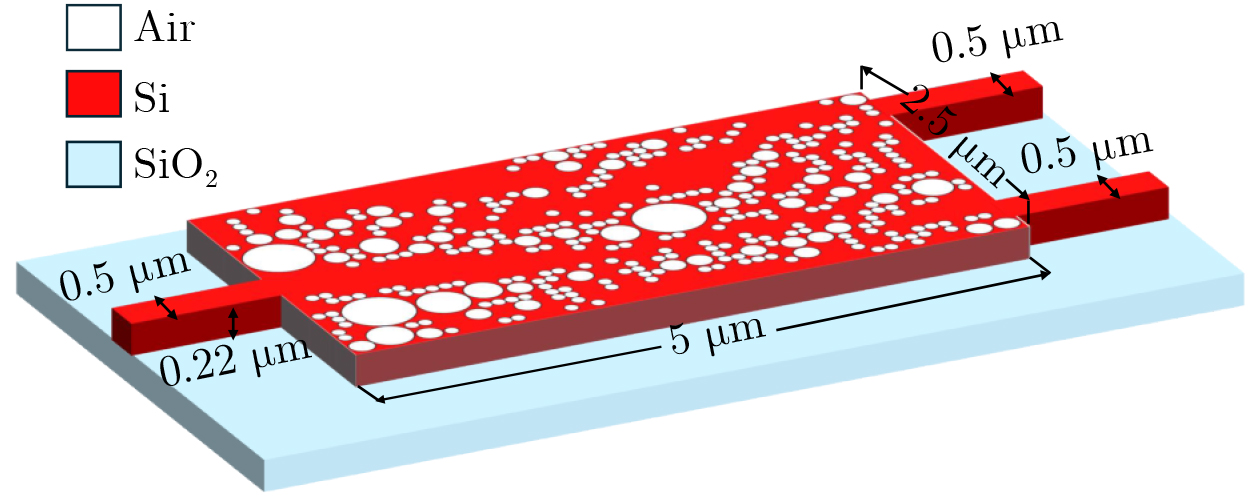
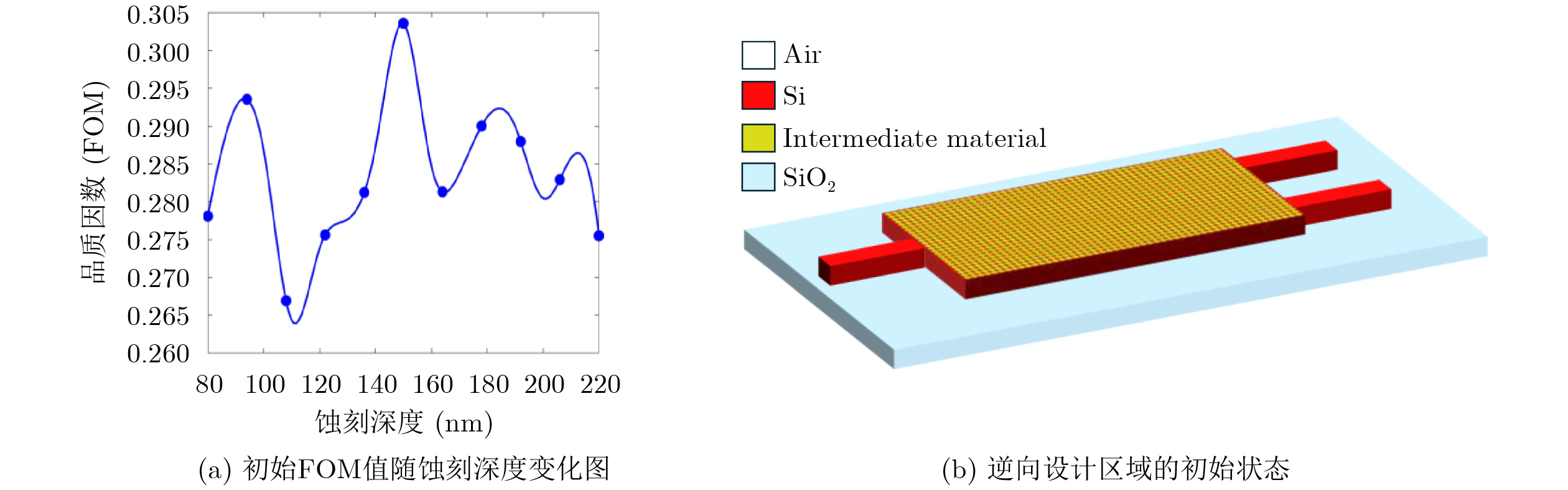
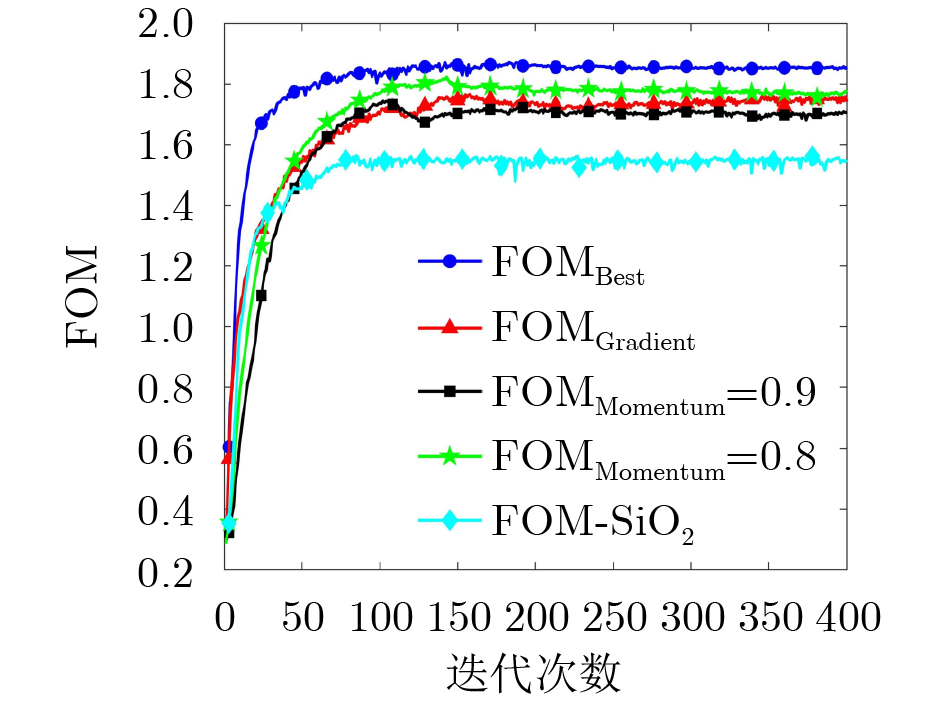
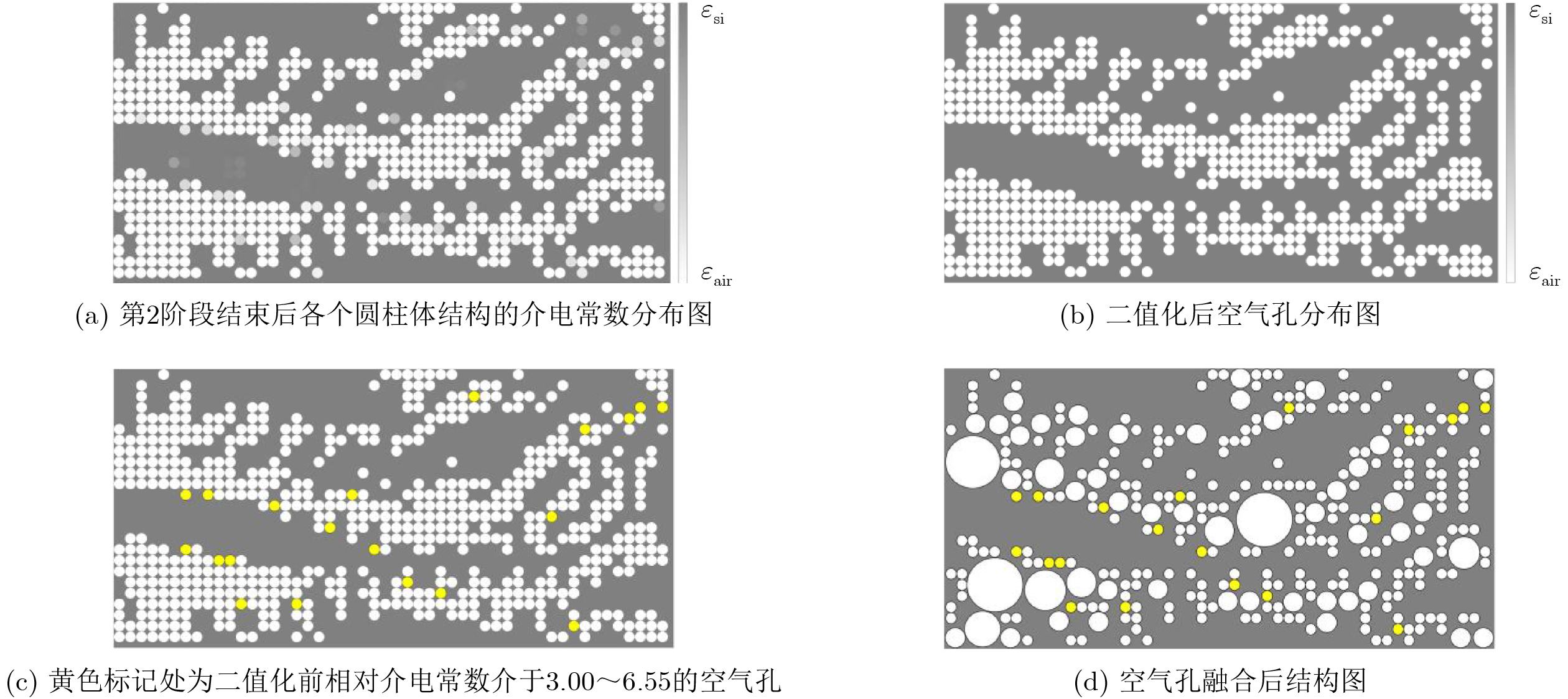
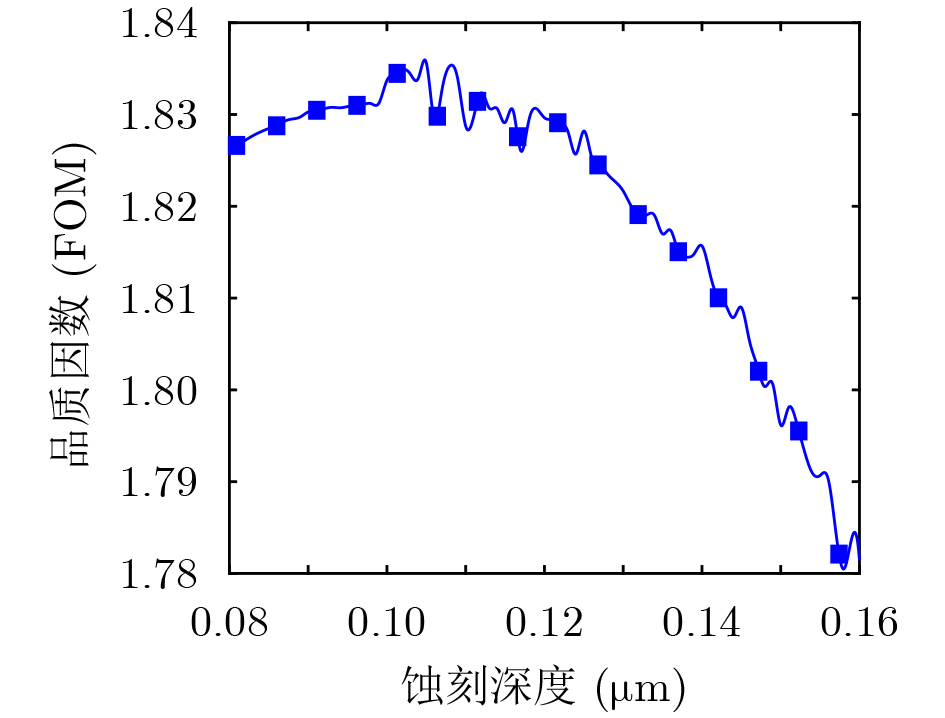
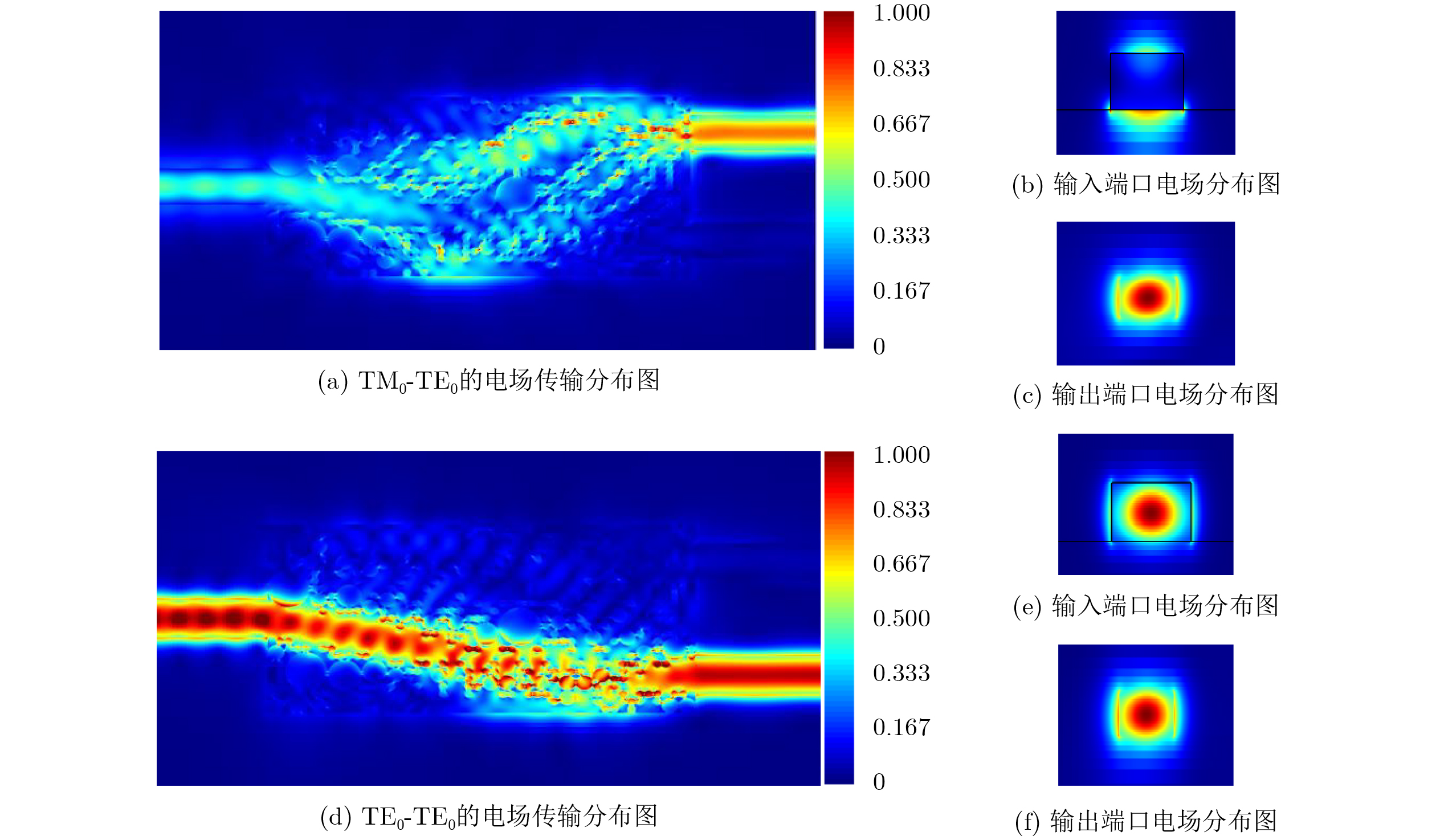
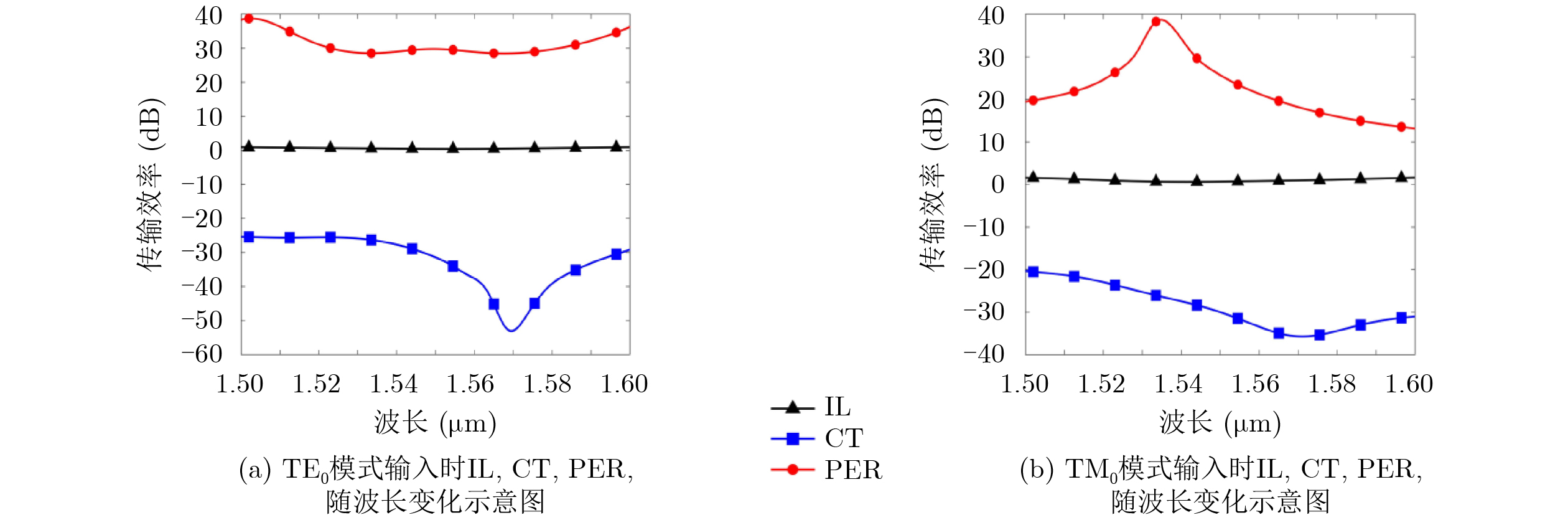
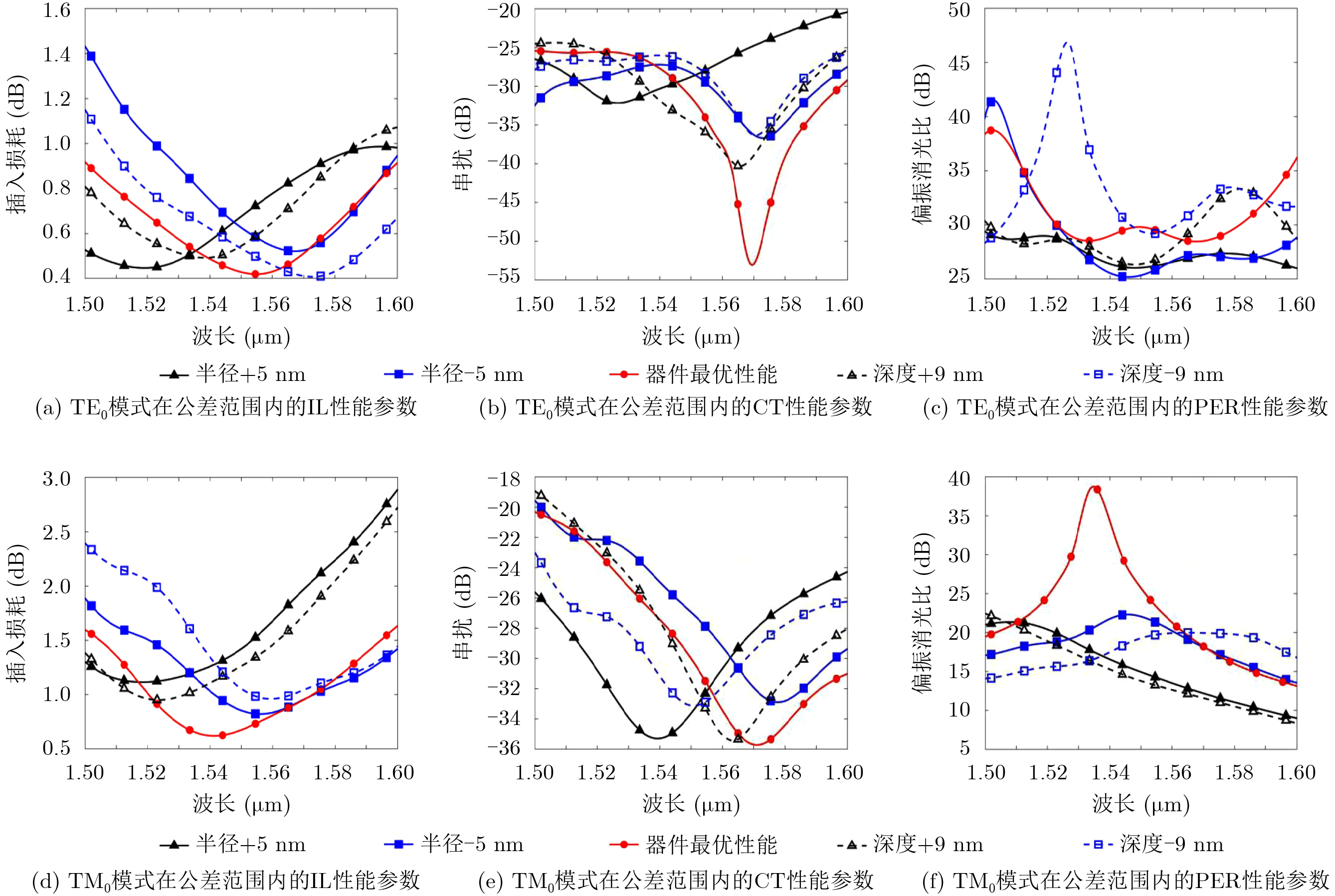
  Objective  The Polarization Splitter-Rotator (PSR) is a key device used to control the polarization state of light in Photonic Integrated Circuits (PICs). Device size has become a major constraint on integration density in PICs. Traditional design methods are time-consuming and tend to yield larger device footprints. Inverse design, by contrast, determines structural parameters through optimization algorithms according to target performance and enables compact devices to be obtained while maintaining functionality. This strategy is now applied to wavelength and mode division multiplexers, all-optical logic gates, power splitters, and other integrated photonic components. The objective of this work is to use inverse design to address size limitations in silicon-based PSRs by combining the Momentum Optimization algorithm with the Adjoint Method. This combined approach improves the integration level of PICs and provides a feasible pathway for the miniaturization of other photonic devices.  Methods  The design region is defined on a 220 nm Silicon-on-Insulator (SOI) wafer and is discretized into 25×50 cylindrical elements. Each element has a 50 nm radius, a 150 nm height, and an initial relative permittivity of 6.55. The adjoint method is used to obtain gradient information across the design region, and this gradient is processed with the Momentum Optimization algorithm. The relative permittivity of each element is then updated according to the processed gradient. During optimization, the momentum factor is dynamically adjusted with the iteration number to accelerate convergence, and a linear bias is applied to guide the permittivity toward the values of silicon and air as the iterations progress. After optimization, the elements are binarized based on their final permittivity: values below 6.55 are assigned to air, whereas values above 6.55 are assigned to silicon. This results in a structure containing irregularly distributed air holes. To compensate for performance loss introduced during binarization, the etching depth of air holes with pre-binarization permittivity between 3 and 6.55 is optimized. Adjacent air holes are merged to reduce fabrication errors. The final device consists of air holes with five radii, among which three larger-radius types are selected for further refinement. Their etching radii and depths are optimized to recover remaining performance loss. Device performance is evaluated through numerical analysis. Calculated parameters include Insertion Loss (IL), Crosstalk (CT), Polarization Extinction Ratio (PER), and bandwidth. Tolerance analysis is also conducted to assess robustness under fabrication variations.  Results and Discussions   A compact PSR is designed on a 220 nm SOI wafer with dimensions of 5 μm in length and 2.5 μm in width. During optimization, the momentum factor in the Momentum Optimization algorithm is dynamically adjusted. A larger momentum factor is applied in the early stage to accelerate escape from local maxima or plateau regions, whereas a smaller momentum factor is used in later iterations to increase the weight of the current gradient. Compared with other optimization strategies, this algorithm requires only 20%~33% of the iteration count needed by alternative methods to reach a Figure of Merit (FOM) of 1.7, which improves optimization efficiency. Numerical analysis shows that the device achieves stable performance across the 1 520~1 575 nm wavelength range. The IL remains low (TM0 < 1 dB, TE0 < 0.68 dB), and the CT is effectively suppressed (TM0 < –23 dB, TE0 < –25.2 dB). The PER is high (TM0 > 17 dB, TE0 > 28.5 dB). Tolerance analysis indicates strong robustness to fabrication variations. Within the 1 520~1 540 nm range, performance remains stable under etching depth offsets of ±9 nm and etching radius offsets of ±5 nm, demonstrating reliable manufacturability.  Conclusions   Numerical analysis demonstrates that combining the adjoint method with the Momentum Optimization algorithm is a feasible strategy for designing an integrated PSR. The design principle relies on controlling light propagation through adjustments to the relative permittivity, which determine the distribution and placement of air holes to achieve polarization splitting and rotation. Compared with traditional design approaches, inverse design uses the design region more efficiently and enables a more compact device structure. The proposed PSR is markedly smaller and shows enhanced fabrication tolerance. It is suitable for future large-scale PICs and provides useful guidance for the miniaturization of other photonic devices.
Adversarial Attacks on 3D Target Recognition Driven by Gradient Adaptive Adjustment
LIU Weiquan, SHEN Xiaoying, LIU Dunqiang, SUN Yanwen, CAI Guorong, ZANG Yu, SHEN Siqi, WANG Cheng
2026, 48(8): 3327-3337. doi: 10.11999/JEIT251264
Abstract:
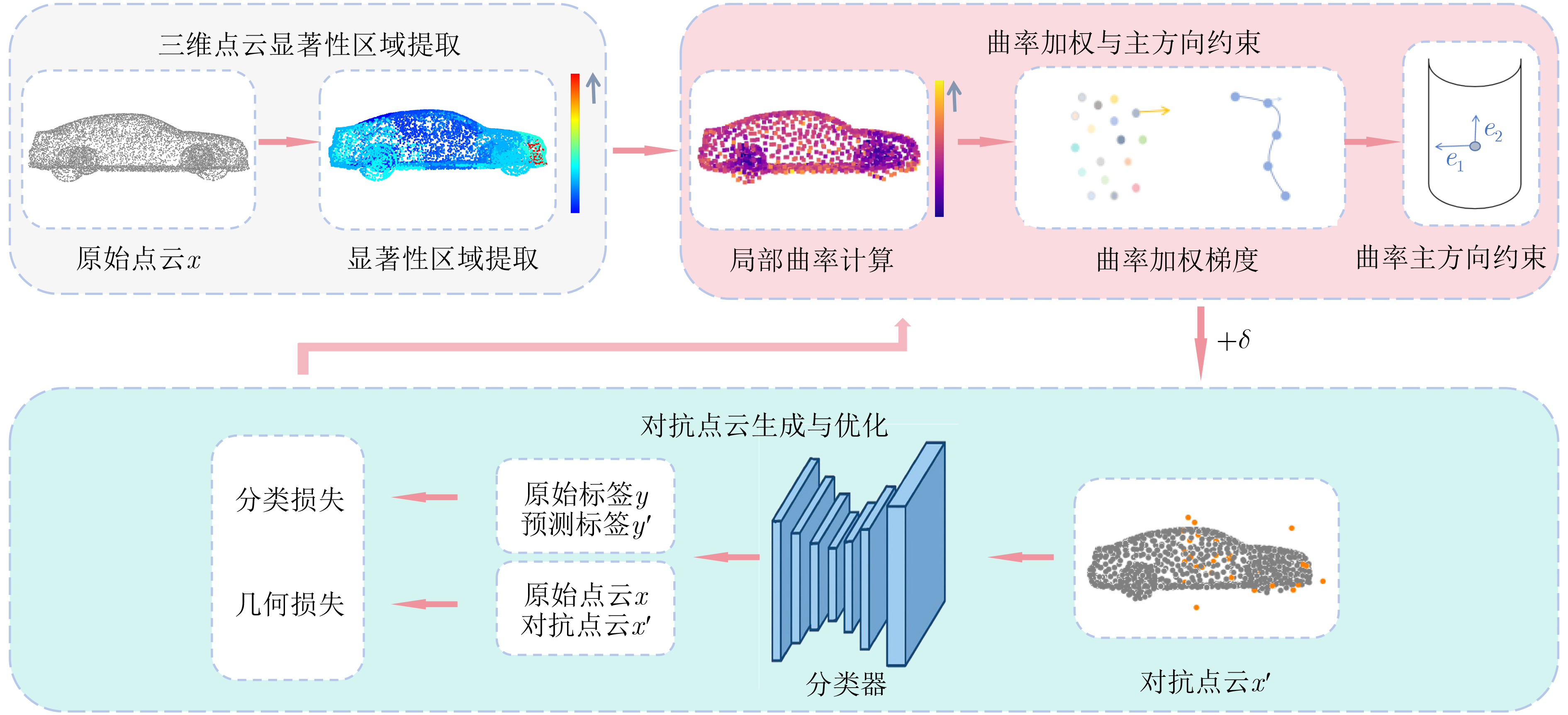
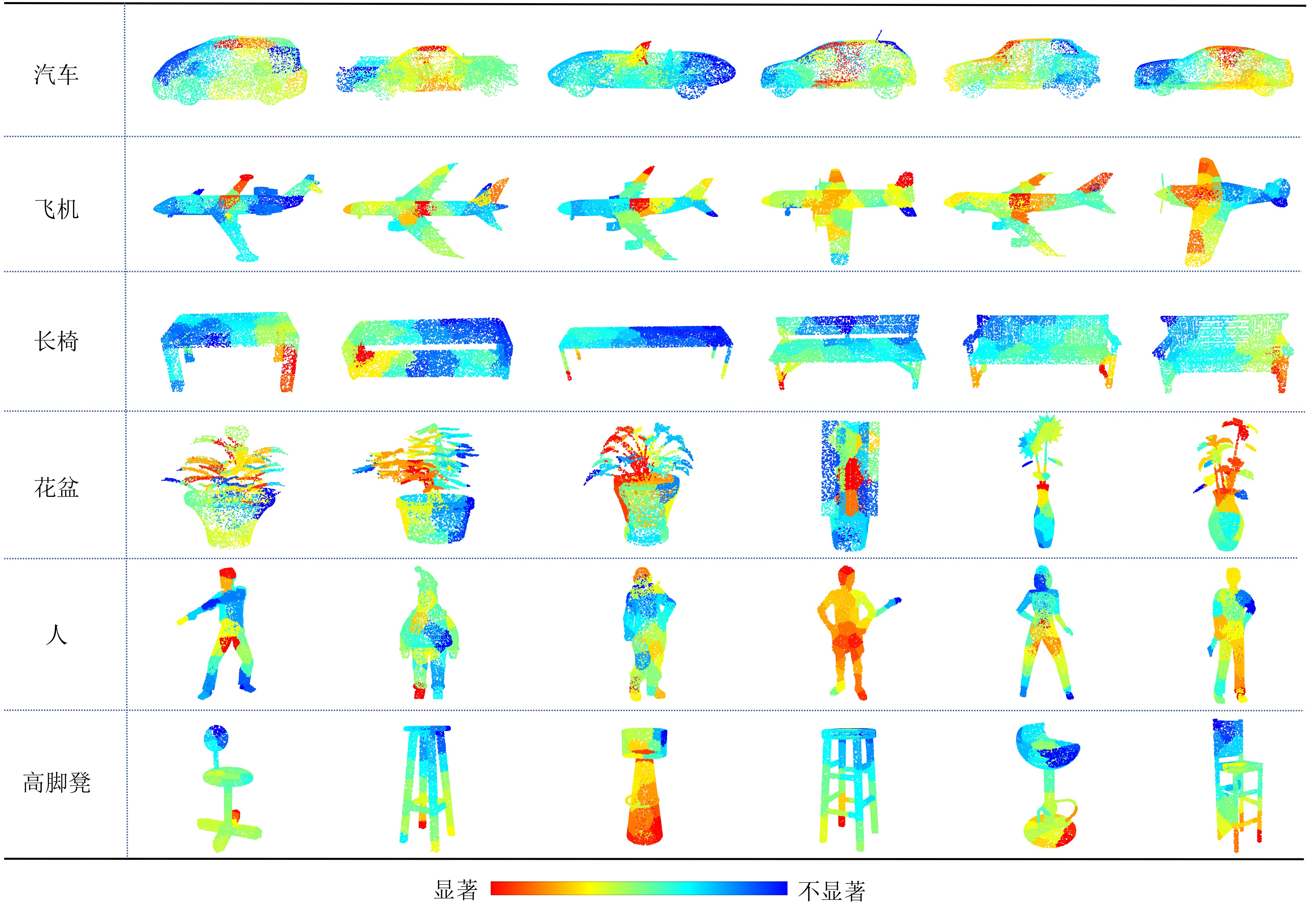
  Objective   Robust environmental perception is essential for intelligent driving systems. Light Detection And Ranging (LiDAR) provides high-resolution 3D point cloud data and serves as a core information source for object detection and recognition. However, deep learning models for 3D point cloud recognition show notable vulnerability to adversarial attacks. Small, imperceptible perturbations can cause severe classification errors and threaten system safety. Existing attack methods have improved the Attack Success Rate (ASR), but the perturbations they generate often lack concealment, create outliers, and show poor imperceptibility because they do not adequately preserve the geometric structure of point clouds. This reduces their suitability for realistic security evaluation of optoelectronic perception systems. Developing an attack method that maintains a high success rate while preserving geometric consistency and imperceptibility is therefore critical. This study addresses this need by proposing a framework that incorporates point cloud geometry into perturbation generation.  Methods   A Gradient Adaptive Adjustment (GAA) adversarial attack method for 3D point cloud recognition is proposed. The framework (Fig. 2) includes three coordinated modules. The 3D Point Cloud Salient Region Extraction module evaluates decision-level vulnerability using Shapley value analysis to identify and rank point subsets with the strongest influence on classifier output. Perturbations are then concentrated in these sensitive regions. A curvature-weighted gradient mechanism integrates local geometric priors. For each point in the salient region, a local covariance matrix is computed from its k-nearest neighbors. Principal component analysis generates eigenvalues and eigenvectors, which are used to compute a curvature measure. A Gaussian kernel function produces curvature-dependent weights that are applied to backpropagated gradients. This suppresses perturbations in high-curvature areas and encourages them in low-curvature regions to preserve local shape morphology. A principal curvature direction constrained optimization module further refines the perturbation direction. The weighted gradient is projected onto the principal curvature directions, and the projection components are fused using coefficients derived from the corresponding eigenvalues. This aligns the perturbation with natural geometric trends and avoids unnatural deformation. An adaptive optimization algorithm then minimizes a multi-objective loss balancing attack success, geometric similarity (via chamfer distance and hausdorff distance), and perturbation sparsity. The adversarial point cloud is iteratively updated based on the saliency map, curvature-weighted gradients, and principal direction constraints.  Results and Discussions   Experiments on ModelNet40, ShapeNetPart, and KITTI were conducted using PointNet, DGCNN, and PointConv. The GAA method showed strong performance. On ModelNet40 with PointNet, it achieved a 97.69% ASR with an average of 28 perturbed points, outperforming ten baselines such as AL-Adv (92.92% ASR, 40 points) and Kim et al. (89.38% ASR, 36 points) (Table 1). It also produced lower geometric distortion, as indicated by smaller Chamfer Distance and Hausdorff Distance values. Visual results (Fig. 4) show that GAA produces fewer outliers and more natural adversarial point clouds compared with methods such as AL-Adv. The method generalized well across architectures, reaching 99.78% ASR on DGCNN and 96.91% on PointConv (Table 2), with similar performance on ShapeNetPart (Table 3). Ablation experiments on the number of salient regions (K) showed consistent improvements in ASR and reduced geometric distortion as K increased from 1 to 6 (Table 4, Fig. 5), confirming the advantage of targeting multiple critical regions. Tests on the KITTI dataset demonstrated strong performance in real-world, noisy environments. The method maintained high ASRs, such as 99.33% on PointNet, with limited perturbations (Table 5). An ablation study on K indicated that K=4 offers an effective balance between success rate and perturbation cost for PointNet (Table 6).  Conclusions   This study presents a GAA method for adversarial attacks on 3D point cloud recognition. By combining a Shapley value-based saliency analyzer, a curvature-weighted gradient mechanism, and a principal curvature direction constraint, the method generates adversarial examples that achieve high attack success while preserving geometric consistency. Experiments show that GAA minimizes perceptual distortion and perturbs fewer points across datasets and models. The method provides a practical tool for vulnerability analysis and supports the development of more robust and secure optoelectronic perception systems for intelligent driving. Future work will examine robustness under adverse conditions and assess physical-world implications.
A Lightweight Spatial-Spectral Dual-Branch Transformer Network for Classifying Polarized White Blood Cell Hyperspectral Images
YANG Yushi, YAN Jiaxuan, XIE Yi, QIU Lijia, HUANG Danfei
2026, 48(8): 3338-3347. doi: 10.11999/JEIT260124
Abstract:
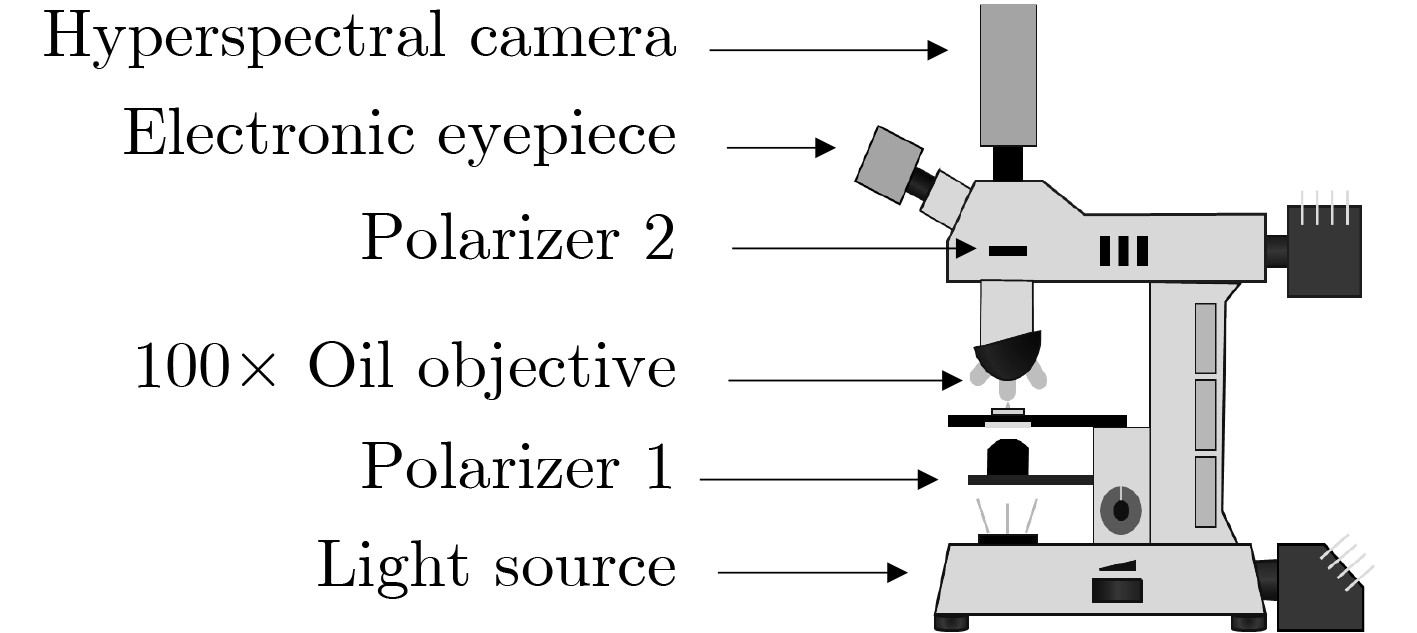
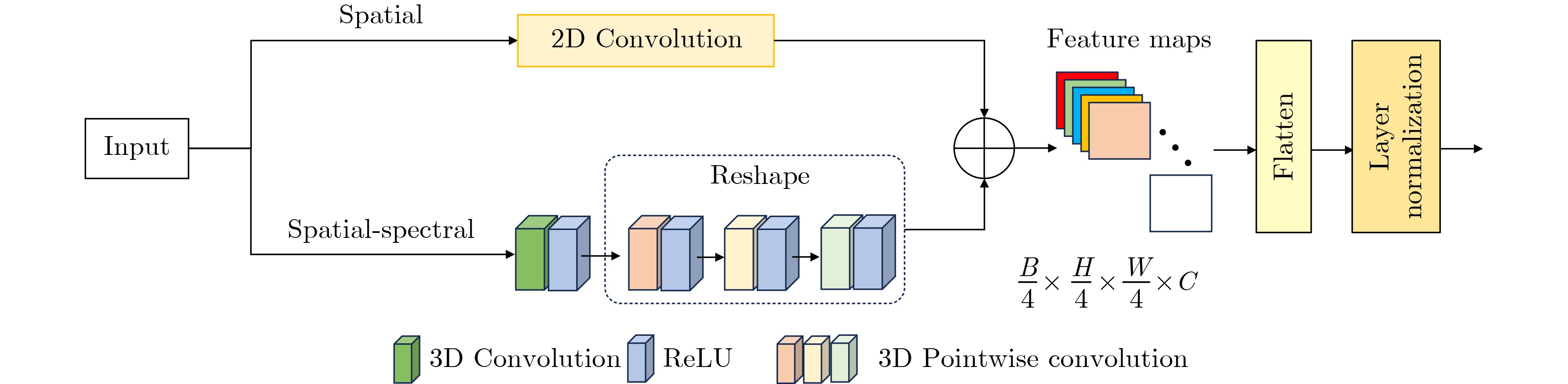
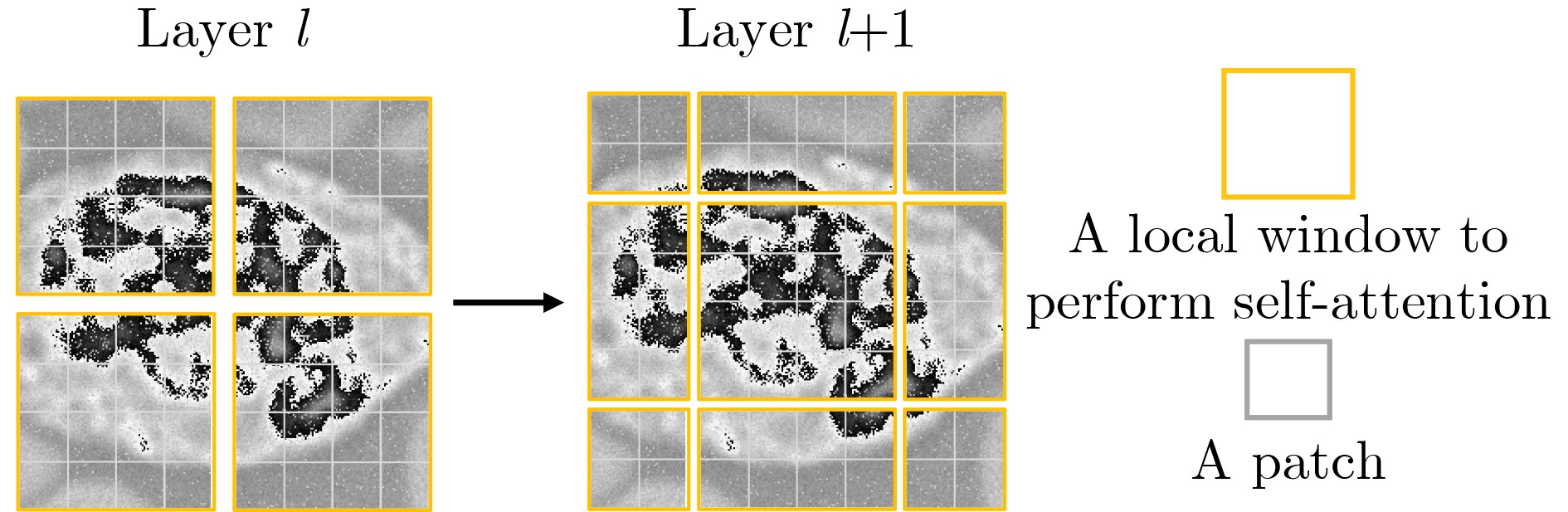
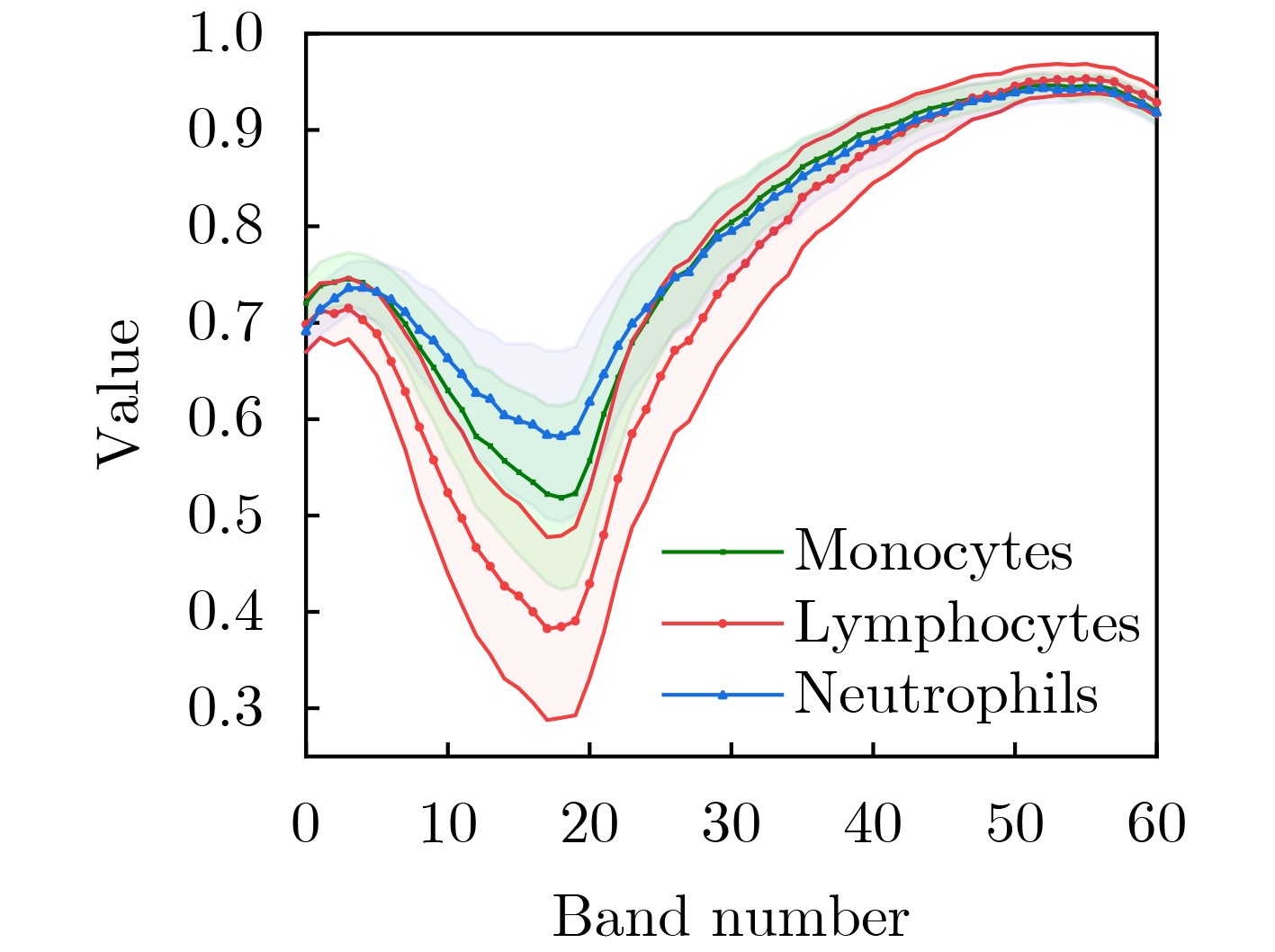
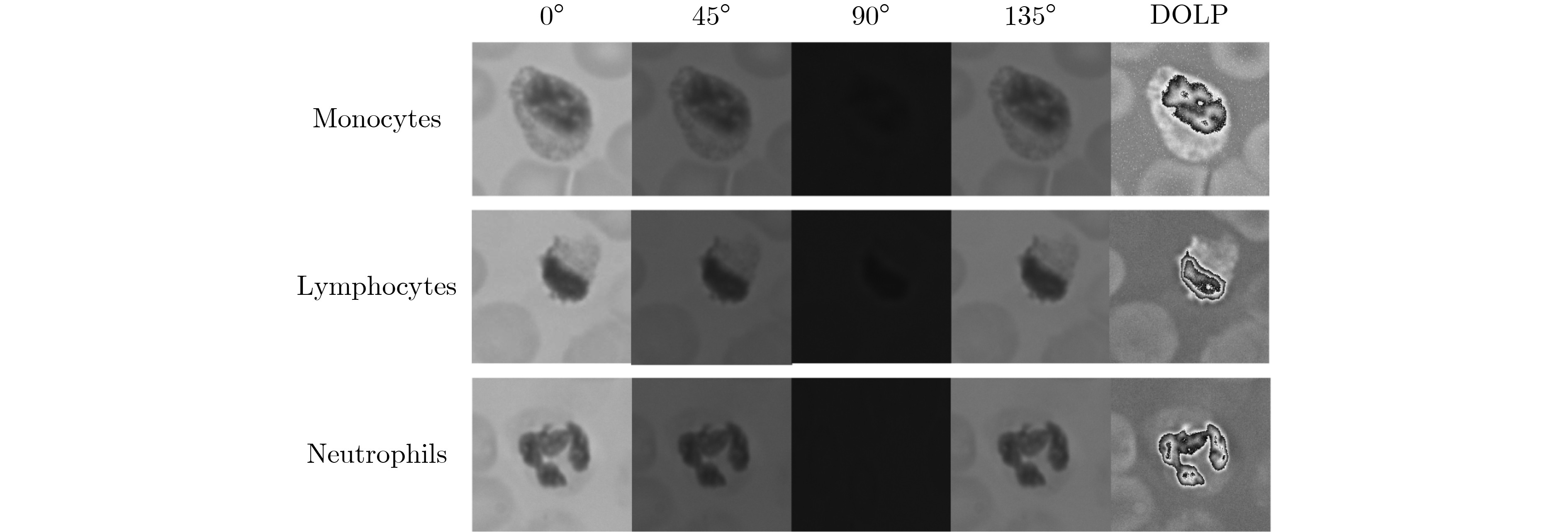
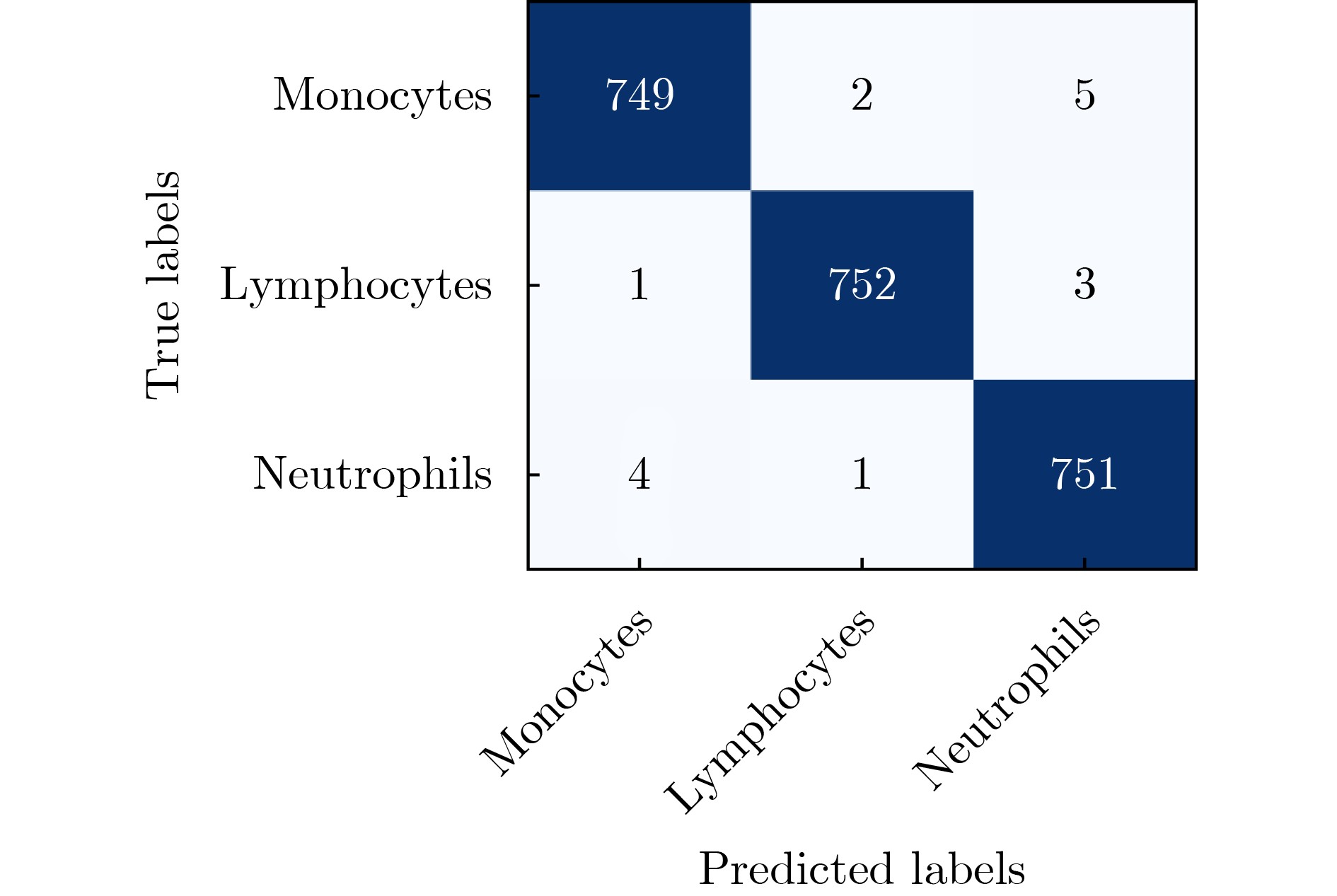
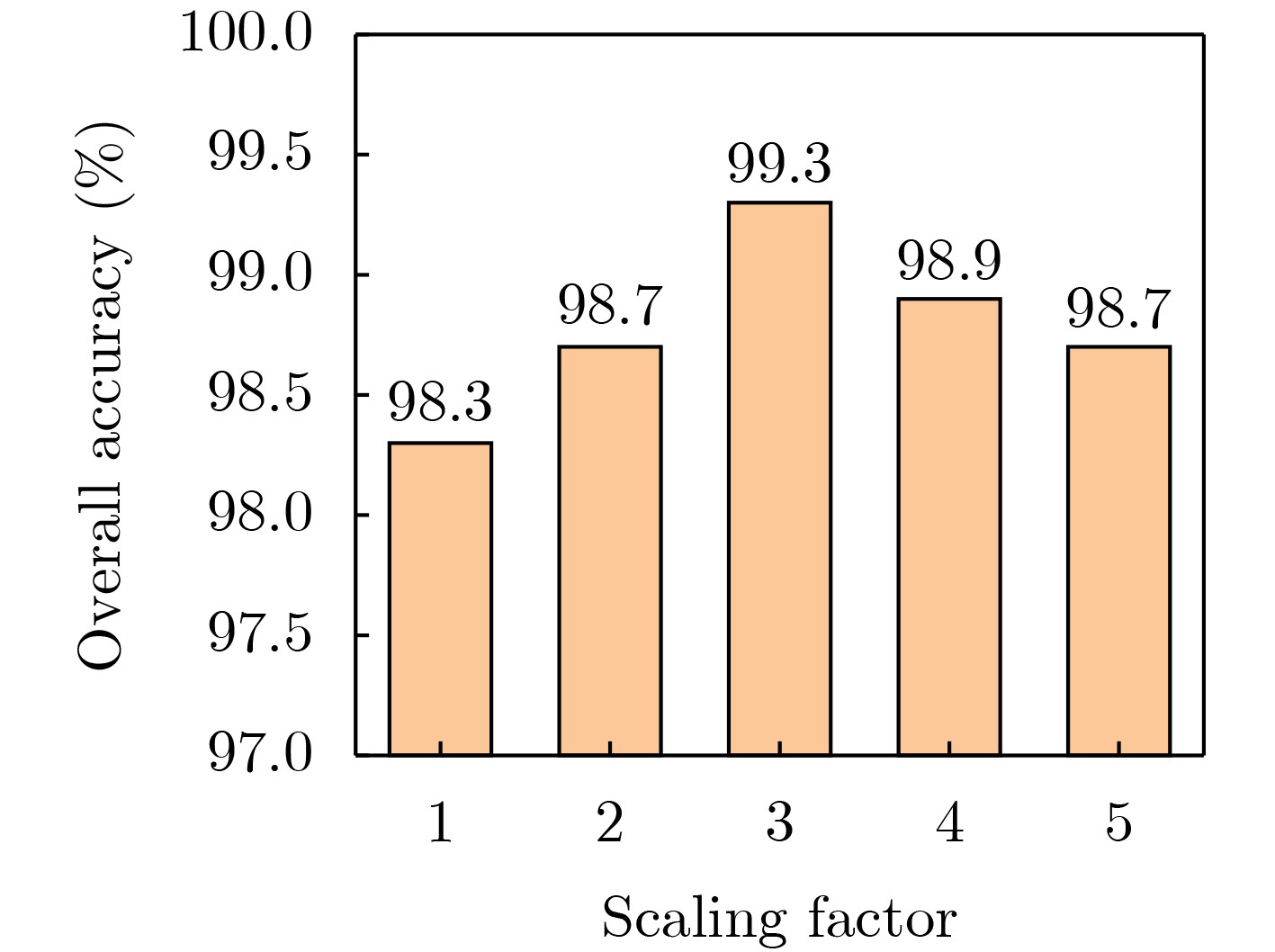
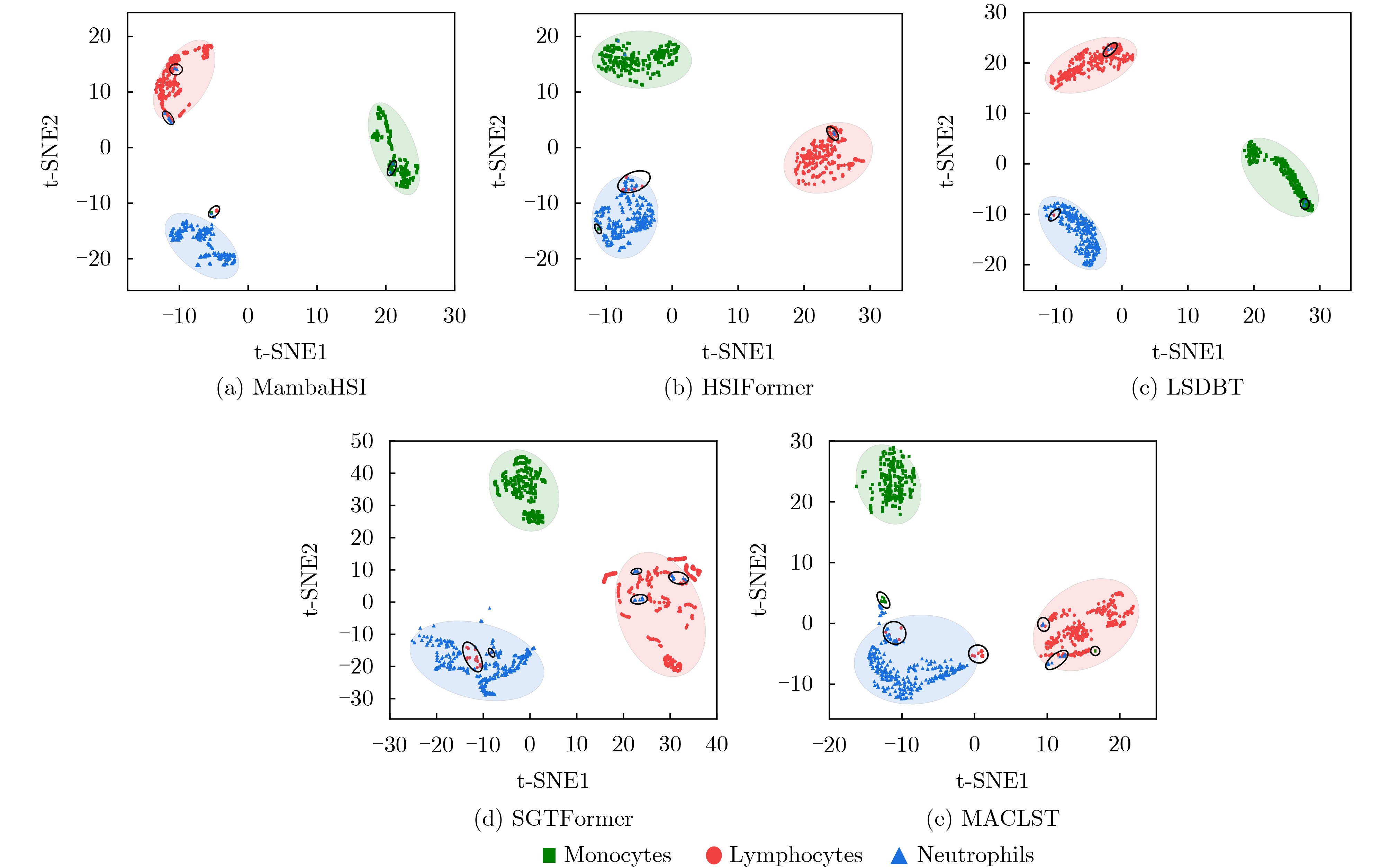
  Objective  White Blood Cell (WBC) classification and morphology are essential in routine blood analysis and provide important information for disease diagnosis and health assessment. Current WBC classification mainly relies on hematology analyzers and manual microscopic examination. Hematology analyzers cannot acquire cellular images, limiting classification accuracy when abnormal cellular characteristics are present, whereas manual microscopic examination depends on operator experience and is susceptible to human error. Although automated WBC classification based on deep learning and computer vision has attracted considerable attention, methods using stained images are sensitive to staining conditions and image quality. In addition, conventional hyperspectral imaging has limited ability to distinguish WBC subtypes with highly similar morphological and spectral characteristics. To address these limitations, this study combines Polarized Hyperspectral Imaging (PHSI) with deep learning and proposes a lightweight classification framework for polarized hyperspectral WBC images, providing an efficient and reliable approach for clinical decision support.  Methods  A polarized hyperspectral microscopic imaging system is established to acquire images at multiple polarization angles. Based on Stokes Vector Theory, polarization parameters are calculated to generate multidimensional data cubes containing both light intensity and polarization-state information. Degree of Linear Polarization (DOLP) images are then computed to construct a PHSI dataset of WBCs. To exploit the multidimensional characteristics of PHSI, a Lightweight Spatial-Spectral Dual-Branch Transformer Network (LSDBT) is proposed. After preprocessing, the input data are fed into a dual-branch feature extraction module that separately extracts local spatial features and joint spatial-spectral features. An adaptive scaling factor is introduced to fuse the two feature streams and balance their contributions, enabling effective utilization of the multidimensional information contained in PHSI. A lightweight Swin Transformer backbone performs effective global feature modeling while reducing computational complexity. Global average pooling and a fully connected layer are used for classification. Model performance is evaluated using Overall Accuracy (OA), Precision, Recall, Specificity, and F1-Score. Ablation studies, comparative experiments, and feature visualization are conducted to validate the proposed method.  Results and Discussions  The DOLP spectra and PHSI visualizations of monocytes, lymphocytes, and neutrophils (Figures. 5 and 6) demonstrate different polarization characteristics that reflect the selective absorption and scattering of light by their internal structures. Compared with conventional intensity images, PHSI improves image contrast and provides additional polarization information that enhances discrimination among WBC types. The proposed LSDBT achieves an OA of 99.29% on the test set, with consistently high classification performance across all cell categories (Table 1). Analysis of the adaptive scaling factor shows that classification performance first improves and then decreases slightly as the scaling factor increases, with the optimal value of 3 providing the best balance between spatial and spatial-spectral features (Figure. 8). Ablation experiments (Tables 2 and 3) demonstrate that the dual-branch feature extraction module substantially improves classification performance, whereas the lightweight design greatly reduces computational complexity and model parameters with only a marginal reduction in accuracy. Compared with conventional hyperspectral imaging, the PHSI dataset achieves higher classification accuracy with all evaluated classifiers, indicating that polarization information provides complementary physical features that improve discrimination among WBC types (Table 4). Comparisons with representative methods show that LSDBT achieves the best overall classification performance across multiple evaluation metrics (Table 5). Furthermore, t-SNE visualization (Figure. 9) shows compact intra-class distributions and clear separation among different cell types, confirming the strong discriminative capability of the learned features. Although LSDBT does not have the lowest computational cost among the compared methods, it achieves the best balance between classification performance, model size, and computational efficiency (Table 6).  Conclusions  This study proposes a lightweight dual-branch Transformer network for polarized hyperspectral WBC classification. To the best of our knowledge, this is the first study to combine PHSI with deep learning for WBC classification. Comparative experiments with conventional hyperspectral imaging validate the superiority of PHSI for WBC classification. The proposed LSDBT integrates spatial and spatial-spectral information through a dual-branch feature extraction module and performs efficient global feature modeling using a lightweight Swin Transformer backbone. The network maintains high classification performance while substantially reducing computational complexity and model parameters. These results demonstrate that LSDBT provides an accurate and computationally efficient solution for automated WBC classification and supports the application of PHSI in cellular microscopic analysis and clinical auxiliary diagnosis.
Image and Intelligent Information Processing
A Hierarchical Cross-layer Closed-loop Learning Framework andCoordination Mechanism for Complex Multi-agent Systems
ZHANG Long, HUANG wenbo, LEI Zhen, FENG Xuanming, WANG Ying
2026, 48(8): 3348-3357. doi: 10.11999/JEIT260143
Abstract:
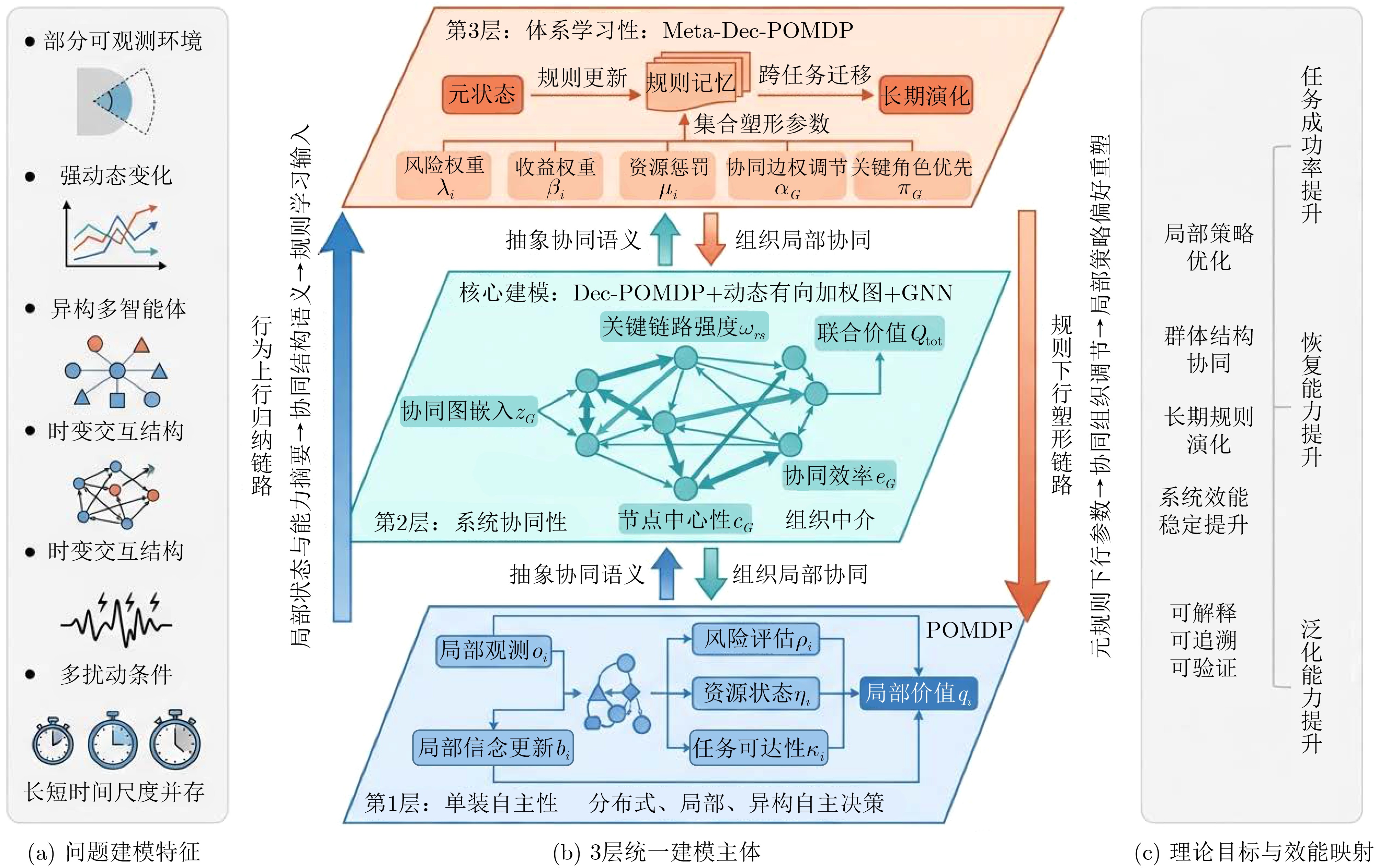
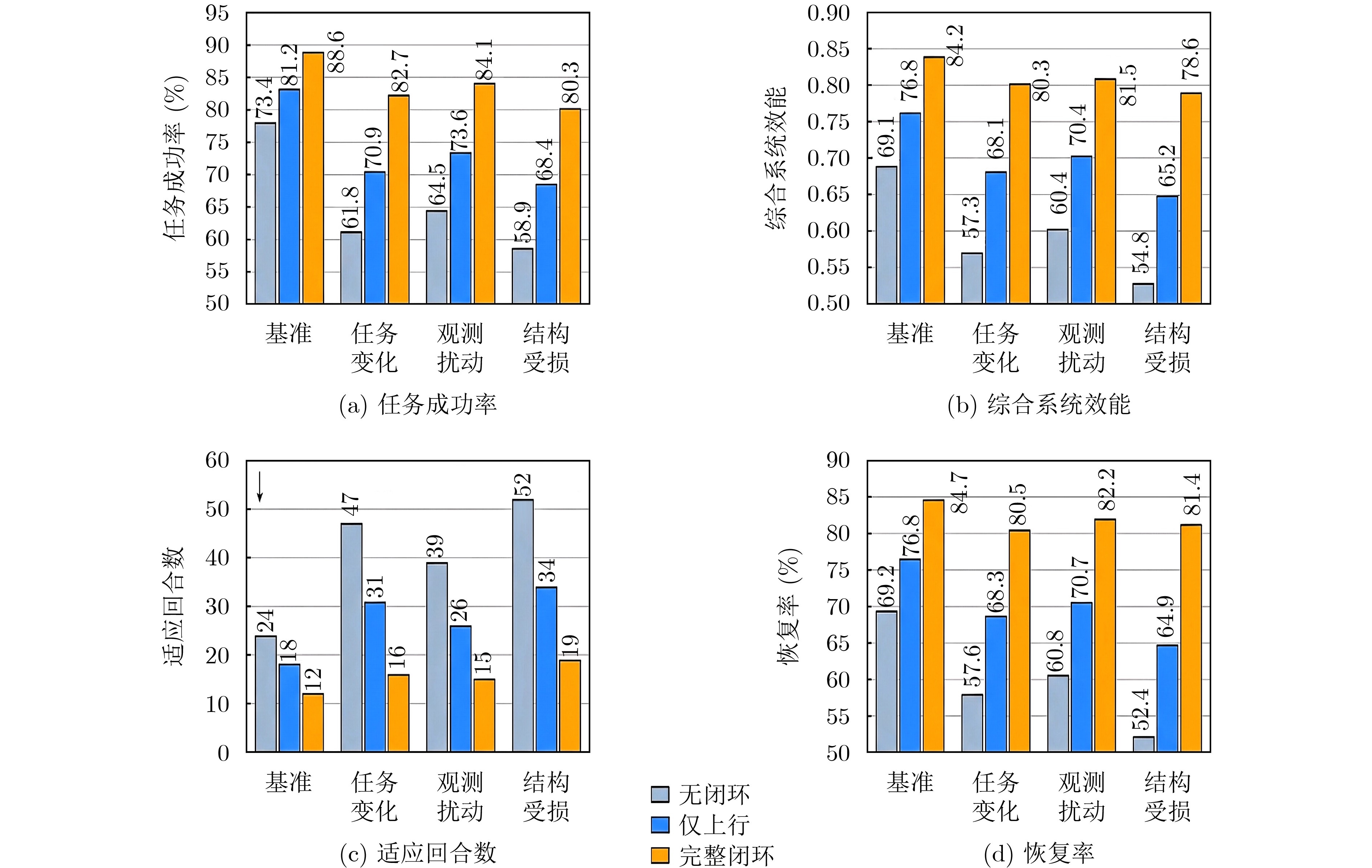
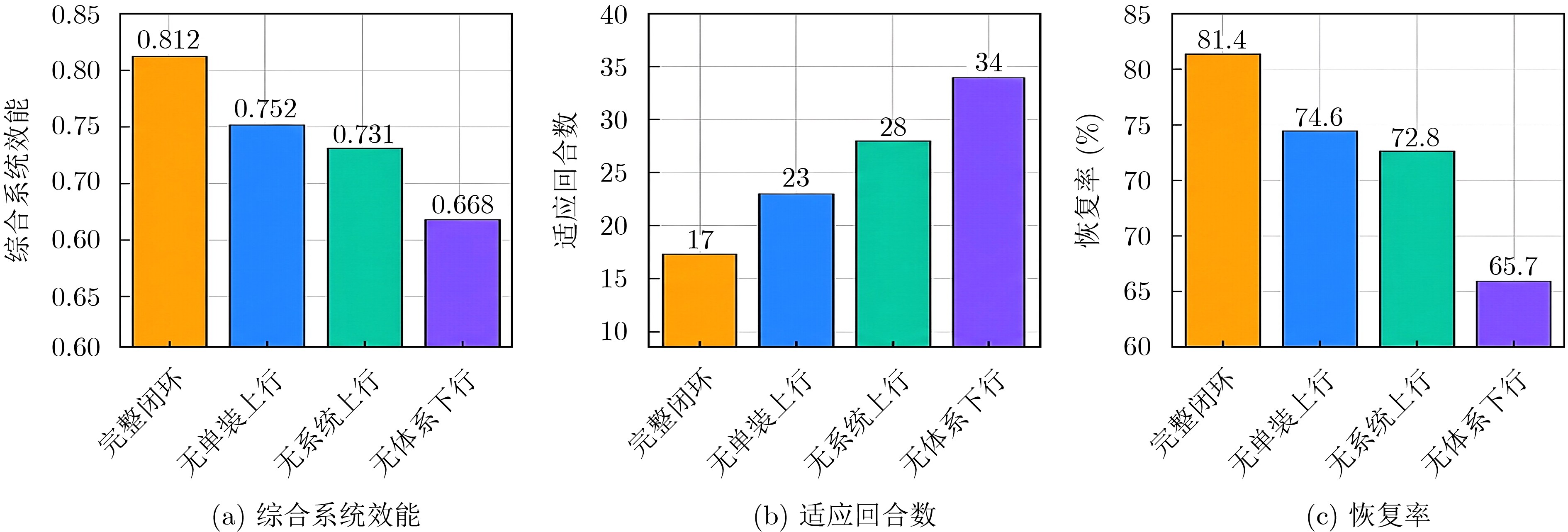
Complex Multi-Agent Systems (MAS) in dynamic and uncertain environments face challenges in unified modeling, adaptive coordination, and interpretable effectiveness evaluation. Existing methods usually address individual decision-making, inter-agent coordination, and high-level policy evolution separately. This separation leads to fragmented decision chains and weak cross-layer coupling. It also makes it difficult to explain how local learning gains are transformed into global effectiveness improvements under mission variation, observation disturbance, and structural damage. To address this issue, a Hierarchical Cross-layer Closed-loop Learning (HCCL) framework is proposed. The framework couples individual autonomy, system-level coordination, and system-of-systems learning to build a computable path from local policy optimization to overall effectiveness enhancement.   Methods   HCCL adopts a unified three-layer architecture. At the individual autonomy layer, each agent is modeled as a Partially Observable Markov Decision Process (POMDP) to describe decision-making under partial observability. At the system-level coordination layer, multi-agent coordination is formulated as a Decentralized Partially Observable Markov Decision Process (Dec-POMDP) and represented by a dynamic directed weighted coordination graph. A Graph Neural Network (GNN) is used to encode interaction dependencies, structural coupling, and joint value information. At the system-of-systems learning layer, a Meta-Decentralized Partially Observable Markov Decision Process (Meta-Dec-POMDP) is established to describe task-context adaptation and rule evolution. A cross-layer closed-loop mechanism is further designed. In the bottom-up behavior induction pathway, local state and capability features are aggregated into graph-level structural representations and supplied to the upper rule-learning process. In the top-down rule-shaping pathway, learned high-level rules are converted into control parameters and fed back to lower layers to regulate local policies and coordination relationships. Simulations are conducted under baseline, mission-variation, observation-disturbance, and structural-damage scenarios. The full HCCL model is compared with a non-closed-loop model and an upward-induction-only model. Interface ablation studies are also performed to analyze the contributions of cross-layer feature reporting, structural induction, and rule shaping.   Results and Discussions   The full HCCL model consistently outperforms the comparison models and ablated variants. In the baseline scenario, it achieves a task success rate of 88.6% and a comprehensive system effectiveness of 0.842. Under mission variation, it reduces the adaptation process to 16±2 rounds. Under structural damage, it achieves a recovery rate of 81.4% and restores coordination-structure stability to 0.742 within 20 steps. These results indicate that HCCL improves task performance, adaptation speed, and structural recovery. Ablation results show that removing any cross-layer interface reduces performance, while removing the top-down rule-shaping pathway causes the largest loss. This result indicates that upward structural perception alone is insufficient for sustained system-level improvement. The effectiveness gain mainly arises from closed-loop coupling between bottom-up behavior induction and top-down rule shaping, rather than from simple hierarchical stacking.   Conclusions   The HCCL framework is proposed for complex MAS by integrating POMDP-based individual autonomy modeling, Dec-POMDP- and graph-based coordination modeling, and Meta-Dec-POMDP-based rule evolution. Through bottom-up behavior induction and top-down rule shaping, HCCL provides a computable and interpretable path from local learning to overall effectiveness enhancement. Experimental results verify its advantages in task completion, adaptation, recovery, and coordination stability under multiple disturbances. Future work will focus on larger-scale heterogeneous systems, communication-constrained networking, online continual adaptation, and data-driven evaluation in realistic environments.
Load Optimization of Inverter Air-Conditioning Clusters Driven by Constraint Surface Projection and Spatial-Fitness Synergy
ZHENG Bowen, PAN Mingming, WANG Lei, LIU Chang, ZHENG Qingrong, TANG Zhuofan, ZHAO Jianli
2026, 48(8): 3358-3369. doi: 10.11999/JEIT260149
Abstract:
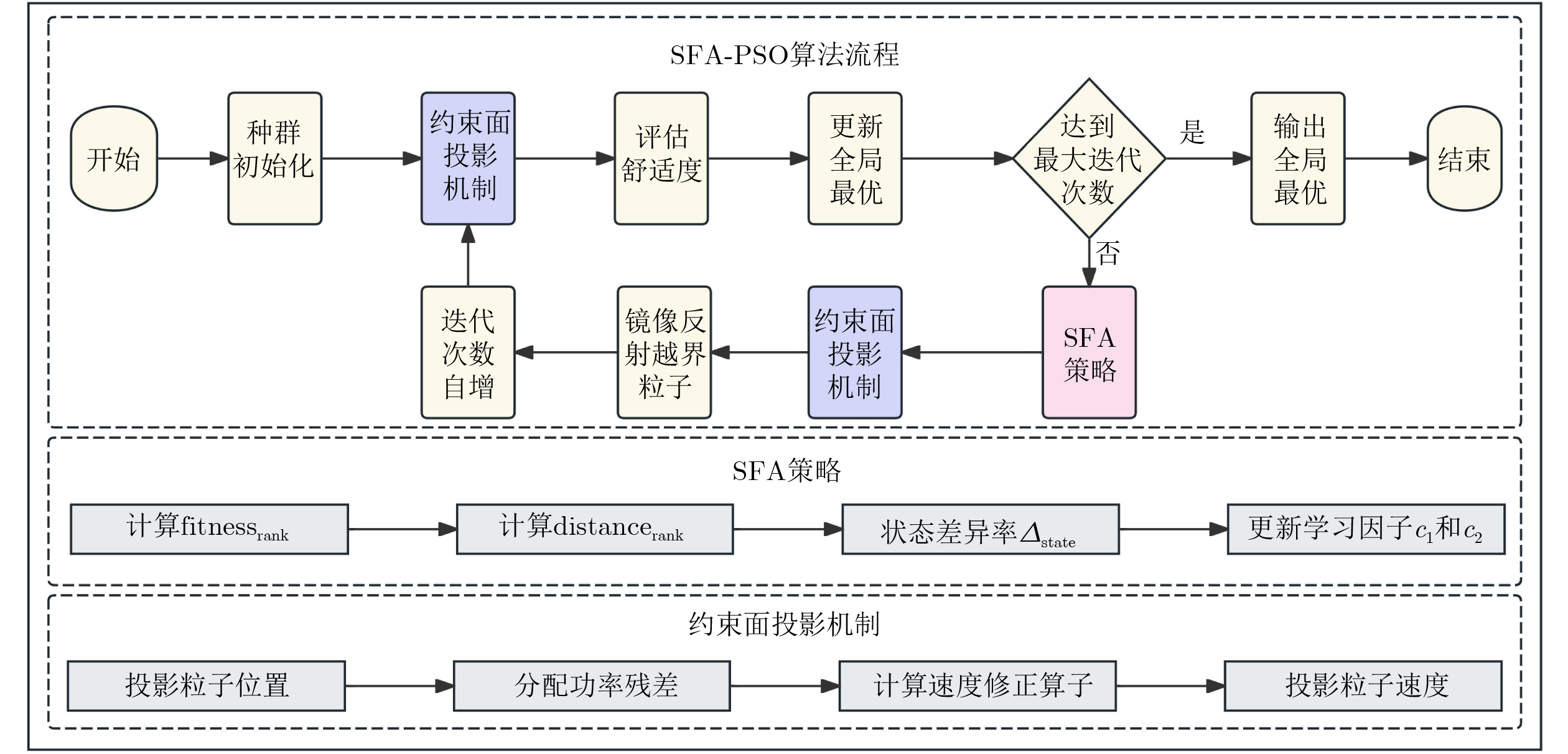
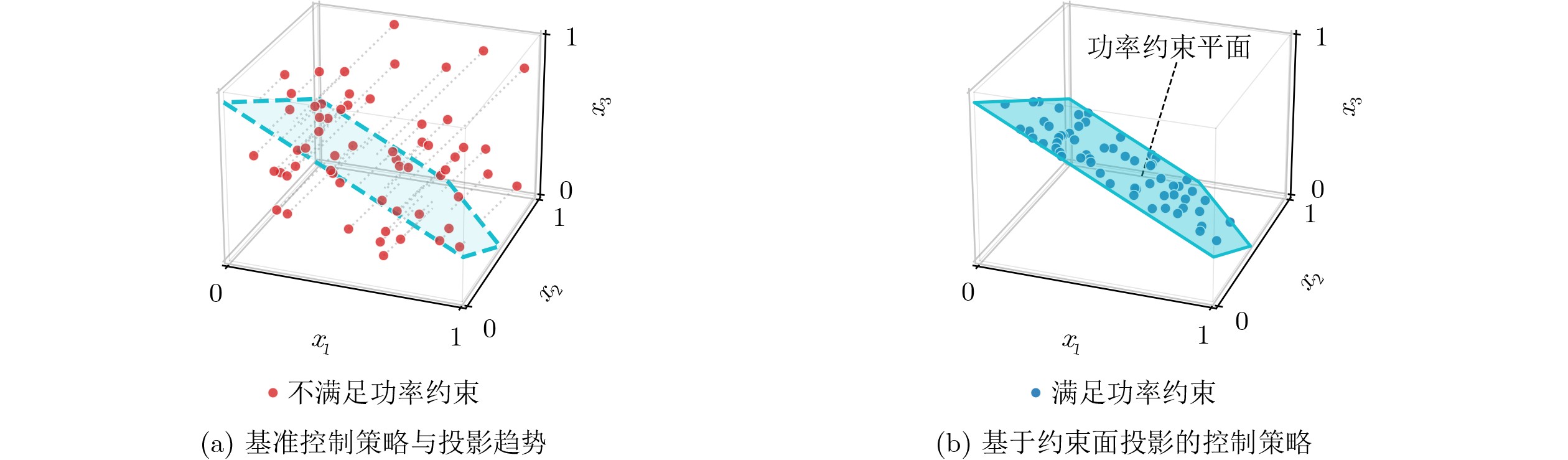
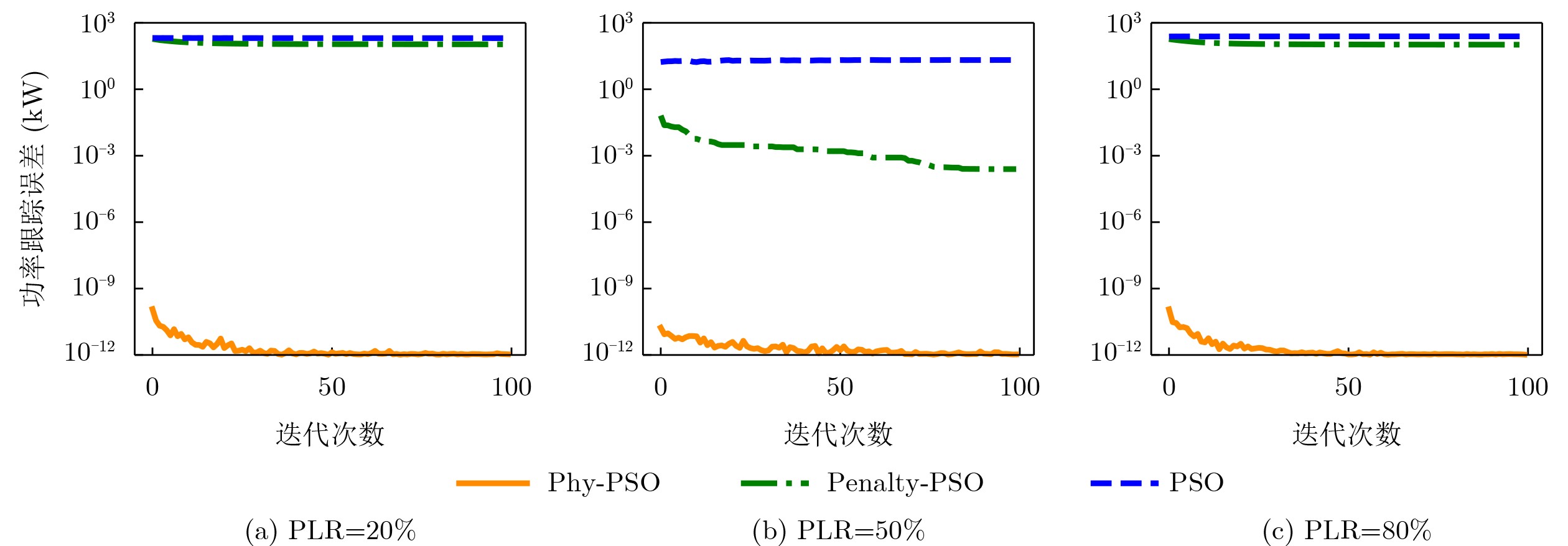
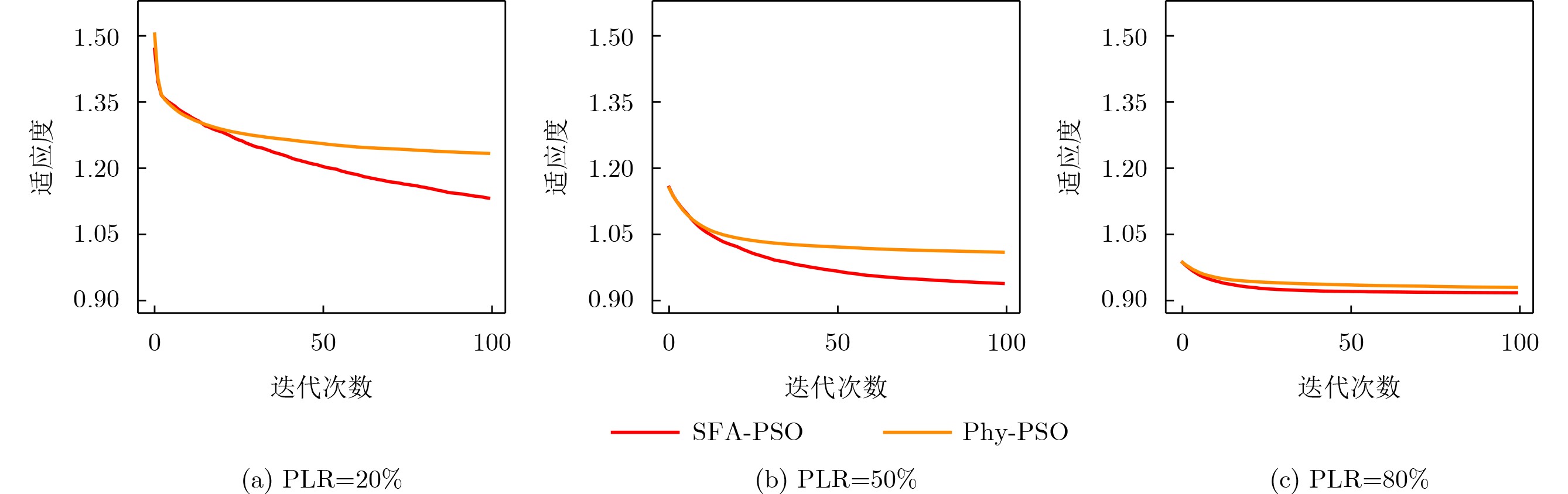
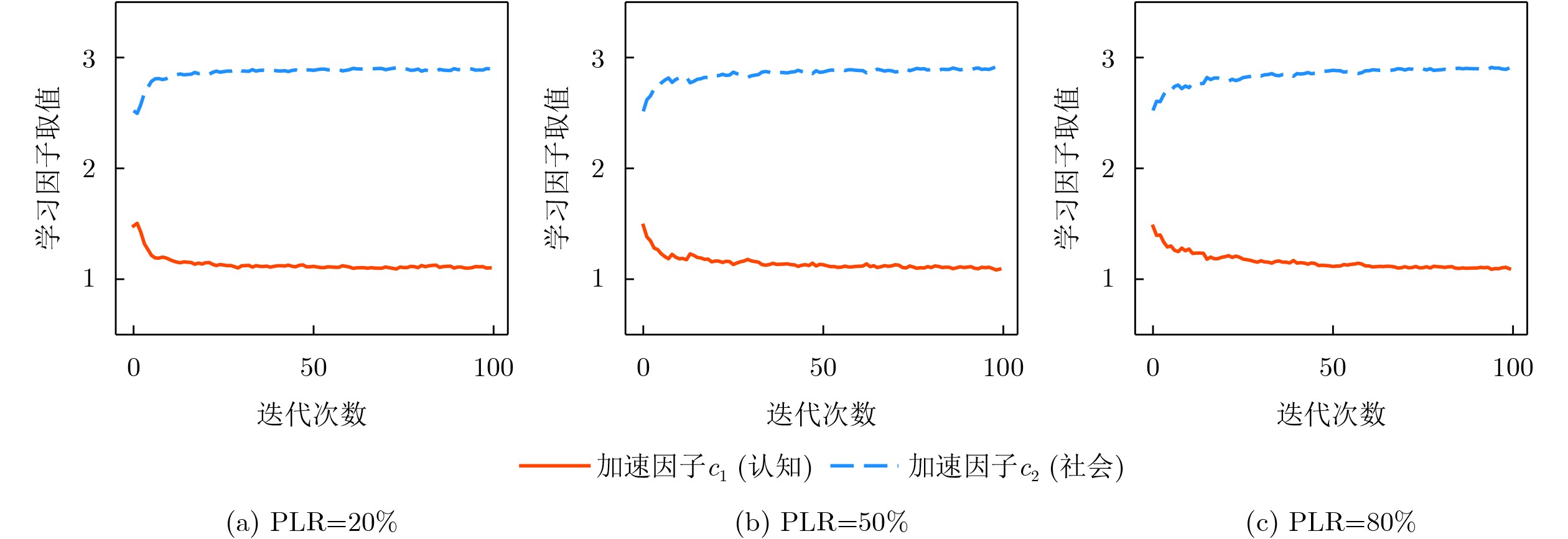
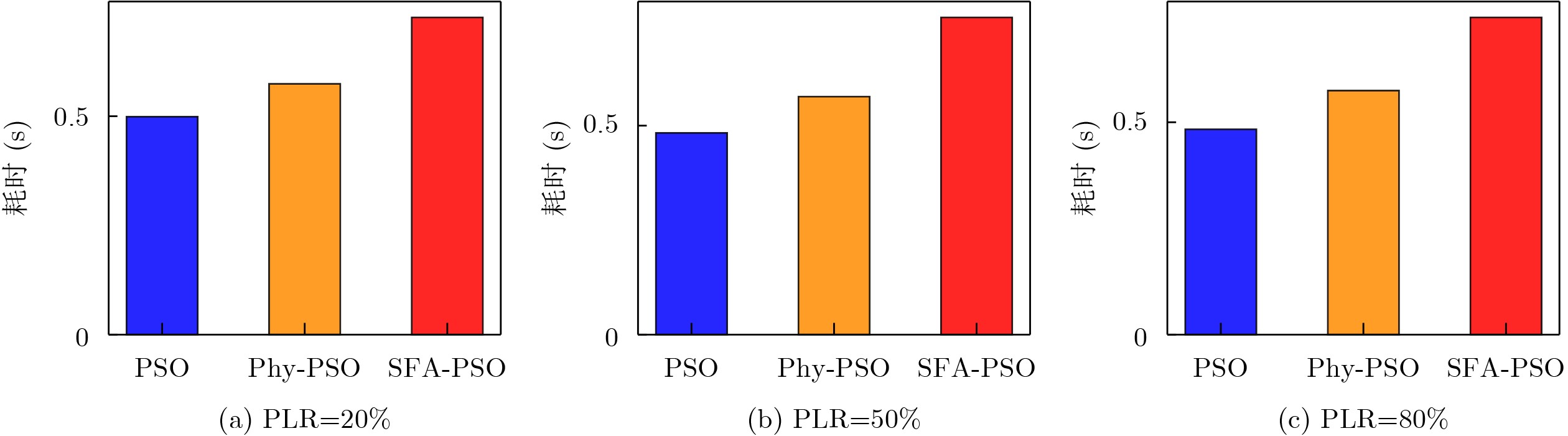
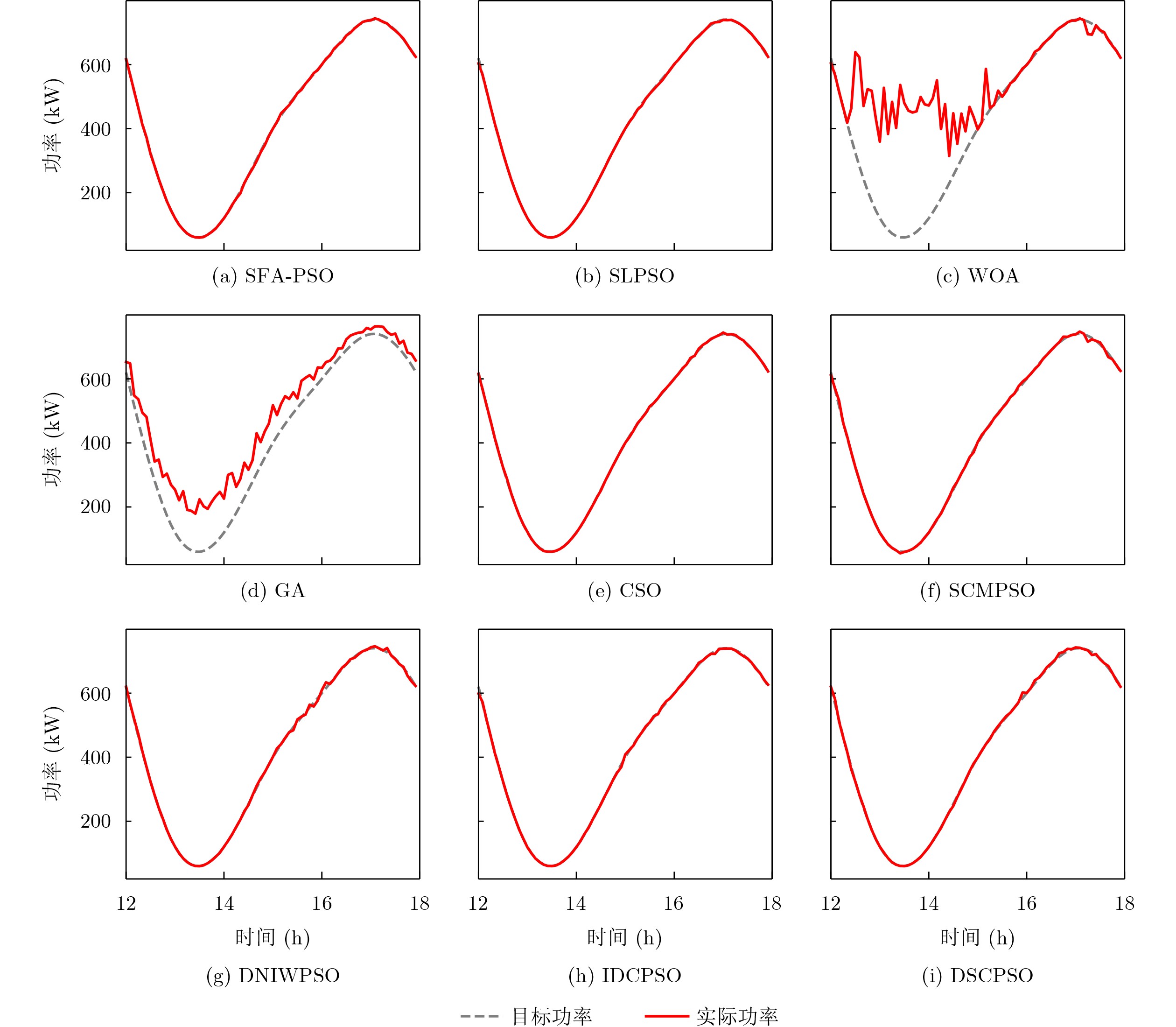
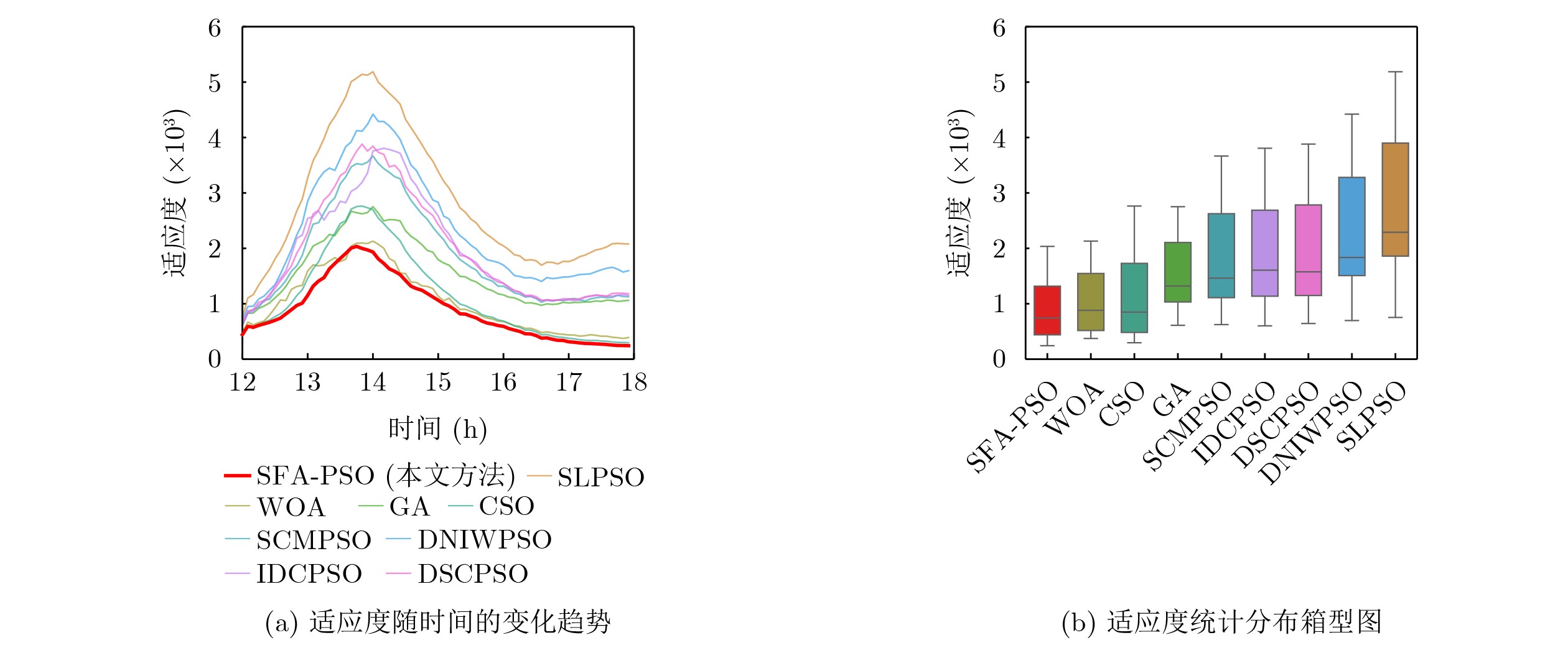
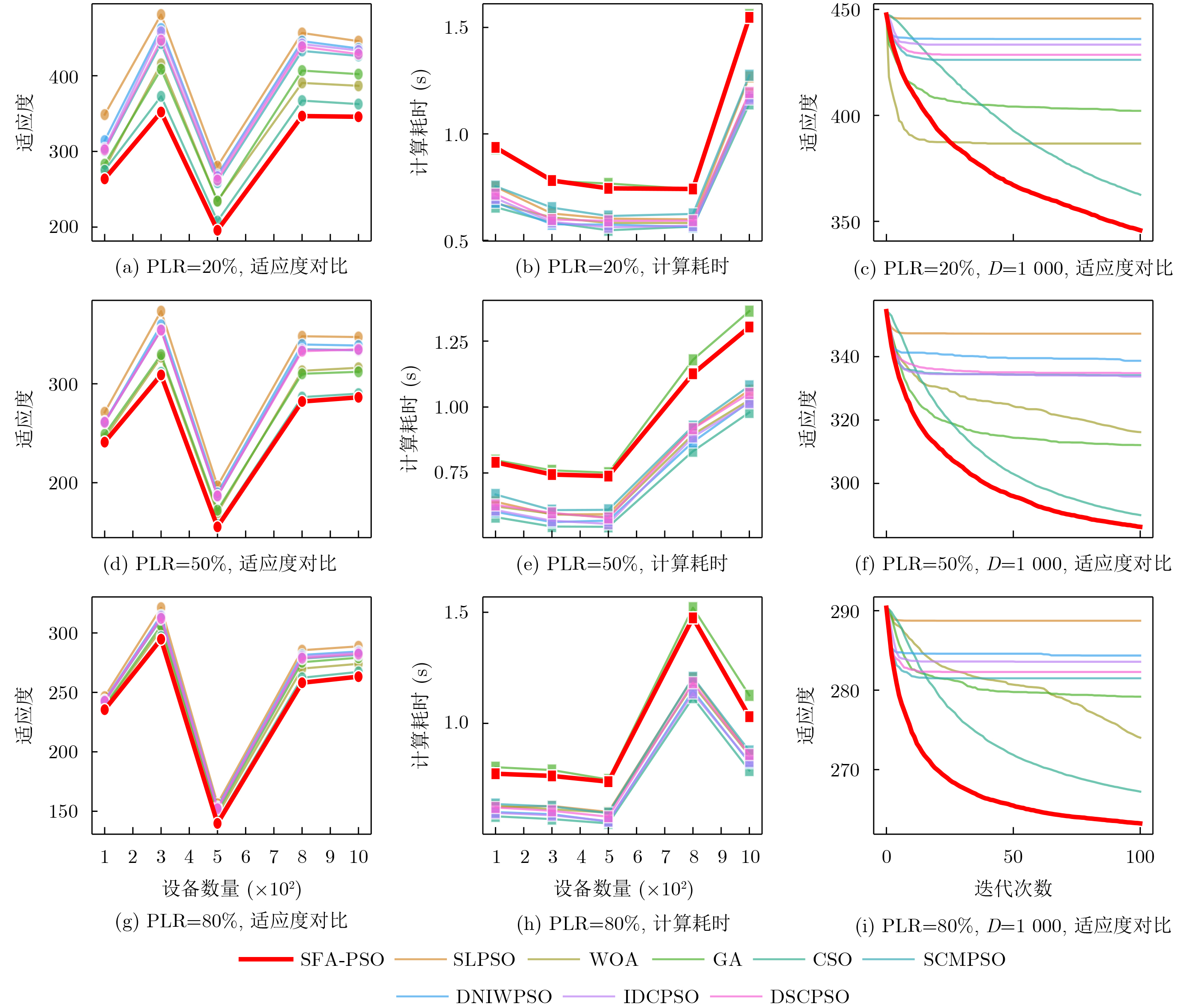
  Objective  Supply-demand imbalances in modern distribution networks are intensified by the increasing penetration of distributed renewable energy and frequent extreme high-temperature events. Large-scale Inverter Air-Conditioning (IAC) clusters can be aggregated as virtual energy storage resources for Demand Response (DR), providing an effective way to improve grid flexibility. However, existing dispatch strategies are often limited by the curse of dimensionality. Conventional penalty-function-based soft constraints also fail to strictly satisfy aggregate power equality constraints and may introduce steady-state errors. This paper develops an optimization framework in which grid-side power commands are accurately tracked while user thermal discomfort is reduced and fairness among heterogeneous users is maintained.  Methods  A multi-objective optimization framework based on an Equivalent Thermal Parameter (ETP) model is established to describe the thermodynamic states of heterogeneous buildings. To balance collective comfort and individual fairness, a composite fitness function is designed by integrating a weighted mean-squared error term, a fairness variance term, and a maximum violation suppression term. To eliminate the steady-state errors of traditional penalty-based methods, a Spatial-Fitness Adaptive Particle Swarm Optimization (SFA-PSO) algorithm is proposed. A geometric constraint surface projection mechanism maps particles strictly onto the power-conservation hyperplane, thereby satisfying the aggregate power equality constraint. In addition, the learning factors are dynamically adjusted through a Spatial-Fitness Adaptive (SFA) strategy. This strategy measures the mismatch between a particle’s fitness rank and spatial distance rank, which helps prevent premature convergence in high-dimensional search spaces.  Results and Discussions  Extensive continuous scheduling simulations are conducted in a complex dynamic environment. The environment includes multi-source thermal disturbances, a bidirectional communication packet loss rate of 1%, and Part Load Ratio (PLR) values of 20%, 50%, and 80%. First, ablation experiments confirm that constraint surface projection guarantees power tracking accuracy. Traditional penalty-based methods, such as Penalty Particle Swarm Optimization (Penalty-PSO), produce steady-state power deviations of approximately 10–1 kW. By contrast, SFA-PSO limits aggregate power tracking errors to within 10–9 kW (Fig. 3). The SFA strategy also prevents the premature convergence observed in Physical Particle Swarm Optimization (Phy-PSO). It enables continuous fitness reduction, especially in low-load scenarios with narrow feasible regions (Fig. 4). This improvement is attributed to the dynamic evolution of the learning factors. The cognitive factor remains high at the early stage to promote global exploration. It then decreases as the social factor increases, which strengthens local exploitation and improves convergence precision (Fig. 5). Second, continuous dynamic scheduling performance is evaluated through a 6-hour simulation during the peak load period from 12:00 to 18:00. The dispatch interval is 5 min, yielding 72 decision steps. Under tight peak-load constraints, Genetic Algorithm (GA) and Whale Optimization Algorithm (WOA) show severe power-limit violations because their population update rules do not cooperate well with the projection mechanism. By contrast, SFA-PSO maintains strict constraint satisfaction (Fig. 7). SFA-PSO remains at the lowest fitness level throughout the real-time evolution curves, indicating strong robustness against environmental thermal noise and uplink and downlink communication packet loss (Fig. 8). Quantitatively, compared with eight baseline algorithms, including Social Learning Particle Swarm Optimization (SLPSO), Competitive Swarm Optimizer (CSO), and Dynamic State Cluster-Based Particle Swarm Optimization (DSCPSO), SFA-PSO achieves the best overall performance. It obtains an average fitness of 904, a minimum fitness of 243, and the lowest standard deviation of 551 (Table 2). Finally, scalability analyses across cluster sizes from 100 to 1,000 nodes further validate the high-dimensional optimization capability of SFA-PSO. In all scale scenarios, SFA-PSO shows the strongest optimization capacity. It achieves rapid initial descent within the first 20 iterations and maintains continuous exploration in later stages (Fig. 9). Although the projection and SFA mechanisms increase computational time by 30% to 50% compared with basic Particle Swarm Optimization (PSO) (Fig. 6), the absolute optimization time remains stable at approximately 1.5 seconds even for a 1 000-node cluster (Fig. 9). This computational overhead is acceptable for minute-level control cycles and meets the real-time dispatch requirements of modern smart grids.  Conclusions  The proposed SFA-PSO algorithm effectively addresses the steady-state error of traditional soft-constraint methods in aggregate power control. By ensuring accurate tracking of dispatch commands and mitigating high-dimensional search traps, it provides a robust and scalable solution for flexible scheduling of large-scale IAC loads in smart grids. It also maintains a practical balance between grid-side regulation and user-side comfort. The method still has limitations. The constraint projection mechanism depends on the host algorithm, which restricts cross-algorithm generalization. High-precision tracking also increases computational cost. Future work will focus on adaptive constraint handling and lightweight algorithm design. Coordinated scheduling for heterogeneous loads, such as electric vehicles and energy storage, will also be investigated.
Hierarchical Attention Mechanism-based Path Planning for Multi-UAV Inspection
FEI Bowen, XING Wenjie, LIU Daqian
2026, 48(8): 3370-3382. doi: 10.11999/JEIT260192
Abstract:
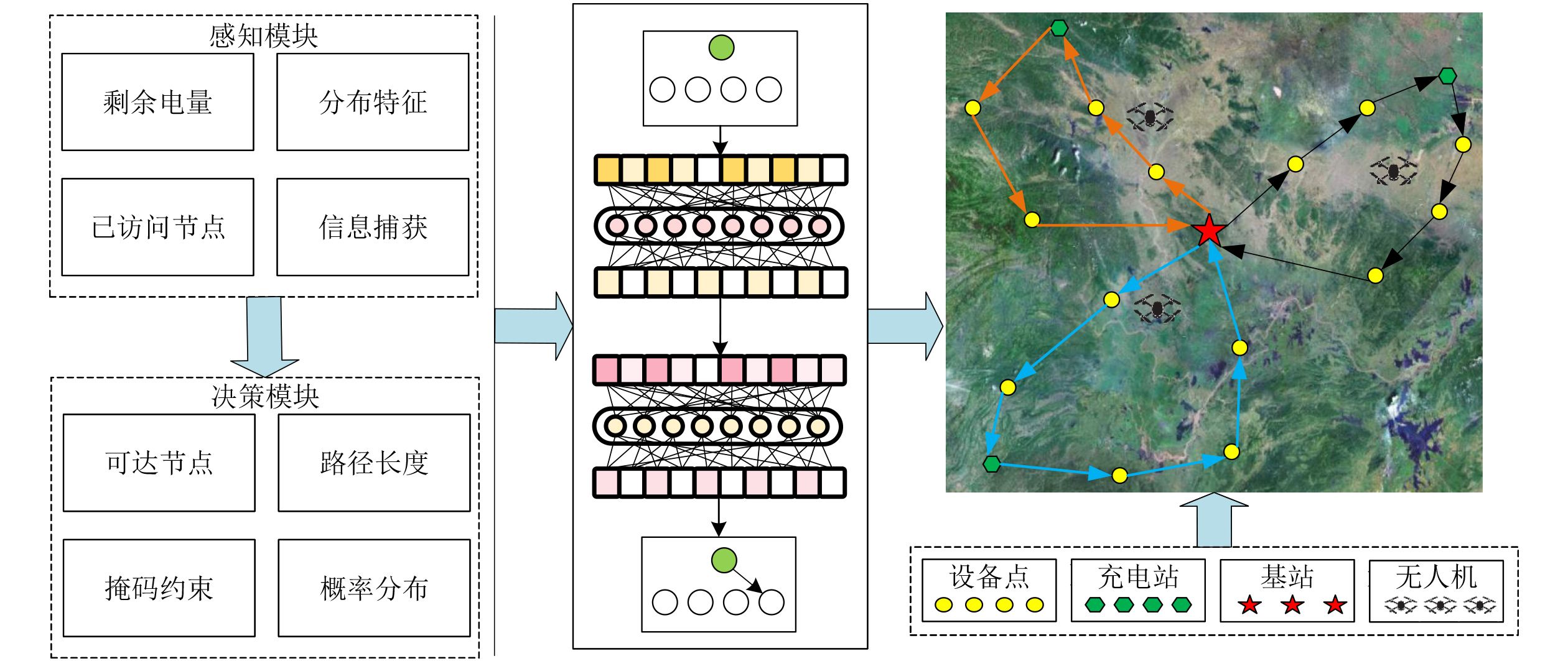
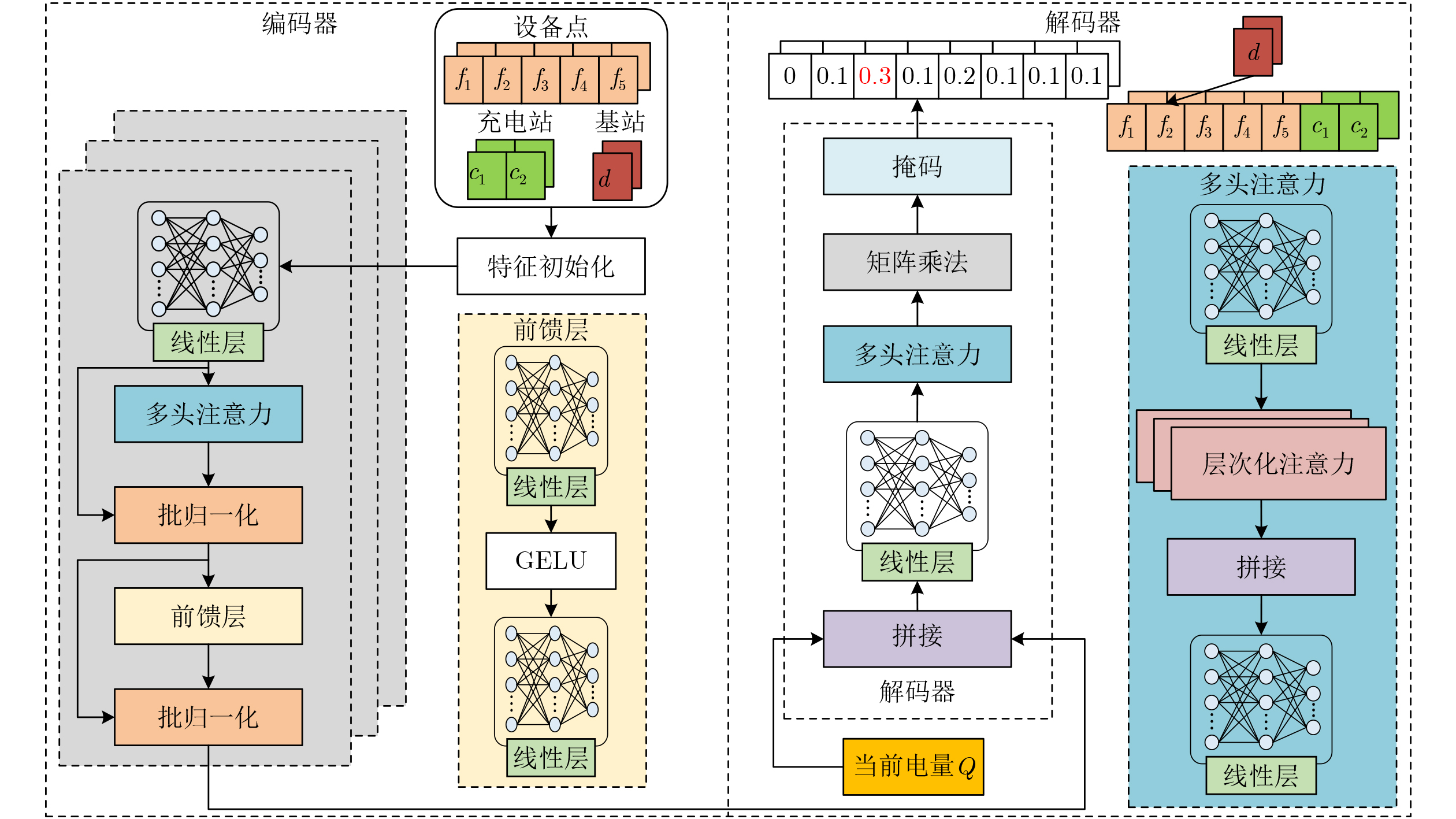
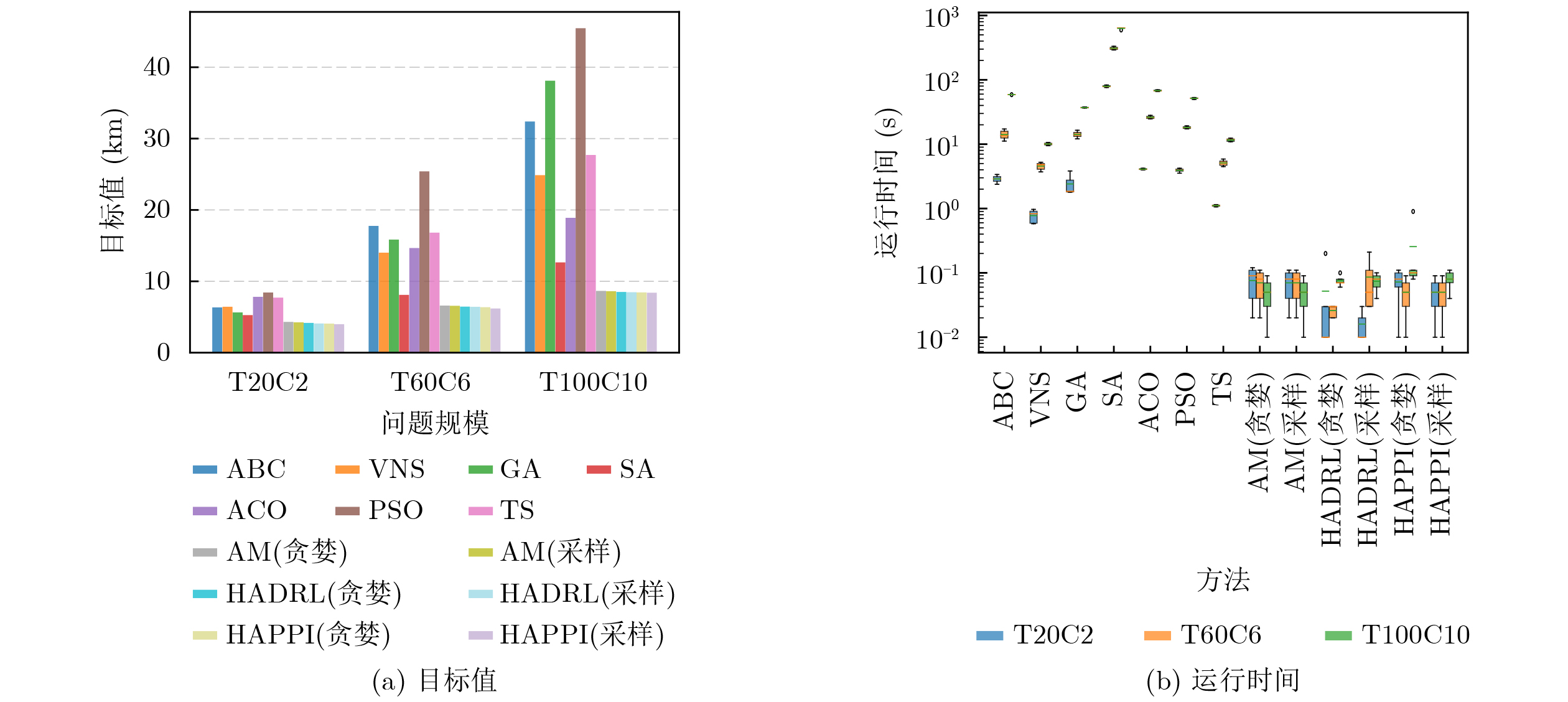
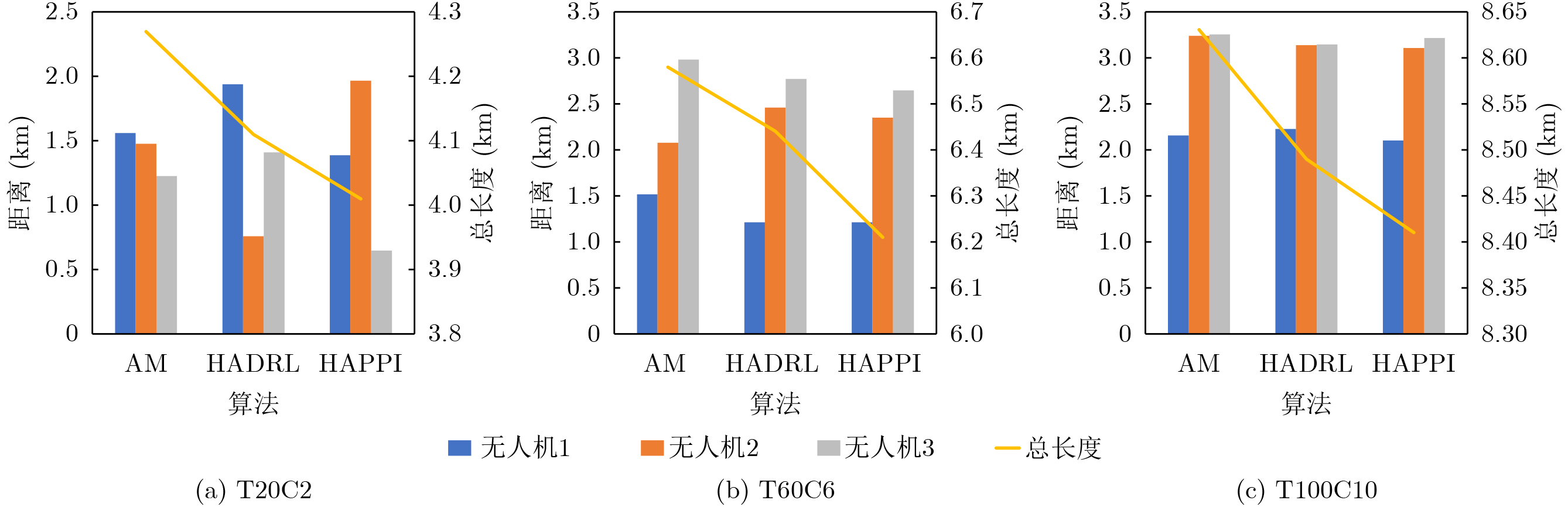
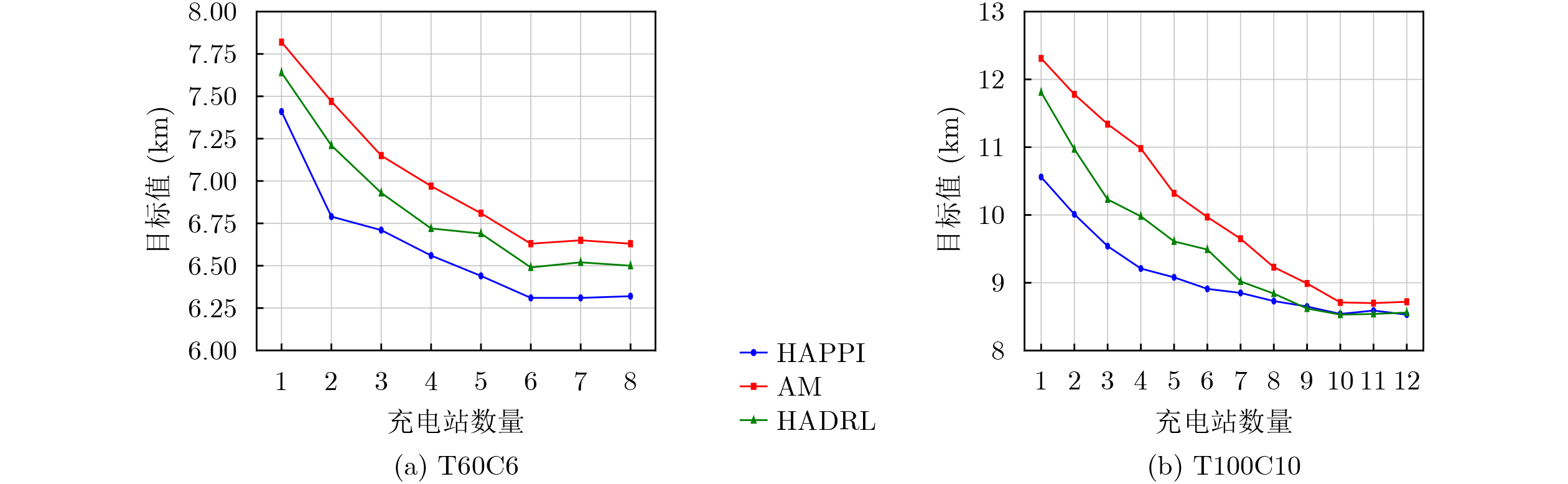
  Objective  In modern power inspection, the use of multiple Unmanned Aerial Vehicles (UAVs) for cooperative inspection is an efficient but challenging task. Existing multi-UAV path planning methods often have limited cooperative scheduling capability. They also fail to accurately capture the topological relationships among heterogeneous nodes, especially those between device nodes and charging stations under strict energy constraints. To address these limitations, this paper proposes Hierarchical Attention mechanism-based Path Planning for multi-UAV Inspection (HAPPI). The objective is to minimize the total flight distance of the UAV fleet while ensuring that all device nodes are inspected and all UAVs safely return to the base station under energy and visit-count constraints.  Methods  The multi-UAV power inspection problem is first formulated as a combinatorial optimization problem with energy constraints. It is then modeled within a Markov Decision Process (MDP) framework. To solve this problem, HAPPI adopts an encoder-decoder architecture with a customized hierarchical attention mechanism. The encoder uses a multi-level attention design to model three types of node relationships. Self-attention among device nodes is used to learn spatial proximity and visit-order preferences. Cross-attention between device nodes and charging stations is used to model energy supply-demand relationships. Self-attention among charging stations is used to explicitly capture the topological structure of the charging-station network. This hierarchical design enables the model to distinguish functional differences and dependencies among heterogeneous nodes. The decoder integrates the global graph embedding, the embedding of the last visited node, and the current remaining energy of the UAV to generate a context vector. A single-head attention mechanism is then used to compute compatibility scores for all candidate nodes. A masking strategy excludes infeasible nodes, including visited nodes, unreachable nodes, nodes that would prevent the UAV from reaching a charging station, and premature returns to the base station. The final node is selected from a probability distribution generated by softmax, which supports both greedy and sampling decoding strategies. The policy network is trained using reinforcement learning, and a baseline network is used to stabilize training. Policy-gradient optimization is used to minimize the expected total path length (Fig. 2).  Results and Discussions  Extensive simulations are conducted on three problem scales: T20C2, with 20 device nodes and 2 charging stations; T60C6, with 60 device nodes and 6 charging stations; and T100C10, with 100 device nodes and 10 charging stations. The training results show that HAPPI achieves faster convergence and a lower final cost than the baseline Attention Model (AM) and Heterogeneous Attention-based Deep Reinforcement Learning (HADRL) methods (Fig. 4). In the comprehensive performance comparison, HAPPI with sampling obtains the shortest total path lengths on T60C6 and T100C10, with values of 6.21 and 8.41, respectively. It outperforms five classical metaheuristic algorithms and two deep reinforcement learning baselines on these two larger-scale scenarios (Table 1). On T20C2, HADRL with sampling achieves the shortest path length, whereas HAPPI remains highly competitive. Overall, HAPPI reduces the total path length by approximately 12% on average compared with the baseline methods. The visualization results show that HAPPI generates routes with fewer route crossovers and a more balanced workload among UAVs, improving safety and efficiency (Fig. 6 and Fig. 7). The single-UAV path length distribution further confirms the superior load-balancing capability of HAPPI across all problem scales (Fig. 8).  Conclusions  This paper presents HAPPI, a hierarchical attention mechanism-based deep reinforcement learning method for cooperative path planning in multi-UAV power inspection scenarios with multiple charging stations. By explicitly modeling spatial relationships among device nodes, energy dependencies between device nodes and charging stations, and the internal topology of the charging-station network, HAPPI improves information aggregation and constraint satisfaction. Experimental results across different problem scales show that HAPPI achieves higher planning quality, greater computational efficiency, and stronger generalization than heuristic and learning-based comparison methods. Future work will extend this framework to multi-objective optimization that considers time, risk, and energy trade-offs, and will further validate the method using real-world inspection data.
LLMA-GCN: A Semantically Enhanced Hierarchical Spatiotemporal Graph Convolutional Network for Skeleton-based Action Recognition
JIA Guimin, ZHOU Xilong
2026, 48(8): 3383-3394. doi: 10.11999/JEIT260154
Abstract:
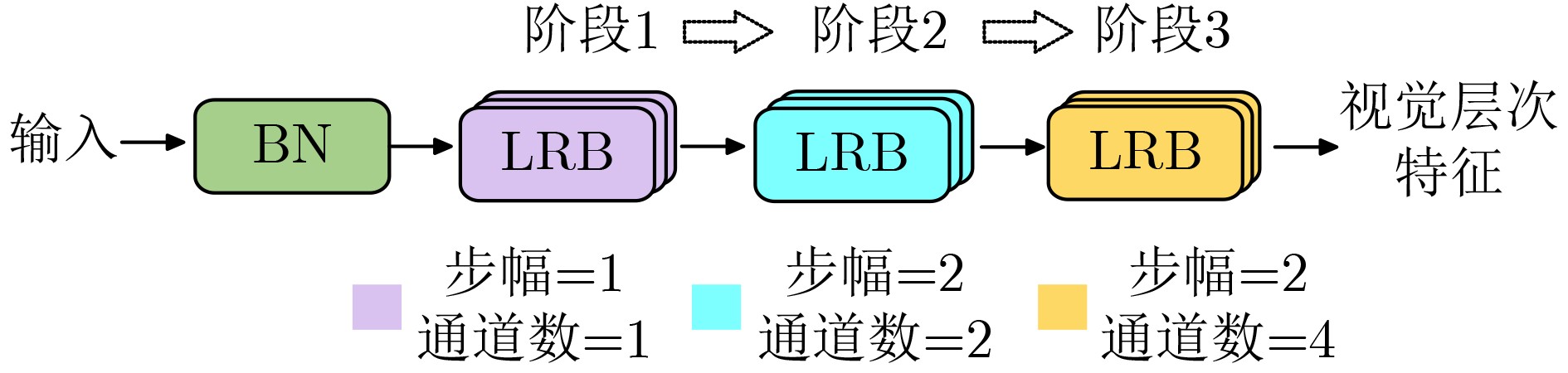
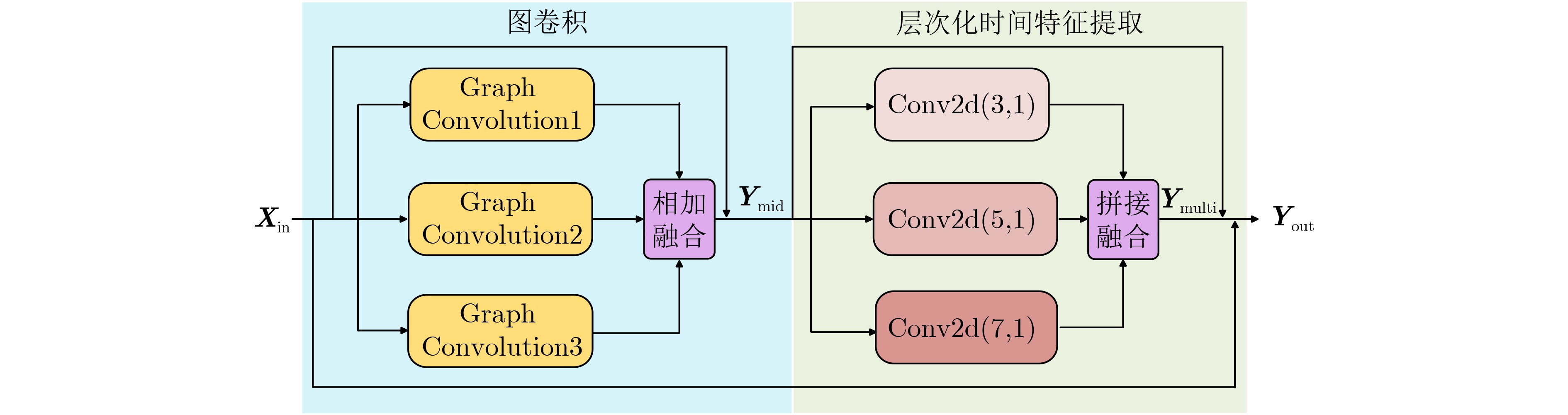
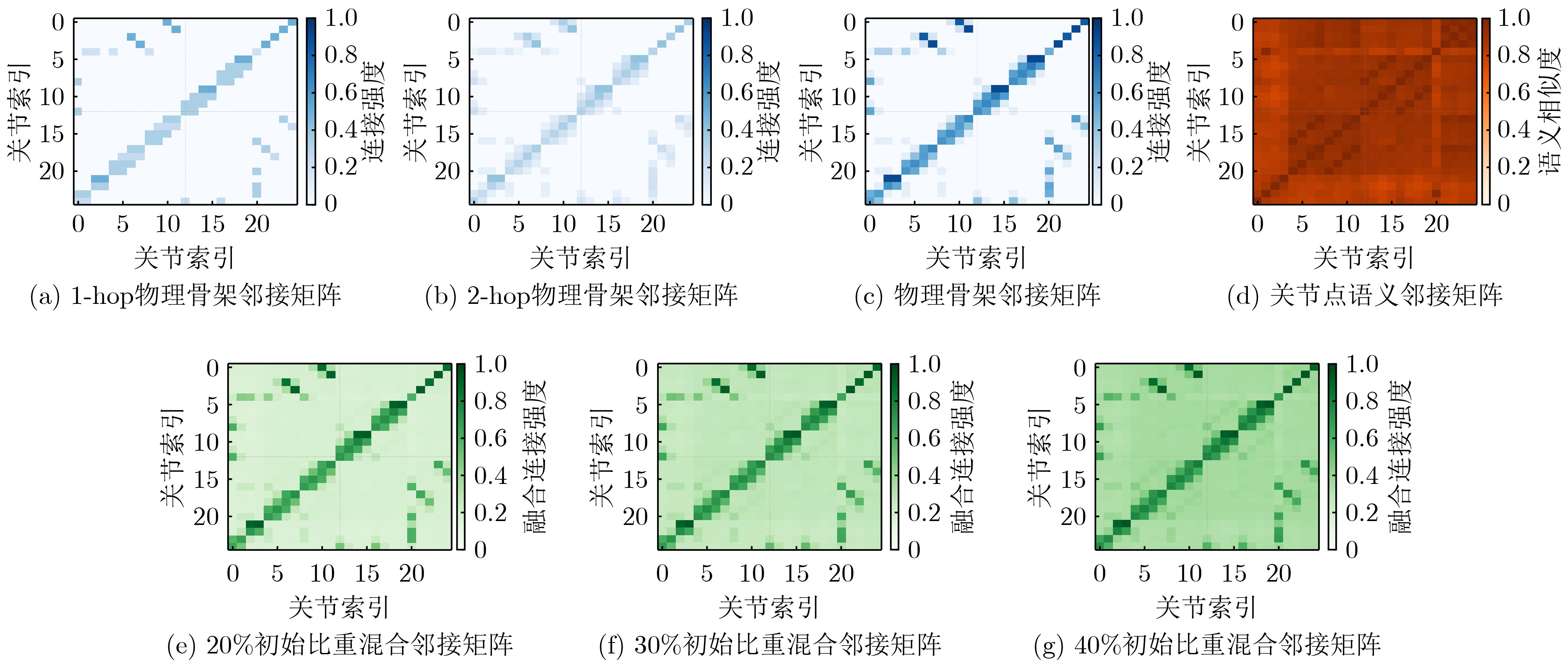
  Objective  Current methods that introduce the Large Language Model (LLM) into skeleton-based action recognition face three main limitations. Semantic guidance remains decoupled from spatial topology learning, temporal modeling lacks hierarchical semantic support, and traditional classification paradigms have limited generalization. To address these issues, this paper proposes LLMA-GCN, a semantically enhanced graph convolutional framework. The proposed framework integrates LLM-derived semantic prior knowledge with graph convolution to improve spatiotemporal feature learning and action classification.  Methods  LLMA-GCN uses visual skeleton data and semantic inputs in a dual-branch framework. Frozen LLMs and prompt engineering are used to precompute the joint semantic adjacency matrix and action text prototypes. The framework consists of three main components: an LLM-based hybrid graph topology learning strategy, a hierarchical visual sequence encoder based on the LLM Refinement Block (LRB), and an action text-prototype-guided decision learning mechanism. These components enable semantic guidance in graph topology learning, hierarchical spatiotemporal feature extraction, and visual-text alignment.  Results and Discussions  Experiments on NTU RGB+D 60, NTU RGB+D 120, and PKU-MMD I show that LLMA-GCN achieves competitive or superior performance compared with state-of-the-art methods. Ablation studies confirm the key roles of the hybrid graph topology, the LRB, and the action text-prototype-guided decision learning mechanism. Model-complexity analysis further indicates the potential of the proposed framework for practical application.  Conclusions  By fusing the joint semantic adjacency matrix and the physical adjacency matrix, LLMA-GCN enables action semantics to directly guide graph convolution and improves semantic perception. The LRB embeds semantic information into hierarchical spatiotemporal feature extraction, which strengthens the modeling of complex actions. The action text-prototype-guided decision learning mechanism further shifts skeleton-based action recognition from purely visual classification to text-prototype-guided visual-text alignment. Overall, LLMA-GCN provides a robust and generalizable framework for skeleton-based action recognition through deep fusion of visual and semantic features.
A Semantic-Enhanced Cybersecurity Named Entity Recognition Approach Oriented to Lightweight Adaptation of Large Language Models
HU Ze, XU Tongwu, YANG Hongyu
2026, 48(8): 3395-3406. doi: 10.11999/JEIT251260
Abstract:
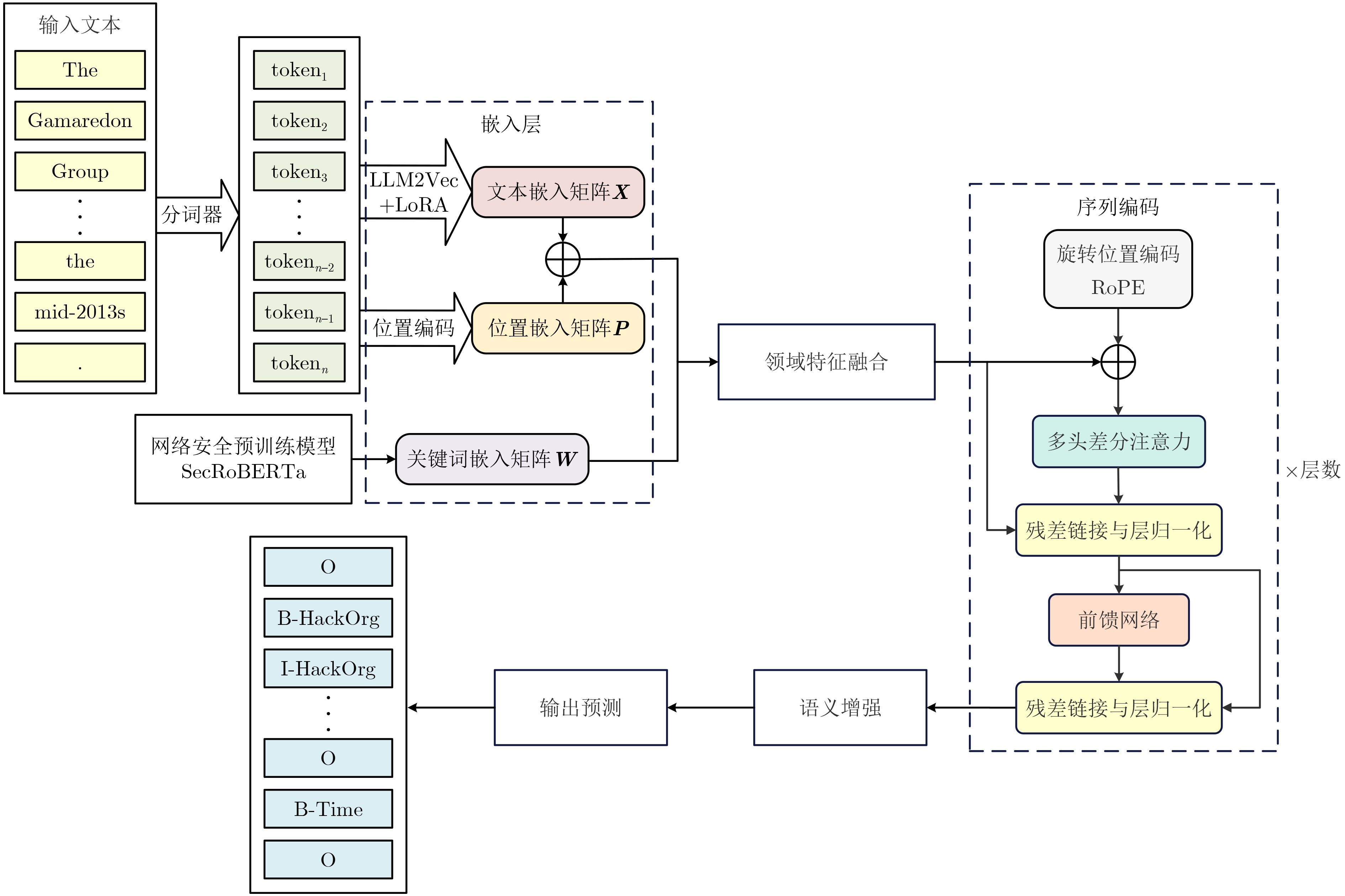
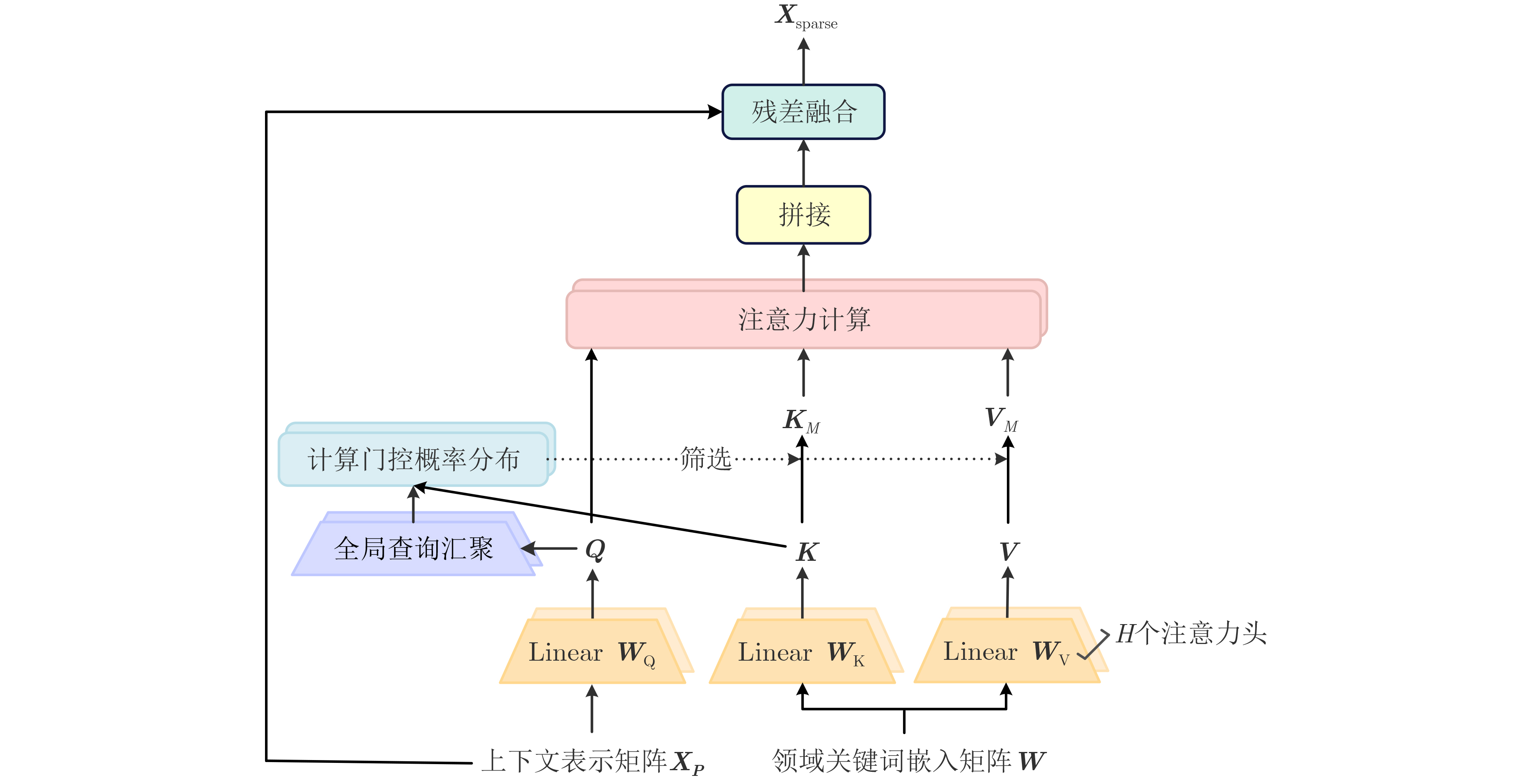
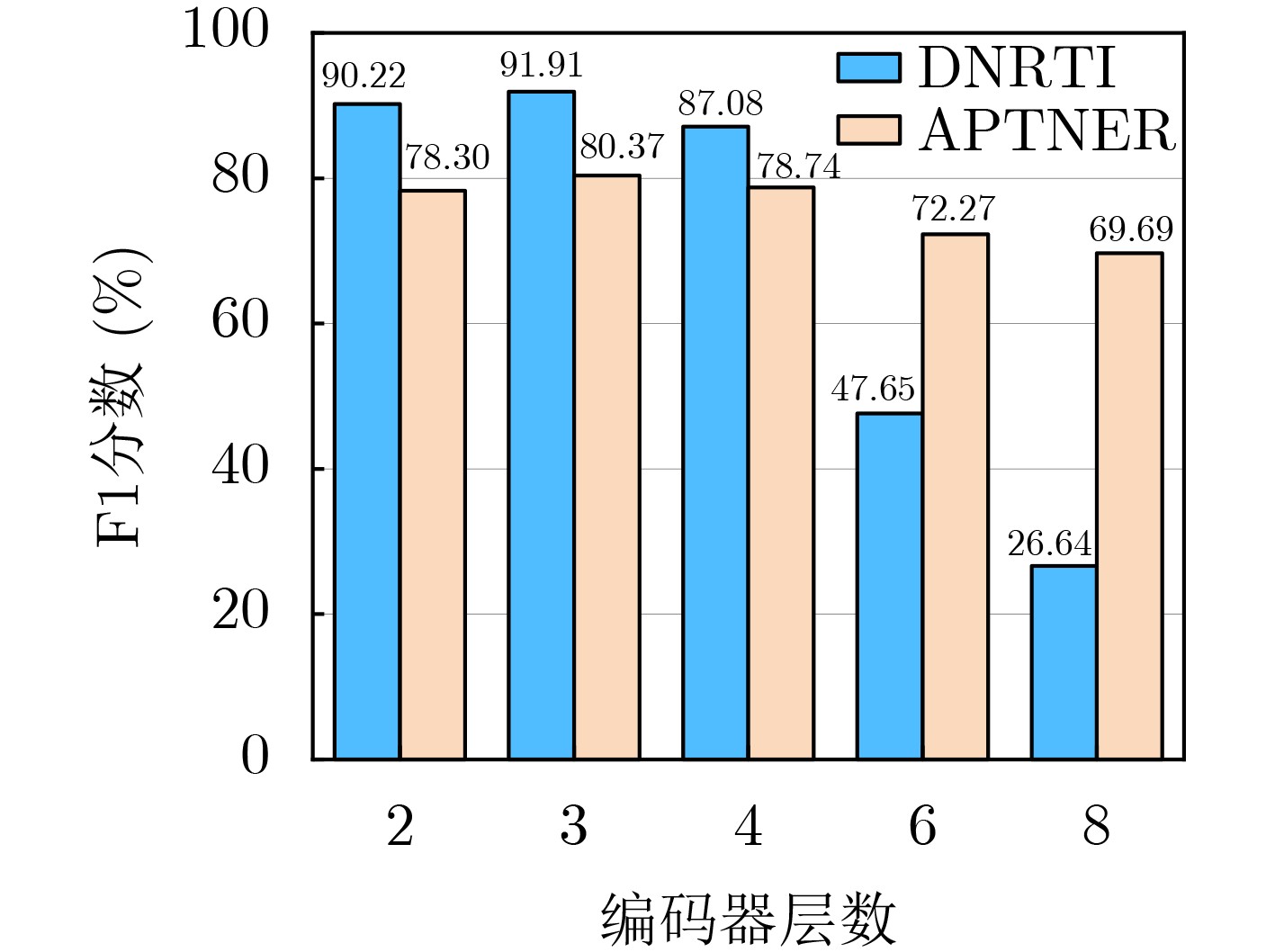
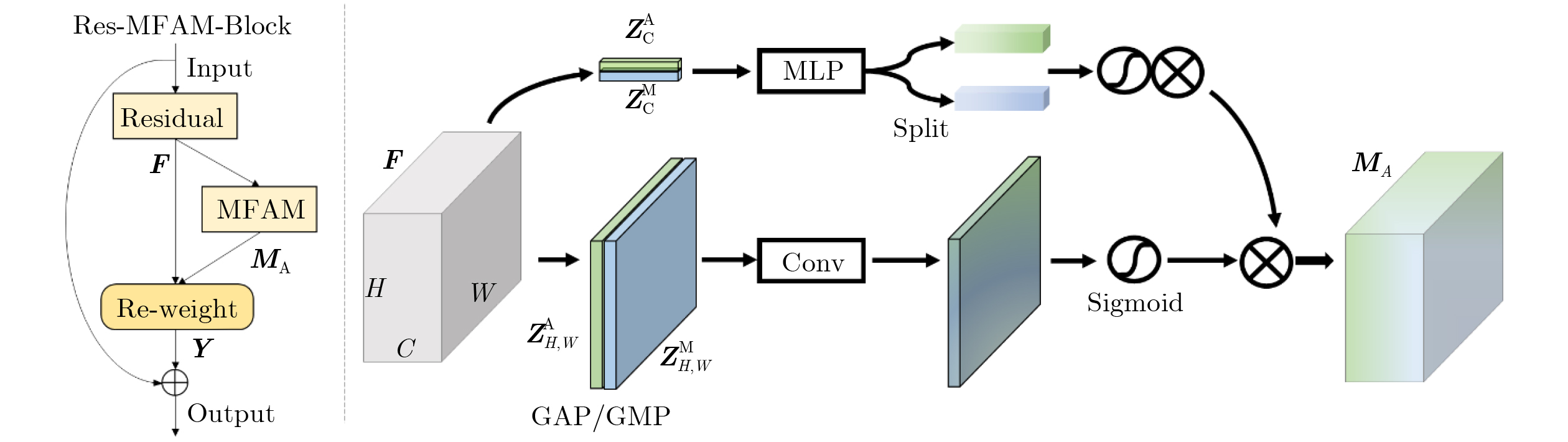
  Objective  Named Entity Recognition (NER) in cybersecurity is a core technology for threat intelligence analysis, vulnerability management, and security incident response. However, this field faces several challenges, including dense technical terminology, limited labeled data, dynamic entity categories, and highly complex semantic features. These factors reduce the domain adaptability and semantic fusion capacity of traditional deep learning models and existing Large Language Models (LLMs). To address these issues while meeting the need for lightweight deployment, a cybersecurity NER approach is proposed to strengthen domain semantic representation, improve rare-entity recognition, and support low-resource environments. This approach provides a reliable technical path for intelligent threat analysis in cybersecurity scenarios.  Methods  To address the complex semantic features of cybersecurity texts, a semantically enhanced, lightweight, and LLM-adaptable cybersecurity NER approach is proposed. LLM2Vec is used to achieve bidirectional semantic reconstruction of large-model decoders, and Low-Rank Adaptation (LoRA) is combined for low-rank fine-tuning. This design preserves deep semantic encoding capacity while substantially reducing the number of updated parameters. To address sparse keywords and severe noise interference in cybersecurity texts, a sparse gated attention mechanism is proposed to strengthen keyword-focused feature extraction. High-contribution cybersecurity terms are selected dynamically through global gating and sparse inference. A SecRoBERTa-based semantic enhancement module is also proposed. This module uses a domain-pretrained model to generate similar-word embeddings, improves feature robustness in small-sample settings, and reduces the difficulty of identifying out-of-vocabulary words and low-frequency terms. Finally, a Masked Conditional Random Field (MCRF) is used to constrain label transitions and ensure BIO-compliant output sequences, thereby achieving robust and consistent entity boundary prediction.  Results and Discussions  Extensive experiments are conducted on two public cybersecurity datasets, DNRTI and APTNER. The proposed approach achieves an F1 score of 91.91% on DNRTI, exceeding the previous state-of-the-art model by 2.14%. On APTNER, it achieves an F1 score of 80.37%, exceeding the best baseline by 2.97%. Ablation studies confirm the contribution of each key component. The sparse gated attention mechanism improves F1 by 3.57% over standard multi-head attention on DNRTI. The semantic enhancement module contributes a 2.32% increase in F1. The model also shows efficient training and inference, consistent with the goals of lightweight design.  Conclusions  A lightweight LLM-based adaptation approach is proposed for NER in the cybersecurity domain. The approach effectively addresses the limitations of existing LLM-based NER methods in domain adaptation and rare-entity recognition. By integrating LLM2Vec and LoRA for lightweight fine-tuning, a sparse gated attention mechanism for domain feature fusion, and a SecRoBERTa-based semantic enhancement module for similar-word precomputation, the proposed approach achieves strong performance on the DNRTI and APTNER datasets. This research provides an efficient technical path for NER tasks in low-resource cybersecurity scenarios and supports downstream tasks such as automated threat intelligence analysis.
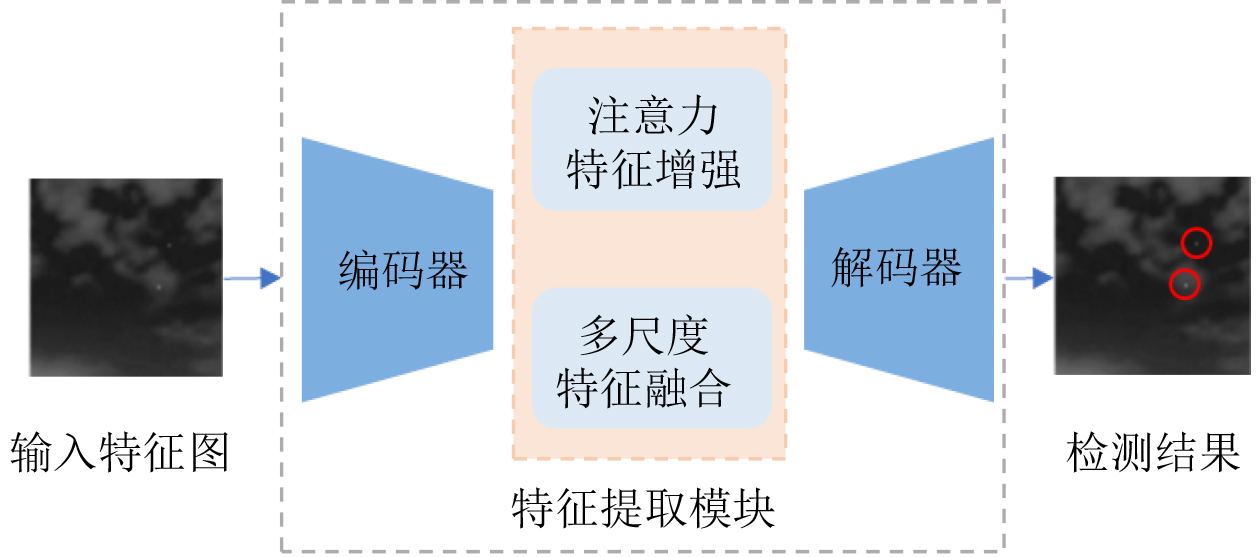
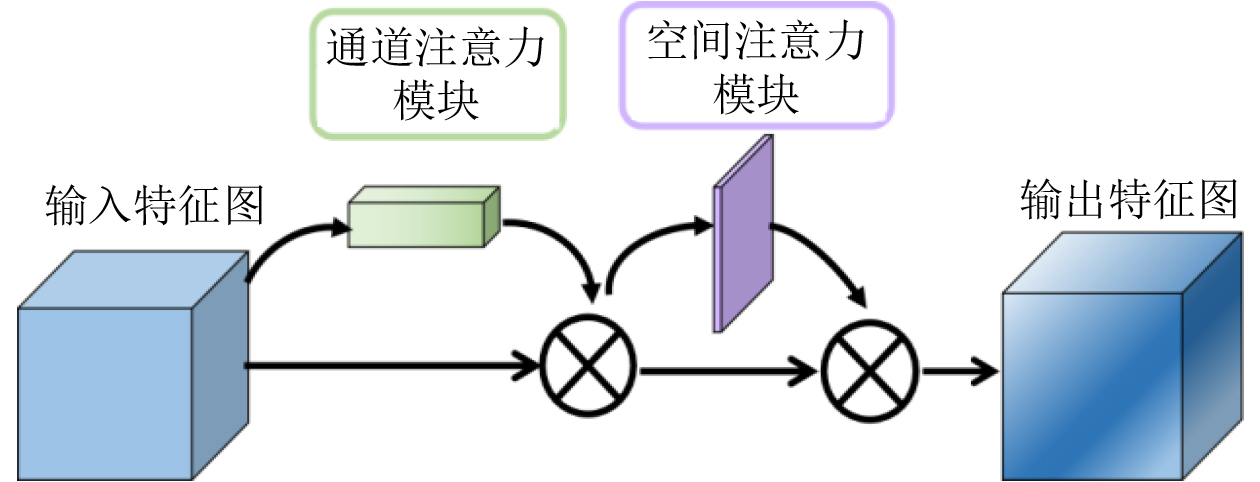
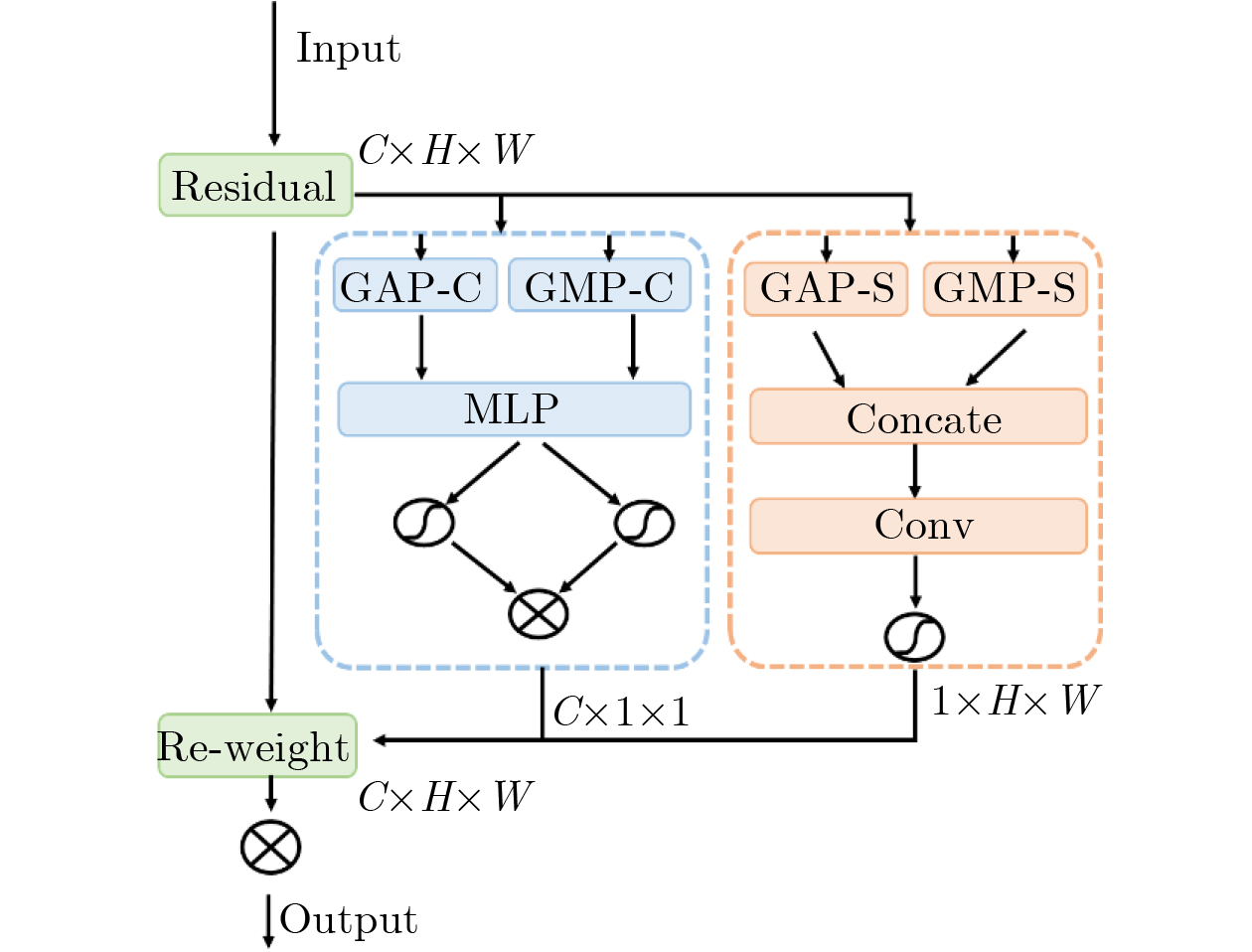
Infrared Small Target Detection Enhanced by Multi-Dimensional Fusion Attention
LI Weixing, WANG Shuai, CHEN Huaiyu, SHENG Weidong
2026, 48(8): 3407-3418. doi: 10.11999/JEIT260040
Abstract:
  Objective  Infrared imaging offers advantages including long operating range, wide coverage, high concealment, and all-weather operation, making it suitable for aerospace surveillance, maritime emergency rescue, forest fire monitoring, and remote sensing. Infrared sensors mounted on satellites and aircraft typically acquire long-range images in which targets occupy only a few pixels and lack discriminative texture and shape features. Moreover, weak thermal radiation signals are easily overwhelmed by background clutter. Existing infrared small target detection networks face two major challenges. First, repeated downsampling used to enlarge the receptive field causes small-target features to disappear in deep networks. Second, small-target features become increasingly diffused during deep feature extraction. Therefore, achieving accurate and reliable infrared small target detection under long-range imaging and complex background conditions remains an active research topic.  Methods  A Multi-Dimensional Fusion Attention Module (MFAM) based on channel-spatial attention is proposed to address feature diffusion caused by the small size of infrared targets. The proposed module captures feature dependencies across the channel, height, and width dimensions. Feature fusion and cross-dimensional interaction are jointly exploited to suppress the diffusion of small-target features in deep networks and strengthen the representation of weak infrared targets. Channel attention and spatial attention are applied in parallel directly to the input feature map, enabling feature extraction and information interaction in the channel and spatial domains, respectively. In the channel domain, compressed features are processed using a Multi-Layer Perceptron (MLP) to model inter-channel dependencies. In the spatial domain, Global Average Pooling (GAP) and Global Maximum Pooling (GMP) encode spatial information along the height and width dimensions. The outputs of the two branches are fused through a Sigmoid activation function to generate the final attention map. Unlike conventional hybrid attention mechanisms that connect channel attention and spatial attention sequentially, the proposed parallel architecture performs refined encoding of the channel, height, and width dimensions directly from the original input feature map. This design preserves both shallow spatial details and deep contextual semantics while reducing information loss during feature propagation. Owing to its plug-and-play design, MFAM can be seamlessly integrated into backbone networks such as ResNet and DNA-Net without introducing complex additional structures, demonstrating excellent compatibility.  Results and Discussions  The proposed method is evaluated on the publicly available NUDT-SIRST dataset. After MFAM is integrated into the baseline DNA-Net, the Intersection over Union (IoU), detection rate (Pd), and false alarm rate (Fa) reach 87.34%, 98.72%, and 3.22×10⁻⁶, respectively. Compared with CBAM, BAM, GAM, CA, and TA, MFAM improves IoU by 0.40%, 1.68%, 2.46%, 2.11%, and 1.61%, respectively (Table 1). CBAM applies spatial attention after channel attention, which increases the risk of information loss during feature propagation. CA and BAM rely solely on GAP for feature encoding and therefore fail to exploit the complementary information provided by GMP. TA models cross-dimensional dependencies through rotation operations but cannot achieve simultaneous interaction among the channel, height, and width dimensions. By jointly integrating channel and spatial attention, MFAM enables effective cross-domain information interaction. The combined use of GAP and GMP further strengthens contextual and local feature representation, resulting in more accurate infrared small target detection. MFAM is also incorporated into ALCNet and AMFU-Net, improving IoU by 0.43% and 0.28%, respectively, compared with CBAM (Table 2). Ablation experiments further demonstrate the effectiveness of the proposed design. Compared with the serial attention architecture, the parallel fusion strategy improves IoU and Pd by 0.37% and 0.39%, respectively, while reducing Fa by 1.41×10⁻⁶. These improvements result from applying channel attention and spatial attention directly to the original input feature map, thereby alleviating the diffusion of small-target features in deep networks. To verify inference performance on edge devices, the proposed method is deployed on an FPGA-GPU heterogeneous platform based on an FPGA and an NVIDIA Jetson AGX Xavier. Experimental results demonstrate successful edge deployment, with an average inference latency of 46.7 ms per 256×256 image (Fig. 8), satisfying real-time processing requirements.  Conclusions  A MFAM is proposed for infrared small target detection. The module effectively aggregates channel and spatial salient features while enabling adaptive cross-dimensional interaction, thereby improving the preservation of small-target features in deep networks and enhancing detection robustness. Owing to its lightweight plug-and-play design, MFAM can be readily integrated into existing detection networks. Experimental results demonstrate superior performance over existing methods in terms of IoU, Pd, and Fa. Furthermore, a lightweight intelligent processing unit based on an FPGA-GPU heterogeneous platform is developed to enable real-time deployment of the proposed algorithm on edge devices, demonstrating its practicality for engineering applications.
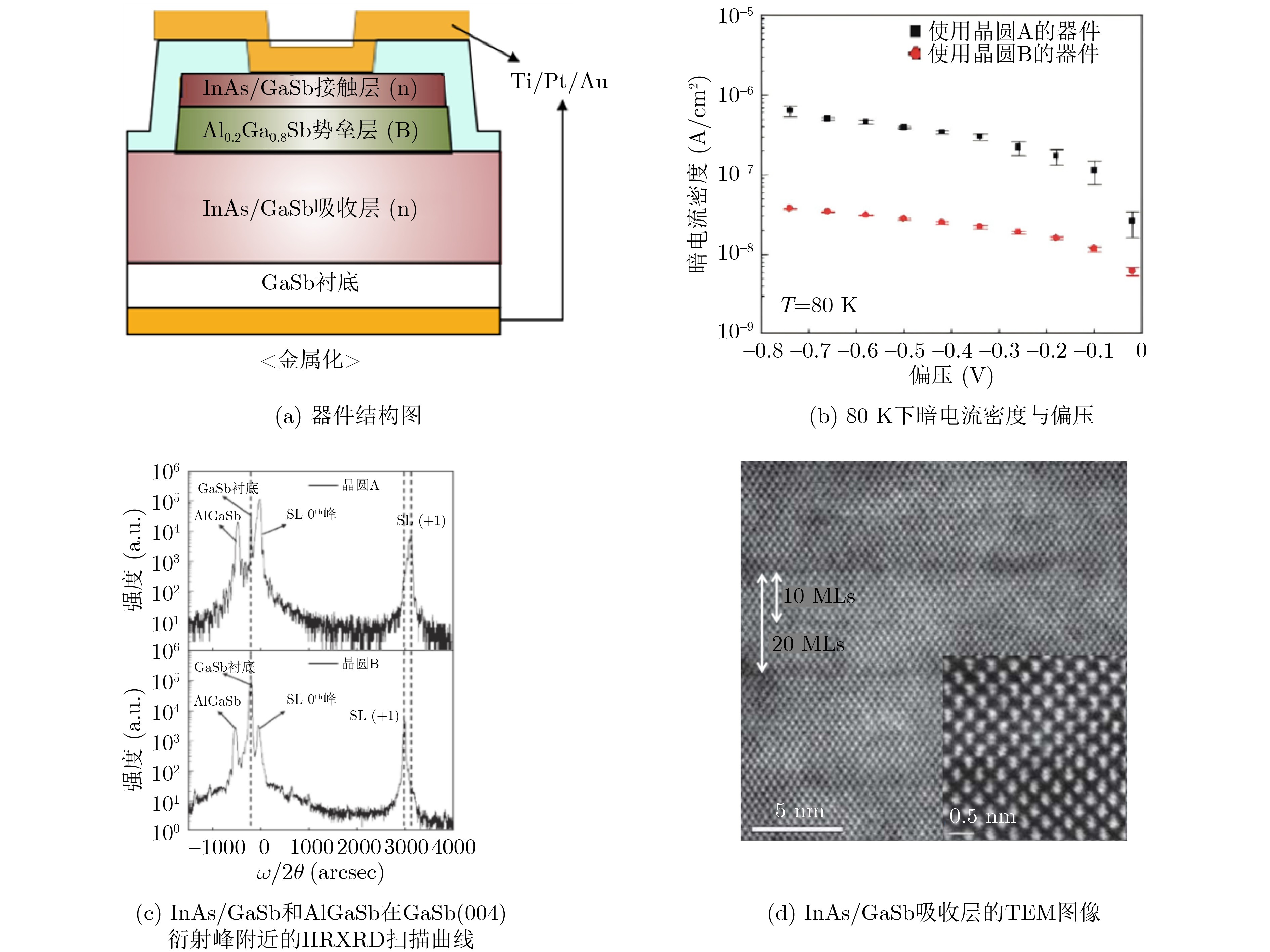
MGM-3DUNet: A Multi-scale Edge Semantic-guided GraphConvolutional Sequence Method for Brain Tumor Segmentation
ZHUANG Jianjun, LI Xiang, JING Shenghua, LÜ Zhenglong
2026, 48(8): 3419-3430. doi: 10.11999/JEIT260128
Abstract:
  Objective  Feature fusion in U-Net and its 3D variants mainly relies on simple single-scale concatenation, which limits the use of encoder features and weakens fine-grained segmentation of Tumor Core (TC) and Enhancing Tumor (ET) regions. Recent methods such as VM-UNet improve sequence modeling efficiency, but they mainly focus on global information modeling. Local detail preservation and edge enhancement remain insufficient. Therefore, current methods still have limitations in segmentation accuracy and clinical utility. To address these problems, this paper proposes MGM-3DUNet for brain tumor segmentation.  Methods  The Multi-scale Edge semantic Guidance Module (MEGM) is designed to improve tumor boundary segmentation through learnable edge detection. The Graph Convolutional Sequence Module (GCSM) combines the local aggregation ability of graph convolution with efficient long-range modeling based on a Mamba-like structure. This design improves semantic consistency while preserving small tumor structures with fewer parameters. The Multi-scale Context Perception Module (MCPM) is introduced to strengthen feature complementarity across different tumor scales through dual-scale fusion.  Results and Discussions   Experiments show that the proposed method achieves better average Dice similarity coefficient (Dice) and 95th percentile Hausdorff Distance (HD95) than the comparison methods. With only 2.3 M parameters, MGM-3DUNet achieves Dice values of 91.2%, 90.4%, and 89.2% for Whole Tumor (WT), TC, and ET, respectively. The visualization results (Fig. 9, Fig. 10) further show that MEGM improves boundary localization. Overall, the proposed method shows improved sensitivity to edge details and contextual correlations while maintaining a low parameter count.  Conclusions   This method improves tumor boundary prediction by introducing shallow-layer edge enhancement to emphasize tumor contours. Local and global semantic information is fused in the bottleneck layer, and multi-scale contextual features are integrated during decoding. The proposed design achieves accurate segmentation with low computational cost and is suitable for deployment on resource-constrained platforms.
Joint Optimization Method for Pairwise Constrained Projection Clustering Integrating a Two-row Simultaneous Update Strategy
ZHU Jianyong, CHEN Kun, YANG Hui, NIE Feiping
2026, 48(8): 3431-3442. doi: 10.11999/JEIT260111
Abstract:
  Objective  As data structures become increasingly complex, conventional unsupervised clustering methods often fail to achieve satisfactory performance. Semi-supervised clustering has therefore attracted growing attention because it uses limited prior information to improve clustering quality. However, existing methods have two major limitations. First, traditional constrained projection clustering algorithms usually use a two-step independent strategy, in which the projection matrix is learned before k-means clustering is performed. This separation allows projection errors to be propagated directly to the clustering stage, causing accumulated learning errors. In addition, applying pairwise constraints only during projection deviates from the goal of using prior information to guide clustering. Second, many existing methods, including spectral clustering-based approaches, handle pairwise constraints implicitly, for example through eigen-decomposition of a modified similarity matrix. Such implicit processing may not strictly satisfy the constraints, especially Cannot-Link (CL) constraints, which are non-transitive, resulting in high constraint violation rates. To address these issues, this paper proposes a joint optimization method for pairwise constrained Projection Clustering Integrating a Two-row simultaneous Update Strategy (PCITUS). The objective is to unify dimensionality reduction and clustering within a single framework to reduce information loss, while designing an explicit optimization strategy that lowers constraint violations and improves computational efficiency.  Methods  The proposed PCITUS model integrates constrained projection and clustering into a unified objective function for collaborative optimization, with pairwise constraints optimized directly. First, the algorithm uses the transitive property of Must-Link (ML) constraints. Samples belonging to the same ML connected component are merged into a single hyper-point in the feature space. This preprocessing step ensures that all ML constraints are naturally satisfied. A trade-off parameter is then introduced to incorporate projection learning into the clustering framework as a regularization term, allowing both components to be jointly optimized under one objective. Prior information is further embedded into the clustering process by transforming pairwise constraints into row-wise constraints on the indicator matrix. An improved coordinate descent method is then used to optimize the discrete indicator matrix directly, which improves computational efficiency and produces better clustering results. A key feature of PCITUS is the two-row simultaneous update strategy for CL constraints. PCITUS explicitly checks CL conflicts by simultaneously evaluating objective function values obtained by moving conflicting rows to suboptimal classes and then selects the case with the higher value.  Results and Discussions  Extensive experiments are conducted on eight benchmark datasets and compared with nine state-of-the-art semi-supervised clustering algorithms. Quantitative results based on ACCuracy (ACC) and Normalized Mutual Information (NMI) demonstrate the superiority of PCITUS (Table 4 and Table 5). PCITUS achieves the best performance on most datasets. In particular, on the Mushroom dataset, NMI is improved by 7.29% compared with the second-best algorithm. The comparison with CNP, a two-step projection method, confirms that the unified framework effectively reduces error propagation and information loss. This effect is also supported by the mutual reinforcement between projection and clustering: a better projection space produces a clearer clustering structure, while a more reasonable clustering structure guides the formation of a more discriminative projection space. The effectiveness of explicit constraint handling is further illustrated (Fig. 1). PCITUS produces no ML constraint violations because of the hyper-point merging strategy. For CL constraints, the two-row simultaneous update strategy enables PCITUS to maintain an extremely low violation rate, such as 0.57% on Mushroom and 0.41% on Satimage, greatly outperforming methods that handle constraints implicitly. Additionally, the parameter sensitivity analysis (Fig. 2) shows that PCITUS remains stable across a wide range of trade-off parameter values. The noise sensitivity experiments (Fig. 3(a) and Fig. 3(b)) confirm its robustness. The convergence curves (Fig. 3(c) and Fig. 3(d)) and runtime comparisons (Table 7) further verify its computational efficiency, showing rapid convergence and a stable objective function value within approximately 10 iterations in most cases.  Conclusions  This paper presents PCITUS, a semi-supervised clustering framework that jointly optimizes pairwise constrained projection and clustering structures. The method addresses the difficulty of optimizing CL constraints and overcomes the limitations of traditional constrained projection clustering frameworks based on a two-step separation scheme. By integrating the projection objective into the clustering framework as a regularizer, the proposed method enables subspace learning and data partitioning to reinforce each other and jointly approach the global optimum. Pairwise constraints are used throughout the learning process, allowing prior knowledge to guide optimization more fully. The coordinate descent method with the two-row simultaneous update strategy directly and accurately allocates samples under CL constraints, significantly reducing constraint violations. Experimental results show that PCITUS outperforms existing algorithms in clustering performance.
Resilience-Aware Cooperative Mission Planning Algorithm for Multiple UAV Systems in Complex Dynamic Environments
ZHAO Xuejian, XIE Lulu, WANG Enliang
2026, 48(8): 3443-3454. doi: 10.11999/JEIT260138
Abstract:
  Objective  This paper addresses the strongly coupled problem of task allocation and route planning in cooperative task and route planning for multiple UAV systems operating in complex dynamic environments, where dynamic task arrivals, UAV failures, no-fly-zone constraints, and link quality degradation occur simultaneously.  Methods  A Resilience-Aware Hybrid Swarm Optimization (RAHSO) algorithm is proposed. First, an integrated task-route planning model is established by jointly considering task value, route cost, energy consumption, interference penalties, time-window constraints, platform capability constraints, conflict resolution, and link quality within a unified optimization framework. High-quality initial solutions are generated through clustering-based and genetic initialization. A hybrid optimization framework that integrates the Dung Beetle Optimizer (DBO), Particle Swarm Optimization (PSO), Genetic Algorithm (GA), and Variable Neighborhood Search (VNS) is then employed to perform global exploration and local refinement. In addition, Tarjan-based deadlock detection and repair are incorporated to guarantee feasible task assignments. Finally, an event-driven Proximal Policy Optimization (PPO) online replanning module is designed to rapidly update affected task subsets in response to emergent tasks, UAV failures, and network topology changes.  Results and Discussions  Comparative and ablation experiments are conducted under static, large-scale, dynamic-event, and interruption scenarios. The results demonstrate that the proposed method consistently outperforms representative baseline algorithms in task completion rate, accumulated task value, average energy consumption, recovery time, and resilience index while maintaining satisfactory online replanning latency.  Conclusions  The proposed method provides an effective solution for resilient cooperative task and route planning for multiple UAV systems operating in complex dynamic environments.
Labeled Multi-Bernoulli Sensor Management Strategy Based on Twin-Delayed Deep Deterministic Policy Gradient Learning Mechanism
ZHANG Xindi, CHEN Hui, ZHANG Hongyun, LIAN Feng, ZHANG Guanghua, YIN Zhipeng
2026, 48(8): 3455-3462. doi: 10.11999/JEIT260045
Abstract:
  Objective  Multi-target tracking requires sensor management to adapt the observation process to clutter, missed detections, target-number variations, and target-motion changes. Conventional methods typically search over a finite set of sensor actions, which increases computational cost and limits control resolution. Furthermore, reward functions constructed from multiple single-target metrics may not adequately characterize the joint multi-target posterior. To address these limitations, a continuous-action sensor management method that integrates Twin-Delayed Deep Deterministic Policy Gradient (TD3) with the Labeled Multi-Bernoulli (LMB) filter is proposed to optimize the mobile-sensor heading angle according to the multi-target belief state.  Methods  The LMB posterior, including target existence probabilities and state densities, is used to construct the belief state. At each filtering step, the mobile sensor selects a continuous heading angle that determines the sensor-target geometry, detection probability, and LMB update. Predicted target states and candidate heading actions are used to generate pseudo measurements and obtain pseudo-updated LMB densities. The Cauchy-Schwarz (CS) divergence between the predicted and pseudo-updated LMB densities is adopted to construct an information-gain reward. TD3 employs twin critics, target policy smoothing, and delayed policy updates to reduce value-estimation bias. Random control, Policy Gradient (PG)-based sensor management, CS divergence-based sensor management, and Deep Deterministic Policy Gradient (DDPG)-based sensor management are used for comparison.  Results and Discussions  DDPG-LMB and TD3-LMB produce smoother sensor trajectories than the discrete-action methods (Fig. 2). TD3-LMB achieves the highest or near-highest detection probabilities for most targets (Fig. 3) and yields larger CS divergence values during most time steps, while random control consistently produces lower values (Fig. 4). TD3-LMB also achieves the lowest overall Optimal Subpattern Assignment (OSPA) distance in the evaluated scenario, while DDPG-LMB generally outperforms the discrete baseline methods (Fig. 5). These results demonstrate that continuous heading-angle control improves observation quality and enhances the overall tracking performance of the LMB filter.  Conclusions  A TD3-based continuous-action sensor management framework for the LMB filter is presented. Candidate heading actions are evaluated using pseudo-updated LMB densities and CS divergence, directly associating action selection with the joint multi-target posterior. Simulation results demonstrate smoother sensor trajectories, higher detection probabilities for most targets, greater information gain, and lower OSPA distances in the evaluated scenario. Future work will consider higher-dimensional action spaces and cooperative multi-sensor management.
From Touch to Semantics: A Cross-Modal Framework for Zero-Shot Spiking Tactile Object Recognition
CHI Wei, XU Jin
2026, 48(8): 3463-3473. doi: 10.11999/JEIT260158
Abstract:
  Objective  Tactile perception enables robots to understand object properties and perform dexterous interactions. However, tactile data are costly to collect and difficult to scale, which limits conventional supervised learning in open-world scenarios. Zero-Shot Learning (ZSL) provides a promising solution by transferring knowledge from seen to unseen categories through semantic representations. Existing tactile ZSL methods either rely on auxiliary visual information or use manually designed attributes, which are often subjective and limited in generalization. Event-based spiking tactile signals are sparse and asynchronous, with rich spatiotemporal dynamics. These properties make semantic modeling more challenging. Systematic studies on zero-shot recognition for such data remain limited. To address these issues, this paper proposes a zero-shot object recognition framework for spiking tactile perception. The framework aims to bridge low-level tactile dynamics and high-level semantics in a scalable manner.  Methods  The proposed framework consists of three components (Fig. 1): spiking tactile feature extraction, semantic prototype construction, and cross-modal tactile-semantic alignment. First, a biomimetic Spiking Graph Neural Network (SGNN) is used to model raw event-based spiking tactile signals. By integrating Leaky Integrate-and-Fire (LIF) neurons with graph-based message passing, the SGNN captures temporal firing dynamics and spatial relationships among tactile sensing units. It then generates discriminative and biologically interpretable high-level tactile embeddings. Second, instead of using manually annotated attributes, a Large Language Model (LLM) is used to generate structured, fine-grained, and extensible tactile attribute descriptions for each object category. These textual descriptions are encoded as continuous semantic vectors to form class-level semantic prototypes with consistent dimensionality across categories. This strategy supports flexible semantic expansion and avoids labor-intensive attribute engineering. Third, a bidirectional tactile-semantic alignment mechanism is designed to improve generalization to unseen categories. A forward mapping projects tactile embeddings into the semantic space for classification, whereas a reverse mapping reconstructs tactile features from semantic representations. A cycle-consistency constraint is imposed between the two mappings to preserve structural coherence and semantic stability across modalities. The overall framework is trained only on seen categories. During zero-shot inference, tactile embeddings of unseen samples are matched with their corresponding semantic prototypes in the shared embedding space.  Results and Discussions  The proposed method is evaluated on the Ev-Object event-based tactile dataset under a strict zero-shot setting, with disjoint seen and unseen category sets. Performance is assessed using Mean Class Accuracy (MCA), Top-k accuracy, and the Semantic Alignment Score (SAS). The proposed framework consistently outperforms representative tactile ZSL baselines across all metrics. It achieves an MCA of 73.48%, a Top-1 accuracy of 62.68%, and a Top-2 accuracy of 88.75%. Ablation studies show that removing the LLM semantic module, bidirectional mapping, or cycle-consistency constraint reduces recognition performance and semantic alignment quality. Removing the LLM semantic module causes a substantial decrease in MCA, which confirms the role of structured LLM-generated tactile semantics in knowledge transfer. Removing the bidirectional mapping or the cycle-consistency constraint also reduces performance, indicating that both components help maintain stable cross-modal alignment. The t-SNE visualization further shows that cycle-consistent alignment yields more compact intra-class clusters and clearer inter-class separation for unseen categories. Semantic prototypes are also better located near the centers of tactile feature clusters. These results indicate that combining biologically inspired spiking models with LLM-generated tactile semantics provides an effective solution for open-world tactile perception.  Conclusions  This paper presents a zero-shot object recognition framework for spiking tactile perception by integrating SGNN-based tactile representation with semantic prototypes. The proposed method addresses key limitations of existing tactile ZSL approaches by avoiding visual data and manual attribute design while effectively modeling the spatiotemporal dynamics of event-based spiking tactile signals. Experimental results under strict zero-shot settings confirm the effectiveness and robustness of the proposed framework. This work provides a strong baseline for zero-shot spiking tactile recognition and offers a principled path toward open-world tactile cognition in robotic systems. Future work will explore generalized zero-shot tactile perception, multimodal extensions, and real-world robotic deployment under noisy and dynamic sensing conditions.
A Cross-Precision Motion Compensation Technique for Security Surveillance Video Coding
JIANG Wei, MA Wei, LU Jinghui, ZHANG Yue, ZHANG Yundong
2026, 48(8): 3474-3485. doi: 10.11999/JEIT251301
Abstract:
  Objective  High-altitude dome cameras are widely used in modern security surveillance. They are often deployed at critical locations, such as bridges and tower tops, where they are vulnerable to external interference. Such interference can cause jitter, blur, and distortion in captured videos, creating major challenges for video coding. In video compression, high-precision motion compensation is essential for improving coding efficiency. However, the existing Ultimate Motion Vector Expression (UMVE) technique has limited motion-vector precision and insufficient flexibility in adaptive adjustment. High-precision motion compensation tools, such as Registration Coding Mode (RCM) and Affine Motion Compensation Prediction (AFFINE), can improve compensation accuracy, but they require high computational complexity and hardware cost. These limitations make it difficult to meet the requirements for coding efficiency, power consumption, and real-time processing in high-altitude surveillance scenarios. Therefore, this study aims to design an optimized UMVE scheme that integrates high-precision motion compensation, low computational complexity, and scene adaptability to improve coding efficiency while balancing resource consumption.  Methods  This study proposes UMVE_CPMC, an Ultimate Motion Vector Expression technique supporting Cross-Precision Motion Compensation. The proposed method improves motion compensation accuracy by constructing an extended Up-Precision Motion Vector (UPMV), expressed as UPMV = BaseMV + MMV(p, angle). Here, Base Motion Vector (BaseMV) denotes the base vector obtained by the existing UMVE method, and Micro-Motion Vector (MMV) denotes the fine-adjustment vector defined by a specific precision p and angle. Incremental candidates are provided only at the 1/8 precision level to balance computational complexity and compression efficiency. For step-size adaptive adjustment, a six-mode improved scheme is proposed. It covers enhanced UMVE, conventional UMVE, and four precision-improved modes, allowing the encoder to switch flexibly according to scene characteristics. The average image gradient is used as an objective evaluation index. Test scenes are divided into Class A, representing high-clarity motion scenes, and Class B, representing low-clarity scenes. Different coding configurations, sequences, and parameters are used to compare coding gains and computational efficiency under different modes.  Results and Discussions  Experiments show that UMVE_CPMC improves performance under different scenes and modes. In Class A high-clarity motion scenes, with both the adaptive strategy and RCM disabled, the average gains of the Y, U, and V components in Fusion Mode 1 are –2.912%, –1.656%, and –1.654%, respectively. The average coding time is reduced to 94.55% of the baseline. In Independent Mode 1, the average Y-component gain reaches –2.925%, and the coding time is reduced to 91.91% of the baseline. Compared with conventional UMVE, when CPMC Independent Mode 1 is enabled with RCM and other tools working together, the gain improves from –0.276% to –1.310%, indicating higher cost effectiveness. In Class B low-clarity scenes, adaptive adjustment significantly reduces the losses of coding gain in Fusion Mode 1 and Fusion Mode 0. The average losses of coding gain are limited to 0.071% and 0.108%, respectively, which maintains the original coding gain. In multi-scene tests with RCM and AFFINE disabled, 9 of 10 test sequences in adaptive Fusion Mode 1 show positive gains. The Y-component gain reaches –10.691% for the yuxuedaolu sequence and –11.400% for the BQTerrace sequence. When all existing coding tools are enabled, the Y-component gains of the dianjing, yuxuedaolu, and BQTerrace sequences reach –1.29%, –2.05%, and –1.21%, respectively. The coding time is reduced to 94%~96% of the baseline. In addition, correlation analysis shows a clear positive relationship between the average image gradient and the coding gain. Images with a high average gradient, corresponding to high clarity, gain more from UMVE_CPMC, whereas images with a low average gradient, corresponding to low clarity, benefit little. Principle analysis shows that pixel changes in low-clarity images are smooth, so high-precision interpolation cannot generate effective new pixel values. The compensation effect is therefore limited. The performance differences among modes are consistent with their computational complexity. The fusion mode balances gain and stability, whereas the independent mode further reduces computation. The six step-size adaptive modes can meet the real-time and precision requirements of different scenes.  Conclusions  The proposed UMVE_CPMC technique integrates Cross-Precision Motion Compensation with the UMVE algorithm. It addresses the limited precision of conventional UMVE and the high computational complexity of high-precision motion compensation tools. It also achieves a favorable balance among coding efficiency, computational complexity, and scene adaptability. In Class A high-clarity motion scenes, UMVE_CPMC achieves notable coding gains. The gain exceeds 10% for some sequences when other high-precision motion compensation tools are disabled and reaches 1%~2% when used with other tools. In Class B low-clarity scenes, the original coding gain is maintained through a frame-level adaptive adjustment interface. In addition, the fusion mode does not increase hardware complexity, whereas the independent mode significantly reduces coding time. These features make the proposed method suitable for encoder designs with limited resources or simplified requirements. UMVE_CPMC provides an effective approach for improving the coding efficiency of high-altitude dome camera videos affected by jitter and blur. It also enriches the video coding toolset and provides practical guidance for optimizing video coding technologies in security surveillance. Future work will further optimize the adaptive strategy, explore integration with other advanced coding tools, develop scenario-specific coding schemes, and improve performance in complex scenes.
An Anomalous Traffic Detection Method Integrating Flow Data Compression and Self-supervised Graph Learning
XIA Jiqiang, ZHAO Jianjin, WANG Zihao, TIAN Le, HU Yuxiang, LI Menglong
2026, 48(8): 3486-3496. doi: 10.11999/JEIT260118
Abstract:
  Objective  As network traffic volumes continue to grow and attack methods become increasingly sophisticated, efficient and intelligent anomalous traffic detection is essential for protecting critical information infrastructure. However, existing detection methods still face substantial challenges in large-scale network environments. On one hand, analyzing raw packet sequences and using deep learning-based end-to-end models incur considerable computational and storage overhead, making them difficult to deploy in line-rate processing scenarios. On the other hand, flow records are usually treated as independent samples, while the topological structure and contextual information of inter-host communications are often ignored. This limitation makes it difficult to detect distributed and correlated threats from a global perspective. In addition, supervised learning methods rely heavily on large amounts of labeled data, which are difficult to obtain in practical deployments and limit generalization to unknown threats. Therefore, an anomalous traffic detection method that supports efficient flow feature extraction under limited resources and enables accurate detection without labeled data is needed.  Methods  During training, the original communication graph and augmented negative samples are simultaneously input into a graph encoder to learn edge embeddings. The resulting embeddings are then fed into a discriminator. Mutual information scores are estimated by contrasting the edge embeddings of positive and negative samples with a global graph summary. The training objective is to maximize the scores of positive samples and minimize those of negative samples. Through this self-supervised optimization, the encoder parameters are refined to improve the discriminative capability of the edge embeddings. The process is iterated using gradient descent until convergence. After training, the encoder parameters are fixed, and the resulting edge embeddings are used for downstream anomalous traffic detection. During inference, traffic is converted into a communication graph by the feature extractor and then fed into the trained graph encoder to generate the corresponding edge embeddings. A lightweight classifier takes these embeddings as input to perform end-to-end anomalous traffic detection and output the final classification results.  Results and Discussions  Comprehensive experiments are conducted on four public datasets, namely CAIDA, CIC-IDS2018, UNSW-NB15, and TON-IoT. For feature extraction, under identical memory configurations, the Average Relative Error (ARE) and per-flow Weighted Mean Relative Error (WMRE) of counter features measured by MFSketch-OP are reduced by 31.5% and 31.0%, respectively, compared with the baseline MFSketch with a fixed structure. For bitmap features, the corresponding reductions are 36.1% and 34.9%, respectively (Fig. 4). High throughput is maintained across datasets with different degrees of traffic skewness, with an average throughput of approximately 12 Mpps achieved on CAIDA (Fig. 4(c)). For detection accuracy, when combined with Principal Component Analysis (PCA), Histogram-Based Outlier Score (HBOS), or Isolation Forest (IF), SketchGNN consistently achieves an accuracy of at least 95.2%, a macro-F1 score of at least 90.1%, and a weighted-F1 score of at least 96.7% on CIC-IDS2018 and UNSW-NB15. These results generally outperform the baseline methods and show more stable performance across datasets (Figs. 5 and 6). For detection efficiency, HBOS provides high and stable throughput among the three classifiers (Fig. 7(a)). The end-to-end packet-level equivalent throughput of SketchGNN reaches 640 kpps, approximately 17 times that of Kitsune (37 kpps), and is comparable in magnitude to that of Whisper accelerated by the Data Plane Development Kit (DPDK) (1.3 Mpps) (Fig. 7(b)). In addition, the performance variation across different datasets remains within 3%, indicating robust generalization to normal traffic fluctuations and diverse flow-level anomalous behaviors.  Conclusions  To address the high overhead of feature extraction, insufficient use of traffic context, and strong dependence on labeled data in existing anomalous traffic detection methods, SketchGNN, an anomalous traffic detection framework integrating flow data compression with self-supervised graph learning, is proposed. A dynamically configurable sketch, MFSketch, is used to efficiently extract and accurately measure diverse flow features under limited resource constraints. A self-supervised graph neural network is then used to model host communication graphs and learn traffic representations, enabling efficient anomalous traffic detection without labeled data. Experimental results show that MFSketch dynamically optimizes its data structure according to traffic distribution and provides high-throughput and high-precision feature inputs for downstream detection. The edge embeddings generated through self-supervised graph learning achieve higher detection accuracy than the baseline methods when combined with different unsupervised classifiers. In future work, hybrid detection mechanisms that combine Deep Packet Inspection (DPI) with programmable data planes will be explored to further improve the detection of application-layer anomalous traffic.
Multi-Agent Deep Reinforcement Learning Strategy for Multi-Spacecraft Long-Distance Orbital Pursuit-Evasion Games
DI Peng, YIN Zengshan, LIN Zheng, YAO Ye
2026, 48(8): 3497-3511. doi: 10.11999/JEIT251384
Abstract:
This paper presents a novel research scenario for the multi-spacecraft Orbital Pursuit-Evasion Game (OPEG), which has not yet been systematically studied. To improve spacecraft decision-making and enable robust policies in complex multi-agent games, a Multi-Agent Deep Reinforcement Learning (MADRL) algorithm based on a Progressive Adversarial Training Framework (PATF) is proposed to solve the game policies of each spacecraft. Two numerical cases with different orbital characteristics and four simulation setups are designed for verification. Behavioral deviation analysis is also conducted to evaluate policy robustness. The effects of different orbital characteristics, simulation setups, and behavioral deviations on spacecraft game policies are analyzed. Simulation results show that the proposed method enables each spacecraft to develop effective game policies that satisfy all prescribed constraints and show good robustness.  Objective  As the space environment becomes increasingly complex, space security has become a major research topic. A large amount of space debris and failed spacecraft pose serious threats to high-value spacecraft in orbit. Therefore, the OPEG for non-cooperative target spacecraft has attracted considerable attention. Existing studies mainly focus on two-spacecraft OPEGs, whereas multi-spacecraft OPEGs remain less explored. When more than two participants are included, a zero-sum game formulation is no longer feasible, and the problem becomes difficult to solve using traditional methods. Moreover, existing studies often ignore engineering dynamic constraints and simplify the dynamics or define the problem in a two-dimensional scene, which may introduce considerable errors. To address these limitations, this paper proposes a novel multi-spacecraft OPEG scenario. The aim is to investigate the application of MADRL to solving the approximate steady-state policies of each spacecraft in a long-distance multi-spacecraft OPEG. This study highlights the advantages of MADRL in multi-spacecraft OPEGs and provides a feasible approach for future autonomous multi-spacecraft game decision-making.  Methods  A Multi-Agent Proximal Policy Optimization (MAPPO) algorithm based on PATF is used to solve the approximate steady-state policy for each spacecraft in the multi-spacecraft OPEG. First, a multi-constrained multi-spacecraft OPEG model is established based on practical engineering constraints, and the problem is formulated as a Partially Observable Stochastic Game (POSG). Second, to improve the decision-making ability of agents in complex multi-agent game environments and develop more robust game policies, a novel PATF is proposed. Different reward functions are designed for the specific missions of each spacecraft. Finally, two numerical cases with different orbital characteristics are designed. Four simulation setups are then used for simulation and behavioral deviation analysis.  Results and Discussions  The proposed PATF-based MAPPO algorithm is compared with the original MAPPO algorithm (Fig. 3). The results show that the proposed method learns effective policies more rapidly, reduces ineffective exploration, and achieves a higher final convergence reward with smaller fluctuations in the reward curve. These results also show that PATF can significantly improve the decision-making ability of agents and help them develop robust policies more effectively. Simulation verification is conducted using two numerical cases under four different setups (Figs. 4, 5, 6, and 7). The simulation results (Tables 3 and 4) show that the proposed method performs well in both cases. The results further show that the pursuer is more likely to be intercepted when the pursuer and interceptor are in the same orbital plane. When the interceptor and the target are not in the same orbital plane, the interception mission becomes relatively easier. This paper also analyzes behavioral deviations on both sides of the game by adding control noise. The simulation results (Tables 5 and 6) show that both sides adopt relatively conservative policies to counter control noise. The game policy obtained by the proposed method is an approximate steady-state policy. Behavioral deviations reduce the deviating side’s payoff and increase the opponent’s payoff, while the game policy maintains good robustness.  Conclusions  The proposed method can be effectively applied to long-distance OPEGs with multiple spacecraft in non-coplanar elliptical orbits, enabling each spacecraft to develop effective game policies. PATF improves spacecraft decision-making in complex multi-spacecraft dynamic systems, and robust control policies are developed by both the pursuer and the interceptors. The results also demonstrate the accuracy and effectiveness of the reward function design. Based on two numerical cases and simulation results under different setups, the effects of different orbital characteristics on the policies of both sides are analyzed. When the interceptors have different maximum thrusts, the decision-making of each spacecraft changes accordingly. Behavioral deviation analysis shows that the game policies of each spacecraft have good robustness. When one side’s behavior deviates, the approximate steady-state policy balance changes, which reduces its own payoff and increases the opponent’s payoff. The research scenario proposed in this paper expands the scope of existing studies on multi-spacecraft game problems.
Biomedical Word Sense Disambiguation via Contrastive Learning with Feature and Sample Enhancement
ZHANG Chunxiang, ZHANG Huibin, GAO Xueyao
2026, 48(8): 3512-3521. doi: 10.11999/JEIT260061
Abstract:
  Objective  Biomedical Word Sense Disambiguation (WSD) is important for biomedical text mining and clinical data analysis. However, biomedical terms are susceptible to semantic noise, fine-grained semantic classes are difficult to distinguish, and model generalization is limited in small-sample settings. A three-branch parallel WSD framework with contrastive learning is proposed to address these problems. Electra, mDeBERTa, and Flan-T5 (FT5) are integrated to obtain complementary semantic features. Chi-square attention, a Focal Loss and Margin Loss hybrid loss, and hard sample mining are further incorporated to improve feature discrimination and model robustness.  Methods  The proposed framework uses Electra, mDeBERTa, and FT5 to extract complementary semantic features from biomedical terms. A chi-square attention module is designed to identify representative biomedical terms and guide token-level attention allocation. Focal Loss and Margin Loss are combined to improve the learning of hard samples and class boundaries under class imbalance. A two-stage hard sample mining strategy is developed by jointly considering training loss and prediction uncertainty. In addition, a constrained contrastive learning mechanism based on core disambiguation tokens is introduced. Random cropping is used to generate semantically equivalent augmented views, and the NT-Xent loss is applied to optimize the representation space.  Results and Discussions  Experiments are conducted on the MSH WSD dataset, which contains 203 ambiguous biomedical terms. The proposed model achieves an accuracy of 95.27%, a precision of 90.33%, a recall of 85.49%, and an F1 score of 87.84%. It outperforms the Neural Concept Embeddings model, which achieves an accuracy of 94.34%, by 0.93 percentage points. Ablation experiments show that the successive addition of Word2Vec, FT5, hard sample mining, chi-square attention, the hybrid loss, and contrastive learning improves model performance. Among the evaluated contrastive learning settings, NT-Xent with a temperature of 0.10 and a contrastive weight of 1.00 achieves the best performance. The proposed hard sample mining strategy, which combines training loss and prediction uncertainty, also outperforms alternative sample selection methods.  Conclusions  A three-branch parallel contrastive learning framework is proposed for biomedical WSD. Electra, mDeBERTa, and FT5 are integrated to capture complementary semantic features. Chi-square attention is used to strengthen representative feature extraction, whereas the Focal Loss and Margin Loss hybrid loss improves learning of hard samples and class boundaries. Two-stage hard sample mining and constrained contrastive learning further enhance the discrimination of fine-grained semantic classes. Experimental results demonstrate that the proposed method improves biomedical WSD performance and reduces confusion among semantically similar biomedical concepts. The framework is evaluated on English biomedical texts from the MSH WSD dataset and can be further extended to multilingual biomedical corpora and domain-specific knowledge graphs.
Wireless Communication and Internet of Things
Energy-Efficient Trajectory Planning and Resource Optimization for UAV Relay Communications over Hybrid RF/FSO Links
LI Baolong, PAN Wenwei, JIANG Hao, FENG Simeng, WU Qihui
2026, 48(8): 3522-3536. doi: 10.11999/JEIT260139
Abstract:
  Objective  In low-altitude communication networks, hybrid Radio Frequency/Free-Space Optical (RF/FSO) Unmanned Aerial Vehicle (UAV) relaying can ease RF spectrum congestion and improve uplink data aggregation. However, in obstacle-rich urban environments, FSO backhaul links are vulnerable to blockage and intermittent outages. This creates a severe mismatch between the RF access-link rate and the FSO backhaul-link rate. UAV trajectory planning is also constrained by obstacle avoidance and flight dynamics. To address these coupled issues, this paper investigates an energy-efficiency maximization problem. Multiuser Non-Orthogonal Multiple Access (NOMA)-based RF access and the Three-Dimensional (3D) obstacle-avoiding UAV trajectory are jointly optimized, and buffer-assisted RF/FSO rate decoupling is incorporated.  Methods  A time-slotted UAV relaying model is considered, in which multiple ground users upload data to the UAV through an RF link using NOMA. The UAV decodes superposed signals by Successive Interference Cancellation (SIC), and the decoding order in each slot is determined according to the received-power ranking. The successfully received data are then forwarded to a Base Station (BS) through an FSO backhaul link. Urban blockage is modeled using 3D geometric obstacles. A visibility test is used to determine whether each relevant link is in Line-Of-Sight (LOS) or Non-Line-Of-Sight (NLOS), which captures the spatially correlated and time-varying RF access-link rate and intermittent FSO backhaul capacity. To suppress blockage-induced rate mismatch between the RF access link and the FSO backhaul link, an onboard finite-capacity buffer is deployed at the UAV. In each slot, the forwardable data amount is jointly limited by the instantaneous FSO backhaul capacity and the data available in the buffer, and buffer-capacity constraints are imposed to prevent overflow. System energy efficiency is defined as the ratio of cumulative data successfully delivered to the BS over the mission horizon to UAV propulsion energy consumption. Propulsion power is modeled as a function of UAV velocity and acceleration to reflect the effect of flight dynamics. Under 3D flight-region boundaries, prescribed start and end locations, discrete-time kinematic equations, maximum velocity and acceleration limits, and obstacle collision-avoidance constraints, a non-convex optimization problem is formulated. The decision variables are cross-slot multiuser transmit powers and the 3D UAV trajectory. An alternating optimization framework is then developed. For a fixed trajectory, propulsion energy is fixed, so maximizing energy efficiency is equivalent to increasing end-to-end successfully forwarded data. This yields a power-optimization subproblem. Because of NOMA coupling and logarithmic rate expressions, this subproblem remains non-convex and is solved by Successive Convex Approximation (SCA). For fixed transmit powers, Particle Swarm Optimization (PSO) is used to search candidate 3D trajectories in continuous space. To ensure feasibility under strict dynamics and safety constraints, Quadratic Programming (QP) projection is used to enforce velocity and acceleration constraints. Collision checks are performed for trajectory waypoints and inter-slot line segments to ensure obstacle-free flight. These two optimization procedures are performed alternately. The resulting joint design satisfies flight-dynamics feasibility and collision-avoidance requirements and improves energy efficiency.  Results and Discussion   Simulations are conducted in an urban airspace with multiple users, a BS, and dense 3D obstacles. Blockage causes frequent LOS/NLOS switching as the UAV moves. Fig. 2 and 3 compare the 3D trajectory and its planar projection, respectively. Compared with the initial trajectory, the optimized trajectory shows clear detours and necessary altitude adjustments. It achieves collision-free flight while satisfying velocity and acceleration constraints, thereby verifying the feasibility and safety of the proposed trajectory planning method. Fig. 4 shows the convergence of energy efficiency under different maxmum user transmit-power budgets. The proposed alternating optimization generally stabilizes within a small number of outer iterations. The converged energy efficiency increases with the power budget, indicating synergy between power control and trajectory adaptation. Fig. 5 shows buffer evolution over time. The buffer gradually accumulates data when the backhaul is blocked or experiences strong fading. It is quickly drained when the UAV enters regions with LOS backhaul and improved FSO capacity. To quantify buffering gain, Fig. 6 compares system energy efficiency between the proposed buffering mechanism and the no-buffer scheme. The proposed mechanism enables store-and-forward temporal smoothing during backhaul interruptions and improves system energy efficiency. Fig. 7 shows energy-efficiency convergence under different buffer capacities. As buffer capacity increases, the converged energy-efficiency level improves. A larger buffer enhances the UAV’s ability to temporarily store incoming data and reduces data accumulation and transmission blockage when RF access-link and FSO backhaul-link rates are mismatched or the backhaul link is constrained. Figure 8 compares four benchmark schemes, namely a non-optimized baseline, a power-optimization scheme, a trajectory-optimization scheme, and the proposed joint power-and-trajectory optimization scheme. The coordinated design of power allocation and obstacle-avoiding trajectory improves end-to-end energy efficiency. Trajectory optimization also plays a more dominant role under blockage-limited conditions.  Conclusion  This paper investigates a hybrid RF/FSO UAV relaying scheme with NOMA and an onboard buffering mechanism for low-altitude urban communication. Given dense obstacles, frequent blockage, FSO-link susceptibility, and strict flight-dynamics constraints, an energy-efficiency maximization problem is formulated for the joint optimization of multiuser NOMA power allocation and UAV trajectory. An SCA-based power-allocation method and an obstacle-avoiding trajectory design that combines PSO with QP projection are developed. The obtained trajectory satisfies flight-dynamics feasibility and collision-avoidance requirements and improves throughput per unit propulsion energy. Simulation results show that the planned trajectory can avoid obstacles, and that the onboard buffer provides an effective cushion between RF access and FSO backhaul to mitigate rate mismatch. The proposed method consistently outperforms benchmark schemes in energy efficiency. Trajectory optimization is also shown to be generally more effective than power allocation in improving overall system performance.
Energy-Aware and Attention-Driven Edge-End Collaborative Inference and Resource Allocation
LIU Yiming, TIAN Jie, LI Tiantian, ZHOU Xiaotian, ZHANG Haixia
2026, 48(8): 3537-3545. doi: 10.11999/JEIT260086
Abstract:
  Objective   The development of Deep Neural Networks (DNNs) has substantially improved the perception and decision-making capabilities of mobile intelligent applications. However, computationally intensive inference imposes substantial demands on mobile devices with limited computing capacity and battery power. Mobile Edge Computing (MEC) enables computation-intensive tasks to be offloaded to nearby Edge Servers (ESs), thereby reducing inference latency and terminal energy consumption. However, limited wireless bandwidth and edge computing resources can cause severe resource contention under multi-user concurrency. Moreover, the increasing demand for DNN inference services raises the long-term energy consumption of ESs, making an energy budget necessary for controlling operating costs. To address these issues, an energy-aware and attention-driven edge-end collaborative inference and resource allocation method is proposed to minimize the long-term average end-to-end processing latency of multi-user inference tasks while satisfying the long-term ES energy budget.  Methods   The optimization problem is formulated to minimize the long-term average end-to-end processing latency of all user inference tasks subject to the long-term energy consumption constraint of the ES system, DNN model partitioning constraints, uplink bandwidth constraints, and ES computing resource constraints. Because both the objective and energy constraint contain long-term averages and stochastic variables, DNN model partitioning and communication-computing resource allocation are highly coupled. Lyapunov optimization theory is therefore used to transform the original stochastic optimization problem into a single-slot deterministic optimization problem. An energy deficit queue is constructed to quantify the cumulative deviation of actual ES energy consumption from the long-term energy budget and to convert the long-term energy consumption constraint into a dynamic penalty for each time slot. On this basis, a Joint Collaborative Inference and Resource Allocation Algorithm (JCIRA) is developed to jointly optimize DNN model partitioning and communication-computing resource allocation. JCIRA consists of three stages (Algorithm 1). In the first stage, an energy-aware DNN partitioning strategy selects the DNN partition point by balancing the estimated end-to-end latency against the corresponding energy penalty through a comprehensive cost function. In the second stage, a joint attention mechanism based on the Key-Query-Value paradigm is designed for communication-computing resource allocation. The uploaded data size, remaining computation load, task urgency, and energy deficit state are mapped to task feature vectors. Separate Query vectors are constructed for uplink bandwidth and ES computing resources, and scaled dot-product attention is used to calculate resource allocation weights. Uplink bandwidth and ES computing resources are then allocated according to these weights. In the third stage, task execution progress, remaining workload, ES energy consumption, and the energy deficit queue are updated after each time slot, forming a closed-loop decision-execution-observation-update process.  Results and Discussions  The task arrival process follows a Poisson distribution, and three DNN models, ResNet18, MobileNetV2, and EfficientNet-B0, are considered in the simulation. Compared with other algorithms, JCIRA maintains its actual energy consumption below the energy budget under different load conditions, demonstrating its ability to satisfy the long-term energy consumption constraint (Fig. 2). The energy deficit queue of JCIRA also remains bounded (Fig. 3). Among the schemes that satisfy the energy consumption constraint, JCIRA maintains an average end-to-end latency below the 300-ms QoS threshold (Fig. 4). Under high load, JCIRA reduces the average latency from 350 ms with JCIRA-Basic to 280 ms. In addition, JCIRA achieves the highest task completion rate across different load levels and maintains a completion rate close to 90% with 1 300 concurrent tasks (Fig. 5).  Conclusions   An energy-aware and attention-driven edge-end collaborative inference and resource allocation method is proposed for DNN inference in MEC systems with limited communication-computing resources and long-term ES energy consumption constraints. Lyapunov optimization theory converts the time-coupled long-term energy consumption constraint into a low-complexity single-slot deterministic optimization subproblem. JCIRA then jointly coordinates DNN model partitioning, uplink bandwidth allocation, and ES computing resource allocation according to task requirements and the current energy deficit state. Simulation results show that the proposed method strictly satisfies the long-term energy budget while improving communication-computing resource utilization and reducing the average end-to-end latency of multi-user inference tasks under different load conditions.
Resource Allocation Optimization in Dual-RIS Cooperative Rate-Splitting Multiple Access Networks
CHEN Yuang, WU Chang, PENG Mingyu, LU Hancheng
2026, 48(8): 3546-3556. doi: 10.11999/JEIT260171
Abstract:
  Objective  In Rate-Splitting Multiple Access (RSMA) systems, the achievable common-stream rate is limited by the user with the weakest channel quality. This constraint reduces scalability, robustness, and user fairness in dense 6G networks. Existing cooperative RSMA architectures partly reduce this bottleneck, but they remain constrained by fixed channel conditions and limited interference management. To address these issues, this paper proposes a dual Reconfigurable Intelligent Surface (RIS) cooperative RSMA system. Two cooperatively deployed RISs create additional controllable propagation paths through cascaded double reflection. The objective is to maximize the system sum rate by jointly optimizing Base Station (BS) Beamforming (BF), Rate Splitting (RS) strategies, and dual-RIS phase configurations, thereby improving spectral efficiency, robustness, and user fairness under users’ Quality of Service (QoS) constraints.  Methods  A tractable system model is developed for the dual-RIS cooperative RSMA system. The model captures cascaded multi-link channels, multi-node channel structures, and interference coupling. Based on this model, a joint optimization problem is formulated to maximize the system sum rate by optimizing BS BF, RS strategies, and the discrete phase shifts of both RISs. Because of strong variable coupling and non-convexity, a low-complexity Alternating Optimization (AO) algorithm is designed. The original problem is decomposed into three subproblems: BS-side RIS phase optimization, user-side RIS phase optimization, and BS BF optimization. Semidefinite Relaxation (SDR) and Successive Convex Approximation (SCA) are used to transform these subproblems into tractable convex forms, which are then solved iteratively with fast convergence.  Results and Discussions  Simulation results verify the effectiveness of the proposed dual-RIS cooperative RSMA system. The proposed AO algorithm converges within six iterations under different numbers of RIS reflecting elements, and it reaches 97.8% of the steady-state sum rate within three iterations when M = 170 (Fig. 3). Compared with SOPS and RPS, the proposed phase-configuration scheme obtains 10.6% and 31.8% sum-rate gains when M = 190, respectively (Fig. 4). The proposed RSMA scheme also outperforms NOMA and SDMA by 10.0% and 14.6%, respectively (Fig. 5). Under M = 160 and b = 4, dual-RIS cooperation provides an 11.9% sum-rate gain over the single-RIS scheme, and its performance is close to the CPS upper bound (Fig. 6). Balanced allocation of reflecting elements between the two RISs further improves the sum rate (Fig. 7). The proposed BF strategy also outperforms ZF and RBF, achieving 33.2% and 336.5% gains at a transmit power of 30 dBm, respectively (Fig. 8). Under different RIS cooperation modes, the proposed joint optimization scheme achieves the best overall performance (Fig. 9). These results show that dual-RIS cooperative RSMA improves common-stream decoding, interference suppression, robustness, and user fairness.  Conclusions  This paper investigates a dual-RIS cooperative RSMA communication system. The proposed architecture improves common-stream decoding while mitigating complex interference. To maximize the system sum rate, BS BF vectors, RS vectors, and the discrete phase matrices of two RISs are jointly optimized. A low-complexity AO algorithm based on SDR and SCA is developed to solve the strongly coupled non-convex problem. Simulation results show that the proposed dual-RIS cooperative RSMA scheme achieves clear sum-rate gains over advanced benchmark schemes. Compared with the single-RIS mode and SDMA, it obtains 11.9% and 14.6% rate gains, respectively, while improving system robustness and user fairness.
A Joint Source-Channel Coding Modulation Scheme for the Transmission of Gaussian Sources
LÜ Yaping, MA Xiao
2026, 48(8): 3557-3566. doi: 10.11999/JEIT251224
Abstract:
  Objective  The Separated Source-Channel Coding (SSCC) scheme has been proven to incur no performance loss when the source block length tends to infinity. However, SSCC usually requires a large buffer and causes long delay. It may also lead to error propagation when a single symbol error occurs in the communication channel. To alleviate these issues, Joint Source-Channel Coding (JSCC) schemes have been studied for Gaussian source transmission. In this paper, a Joint Source-Channel Coding Modulation (JSCCM) scheme is proposed for Gaussian sources. A Gaussian source reconstruction scheme and its reconstruction expression are also provided.  Methods  The Gaussian source sequence is quantized into an M-ary symbol sequence by a Lloyd-Max quantizer. For the M-ary quantized symbol sequence, a matching M-ary Fourier Transform Pair (FTP) code is constructed. The corresponding M-ary Pulse Amplitude Modulation (M-PAM) scheme is adopted for modulation. The modulated M-ary symbol sequence is transmitted using Block Markov Superposition Transmission (BMST), forming a BMST-FTP code. In addition, a Geometric Shaping (GS) scheme is proposed to obtain shaping gain. In the proposed source reconstruction scheme, the system output is the weighted average of the representative elements of the Lloyd-Max quantizer, rather than a single representative element.  Results and Discussions  Simulations are conducted over Additive White Gaussian Noise (AWGN) channels with M-PAM modulation and BMST-FTP codes over Galois Field (GF) orders 3 and 5, denoted GF(3) and GF(5). For FTP codes with random mapping, the Word Error Rate (WER) approaches the Union Bound (UB) at high Signal-to-Noise Ratio (SNR). Similarly, FTP codes with m+1 repeated transmissions show WER performance close to the corresponding UBs. The WER performance of BMST-FTP codes with memory m also approaches the UBs in the high SNR region (Fig. 6). In terms of Symbol Error Rate (SER), the GF(3) BMST-FTP code outperforms the GF(5) BMST-FTP code (Fig. 7(a)). For the GF(5) BMST-FTP code, GS provides an SER performance gain of approximately 0.3 dB (Fig. 8(a)). In terms of distortion performance, the GF(3) BMST-FTP code performs better in the low SNR region, whereas the GF(5) BMST-FTP code performs better in the high SNR region (Fig. 7(b)). Compared with other work, the GF(3) BMST-FTP code with m = 1 achieves similar performance, whereas the GF(5) BMST-FTP code with m = 1 achieves better performance (Fig. 7(b)).  Conclusions  This work proposes a JSCCM scheme for Gaussian source transmission. In the proposed scheme, two types of BMST-FTP codes are constructed. Each code is matched with a corresponding Lloyd-Max quantizer and M-PAM modulator. A Gaussian source reconstruction scheme and its reconstruction expression are also provided. Simulation results show that an appropriate transmission scheme can be selected according to the target performance. The proposed GS scheme provides an SER gain of approximately 0.3 dB and improves distortion performance in the waterfall region.
A Two-layer Closed-loop Cooperative Resource Allocation Framework for Improving QoS of MEC Network Slicing
XU Juntao, FAN Xinggang, XU Changfu, SHEN Minyang, LIANG Yuzhu, WANG Tian
2026, 48(8): 3567-3577. doi: 10.11999/JEIT260156
Abstract:
  Objective  Driven by 5G/6G networks, Multi-access Edge Computing (MEC) environments face major challenges in ensuring Quality of Service (QoS) for heterogeneous network slices while improving resource utilization. Existing resource allocation methods often lack dynamic adaptability in heterogeneous settings. They also fail to jointly optimize caching, bandwidth, and computing resources, which reduces resource utilization and service success rates. This paper addresses these limitations by proposing a robust framework for joint multi-dimensional resource optimization under strict QoS constraints. The framework provides a tailored solution for heterogeneous MEC environments.  Methods  The network slicing resource allocation problem is first formally defined. Its NP-hardness is proved by reducing the NP-hard multidimensional 0-1 knapsack problem to this problem. To solve this complex optimization problem, a cache-aware two-layer closed-loop cooperative framework, termed QCache, is proposed. The framework uses a synergistic “generate-evaluate-feedback” loop. In the upper Global Exploration Layer, a hybrid heuristic algorithm is designed by combining a population evolution strategy, including selection, crossover, and mutation, with a particle update mechanism guided by historical individual and global best positions. This layer broadly explores the solution space and generates high-quality candidate resource allocation schemes under complex constraints. Adaptive parameter adjustment and elite retention strategies are used to avoid local optima. In the lower Multi-Dimensional Weight Evaluation Layer, a quantitative assessment model is constructed. This model converts low-latency and high-bandwidth service demands into explicit QoS constraints by normalizing key performance indicators, including delay and rate, and by dynamically assigning weights through the entropy weight method. The weighted score reflects different slice priorities. The evaluated score (SCORE) from this layer is fed back to the upper layer as the fitness value, guiding the iterative evolution of candidate solutions until convergence.  Results and Discussions  Extensive simulations are conducted to validate the effectiveness of QCache against several baseline methods, including Genetic Algorithm (GA), PSO-Leader, GraphSAGE, and the No-Consideration-of-Service-Quality (NCSQ) scheme. Under identical resource and user demand scenarios, the overall comparison (Fig. 3) shows that QCache achieves the highest resource utilization rate of 80.30% and the best average service score of 1.109. Compared with the baseline methods, QCache improves resource utilization by 2.29% to 24.50% and increases user service scores by 4.13% to 59.34%. Experiments with varying total cache resources (Fig. 4) show that QCache maintains superior performance across different cache states. It improves resource utilization by 2.43% to 27.53% and service scores by 10.81% to 119.56%, confirming its cache-aware adaptability. Tests with increasing user numbers (Fig. 5) show that QCache scales effectively, achieving up to 85.83% resource utilization and a service score of 3.06. These results demonstrate its ability to handle dense access scenarios. Experiments with time-varying user demands (Fig. 6) further confirm the dynamic robustness of the framework. In these tests, QCache achieves average improvements of 9.20% in resource utilization and 23.45% in service score over the baselines.  Conclusions  This paper studies the NP-hard resource allocation problem in dynamic MEC environments with heterogeneous network slices. The proposed cache-aware two-layer closed-loop cooperative framework, QCache, jointly optimizes caching, bandwidth, and computing resources under explicit QoS constraints. The upper-layer hybrid heuristic provides strong global search capability. The lower-layer multi-dimensional weight model supports accurate QoS quantification and dynamic feedback. Comprehensive experimental results show that QCache outperforms existing methods in both resource utilization efficiency and user QoS satisfaction. Future work will explore reinforcement learning and traffic prediction mechanisms to further improve the response of the framework to bursty traffic and anomalous demands. This may support more intelligent and autonomous MEC network slice resource management.
Conditional Generative Adversarial Network-Based Channel Estimation for RIS-Assisted ISAC System
LIU Yu, ZHENG Zelin, LIU Gang
2026, 48(8): 3578-3591. doi: 10.11999/JEIT251168
Abstract:
  Objective  Accurate channel estimation is essential for the reliable operation of RIS-assisted ISAC systems. Traditional deep learning methods provide partial solutions, but their generalization ability and estimation accuracy remain limited in complex multi-user channel environments. To address this issue, this study proposes a two-stage channel estimation method based on Conditional Generative Adversarial Network (CGAN) for RIS-assisted multi-user ISAC systems to improve estimation accuracy and stability.  Methods  A two-stage CGAN-based method is proposed for channel estimation in RIS-assisted multi-user ISAC systems. By adjusting the RIS switching states, the overall estimation task is divided into subproblems, which enables sequential estimation of the direct and reflected channels. Within the CGAN framework, adversarial training between the generator and discriminator is used to learn the mapping from observed signals to true channels. Feedback from the discriminator is further used to optimize the output, thereby improving training efficiency and estimation accuracy.  Results and Discussions  Extensive simulations are conducted to evaluate the effectiveness of the proposed method. Channel estimation performance is first assessed under different Signal-to-Noise Ratio (SNR) conditions. The CGAN-based approach achieves substantially better Normalized Mean Square Error (NMSE) performance than the Least Squares (LS) benchmark and conventional models such as FNN and ELM (Fig. 4). The effects of antenna number and RIS element count on channel estimation are then examined. Across different channel sizes and SNR conditions, the CGAN-based method consistently outperforms the LS benchmark (Figs. 5 and 6).  Conclusions  This study investigates channel estimation in RIS-assisted multi-user ISAC systems and proposes a two-stage CGAN-based method. By adjusting the RIS switching states and applying adversarial training between the generator and discriminator, accurate estimation of the direct and reflected channels is achieved. Simulation results show that the proposed method has strong generalization ability across different SNR levels and channel dimensions, and achieves substantially higher estimation accuracy than benchmark schemes. This method provides a promising solution for improving the accuracy and stability of channel estimation.
Design and Verification of Robust Modulation Recognition Framework Under Blind Adversarial Attacks
ZHENG Qinghe, ZHOU Fuhui, YU Lisu, HUANG Chongwen, JIANG Weiwei, SHU Feng, ZHAO Yizhe
2026, 48(8): 3592-3603. doi: 10.11999/JEIT260019
Abstract:
  Objective  Deep learning-based Automatic Modulation Recognition (AMR) models demonstrate strong performance in non-cooperative communication systems such as cognitive radio and spectrum monitoring. However, deep learning models remain vulnerable to adversarial attacks. In these attacks, imperceptible perturbations lead to severe misclassification and create security risks. Existing defense methods, including adversarial training, often rely on prior knowledge of specific attacks. They also introduce considerable computational overhead and reduce accuracy on clean samples. This study designs and verifies a robust modulation recognition framework that operates effectively under blind adversarial attack scenarios without prior knowledge of attack type or strategy. The goal is to support reliable deployment of intelligent communication systems in adversarial environments.  Methods  The proposed framework integrates a feature-purifying autoencoder module with standard modulation classifiers, including Convolutional Neural Network (CNN) and Transformer architectures. The core component is the autoencoder bottleneck layer, which implements a dynamic purification mechanism. First, an adaptive threshold is calculated from the statistical properties of encoded latent features to detect anomalies. Then a Top-K sparsification operation retains the most significant feature activations. This step suppresses noise and adversarial perturbations and preserves essential signal characteristics. The autoencoder is trained using a three-stage curriculum learning strategy. The stages sequentially optimize reconstruction fidelity, feature sparsity, and semantic consistency between purified signals and original clean signals. This process guides the reconstructed signals toward the true modulation manifold. The module is model-agnostic and can be placed before a trained classifier without retraining.  Results and Discussions  Experiments are conducted on a simulated dataset containing 12 digital modulation types under multipath fading channels. The framework produces clear performance gains. Under targeted white-box attacks, recognition accuracy increases to 82.1% for CNN and 83.2% for Transformer. Under non-targeted black-box attacks, accuracy reaches 87.7% and 89.4%, respectively (Table 1). The Attack Success Rate (ASR) and Attack Effectiveness Index (AEI) remain low, indicating strong defense capability. Figure 4 shows that defense performance improves as the Signal-to-Noise Ratio (SNR) increases. The ablation study in Figure 5 confirms the critical role of the autoencoder. Removing this module reduces accuracy by 4.02% for CNN and 2.36% for Transformer under strong attacks. Further analysis in Figure 6 shows that the framework maintains stable robustness across a wide perturbation range (\begin{document}$ \epsilon \leq 0.1 $\end{document}). Parameter sensitivity experiments in Figures 7 and 8 indicate stable performance when the threshold coefficient \begin{document}$ \xi $\end{document} is within [1.5, 1.9] and the sparsity rate k is around 0.7. These results support practical deployment.  Conclusions  A robust blind defense framework for AMR is presented based on a feature-purifying autoencoder. The framework provides three main advantages. First, it defends against different white-box and black-box attacks without requiring prior knowledge of attack methods. Second, as a preprocessing module, it avoids computationally expensive retraining of the primary classifier and remains compatible with different backbone networks. Third, the multi-stage training strategy balances adversarial robustness with high accuracy on clean samples. Experiments on the simulated dataset confirm the effectiveness of the proposed framework. Future work will explore lightweight architectural designs to reduce inference latency and will further investigate performance limits under extremely low SNR conditions combined with nonlinear channel impairments.
Channel Estimation for MIMO-OFDM Based on Adaptive Transformer Network in High-speed Mobile Scenarios
LIAO Xi, HE Xiangni, ZHANG Zhe, WANG Yang
2026, 48(8): 3604-3615. doi: 10.11999/JEIT260075
Abstract:
  Objective  Accurate Channel State Information (CSI) is essential for coherent detection, beamforming, and adaptive resource allocation in Multiple-Input Multiple-Output Orthogonal Frequency Division Multiplexing (MIMO-OFDM) systems. In high-mobility scenarios, large Doppler shifts and multipath propagation jointly produce doubly selective fading, destroy subcarrier orthogonality, and intensify inter-carrier interference. Therefore, conventional Least Squares (LS) and Linear Minimum Mean Square Error (LMMSE) estimators exhibit substantial performance degradation. Existing deep learning-based channel estimation methods provide strong nonlinear modeling capability but often lack sufficient adaptability to variations in Signal-to-Noise Ratio (SNR), delay spread, and maximum Doppler shift. Moreover, channel physical parameters are not efficiently exploited as prior information. To address these limitations, this paper proposes AdaFiT, an adaptive Transformer-based channel estimation network incorporating Feature-wise Linear Modulation (FiLM) for high-mobility MIMO-OFDM systems.  Methods  AdaFiT performs channel estimation by jointly exploiting local time-frequency features, global time-frequency dependencies, and channel-adaptive feature modulation. The network takes LS estimates at pilot positions together with SNR, delay spread, and maximum Doppler shift as inputs. A separable two-dimensional linear upsampling module first reconstructs sparse pilot estimates over the complete OFDM time-frequency grid by independently processing the real and imaginary components in the frequency and time dimensions. A convolutional feature enhancement module then extracts robust local feature representations. Specifically, a complex feature-mixing layer jointly models the real and imaginary components of multi-antenna complex channel responses, while multi-scale convolutional blocks with channel attention capture local time-frequency features and suppress noise. Subsequently, an FiLM-based channel-adaptive feature modulation module embeds the three channel physical parameters through independent multilayer perceptrons and combines them into a channel-condition representation. The resulting representation generates feature-wise scaling and shifting coefficients to dynamically recalibrate block-embedded feature sequences according to changing channel statistical characteristics. Finally, the modulated feature sequences are processed by a Transformer encoder with learnable two-dimensional positional encoding to capture long-range dependencies across the time-frequency grid and antenna dimensions. A residual reconstruction module combines global and local feature representations to generate accurate channel estimates while preserving fine local details.  Results and Discussions  Simulation results are obtained under the CDL-C and CDL-A channel models. The LS-Bilinear interpolation method, LMMSE, AdaFortiTran, and AdaFiT without the channel-adaptive feature modulation module are selected as benchmark methods. Their Mean Squared Error (MSE) performance is evaluated under different SNR, maximum Doppler shift, and delay spread conditions. Under the CDL-C channel model, AdaFiT achieves the lowest MSE across the entire SNR range (Fig. 3). At an SNR of 0 dB, the MSE is approximately 2.5 dB lower than that of AdaFortiTran, and the performance gain increases to approximately 7 dB at an SNR of 30 dB. Compared with AdaFiT without the channel-adaptive feature modulation module, the proposed model achieves a maximum MSE improvement of approximately 2.1 dB, confirming the effectiveness of the proposed channel-adaptive feature modulation module. When the maximum Doppler shift increases from 200 Hz to 1 400 Hz, AdaFiT consistently achieves the lowest MSE (Fig. 4). In the high-Doppler region (1 000~1 400 Hz), AdaFiT outperforms AdaFiT without the channel-adaptive feature modulation module and AdaFortiTran by approximately 2 dB and 3.5 dB, respectively, demonstrating superior robustness under rapidly time-varying channel conditions. For delay spreads ranging from 100 ns to 700 ns, AdaFiT also achieves the lowest MSE throughout the entire range (Fig. 5), providing gains of approximately 3 dB and 5.5 dB over AdaFiT without the channel-adaptive feature modulation module and AdaFortiTran, respectively. These results demonstrate that the proposed channel-adaptive feature modulation mechanism effectively improves model adaptability to time-selective and frequency-selective fading. To further evaluate the generalization capability of AdaFiT, additional simulations are conducted under the 3GPP CDL-A channel model. At SNRs of 0~5 dB, AdaFiT outperforms LMMSE by approximately 4~5 dB, and the performance gain increases to approximately 7 dB at SNRs of 20~30 dB (Fig. 6(a)). Compared with AdaFortiTran, AdaFiT achieves an MSE gain of approximately 2 dB under low-SNR conditions, which increases to approximately 5.5 dB under high-SNR conditions. In the maximum Doppler shift experiment, the MSE of AdaFiT remains between approximately –38 dB and –37 dB over the range of 200~800 Hz and is approximately 5 dB lower than that of AdaFortiTran (Fig. 6(b)). Although the MSE increases when the maximum Doppler shift exceeds 1 000 Hz, AdaFiT still provides an approximately 6 dB gain over LMMSE at 1 400 Hz and continues to outperform AdaFortiTran. Across the entire delay spread range, AdaFiT achieves gains of approximately 4~6 dB over LMMSE and approximately 4~5.5 dB over AdaFortiTran (Fig. 6(c)).  Conclusions  AdaFiT, an adaptive Transformer-based channel estimation network, jointly exploits local time-frequency features, global time-frequency dependencies, and channel-adaptive feature modulation to improve channel estimation accuracy. Simulation results under the CDL-C and CDL-A channel models demonstrate that AdaFiT consistently achieves lower MSE than the LS-Bilinear interpolation method, LMMSE, AdaFortiTran, and AdaFiT without the channel-adaptive feature modulation module under different SNR, maximum Doppler shift, and delay spread conditions. These results confirm the effectiveness of the proposed channel-adaptive feature modulation mechanism and demonstrate that AdaFiT maintains high estimation accuracy and stable performance across different channel models, indicating strong adaptability to dynamic channel environments.
Blind Parameter Estimation Method for PSK-Modulated Frequency-Hopping Signals Based on Improved Maximum Likelihood
ZHANG Tianhao, ZHANG Yushu, XU Zhongqiu, TANG Xinyi, DANG Wenhua, LI Guangzuo
2026, 48(8): 3616-3626. doi: 10.11999/JEIT260005
Abstract:
  Objective  Blind parameter estimation of non-cooperative Frequency-Hopping (FH) signals is a key task in electronic reconnaissance and countermeasure systems. Estimation methods based on time-frequency analysis typically suffer from limited resolution or high computational cost. Methods based on compressive sensing also rely heavily on consistency between the predefined dictionary and the actual signal characteristics, and their estimation accuracy is often degraded by grid mismatch or modulation-induced energy dispersion. Maximum Likelihood (ML)-based methods provide high theoretical estimation accuracy at relatively low computational cost. However, existing studies usually assume an ideal unmodulated signal model with a single frequency transition. Therefore, severe model mismatch can arise when these ML-based methods are applied to digitally modulated FH signals, including Phase-Shift Keying (PSK)-modulated signals, or to signals containing multiple frequency transitions. In addition, conventional iterative solutions in ML-based methods may diverge or converge to suboptimal solutions. To address these issues, an improved ML-based method is proposed for blind parameter estimation of PSK-modulated FH signals.  Methods  To process received multi-hop signals, a signal-slicing method based on the Short-Time Fourier Transform (STFT) is proposed to extract slices that contain individual frequency transitions. To reduce the model mismatch caused by digital modulation in conventional ML-based methods, a model-matching signal extraction method based on the ML objective function is developed for PSK-modulated FH signals. Furthermore, a weighted iterative algorithm is designed for ML estimation to improve convergence and enable robust estimation of FH parameters.  Results and Discussions  To verify the effectiveness of the model-matching signal extraction method, ablation experiments are conducted under several modulation schemes, including Binary PSK (BPSK), Quadrature PSK (QPSK), and 8-ary PSK (8PSK). The results show that the proposed method (Group D) significantly reduces the Mean Square Error (MSE) of hopping-frequency estimation compared with the method without the proposed extraction procedure (Group ND). These findings indicate that the proposed method effectively reduces model mismatch (Fig. 5). Simulation results also show that the designed weighted iterative algorithm provides better convergence than linear weighting and unweighted schemes (Fig. 6). The algorithm tolerates moderate initial frequency errors under the tested conditions, although its sensitivity increases as the Signal-to-Noise Ratio (SNR) decreases (Fig. 7). Comparative experiments with representative existing methods also show that the proposed method achieves higher estimation accuracy (Fig. 8).  Conclusions  An improved ML-based method is proposed for blind parameter estimation of PSK-modulated FH signals. By using an STFT-based signal-slicing method, the applicability of the ML-based estimator is extended to continuous multi-hop signals. To reduce the model mismatch caused by PSK modulation, a model-matching signal extraction method is developed to isolate valid signal segments that satisfy the ML model. Furthermore, a weighted iterative algorithm with a dynamic weighting function is proposed to address the instability of the conventional iterative ML solver. Simulation results show that the proposed method reduces model mismatch, improves convergence, and tolerates moderate initial frequency errors under the tested conditions. High estimation accuracy is achieved for both hopping frequency and hopping time.
Full-Space Covert Integrated Sensing and Communications Assisted by Simultaneous Transmitting and Reflecting Reconfigurable Intelligent Surface
XIE Wenwu, ZHANG Qinke, YANG Liang, WANG Ji, YU Chao, LIU Xinzhong, CUI Yaru
2026, 48(8): 3627-3637. doi: 10.11999/JEIT260145
Abstract:
  Objective  The evolution of Sixth Generation (6G) mobile communications toward higher frequencies and larger antenna arrays has made Integrated Sensing And Communication (ISAC) a key enabling technology. However, ISAC systems still face limited communication covertness and resource competition between sensing and communication. Covert communication and Reconfigurable Intelligent Surface (RIS) techniques provide promising solutions. However, most existing studies use reflective RISs with half-space coverage and assume far-field propagation. These assumptions limit deployment flexibility and fail to capture near-field spherical-wave characteristics. To address these issues, this paper proposes a near-field full-space ISAC framework assisted by an Extremely Large-Scale Simultaneously Transmitting And Reflecting Reconfigurable Intelligent Surface (XL-STAR-RIS). The objective is to jointly optimize active transmit beamforming and passive XL-STAR-RIS coefficient design to improve the covert communication rate while satisfying sensing performance and covertness requirements.  Methods  The detection capability of warden Willie is first analyzed, and a closed-form lower-bound expression for the minimum Detection Error Probability (DEP) is derived. A non-convex optimization problem is then formulated to maximize the covert communication rate under sensing Signal-to-Noise Ratio (SNR), covertness, and total transmit power constraints. Direct solution is difficult because the active transmit beamforming vectors and passive XL-STAR-RIS coefficients are strongly coupled. An Alternating Optimization (AO) framework is therefore adopted to decompose the original problem into two tractable subproblems. The active transmit beamforming subproblem is solved using SemiDefinite Relaxation (SDR) combined with a penalty-based successive convex approximation method. The passive XL-STAR-RIS coefficient design subproblem is solved using the Dinkelbach algorithm and a rank-one penalty method. The two subproblems are solved alternately until convergence.  Results and Discussions  Simulation results verify the effectiveness of the proposed framework. The algorithm converges within approximately 10 iterations and achieves a covert communication rate of about 11.5 bit/(s·Hz). This rate is higher than those of the passive-RIS scheme (9.8 bit/(s·Hz)) and the non-RIS scheme (8.0 bit/(s·Hz)). The performance gain becomes more evident as the transmit power increases, which indicates strong power adaptability. The proposed framework also maintains robust performance under strict operational constraints. When the sensing SNR threshold increases, it achieves a higher covert communication rate than the benchmark schemes. Under a stricter covertness requirement, it also preserves a higher communication rate. These results show that joint active transmit beamforming and passive XL-STAR-RIS coefficient design can effectively balance communication, sensing, and covertness in near-field ISAC systems.  Conclusions  This paper presents an XL-STAR-RIS-assisted covert communication framework for near-field ISAC systems. By jointly designing active transmit beamforming and passive XL-STAR-RIS coefficients through an efficient AO algorithm, the proposed framework balances communication rate, sensing performance, and communication covertness. Simulation results confirm its advantages over conventional passive-RIS and non-RIS schemes, especially under strict sensing and covertness constraints. The results also indicate the potential of XL-STAR-RIS for secure full-space 6G applications. Future work will consider imperfect Channel State Information (CSI), dynamic propagation environments, and multi-RIS collaboration to improve practical robustness.
Deep Side-Channel Attack Method Integrating Convolutional Block Attention Mechanism and Triplet Metric Learning
XU Yang, LI Kaibin, HE Xingxing
2026, 48(8): 3638-3648. doi: 10.11999/JEIT260140
Abstract:
  Objective  Side-Channel Attack (SCA) is one of the primary threats to the physical security of cryptographic chips, and deep learning methods for secret key recovery have attracted considerable attention in the field of SCA. However, existing deep learning-based side-channel attack methods have limited capability to focus on critical leakage intervals during feature extraction, particularly for long traces with high-dimensional noise. Therefore, irrelevant background noise interferes with feature extraction, leading to reduced attack efficiency and slower convergence of Guessing Entropy (GE). To address these limitations, a deep side-channel attack method integrating the Convolutional Block Attention Module (CBAM) and triplet loss is proposed to improve the extraction of weak leakage features under complex noise conditions and enhance secret key recovery efficiency.  Methods  CBAM is embedded into a Convolutional Neural Network (CNN) to construct an adaptive feature extraction network. CBAM consists of a Channel Attention Module (CAM) and a Spatial Attention Module (SAM). CAM adaptively recalibrates feature-channel weights to emphasize leakage-related features with a high Signal-to-Noise Ratio (SNR), whereas SAM identifies Points Of Interest (POI) in the temporal domain and suppresses background noise outside the leakage intervals. After attention-based feature refinement, triplet loss is adopted as the optimization objective to optimize the distribution of embedding features, encouraging compact intra-class clusters while maximizing inter-class separation in the embedding space. Finally, a multivariate Gaussian template attack is performed using the optimized embedding features to recover the secret key. The overall framework is illustrated in (Fig. 2).  Results and Discussions  The proposed method is evaluated on two public benchmark datasets, ASCAD and AES_HD, using GE and the minimum number of attack traces required for GE to converge to 1 (\begin{document}$ {T}_{{\mathrm{GE0}}} $\end{document}) as evaluation metrics. On the ASCAD dataset, the proposed method requires only 144 attack traces in the ASCAD_f (HW) scenario, representing a 51.0% reduction compared with the conventional CNN model. In the ASCAD_f (ID) scenario, only 61 attack traces are required, corresponding to a 68.0% reduction. In the ASCAD_r dataset, GE converges with 176 attack traces under the HW leakage model and 137 attack traces under the ID leakage model, outperforming representative methods, including RL-SCA and Metric Learning (Table 2 and Fig. 3). On the low-SNR AES_HD dataset, the proposed method requires 1 219 attack traces, outperforming MHA and NLS while maintaining smooth and stable GE convergence (Table 2 and Fig. 4). Furthermore, desynchronization experiments demonstrate that the proposed method maintains accurate localization of effective leakage points under severe desynchronization noise, indicating strong robustness to time-domain jitter (Table 3). Ablation studies further verify the synergistic effect of the proposed architecture and confirm the effectiveness of its core components (Table 4).  Conclusions  A deep side-channel attack method integrating CBAM and triplet-loss-based metric learning is proposed. The CBAM module enables the network to adaptively focus on leakage-related features, improving feature extraction over conventional CNN-based methods. Triplet loss enhances the discriminability of embedding features, thereby improving template matching accuracy. Experimental results on the ASCAD and AES_HD datasets demonstrate that the proposed method substantially reduces the number of attack traces required for successful secret key recovery and accelerates GE convergence. The proposed method consistently outperforms existing mainstream approaches under fixed-key, random-key, and low-SNR conditions. Future work will focus on improving robustness under more severe desynchronization conditions and enhancing generalization in small-sample scenarios.
Radar, Sonar,Navigation and Array Signal Processing
Multi-projection Plane InISAR 3D Reconstruction Method for Complex Moving Ship Targets
LI Ning, NIU Jinfa, WANG Weibin, HU Xingwang, WU Lin
2026, 48(8): 3649-3660. doi: 10.11999/JEIT251268
Abstract:
  Objective  Interferometric Inverse Synthetic Aperture Radar (InISAR) is a three-dimensional (3D) reconstruction technique for non-cooperative targets. However, the complex 3D rotational motion of ship targets causes unstable Doppler frequency variation. Inverse Synthetic Aperture Radar (ISAR) imaging also inevitably suffers from target overlap and occlusion. These factors make high-precision and complete 3D reconstruction under a single projection plane difficult. Therefore, a multi-projection plane InISAR 3D reconstruction method for complex moving ship targets based on point cloud fusion is proposed. The method supplements target 3D information through efficient and high-precision point cloud registration and fusion, thereby significantly improving 3D reconstruction quality.  Methods  This method fully exploits the advantage of multi-plane observation enabled by the severe motion of ship targets. The ship centerline is extracted, and the vertical rotation vector is estimated by Principal Component Analysis (PCA) to select the optimal imaging times corresponding to different Imaging Projection Planes (IPPs). ISAR imaging and InISAR 3D reconstruction are then completed. In addition, a point cloud fusion algorithm that combines Weighted Random Sample Consensus (RANSAC) and hierarchical Iterative Closest Point (ICP) is proposed. The random sampling process is optimized through a feature stability weighting strategy, which enables efficient extraction and matching of corresponding feature points in InISAR images and achieves high-precision point cloud fusion under multiple IPPs.  Results and Discussions  Experimental results show that the proposed method significantly improves reconstruction accuracy and target completeness. For simulated ship point-target data, Fig. 7 shows excellent results, with a significant reduction in reconstruction error. Signal-to-Noise Ratio (SNR) analysis shows that the quality of 3D fusion imaging improves steadily as the SNR increases from –10 dB to 10 dB, and robust fusion performance is maintained even under low-SNR conditions. For simulated destroyer Radar Cross Section (RCS) data, the method achieves strong registration performance. The detail recovery and structural integrity of the fused image are also significantly improved, effectively addressing the incomplete reconstruction of 3D information caused by scattering-point overlap and occlusion.  Conclusions  To address the low reconstruction accuracy and information loss caused by target rotation, overlap, and occlusion in traditional InISAR methods for 3D reconstruction of complex moving ship targets, a multi-IPP InISAR 3D reconstruction method based on point cloud fusion is proposed. The method uses a PCA-based optimal imaging time selection strategy. Weighted RANSAC and hierarchical ICP algorithms are then applied to achieve efficient and high-precision registration and fusion of InISAR point clouds under multiple IPPs, thereby producing high-quality 3D reconstruction results. Multi-scenario experiments are conducted by constructing both a ship model with ideal scattering points and an electromagnetic simulation RCS model with occlusion effects. The results verify the accuracy of the proposed method under ideal conditions and demonstrate its applicability in complex real-world scenarios.
Indoor Visible Light Positioning Based on CNN-MLP Multi-Feature Fusion under Random Receiver Tilt Conditions
JIA Kejun, WANG Jian, MAO Lifei, YOU Wei, HUANG Ziyang, PENG Duo
2026, 48(8): 3661-3671. doi: 10.11999/JEIT251021
Abstract:
  Objective  Traditional Visible Light Positioning (VLP) methods based on Received Signal Strength (RSS) are unstable when the receiver undergoes orientation perturbations. Such perturbations disrupt the correspondence between optical power and spatial position, which makes reliable three-dimensional (3D) positioning difficult. Existing approaches usually rely on Inertial Measurement Units (IMUs) to obtain orientation information. However, sensor fusion increases system complexity and hardware cost and also introduces cumulative errors. To address these issues, this paper proposes a positioning method that fuses incidence-angle cosine estimation derived from a Photodiode (PD) array with RSS information, which enables high-accuracy 3D indoor positioning under receiver orientation perturbations.  Methods  In the proposed fusion-based positioning method, a multi-PD array structure is first adopted, and a Local Coordinate System (LCS) is established at the array center. Constraint equations are then constructed from differences in the optical power received by the PDs in the array. A Gauss-Newton iterative algorithm is used to estimate the incident light direction vector. By exploiting the orthogonal rotation invariance between the LCS and the Global Coordinate System (GCS), the incident-angle cosine is estimated without orientation sensors. A serial CNN-MLP fusion network is then constructed, in which the estimated incident-angle cosine is introduced as an additional positioning feature beyond RSS-based localization. The network jointly models the RSS and incident-angle cosine information received by the PD array and maps them to 3D spatial coordinates. Finally, training samples are generated by Latin Hypercube Sampling (LHS) to uniformly sample spatial positions and orientation dimensions, thereby improving the representativeness of the training dataset.  Results and Discussions  Simulation experiments are conducted in a 4 m × 4 m × 2.5 m indoor environment. First, the effects of different numbers of PDs and different tilt angles on the accuracy of incident-angle cosine estimation and spatial coverage are evaluated (Fig. 6), and the Cumulative Distribution Functions (CDFs) of positioning errors under different array configurations are compared (Fig. 7). The results show that a 3-PD array with a tilt angle of 40° achieves the best balance of cost, coverage, and positioning accuracy. Next, positioning performance under different receiver tilt angles is analyzed. When the tilt angle is small, more than 70% of positioning errors are below 5 cm. Even when the receiver is tilted by up to 55°, the average error remains within 11.7 cm (Fig. 8). Comparisons of error components show that the error along the Z-axis is significantly smaller than those along the X- and Y-axes (Fig. 9). Further tests are conducted at a height of 0.0 m, which is covered by the training data, and at an unseen height of 0.6 m, which is not included in the training set (Fig. 10). The results show that the proposed model does not strongly depend on a specific height plane and maintains stable 3D positioning performance at unseen heights. Finally, the proposed method is compared with related positioning schemes. It outperforms existing methods in terms of CDF convergence speed, RMSE, and standard deviation (Fig. 11), with an average error reduction of about 2.5 cm and an RMSE reduction of 31.58% compared with Ref. [13].  Conclusions  This paper estimates the incident-angle cosine at the receiver by exploiting differences in the optical power received by different PDs in an array, and introduces this cosine value as a joint positioning feature into conventional RSS-based localization. This design alleviates the instability of position mapping caused by relying only on RSS under random receiver perturbations. By combining the spatial feature extraction capability of CNNs with the nonlinear modeling strength of MLPs, the proposed method effectively maps positioning features to 3D spatial coordinates. The approach reduces reliance on orientation sensors such as IMUs, while overcoming the sensitivity of traditional geometric positioning methods to noise and high-dimensional nonlinear features. Under varying heights and receiver orientations, the proposed algorithm shows clear advantages in both positioning accuracy and stability.
Circuit and System Design
FPGA Hybrid Programmable Logic Block Architecture for Highly Efficient Resource Utilization
WANG Yanlin, GAO Lijiang, YANG Haigang
2026, 48(8): 3672-3681. doi: 10.11999/JEIT260108
Abstract:
Six-input Look-Up Tables (6-LUTs) are widely used in commercial Field-Programmable Gate Arrays (FPGAs) to construct programmable logic blocks. However, related experiments show that their average utilization in circuits is less than 30%, which leads to substantial waste of programmable resources. In this paper, 6-LUTs are fractured according to fracturable factors and then recombined at different granularities to construct several new Hybrid Basic Logic Elements (HBLEs). Based on these HBLEs, several novel Hybrid Programmable Logic Block (HPLB) architectures are proposed. The programmable logic blocks in Xilinx devices are then replaced with these HPLB architectures. Concurrently, a statistical evaluation algorithm for the mapped netlist is proposed. Finally, several HPLB architectures are experimentally verified and evaluated. Experimental results for the three enhanced architectures show that the HPLBs achieve an average area reduction of more than 30% compared with Xilinx PLBs, without increasing the number of input ports. Among them, the hybrid HPLB architecture with a fracturable factor of N = 3 achieves the best overall optimization when both HPLB utilization and area reduction are considered. Based on the MCNC and VTR benchmarks, the proposed architecture results in average HPLB count increases of 8.27% and 27.64%, respectively, while improving programmable resource utilization.  Objective  Currently, modern commercial Field-Programmable Gate Array (FPGA) architectures use Six-input Look-Up Tables (6-LUTs) as the fundamental building blocks of basic logic elements. Experimental results show that when circuits are mapped to 6-LUT-based basic logic elements, only about 30% of the logic elements are ultimately implemented as 6-LUTs. When 6-LUTs are used to implement functions with fewer than six inputs, more than half of the logic resources are wasted. This leads to substantial underutilization of programmable resources. Experimental data show that a circuit design mapped to 100 4-LUTs can be fractured into 78 6-LUTs during 6-LUT mapping, with a {6,5,4,3,2}-LUT function distribution of {23,32,17,9,13}. These results indicate that only about 25% of the 6-LUTs are assigned to 6-input functions, whereas the remaining 6-LUTs are underutilized. This further demonstrates the inefficiency of technology mapping for LUTs with a large input size K.  Methods   The fracturable factor N, defined as the number of sub-LUTs that can be obtained from a single LUT, characterizes the fracturable and reconfigurable nature of LUT architectures in FPGAs. To address the low resource utilization described above, a 6-LUT is fractured into several granularities according to the fracturable factor. Three novel hybrid-granularity divisible logic structures are then constructed by reconnecting and reconfiguring the resulting sub-LUTs with additional input ports and multiplexer modules. The optimization effects of these three Hybrid Basic Logic Element (HBLE) topologies on FPGA performance are then investigated. The HBLE2 structure consists of one intact 6-LUT and one divisible 6-LUT split into two 5-LUTs with a fracturable factor of N = 2. The HBLE3 structure consists of one intact 6-LUT and one divisible 6-LUT split into one 5-LUT and two 4-LUTs with a fracturable factor of N = 3. The HBLE4 structure consists of one intact 6-LUT and one divisible 6-LUT split into four 4-LUTs with a fracturable factor of N = 4. All three HBLE structures support adder units and allow either latched output or direct combinational logic output. They also support direct latched output without passing through combinational logic. A Hybrid Programmable Logic Block (HPLB) is formed by combining several HBLEs. Two widely used academic benchmark sets, the MCNC circuit set and the VTR circuit set, are selected for experimental evaluation. Each circuit set is mapped onto a Xilinx Virtex-7 FPGA. The mapped netlist is then analyzed to count the types and numbers of LUTs used. After the data are organized with the corresponding greedy algorithms, the minimum number of Configurable Logic Blocks (CLBs) required is determined. Because each Xilinx CLB contains eight 6-LUTs, the greedy algorithm uses the total LUT number fractured by 8 to estimate the minimum number of CLBs required after benchmark mapping. To ensure comparable conditions, each structure is also reorganized with the greedy algorithm after the Xilinx CLB structure is replaced by the HPLB structure proposed in this study. This yields the minimum number of HPLBs required. In practical packing, not every LUT in the mapped CLBs can be used because of routing constraints. Therefore, the optimized result obtained after greedy restructuring represents the theoretical lower bound under ideal optimization conditions.  Results and Discussions  For the MCNC circuit set, replacing CLB structures with HPLBs reduces the average number of required blocks by about 8% for both the HPLB2 and HPLB3 structures. However, the HPLB4 structure increases the required block count by more than 30% on average. For the VTR circuit set, fewer HPLBs are required than CLBs after replacement. On average, the counts for HPLB2 and HPLB4 decrease by less than 10%, whereas the count for HPLB3 decreases by about 30%. This allows more efficient SRAM scheduling and fuller use of input pins. In contrast, the uniform CLB structure requires more CLBs when functions with a small LUT input size K are implemented because of resource waste. According to the post-mapping HPLB counts, the HPLB4 structure performs less effectively than the HPLB3 structure. Analysis of post-mapping area optimization shows that both the MCNC and VTR circuit sets achieve average area reduction ratios of more than 30%. On the MCNC benchmark set, all three HPLB structures achieve area optimization ratios of about 31%. On the VTR benchmark set, the optimization effects differ: HPLB2 achieves an average area reduction of 30.63%, whereas HPLB4 achieves an average reduction of 51.21%. HPLB3 achieves a 45.22% area reduction, which is slightly lower than that of HPLB4. Detailed analysis of the area optimization results shows that a higher fracturable factor N provides greater benefits for integrating small-scale LUTs in circuits, resulting in larger area reduction ratios in the enhanced architectures.  Conclusions  To address the low resource utilization of 6-LUTs, this study proposes three HPLB enhancement architectures based on split granularity. These HPLBs replace the Xilinx CLB structure, and an evaluation procedure and matching algorithms are established to examine the advantages of the proposed structures in resource utilization. Evaluation experiments based on the MCNC and VTR benchmark suites show that although HPLB4 achieves substantial area optimization, it also requires more HPLBs, which increases interconnect area. Both HPLB2 and HPLB3 achieve average area reductions of more than 30%. As the scale of the test circuits increases, HPLB3 provides a greater increase in HPLB count and a stronger area optimization effect than HPLB2. Therefore, after the CLB structure is replaced, HPLB3 provides a better balance between HPLB usage and area optimization, and substantially improves the utilization of programmable resources.
Performance Optimization and Gate Oxide Electric Field Analysis of 1200V Trench SiC MOSFET Based on PCL-CSL Collaborative Design
FANG Shaoming, LI Hongda, GAO Yuan
2026, 48(8): 3682-3690. doi: 10.11999/JEIT260164
Abstract:
  Objective  1 200 V Silicon Carbide (SiC) trench Metal-Oxide-Semiconductor Field-Effect Transistors (MOSFETs) are key devices in medium- and high-voltage power conversion systems. They feature high switching performance, low conduction loss, and high-temperature stability. However, conventional trench structures suffer from electric-field concentration at the trench corner and bottom gate oxide. This effect can cause the peak gate oxide electric field to exceed the industrial reliability criterion of 3 MV/cm, reducing long-term reliability. In addition, strong trade-offs exist among breakdown voltage, specific on-resistance, threshold voltage, and peak gate oxide electric field. These trade-offs make it difficult to achieve high efficiency and high reliability at the same time. To address these issues, this work studies a synergistic structure that combines deep P-type Column (PCL), Carrier Storage Layer (CSL), and locally thickened gate oxide. The aim is to regulate the electric-field distribution, suppress electric-field concentration, improve carrier transport, and achieve balanced device performance. This study provides a systematic design method for high-reliability and high-performance 1 200 V Trench SiC MOSFETs for industrial applications.  Methods  Numerical device simulations were performed using a Technology Computer-Aided Design (TCAD) platform to analyze and optimize the electrical performance of 1 200 V Trench SiC MOSFETs. To ensure reliable simulations, physical models were used for bandgap narrowing, Shockley-Read-Hall (SRH) recombination, Auger recombination, avalanche breakdown, incomplete dopant ionization, doping- and temperature-dependent mobility, and high-field mobility saturation. A device structure with deep PCL, CSL, and locally thickened bottom gate oxide is constructed to reduce the peak gate oxide electric field and improve device reliability. Key structural and process parameters were swept and quantitatively analyzed. These parameters included epitaxial layer thickness (TEpi), epitaxial layer doping concentration (NEpi), trench width, trench depth, P-Well (PW) implantation dose, PCL spacing, and CSL implantation dose. Static electrical characteristics, including threshold voltage (Vth), specific on-resistance (Ron,sp), Breakdown Voltage (BV), and peak gate oxide electric field (Eox,max) are extracted and evaluated. The final parameter combination is finally determined through a trade-off analysis between conduction performance and long-term device reliability.  Results and Discussions  The simulation results show that the deep PCL structure redirects electric-field lines away from the trench bottom gate oxide and reduces electric-field concentration. When this structure is combined with the locally thickened bottom gate oxide, Eox-max is reduced below 3 MV/cm, meeting the industrial reliability criterion. The CSL broadens the vertical conduction path, reduces current crowding, and decreases Ron,sp. Parameter optimization shows that TEpi, NEpi, trench dimensions, PW implantation dose, and CSL implantation dose determine the trade-off between BV and conduction performance (Fig. 5, Fig. 6, Fig. 9, Fig. 10, and Fig. 19). PCL spacing has a strong effect on electric-field shielding and gate oxide protection (Fig. 16 and Fig. 17). After multi-parameter optimization, the device achieves VTH=4.7 V, BV=1 708 V, Ron,sp=1.57 mΩ·cm2, and Eox-max=2.5 MV/cm (Table 2). These results indicate balanced performance for high-voltage power applications.  Conclusions  A synergistic PCL-CSL structural design for 1 200 V Trench SiC MOSFETs is studied and validated through TCAD simulation. The design addresses key limitations of conventional Trench SiC MOSFETs, including high peak gate oxide electric field, limited breakdown capability, and the trade-off between conduction performance and reliability. The effects of TEpi, NEpi, trench dimensions, PW implantation dose, PCL spacing, and CSL implantation dose on device performance and gate oxide reliability are clarified through parameter sweeping and comparative analysis. With coordinated structural optimization, the optimized device achieves low Ron,sp, high BV, suitable VTH, and suppressed electric-field concentration near the trench bottom oxide. Eox-max is controlled below the 3 MV/cm industrial reliability criterion, which reduces the risk of oxide degradation under high-bias operation. The proposed structural strategy and optimization method provide guidance for the design, simulation, and process development of high-voltage, high-reliability SiC power devices.