




DSC-PUF: Dynamic Spatial Coupling Strong PUF Circuit Against Machine Learning Attacks
-
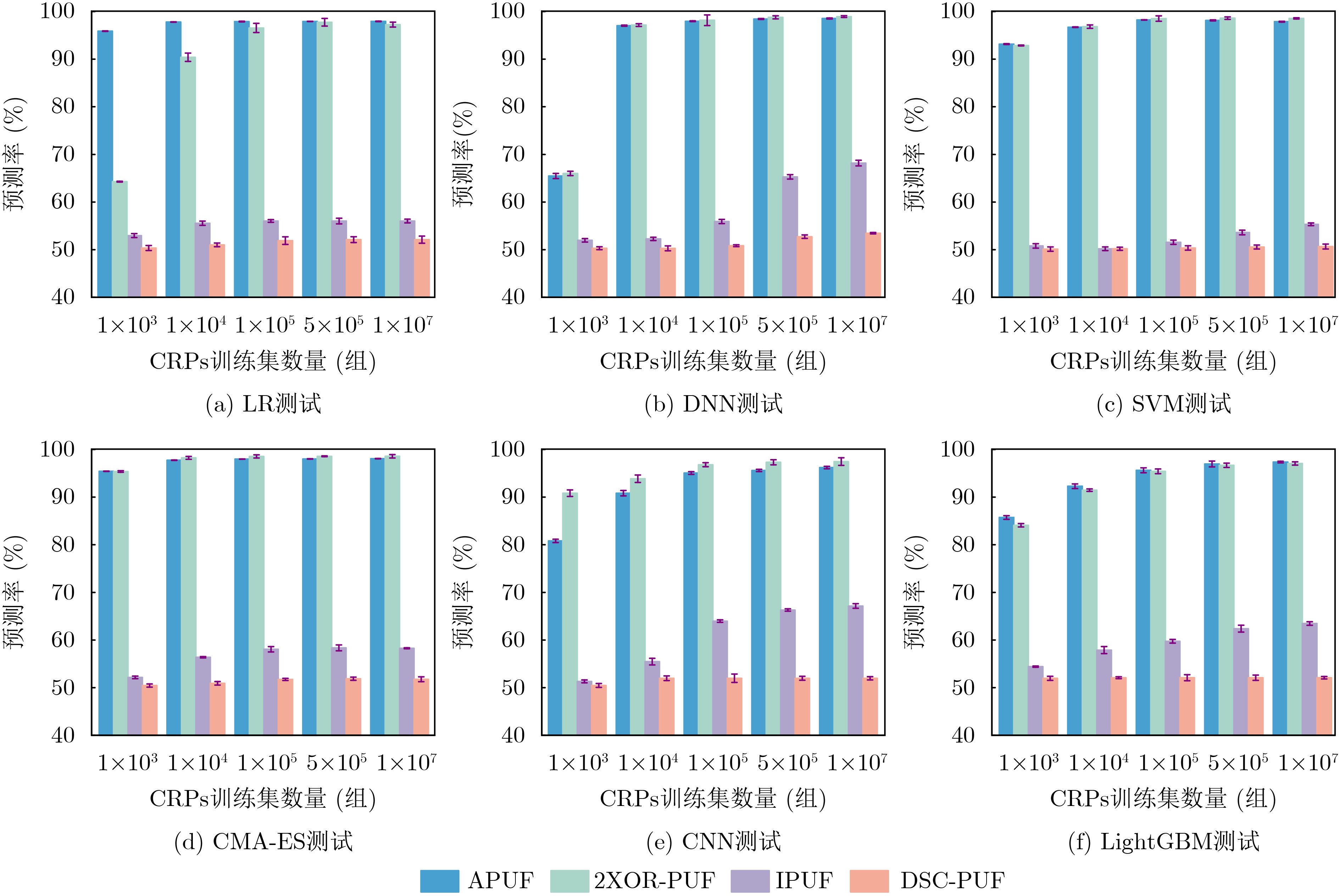
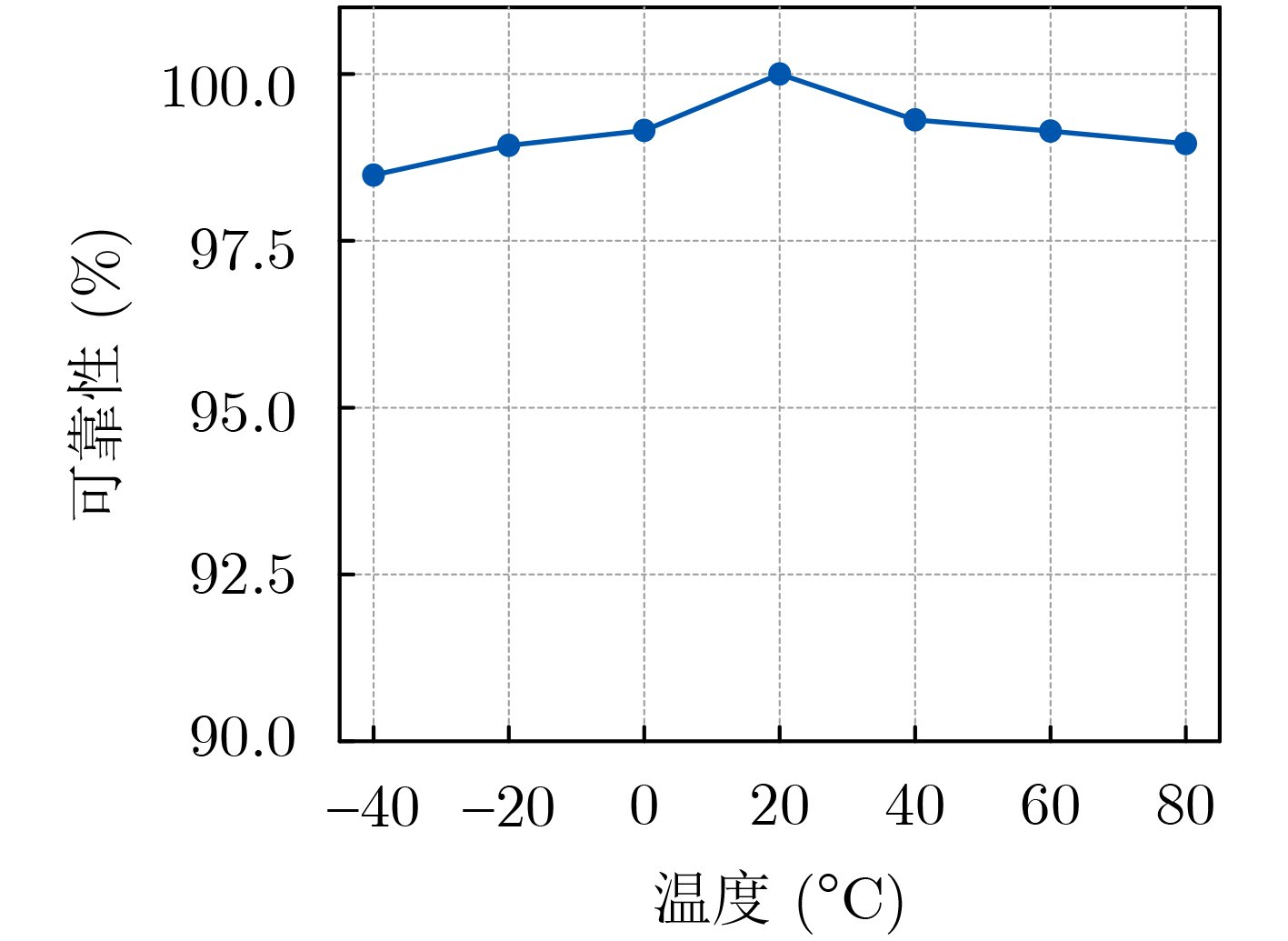
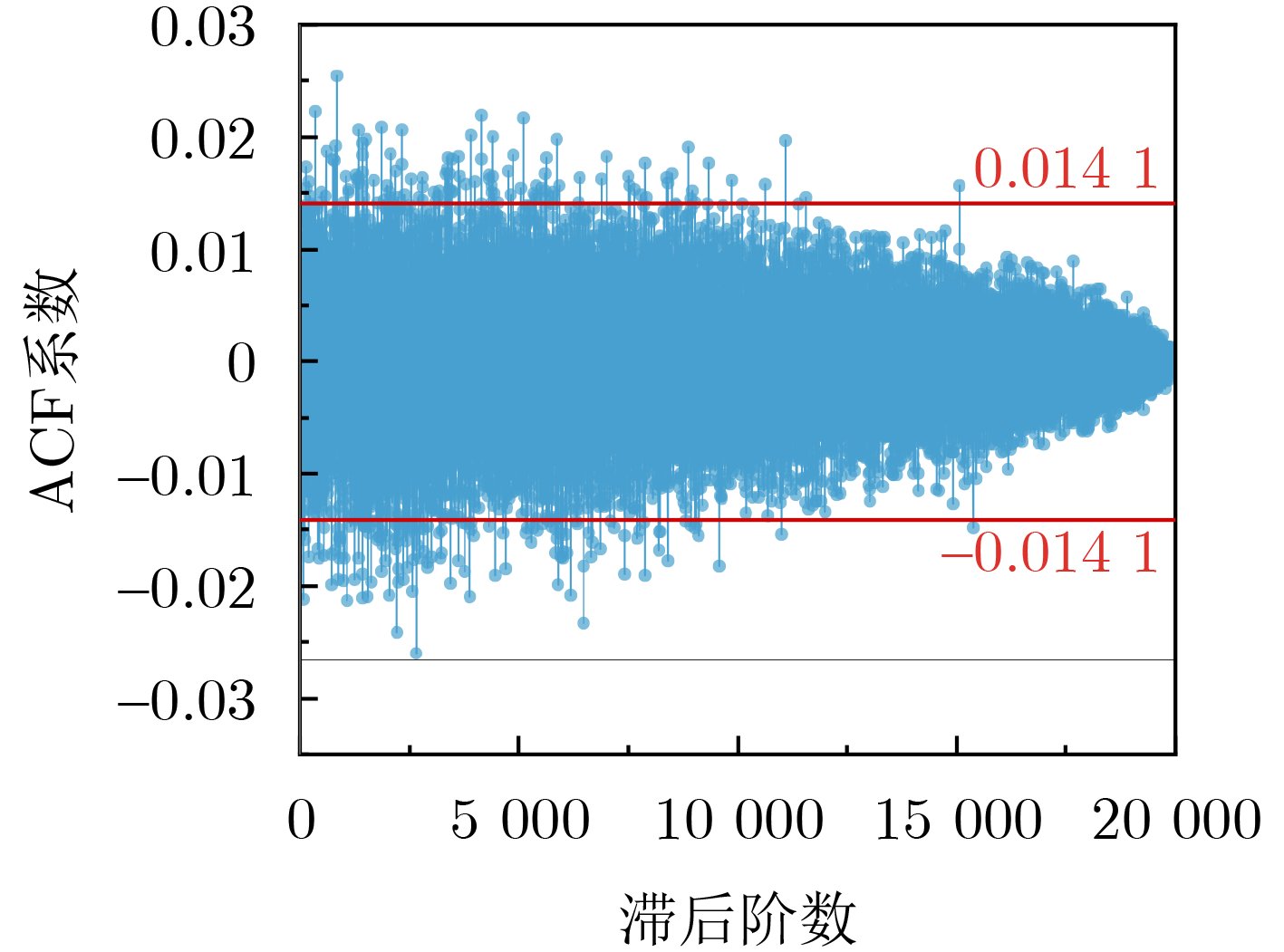
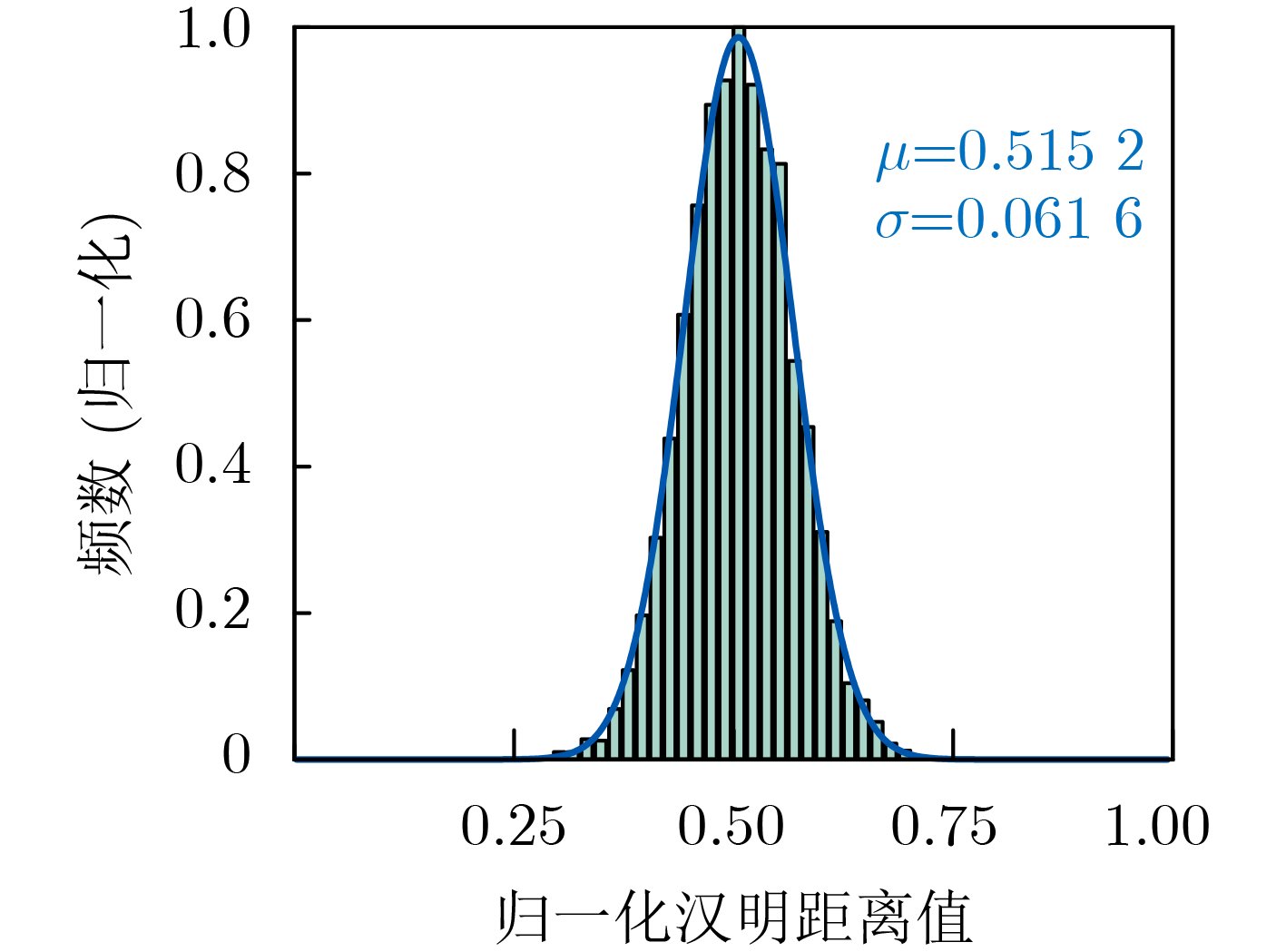
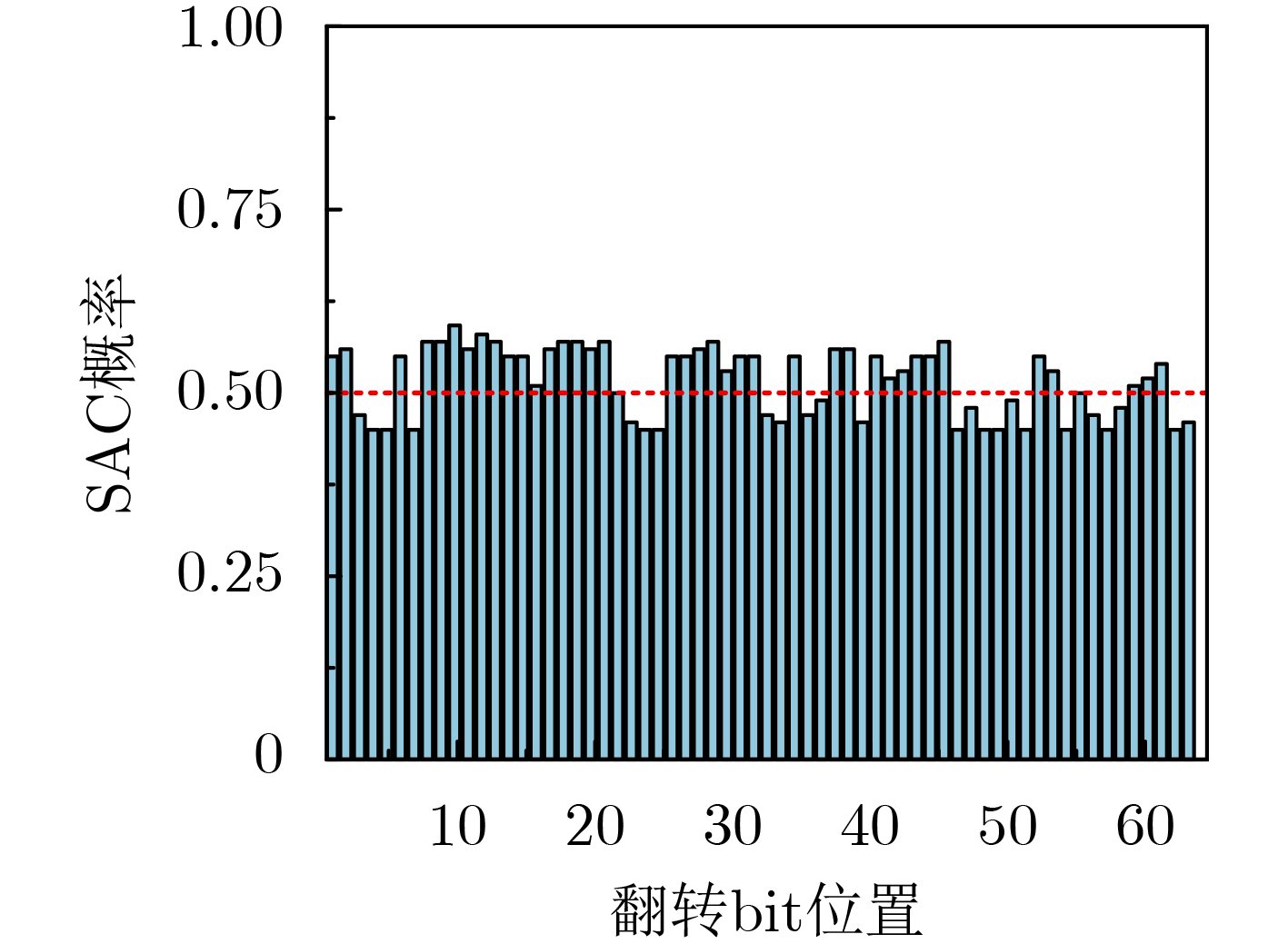
摘要: 物理不可克隆函数(Physical Unclonable Function, PUF)作为物联网设备身份认证的关键安全原语,但其实际应用场景中也面临机器学习攻击威胁。针对传统延时型强PUF底层结构存在的线性相关特性与安全隐患问题,提出一种动态空间耦合的强PUF(Dynamic Spatial Coupling Strong PUF, DSC-PUF)电路。首先采用主从双链协同结构,其中主链作为物理熵源,通过内部延时竞争过程提取不可预测的隐藏状态,从链用于生成响应。其次,设计动态空间耦合网络(Dynamic Spatial Coupling Network, DSCN)模块,利用隐藏状态作为动态控制信息,对输入挑战进行掩码调制、大跨度移位扩散以及对称交织异或等多级空间耦合操作,将动态耦合后的挑战输入从链生成响应,最终将双链路响应异或,进一步增强输出序列的非线性特征,提升抗机器学习攻击能力。最后,在Xilinx Artix-7 FPGA中实现电路并测试,结果表明,DSC-PUF面对逻辑回归、支持向量机、人工神经网络等典型机器学习攻击时的预测准确率均显著下降,预测率在50.28%至53.39%之间,同时,在–40 ℃至80 ℃的温度范围内,最低可靠性为98.49%,严格雪崩准则均值约为0.517,唯一性和自相关性分别为
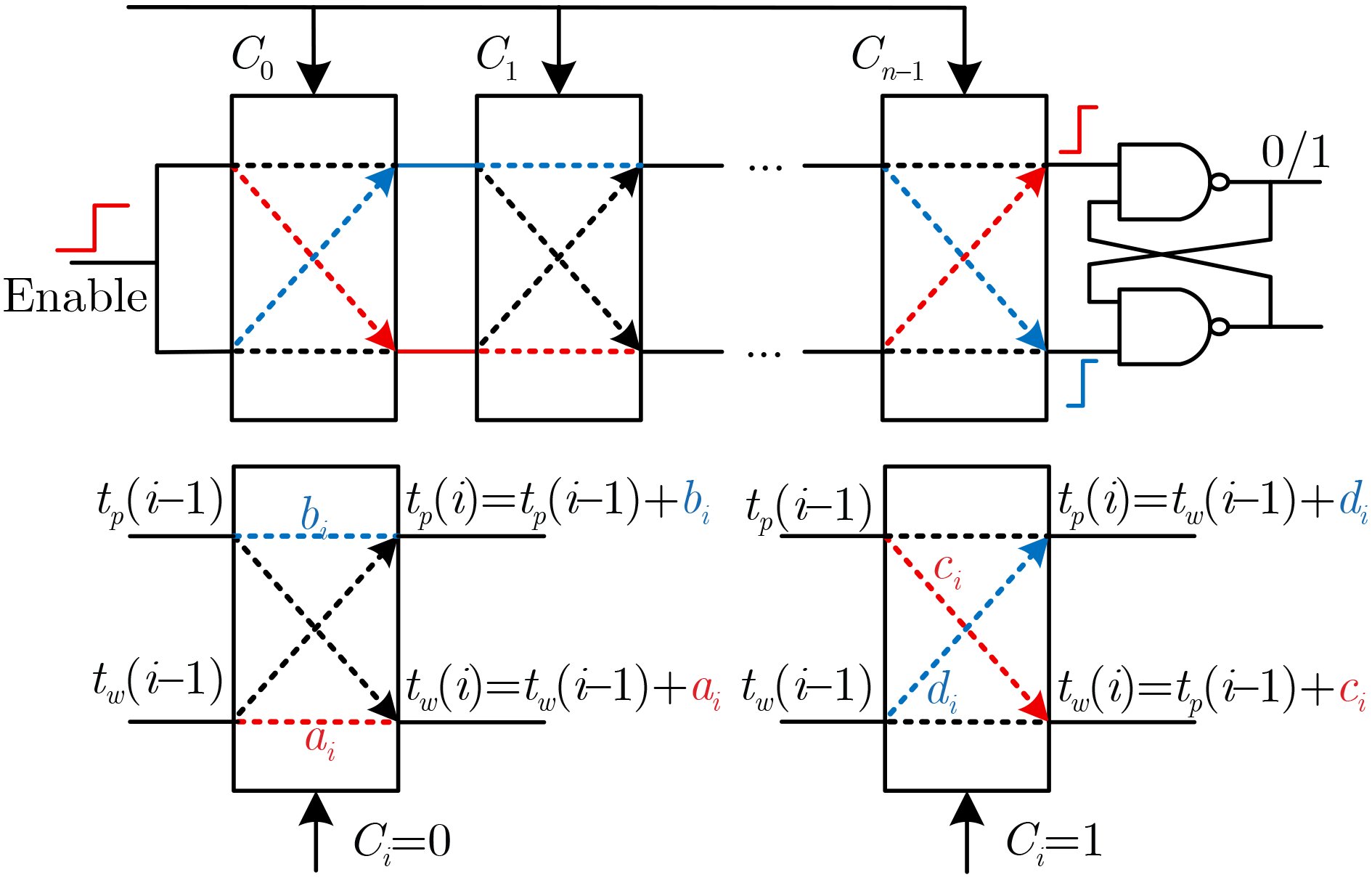
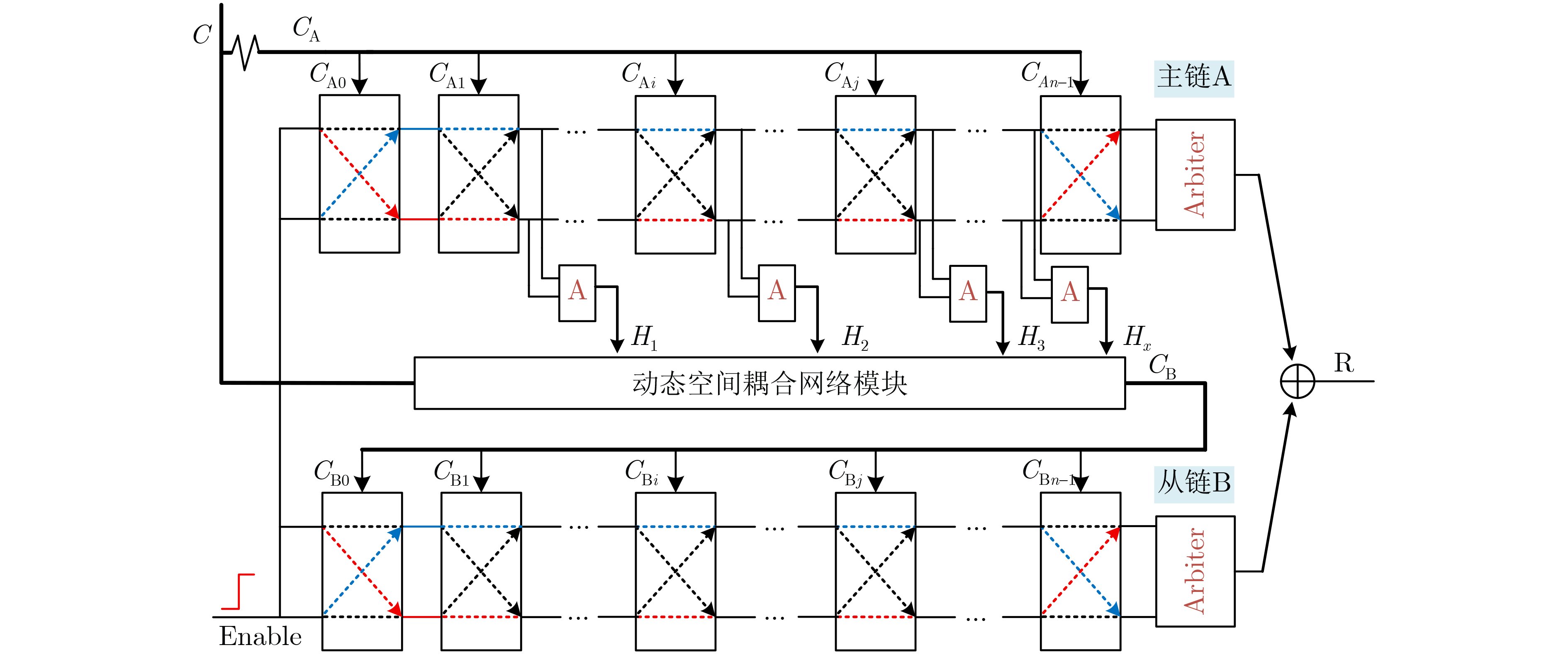
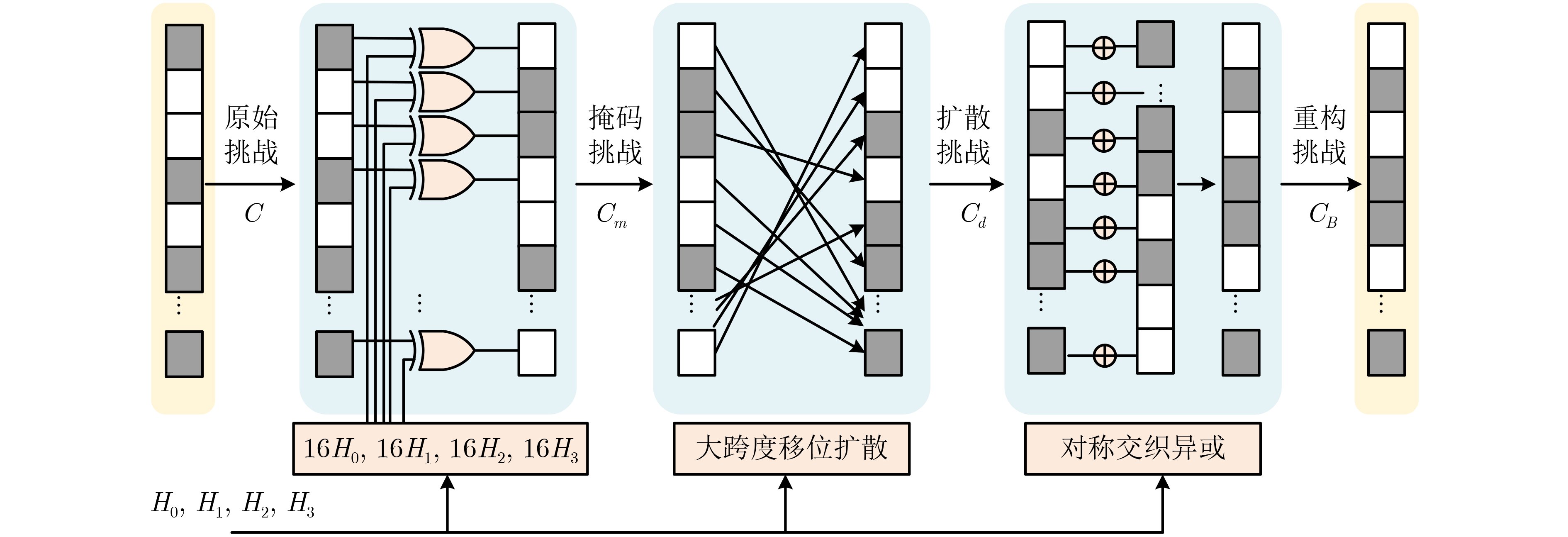
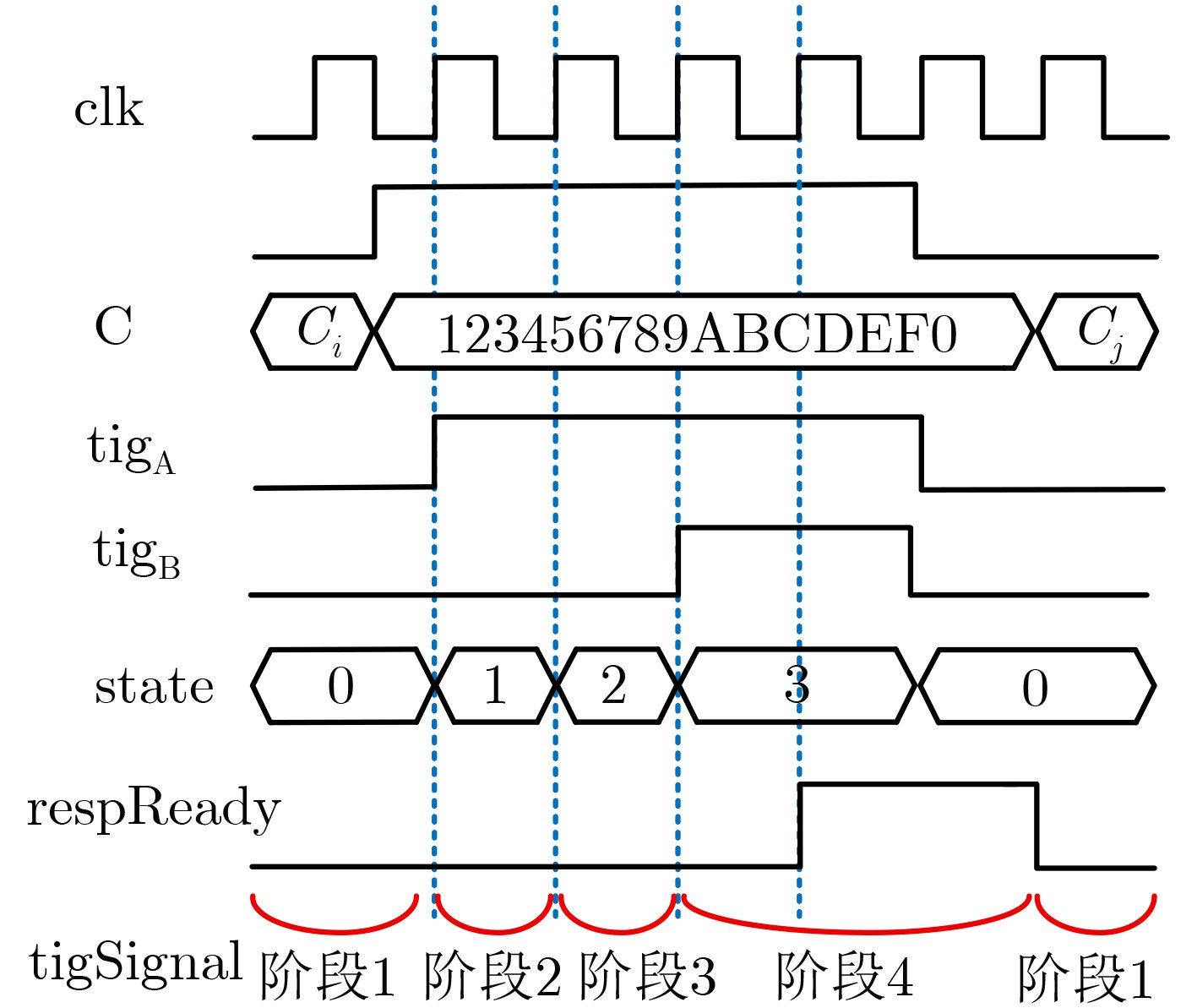
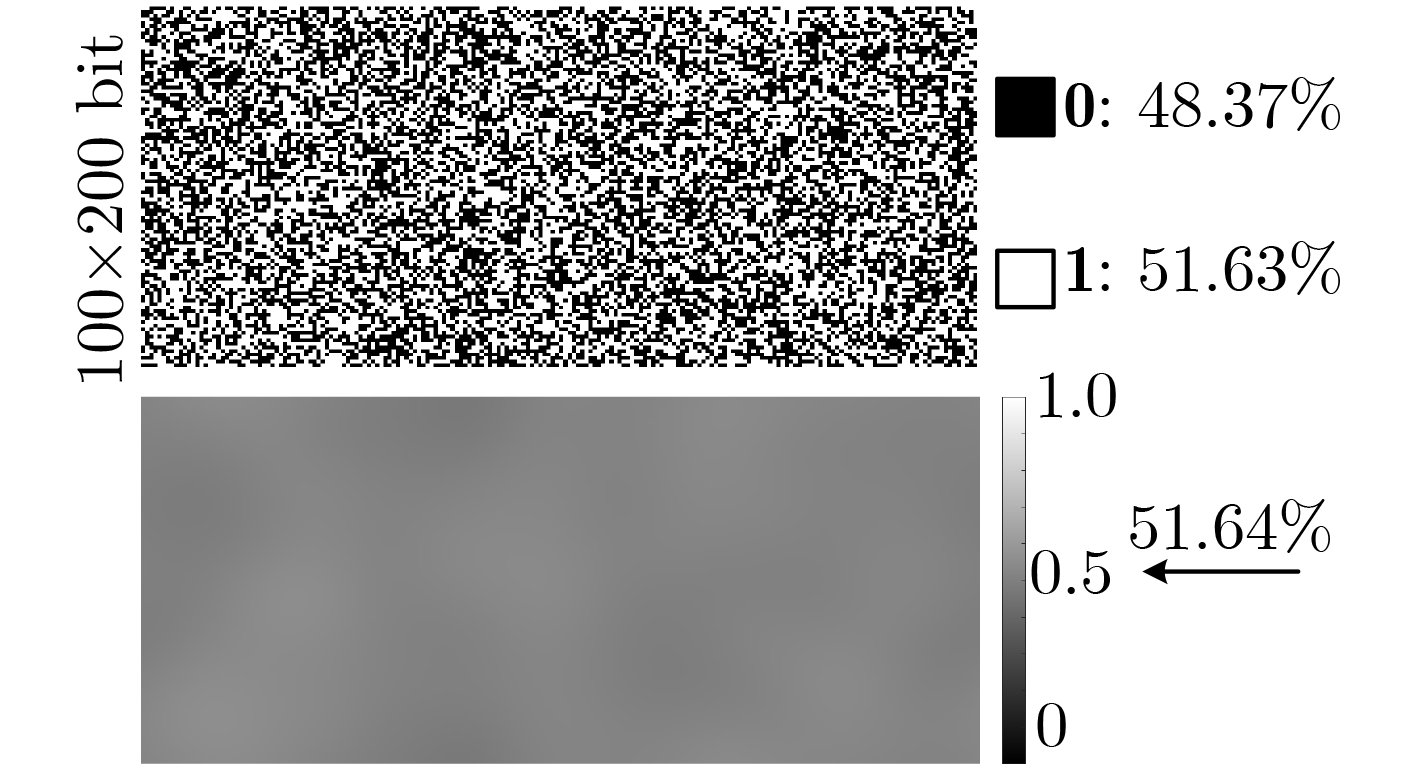
0.5152 和0.0141 ,且通过NIST800-22随机性测试。Abstract:Objective The large-scale deployment of Internet of Things (IoT) devices raises the demand for lightweight authentication and dynamic key generation on resource-limited hardware. Physical Unclonable Functions (PUFs) leverage inherent manufacturing variations of integrated circuits to generate unique, unclonable hardware fingerprints, serving as an effective lightweight scheme for device authentication and secure key derivation. Nevertheless, conventional delay-based strong PUFs feature linear delay superposition, rendering their challenge–response relationships susceptible to machine learning modeling. Existing countermeasures against modeling attacks enhance nonlinearity using elaborate feedback loops, multi-stage XOR gates and heterogeneous logic cells. Though these approaches improve security to some extent, they incur substantial hardware overhead, timing convergence problems, degraded reliability and weak environmental robustness. This work presents a Dynamic Spatial Coupling Strong PUF (DSC-PUF) architecture. With restrained hardware cost, the proposed design maintains PUFs’ inherent physical properties and resistance to machine learning attacks, enabling joint optimization of multi-dimensional system metrics. Methods To mitigate modeling vulnerabilities of conventional strong PUFs and resolve the tradeoff between security and reliability, this paper presents a DSC-PUF architecture with dual delay chains and dynamic spatial perturbation. It consists of a primary chain A, an auxiliary chain B, and a dynamic spatial coupling network. As signals propagate, the primary chain captures multi-level delay competition outcomes to produce random hidden states governed by physical process variations. Using these hidden states as dynamic control signals, nonlinear transformations including mask modulation, long-range shift diffusion, and symmetric interleaved XOR are applied to input challenges. This dynamically varies the challenge space seen by the auxiliary chain and breaks the stable linear CRP mapping inherent in traditional PUFs. To suppress dynamic interference to system stability, a master-slave asynchronous triggering mechanism is introduced. It temporally isolates hidden state latching, spatial coupling and auxiliary-chain propagation to prevent glitch propagation and race hazards. A majority voting scheme is also utilized for response denoising to enhance output robustness under harsh operating conditions. Results and Discussions The proposed architecture was implemented on a Xilinx Artix-7 FPGA platform, and its performance was evaluated through multiple standard tests. Experimental results demonstrate that the DSC-PUF significantly enhances the resistance of conventional delay-based PUFs against machine learning modeling attacks. Under typical attacks, including Logistic Regression, Support Vector Machine, Deep Neural Network, Covariance Matrix Adaptation Evolution Strategy, Convolutional Neural Network, and Light Gradient Boosting Machine, the prediction accuracy remains between 50.28% and 53.39%, close to the random-guessing level ( Fig. 5 ), indicating that the dynamic spatial reconfiguration mechanism effectively disrupts the stable feature distribution of conventional CRPs. The proposed structure has a minimum reliability of 98.49% in the temperature range of -40℃ to 80℃, satisfying the reliability requirements of IoT devices in complex environments (Fig. 6 ). The generated responses successfully passed the NIST SP800-22 randomness test suite (Table 1 andFig. 7 ), while the autocorrelation coefficients remained within the 95% confidence bounds of ±0.0141 (Fig. 8 ), demonstrating favorable randomness and low data correlation. In addition, the proposed architecture achieved a uniqueness value of0.5152 and an average Strict Avalanche Criterion value of approximately 0.517 (Fig. 9 and10 ), both close to the theoretical ideal values. The hardware overhead of the proposed design is 606 LUTs and 350 FFs (Table 2 ), demonstrating good lightweight implementation efficiency. Compared with existing strong PUF structures, the proposed DSC-PUF achieves a better balance among attack resistance, reliability, randomness, and hardware overhead.Conclusions This paper proposes a dynamic spatial coupling strong PUF architecture with enhanced resistance against machine learning attacks. By introducing a hidden-state-driven dynamic spatial coupling mechanism, the proposed architecture dynamically reconstructs challenge features, thereby disrupting the stable linear characteristics of conventional delay-based PUFs and reducing the statistical learnability of challenge–response mappings. Experimental results demonstrate that the DSC-PUF effectively resists LR, SVM, DNN, CMA-ES, CNN, and LightGBM modeling attacks, with prediction accuracies reduced to near-random guessing levels, while maintaining favorable reliability, randomness, uniqueness, and avalanche characteristics. This architecture provides a reliable hardware security solution for device authentication and secure key generation in resource-constrained IoT environments. -
1 DSCN挑战重构方式
输入:原始挑战$ \boldsymbol{C}\in\{{0,1}\}^{64} $和隐藏状态H=[H3, H2, H1, H0] 输出:重构挑战CB (1) 通过重复H生成动态掩码M (2) for i = 0 to 63 do (3) M[i] ← H[i mod 4] (4) end for (5) Cm ← C XOR M (6) CL← Cm << α (7) CR ← Cm >> β (8) CB ←Cm XOR CL XOR CR (9) return CB  下载: 导出CSV
表 1 NIST随机性测试
测试项目 P-Value 通过/不通过 近似熵 1.00000 通过 块内频率 0.41847 通过 累加和 0.50253 通过 离散傅里叶变换 0.61809 通过 频率 0.47583 通过 线性复杂度 0.71981 通过 块内最长游程 0.52598 通过 非重叠模块匹配 0.60330 通过 串行 0.32630 通过 游程 0.45428 通过
下载: 导出CSV
表 2 与相关文献性能对比
PUF类型 设计平台 预测率(%) 唯一性(%) 可靠性(%) 温度(℃) 结构数量(个) BF PUF[19] Virtex-7 52.6 49.99 84.2 –10~80 405 LUTs 312 FFs Ca PUF[17] Virtex-7 57 55.63 92.54 - 3290 LUTs- FFs PRO PUF[20] Spartan 6 72 44.79 98.01 –40~80 820 LUTs 420 FFs cSOI PUF[24] Artix-7 58.71 49.8 83 –20~80 1035 LUTs264 FFs CT PUF[18] ZedBoard 60 49 96 –25~75 731 LUTs 486 FFs 本文 Artix-7 53.39 51.52 98.49 –40~80 606 LUTs 350 FFs
下载: 导出CSV
-
[1] 张源, 罗静茹, 张吉良. SDL PUF: 高可靠自适应偏差锁定PUF电路[J]. 电子与信息学报, 2024, 46(5): 2274–2280. doi: 10.11999/JEIT231313.ZHANG Yuan, LUO Jingru, and ZHANG Jiliang. SDL PUF: A high reliability self-adaption deviation locking PUF[J]. Journal of Electronics & Information Technology, 2024, 46(5): 2274–2280. doi: 10.11999/JEIT231313. [2] HE Haonan, WANG Pengjun, LI Xiangyu, et al. Highly reliable RS-PUF based on reconfigurable gas sensor array[J]. IEEE Sensors Journal, 2024, 24(10): 16875–16882. doi: 10.1109/JSEN.2024.3375872. [3] RAI V K, TRIPATHY A, and MATHEW J. LPA: A lightweight PUF-based authentication protocol for IoT system[C]. Proceedings of 2023 IEEE 22nd International Conference on Trust, Security and Privacy in Computing and Communications, Exeter, United Kingdom, 2023: 1712–1717. doi: 10.1109/TrustCom60117.2023.00233. [4] NI Li, HUANG Xijun, CHEN Xinhui, et al. In-memory unified TRNG and PUF based on RRAM random switching time[J]. IEEE Transactions on Electron Devices, 2025, 72(12): 6729–6739. doi: 10.1109/TED.2025.3627172. [5] 乔彦淇, 唐明, 刘树波. 新型基于时延的PUF设计[J]. 密码学报, 2021, 8(5): 856–867. doi: 10.13868/j.cnki.jcr.000482.QIAO Yanqi, TANG Ming, and LIU Shubo. New delay-based PUF design[J]. Journal of Cryptologic Research, 2021, 8(5): 856–867. doi: 10.13868/j.cnki.jcr.000482. [6] HU Shuang, ZHOU Ziyu, WANG Pengjun, et al. A hierarchical cooperative authentication protocol for attack-resilient UAV swarms with ultra-low overhead[J]. IEEE Transactions on Information Forensics and Security, 2025, 20: 12652–12664. doi: 10.1109/TIFS.2025.3634031. [7] NI Tianming, WU Hao, NIE Mu, et al. A response-nonlinearized DEMUX-TDC PUF for resistance against modeling attacks and secure authentication protocols[J]. IEEE Transactions on Very Large Scale Integration (VLSI) Systems, 2025, 33(10): 2606–2619. doi: 10.1109/TVLSI.2025.3575056. [8] LI Xiangyu, WANG Pengjun, LI Gang, et al. Design of interface circuits and lightweight PUF for TMR sensors[J]. IEEE Sensors Journal, 2023, 23(11): 11754–11761. doi: 10.1109/JSEN.2023.3266816. [9] ZHOU Ziyu, LI Gang, ZHANG Yuejun, et al. A strong PUF-based security protocol to protect AI model parameters against privacy information leakage[J]. IEEE Internet of Things Journal, 2025, 12(12): 20815–20827. doi: 10.1109/JIOT.2025.3544555. [10] 汪鹏君, 方皓冉, 李刚. 基于混沌映射的抗机器学习攻击强物理不可克隆函数[J]. 电子与信息学报, 2024, 46(5): 2281–2288. doi: 10.11999/JEIT231129.WANG Pengjun, FANG Haoran, and LI Gang. Design of strong physical unclonable function circuit against machine learning attacks based on chaos mapping[J]. Journal of Electronics & Information Technology, 2024, 46(5): 2281–2288. doi: 10.11999/JEIT231129. [11] 夏卓群, 苏潮, 徐梓桑, 等. 基于物理不可克隆函数的轻量级可证明安全车联网认证协议[J]. 电子与信息学报, 2024, 46(9): 3788–3796. doi: 10.11999/JEIT240141.XIA Zhuoqun, SU Chao, XU Zisang, et al. A lightweight and provably secure authentication protocol for internet of vehicles using physical unclonable function[J]. Journal of Electronics & Information Technology, 2024, 46(9): 3788–3796. doi: 10.11999/JEIT240141. [12] GU Chongyan, LIU Weiqiang, CUI Yijun, et al. A flip-flop based arbiter physical unclonable function (APUF) design with high entropy and uniqueness for FPGA implementation[J]. IEEE Transactions on Emerging Topics in Computing, 2021, 9(4): 1853–1866. doi: 10.1109/TETC.2019.2935465. [13] DOFE J and RAJPUT S. Protecting against modeling attacks: Design and analysis of lightweight dynamic physical unclonable function[J]. Cluster Computing, 2025, 28(1): 6. doi: 10.1007/s10586-024-04736-5. [14] BECKER G T. The gap between promise and reality: On the insecurity of XOR arbiter PUFs[C]. Proceedings of the 17th International Workshop on Cryptographic Hardware and Embedded Systems, Saint-Malo, France, 2015: 535–555. doi: 10.1007/978-3-662-48324-4_27. [15] RÜHRMAIR U, SEHNKE F, SÖLTER J, et al. Modeling attacks on physical unclonable functions[C]. Proceedings of the 17th ACM Conference on Computer and Communications Security, Chicago, USA, 2010: 237–249. doi: 10.1145/1866307.1866335. [16] GAO Yansong, YAO Jianrong, PANG Lihui, et al. MLMSA: Multilabel multiside-channel-information enabled deep learning attacks on APUF variants[J]. IEEE Transactions on Computer-Aided Design of Integrated Circuits and Systems, 2023, 42(9): 2863–2876. doi: 10.1109/TCAD.2023.3236563. [17] NASSAR H, BAUER L, and HENKEL J. CaPUF: Cascaded PUF structure for machine learning resiliency[J]. IEEE Transactions on Computer-Aided Design of Integrated Circuits and Systems, 2022, 41(11): 4349–4360. doi: 10.1109/TCAD.2022.3197539. [18] ZHANG Jiliang, SHEN Chaoqun, GUO Zhiyang, et al. CT PUF: Configurable tristate PUF against machine learning attacks for IoT security[J]. IEEE Internet of Things Journal, 2022, 9(16): 14452–14462. doi: 10.1109/JIOT.2021.3090475. [19] HUANG Zhengfeng, ZENG Fansheng, CHI Yanqiao, et al. BF PUF: A modeling attack-resistant strong PUF based on bent functions[J]. IEEE Transactions on Very Large Scale Integration (VLSI) Systems, 2025, 33(8): 2299–2311. doi: 10.1109/TVLSI.2025.3569587. [20] CUI Yijun, LI Jiang, CHEN Yunpeng, et al. An efficient ring oscillator PUF using programmable delay units on FPGA[J]. ACM Transactions on Design Automation of Electronic Systems, 2024, 29(1): 2. doi: 10.1145/3593807. [21] WANG Yao, ZHANG Guangyang, MEI Xue, et al. A high-reliability, non-CRP-discard arbiter PUF based on delay difference quantization[J]. IEEE Transactions on Circuits and Systems I: Regular Papers, 2025, 72(2): 573–585. doi: 10.1109/TCSI.2024.3466972. [22] DONG Xiangyu, YAO Liang, DING Peng, et al. Lightweight high-throughput portable multi-mode reconfigurable integrated PUF-TRNG[J]. IEEE Transactions on Circuits and Systems I: Regular Papers, 2026, 73(5): 3284–3295. doi: 10.1109/TCSI.2026.3668151. [23] WANG Yao, MEI Xue, CHANG Zhengtai, et al. A lightweight authentication protocol against modeling attacks based on a novel LFSR-APUF[J]. IEEE Internet of Things Journal, 2024, 11(1): 283–295. doi: 10.1109/JIOT.2023.3314058. [24] XU Chongyao, ZHANG Litao, MAK P I, et al. Fully symmetrical obfuscated interconnection and weak-PUF-assisted challenge obfuscation strong PUFs against machine-learning modeling attacks[J]. IEEE Transactions on Information Forensics and Security, 2024, 19: 3927–3942. doi: 10.1109/TIFS.2024.3372801. -

 下载:


图(10) / 表(3)
计量
- 文章访问数: 10
- HTML全文浏览量: 0
- PDF下载量: 1
- 被引次数: 0
