




Generalized Boolean function-based constant-modulus OFDM waveform design for integrated sensing and communication
-
摘要: 针对正交频分复用(OFDM)通感一体化(ISAC)波形因高峰均功率比(PAPR)导致功率放大器效率受限的问题,提出一种基于广义布尔函数(GBF)的恒模OFDM波形设计方法。该方法利用GBF-Golay闭式构造互补序列对,经相位校正与正交叠加生成0 dB PAPR的严格恒模波形;同时,在波形构造中嵌入通信数据,使得接收端可基于GBF结构实现低复杂度解码。仿真结果表明,相较于迭代式CM-OFDM方法,所提方法频谱更平坦、逐元消除后有效信噪比更高,并具有较好的通信可靠性。
-
关键词:
- 通感一体化 /
- 恒模 OFDM /
- 广义布尔函数 /
- Golay 互补序列 /
- 频谱平坦性
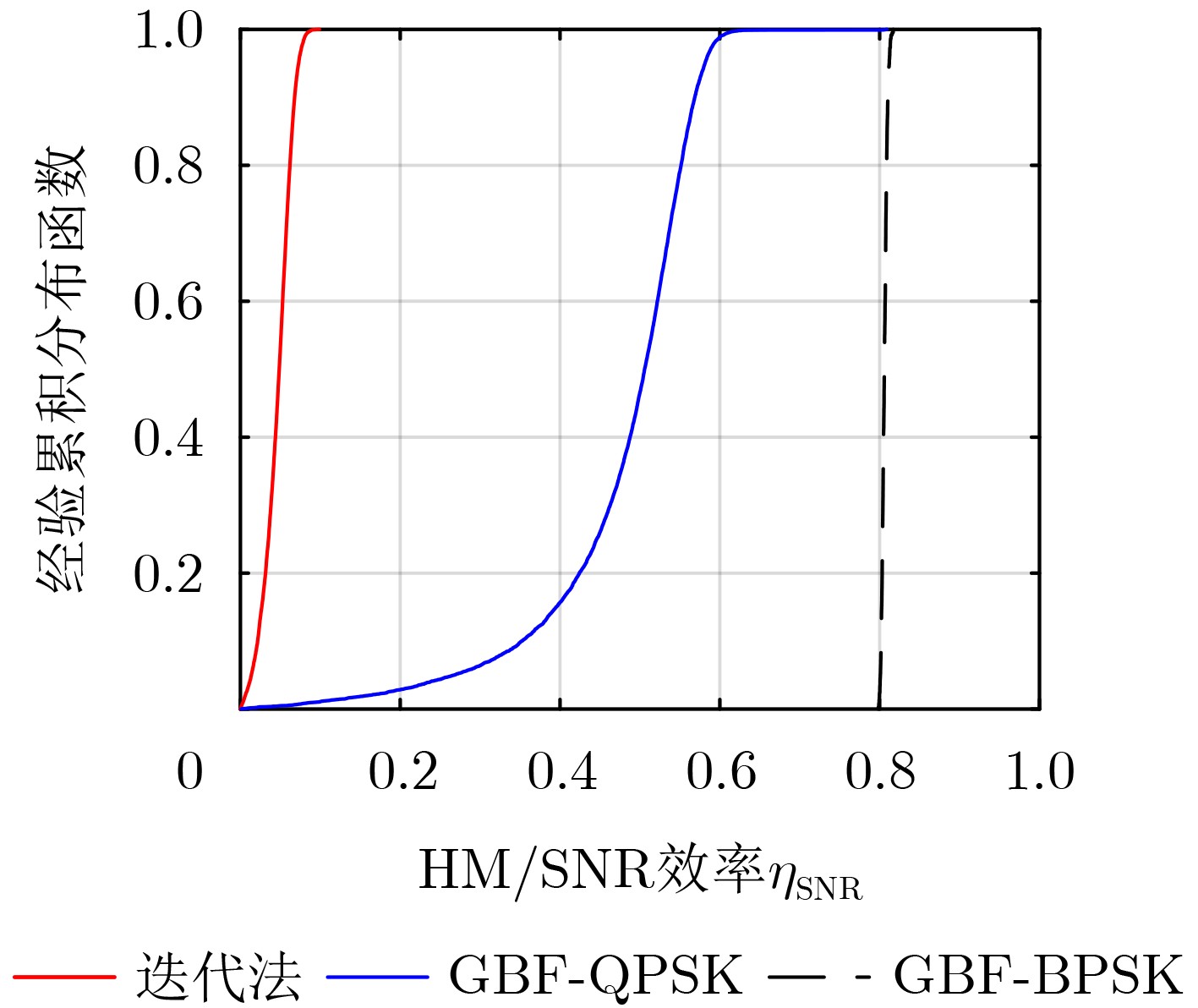
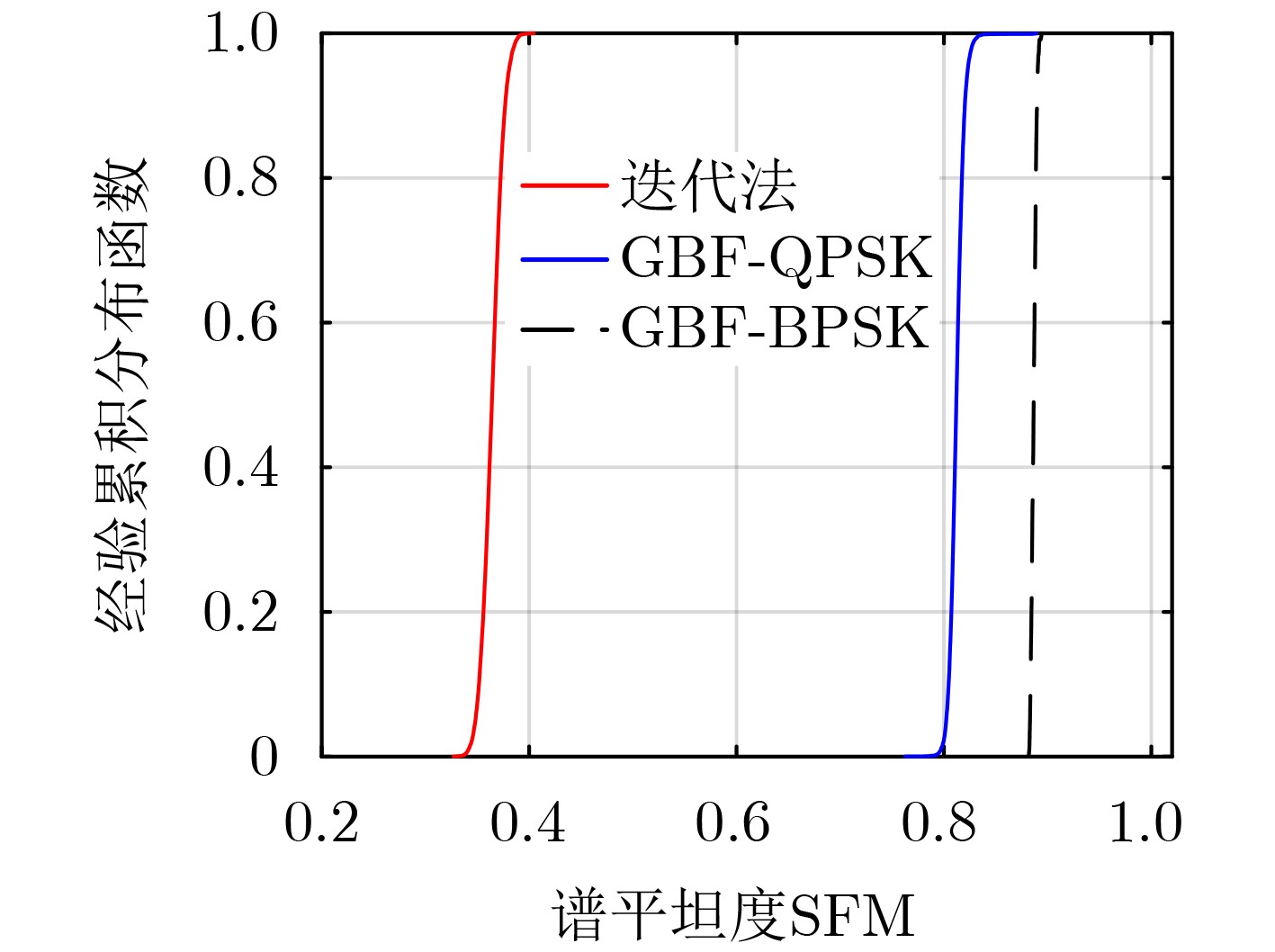
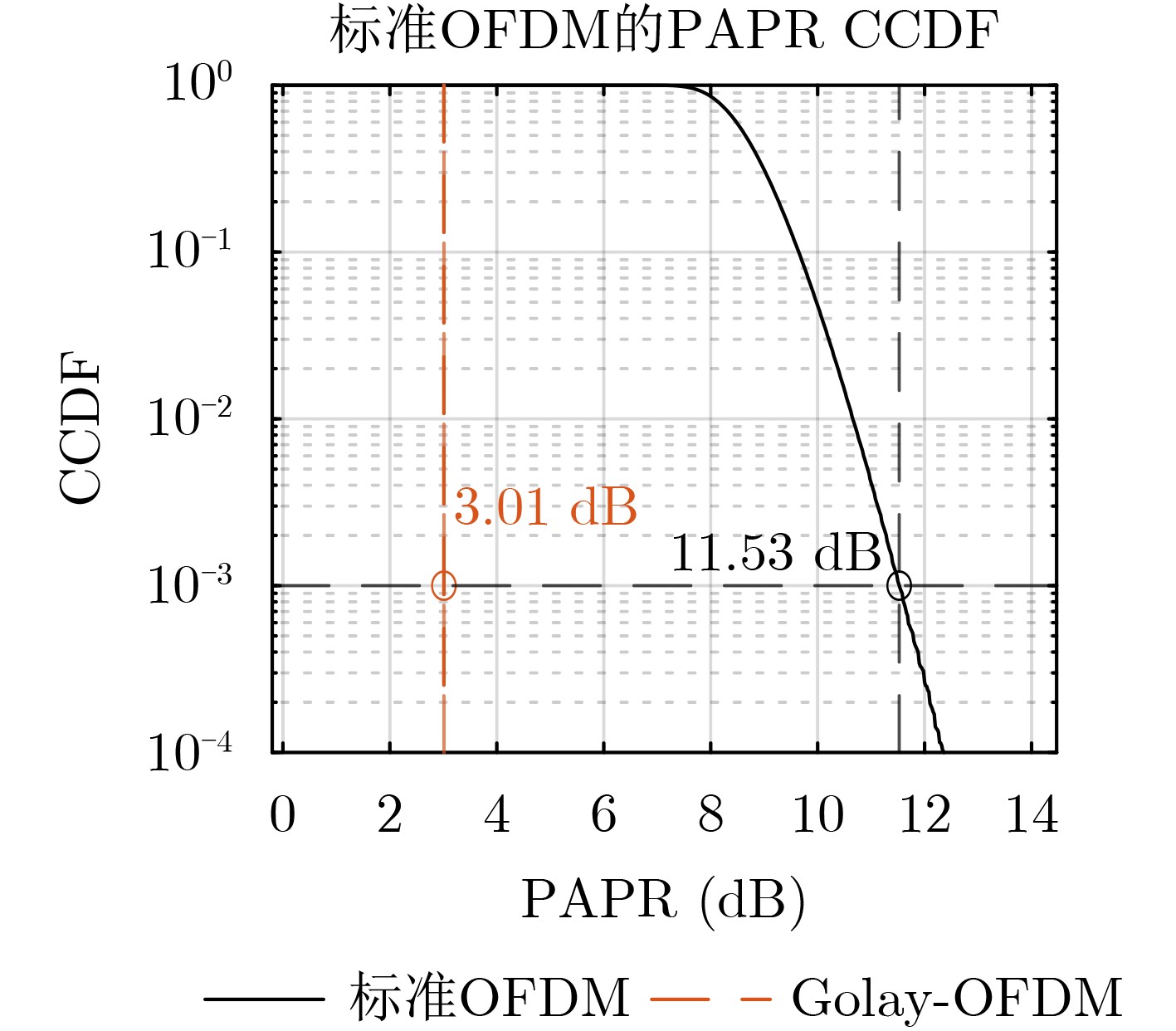
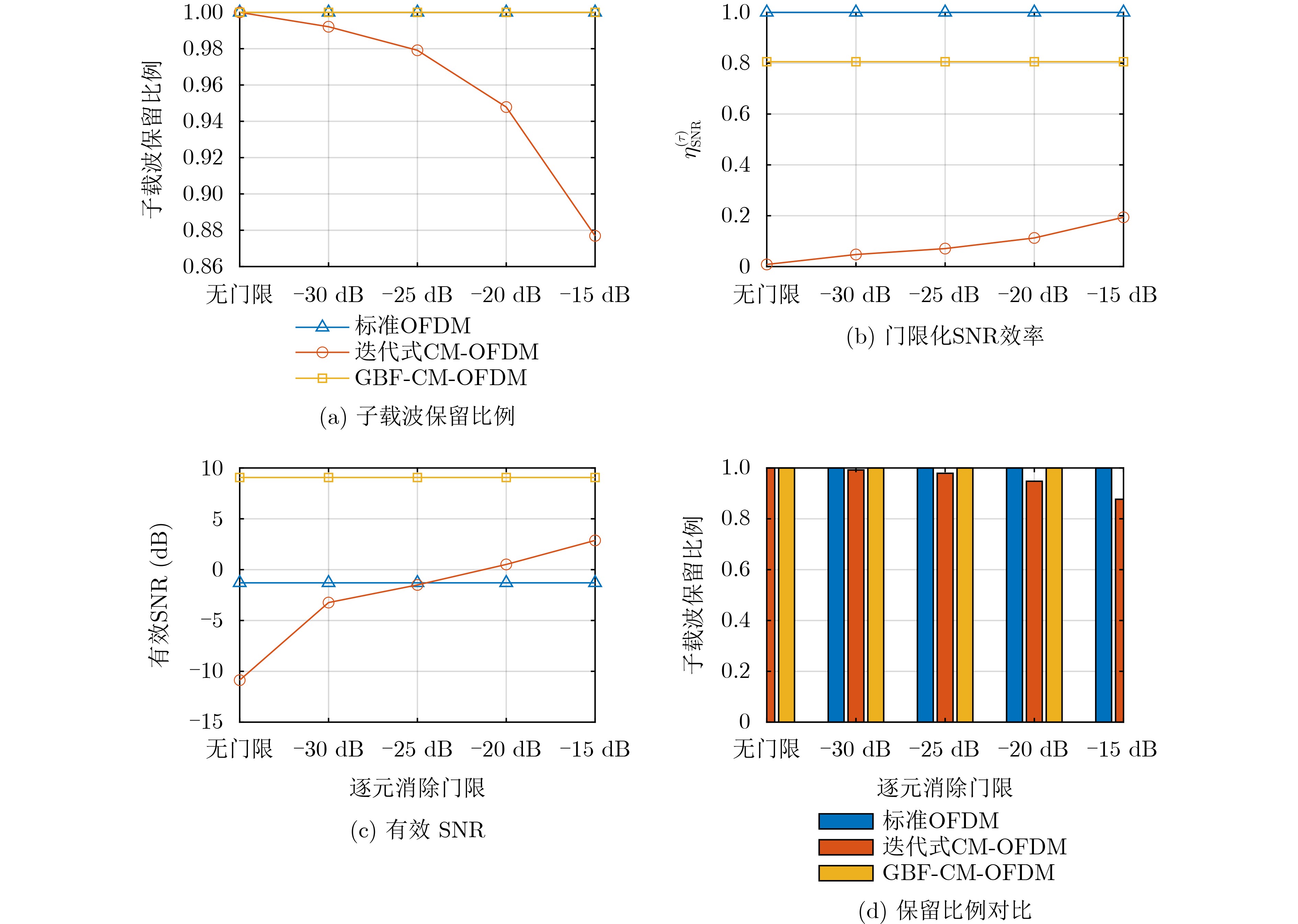
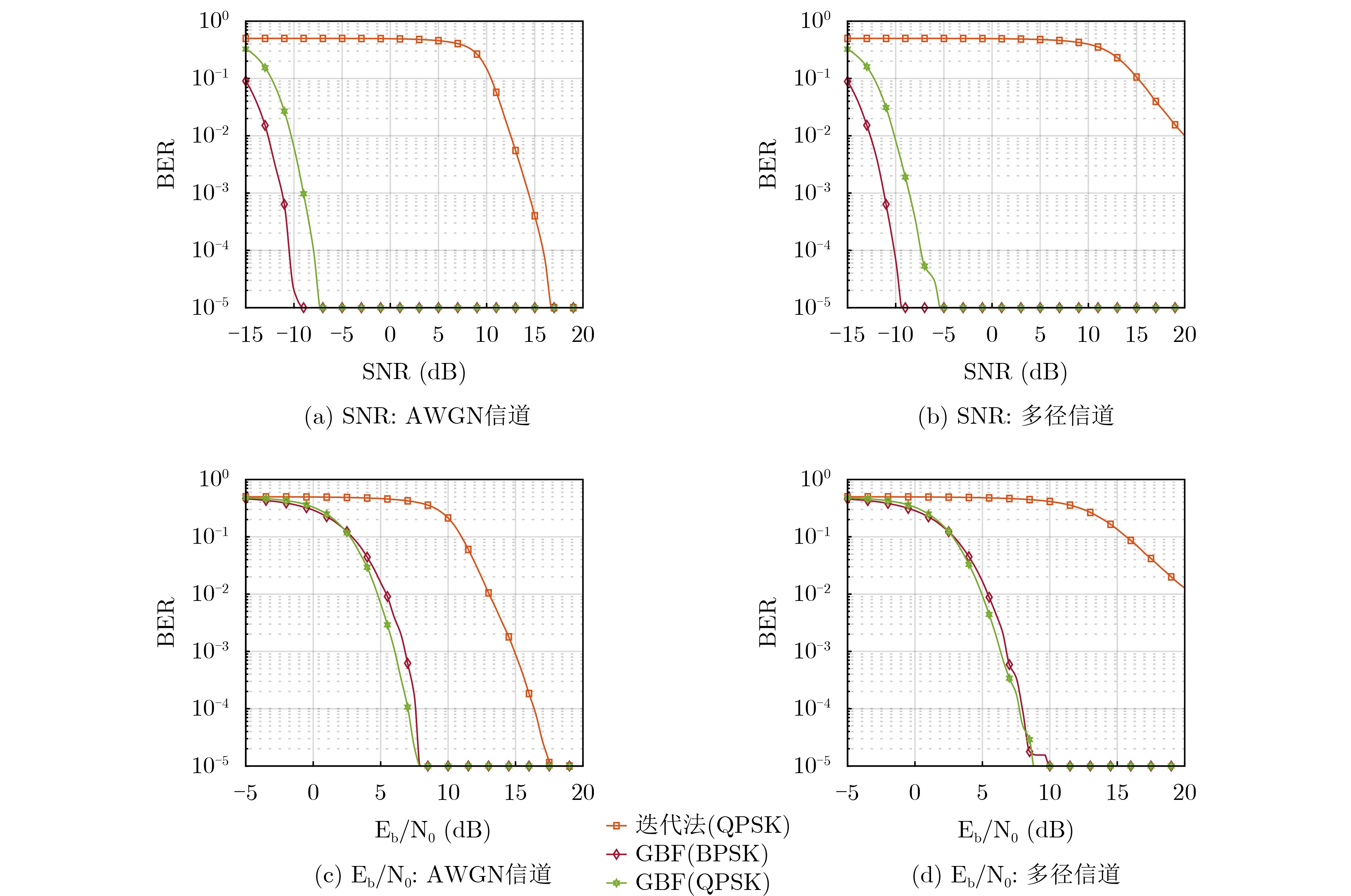
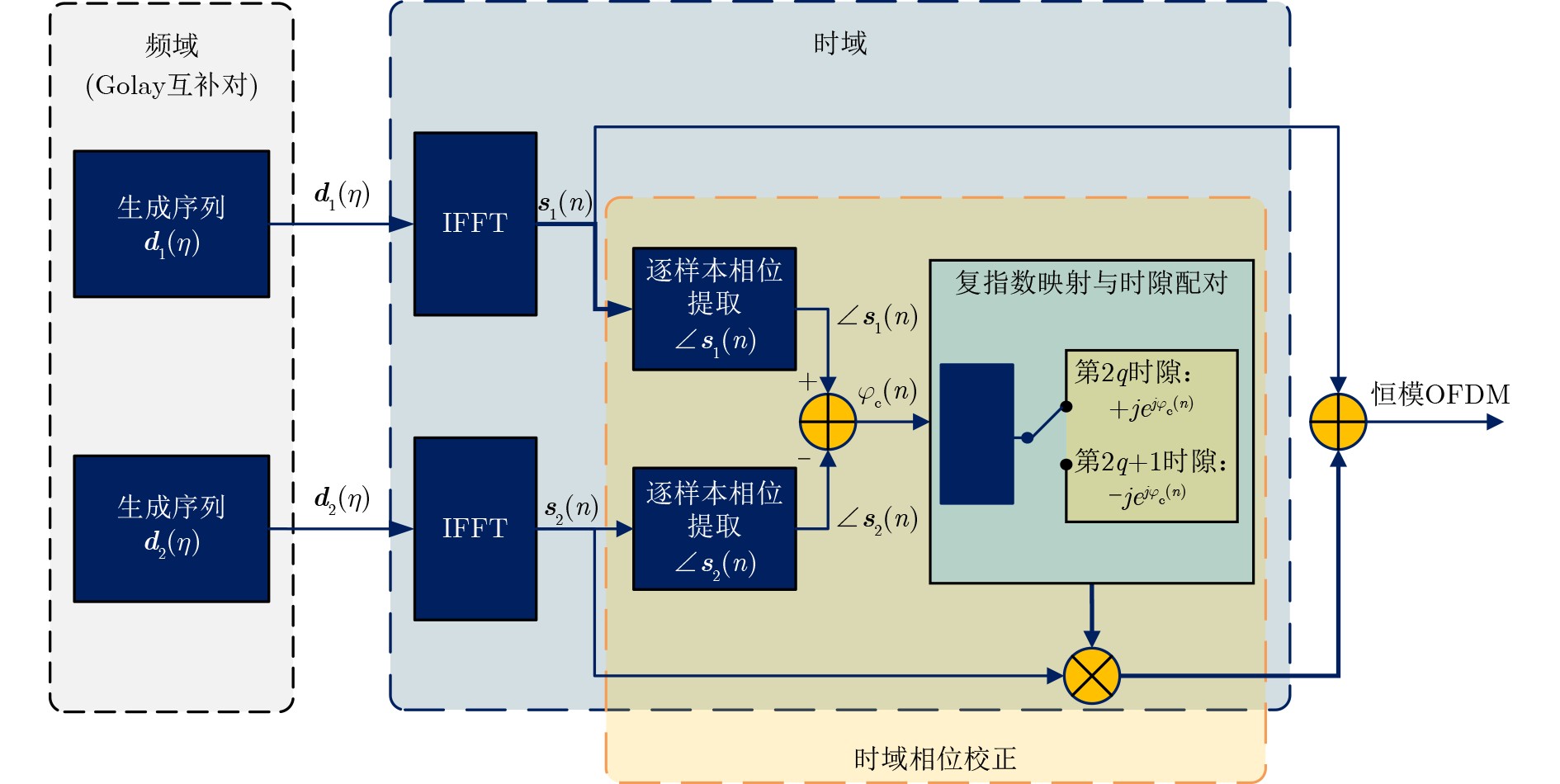
Abstract:Objective Integrated sensing and communication (ISAC) is an important technology for future wireless networks because it enables communication and sensing functions to share spectrum, hardware, and signal processing resources. Orthogonal frequency division multiplexing (OFDM) is a promising ISAC waveform due to its flexible spectrum allocation and compatibility with existing communication systems. However, conventional OFDM suffers from a high peak-to-average power ratio (PAPR), which reduces power amplifier efficiency under peak-power-limited transmission. Although constant-modulus OFDM (CM-OFDM) can avoid power back-off, existing iterative CM-OFDM methods may produce severe frequency-domain power fluctuations and deep spectral notches. In element-wise-cancellation-based OFDM radar processing, these notches amplify the equivalent noise and degrade the range-velocity map. To address this problem, a generalized Boolean function (GBF)-based CM-OFDM waveform design method is proposed for sensing-prioritized ISAC scenarios with low communication payloads. Methods The proposed method constructs a pair of Golay complementary sequences from a special quadratic GBF. The quadratic term determines the complementary structure, while the affine term embeds communication information. The two complementary sequences are transformed into OFDM time-domain branches by inverse fast Fourier transform. Then, a sample-wise phase correction factor is introduced according to the phase difference between the two branches, and the corrected branches are orthogonally superposed to generate a strict constant-modulus OFDM signal. Two consecutive OFDM time slots with opposite signs in the second branch are transmitted to support receiver-side component separation. For sensing, element-wise cancellation and two-dimensional discrete Fourier transform are used to obtain the range-velocity map. Spectral flatness measure, deep notch rate, harmonic mean, and SNR efficiency are introduced to analyze noise enhancement caused by non-flat transmit spectra. A thresholded element-wise cancellation model is also considered to avoid direct division on low-power subcarriers. For communication, the receiver adds the paired time slots, removes the known quadratic term, and detects the affine information by fast Walsh-Hadamard transform in the BPSK case. Results and Discussions Simulation results show that the proposed GBF-CM-OFDM method achieves 0 dB PAPR, the same as iterative CM-OFDM, but provides a much flatter final transmit spectrum. When the normalized power threshold is 0.1, the deep notch rate of iterative CM-OFDM is mainly around 0.20, while that of the proposed method is about 0.01–0.03. The spectral flatness measure of the proposed method is mainly above 0.80, whereas that of the iterative method is around 0.3–0.4. Under naive element-wise cancellation, the average SNR efficiency is improved from 0.00732 for iterative CM-OFDM to0.80604 for GBF-BPSK, and the average effective SNR is improved from –11.35 dB to 9.06 dB. With a −20 dB thresholded cancellation model, the iterative method is improved by discarding low-power subcarriers, but GBF-BPSK still achieves higher sensing performance, increasing the average effective SNR from 0.51 dB to 9.06 dB. Multi-target range-velocity maps further demonstrate that the proposed waveform has lower background noise and clearer target peaks. For communication performance, when \(N=256\), GBF-BPSK and GBF-QPSK carry 9 bits and 18 bits per paired waveform, respectively. The bit error rate results show that the proposed method has better recovery stability than iterative CM-OFDM under the considered low-communication-payload setting.Conclusions This paper proposes a GBF-based CM-OFDM waveform design method for ISAC systems. By using GBF-Golay complementary sequence construction, phase correction, and orthogonal branch superposition, the proposed method achieves strict 0 dB PAPR and supports communication data embedding. Compared with iterative CM-OFDM, the proposed method has better spectral flatness, fewer deep notches, and higher SNR efficiency after element-wise cancellation, thereby reducing noise enhancement and improving sensing performance under peak-power-limited conditions. The proposed method is more suitable for sensing-prioritized ISAC scenarios in which the communication function is used to convey a limited amount of auxiliary information, such as control, identification, synchronization, or status information, rather than to support high-throughput data transmission. Future work will investigate additional structural degrees of freedom in the GBF construction, such as variable permutations and complementary-sequence construction rules, to explore additional information embedding while preserving constant modulus and spectral flatness. -
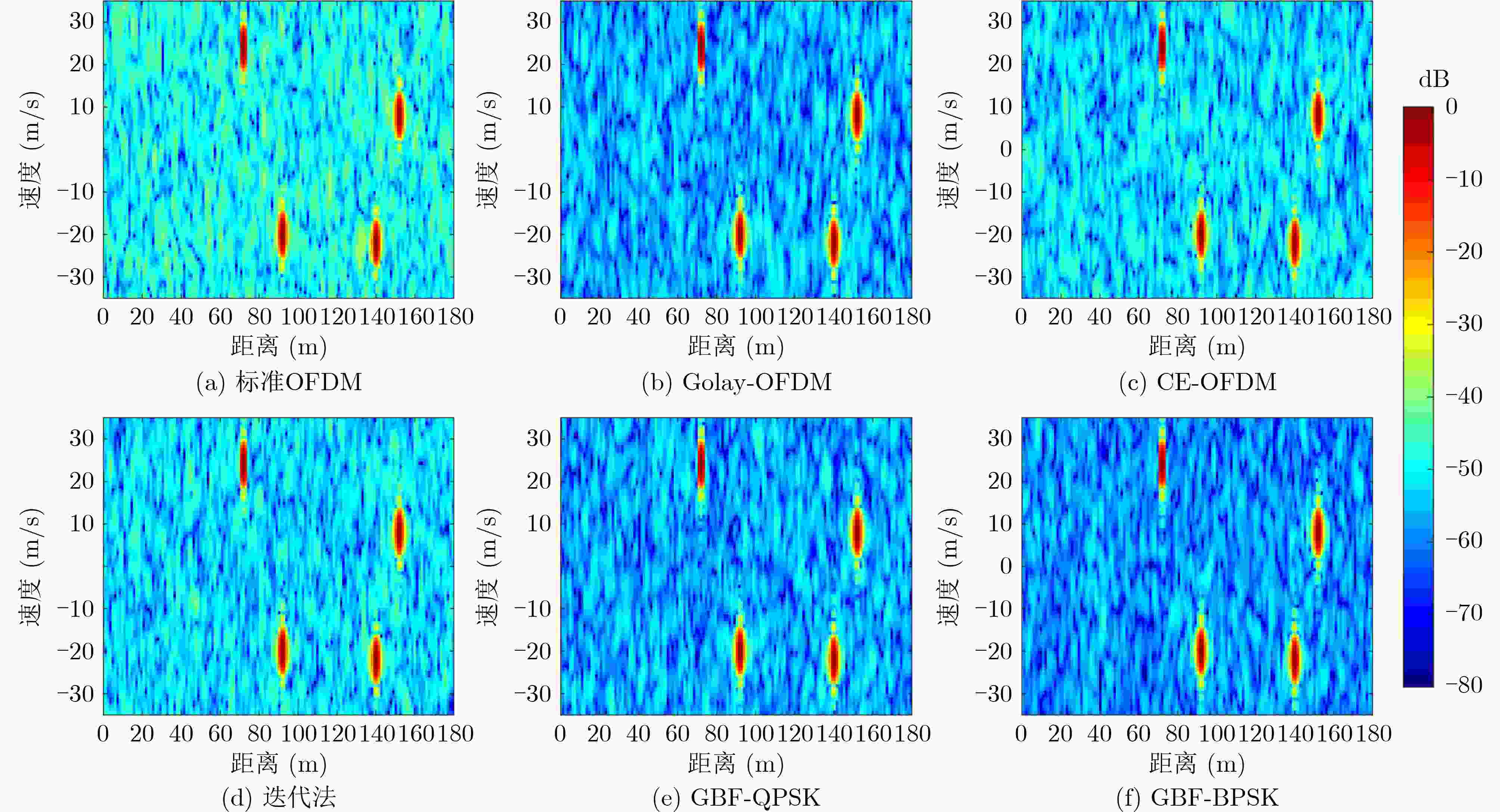
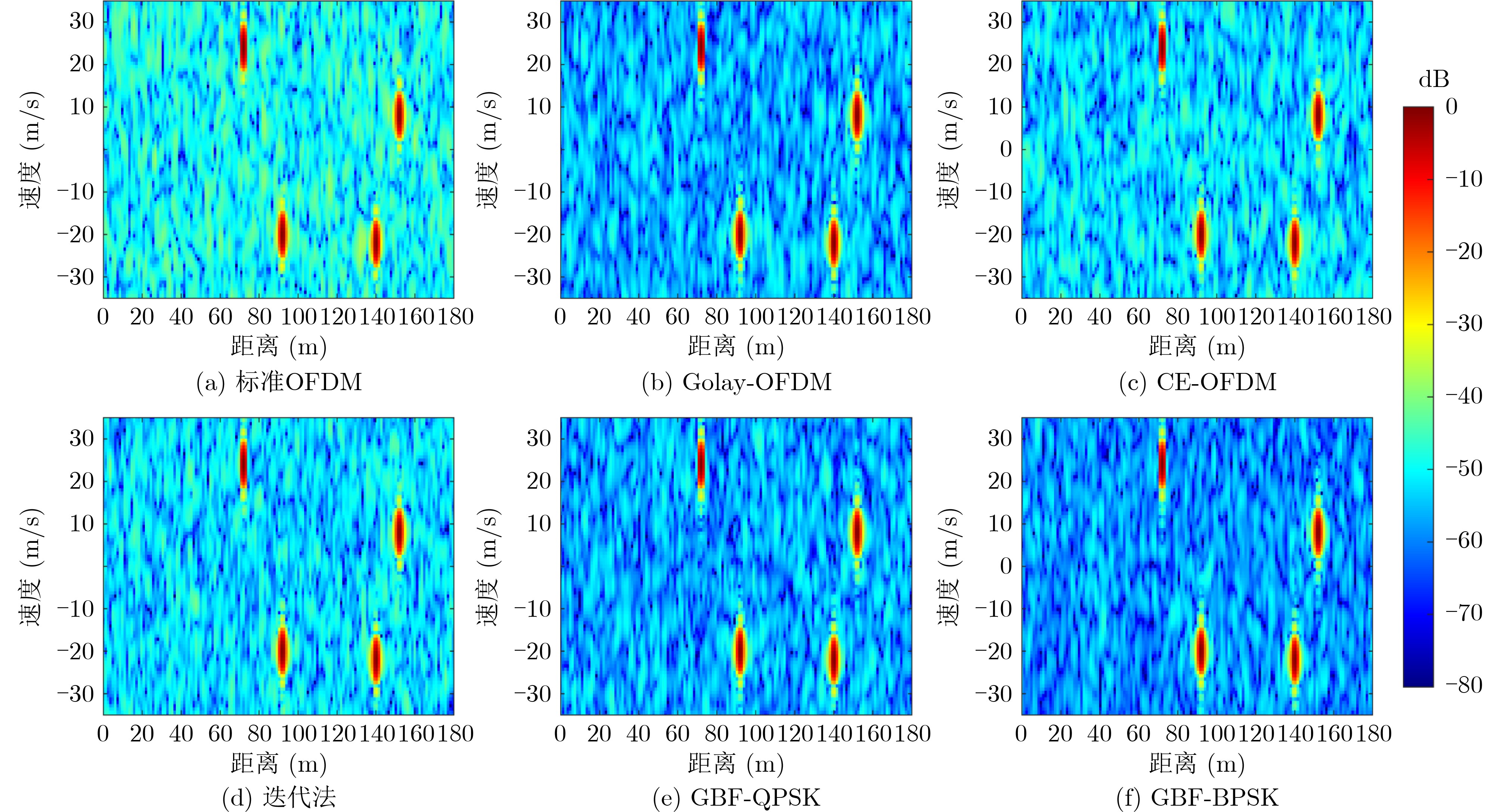
图 10 不同OFDM波形下雷达多目标检测距离-速度图
门限阈值为 ρ=−20 dB,目标参数为 (R,v)={(72,24),(92,−20),(140,−22),(152,8)},其中距离单位为m,速度单位为m/s。
表 1 不同逐元消除模型下的SNR相关参数对比
波形 回退量/
dB输入SNR/dB 无门限平均SNR效率 –20 dB门限平均SNR效率 无门限平均有效SNR/dB –20 dB门限平均有效SNR/dB –20 dB门限保留比例 标准OFDM 11.53 –1.53 1 1 – 1.525466 –1.53 1 Golay-OFDM 3.01 6.99 1 1 6.98970 6.99 1 CE-OFDM 0 10 0.20865 0.21124 3.10003 3.25 0.99987 迭代式CM-OFDM 0 10 0.00732 0.11248 – 11.35085 0.51 0.94757 GBF-QPSK 0 10 0.40760 0.56640 6.10236 7.53123 0.99910 GBF-BPSK 0 10 0.80604 0.80604 9.06356 9.06356 1  下载: 导出CSV
-
[1] International Telecommunication Union. Framework and overall objectives of the future development of IMT for 2030 and beyond[R]. ITU-R M. 2160-0, 2023. [2] 徐金雷, 赵俊湦, 卢华兵, 等. 面向6G的多维扩展通感一体化研究综述[J]. 电子与信息学报, 2024, 46(5): 1672–1683. doi: 10.11999/JEIT231045.XU Jinlei, ZHAO Junsheng, LU Huabing, et al. An overview on multi-dimensional expanded integrated sensing and communication for 6G[J]. Journal of Electronics & Information Technology, 2024, 46(5): 1672–1683. doi: 10.11999/JEIT231045. [3] 余显祥, 姚雪, 杨婧, 等. 面向感知应用的通感一体化信号设计技术与综述[J]. 雷达学报, 2023, 12(2): 247–261. doi: 10.12000/JR23015.YU Xianxiang, YAO Xue, YANG Jing, et al. Radar-centric DFRC signal design: Overview and future research avenues[J]. Journal of Radars, 2023, 12(2): 247–261. doi: 10.12000/JR23015. [4] ZHANG J A, LIU Fan, MASOUROS C, et al. An overview of signal processing techniques for joint communication and radar sensing[J]. IEEE Journal of Selected Topics in Signal Processing, 2021, 15(6): 1295–1315. doi: 10.1109/JSTSP.2021.3113120. [5] STURM C and WIESBECK W. Waveform design and signal processing aspects for fusion of wireless communications and radar sensing[J]. Proceedings of the IEEE, 2011, 99(7): 1236–1259. doi: 10.1109/JPROC.2011.2131110. [6] THOMPSON S C, AHMED A U, PROAKIS J G, et al. Constant envelope OFDM phase modulation: Spectral containment, signal space properties and performance[C]. Proceedings of the MILCOM 2004. Military Communications Conference, Monterey, USA, 2004: 1129–1135. doi: 10.1109/MILCOM.2004.1495013. [7] OCHIAI H and IMAI H. Performance analysis of deliberately clipped OFDM signals[J]. IEEE Transactions on Communications, 2002, 50(1): 89–101. doi: 10.1109/26.975762. [8] BÄUML R W, FISCHER R F H, and HUBER J B. Reducing the peak-to-average power ratio of multicarrier modulation by selected mapping[J]. Electronics Letters, 1996, 32(22): 2056–2057. doi: 10.1049/el:19961384. [9] MÜLLER S H and HUBER J B. OFDM with reduced peak-to-average power ratio by optimum combination of partial transmit sequences[J]. Electronics Letters, 1997, 33(5): 368–369. doi: 10.1049/el:1997026. [10] DAVIS J A and JEDWAB J. Peak-to-mean power control in OFDM, Golay complementary sequences, and Reed-Muller codes[J]. IEEE Transactions on Information Theory, 1999, 45(7): 2397–2417. doi: 10.1109/18.796380. [11] LIU Jiaqi, YANG Ping, KE Jiang, et al. OFDM-structure based waveform designs for integrated sensing and communication[J]. Science China Information Sciences, 2025, 68(5): 150306. doi: 10.1007/s11432-024-4373-7. [12] LI Kaimin, WANG Jiahuan, CUI Haixia, et al. Low-PAPR OFDM-ISAC waveform design based on frequency-domain phase differences[J]. IEEE Internet of Things Journal, 2025, 12(21): 45106–45118. doi: 10.1109/JIOT.2025.3599171. [13] WU Shoufan, LEE M C, and LEE T S. Symbol-level precoding-based waveform design for low-PAPR multi-user MIMO-OFDM integrated sensing and communication systems[C]. Proceedings of the 2025 IEEE International Conference on Communications, Montreal, Canada, 2025: 1001–1006. doi: 10.1109/ICC52391.2025.11161635. [14] GOURAR E, MEDJAHDI Y, CLAVIER L, et al. Analysis of PAPR-aware OFDM waveforms for integrated sensing and communication[C]. Proceedings of the 2025 IEEE 101st Vehicular Technology Conference, Oslo, Norway, 2025: 1–6. doi: 10.1109/VTC2025-Spring65109.2025.11174398. [15] 翟怡昊, 赵宏宇, 牛凤梁, 等. 基于符号级预编码的雷达通信一体化恒模波形设计算法研究[J]. 电子与信息学报, 2025, 47(10): 3702–3711. doi: 10.11999/JEIT250288.ZHAI Yihao, ZHAO Hongyu, NIU Fengliang, et al. Constant-modulus waveform design for SLP-based DFRC systems[J]. Journal of Electronics & Information Technology, 2025, 47(10): 3702–3711. doi: 10.11999/JEIT250288. [16] 刘涛, 李香璇, 李玉博. 通感一体化波形和接收滤波器联合设计方法[J]. 电子与信息学报, 2025, 47(7): 2163–2171. doi: 10.11999/JEIT241082.LIU Tao, LI Xiangxuan, and LI Yubo. Joint design of integrated sensing and communication waveforms and receiving filters[J]. Journal of Electronics & Information Technology, 2025, 47(7): 2163–2171. doi: 10.11999/JEIT241082. [17] 刘燕, 万显荣, 易建新. 基于数据失真的雷达通信一体化OFDM波形设计方法[J]. 雷达学报, 2024, 13(1): 160–173. doi: 10.12000/JR23205.LIU Yan, WAN Xianrong, and YI Jianxin. OFDM waveform design for joint radar-communication based on data distortion[J]. Journal of Radars, 2024, 13(1): 160–173. doi: 10.12000/JR23205. [18] WILLSTATTER K and ZOLTOWSKI M D. Complementary sequence encoding for 1D and 2D constant-modulus OFDM transmission at millimeter wave frequencies[C]. Proceedings of the 2019 IEEE International Conference on Acoustics, Speech and Signal Processing, Brighton, UK, 2019: 4804–4808. doi: 10.1109/ICASSP.2019.8682638. [19] WILLSTATTER K. Constant-modulus OFDM transmission using complementary sequences[D]. [Ph. D. dissertation], Purdue University, 2022. [20] WILLSTATTER K and ZOLTOWSKI M D. Complementary sequence construction for constant-envelope OFDM transmission enabling nonlinear amplification and clipping[C]. Proceedings of 2021 IEEE Military Communications Conference, San Diego, USA, 2021: 390–395. doi: 10.1109/MILCOM52596.2021.9653128. [21] 石明利, 李晓辉, 吕思婷. 基于多目标公平感知的通感一体化恒模波形设计[J]. 通信学报, 2024, 45(10): 31–40. doi: 10.11959/j.issn.1000-436x.2024173.SHI Mingli, LI Xiaohui, and LYU Siting. ISAC constant modulus waveform design based on multi-target fair sensing[J]. Journal on Communications, 2024, 45(10): 31–40. doi: 10.11959/j.issn.1000-436x.2024173. [22] CHEN Xinyu, RAO Bin, SONG Dan, et al. Golay complementary sequence and constant envelope orthogonal frequency-division multiplexing-based for integrated sensing and communication with mutual information analysis[J]. IET Radar, Sonar & Navigation, 2024, 18(10): 1848–1858. doi: 10.1049/rsn2.12622. [23] BRAUN K M. OFDM radar algorithms in mobile communication networks[D]. [Ph. D. dissertation], Karlsruher Institut für Technologie, 2014. [24] LAVERY S P and RATNARAJAH T. Remote sensing with constant-modulus OFDM signals from complementary sequences[C]. Proceedings of the 2024 IEEE Radar Conference, Denver, USA, 2024: 1–6. doi: 10.1109/RadarConf2458775.2024.10548669. -

 下载:



图(11) / 表(1)
计量
- 文章访问数: 19
- HTML全文浏览量: 0
- PDF下载量: 0
- 被引次数: 0
