




Research and Design of a Large Model for Location-Based Service Awareness and Feature Extraction Based on a Mobile 5G Single Station
-
摘要: 随着复杂室内场景下位置业务与定位需求持续增长,基于5G无线信号的室内定位成为重要研究方向。现有5G定位方案多依赖多站协同或固定单站部署,在非视距 (NLOS)、基站稀疏环境下容易失效。传统指纹定位方法通过融合多站的信号特征,能够在一定程度上克服非视距带来的问题,但存在泛化能力有限、对未知位置特征提取能力不足的问题,造成定位精度下降。为此,本文提出一种可移动5G单站大模型定位方法,构建专用定位大模型LLM4CSI-RS,采用参数高效微调 (PEFT) 策略优化训练,融合单站动态感知与大模型推理能力,建立无线测量指纹到参考点 (RP) 的映射关系,从而在无需终端主动配合的条件下,实现复杂室内环境下的被动式定位。真实室内NLOS场景下的实验验证了该方法的有效性,可达到1.25 m平均定位误差,为室内复杂场景下的位置业务感知提供了基于可移动5G单站指纹定位的技术路径。Abstract:
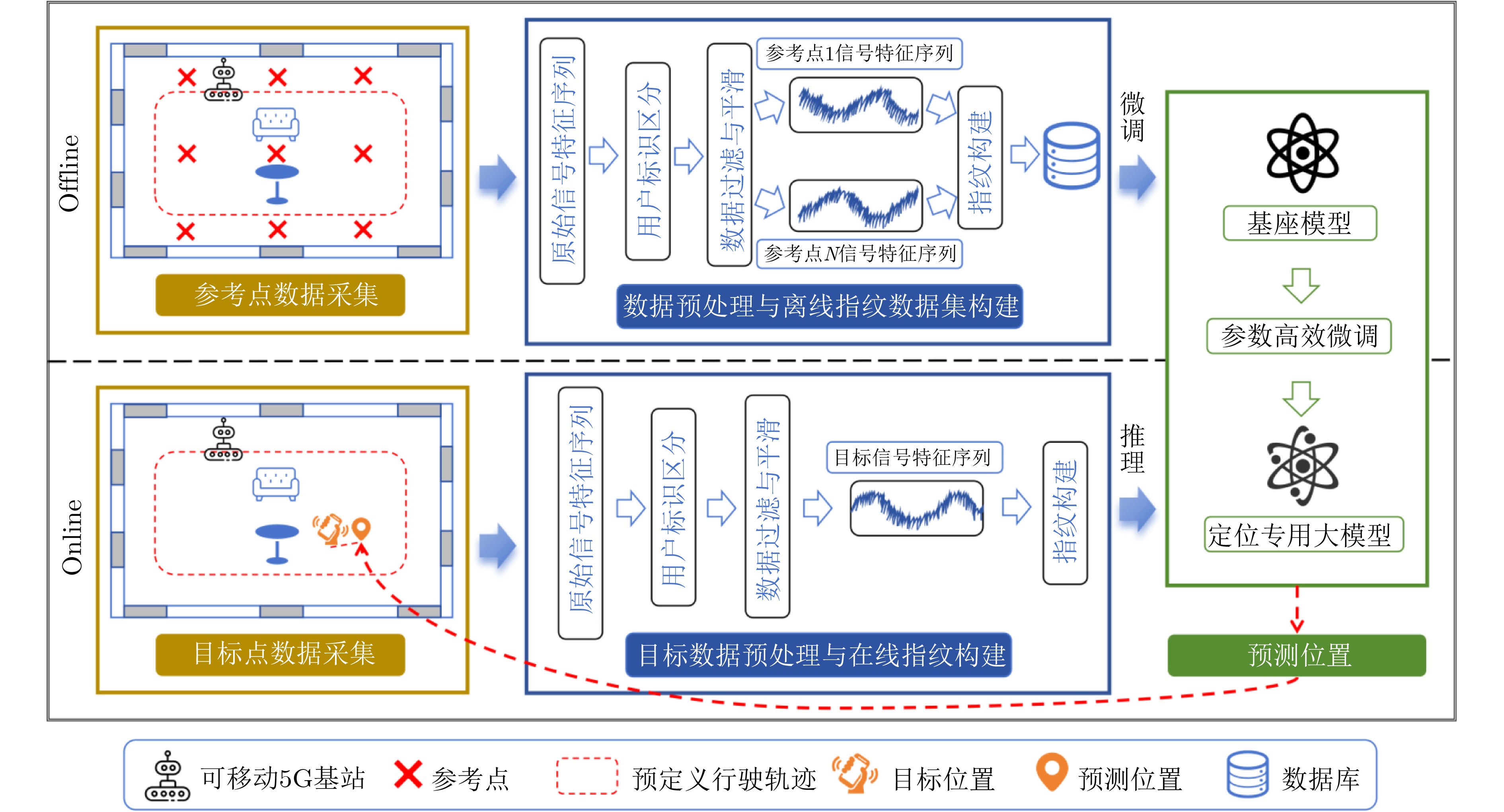
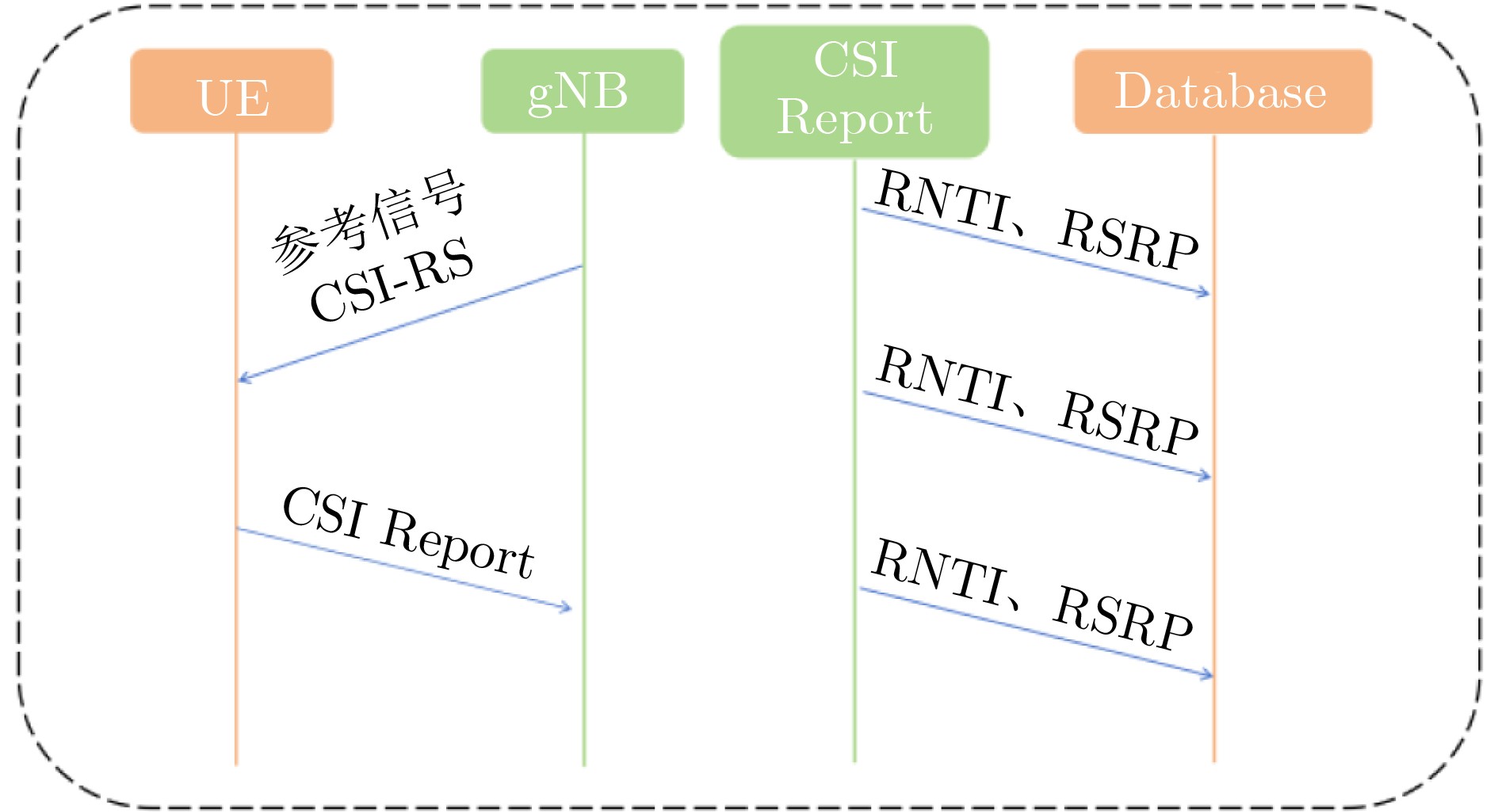
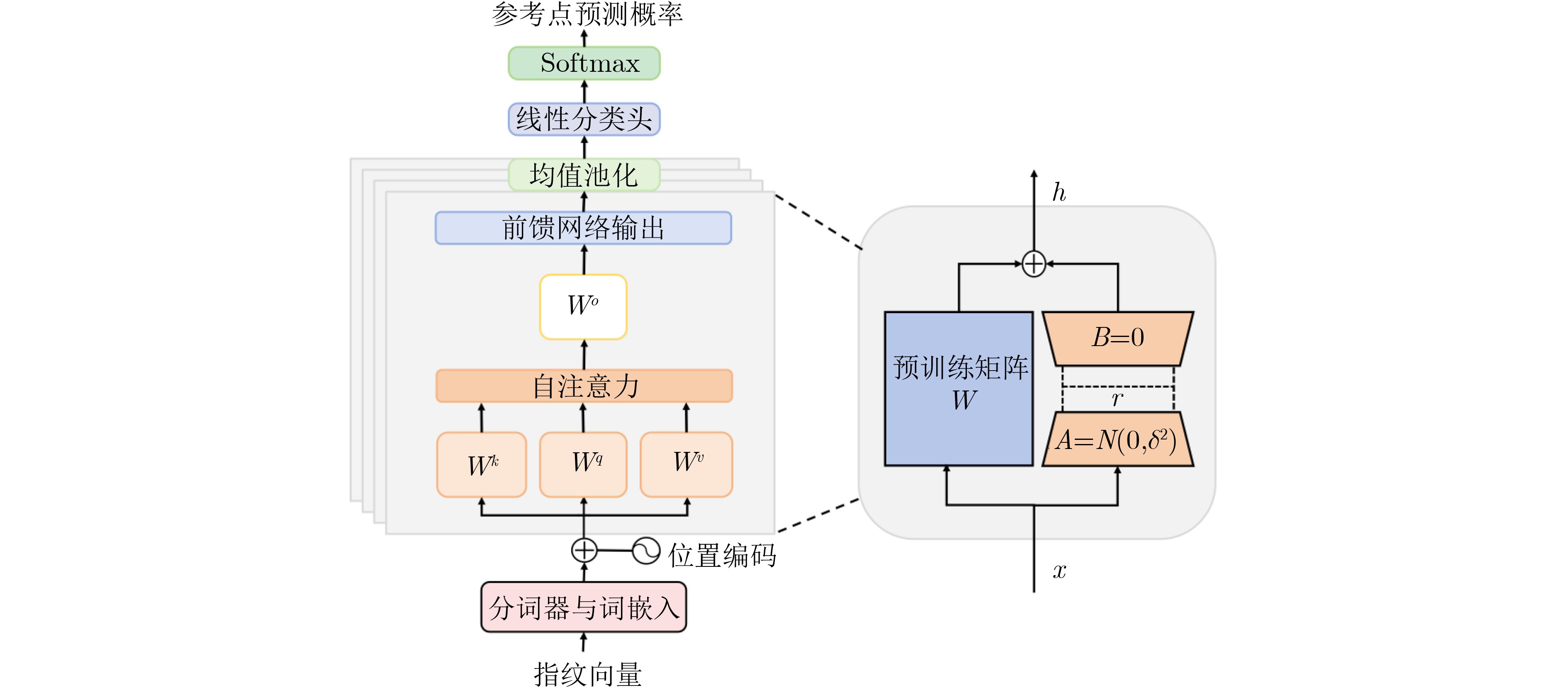
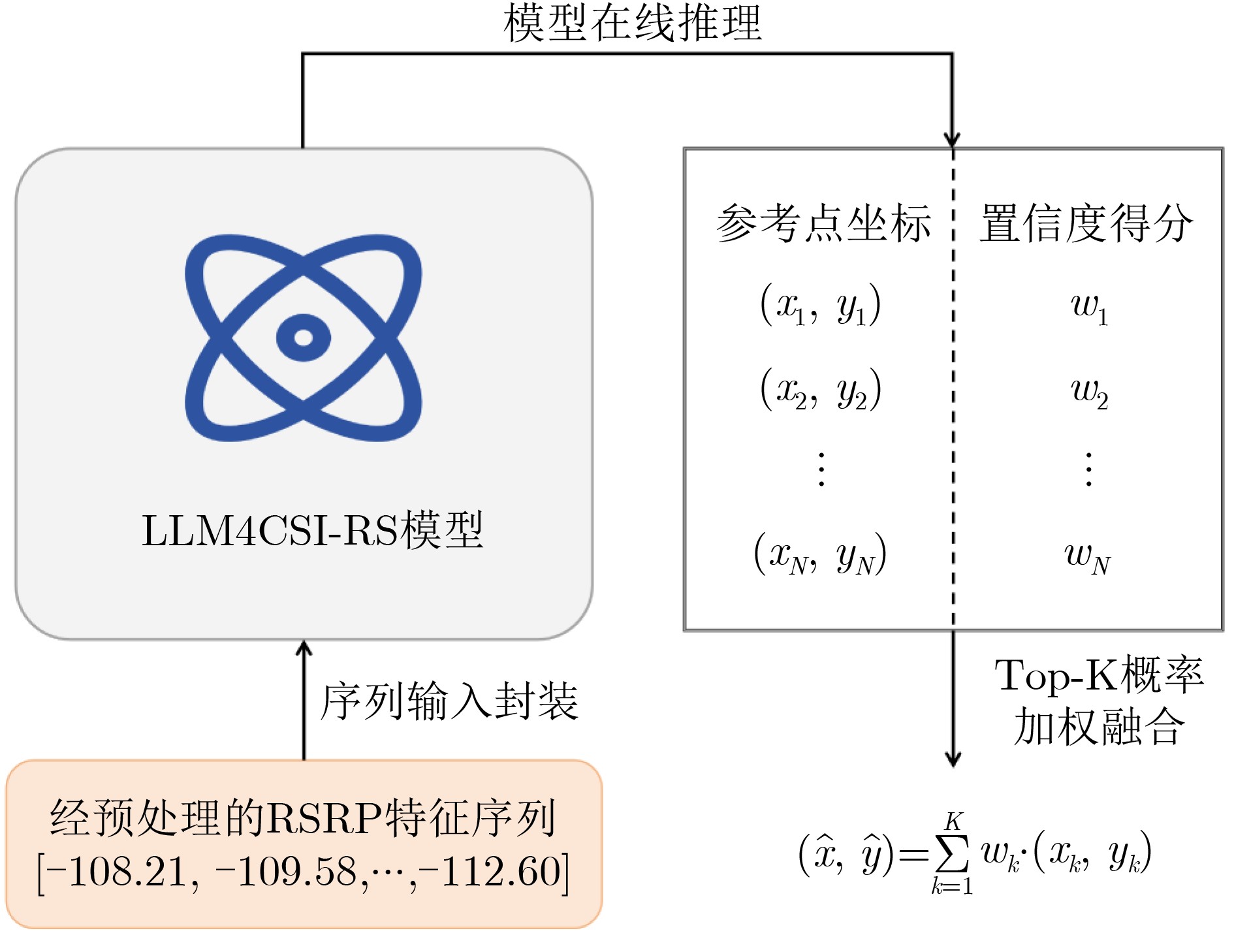
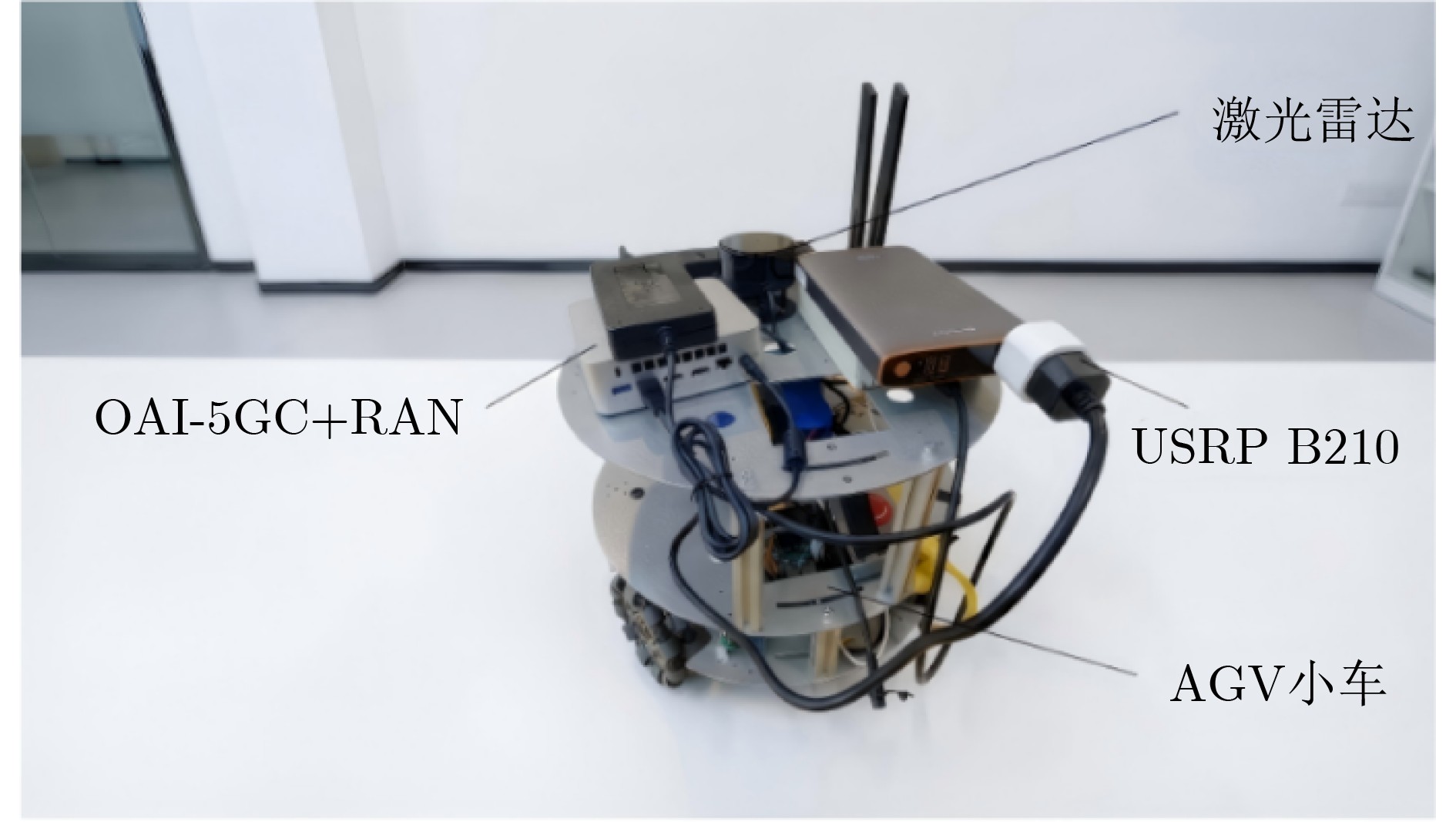
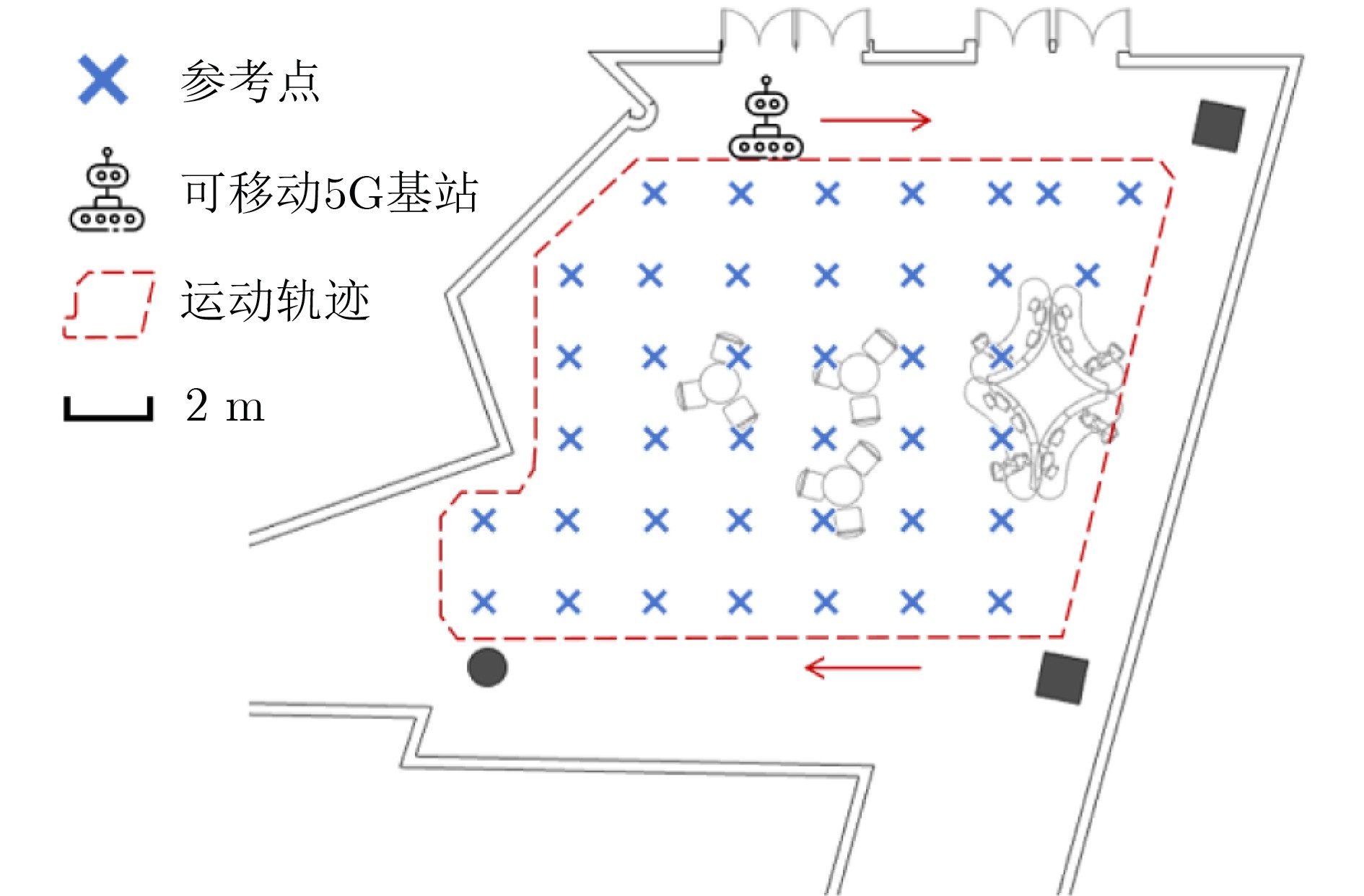
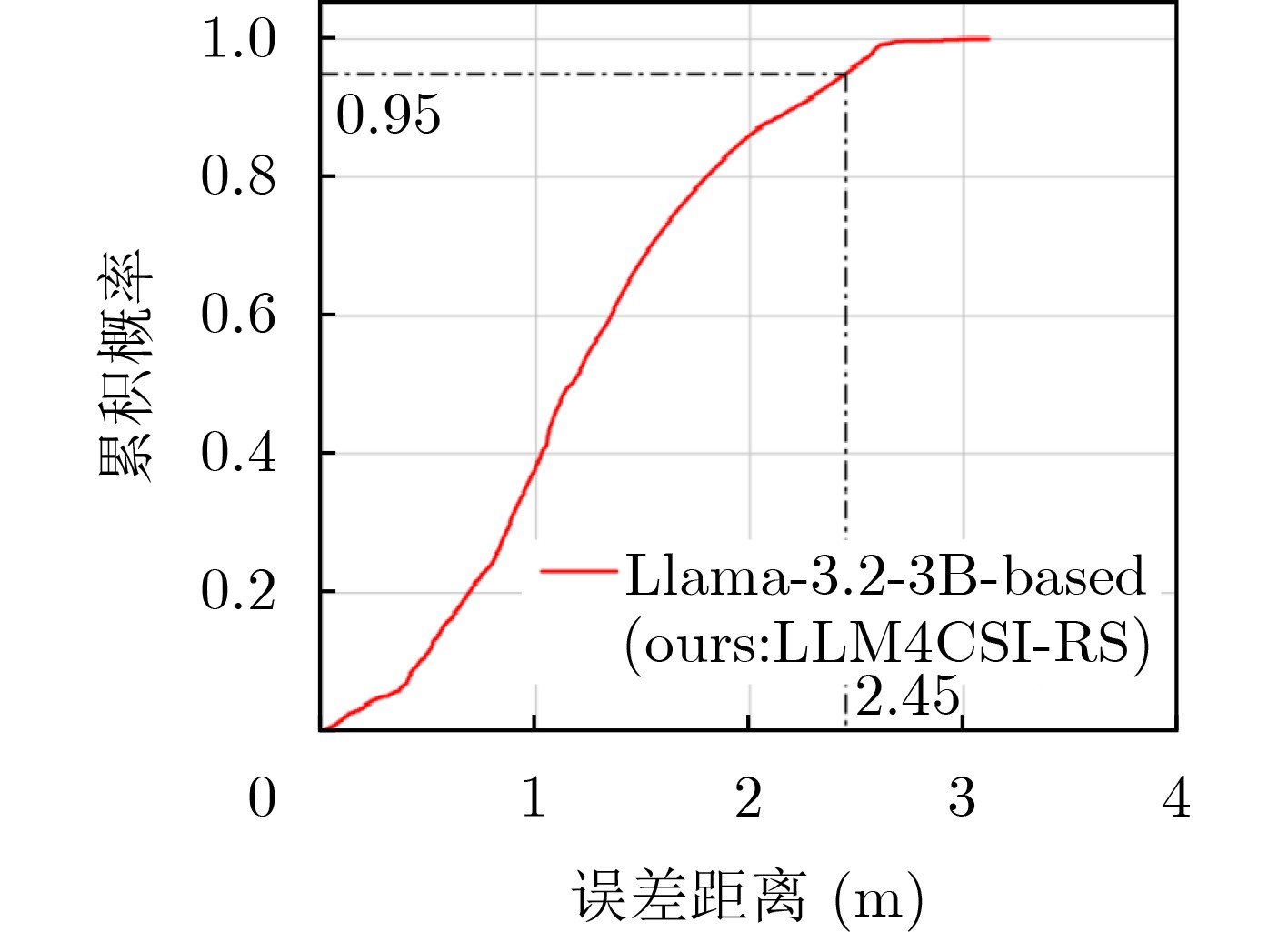
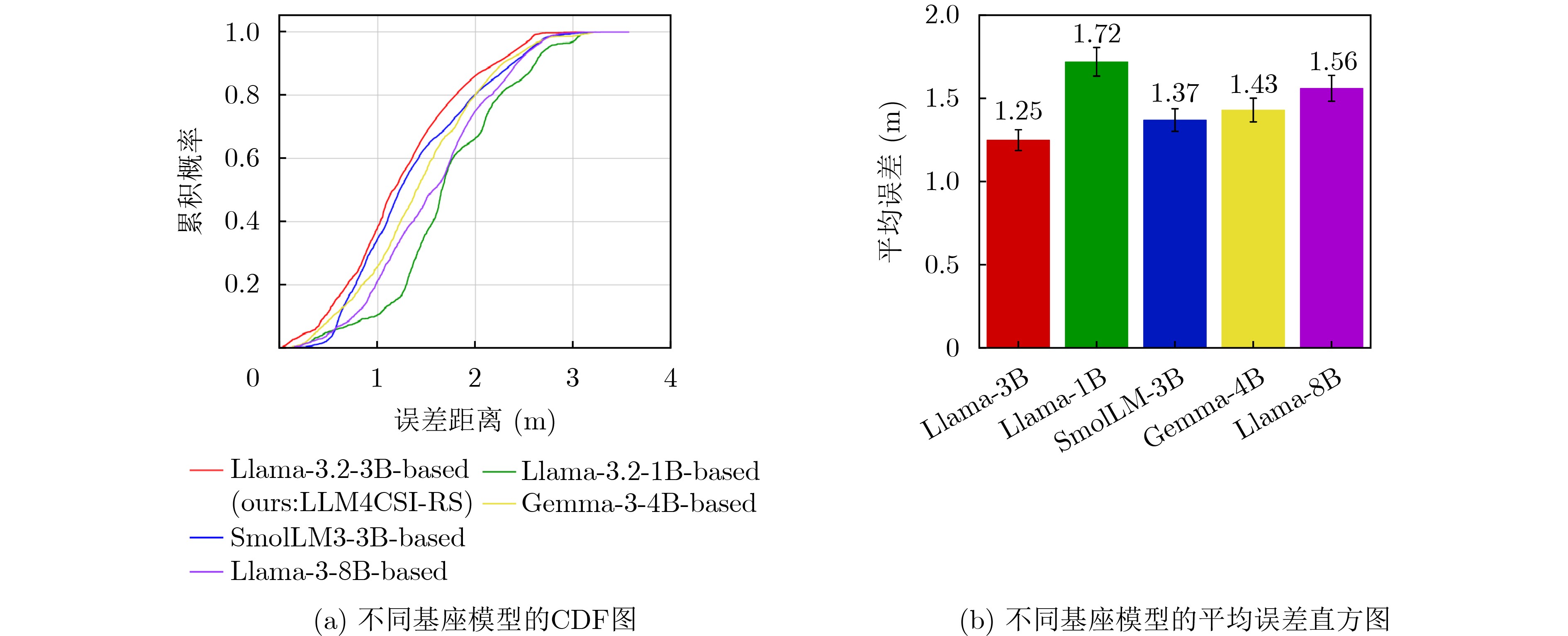
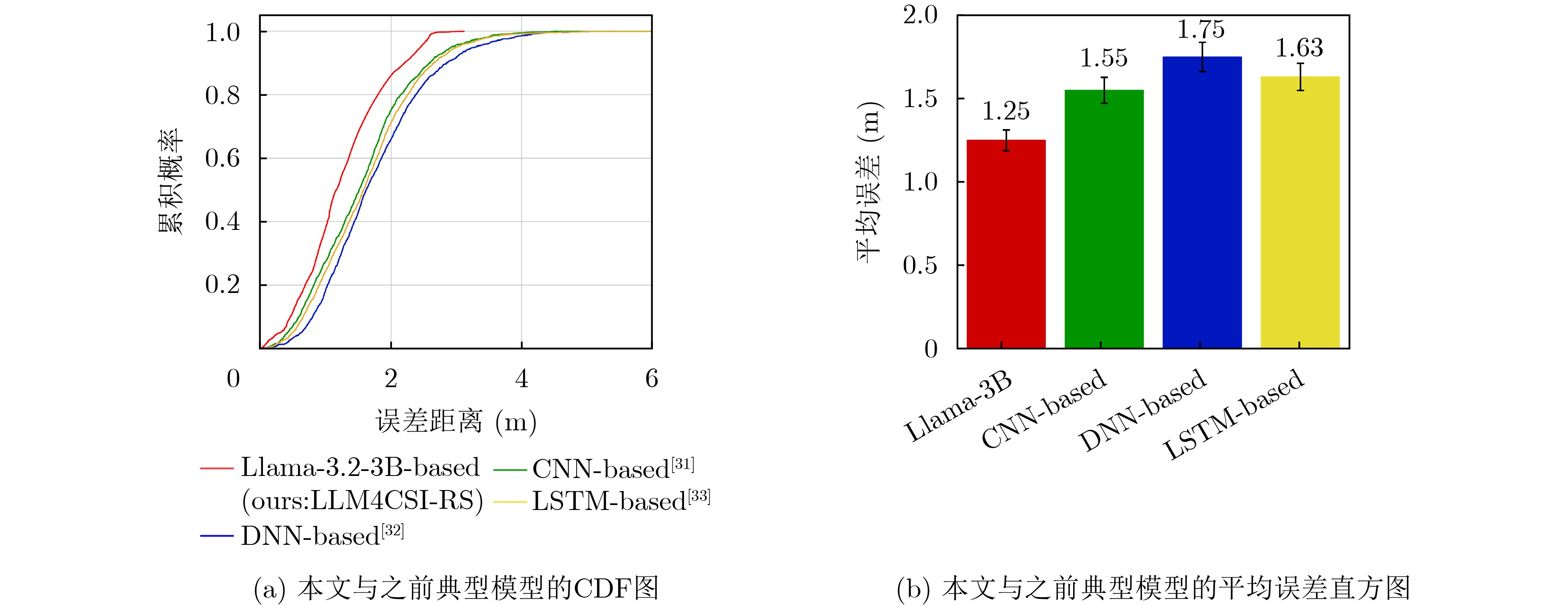
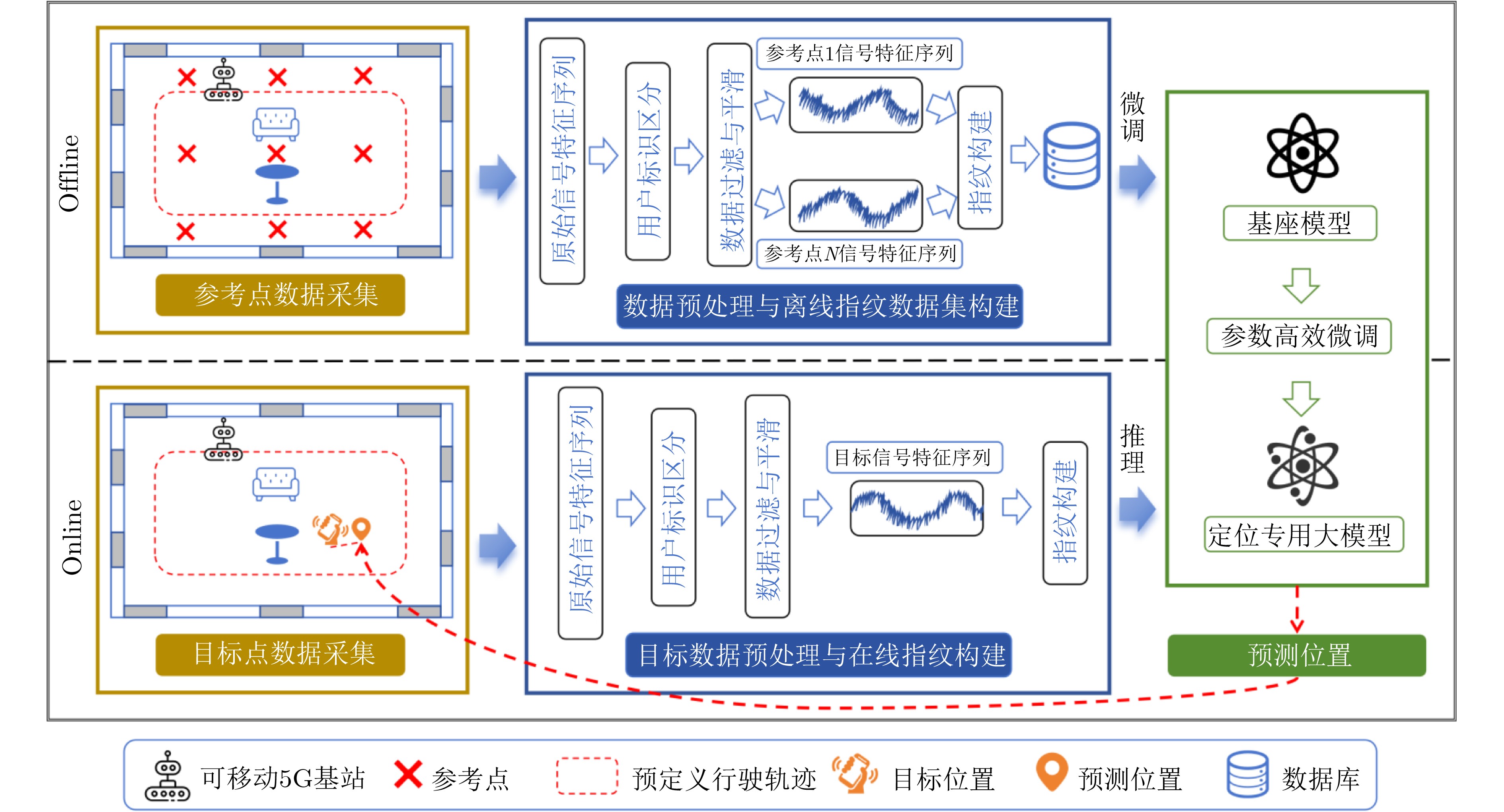
Objective The growing demand for high-precision localization in complex indoor scenarios such as industrial warehouses and smart buildings has made 5G integrated sensing and communication (ISAC) a promising enabling technology. However, existing 5G localization schemes are predominantly designed for multi-station cooperation or fixed single-station deployment. Multi-station approaches rely heavily on dense base station deployment, which fails to work in infrastructure-sparse scenarios. Fixed single-station solutions suffer from severe performance degradation in non-line-of-sight (NLOS) and multipath environments due to the limited observation perspective, and conventional fingerprint localization algorithms have limited generalization ability for unknown positions. To address these limitations, this paper proposes a mobile 5G single-station localization framework based on large models, which enables passive localization without active terminal cooperation. Methods A mobile 5G single-station sensing prototype is developed based on the OpenAirInterface (OAI) platform, USRP B210 software-defined radio and automated guided vehicle (AGV) platform ( Fig. 1 ). By reusing the native channel state information reference signal (CSI-RS) measurement and CSI Report reporting mechanism in 5G NR, CSI reports are parsed at the gNB side and reference signal received power (RSRP) sequences are extracted to construct a dedicated localization fingerprint dataset, without introducing additional dedicated sensing signals (Fig. 2 ). A specialized localization large model named LLM4CSI-RS is built upon the Llama-3.2-3B-Instruct backbone. Parameter-efficient fine-tuning (PEFT) is implemented via low-rank adaptation (LoRA), where only the low-rank matrices in attention projection layers are updated while the pre-trained weights remain frozen, significantly reducing training overhead and mitigating overfitting (Table 1 ). During online inference, the model outputs confidence scores of candidate reference points, and the final position is estimated through a Top-K weighted fusion strategy.Results and Discussions Extensive experiments are conducted in a real-world indoor NLOS scenario ( Fig. 6 ). The proposed LLM4CSI-RS method achieves a mean localization error of 1.25 m, a 95th percentile error of 2.45 m, and an accuracy of 86.06% within the 2 m error threshold, with the steepest rise in cumulative probability in the low-error range (Fig. 7 ). Systematic hyperparameter tuning confirms that the baseline low-rank adaptation configuration yields the optimal performance for this task (Table 2 ). Ablation studies validate the effectiveness of each key module, and the full configuration — with low-rank adaptation applied to all attention projection matrices, a single-layer linear classifier, global mean pooling and Top-4 weighted fusion — delivers the best overall performance (Table 3 ). Comparative experiments across multiple backbone models show that Llama-3.2-3B strikes the optimal balance between feature representation capability and computational cost, avoiding underfitting in smaller models and overfitting in larger ones (Fig. 8 ). Compared with conventional deep learning baselines including CNN, DNN and LSTM, the proposed method consistently outperforms all benchmarks (Fig. 9 ).Conclusions The proposed framework integrates the multi-perspective dynamic sensing capability of mobile single stations and the deep sequence modeling ability of large models, effectively alleviates the performance degradation caused by NLOS and sparse infrastructure, and significantly improves localization accuracy and robustness. It provides a low-deployment-cost and scalable technical path for indoor localization in complex scenarios, and offers a practical reference for industrial-grade indoor location-based services. -
表 3 消融实验结果
消融配置 平均误差 95%累计误差 Acc@2m 基线 (Top-4) 1.25 2.45 86.06 微调模块:$ q,k,v $ 1.51 2.20 83.89 多层分类头 1.68 2.90 65.67 末Token池化 1.70 2.63 75.61 Top-3加权融合 1.42 3.04 74.94 Top-5加权融合 1.37 2.24 85.33  下载: 导出CSV
表 1 实验参数配置
参数类别 参数名称 配置说明 基座模型 预训练模型 Llama-3.2-3B-Instruct 微调 LoRA超参数 $ r $=8, $ \alpha $=32 LoRA目标模块 q, k, v, o 模型结构 序列池化方式 全局均值池化 分类头结构 单层线性分类头 训练优化 学习率 $ 2\times 1{0}^{-4} $ 优化器 AdamW 损失函数 标签平滑交叉熵 推理策略 加权融合方式 Top-4概率加权融合
下载: 导出CSV
表 2 不同LoRA配置的实验结果
LoRA配置 $ (r,\alpha ) $ 平均误差 95%累计误差 Acc@2m 基线(8,32) 1.25 2.45 86.06 (4,8) 1.34 2.44 85.44 (8,16) 1.30 2.41 82.11 (16,32) 1.42 2.47 80.22
下载: 导出CSV
-
[1] LU Shihang, LIU Fan, LI Yunxin, et al. Integrated sensing and communications: Recent advances and ten open challenges[J]. IEEE Internet of Things Journal, 2024, 11(11): 19094–19120. doi: 10.1109/JIOT.2024.3361173. [2] 赵川斌, 许伟华, 林博, 等. 融合视觉的多模态通信感知一体化关键技术及原型验证[J]. 电子与信息学报, 2026, 48(2): 487–498. doi: 10.11999/JEIT250685.ZHAO Chuanbin, XU Weihua, LIN Bo, et al. Vision enabled multimodal integrated sensing and communications: Key technologies and prototype validation[J]. Journal of Electronics & Information Technology, 2026, 48(2): 487–498. doi: 10.11999/JEIT250685. [3] ALDIRMAZ-COLAK S, NAMDAR M, BASGUMUS A, et al. A comprehensive review on ISAC for 6G: Enabling technologies, security, and AI/ML perspectives[J]. IEEE Access, 2025, 13: 97152–97193. doi: 10.1109/ACCESS.2025.3573371. [4] ZHU Xiaoqiang, QU Wenyu, QIU Tie, et al. Indoor intelligent fingerprint-based localization: Principles, approaches and challenges[J]. IEEE Communications Surveys & Tutorials, 2020, 22(4): 2634–2657. doi: 10.1109/COMST.2020.3014304. [5] YANG Kexin, YU Chao, YAO Saibin, et al. Indoor localization with extended trajectory map construction and attention mechanisms in 5G[J]. Sensors, 2025, 25(18): 5784. doi: 10.3390/s25185784. [6] 王逸帆, 孙顺远, 秦宁宁. 时空约束下优选近邻指纹定位算法[J]. 电子与信息学报, 2026, 48(3): 1366–1376. doi: 10.11999/JEIT250777.WANG Yifan, SUN Shunyuan, and QIN Ningning. Spatio-temporal constrained refined nearest neighbor fingerprinting localization[J]. Journal of Electronics & Information Technology, 2026, 48(3): 1366–1376. doi: 10.11999/JEIT250777. [7] LEE S H and SEO D H. Scalable Wi-Fi fingerprinting localization by deep similarity network[J]. IEEE Internet of Things Journal, 2025, 12(4): 4197–4206. doi: 10.1109/JIOT.2024.3484456. [8] LIN Yiruo, YU Kegen, ZHU Feiyang, et al. The state of the art of deep learning-based Wi-Fi indoor positioning: A review[J]. IEEE Sensors Journal, 2024, 24(17): 27076–27098. doi: 10.1109/JSEN.2024.3432154. [9] QIAO Jiageng, YANG Fan, LIU Jingbin, et al. Advancements in indoor precision positioning: A comprehensive survey of UWB and Wi-Fi RTT positioning technologies[J]. Network, 2024, 4(4): 545–566. doi: 10.3390/network4040027. [10] 孙骞, 丁天语, 简鑫, 等. 面向同频干扰环境的5G机会信号定位算法研究[J]. 电子与信息学报, 2024, 46(8): 3136–3145. doi: 10.11999/JEIT231423.SUN Qian, DING Tianyu, JIAN Xin, et al. Research on localization algorithm with 5G opportunistic signals in co-channel interference environments[J]. Journal of Electronics & Information Technology, 2024, 46(8): 3136–3145. doi: 10.11999/JEIT231423. [11] 周鑫. 商用5G单基站室内定位研究[J]. 武汉大学学报: 信息科学版, 2025, 50(7): 1456. doi: 10.13203/j.whugis20250079.ZHOU Xin. Research on indoor positioning for commercial 5G single base station[J]. Geomatics and Information Science of Wuhan University, 2025, 50(7): 1456. doi: 10.13203/j.whugis20250079. [12] DHUNGEL S, DUGGAL G, RON D, et al. Experimental validation of a 3GPP compliant 5G-based positioning system[C]. Proceedings of the 30th Annual International Conference on Mobile Computing and Networking, Washington, USA, 2024: 1946–1953. doi: 10.1145/3636534.3697324. [13] GUO Haobing, YI Xiushuang, ZENG Wanxin, et al. CL-Loc: A dual-branch CNN-LSTM network for WiFi fingerprint-based indoor localization[C]. Proceedings of 2025 IEEE 25th International Conference on Communication Technology, Shenyang, China, 2025: 1428–1432. doi: 10.1109/ICCT67417.2025.11373959. [14] HOMAYOUNI S, PAIER M, BODUR O, et al. Evaluation of 3GPP release 16 indoor positioning in private standalone 5G networks[C]. Proceedings of 2023 IEEE 20th International Conference on Smart Communities: Improving Quality of Life using AI, Robotics and IoT, Boca Raton, USA, 2023: 13–17. doi: 10.1109/HONET59747.2023.10375065. [15] DAI Yue, CHEN Gong, CHEN Liang, et al. Multi-scenario dynamic indoor positioning based on 5G commercial DAS signals[C]. Proceedings of 2024 Asia Conference on Advances in Electrical and Power Engineering, Suzhou, China, 2024: 1–5. doi: 10.1109/ACEPE63527.2024.10871717. [16] 黄逸, 熊朝锐, 唐小伟, 等. 半无源智能反射面辅助的通感一体分布式高精度联合定位方法[J]. 电子与信息学报, 2026, 48(5): 2188–2198. doi: 10.11999/JEIT251039.HUANG Yi, XIONG Chaorui, TANG Xiaowei, et al. Semi-passive intelligent reflecting surface-assisted integrated sensing and communication for distributed and high-precision joint localization[J]. Journal of Electronics & Information Technology, 2026, 48(5): 2188–2198. doi: 10.11999/JEIT251039. [17] NIE Wendi, ZHANG Yuanyi, LAM K Y, et al. Toward pervasive WLAN localization leveraging collaborative mobile sites: A multi-agent deep reinforcement learning approach[J]. IEEE Transactions on Mobile Computing, 2026, 25(9): 14086–14101. doi: 10.1109/TMC.2026.3677256. [18] NIE Wendi, WANG Xiaoyang, LIU Zexing, et al. MS-Loc: Toward pervasive indoor localization utilizing mobile single site[J]. IEEE Internet of Things Journal, 2025, 12(10): 14188–14201. doi: 10.1109/JIOT.2024.3525026. [19] NIE Wendi, LIU Zexing, WANG Xiaoyang, et al. Pervasive indoor user identification leveraging mobile single-station localization[J]. IEEE Internet of Things Journal, 2025, 12(11): 15224–15237. doi: 10.1109/JIOT.2025.3528447. [20] BHATIA N S and OBRACZKA K. Transforming decoder-only transformers for accurate WiFi-telemetry based indoor localization[EB/OL]. https://arxiv.org/abs/2505.15835, 2025. [21] SHI Wenbin, ZHAN Zhongxu, LEI Jingsheng, et al. GeoNR-PSW: Prompt-aligned localization leveraging ray-traced 5G channels and LLM reasoning[J]. Sensors, 2025, 25(17): 5397. doi: 10.3390/s25175397. [22] MASRUR S, CHENG J F T, KHAMESI A R, et al. Transformer-based resource-efficient indoor localization for 5G/6G NLOS-rich environments[C]. Proceedings of 2025 IEEE International Conference on Communications Workshops, Montreal, Canada, 2025: 1900–1905. doi: 10.1109/ICCWorkshops67674.2025.11162366. [23] 赵川斌, 孙红, 张腾宇, 等. 面向6G的通信感知一体化关键技术体系与硬件原型验证[J]. 电子与信息学报, 2025, 47(4): 932–947. doi: 10.11999/JEIT241114.ZHAO Chuanbin, SUN Hong, ZHANG Tengyu, et al. Integrated sensing and communications framework for 6G: Key technologies and hardware prototype validation[J]. Journal of Electronics & Information Technology, 2025, 47(4): 932–947. doi: 10.11999/JEIT241114. [24] WANG Yuhao, HO I W H, ZHANG Shuowen, et al. Intelligent reflecting surface enabled fingerprinting-based localization with deep reinforcement learning[J]. IEEE Transactions on Vehicular Technology, 2023, 72(10): 13162–13172. doi: 10.1109/TVT.2023.3275581. [25] MALIK A, AHADI M, KALTENBERGER F, et al. From concept to reality: 5G positioning with UL-TDoA in OpenAirInterface[C]. Proceedings of the IEEE Conference on Computer Communications Workshops, London, United Kingdom, 2025: 1–6. doi: 10.1109/INFOCOMWKSHPS65812.2025.11152876. [26] PUTRA G M, BUDIMAN E, MALEWA Y, et al. 4G LTE experience: Reference signal received power, noise ratio and quality[C]. Proceedings of 2021 3rd East Indonesia Conference on Computer and Information Technology, Surabaya, Indonesia, 2021: 139–144. doi: 10.1109/EIConCIT50028.2021.9431853. [27] QIN Ziao and YIN Haifan. A review of codebooks for CSI feedback in 5G new radio and beyond[J]. China Communications, 2025, 22(2): 112–127. doi: 10.23919/JCC.ja.2023-0117. [28] HU E J, SHEN Yelong, WALLIS P, et al. LoRA: Low-rank adaptation of large language models[C]. Proceedings of the 10th International Conference on Learning Representations, 2022. (查阅网上资料, 未找到对应的出版地信息, 请确认). [29] MÜLLER R, KORNBLITH S, and HINTON G. When does label smoothing help?[C]. Proceedings of the 33rd International Conference on Neural Information Processing Systems, Vancouver, Canada, 2019: 422. [30] LIU Siyang, DE LACERDA R, and FIORINA J. Hierarchical fingerprinting and feature extraction for indoor localization[C]. Proceedings of the IEEE International Conference on Communications, Seoul, Korea, Republic of, 2022: 4637–4642. doi: 10.1109/ICC45855.2022.9839182. (查阅网上资料,不确定标黄处是否正确,请确认). [31] ISMAIL-FAWAZ A, DEVANNE M, BERRETTI S, et al. LITE: Light inception with boosting techniques for time series classification[C]. Proceedings of 2023 IEEE 10th International Conference on Data Science and Advanced Analytics, Thessaloniki, Greece, 2023: 1–10. doi: 10.1109/DSAA60987.2023.10302569. [32] AYINLA S L, ABD AZIZ A, DRIEBERG M, et al. An enhanced deep neural network approach for WiFi fingerprinting-based multi-floor indoor localization[J]. IEEE Open Journal of the Communications Society, 2025, 6: 560–575. doi: 10.1109/OJCOMS.2024.3520005. [33] WANG Yan and ZHOU Yuqing. Sparrow search algorithm optimized LSTM model for CSI-based indoor localization[J]. Earth Science Informatics, 2025, 18(1): 39. doi: 10.1007/s12145-024-01580-4. -

 下载:

图(9) / 表(3)
计量
- 文章访问数: 14
- HTML全文浏览量: 3
- PDF下载量: 1
- 被引次数: 0
