




Rotatable-Antenna-Array-Enhanced Direction Sensing for Low-Altitude Communication Networks: Method and Performance Analysis
-
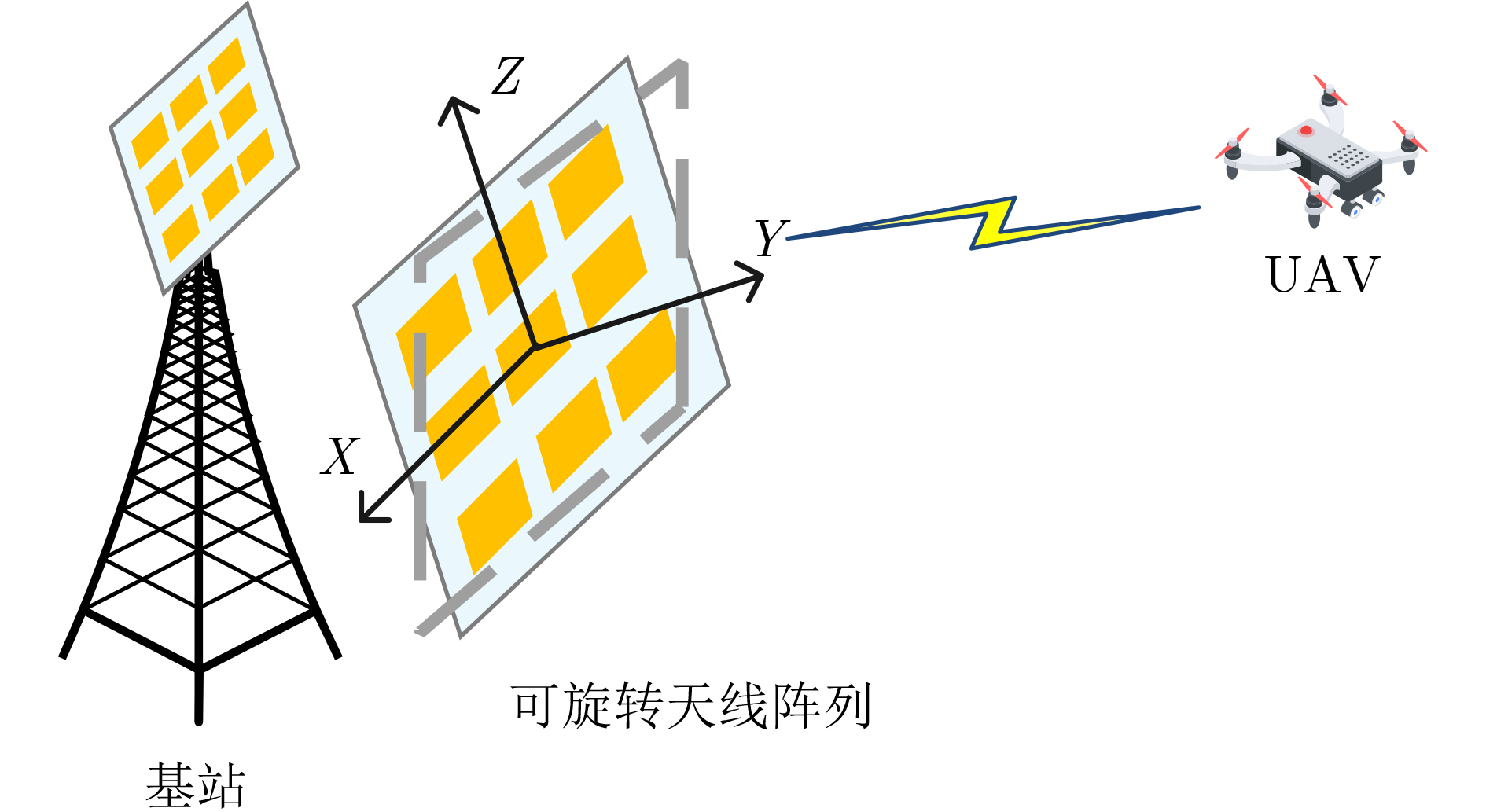
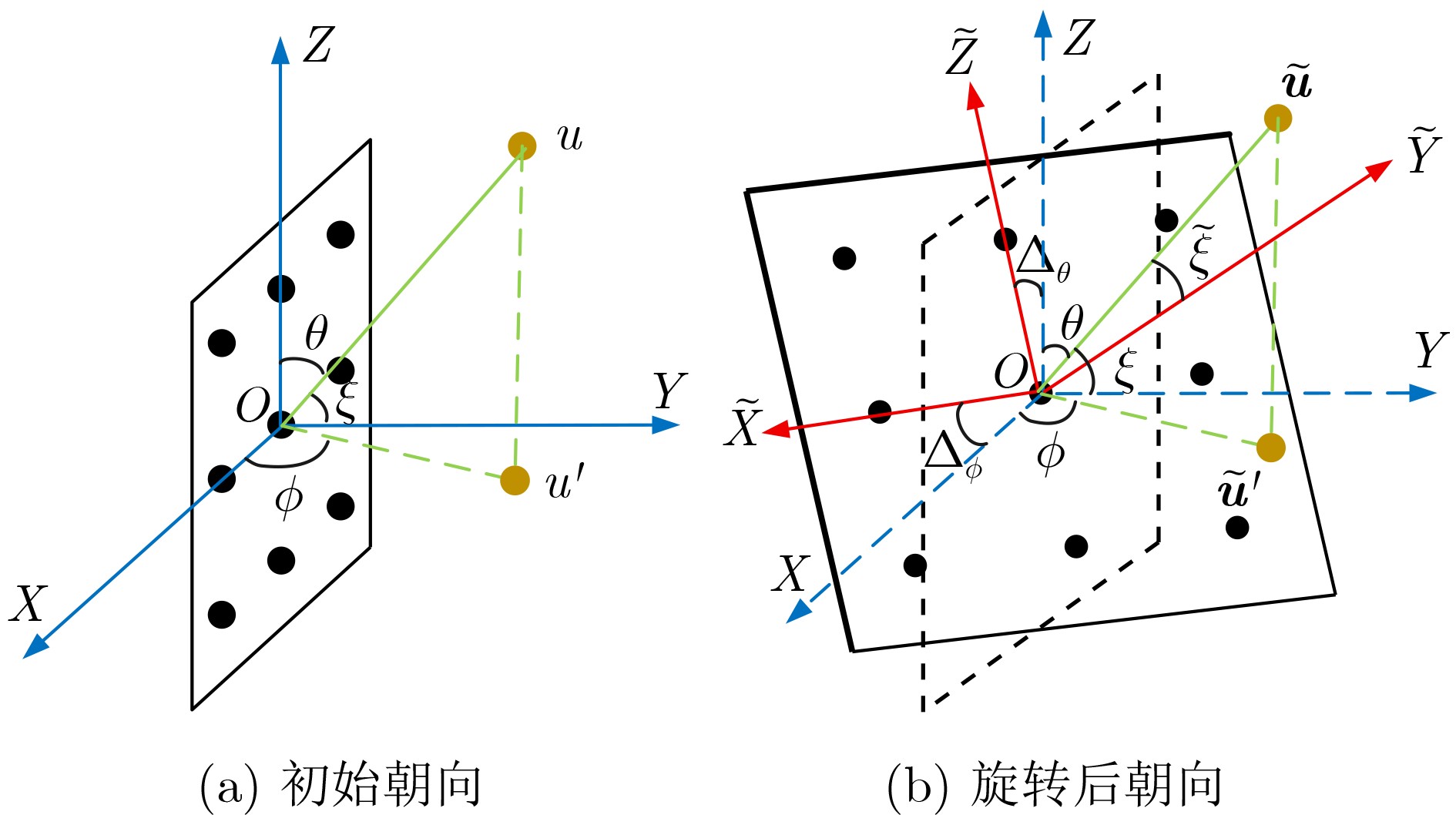
摘要: 在实际的多天线接收机中,天线方向图通常具有各向异性。当信号入射方向大幅偏离阵列法线或靠近方向图零陷区域时,阵列的接收功率将严重衰减,导致传统固定阵列难以满足低空通信网络极端入射场景下的感知需求,而该问题在学术界和工业界尚未得到充分的探索。针对单个低空无人机的波达方向估计问题,本文构建了一种基于可旋转阵列的接收系统框架,并设定各阵元具有相同方向增益特性。随后推导了对应的克拉美罗下界(CRLB)。最后,为实现高精度的方向感知,提出了一种基于迭代旋转的求根多重信号分类(RR-Root-MUSIC)算法,并以推导的CRLB作为性能基准。在所考虑的理想仿真条件下,所提方法所需迭代次数较少,并具有较好的收敛稳定性;与固定阵列下的Root-MUSIC算法相比,所提方法的估计性能显著提升,且更逼近理想对准下的CRLB。进一步采用非理想Patch天线方向图的补充验证表明,阵列旋转改善大偏角观测条件并提高DOA估计性能的基本结论仍然成立。Abstract:
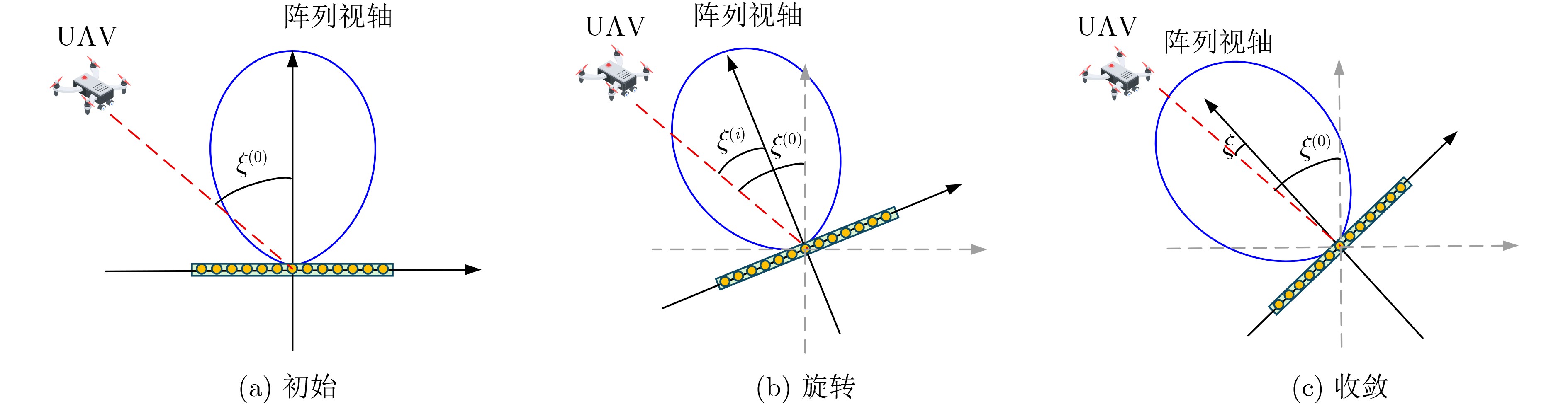
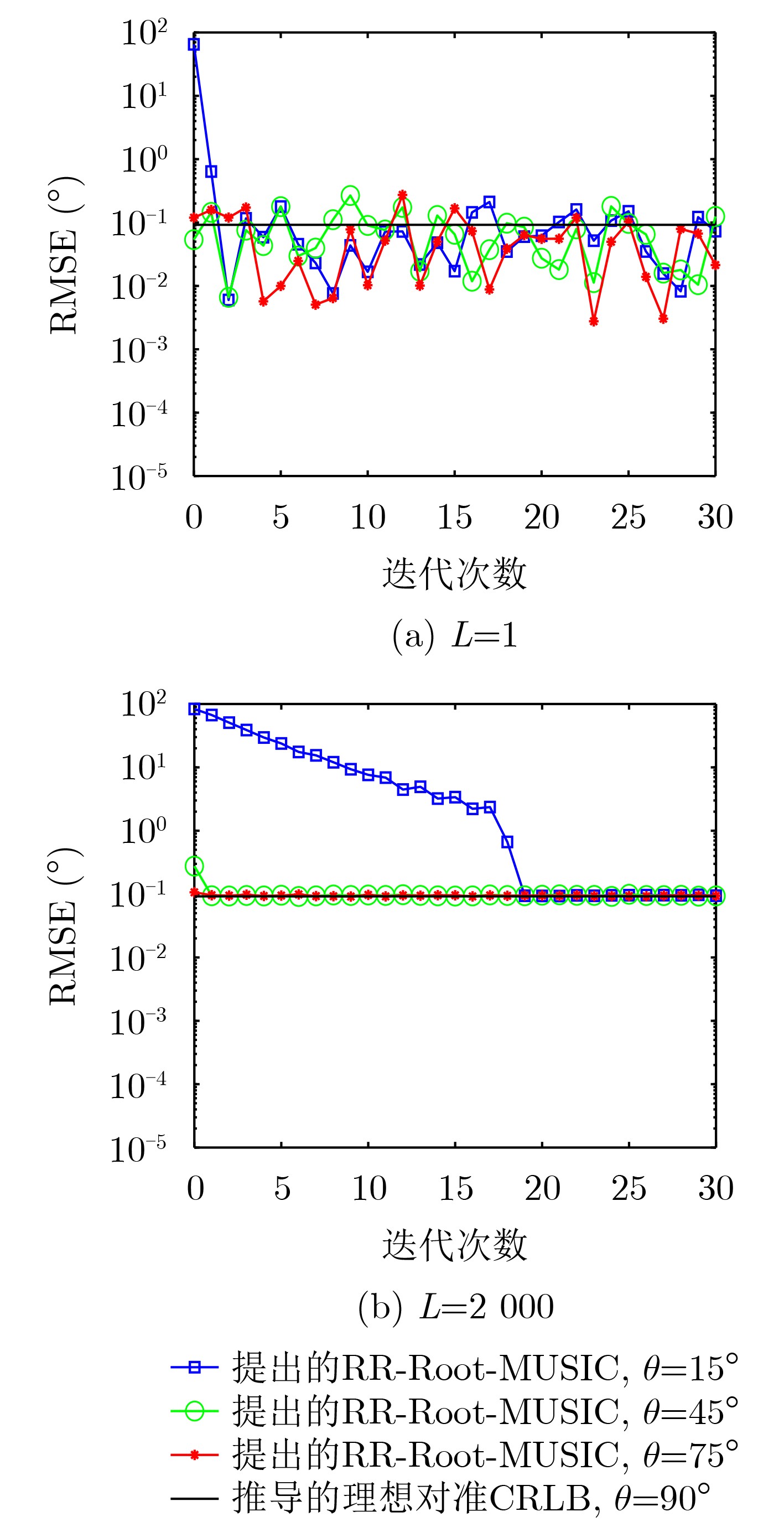
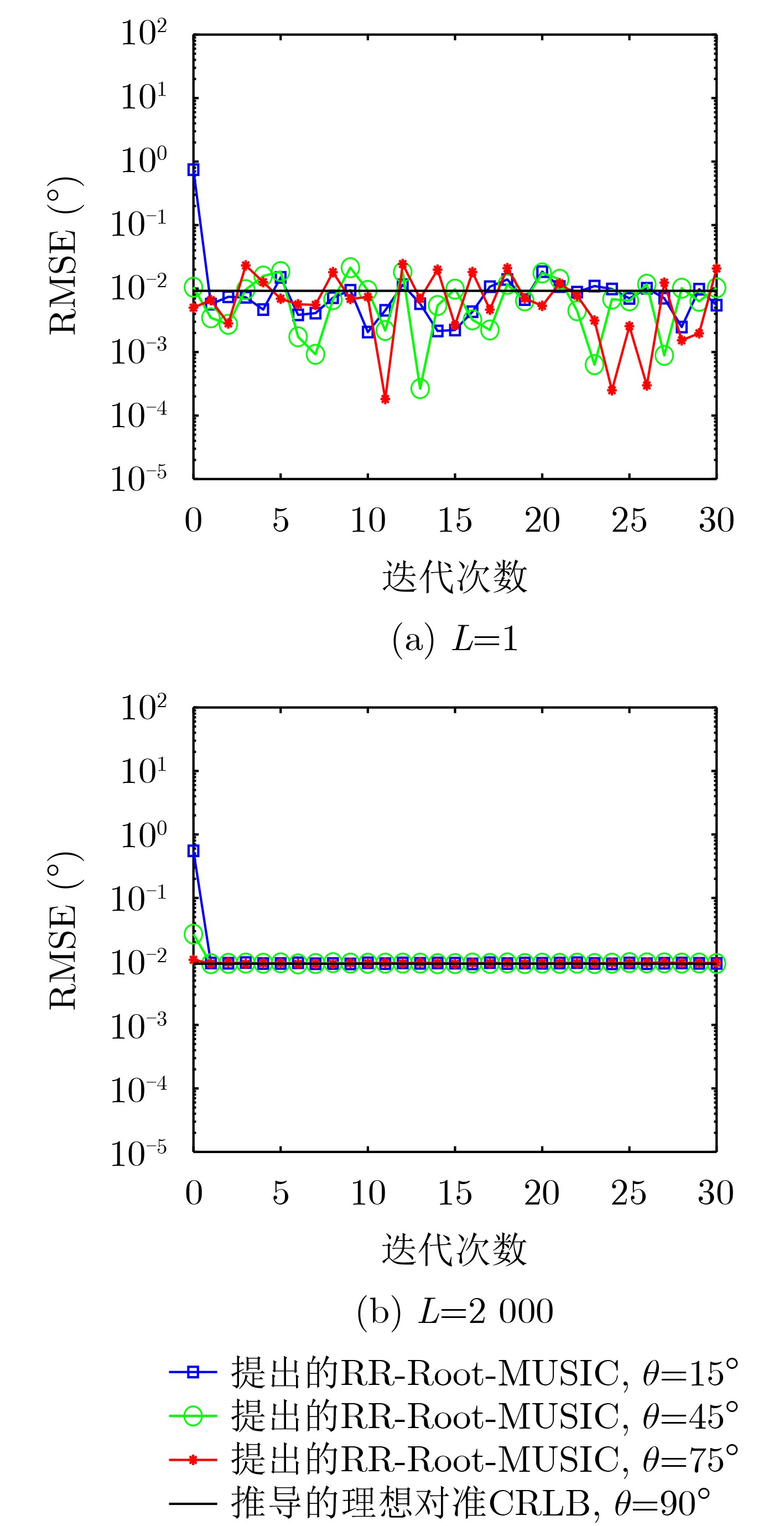
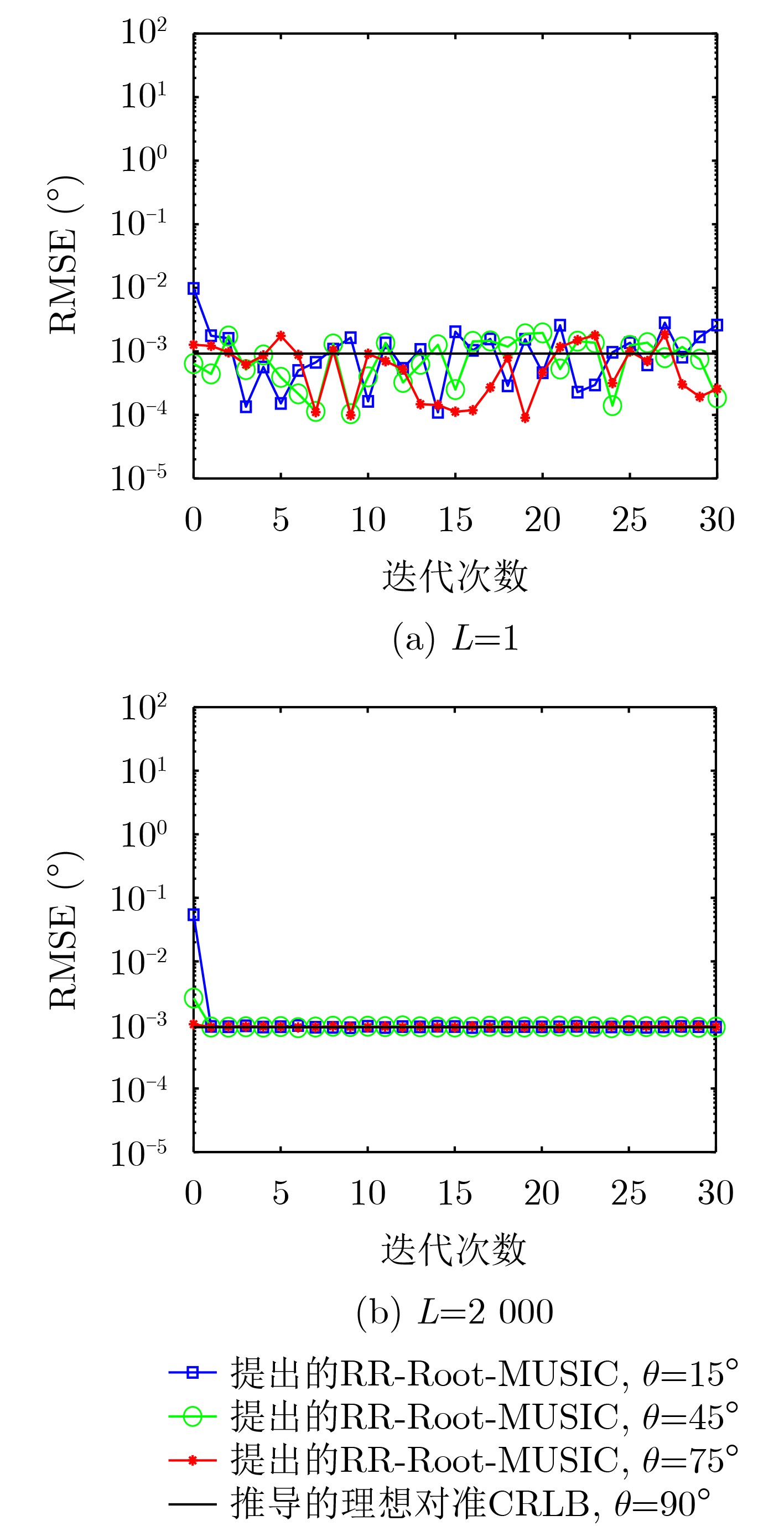
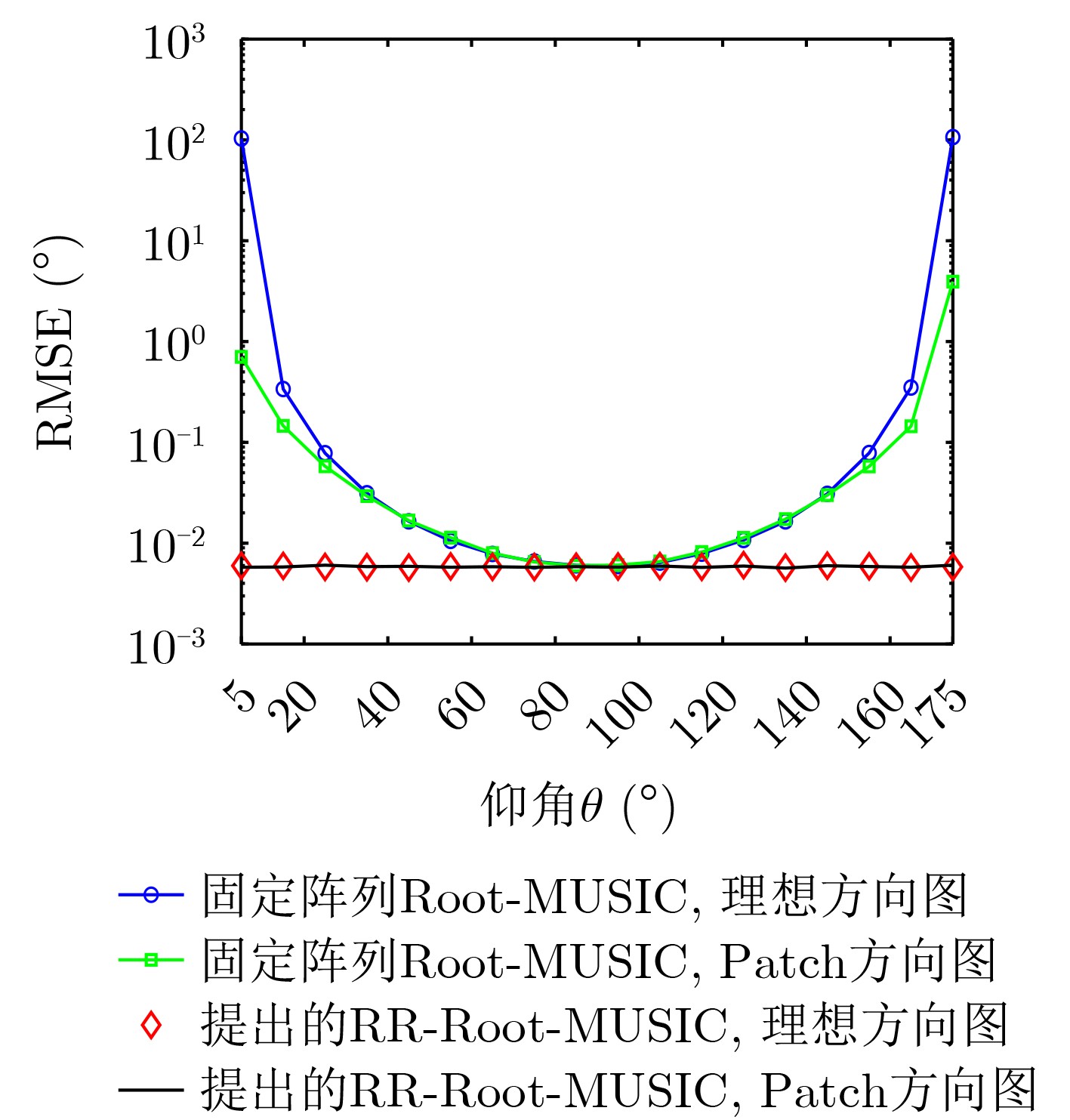
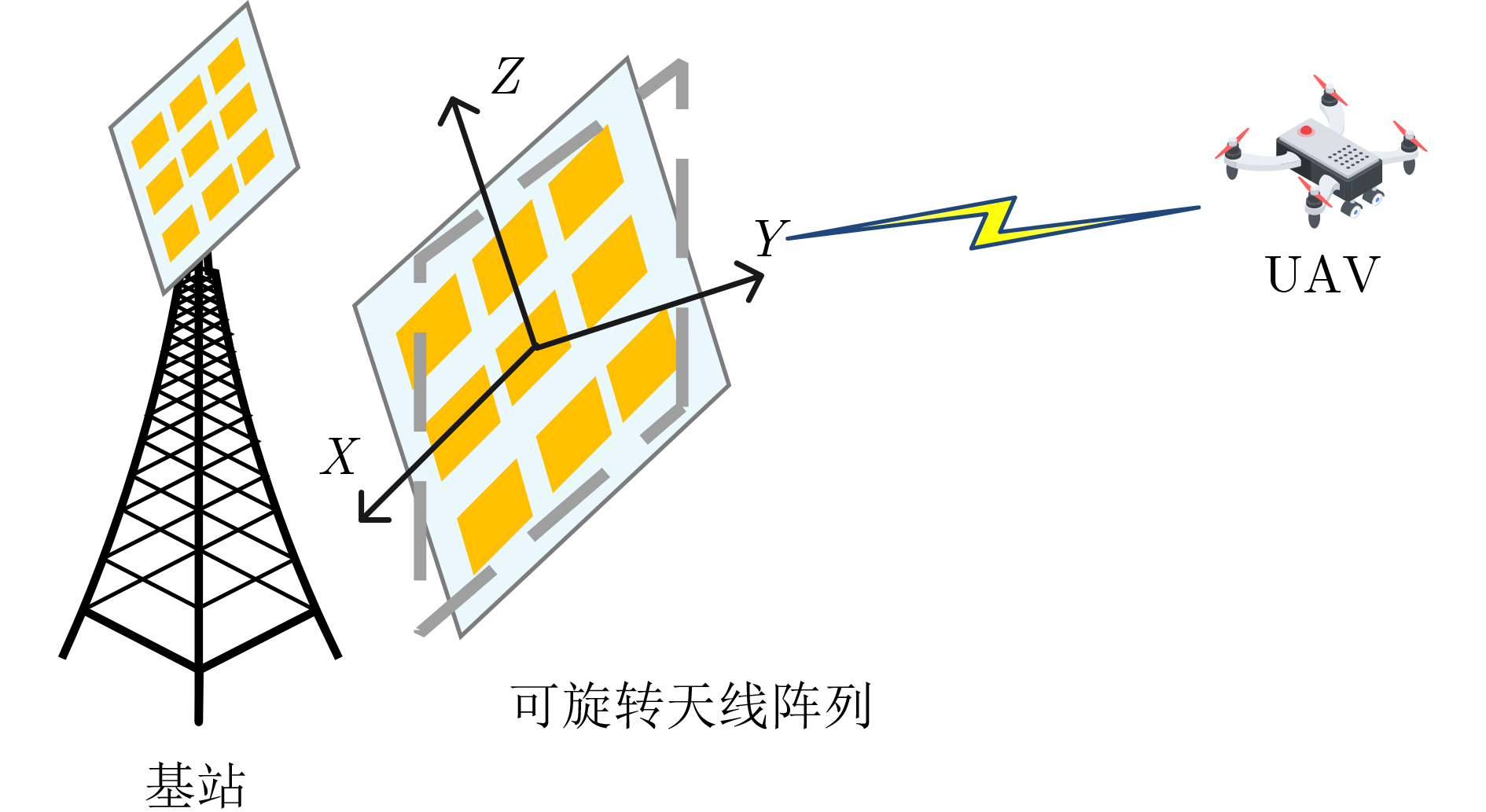
Objective In practical multi-antenna receiving systems, antenna elements usually exhibit anisotropic radiation patterns. However, the impact of such pattern characteristics on direction sensing remains insufficiently explored in both academia and industry. Particularly in extreme scenarios, when the emitter direction significantly deviates from the array boresight or is close to a null of the antenna pattern, the received signal power at the array will be seriously attenuated. Consequently, traditional fixed antenna arrays struggle to meet the dynamic sensing and coverage demands of low-altitude networks. To address this issue, a rotatable antenna array system is developed by accounting for the directional radiation pattern of each antenna element. This research offers a solution for high-precision Direction of Arrival (DOA) estimation of Unmanned Aerial Vehicles (UAVs). Methods To achieve high-precision direction sensing, a Recursive Rotation Root-MUltiple SIgnal Classification (RR-Root-MUSIC) algorithm based on a rotatable array architecture is proposed. Specifically, the Root-MUSIC method is first utilized to obtain an initial DOA estimate of the target. Subsequently, the array is rotated toward this estimated direction, and the Root-MUSIC algorithm is applied once more to obtain an updated estimate. This sensing-rotation-resensing loop is repeated iteratively until the difference between adjacent estimates falls below a predefined convergence threshold. Furthermore, to evaluate the performance of the algorithm, the closed-form Cramér-Rao Lower Bound (CRLB) accounting for the directional antenna gain is derived as a theoretical benchmark. Results and Discussions To evaluate the proposed RR-Root-MUSIC algorithm, its sensing performance is compared with the derived CRLB under various Signal-to-Noise Ratios (SNRs) and incident angles. Simulation results demonstrate that the proposed method achieves a convergence probability of at least 99.8%, and the required number of iterations decreases as the SNR increases ( Figs. 4 -6 ). When the target direction significantly deviates from the array boresight, the proposed method effectively improves the subsequent observation conditions through iterative array rotation. Additional simulations using a non-ideal microstrip patch antenna pattern show that the proposed method maintains relatively stable estimation performance under antenna-pattern variations (Fig. 7 ). Along the considered UAV flight trajectories, the estimation error remains low and varies smoothly, indicating that array-orientation adjustment can mitigate the effect of UAV position variations on direction-sensing performance (Fig. 8 ).Conclusions This paper develops a rotatable antenna array system for direction sensing of a single UAV in low-altitude communication networks. Based on a sensing-rotation-resensing process, the proposed RR-Root-MUSIC method iteratively adjusts the array orientation according to the current DOA estimate, thereby improving the subsequent observation conditions. Simulation results show that the proposed method alleviates the DOA estimation performance degradation caused by directional-gain attenuation, especially when the target direction significantly deviates from the array boresight. Additional simulations using a non-ideal microstrip patch antenna pattern further verify the effectiveness of the proposed method under the considered non-ideal antenna pattern. The proposed method also exhibits stable convergence performance and maintains relatively low estimation errors along the considered UAV trajectories. These results indicate that rotatable antenna arrays provide a promising approach for low-altitude UAV direction sensing. -
表 1 主要仿真参数设置
参数 取值 参数 取值 阵列规模$ M\times N $ $ 7\times 7 $ 阵元间距$ {d}_{x}, {d}_{z} $ $ \lambda /2, \lambda /2 $ 载波波长$ \lambda $ 0.125 m 方向性因子p 2 快拍数K 100 最大迭代次数 30 固定方位角$ \phi $ 90o 收敛阈值$ \varepsilon $ 0.1o 噪声功率$ {\sigma }^{2} $ –100 dBm 阵元等效接收孔径A $ {\lambda }^{2}/4\text{π} $  下载: 导出CSV
-
[1] 陈新颖, 盛敏, 李博, 等. 面向6G的无人机通信综述[J]. 电子与信息学报, 2022, 44(3): 781–789. doi: 10.11999/JEIT210789.CHEN Xinying, SHENG Min, LI Bo, et al. Survey on unmanned aerial vehicle communications for 6G[J]. Journal of Electronics & Information Technology, 2022, 44(3): 781–789. doi: 10.11999/JEIT210789. [2] 卢为党, 冯凯, 丁雨, 等. 基于无人机辅助联邦边缘学习通信系统的安全隐私能效研究[J]. 电子与信息学报, 2025, 47(5): 1322–1331. doi: 10.11999/JEIT240847.LU Weidang, FENG Kai, DING Yu, et al. Research on security, privacy, and energy efficiency in unmanned aerial vehicle-assisted federal edge learning communication systems[J]. Journal of Electronics & Information Technology, 2025, 47(5): 1322–1331. doi: 10.11999/JEIT240847. [3] 束锋, 吴肖敏, 尤肖虎, 等. 基于方向调制的物理层安全无线传输原理、关键技术与未来应用[J]. 中国科学: 信息科学, 2017, 47(9): 1209–1225. doi: 10.1360/N112016-00280.SHU Feng, WU Xiaomin, YOU Xiaohu, et al. Directional modulation-based secure wireless transmission: Basic principles, key techniques, and applications[J]. Scientia Sinica Informationis, 2017, 47(9): 1209–1225. doi: 10.1360/N112016-00280. [4] SHU Feng, SHI Baihua, CHEN Yiwen, et al. A new heterogeneous hybrid massive MIMO receiver with an intrinsic ability of removing phase ambiguity of DOA estimation via machine learning[J]. IEEE Transactions on Machine Learning in Communications and Networking, 2025, 3: 17–29. doi: 10.1109/TMLCN.2024.3506874. [5] BAI Jiatong, SHU Feng, ZHOU Fuhui, et al. Co-learning-aided multi-modal-deep-learning framework of passive DOA estimators for a heterogeneous hybrid massive MIMO receiver[J]. IEEE Journal of Selected Topics in Signal Processing, 2025, 19(7): 1448–1460. doi: 10.1109/JSTSP.2025.3626260. [6] WEN Fangqing, ZHANG Zhe, SUN Hang, et al. 2D-DOA estimation auxiliary localization of anonymous UAV using EMVS-MIMO radar[J]. IEEE Internet of Things Journal, 2024, 11(9): 16255–16266. doi: 10.1109/JIOT.2024.3351136. [7] ZANDAMELA A, MARCHETTI N, AMMANN M J, et al. A dual-band planar antenna for angle-of-arrival estimation in on-body IoT devices[J]. IEEE Internet of Things Journal, 2025, 12(13): 23921–23932. doi: 10.1109/JIOT.2025.3554738. [8] SARRAZIN J, WANG Yide, and VALERIO G. Direction-of-arrival estimation with multibeam leaky wave antennas[J]. IEEE Transactions on Antennas and Propagation, 2026, 74(7): 6188–6198. doi: 10.1109/TAP.2026.3686586. [9] ZHENG Beixiong, WU Qingjie, MA Tiantian, et al. Rotatable antenna-enabled wireless communication: Modeling and optimization[J]. IEEE Transactions on Communications, 2026, 74: 6825–6842. doi: 10.1109/TCOMM.2026.3672230. [10] NEW W K, WONG K K, WANG Chao, et al. Fluid antenna systems: Redefining reconfigurable wireless communications[J]. IEEE Journal on Selected Areas in Communications, 2026, 44: 1013–1044. doi: 10.1109/JSAC.2025.3632097. [11] CHEN Kangjian, QI Chenhao, HONG Yujing, et al. REMAA: Reconfigurable pixel antenna-based electronic movable-antenna arrays for multiuser communications[J]. IEEE Transactions on Communications, 2025, 73(11): 12913–12928. doi: 10.1109/TCOMM.2025.3592593. [12] 李振东, 巴建乐, 苏洲, 等. 可移动天线赋能的ISAC系统中波束赋形与天线位置联合优化[J]. 电子与信息学报, 2025, 47(10): 3482–3491. doi: 10.11999/JEIT250146.LI Zhendong, BA Jianle, SU Zhou, et al. Joint beamforming and antenna position optimization in movable antenna empowered ISAC systems[J]. Journal of Electronics & Information Technology, 2025, 47(10): 3482–3491. doi: 10.11999/JEIT250146. [13] ZHANG Zijian, ZHU Jieao, DAI Linglong, et al. Successive Bayesian reconstructor for channel estimation in fluid antenna systems[J]. IEEE Transactions on Wireless Communications, 2025, 24(3): 1992–2006. doi: 10.1109/TWC.2024.3515135. [14] REN Jiaji, TIAN Ye, WU Tuo, et al. Fluid-antenna array enabled DOA estimation for the hybrid analog-digital architecture with unknown nonuniform noise[C]. 2025 33rd European Signal Processing Conference, Palermo, Italy, 2025: 1447–1451. doi: 10.23919/EUSIPCO63237.2025.11226580. [15] ZHANG Ruoyu, CHENG Lei, ZHANG Wei, et al. Channel estimation for movable-antenna MIMO systems via tensor decomposition[J]. IEEE Wireless Communications Letters, 2024, 13(11): 3089–3093. doi: 10.1109/LWC.2024.3450592. [16] SHAO Xiaodan, ZHANG Rui, and SCHOBER R. Exploiting six-dimensional movable antenna for wireless sensing[J]. IEEE Wireless Communications Letters, 2025, 14(2): 265–269. doi: 10.1109/LWC.2024.3487966. [17] ZHENG Beixiong, MA Tiantian, YOU Changsheng, et al. Rotatable antenna enabled wireless communication and sensing: Opportunities and challenges[J]. IEEE Wireless Communications, 2026, 33(3): 134–141. doi: 10.1109/MWC.2025.3611919. [18] WU Qingjie, ZHENG Beixiong, MA Tiantian, et al. Modeling and optimization for rotatable antenna enabled wireless communication[C]. ICC 2025 - IEEE International Conference on Communications, Montreal, Canada, 2025: 1055–1060. doi: 10.1109/ICC52391.2025.11161853. [19] ZHANG Xuzhong, XIANG Lin, WANG Jiaheng, et al. Rotatable antenna array enabled UAV mmWave massive MIMO communication[J]. IEEE Transactions on Communications, 2026, 74: 1219–1236. doi: 10.1109/TCOMM.2025.3622962. [20] DAI Liang, ZHENG Beixiong, WU Qingjie, et al. Rotatable antenna-enabled secure wireless communication[J]. IEEE Wireless Communications Letters, 2025, 14(11): 3440–3444. doi: 10.1109/LWC.2025.3593258. [21] WANG Anding, LIU Lingjia, and ZHANG Jianzhong. Low complexity direction of arrival (DoA) estimation for 2D massive MIMO systems[C]. 2012 IEEE Globecom Workshops, Anaheim, USA, 2012: 703–707. doi: 10.1109/GLOCOMW.2012.6477660. -

 下载:
下载:


图(8) / 表(1)
计量
- 文章访问数: 19
- HTML全文浏览量: 3
- PDF下载量: 0
- 被引次数: 0
