




Bearing Fault Diagnosis of Roadheader via Cross-modal Kernel Fusion-sphere Space Learning
-
摘要: 针对传统掘进机轴承故障诊断方法难以有效感知跨模态多尺度故障信息的问题,该文提出跨模态核聚球空间学习(CKFSL)的掘进机轴承故障诊断方法。该方法首先在高维核空间中采用对偶极值点锚定和极向近邻分配机制来捕获核空间中具有相似同构信息的故障样本集群以形成核聚球。随后设计了新颖的自适应二叉剖分策略,该策略根据核聚球内部故障样本的几何跨度进行自适应剖分,形成微近邻核聚球空间,在微尺度上实现了对掘进机轴承故障样本的高同构性流形聚合。为进一步刻画微近邻核聚球间的广域拓扑关联,该文提出广域拓扑同构约束,该约束在微近邻核聚球空间中量化故障样本的秩次散度与相对散度因子,从而构建微近邻核聚球间的广域动态同构图,实现微近邻核聚球广域拓扑关联的重构。最后整合跨模态故障样本的局部流形同构性与广域拓扑关联,形成了CKFSL模型的目标优化函数,实现模型对跨模态多尺度故障信息的感知。该文在理论上推导出微近邻核聚球空间投影方向解析解,进而利用空间投影来直接获得掘进机跨模态故障样本的跨模态核聚球空间同构特征,该特征不仅能够有效感知掘进机轴承跨模态多尺度故障信息,且具有良好的鉴别力。在自建的AUST掘进机数据集和帕德博恩轴承数据集上进行的实验结果表明了CKFSL方法的有效性。Abstract:
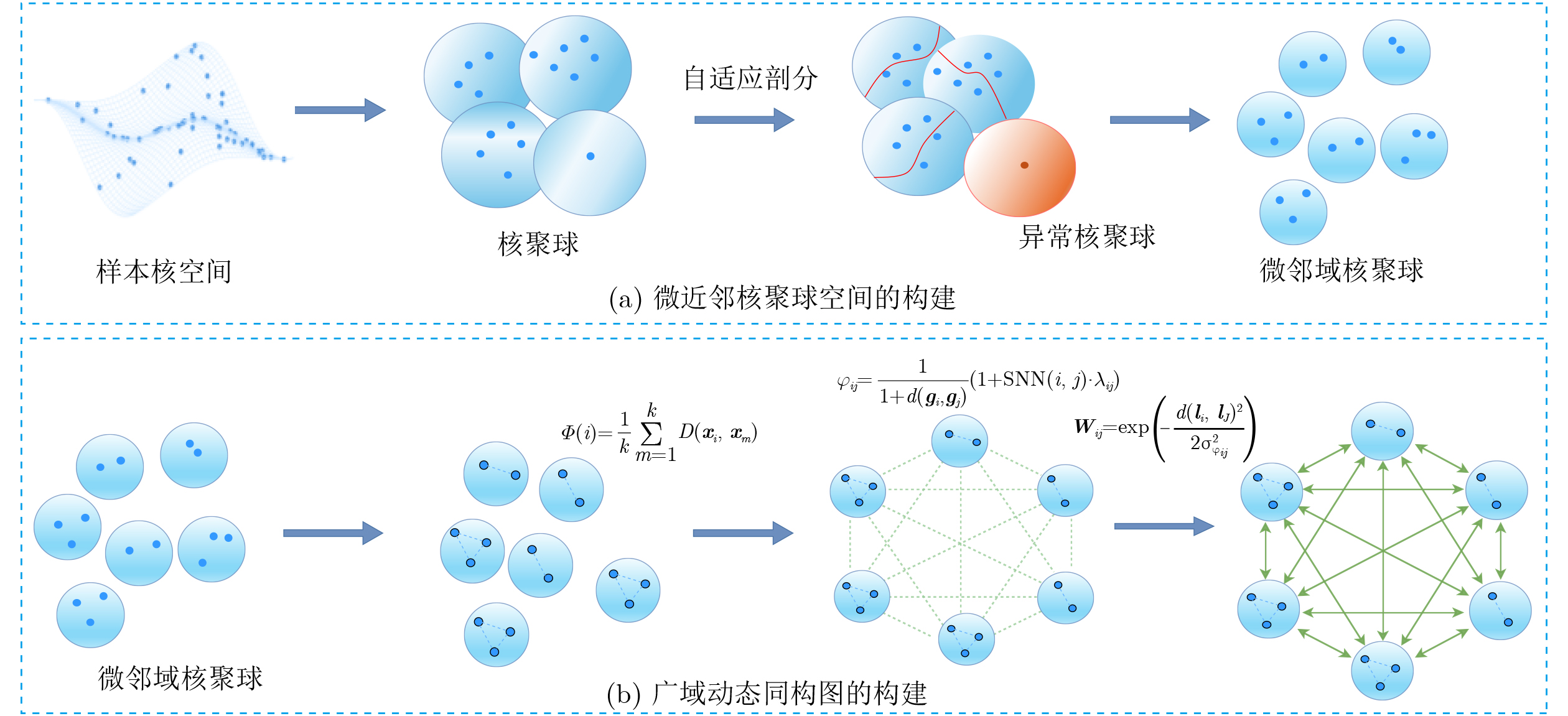
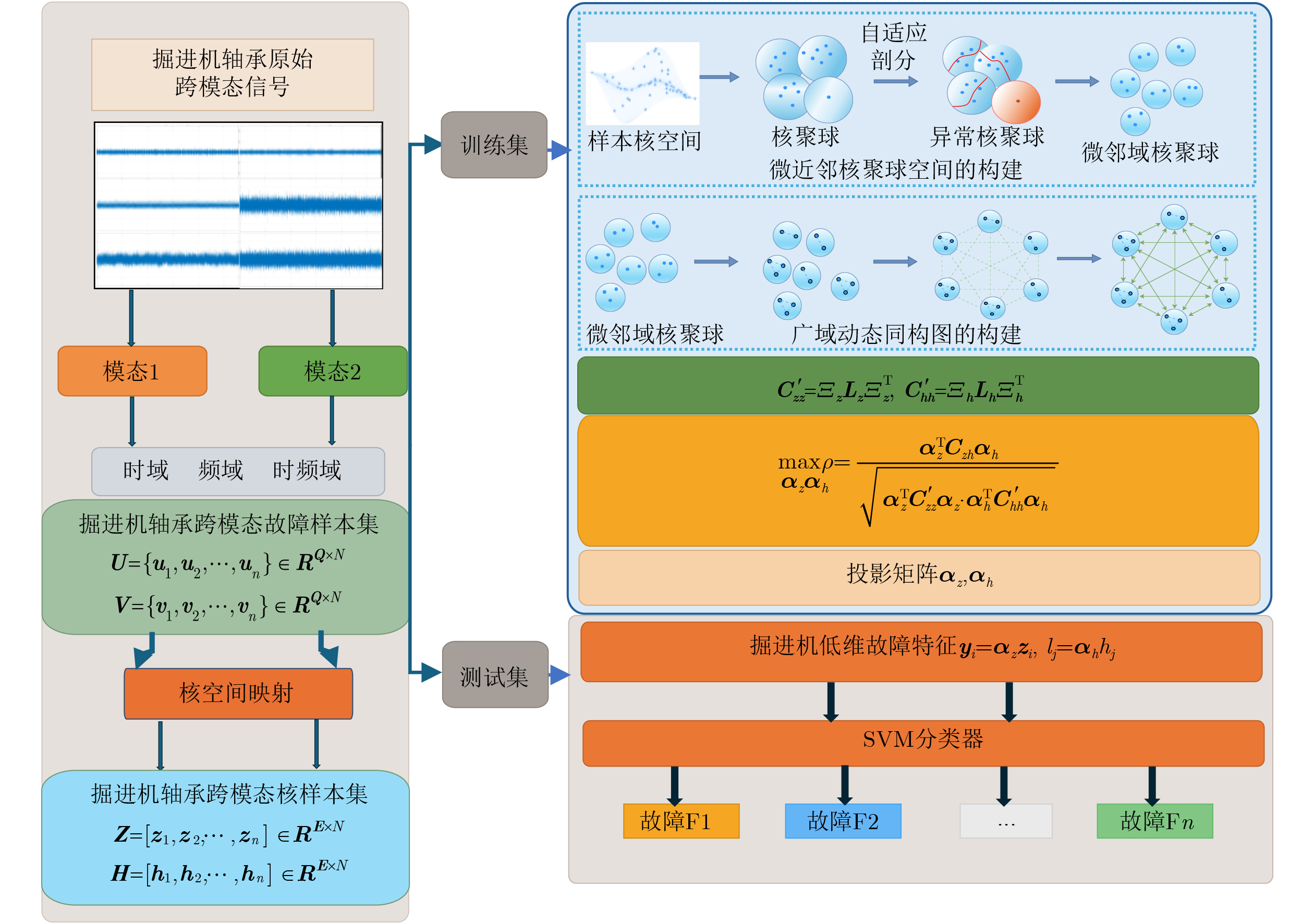
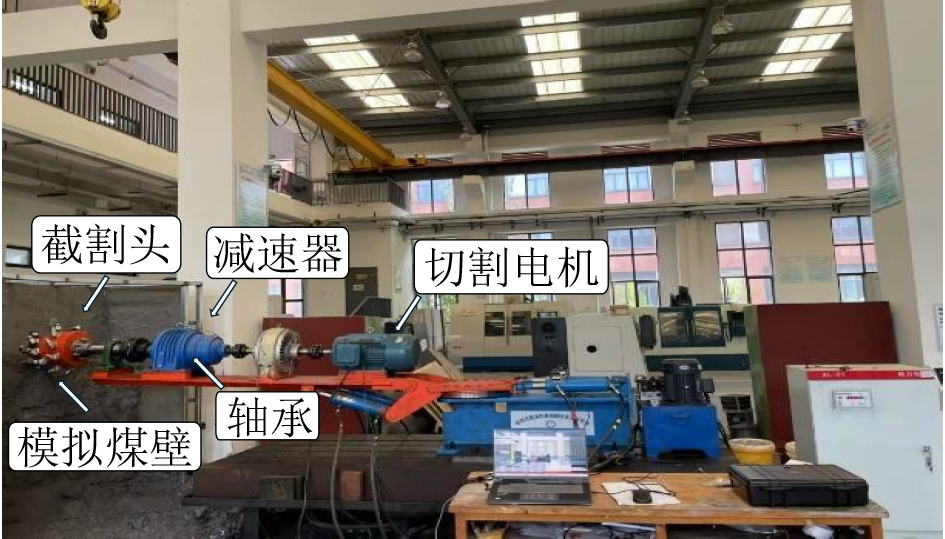
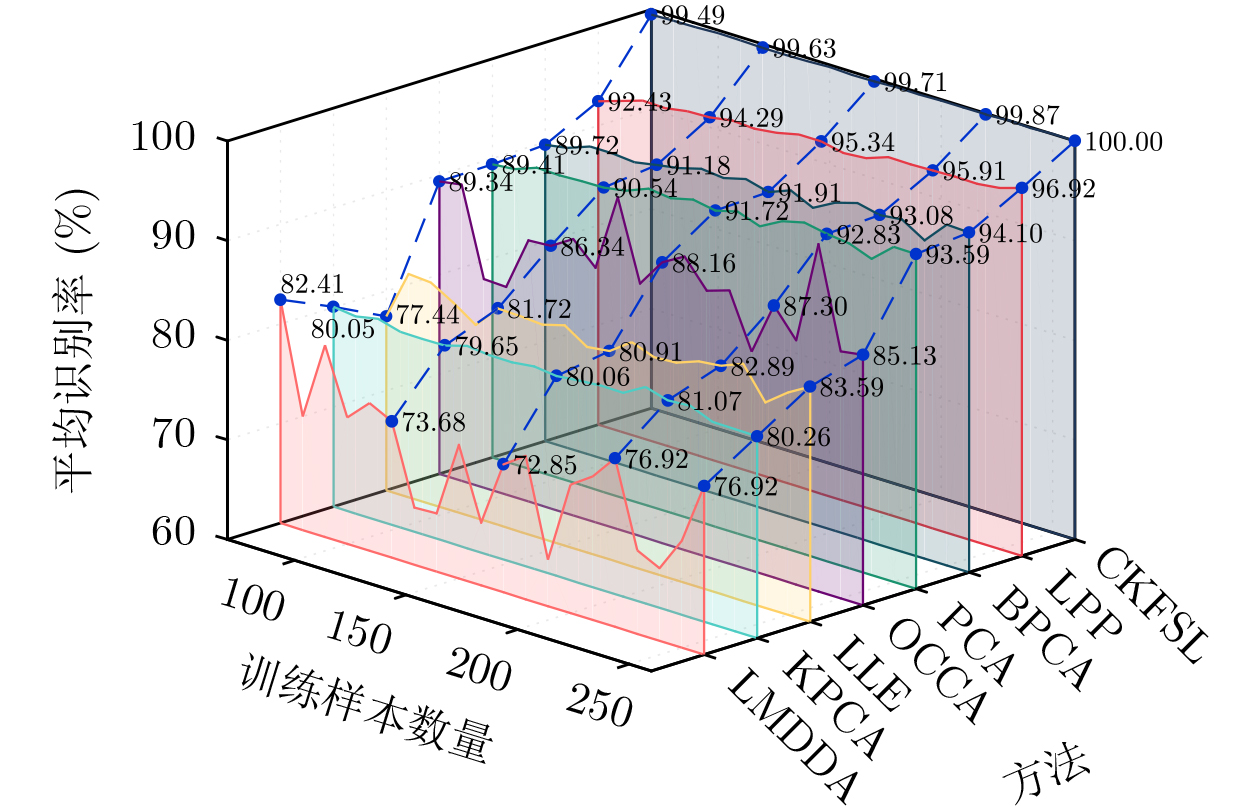
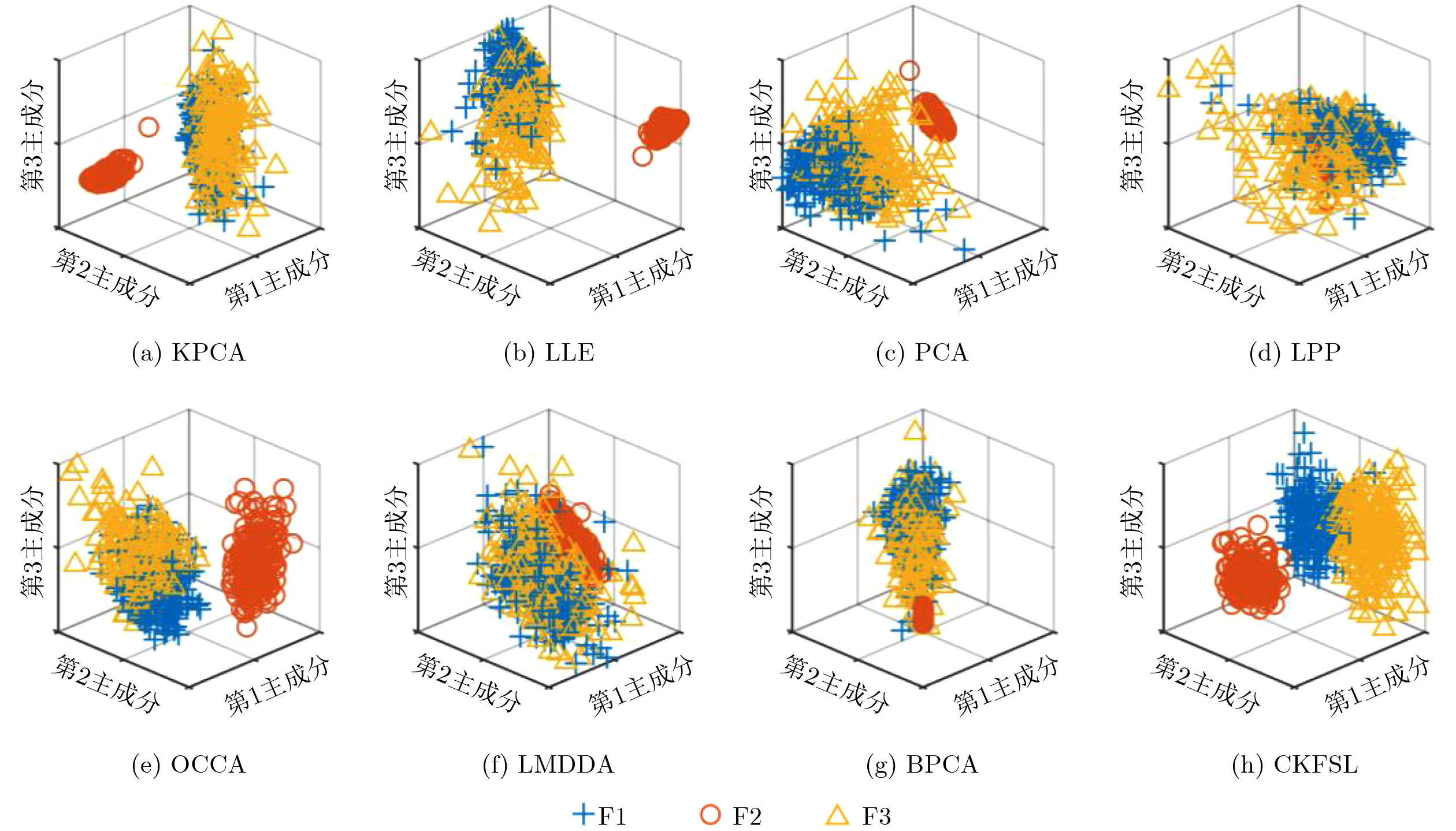
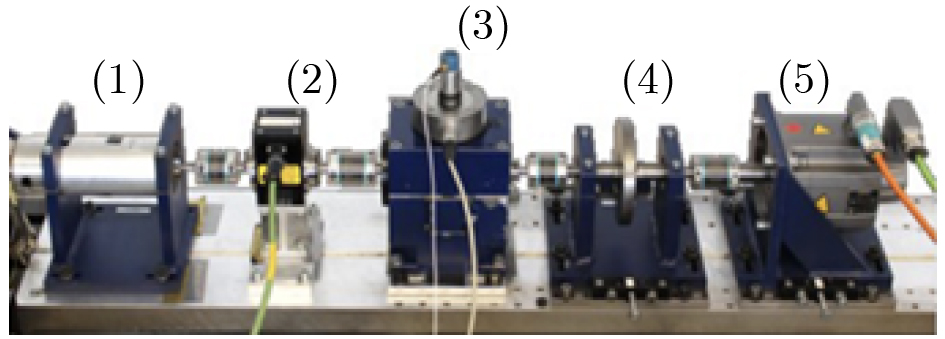
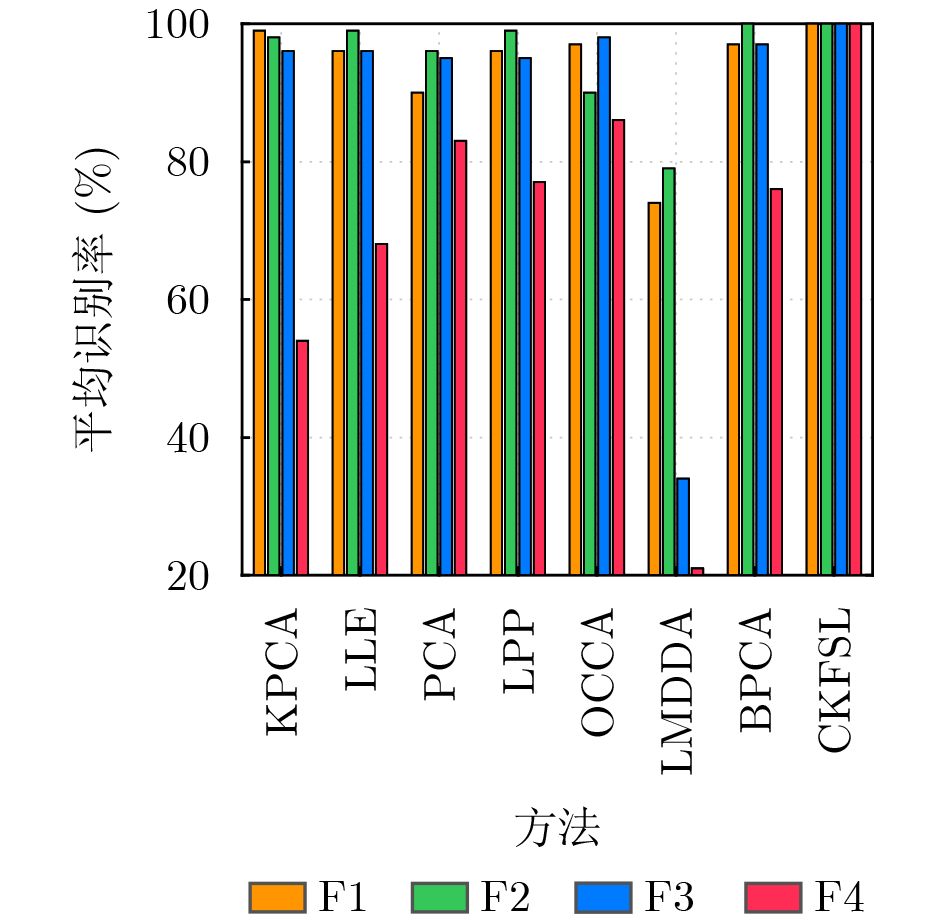
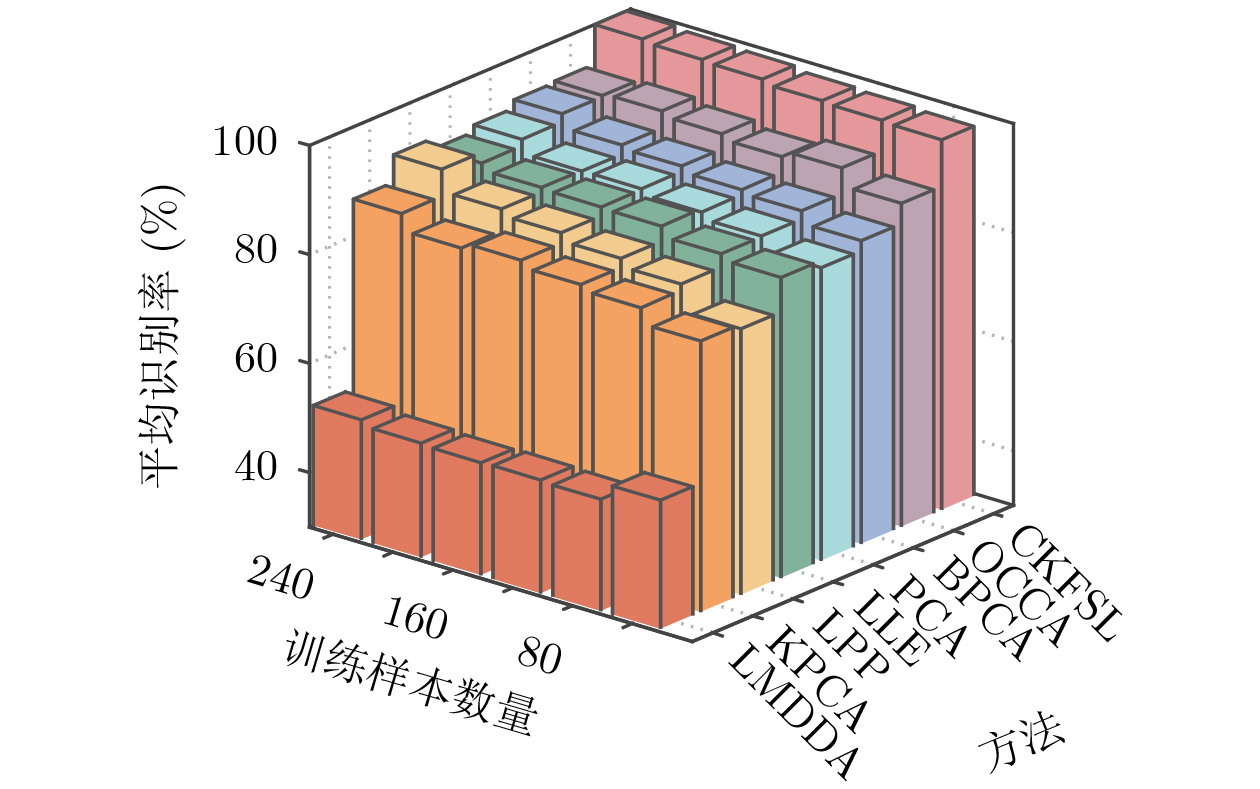
Objective Traditional roadheader bearing fault diagnosis methods often struggle with high-dimensional and nonlinear multi-sensor data. They also fail to effectively perceive cross-modal, multi-scale fault information or integrate local and global structural features. To address these limitations, this paper proposes a Cross-modal Kernel Fusion-sphere Space Learning (CKFSL) method. By perceiving cross-modal multi-scale fault information, CKFSL extracts highly discriminative features from roadheader bearing cross-modal fault samples and improves diagnostic accuracy. Methods CKFSL first maps roadheader bearing cross-modal fault samples into a high-dimensional kernel space through implicit transformation. Dual extremal point anchoring and polar neighbor allocation mechanisms are then used to capture fault sample clusters with similar isomorphic information, forming kernel fusion-spheres. An adaptive binary partitioning strategy is designed according to the geometric span of internal fault samples. This strategy tightens isomorphic boundaries, constructs micro-neighbor kernel fusion-spheres, and achieves highly isomorphic manifold aggregation at the microscopic scale. A micro-neighbor kernel fusion-sphere space is further formed to re-evaluate local isomorphism ( Fig. 1 ). To characterize wide-area topological correlations, a wide-area topological isomorphism constraint is proposed. This constraint constructs a wide-area dynamic isomorphism graph among micro-neighbor kernel fusion-spheres (Fig. 1 ). Finally, an objective optimization function is formulated within the space learning framework. It integrates local manifold isomorphism and wide-area topological correlations of roadheader bearing cross-modal fault samples, as shown in the CKFSL diagnostic flowchart (Fig. 2 ). The analytical solution for spatial projection is theoretically derived to obtain discriminative cross-modal kernel fusion-sphere space isomorphic features from roadheader bearing cross-modal fault samples.Results and Discussions CKFSL is first validated on the self-built AUST roadheader bearing cross-modal fault dataset, with the experimental platform shown in Fig. 3 . The average recognition rates obtained with increasing numbers of training fault samples are shown in Fig. 4. On the AUST dataset, CKFSL achieves a recognition rate of 99.49% with only 70 training fault samples and reaches 100% as the number of training fault samples increases.Table 1 summarizes the standard deviations under different training fault sample sizes. The results show that CKFSL has the lowest standard deviation and stronger robustness than the other seven comparison algorithms. Three-dimensional fault feature distributions are shown inFig. 5 . The results confirm that CKFSL effectively separates highly overlapping fault samples into different clusters and reduces the boundary confusion observed in the comparison algorithms. To verify generalization capability, CKFSL is further evaluated on the public Paderborn dataset, with the experimental setup shown inFig. 6 . As shown inFig. 7 andFig. 8 , CKFSL achieves a 100% average recognition rate across four complex fault categories. It also outperforms the comparison algorithms, which have difficulty exceeding an 85% recognition rate for the F4 fault category.Conclusions CKFSL effectively addresses the inability of traditional roadheader bearing fault diagnosis methods to perceive complex multi-scale fault information. By using the wide-area dynamic isomorphism graph learned in the micro-neighbor kernel fusion-sphere space, CKFSL integrates local manifold isomorphism with wide-area topological correlations of roadheader bearing cross-modal fault samples. This process enables CKFSL to extract highly discriminative cross-modal kernel fusion-sphere space isomorphic features. It improves the accuracy of roadheader bearing fault diagnosis and supports the reliability and continuous operation of roadheaders. -
Key words:
- Roadheader bearing /
- Fault diagnosis /
- Space learning /
- Multi-scale fault perception.
-
表 1 在AUST数据集上不同训练样本下各方法的标准差
方法 不同训练样本对应的标准差 100 140 180 220 260 KPCA 1.44 1.11 2.27 3.69 6.51 LLE 2.79 2.08 1.99 2.62 4.59 PCA 2.97 1.19 1.84 1.66 2.02 LPP 3.95 0.96 1.01 1.63 1.32 OCCA 12.88 13.99 11.86 12.05 17.09 LMDDA 10.01 11.18 8.85 5.24 12.68 BPCA 1.53 1.16 1.09 2.08 3.43 CKFSL 0.71 0.94 0.49 0.49 0.00  下载: 导出CSV
-
[1] LI Changpeng, MA Tianbing, RUI Shi, et al. A fault identification method for cutting head of the roadheader based on parameter optimization VMD and RCMFDE[J]. Signal, Image and Video Processing, 2025, 19(4): 319. doi: 10.1007/s11760-025-03884-4. [2] WANG Xin, JIANG Hongkai, MU Mingzhe, et al. A trackable multi-domain collaborative generative adversarial network for rotating machinery fault diagnosis[J]. Mechanical Systems and Signal Processing, 2025, 224: 111950. doi: 10.1016/j.ymssp.2024.111950. [3] 伍章俊, 许仁礼, 方刚, 等. 一种面向旋转机械多传感器故障诊断的模态融合深度聚类方法[J]. 电子与信息学报, 2025, 47(1): 244–259. doi: 10.11999/JEIT240648.WU Zhangjun, XU Renli, FANG Gang, et al. A modal fusion deep clustering method for multi-sensor fault diagnosis of rotating machinery[J]. Journal of Electronics & Information Technology, 2025, 47(1): 244–259. doi: 10.11999/JEIT240648. [4] WU Yifan, ZHAO Dandan, LI Chuan, et al. MCSANet: Cross-modal semantic alignment in multi-attribute learning for zero-shot bearing fault diagnosis[J]. IEEE Transactions on Industrial Informatics, 2026, 22(3): 2599–2609. doi: 10.1109/tii.2025.3641795. [5] CHEN Jianbing, SUN Tingting, and LYU Mengze. DR-PDEE for engineered high-dimensional nonlinear stochastic systems: A physically-driven equation providing theoretical basis for data-driven approaches[J]. Nonlinear Dynamics, 2025, 113(10): 10947–10968. doi: 10.1007/s11071-024-10664-1. [6] JI Xiaodong, YANG Yang, QU Yuanyuan, et al. Health diagnosis of roadheader based on reference manifold learning and improved K‐means[J]. Shock and Vibration, 2021, 2021(1): 6311795. doi: 10.1155/2021/6311795. [7] QIAN Quan, WU Fei, WANG Yi, et al. Maximum subspace transferability discriminant analysis: A new cross-domain similarity measure for wind-turbine fault transfer diagnosis[J]. Computers in Industry, 2025, 164: 104194. doi: 10.1016/j.compind.2024.104194. [8] 王大虎, 刘畅, 王健, 等. 一种高精度并行主偏度分析算法及其在遥感图像中的应用[J]. 电子与信息学报, 2023, 45(10): 3492–3501. doi: 10.11999/JEIT220960.WANG Dahu, LIU Chang, WANG Jian, et al. A high precision parallel principal skewness analysis algorithm and its application to remote sensing images[J]. Journal of Electronics & Information Technology, 2023, 45(10): 3492–3501. doi: 10.11999/JEIT220960. [9] WANG S G W, PATILEA V, and KLUTCHNIKOFF N. Adaptive functional principal components analysis[J]. Journal of the Royal Statistical Society Series B: Statistical Methodology, 2025, 87(3): 603–631. doi: 10.1093/jrsssb/qkae106. [10] QIE Yifan, SCHLEICH B, and ANWER N. Generative adversarial networks and hessian locally linear embedding for geometric variations management in manufacturing[J]. Journal of Intelligent Manufacturing, 2025, 36(2): 1033–1062. doi: 10.1007/s10845-023-02284-0. [11] KERBOUCHE A, ABIDI H, LOUIFI A, et al. Enhancing fault detection reliability in PV systems through a novel approach based on interval-valued kernel PCA[J]. Electric Power Systems Research, 2026, 256: 112842. doi: 10.1016/j.epsr.2026.112842. [12] LI Tao, HAN Yongming, DUAN Xiaoyan, et al. Fault detection for multimode process based on local neighborhood-density standardization and ensemble serial global-local preserving projections processes[J]. Reliability Engineering & System Safety, 2025, 261: 111119. doi: 10.1016/j.ress.2025.111119. [13] ZOU Xinxin, XU Hao, and LIU Xinling. Manifold learning based on locally linear embedding for symmetric positive definite matrix[J]. Pattern Recognition, 2025, 172: 112691. doi: 10.1016/j.patcog.2025.112691. [14] ZHAO Xiaowei, WU Dongming, NIE Feiping, et al. Nonlinear locality-preserving projections with dynamic graph learning[J]. IEEE Transactions on Neural Networks and Learning Systems, 2025, 36(4): 7225–7236. doi: 10.1109/tnnls.2024.3408835. [15] JI Xiaodong, AN Rui, JIANG Hai, et al. Research on fault recognition of roadheader based on multi-sensor and multi-layer local projection[J]. Applied Sciences, 2025, 15(5): 2663. doi: 10.3390/app15052663. [16] LI Xinrui, MIN Hongqi, ZENG Yong, et al. Sparse MIMO for ISAC: New opportunities and challenges[J]. IEEE Wireless Communications, 2025, 32(4): 170–178. doi: 10.1109/mwc.001.2400201. [17] RAN Ruisheng, WANG Ting, ZHANG Wenfeng, et al. Autoencoder-based discriminant locality-preserving projections for fault diagnosis[J]. IEEE Transactions on Instrumentation and Measurement, 2025, 74: 3526113. doi: 10.1109/TIM.2025.3551906. [18] 孙俊, 杨俊龙, 杨青青, 等. 联合局部线性嵌入与深度强化学习的RIS-MISO下行和速率优化[J]. 电子与信息学报, 2025, 47(7): 2117–2126. doi: 10.11999/JEIT241083.SUN Jun, YANG Junlong, YANG Qingqing, et al. Joint local linear embedding and deep reinforcement learning for RIS-MISO downlink sum-rate optimization[J]. Journal of Electronics & Information Technology, 2025, 47(7): 2117–2126. doi: 10.11999/JEIT241083. [19] GUAN Yang, MENG Zong, SUN Dengyun, et al. 2MNet: Multi-sensor and multi-scale model toward accurate fault diagnosis of rolling bearing[J]. Reliability Engineering & System Safety, 2021, 216: 108017. doi: 10.1016/j.ress.2021.108017. [20] LI Sheng, FENG Ke, XU Yadong, et al. Cross-modal zero-sample diagnosis framework utilizing non-contact sensing data fusion[J]. Information Fusion, 2024, 110: 102453. doi: 10.1016/j.inffus.2024.102453. [21] ZHOU Hongdi, HUANG Tao, ZHONG Fei, et al. Bearing fault diagnosis based on local manifold discriminant domain adaptation[J]. IEEE Sensors Journal, 2024, 24(7): 10504–10514. doi: 10.1109/JSEN.2024.3357809. [22] CHEN Lin, GE Li, JIANG Xue, et al. Boosting RPCA by prior subspace[J]. IEEE Transactions on Signal Processing, 2025, 73: 2170–2186. doi: 10.1109/TSP.2025.3569861. -

 下载:
下载:


图(8) / 表(1)
计量
- 文章访问数: 254
- HTML全文浏览量: 102
- PDF下载量: 18
- 被引次数: 0
