




Multi-RAT Fusion Architecture and Intelligent Routing for Marine Heterogeneous Wireless Networks
-
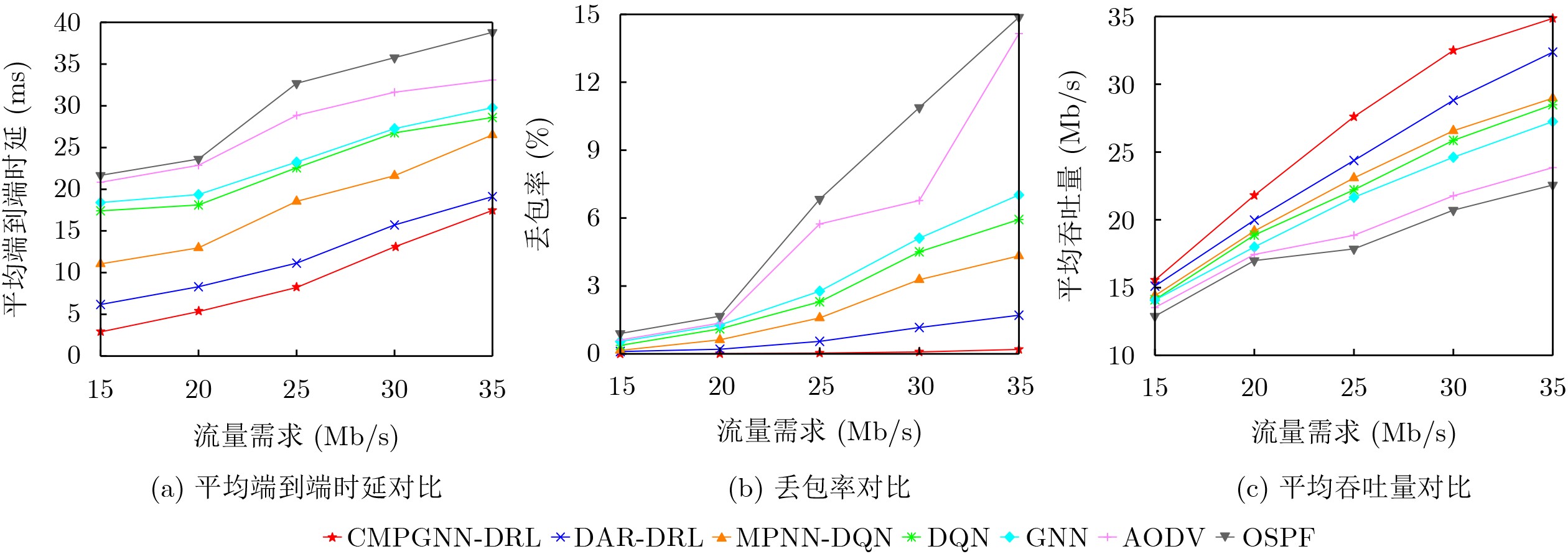
摘要: 海上异构无线网络通信场景中多种通信体制并存,面临互联互通与资源协同面临双重挑战,而现有基于深度强化学习的路由算法对动态拓扑的表征能力不足,难以在网络拓扑频繁变化时做出高效的路由决策。这主要归因于现有主流框架多采用标准图神经网络(GNN)或全连接网络进行状态编码,难以有效捕捉高动态拓扑下的结构特征。为此,本文提出了一种支持5G与自组网融合的多无线接入网关,并构建融合对比消息传递图神经网络与深度强化学习的路由方法,以提升网络服务质量与转发效率,实现资源的优化分配。实验结果表明,与最优基准方法相比,所提方法端到端时延降低20.8%~47.7%,丢包率降低0.3%~5.3%,吞吐量提升5.2%~14.2%,验证了其动态适应性与泛化能力。
-
关键词:
- 海上异构无线网络 /
- 多无线接入网关 /
- 对比消息传递图神经网络 /
- 深度强化学习
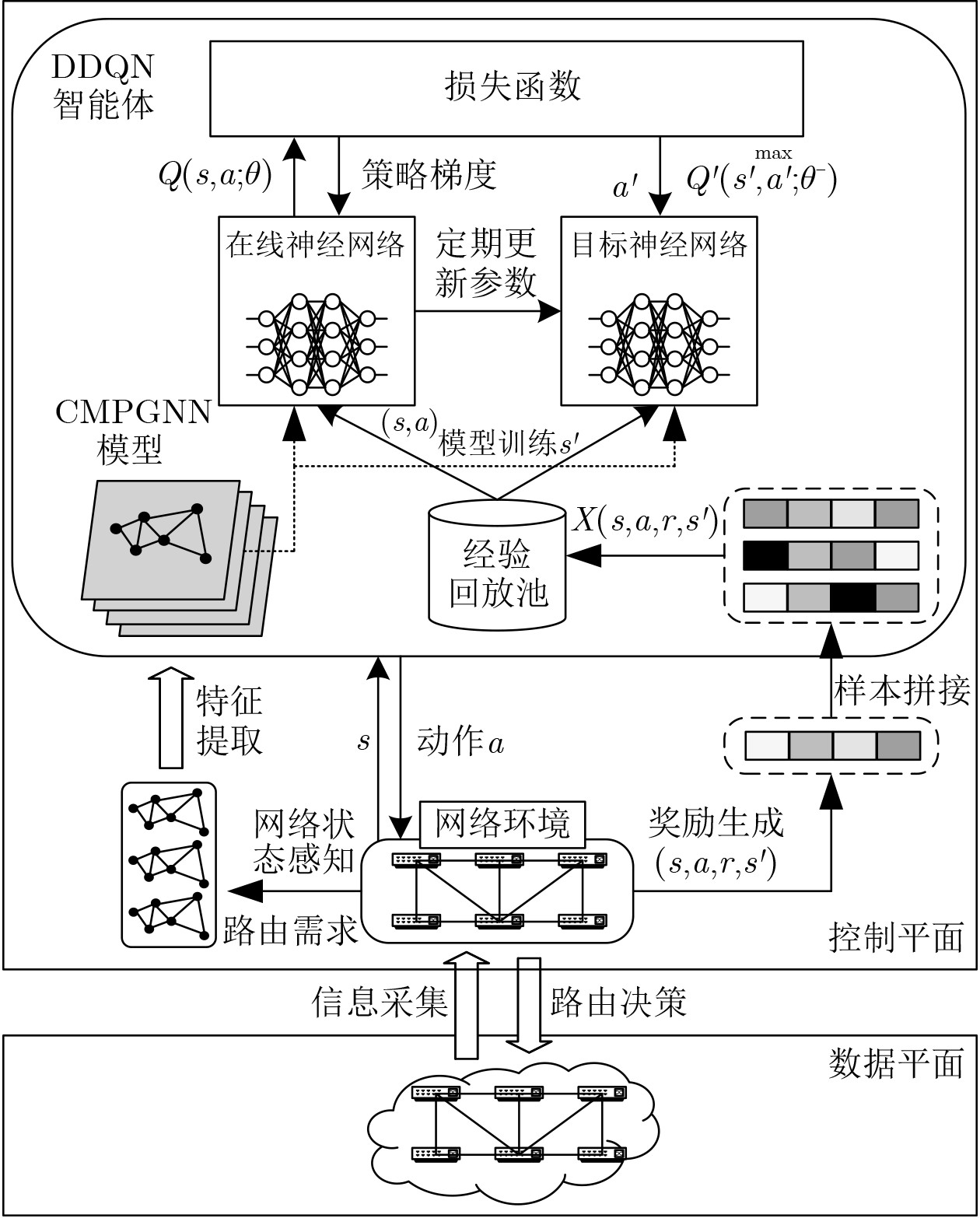
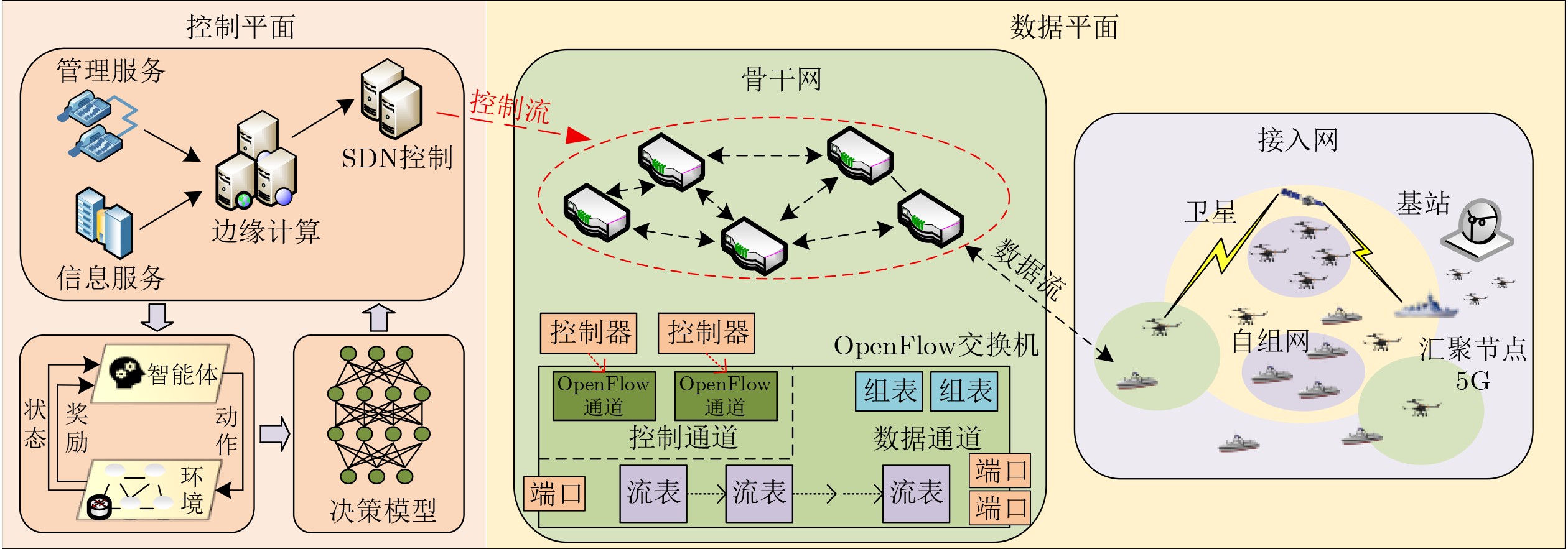
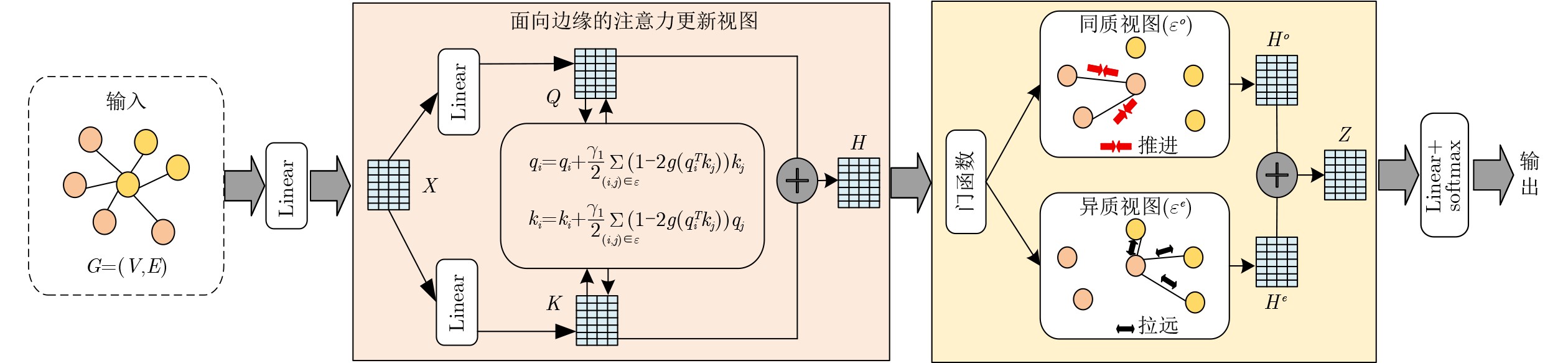
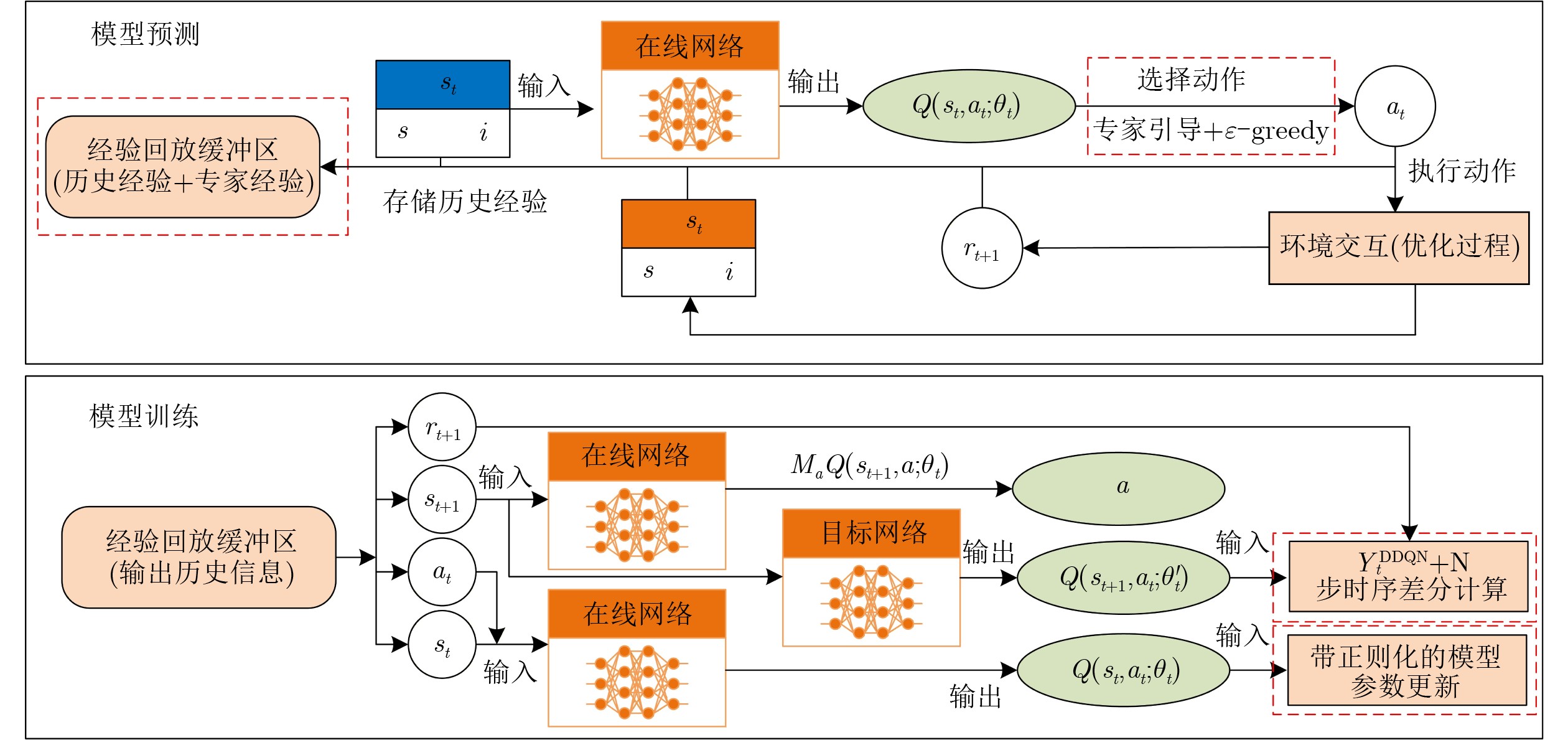
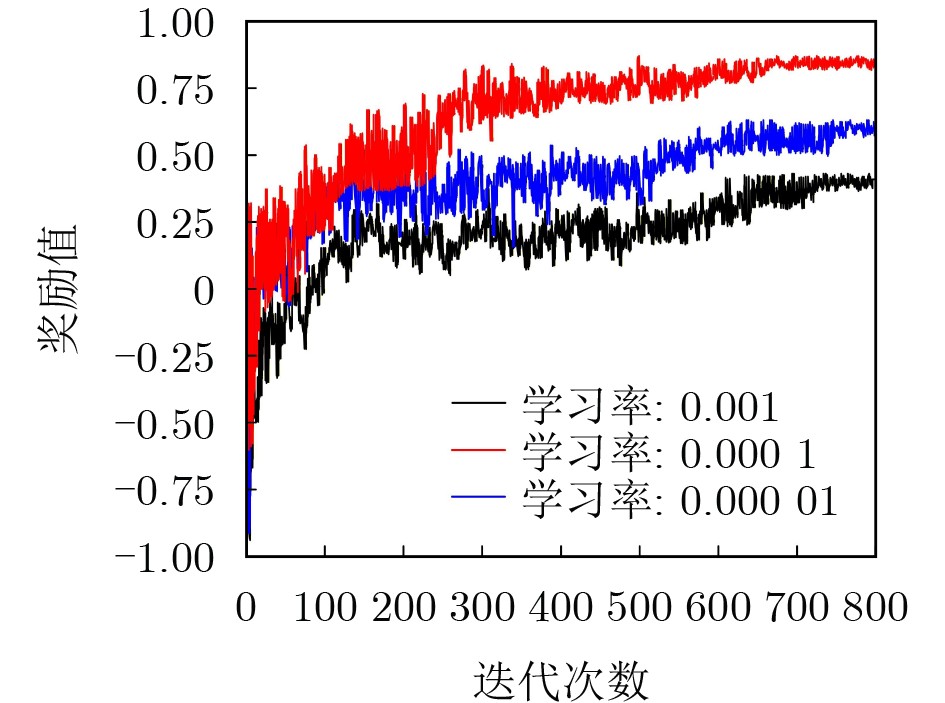
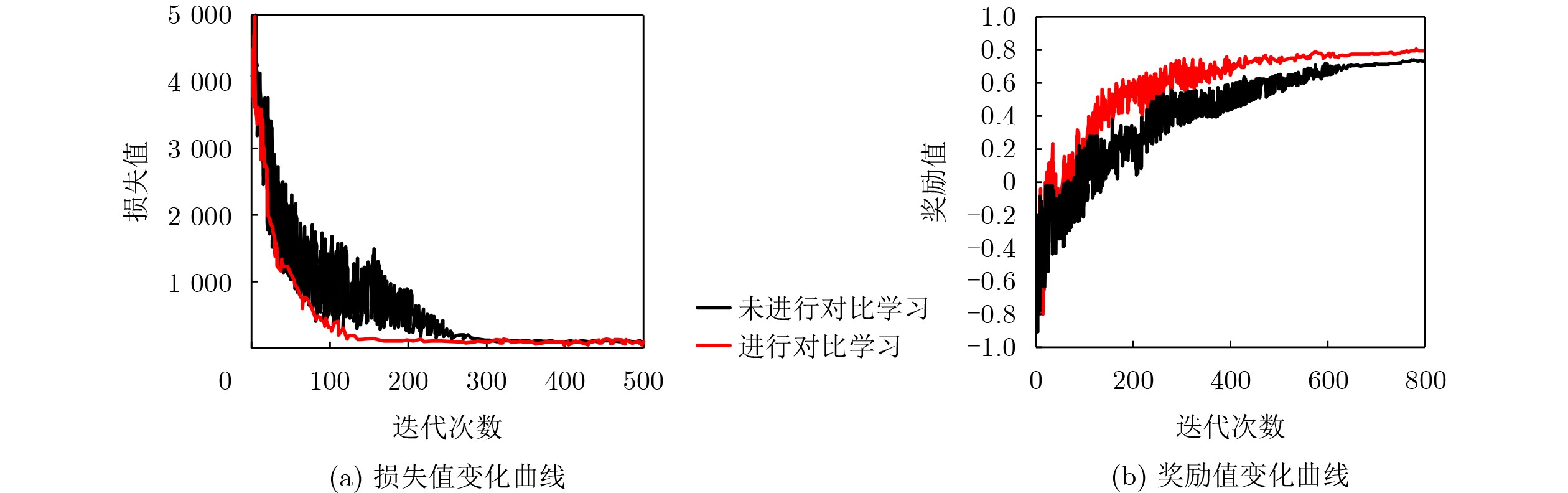
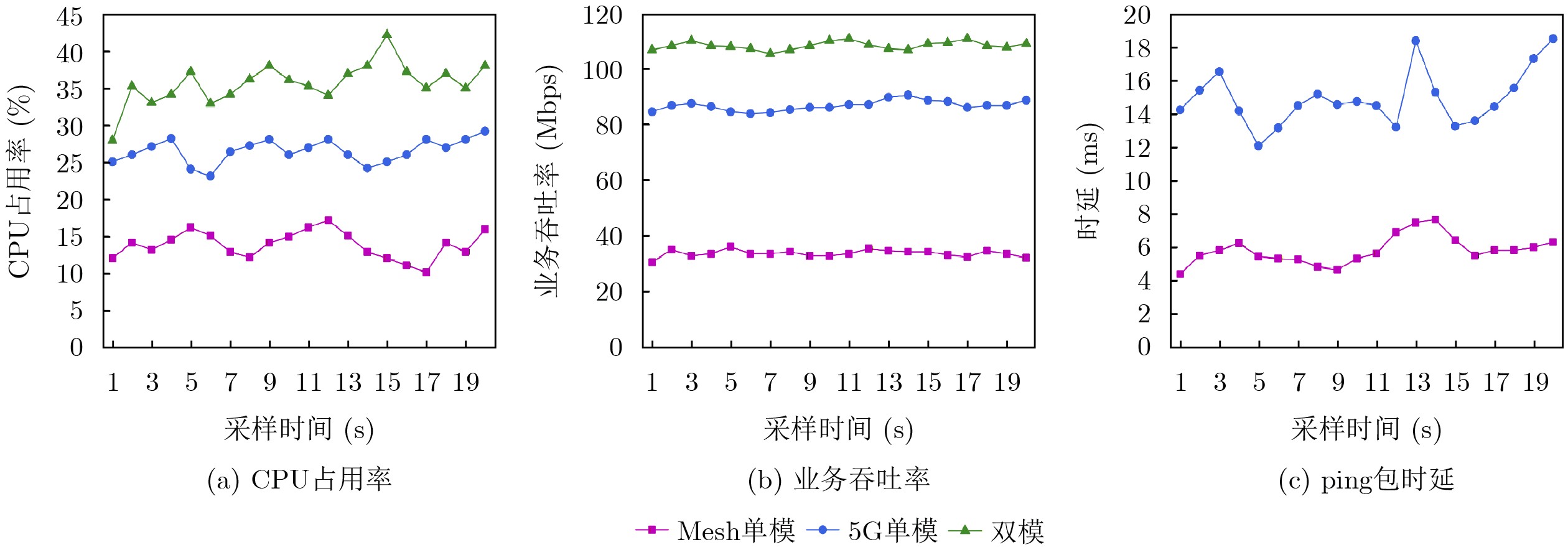
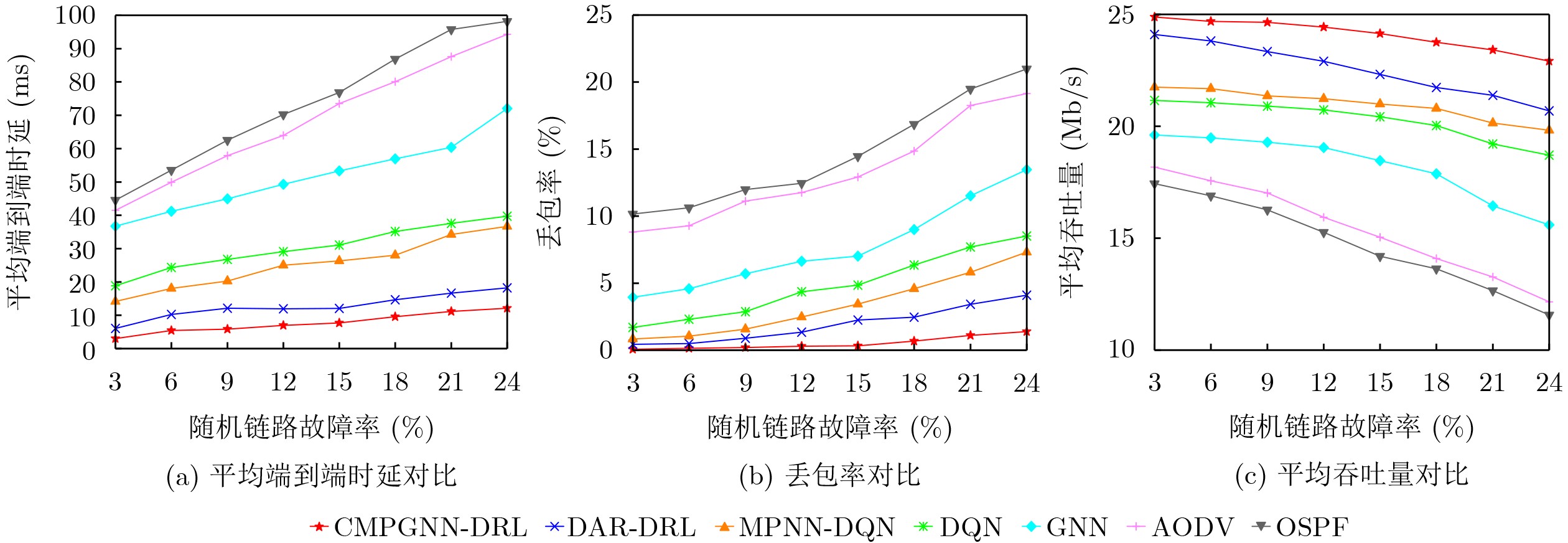
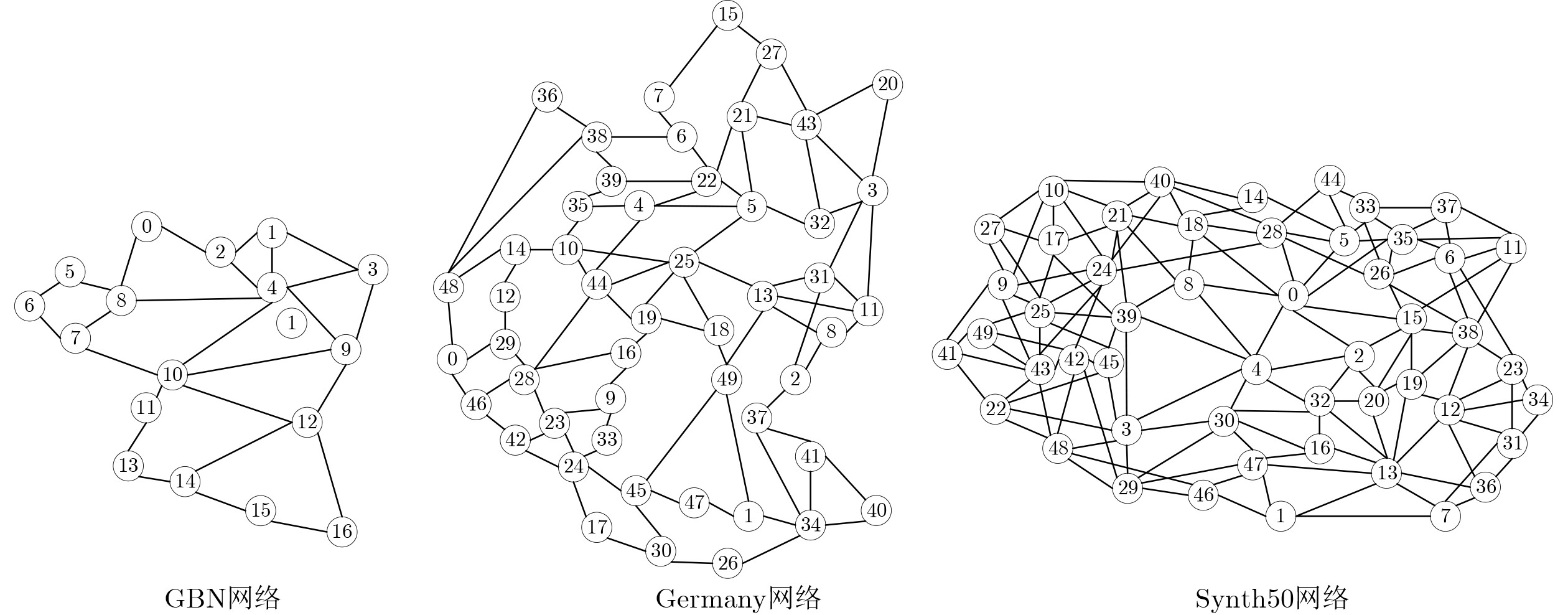
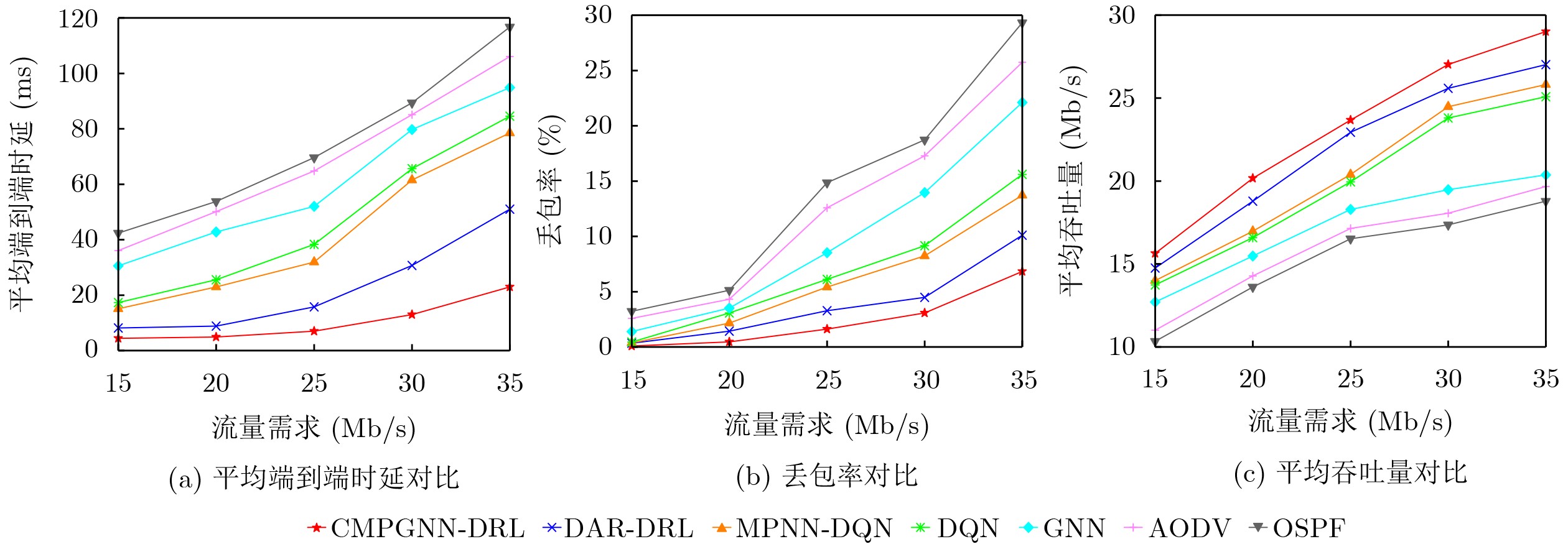
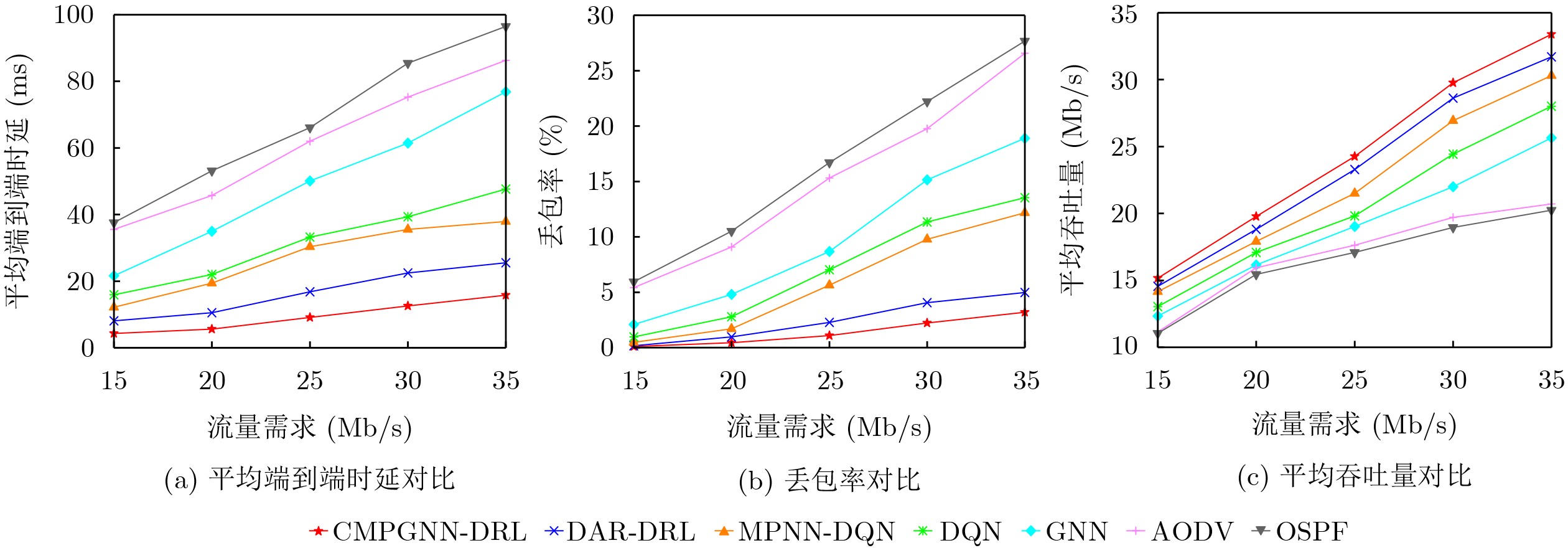
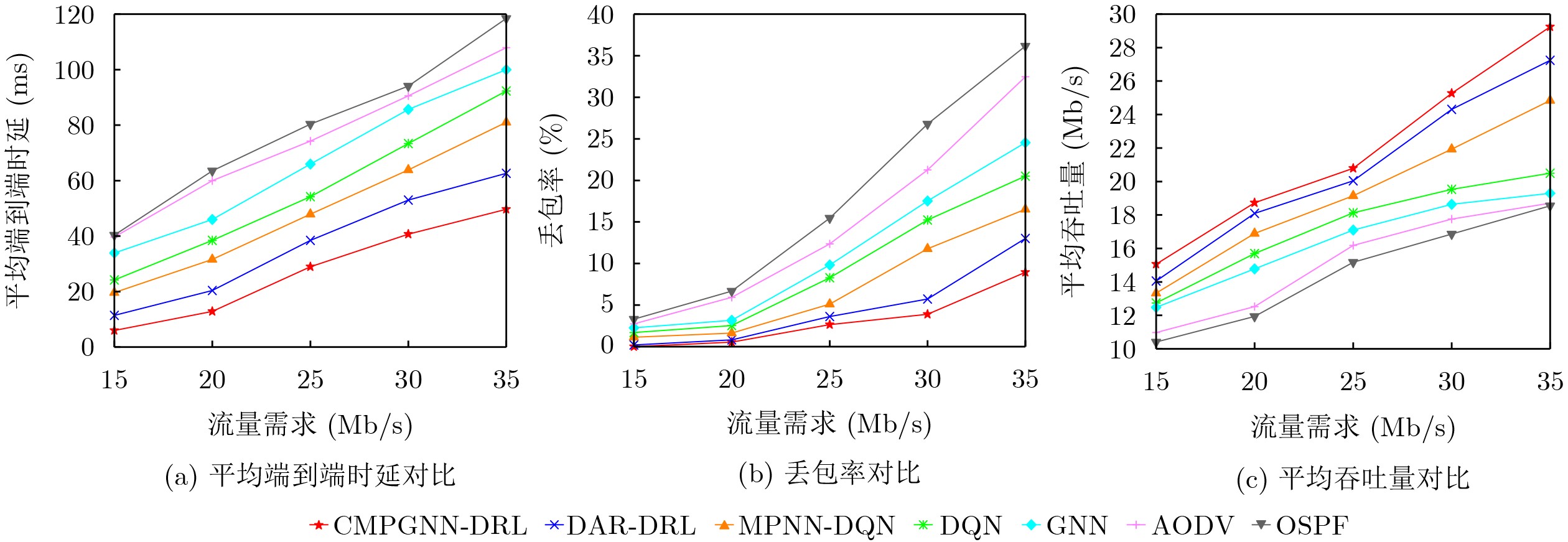
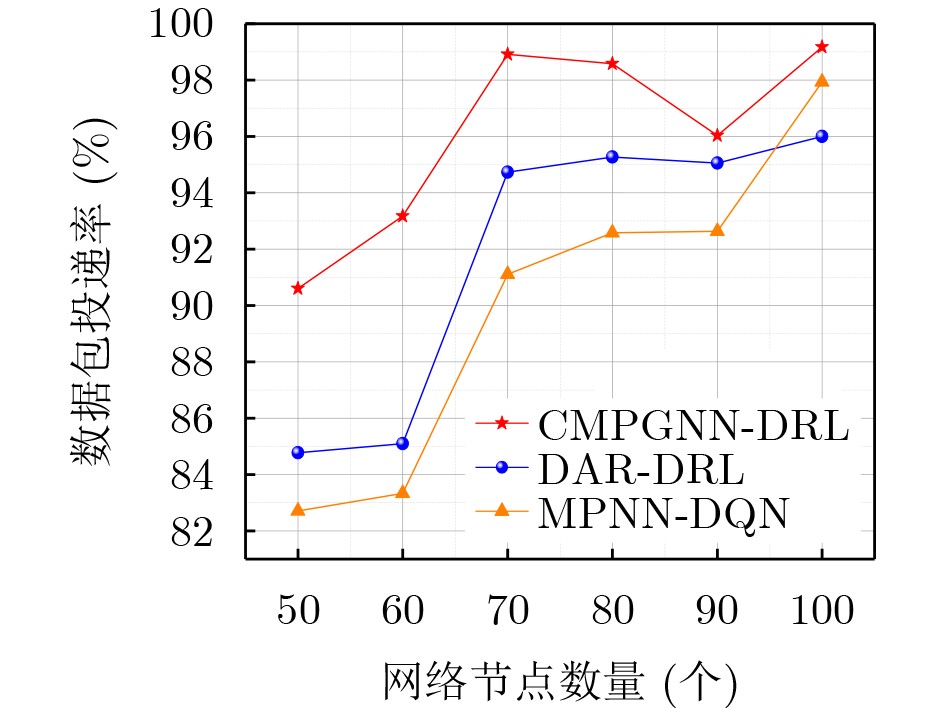
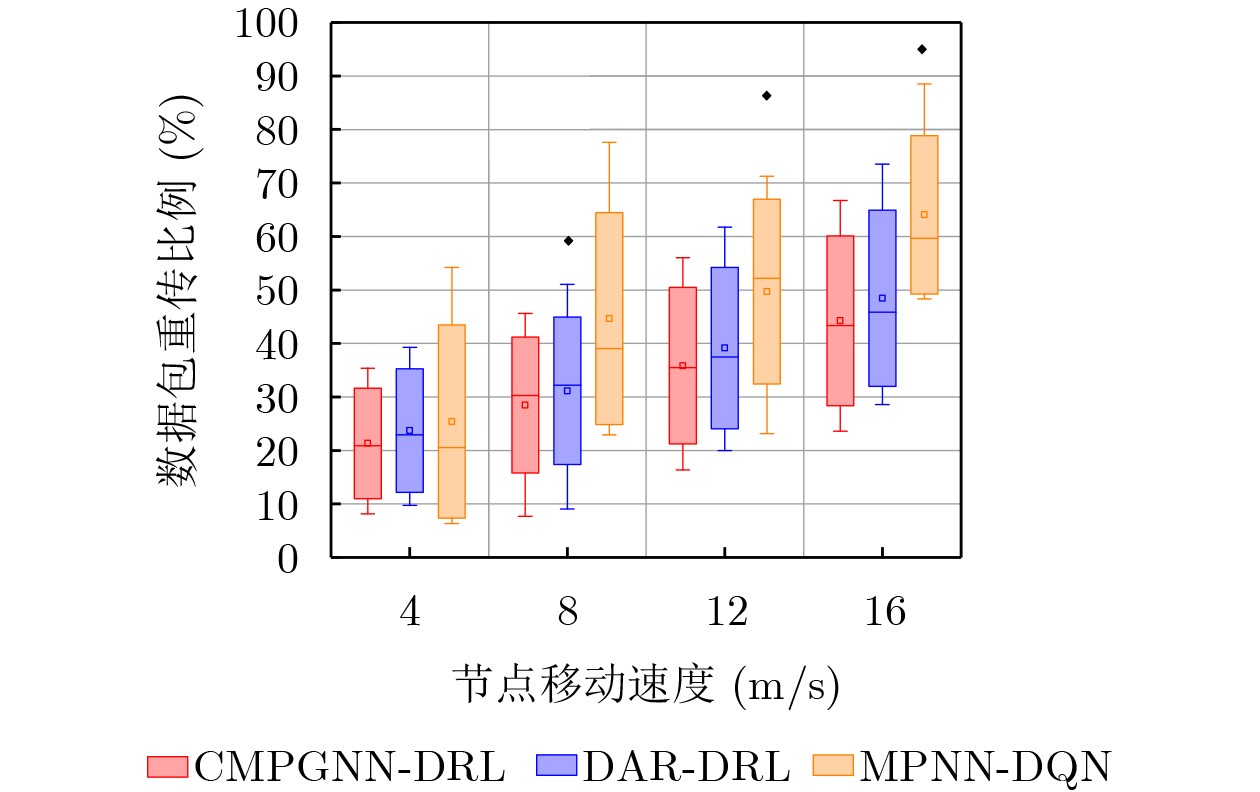
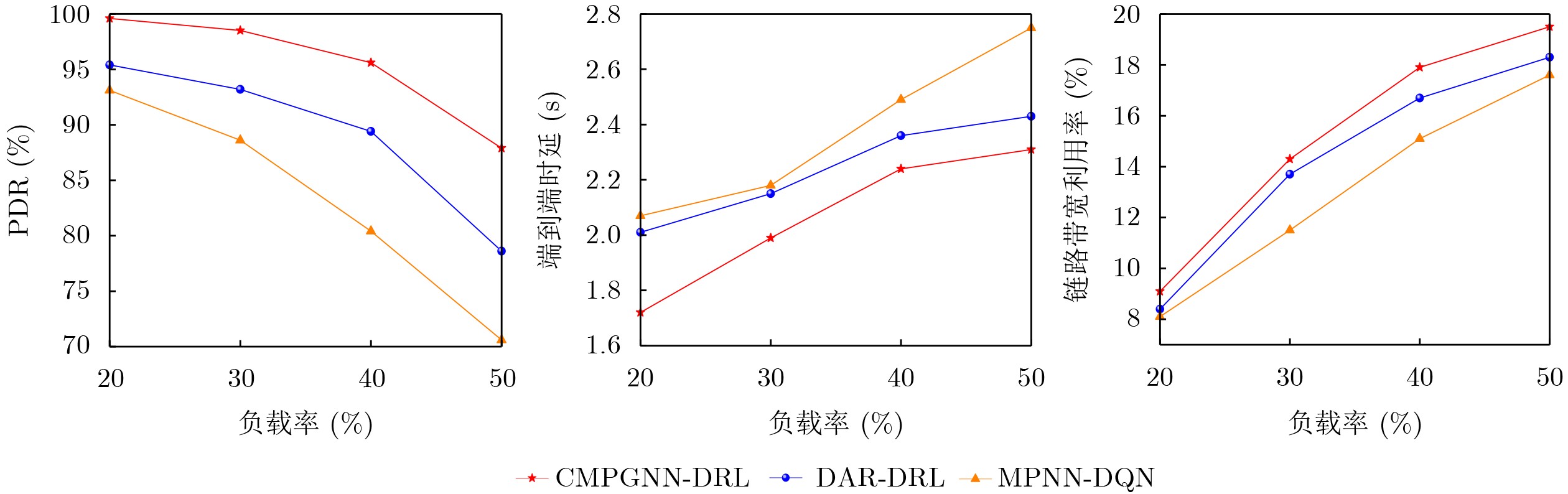
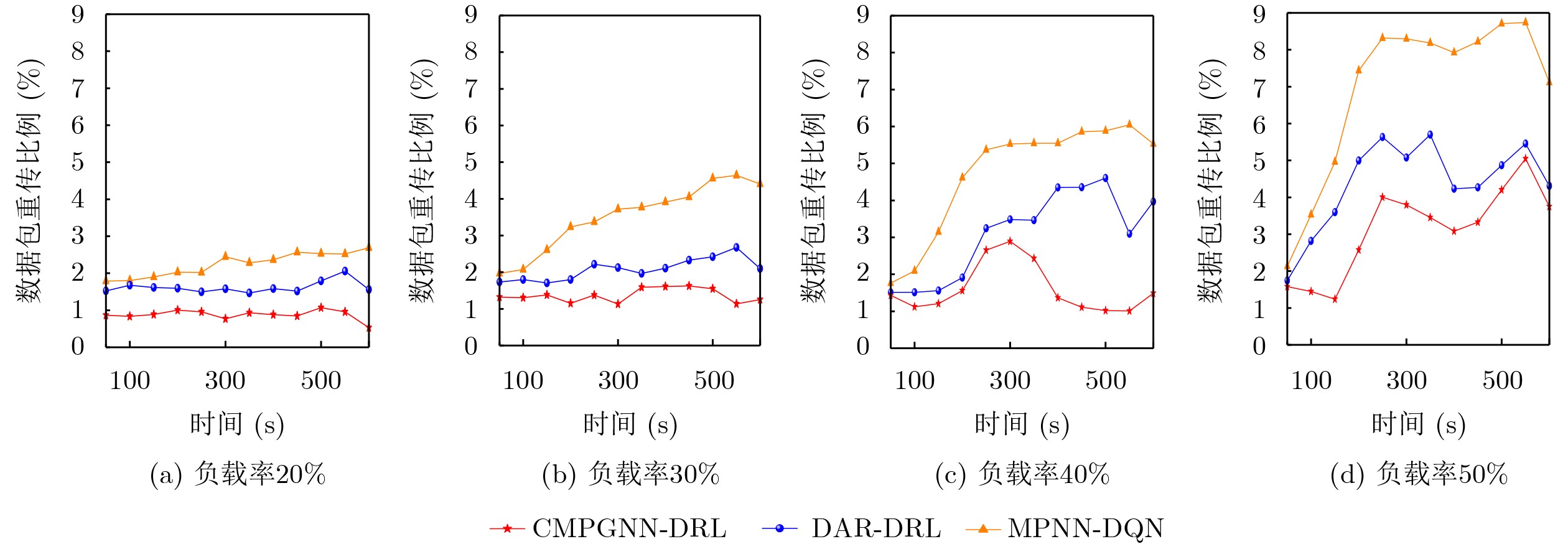
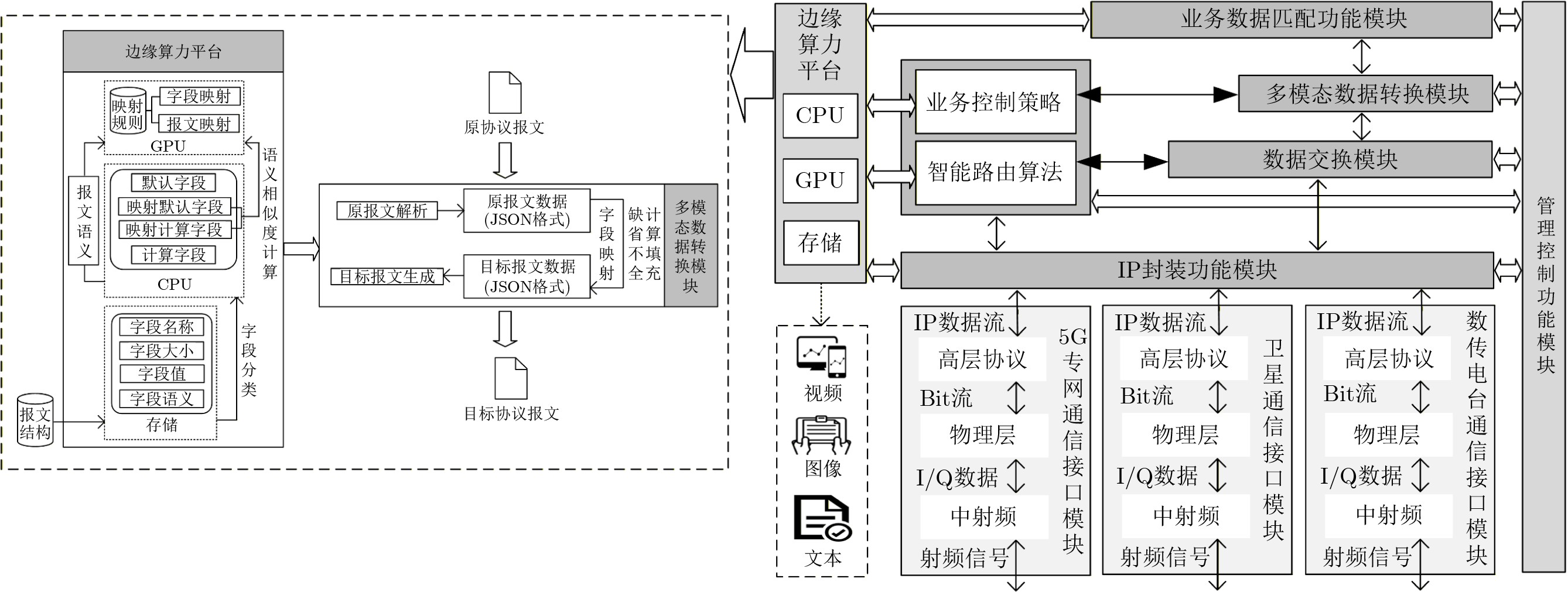
Abstract:Objective Marine Heterogeneous Wireless Networks (MHWNs), which deeply integrate multi-dimensional resources spanning space, air, and sea, must accommodate multiple coexisting communication systems and thus face the dual challenges of interconnection and resource coordination. Meanwhile, existing routing algorithms based on Deep Reinforcement Learning (DRL) exhibit insufficient representation capability for dynamic topologies, making it difficult to make efficient routing decisions when the network topology changes frequently. This is mainly because mainstream frameworks typically adopt standard Graph Neural Networks (GNNs) or fully connected networks for state encoding, which cannot effectively capture the structural features of highly dynamic topologies. Methods This paper designs a modular Multi-Radio Access Technology (Multi-RAT) gateway supporting the fusion of 5G and ad hoc (Mesh) networks, and proposes an intelligent routing method combining a Contrastive Message Passing Graph Neural Network with Deep Reinforcement Learning (CMPGNN-DRL), so as to improve Quality of Service (QoS) and forwarding efficiency and achieve optimized resource allocation. In the gateway, service data are IP-encapsulated, protocol-identified, and semantically converted by communication interface modules before being forwarded to the target interface. The gateway periodically collects node features and link states to construct the input graph for routing decisions, and monitors key indicators such as link bandwidth utilization, queue depth, packet loss rate, and end-to-end delay. To compensate for the information delay introduced by periodic reporting, short-term trend terms of key indicators are incorporated into the state vector, and an asynchronous decision-execution architecture is adopted. Under a centralized Software-Defined Networking (SDN) control plane, the network is modeled as a graph with continuously monitored node and link features. For each node, the CMPGNN module synchronously constructs homophily and heterophily views along two message-passing paths and constrains the resulting embeddings with a contrastive loss, yielding discriminative node representations that are robust to edge perturbations. The learned representations are then fed into a Double Deep Q-Network (DDQN) agent that makes hop-by-hop routing decisions with an ε-greedy exploration strategy. Specifically, the topology prior values predicted by CMPGNN for neighboring nodes are fused with the DDQN Q-value estimates through weighted summation to form joint action values, which can correct inaccurate Q-value estimates when training is insufficient or observations are noisy. A normalized multi-objective reward function is designed to be negatively correlated with latency, packet loss rate, and link load, and positively correlated with throughput, while explicitly penalizing routing loops. Results and Discussions The proposed solution was validated through hardware prototype measurements and extensive simulations. Prototype tests showed that the average CPU utilization of the fusion gateway was 14%, 25%, and 37% in Mesh-only, 5G-only, and dual-mode operation, respectively; the dual-mode aggregate throughput reached 108 Mbps, compared with 32 Mbps for Mesh-only and 84 Mbps for 5G-only (uplink); and the average ping latencies between the gateway and the application server were 6 ms for Mesh and 16 ms for 5G. CMPGNN-DRL was compared with six baseline methods, namely OSPF, AODV, GNN, DQN, MPNN-DQN, and DAR-DRL, on the GEANT2, GBN, Germany, and Synth50 topologies, covering dynamic traffic, random link failures with failure rates of 3%–24%, and large-scale topology variations. The training reward increased rapidly and then stabilized, and ablation experiments verified the effectiveness of the contrastive learning mechanism. Compared with the optimal baseline, the proposed method reduces the average end-to-end delay by 20.8%–47.7%, reduces the packet loss rate by 0.3%–5.3%, and increases the average throughput by 5.2%–14.2%. In maritime heterogeneous wireless network scenarios constructed according to the environmental constraints of the Maritime Internet of Things (MIoT), i.e., a 1500 m ×1500 m area with 50–100 randomly deployed nodes evaluated through repeated Monte Carlo simulations, the method adapted stably to variations in network scale and node mobility in terms of Packet Delivery Ratio (PDR) and packet loss rate. As the load rate increased from 20% to 50%, it improved PDR by 4.2%–17.3% over MPNN-DQN and DAR-DRL while maintaining lower latency, higher bandwidth utilization, and a lower packet retransmission ratio under medium-to-high loads.Conclusions Aiming at sea-air cross-domain heterogeneous networks, this paper designed a Multi-RAT fusion gateway supporting ad hoc networks and 5G, and proposed an intelligent multi-path routing algorithm integrating CMPGNN with DRL. The contrastive learning mechanism strengthens the topology representation capability of the graph neural network and improves the robustness of routing policies. Experimental results show that the proposed method outperforms existing mainstream algorithms in key performance indicators such as PDR, end-to-end delay, and throughput, and exhibits good cross-topology generalization capability. Future work will focus on verification in real maritime environments and optimization of training efficiency, so as to support the practical deployment and application of integrated sea-air communication systems. -
表 1 仿真参数
参数 数值 节点部署策略 均匀随机分布 节点数量 50~100 区域尺寸 1500m×1500m 节点移动速度 4~16 m/s 负载率 20%~50% 数据包大小 1 Mbits 仿真时间 3000s  下载: 导出CSV
-
[1] TIAN Ennong, LI Ye, MA Teng, et al. Design and experiment of a sea-air heterogeneous unmanned collaborative system for rapid inspection tasks at sea[J]. Applied Ocean Research, 2024, 143: 103856. doi: 10.1016/j.apor.2023.103856. [2] ESMAT H H, LORENZO B, and GOECKEL D. Multi-RAT network slicing for heterogeneous MEC-enabled Internet of Things[J]. IEEE Network, 2026, 40(2): 218–229. doi: 10.1109/MNET.2025.3572464. [3] 杨柯. 基于边缘计算的智能物联网网关关键技术及应用[J]. 自动化应用, 2024, 65(6): 158–160. doi: 10.19769/j.zdhy.2024.06.052.YANG Ke. Key technologies and applications of intelligent IoT gateway based on edge computing[J]. Automation Application, 2024, 65(6): 158–160. doi: 10.19769/j.zdhy.2024.06.052. [4] 董裕民, 张静, 谢昌佐, 等. 云边端架构下边缘智能计算关键问题综述: 计算优化与计算卸载[J]. 电子与信息学报, 2024, 46(3): 765–776. doi: 10.11999/JEIT230390.DONG Yumin, ZHANG Jing, XIE Changzuo, et al. A survey of key issues in edge intelligent computing under cloud-edge-terminal architecture: Computing optimization and computing offloading[J]. Journal of Electronics & Information Technology, 2024, 46(3): 765–776. doi: 10.11999/JEIT230390. [5] 王侃, 曹铁林, 李旭杰, 等. 无人机辅助边缘计算网络轨迹规划与资源分配研究综述[J]. 电子与信息学报, 2025, 47(5): 1266–1281. doi: 10.11999/JEIT241071.WANG Kan, CAO Tielin, LI Xujie, et al. A survey on trajectory planning and resource allocation in unmanned aerial vehicle-assisted edge computing networks[J]. Journal of Electronics & Information Technology, 2025, 47(5): 1266–1281. doi: 10.11999/JEIT241071. [6] 冯伊凡, 吴畏虹, 孙罡, 等. 天地一体化边缘计算网络服务迁移算法研究[J]. 电子与信息学报, 2026, 48(2): 499–511. doi: 10.11999/JEIT250835.FENG Yifan, WU Weihong, SUN Gang, et al. Service migration algorithm for satellite-terrestrial edge computing networks[J]. Journal of Electronics & Information Technology, 2026, 48(2): 499–511. doi: 10.11999/JEIT250835. [7] SONAL and DESWAL S. Enhancing IoT gateway management security: A deep learning based framework for intrusion detection and threat mitigation[J]. International Journal of Information Technology, 2025, 17(6): 3695–3705. doi: 10.1007/s41870-025-02441-z. [8] CHAKOUR I, DAOUI C, BASLAM M, et al. Strategic bandwidth allocation for QoS in IoT gateway: Predicting future needs based on IoT device habits[J]. IEEE Access, 2024, 12: 6590–6603. doi: 10.1109/ACCESS.2024.3351111. [9] ABDALLA A S, UPADHYAYA P S, SHAH V K, et al. Toward next generation open radio access networks: What O-RAN can and cannot do![J]. IEEE Network, 2022, 36(6): 206–213. doi: 10.1109/MNET.108.2100659. [10] KUMAR S. AI/ML enabled automation system for software defined disaggregated open radio access networks: Transforming telecommunication business[J]. Big Data Mining and Analytics, 2024, 7(2): 271–293. doi: 10.26599/BDMA.2023.9020033. [11] 杨定木, 倪龙强, 梁晶, 等. 基于语义相似度的协议转换方法[J]. 计算机应用, 2025, 45(4): 1263–1270. doi: 10.11772/j.issn.1001-9081.2024040534.YANG Dingmu, NI Longqiang, LIANG Jing, et al. Protocol conversion method based on semantic similarity[J]. Journal of Computer Applications, 2025, 45(4): 1263–1270. doi: 10.11772/j.issn.1001-9081.2024040534. [12] KOO H, CHAE J, and KIM W. Design and experiment of satellite-terrestrial integrated gateway with dynamic traffic steering capabilities for maritime communication[J]. Sensors, 2023, 23(3): 1201. doi: 10.3390/s23031201. [13] HUANG Linqiang, YE Miao, XUE Xingsi, et al. Intelligent routing method based on Dueling DQN reinforcement learning and network traffic state prediction in SDN[J]. Wireless Networks, 2024, 30(5): 4507–4525. doi: 10.1007/s11276-022-03066-x. [14] MA Kanghua, LIAO Shubing, and NIU Yunyun. Connected vehicles' dynamic route planning based on reinforcement learning[J]. Future Generation Computer Systems, 2024, 153: 375–390. doi: 10.1016/j.future.2023.11.037. [15] ZHU Changxi, DASTANI M, and WANG Shihan. A survey of multi-agent deep reinforcement learning with communication[J]. Autonomous Agents and Multi-Agent Systems, 2024, 38(1): 4. doi: 10.1007/s10458-023-09633-6. [16] RUSEK K, SUÁREZ-VARELA J, ALMASAN P, et al. RouteNet: Leveraging graph neural networks for network modeling and optimization in SDN[J]. IEEE Journal on Selected Areas in Communications, 2020, 38(10): 2260–2270. doi: 10.1109/JSAC.2020.3000405. [17] 孔凌辉, 饶哲恒, 徐彦彦, 等. 基于深度强化学习的无线网络智能路由算法[J]. 计算机工程, 2023, 49(9): 199–207,216. doi: 10.19678/j.issn.1000-3428.0066301.KONG Linghui, RAO Zheheng, XU Yanyan, et al. Intelligent routing algorithm for wireless networks based on deep reinforcement learning[J]. Computer Engineering, 2023, 49(9): 199–207,216. doi: 10.19678/j.issn.1000-3428.0066301. [18] TANG Huijun, DU Ming, WU Huaming, et al. TLCO: Topological link-aware task co-offloading method for joint V2V and V2I system[J]. IEEE Transactions on Intelligent Transportation Systems, 2025, 26(9): 13247–13259. doi: 10.1109/TITS.2025.3590519. [19] ZHANG Senbai, LIU Aijun, HAN Chen, et al. Graph neural network and reinforcement learning based routing for mega LEO satellite constellations[C]. The 9th International Conference on Computer and Communications (ICCC), Chengdu, China, 2023: 1–6. doi: 10.1109/ICCC59590.2023.10507285. [20] YAN Hui, GAO Yuan, AI Guoguo, et al. Contrastive message passing for robust graph neural networks with sparse labels[J]. Neural Networks, 2025, 182: 106912. doi: 10.1016/j.neunet.2024.106912. [21] LIU Weirong, CHEN Chen, ZHOU Shun, et al. A DEM-based semideterministic path loss model for marine-to-terrestrial propagation channels[J]. IEEE Antennas and Wireless Propagation Letters, 2026, 25(2): 571–575. doi: 10.1109/LAWP.2025.3632061. [22] WANG Chenlu, PENG Yuhuai, WU Jingjing, et al. Deterministic scheduling and reliable routing for smart ocean services in maritime Internet of Things: A cross-layer approach[J]. IEEE Transactions on Services Computing, 2024, 17(6): 3387–3399. doi: 10.1109/TSC.2024.3442471. [23] ADEBAYO S O, BARNAWI A, SHELTAMI T, et al. Dynamic spectrum sharing in heterogeneous wireless networks using deep reinforcement learning[J]. Internet of Things, 2025, 32: 101635. doi: 10.1016/j.iot.2025.101635. [24] JANATI Y, MOULINES E, OLSSON J, et al. Bridging diffusion posterior sampling and Monte Carlo methods: A survey[J]. Philosophical Transactions of the Royal Society A: Mathematical, Physical and Engineering Sciences, 2025, 383(2299): 20240331. doi: 10.1098/rsta.2024.0331. -


 下载:
下载:

图(19) / 表(1)
计量
- 文章访问数: 23
- HTML全文浏览量: 4
- PDF下载量: 6
- 被引次数: 0
