




Intelligent Detection of DSSS Signals Under False-Alarm Rate Constraints Based on a Noise Score-Pool Threshold Calibration Mechanism
-
摘要: 针对弱信号场景下导航直扩信号传统检测方法性能受限,以及现有深度学习检测模型普遍缺乏有效虚警率控制机制的问题,该文提出一种虚警率可控的直接序列扩频信号深度学习检测方法。该方法创新性地提出了基于噪声分数池的检测阈值自适应标定机制,同时设计了适配I/Q信号一维序列输入的改进的残差神经网络。通过统计噪声数据集经网络处理后输出的置信度分数的经验分布,根据预设虚警率来标定检测判决阈值,从而将深度学习模型纳入经典的恒虚警率评估框架。此外,该文验证了有无归一化处理的数据预处理策略对弱信号检测的影响。仿真结果表明,该文所提模型整体检测性能较传统自相关方法提升3~4 dB,无归一化处理策略相较于归一化处理性能提升约1 dB。在非理想的高斯色噪声环境下,该模型同样展现出优于传统方法的检测性能与稳健的泛化能力。Abstract:
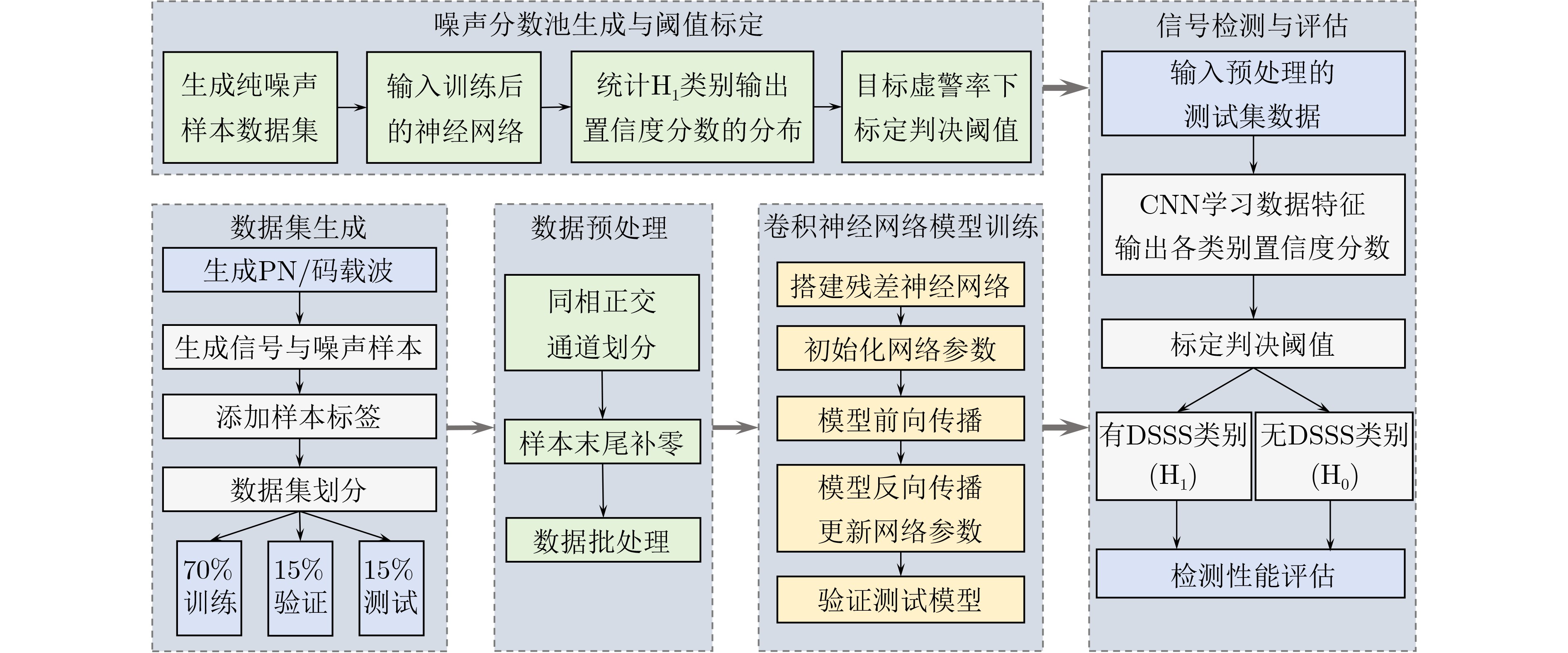
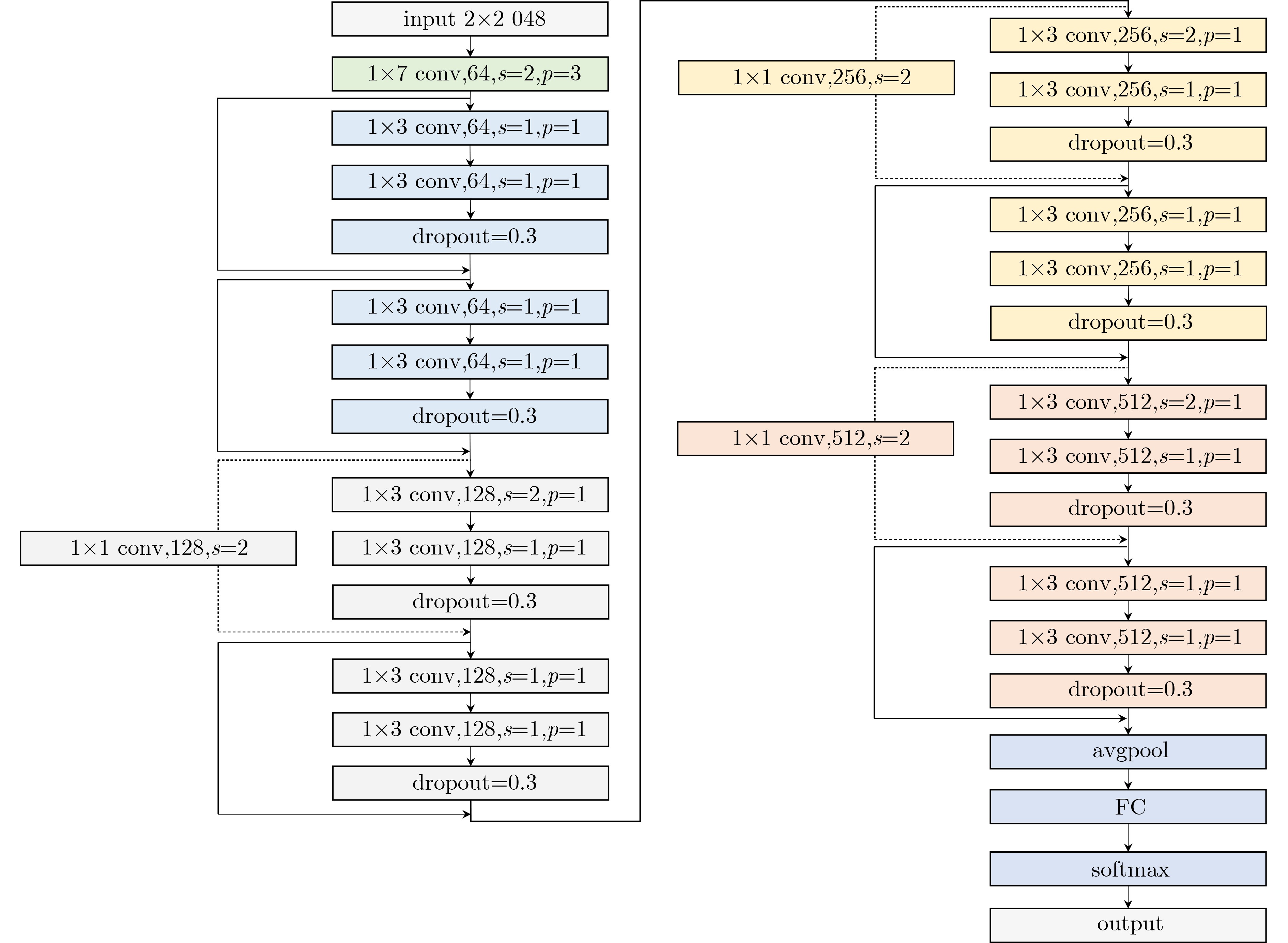
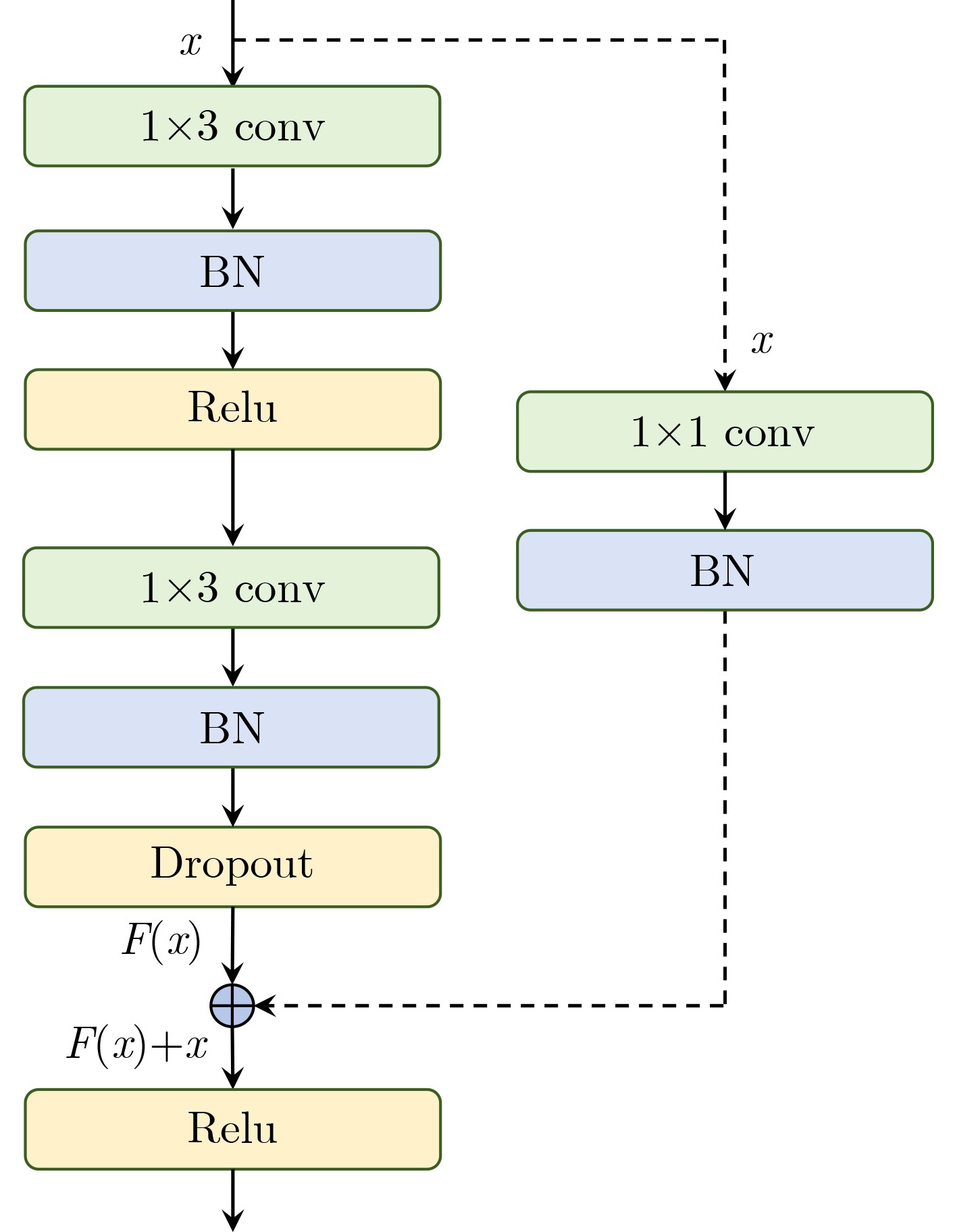
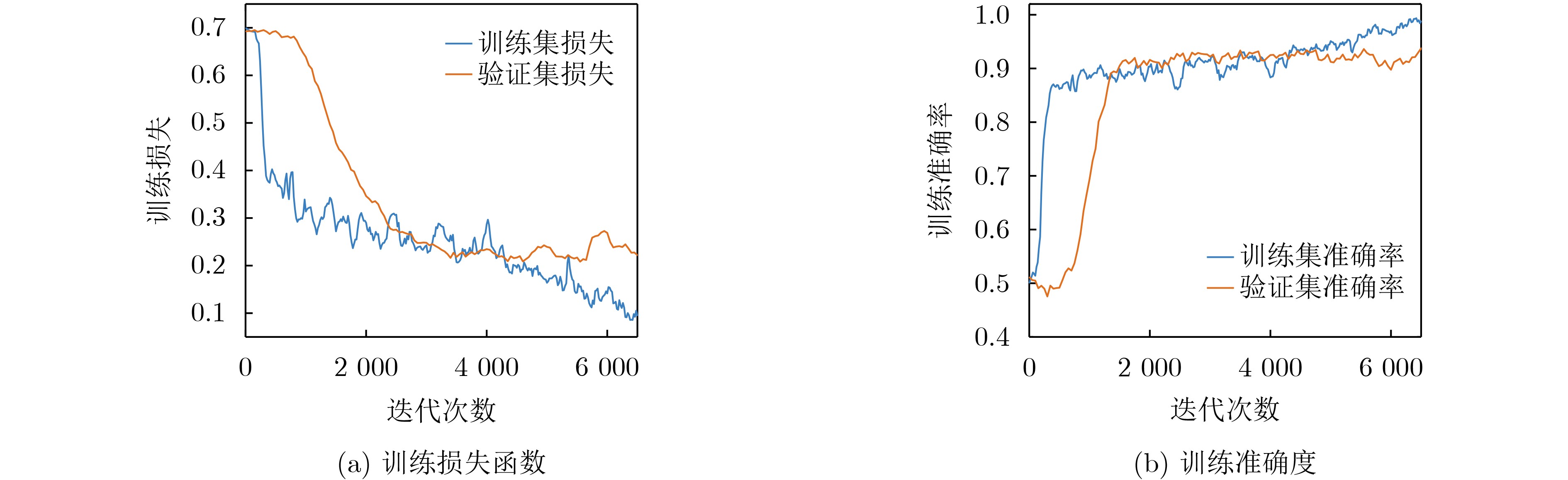
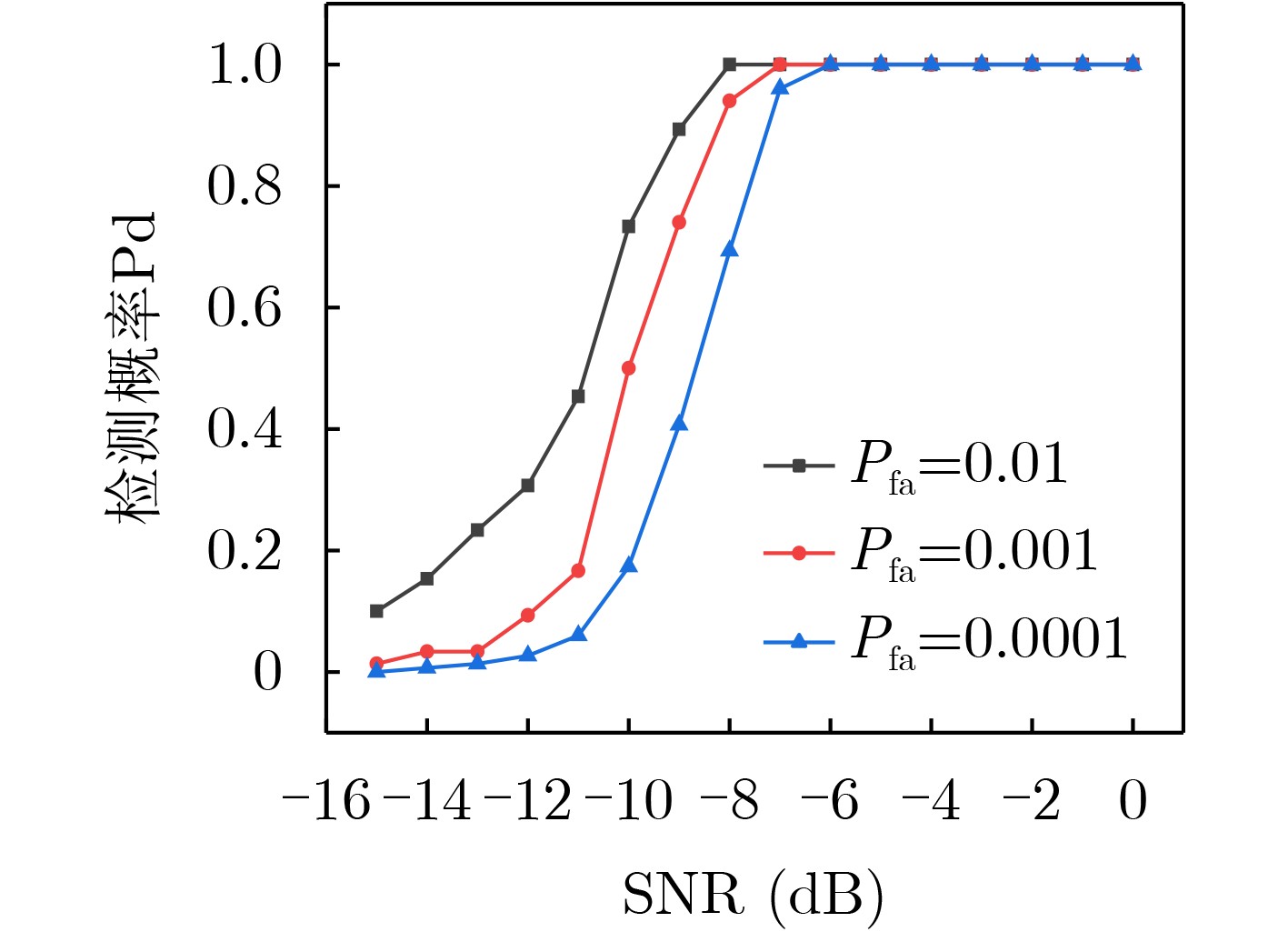
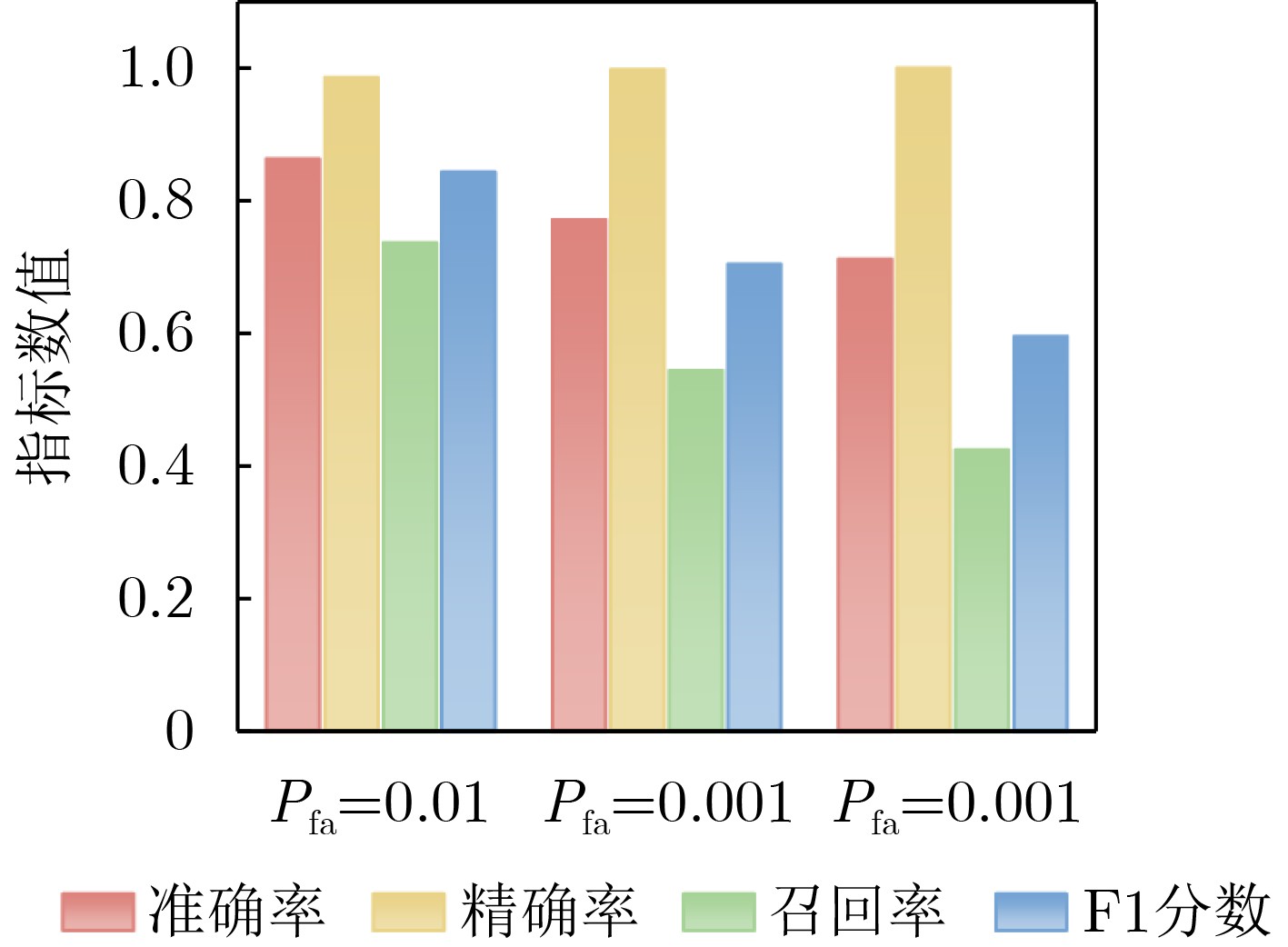
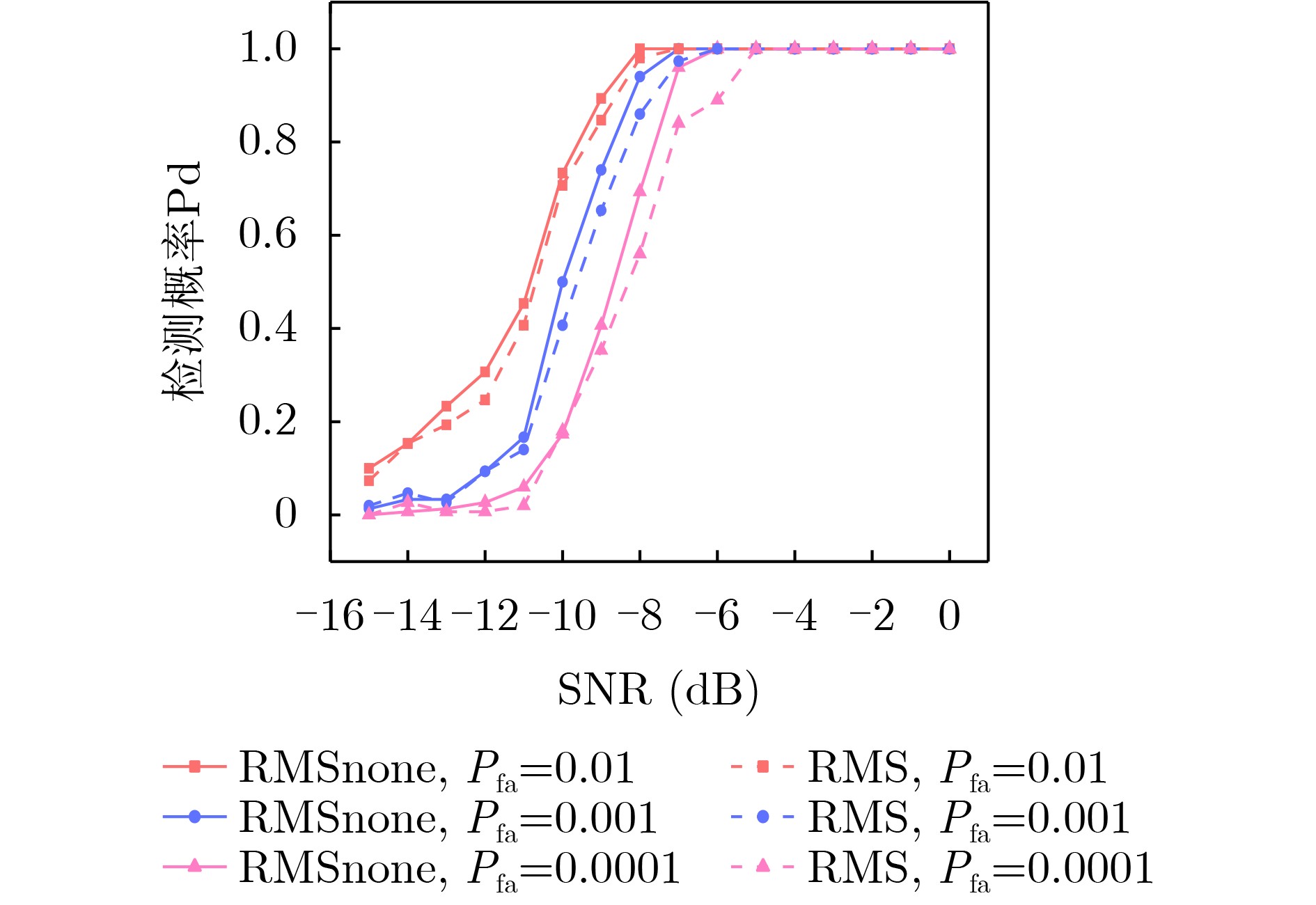
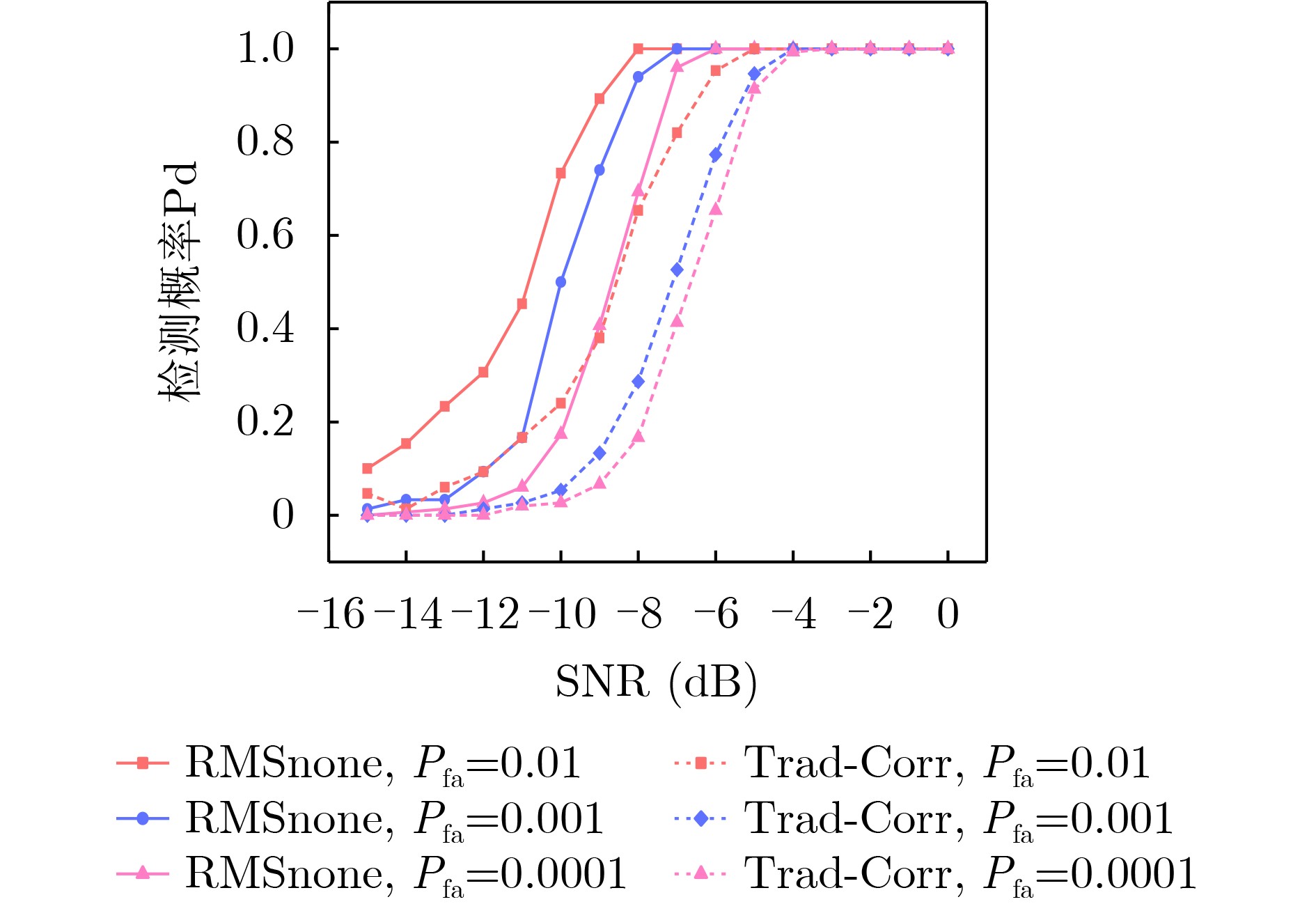
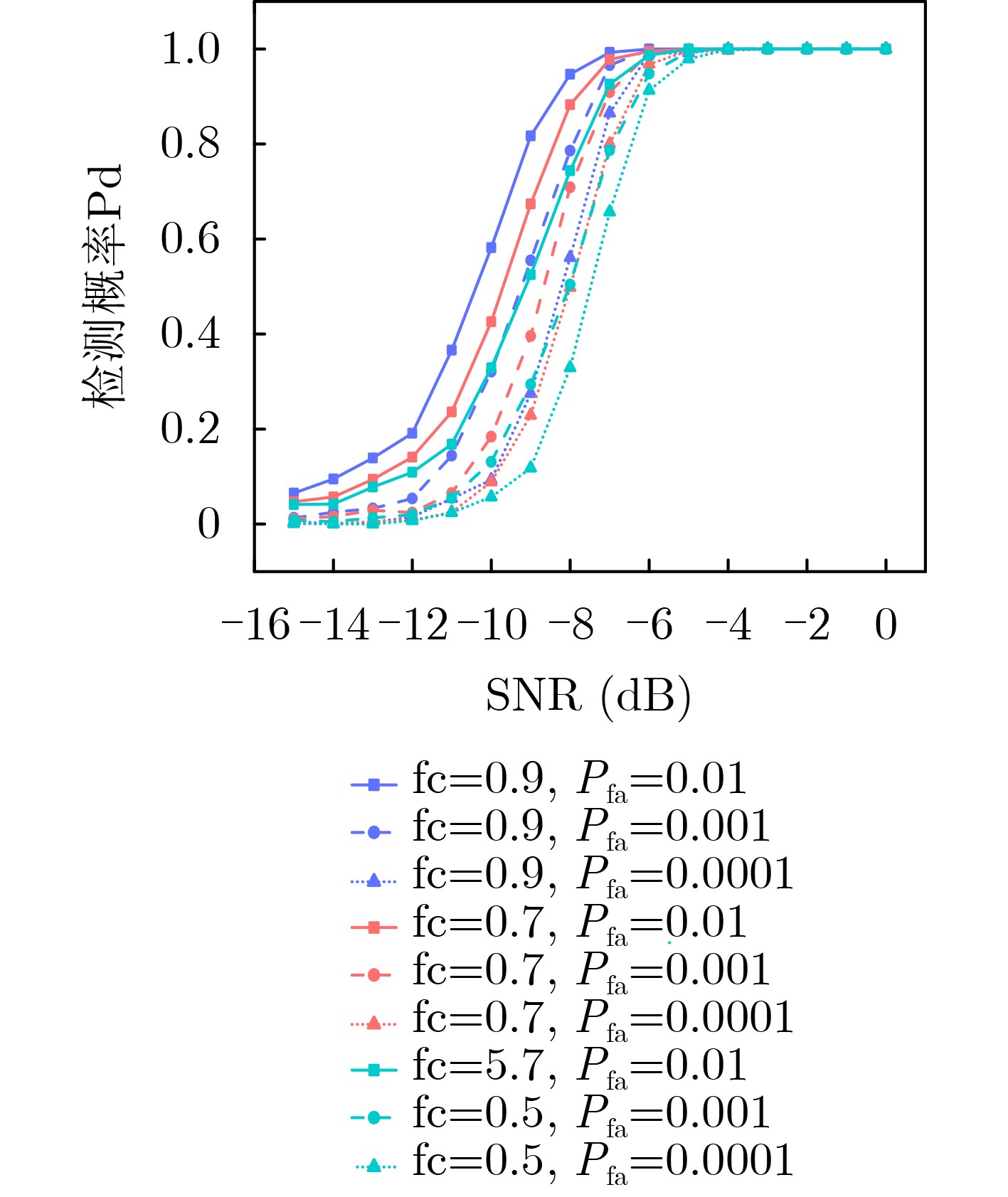
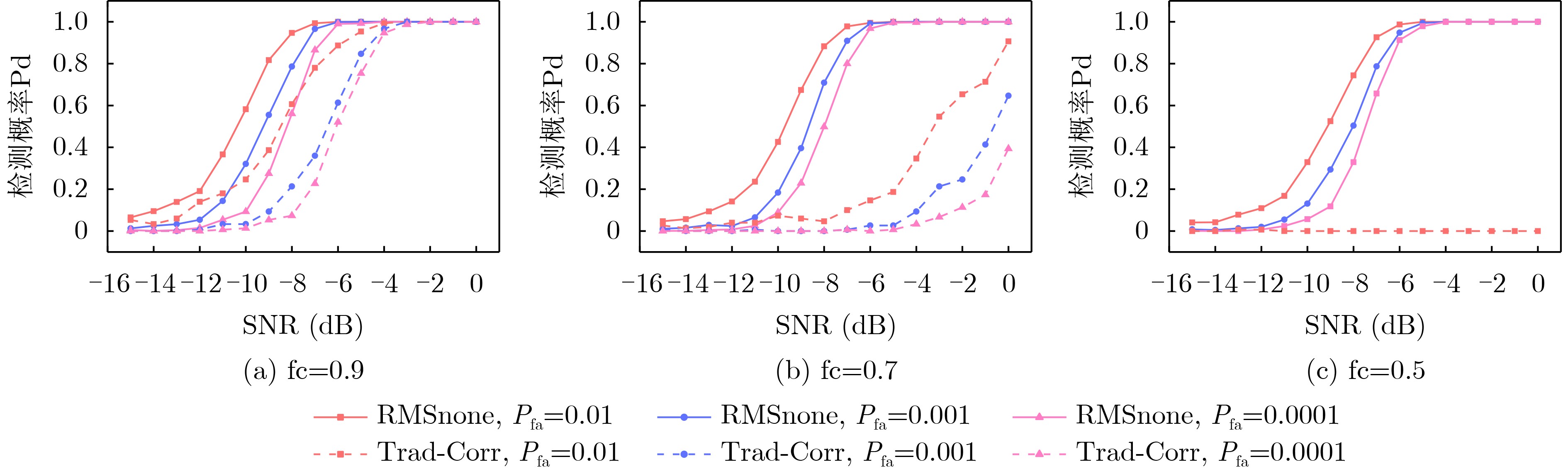
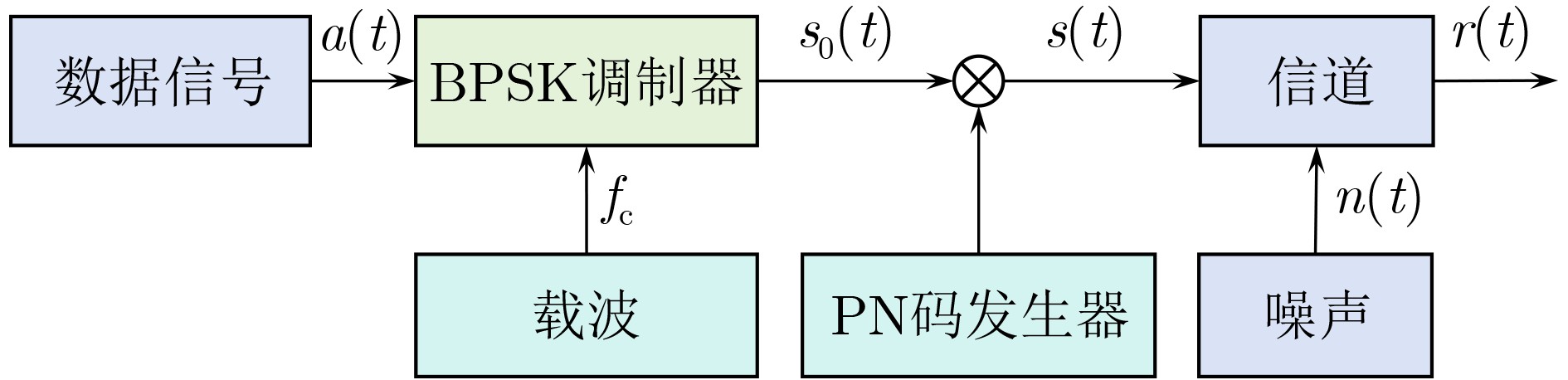
Objective To address the degradation in Global Navigation Satellite System (GNSS) signal detection performance under weak-signal conditions and the limited control of the probability of false alarm (Pfa) in existing Deep Learning (DL) models, a DSSS signal detection method with a prescribed Pfa is investigated. The method enables the DL detector to be evaluated within a Constant False Alarm Rate (CFAR) framework. Methods DSSS signal detection is formulated as a binary classification problem, and a DL-based detection framework is developed. An improved one-dimensional ResNet-18 is designed for I/Q sampled time-series data. The input convolution kernel is set to 1×7, and the initial maximum pooling layer is removed to preserve weak-signal temporal features. The first residual layer is also configured without downsampling. A noise score-pool-based threshold calibration mechanism is developed to impose Pfa constraints on the detection decision. A large number of pure-noise samples are processed by the trained network to obtain the empirical distribution of confidence scores for the signal-present class. The decision threshold is then calibrated according to the quantile corresponding to the preset Pfa. In addition, the effect of signal normalization on detection performance is evaluated. The proposed method is validated using a simulated GPS L1 C/A signal dataset under different Signal-to-Noise Ratio (SNR) and Pfa settings and in non-ideal colored-noise environments. Results and Discussions The proposed method achieves high detection performance under different Pfa constraints. At a Pfa of 0.01, the detection probability reaches 100% at an SNR of –8 dB. When the Pfa decreases from 0.01 to 0.001 and 0.000 1, the detection curve shifts toward higher SNRs, but the decrease in detection performance remains limited. The unnormalized preprocessing strategy consistently outperforms Root-Mean-Square (RMS) normalization, providing a performance gain of approximately 1 dB. Compared with the traditional autocorrelation detection method, the proposed DL-based detector provides a detection performance gain of approximately 3~4 dB across the tested Pfa settings. In colored-noise environments not used for network training, the proposed method maintains effective detection performance and demonstrates robustness to noise mismatch. The structural ablation results further show that removing the maximum pooling layer and retaining the temporal resolution of the first residual layer improve detection performance under low-SNR conditions. Conclusions A DL-based DSSS signal detection method with noise score-pool-based threshold calibration is proposed. The empirical distribution of pure-noise confidence scores is used to calibrate the decision threshold, thereby incorporating the DL detector into a CFAR-based detection framework. The improved one-dimensional ResNet-18 effectively extracts features from I/Q time-series data, whereas the unnormalized preprocessing strategy preserves useful signal-amplitude information. The proposed method improves detection sensitivity while maintaining effective Pfa control and exhibits robustness under non-ideal colored-noise conditions. -
表 1 N网络层输出维度
网络层名称 输出特征维度 网络层名称 输出特征维度 Input 2×2048 Layer3-Block2 256×256 Conv1 64× 1024 Layer4-Block1 512×128 Layer1-Block1 64× 1024 Layer4-Block2 512×128 Layer1-Block2 64× 1024 Avgpool 512×1 Layer2-Block1 128×512 FC 512×1 Layer2-Block2 128×512 Softmax 1×2 Layer3-Block1 256×256 Output 1×2  下载: 导出CSV
表 2 训练参数
参数 值 Initial Learning Rate 0.0001 Max Epochs 50 Mini Batch Size 64 Freeze BN True Dropout 0.3 Optimizer AdamW
下载: 导出CSV
表 3 模型结构参数消融实验结果
模型设置 Pd 达到$ {P}_{\mathrm{d}} $=1所需SNR (dB) –12 dB –11 dB –10 dB –9 dB –8 dB 本文模型 30.67% 45.33% 73.33% 89.33% 100% –8 消融模型1 25.33% 38.00% 67.33% 84.00% 97.33% –7 消融模型2 23.33% 41.33% 62.00% 86.67% 99.33% –7
下载: 导出CSV
-
[1] HALDER N and MURTHY C R. Channel estimation and data detection in DS-spread channels: A unified framework, novel algorithms, and waveform comparison[J]. IEEE Transactions on Signal Processing, 2025, 73: 4108–4123. doi: 10.1109/TSP.2025.3608021. [2] DENG Zhongliang, JIA Buyun, TANG Shihao, et al. Fine frequency acquisition scheme in weak signal environment for a communication and navigation fusion system[J]. Electronics, 2019, 8(8): 829. doi: 10.3390/electronics8080829. [3] GUO Wenfei, NIU Xiaoji, GUO Chi, et al. A new FFT acquisition scheme based on partial matched filter in GNSS receivers for harsh environments[J]. Aerospace Science and Technology, 2017, 61: 66–72. doi: 10.1016/j.ast.2016.11.017. [4] BORIO D and LACHAPELLE G. A non-coherent architecture for GNSS digital tracking loops[J]. Annals of Telecommunications, 2009, 64(9/10): 601–614. doi: 10.1007/s12243-009-0114-1. [5] LIN Mengying, LUO Yimei, ZHU Xuefen, et al. Optimal GPS acquisition algorithm in severe ionospheric scintillation scene[J]. Electronics, 2023, 12(6): 1343. doi: 10.3390/electronics12061343. [6] WU Chao, XU Luping, ZHANG Hua, et al. An improved acquisition method for GNSS in high dynamic environments: Differential acquisition based on compressed sensing theory[J]. Navigation, 2017, 64(1): 23–34. doi: 10.1002/navi.173. [7] 朱政宇, 殷梦琳, 姚信威, 等. AI赋能的通感算一体化关键技术研究综述[J]. 电子与信息学报, 2025, 47(10): 3426–3438. doi: 10.11999/JEIT250242.ZHU Zhengyu, YIN Menglin, YAO Xinwei, et al. Overview of the research on key technologies for AI-powered integrated sensing, communication and computing[J]. Journal of Electronics & Information Technology, 2025, 47(10): 3426–3438. doi: 10.11999/JEIT250242. [8] 李云, 杨松林, 邢智童, 等. 多尺度特征注意力网络下的卫星信号识别研究[J]. 电子与信息学报, 2025, 47(6): 1792–1802. doi: 10.11999/JEIT250126.LI Yun, YANG Songlin, XING Zhitong, et al. Study on satellite signal recognition with multi-scale feature attention network[J]. Journal of Electronics & Information Technology, 2025, 47(6): 1792–1802. doi: 10.11999/JEIT250126. [9] 樊盛华, 尹航, 刘俭, 等. 融合双分支优化SAM与全局-局部协同匹配的单样本目标检测方法[J]. 电子与信息学报, 2025, 47(12): 4665–4676. doi: 10.11999/JEIT250982.FAN Shenghua, YIN Hang, LIU Jian, et al. A one-shot object detection method fusing dual-branch optimized SAM and global-local collaborative matching[J]. Journal of Electronics & Information Technology, 2025, 47(12): 4665–4676. doi: 10.11999/JEIT250982. [10] WEI Fei, ZHENG Shilian, ZHOU Xiaoyu, et al. Detection of direct sequence spread spectrum signals based on deep learning[J]. IEEE Transactions on Cognitive Communications and Networking, 2022, 8(3): 1399–1410. doi: 10.1109/TCCN.2022.3174609. [11] BORHANI-DARIAN P, LI Haoqing, WU Peng, et al. Deep learning of GNSS acquisition[J]. Sensors, 2023, 23(3): 1566. doi: 10.3390/s23031566. [12] MORADI N, NEZHADSHAHBODAGHI M, and MOSAVI M R. GPS signal acquisition based on deep convolutional neural network and post-correlation methods[J]. GPS Solutions, 2023, 27(3): 132. doi: 10.1007/s10291-023-01469-7. [13] GU Hanqing, LIU Xiaxia, XU Lu, et al. DSSS signal detection based on CNN[J]. Sensors, 2023, 23(15): 6691. doi: 10.3390/s23156691. [14] ZHANG Shuang, LIU Feng, HUANG Yuang, et al. Adaptive detection of direct-sequence spread-spectrum signals based on knowledge-enhanced compressive measurements and artificial neural networks[J]. Sensors, 2021, 21(7): 2538. doi: 10.3390/s21072538. [15] DUAN Lei, LI Chuanjun, and ZHANG Qingpu. Optimizing the computational effort of satellite signal acquisition based on mean recognition convolutional neural network[J]. Journal of Physics: Conference Series, 2023, 2493(1): 012001. doi: 10.1088/1742-6596/2493/1/012001. [16] QIU Ye, MA Xinjie, LI Xinglong, et al. An end-to-end approach for enhanced weak signal detection in time–frequency analysis[J]. IEEE Transactions on Aerospace and Electronic Systems, 2025, 61(6): 19383–19398. doi: 10.1109/TAES.2025.3618514. [17] LIU Yang, LIU Peng, SHI Yu, et al. Deep learning-enhanced signal detection for communication systems[J]. PLoS One, 2025, 20(5): e0324916. doi: 10.1371/journal.pone.0324916. [18] WANG Bo, SHEN Lei, WANG Huaxia, et al. Direct sequence spread spectrum (DSSS) signal detection based on eigenvalues local binary pattern residual network (EL-ResNet)[J]. Signal, Image and Video Processing, 2024, 18(5): 4741–4751. doi: 10.1007/s11760-024-03110-7. [19] ZHANG Mingzhen. Communication signal detection technology based on residual neural network and DenseNet[J]. Discover Applied Sciences, 2025, 7(10): 1058. doi: 10.1007/s42452-025-07676-w. -

 下载:
下载:

图(11) / 表(3)
计量
- 文章访问数: 328
- HTML全文浏览量: 145
- PDF下载量: 12
- 被引次数: 0
