




Physical-layer Security in Visible Light Communications: Fundamental Theories, Key Techniques, and Future Challenges
-
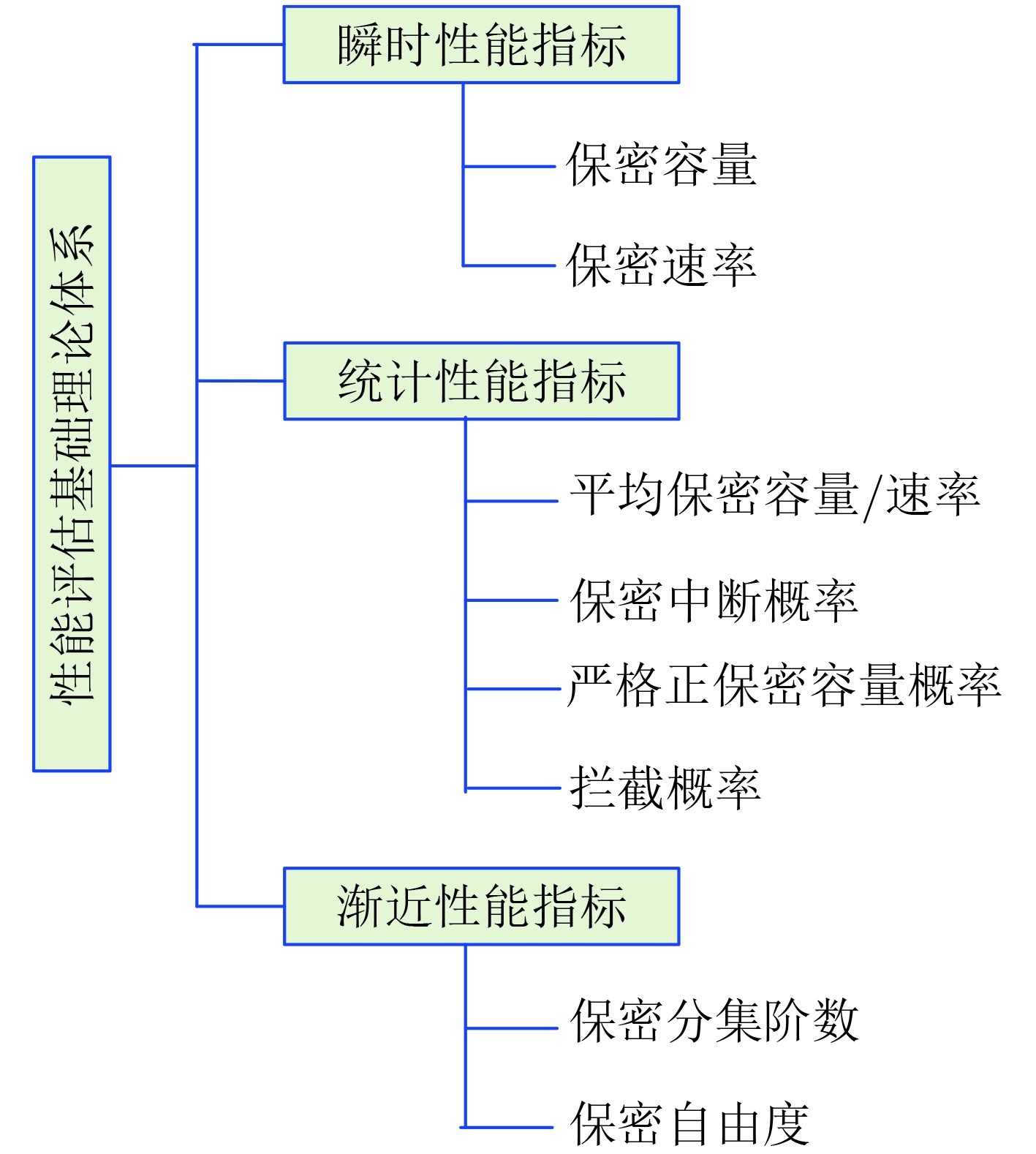
摘要: 与网络加密技术不同,可见光通信(VLC)的物理层安全(PLS)作为一种新型安全传输技术备受关注。由于存在显著差异,传统射频无线通信的PLS技术并不能直接应用到VLC中。近年来,国内外学者对VLC的PLS技术进行了研究。遗憾的是,VLC的PLS技术所涉及的基础理论、关键技术以及未来挑战尚缺乏系统性的梳理。基于此,该文建立了VLC的PLS系统模型,构建了包括瞬时性能指标、统计性能指标和渐近性能指标的性能评估综合理论体系,进一步讨论了安全波束成形技术、人工辅助技术、物理区域防护技术、安全编码技术、安全分集技术等各种PLS性能提升关键技术,并结合当前研究的局限性对未来工作进行了展望。Abstract:
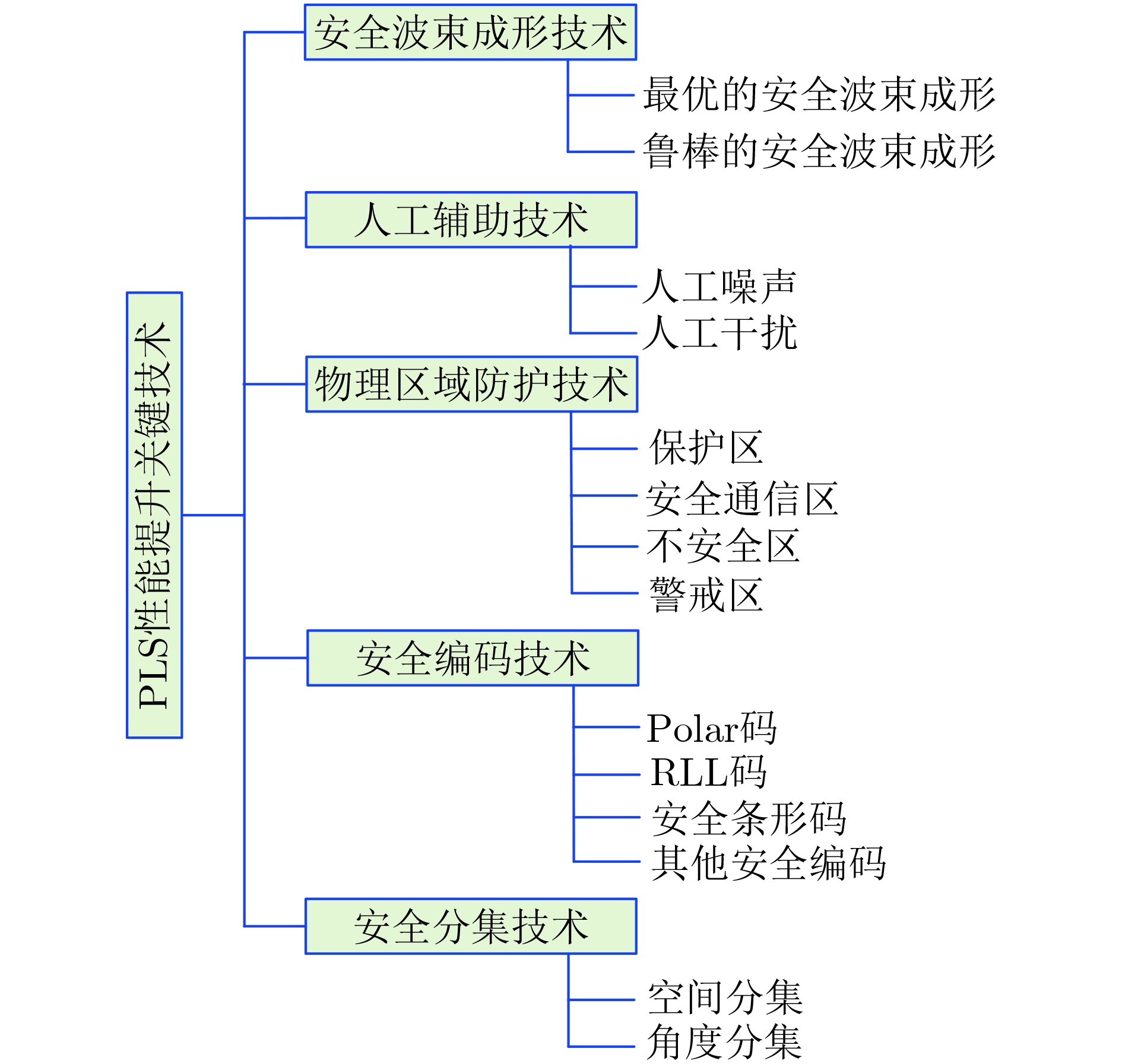
Significance Because optical signals are broadcast, information security is a key research issue in Visible Light Communications (VLC). Conventional encryption techniques address network security at the upper layers of the protocol stack through access control, cryptographic protection, and end-to-end encryption. However, their security depends on the assumption that eavesdroppers have limited computational capability. This assumption is increasingly challenged by advances in high-performance and quantum computing. In recent years, Physical-Layer Security (PLS) has emerged as a new secure transmission paradigm and has drawn wide research attention. PLS uses the randomness, heterogeneity, and differences between the main channel and the eavesdropping channel to support secure information transmission at the physical layer. Substantial progress has been made in PLS for Radio Frequency Wireless Communication (RFWC). However, because VLC differs from RFWC in frequency band, transmitted signal form, power representation, and channel characteristics, PLS results obtained for RFWC systems cannot be directly applied to VLC. Although many studies have examined VLC PLS technologies, their fundamental theories, key techniques, and future challenges have not yet been systematically reviewed. To fill this gap, this paper presents a comprehensive survey of VLC PLS. Progress To evaluate and improve system performance, a classic VLC PLS system model is first established. This model consists of the received signal model, input constraint model, and channel gain model. A comprehensive theoretical framework for performance evaluation is then developed. The framework covers instantaneous, statistical, and asymptotic performance metrics. For instantaneous performance, existing studies on instantaneous secrecy capacity and instantaneous secrecy rate under different scenarios are summarized. For statistical performance, average secrecy capacity, average secrecy rate, secrecy outage probability, probability of strictly positive secrecy capacity, and intercept probability are analyzed. For asymptotic performance, secrecy diversity order and secrecy degrees of freedom are discussed. In addition, key techniques for improving PLS performance are reviewed, including secure beamforming, artificial-aided techniques, physical region protection, secure coding, and secure diversity. Prospects Despite recent progress, several challenges remain in VLC PLS. Four major challenges are identified in this paper. (1) Accurate PLS performance limits. Deriving exact expressions for secrecy capacity under the unique physical constraints of VLC remains difficult. (2) Incomplete evaluation framework. Some key metrics widely used in RFWC have not been fully studied in VLC, and a comprehensive VLC PLS performance evaluation framework remains to be developed. (3) Limitations of existing methods. Conventional PLS performance enhancement methods typically follow a separated research paradigm of modeling, optimization, and verification. This paradigm may lead to a cycle of inaccurate modeling, suboptimal solutions, and limited performance gains. Therefore, new technologies, such as deep learning, reinforcement learning, and digital twins, should be integrated to build a data- and model-driven framework for VLC PLS performance enhancement. (4) Hardware platform gap. The lack of dedicated hardware platforms with adversarial topologies and real-time processing capability hinders the practical deployment of VLC PLS technologies. Addressing these challenges is essential for moving VLC PLS from theoretical research toward commercial applications. Conclusions The broadcast nature of optical signals makes VLC systems vulnerable to eavesdropping attacks. This paper presents a comprehensive survey of PLS in VLC. The survey covers system models, performance metrics, and key performance enhancement technologies. The reviewed performance metrics include instantaneous, statistical, and asymptotic metrics. The reviewed enhancement techniques include secure beamforming, artificial-aided techniques, physical region protection, secure coding, and secure diversity. Although substantial progress has been achieved, challenges remain in accurate performance limits, complete evaluation frameworks, new enhancement techniques, and practical hardware implementation. By exploiting channel differences at the physical layer without relying on complex encryption, PLS provides a promising security mechanism for next-generation secure and reliable VLC networks. -
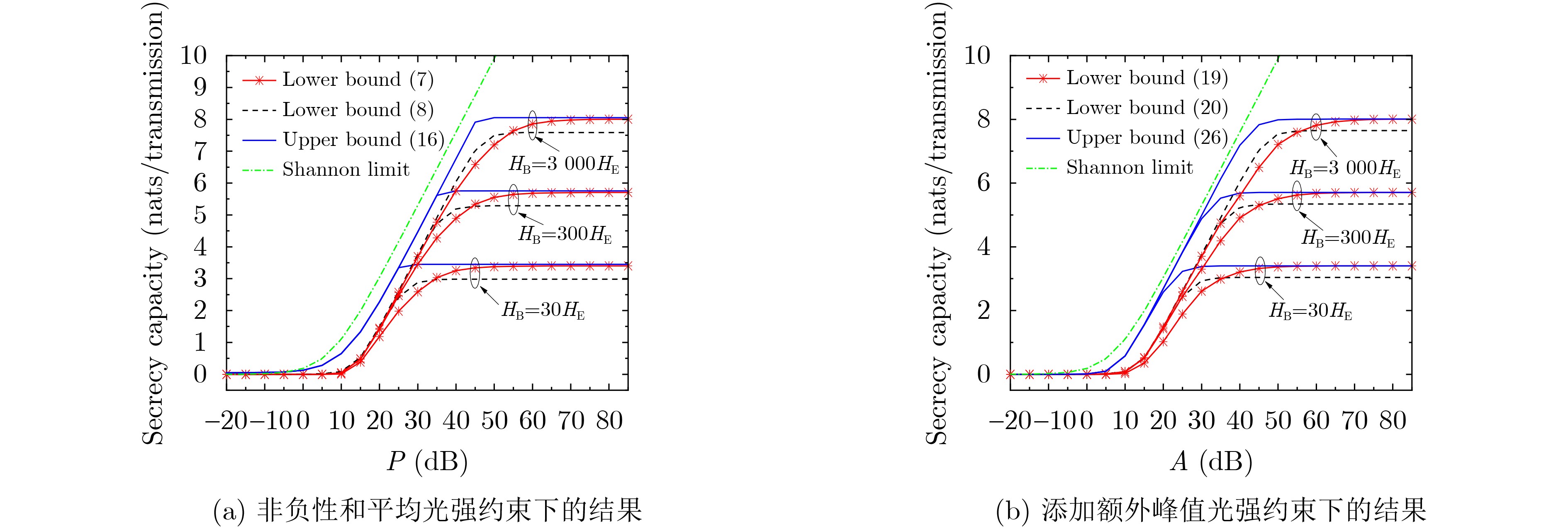
表 1 VLC瞬时保密容量界的研究工作
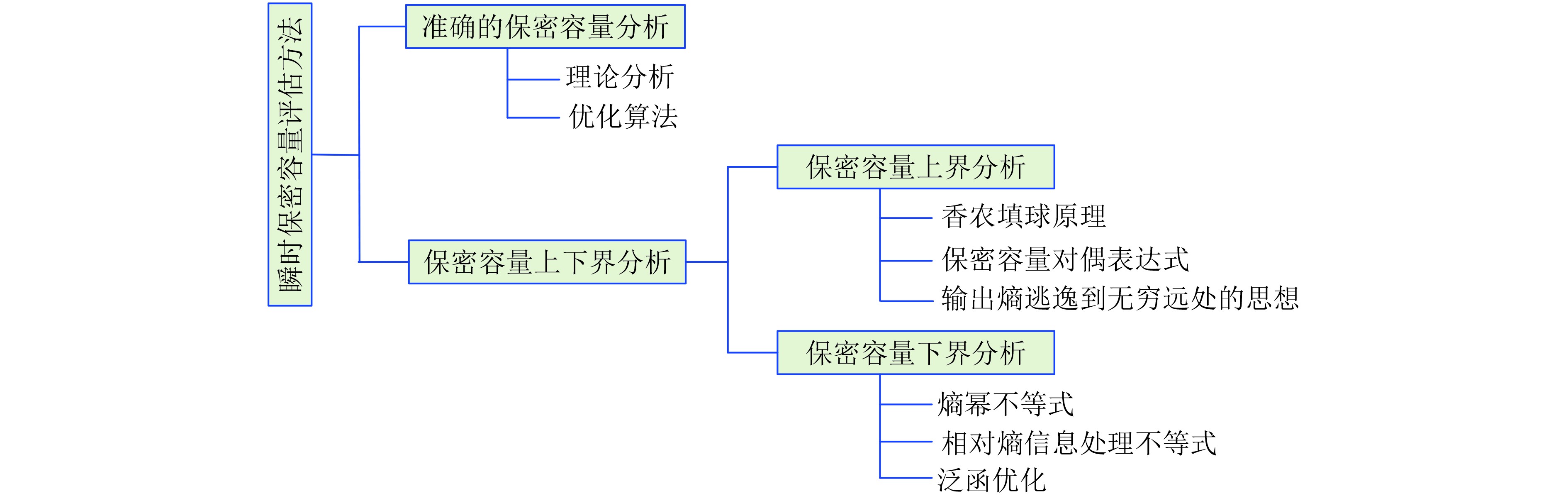
典型文献 系统场景 求解方法 所得保密容量界 [21] SISO VLC 变分法、熵幂不等式和保密容量的对偶表达式 下界:(7)、(8)、(19)、(20);上界:(16)、(26) [22] 水到空气跨介质VLC 文献[21]所得结果 下界:(22);上界:(23) [23] 车辆VLC 不等式放缩、文献[6]所得结果 下界:(8)、(10);上界:(12)、(13) [24] 干扰机和智能反射面辅助的VLC 文献[21]所得结果、熵幂不等式、变分法 下界:(14)、(15)、(17) [25] 相关噪声下的VLC 变分法、保密容量对偶表达式、最优输入分布逃逸到无穷远处 下界:(14)、(16);上界:(21)、(31) [26] MISO VLC 不等式放缩、文献[6]所得结果 下界:(9)、(10);上界:(11) [27] 中继辅助的VLC 文献[26]的结果 下界:(12b);上界:(12a)  下载: 导出CSV
表 6 VLC物理区域防护的研究工作
分类 典型文献 系统场景 保护区 [39] 由多个位置随机的发射机、一个典型合法用户和多个潜在的窃听者构成的VLC系统 [43,60] 由一个固定发射机、一个服从均匀分布的合法用户和一个服从均匀分布的窃听者构成的VLC系统 [61] 由一个源节点、一个中继节点、一个随机移动的合法用户和多个服从均匀分布的窃听者构成的电力线通信/
VLC混合网络安全通信区 [62] 由8个LED发射机(其中4个发送有用信号,4个发送入侵信号)和一个接收机构成的VLC系统 [63] 由多个发射机和多个接收机构成的VLC系统 不安全区 [21] 由一个发射机、一个合法用户和一个窃听者构成的VLC系统 [64] 由多个发射机和一个接收机构成的VLC系统 警戒区 \ VLC领域暂无相关工作
下载: 导出CSV
-
[1] ZARINI H, GHOLIPOOR N, MILI M R, et al. Multiplexing B5G/6G services over aerial VLC networks: A comprehensive radio resource management framework[J]. IEEE Internet of Things Journal, 2025, 12(9): 11600–11621. doi: 10.1109/JIOT.2024.3523016. [2] PANG G, KWAN T, CHAN C H, et al. LED traffic light as a communications device[C]. The IEEE/IEEJ/JSAI International Conference on Intelligent Transportation Systems (Cat. No. 99TH8383), Tokyo, Japan, 1999: 788–793. doi: 10.1109/ITSC.1999.821161. [3] ELDEEB H B, QARAQE M, MUHAIDAT S, et al. Shaping connectivity: Channel modeling and performance analysis of reconfigurable intelligent surfaces for IoV visible light communication[J]. IEEE Transactions on Vehicular Technology, 2025, 74(8): 12529–12543. doi: 10.1109/TVT.2025.3554581. [4] WANG Junbo, HU Qingsong, WANG Jiangzhou, et al. Tight bounds on channel capacity for dimmable visible light communications[J]. Journal of Lightwave Technology, 2013, 31(23): 3771–3779. doi: 10.1109/JLT.2013.2286088. [5] WANG Jinyuan, DAI Jianxin, GUAN Rui, et al. Channel capacity and receiver deployment optimization for multi-input multi-output visible light communications[J]. Optics Express, 2016, 24(12): 13060–13074. doi: 10.1364/OE.24.013060. [6] WANG Jinyuan, SUN Ziqi, ZHANG Danting, et al. Capacity bounds of range-limited visible light communications having signal-dependent noise[J]. IEEE Photonics Technology Letters, 2025, 37(20): 1185–1188. doi: 10.1109/LPT.2025.3590408. [7] PUGLIESE D, IACOVELLI G, FASCISTA A, et al. Visible light indoor positioning with a single LED and distributed single-element OIRS: An iterative approach with adaptive beam steering[J]. IEEE Transactions on Communications, 2026, 74: 4507–4523. doi: 10.1109/TCOMM.2026.3657386. [8] WANG Jinyuan, YANG Zhaohui, WANG Yongjin, et al. On the performance of spatial modulation-based optical wireless communications[J]. IEEE Photonics Technology Letters, 2016, 28(19): 2094–2097. doi: 10.1109/LPT.2016.2585502. [9] GUO Xinyue and XU Ruijia. Probabilistically shaped 3D-32QAM constellation design for visible light communication[J]. IEEE Photonics Technology Letters, 2025, 37(10): 583–586. doi: 10.1109/LPT.2025.3541066. [10] LU Jia, MA Xu, MA Jie, et al. Performance analysis of two color-coded 8D modulation formats in FBMC-VLC system[J]. IEEE Photonics Technology Letters, 2025, 37(20): 1209–1212. doi: 10.1109/LPT.2025.3590511. [11] WASFI A, YASEEN M, AWWAD F, et al. Unified mathematical framework for channel estimation in VLC systems with signal-dependent noise[J]. IEEE Communications Letters, 2026, 30: 248–252. doi: 10.1109/LCOMM.2025.3634519. [12] ZHANG Hongyang, YANG Aiying, XU Hang, et al. 16QAM-OFDM VLC system based on frequency domain precompensation and DNN post-equalization[J]. IEEE Internet of Things Journal, 2025, 12(9): 12278–12286. doi: 10.1109/JIOT.2024.3519590. [13] ZHANG Licheng, BAO Xu, MEI Muyu, et al. LED deployment optimization for VLP system based on Fisher information fusion[J]. IEEE Internet of Things Journal, 2026, 13(5): 8496–8506. doi: 10.1109/JIOT.2025.3640831. [14] HOANG T A, NGUYEN C T, and PHAM T V. Design of an adaptive hybrid downlink NOMA-TDMA for visible light communication systems[J]. IEEE Wireless Communications Letters, 2026, 15: 585–589. doi: 10.1109/LWC.2025.3632790. [15] CHEN Jingyu, CAO Kunrui, DING Haiyang, et al. Double-RIS enabled physical layer security for wireless-powered communication systems over Rayleigh fading channels[J]. IEEE Transactions on Communications, 2025, 73(10): 9517–9535. doi: 10.1109/TCOMM.2025.3548690. [16] MATSUMINE T, OCHIAI H, and SHIKATA J. Physical layer security for integrated sensing and communication: A survey[J]. IEEE Open Journal of the Communications Society, 2025, 6: 6690–6743. doi: 10.1109/OJCOMS.2025.3598312. [17] ILLI E, QARAQE M, ALTHUNIBAT S, et al. Physical layer security for authentication, confidentiality, and malicious node detection: A paradigm shift in securing IoT networks[J] IEEE Communications Surveys & Tutorials, 2024, 26(1): 347–388. doi: 10.1109/COMST.2023.3327327. [18] PRADHAN A, DAS S, PIRAN M J, et al. A survey on physical layer security of ultra/hyper reliable low latency communication in 5G and 6G networks: Recent advancements, challenges, and future directions[J]. IEEE Access, 2024, 12: 112320–112353. doi: 10.1109/ACCESS.2024.3429285. [19] AHMED M, SOOFI A A, RAZA S, et al. A comprehensive survey on RIS-enhanced physical layer security in UAV-assisted networks[J]. IEEE Internet of Things Journal, 2025, 12(16): 32538–32562. doi: 10.1109/JIOT.2025.3569716. [20] NIU Hong, XIAO Yue, LEI Xia, et al. A survey on artificial noise for physical layer security: Opportunities, technologies, guidelines, advances, and trends[J]. IEEE Communications Surveys & Tutorials, 2026, 28: 341–381. doi: 10.1109/COMST.2025.3610758. [21] WANG Jinyuan, LIU Cheng, WANG Junbo, et al. Physical-layer security for indoor visible light communications: Secrecy capacity analysis[J]. IEEE Transactions on Communications, 2018, 66(12): 6423–6436. doi: 10.1109/TCOMM.2018.2859943. [22] HU Qingqing, GONG Chen, LIN Tianrui, et al. Secrecy performance analysis for water-to-air visible light communication[J]. Journal of Lightwave Technology, 2022, 40(14): 4607–4620. doi: 10.1109/JLT.2022.3168258. [23] AL-SALLAMI F M, GHATORHE H S, PU Xianglin, et al. Secrecy capacity and pressure in multiple-lane vehicle-to-vehicle visible light communication channel: An empirical analysis[J]. IEEE Transactions on Vehicular Technology, 2025, 74(9): 13631–13641. doi: 10.1109/TVT.2025.3558762. [24] WANG Jinyuan, HONG Lihua, LIU Na, et al. Secrecy analysis and optimization for IRMA- and jammer-aided visible light communications[J]. IEEE Wireless Communications Letters, 2024, 13(7): 1908–1912. doi: 10.1109/LWC.2024.3395667. [25] WANG Jinyuan, YU Pengfei, FU Xiantao, et al. Secrecy-capacity bounds for visible light communications with signal-dependent noise[J]. IEEE Transactions on Wireless Communications, 2023, 22(11): 7227–7242. doi: 10.1109/TWC.2023.3249222. [26] MOSTAFA A and LAMPE L. Physical-layer security for MISO visible light communication channels[J]. IEEE Journal on Selected Areas in Communications, 2015, 33(9): 1806–1818. doi: 10.1109/JSAC.2015.2432513. [27] ZHU Manjing, WANG Yuhao, LIU Xiaodong, et al. Physical layer security performance analysis for relay-aided visible light communication system[J]. IEEE Photonics Journal, 2023, 15(3): 7302009. doi: 10.1109/JPHOT.2023.3263122. [28] MOSTAFA A and LAMPE L. Securing visible light communications via friendly jamming[C]. The 2014 IEEE Globecom Workshops (GC Wkshps), Austin, USA, 2014: 524–529. doi: 10.1109/GLOCOMW.2014.7063485. [29] MOSTAFA A and LAMPE L. Optimal and robust beamforming for secure transmission in MISO visible-light communication links[J]. IEEE Transactions on Signal Processing, 2016, 64(24): 6501–6516. doi: 10.1109/TSP.2016.2603964. [30] ZAID H, REZKI Z, CHAABAN A, et al. Improved achievable secrecy rate of visible light communication with cooperative jamming[C]. The 2015 IEEE Global Conference on Signal and Information Processing, Orlando, USA, 2015: 1165–1169. doi: 10.1109/GlobalSIP.2015.7418381. [31] ARFAOUI M A, REZKI Z, GHRAYEB A, et al. On the secrecy capacity of MISO visible light communication channels[C]. The 2016 IEEE Global Communications Conference, Washington, USA, 2016: 1–7. doi: 10.1109/GLOCOM.2016.7842062. [32] ARFAOUI M A, REZKI Z, GHRAYEB A, et al. Discrete input signaling for MISO visible light communication channels[C]. The 2017 IEEE Wireless Communications and Networking Conference, San Francisco, USA, 2017: 1–6. doi: 10.1109/WCNC.2017.7925912. [33] WANG Fasong, LIU Chaowen, WANG Qi, et al. Secrecy analysis of generalized space-shift keying aided visible light communication[J]. IEEE Access, 2018, 6: 18310–18324. doi: 10.1109/ACCESS.2018.2799658. [34] CHEN Bingjun, ZHANG Lin, and LU Huaiyin. High security differential chaos-based modulation with channel scrambling for WDM-aided VLC system[J]. IEEE Photonics Journal, 2016, 8(5): 7804513. doi: 10.1109/JPHOT.2016.2607689. [35] LU Huaiyin, ZHANG Lin, CHEN Wenjun, et al. Design and analysis of physical layer security based on Ill-posed theory for optical OFDM-based VLC system over real-valued visible light channel[J]. IEEE Photonics Journal, 2016, 8(6): 7805919. doi: 10.1109/JPHOT.2016.2628800. [36] CHO S, CHEN Gaojie, and COON J P. Physical layer security in visible light communication systems with randomly located colluding eavesdroppers[J]. IEEE Wireless Communications Letters, 2018, 7(5): 768–771. doi: 10.1109/LWC.2018.2820709. [37] PAN Gaofeng, YE Jia, and DING Zhiguo. On secure VLC systems with spatially random terminals[J]. IEEE Communications Letters, 2017, 21(3): 492–495. doi: 10.1109/LCOMM.2016.2643632. [38] CHO S, CHEN Gaojie, and COON J P. Secrecy analysis in visible light communication systems with randomly located eavesdroppers[C]. The 2017 IEEE International Conference on Communications Workshops, Paris, France, 2017: 475–480. doi: 10.1109/ICCW.2017.7962703. [39] YIN Liang and HAAS H. Physical-layer security in multiuser visible light communication networks[J]. IEEE Journal on Selected Areas in Communications, 2018, 36(1): 162–174. doi: 10.1109/JSAC.2017.2774429. [40] CHO S, CHEN Gaojie, and COON J P. Securing visible light communication systems by beamforming in the presence of randomly distributed eavesdroppers[J]. IEEE Transactions on Wireless Communications, 2018, 17(5): 2918–2931. doi: 10.1109/TWC.2018.2804390. [41] TANG Jie, DABAGHCHIAN M, ZENG Kai, et al. Impact of mobility on physical layer security over wireless fading channels[J]. IEEE Transactions on Wireless Communications, 2018, 17(12): 7849–7864. doi: 10.1109/TWC.2018.2868935. [42] SOLTANI M D, PURWITA A A, ZENG Zhihong, et al. Modeling the random orientation of mobile devices: Measurement, analysis and LiFi use case[J]. IEEE Transactions on Communications, 2019, 67(3): 2157–2172. doi: 10.1109/TCOMM.2018.2882213. [43] WANG Jinyuan, QIU Yu, LIN Shenghong, et al. On the secrecy performance of random VLC networks with imperfect CSI and protected zone[J]. IEEE Systems Journal, 2020, 14(3): 4176–4187. doi: 10.1109/JSYST.2019.2947614. [44] WANG Jinyuan, GE Hong, LIN Min, et al. On the secrecy rate of spatial modulation-based indoor visible light communications[J]. IEEE Journal on Selected Areas in Communications, 2019, 37(9): 2087–2101. doi: 10.1109/JSAC.2019.2929403. [45] SOLEIMANI-NASAB E and COLERI S. Hybrid RF/VLC intelligent vehicular communications: A secrecy analysis[J]. Vehicular Communications, 2025, 55: 100964. doi: 10.1016/j.vehcom.2025.100964. [46] WANG Jinyuan, YU Yinchang, LU Dingshan, et al. Secure beamforming for MISO visible light communications with ISI and NLoS components[J]. IEEE Wireless Communications Letters, 2024, 13(3): 908–912. doi: 10.1109/LWC.2024.3350544. [47] YU Yinchang, ZENG Zhizhao, LU Dingshan, et al. Power minimization-based secure beamforming for MISO VLC having both perfect and imperfect CSI[J]. IEEE Signal Processing Letters, 2025, 32: 1830–1834. doi: 10.1109/LSP.2025.3563129. [48] 王金元, 于印长, 林生红, 等. 人工噪声辅助的MISO可见光通信安全波束成形策略[J]. 通信学报, 2025, 46(12): 93–103. doi: 10.11959/j.issn.1000-436x.2025224.WANG Jinyuan, YU Yinchang, LIN Shenghong, et al. Secure beamforming schemes in artificial noise-based MISO visible light communications[J]. Journal on Communications, 2025, 46(12): 93–103. doi: 10.11959/j.issn.1000-436x.2025224. [49] MIAO Pu, CHEN Gaojie, WANG Xuewen, et al. Secure optical reconfigurable intelligent surface-aided visible light communications with nonlinear impairments[J]. IEEE Transactions on Wireless Communications, 2026, 25: 2045–2060. doi: 10.1109/TWC.2025.3594380. [50] ALBAYRAK C. Secure beamforming design for multi-color visible light communication systems[J]. IEEE Access, 2025, 13: 144995–145006. doi: 10.1109/ACCESS.2025.3599792. [51] XIAO Liang, SHENG Geyi, LIU Sicong, et al. Deep reinforcement learning-enabled secure visible light communication against eavesdropping[J]. IEEE Transactions on Communications, 2019, 67(10): 6994–7005. doi: 10.1109/TCOMM.2019.2930247. [52] PHAM T V, HRANILOVIC S, and ISHIHARA S. On the design of artificial noise for physical layer security in visible light communication channels with clipping[J]. IEEE Transactions on Wireless Communications, 2024, 23(11): 16062–16075. doi: 10.1109/TWC.2024.3436534. [53] PHAM T V, PHAM A T, and ISHIHARA S. Design of energy-efficient artificial noise for physical layer security in visible light communications[J]. IEEE Transactions on Green Communications and Networking, 2024, 8(2): 741–755. doi: 10.1109/TGCN.2024.3355894. [54] PHAM T V and PHAM A T. Energy efficient artificial noise-aided precoding designs for secured visible light communication systems[J]. IEEE Transactions on Wireless Communications, 2021, 20(1): 653–666. doi: 10.1109/TWC.2020.3027674. [55] YANG Fan, ZHANG Kai, ZHAI Yongzhi, et al. Artificial noise design in time domain for indoor SISO DCO-OFDM VLC wiretap systems[J]. Journal of Lightwave Technology, 2021, 39(20): 6450–6458. doi: 10.1109/JLT.2021.3104469. [56] ALBAYRAK C, ARSLAN H, and TURK K. Physical layer security for visible light communication in the presence of ISI and NLoS [C]. The 2022 IEEE International Conference on Communications Workshops, Seoul, Korea, 2022: 469–474. doi: 10.1109/ICCWorkshops53468.2022.9814535. [57] LIU Sicong, LIU Xianbin, DU Xiaojiang, et al. Smart jamming for secrecy: Deep reinforcement learning enabled secure visible light communication[J]. IEEE Transactions on Wireless Communications, 2024, 23(12): 17915–17928. doi: 10.1109/TWC.2024.3458046. [58] WU Kun, DONG Yuhan, YU Xinchun, et al. Relay-aided physical layer security in multi-user VLC with single light source using cooperative jamming[J]. IEEE Transactions on Vehicular Technology, 2025, 74(9): 15002–15007. doi: 10.1109/TVT.2025.3566084. [59] SODERI S, BRIGHENTE A, TURRIN F, et al. VLC physical layer security through RIS-aided jamming receiver for 6G wireless networks[C]. The 19th Annual IEEE International Conference on Sensing, Communication, and Networking, Stockholm, Sweden, 2022: 370–378. doi: 10.1109/SECON55815.2022.9918547. [60] WANG Jinyuan, QIU Yu, LIN Shenghong, et al. Performance analysis and improvement for secure VLC with SLIPT and random terminals[J]. IEEE Access, 2020, 8: 73645–73658. doi: 10.1109/ACCESS.2020.2988470. [61] ZHAO Yuqing and ZHAO Xiang. On the physical layer security of hybrid PLC/VLC network[C]. The 2023 3rd International Conference on Intelligent Communications and Computing, Nanchang, China, 2023: 56–59. doi: 10.1109/ICC59986.2023.10421636. [62] CHOW C W, LIU Yang, YEH C H, et al. Secure communication zone for white-light LED visible light communication[J]. Optics Communications, 2015, 344: 81–85. doi: 10.1016/j.optcom.2015.01.055. [63] MINH H L, PHAM A T, GHASSEMLOOY Z, et al. Secured communications-zone multiple input multiple output visible light communications[C]. Proceedings of the 2014 IEEE Globecom Workshops, Austin, USA, 2014: 505–511. doi: 10.1109/GLOCOMW.2014.7063482. [64] MOSTAFA A and LAMPE L. Pattern synthesis of massive LED arrays for secure visible light communication links[C]. The 2015 IEEE International Conference on Communication Workshop (ICCW), London, UK, 2015: 1350–1355. doi: 10.1109/ICCW.2015.7247366. [65] JI Yahui, YU Kan, QIU Jing, et al. Massive MIMO and secrecy guard zone based improving physical layer security in UAV-enabled uRLLC networks[J]. IEEE Transactions on Vehicular Technology, 2023, 72(4): 4553–4567. doi: 10.1109/TVT.2022.3221866. [66] CHE Zhen, FANG Junbin, JIANG Z L, et al. A physical-layer secure coding scheme for indoor visible light communication based on polar codes[J]. IEEE Photonics Journal, 2018, 10(5): 7907313. doi: 10.1109/JPHOT.2018.2869931. [67] FANG Junbin, PAN Junxing, HUANG Xia, et al. Integrated physical-layer secure visible light communication and positioning system based on polar codes[J]. Optics Express, 2023, 31(25): 41756–41772. doi: 10.1364/OE.502114. [68] WANG He and KIM S. Novel soft decoding algorithm of RLL codes for secure physical-layer visible light communications[C]. The 2015 3rd International Conference on Future Internet of Things and Cloud, Rome, Italy, 2015: 760–764. doi: 10.1109/FiCloud.2015.26. [69] ZHANG Bingsheng, REN Kui, XING Guoliang, et al. SBVLC: Secure barcode-based visible light communication for smartphones[J]. IEEE Transactions on Mobile Computing, 2016, 15(2): 432–446. doi: 10.1109/TMC.2015.2413791. [70] ARFAOUI M A, SOLTANI M D, TAVAKKOLNIA I, et al. Physical layer security for visible light communication systems: A survey[J]. IEEE Communications Surveys & Tutorials, 2020, 22(3): 1887–1908. doi: 10.1109/COMST.2020.2988615. [71] JEONG J, LEE C G, MOON I, et al. Receiver angle control in an infrastructure-to-car visible light communication link[C]. 2016 IEEE Region 10 Conference (TENCON), Singapore, Singapore, 2016: 1957–1960. doi: 10.1109/TENCON.2016.7848364. [72] CHEN Zhe and WANG Xin. A method for improving physical layer security in visible light communication networks[C]. 2018 IEEE Conference on Standards for Communications and Networking (CSCN), Paris, France, 2018: 1–5. doi: 10.1109/CSCN.2018.8581712. [73] MOHAMMADI M, SADOUGH S M S, and GHASSEMLOOY Z. Physical layer security enhancement in VLC using zero-forcing beamforming and optimized LED placement[C]. 2022 13th International Symposium on Communication Systems, Networks and Digital Signal Processing (CSNDSP), Porto, Portugal, 2022: 452–456. doi: 10.1109/CSNDSP54353.2022.9907923. [74] MOHAMMADI M and SADOUGH S M S. Improved LED arrangement through outage probability minimization in LiFi communication systems[J]. IET Communications, 2023, 17(8): 987–998. doi: 10.1049/cmu2.12598. [75] QIAN Lei, ZHAO Linlin, HUANG Nuo, et al. Security enhancement by intelligent reflecting surfaces for visible light communications[J]. Optics Communications, 2024, 570: 130851. doi: 10.1016/j.optcom.2024.130851. [76] SHI Ge, CHENG Wei, GAO Xiang, et al. Enhancing security in visible light communication: A tabu-search-based method for transmitter selection[J]. Sensors, 2024, 24(6): 1906. doi: 10.3390/s24061906. -

 下载:
下载:

图(7) / 表(7)
计量
- 文章访问数: 505
- HTML全文浏览量: 195
- PDF下载量: 25
- 被引次数: 0
