




Intelligent Sorting Algorithm for Multi-station Radar Signals Based on Federated Learning
-
摘要: 针对多站雷达信号分选面临的传输受限、数据安全以及站间非独立同分布导致的泛化能力差等问题,该文提出一种基于联邦学习的多站协同分选方法。首先,构建了中心化联邦分选架构,设计了本地时序模型,通过双向长短时记忆网络与残差连接的结合,有效捕捉了脉冲序列的时序信息,在核心集上实现了超过96%的分选性能。其次,针对站间数据异构性问题,提出参数解耦与近端正则的站间聚合策略,有效缓解模型漂移。仿真表明,所提方法在扩展集上的F1-Score达到83.75%,较FedAvg算法提升了3.86%。在70%高脉冲丢失率或杂散干扰等极端场景下F1-Score保持在75%以上,表现出优异的鲁棒性。同时该方法将全周期通信总量降低了92.60%,实现了高效、鲁棒的多站分选处理。Abstract:
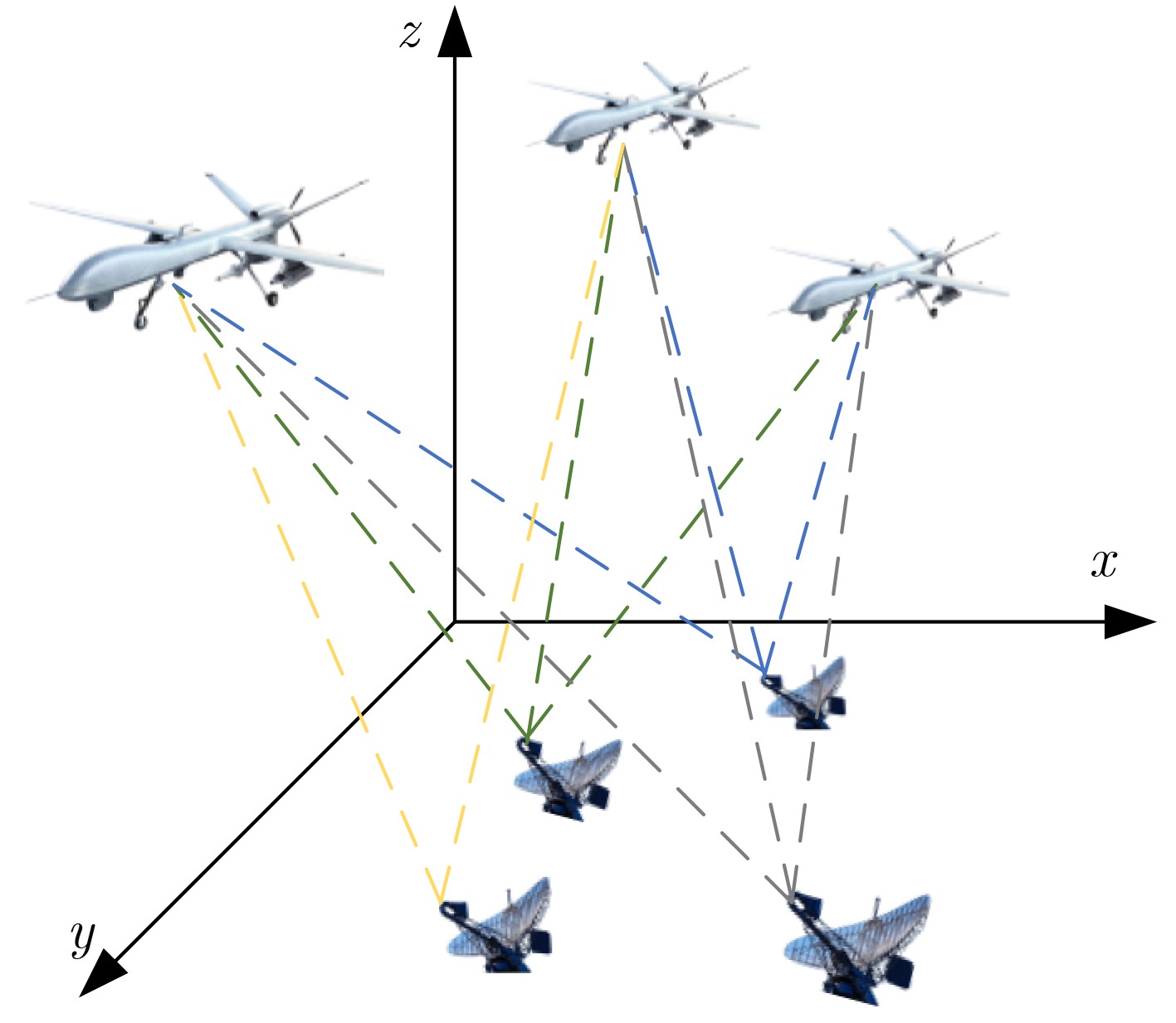
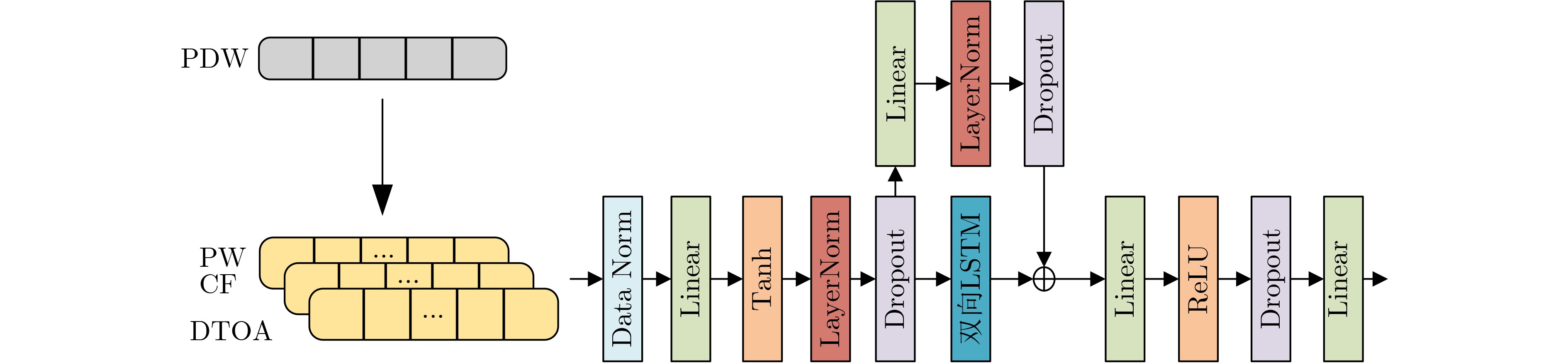
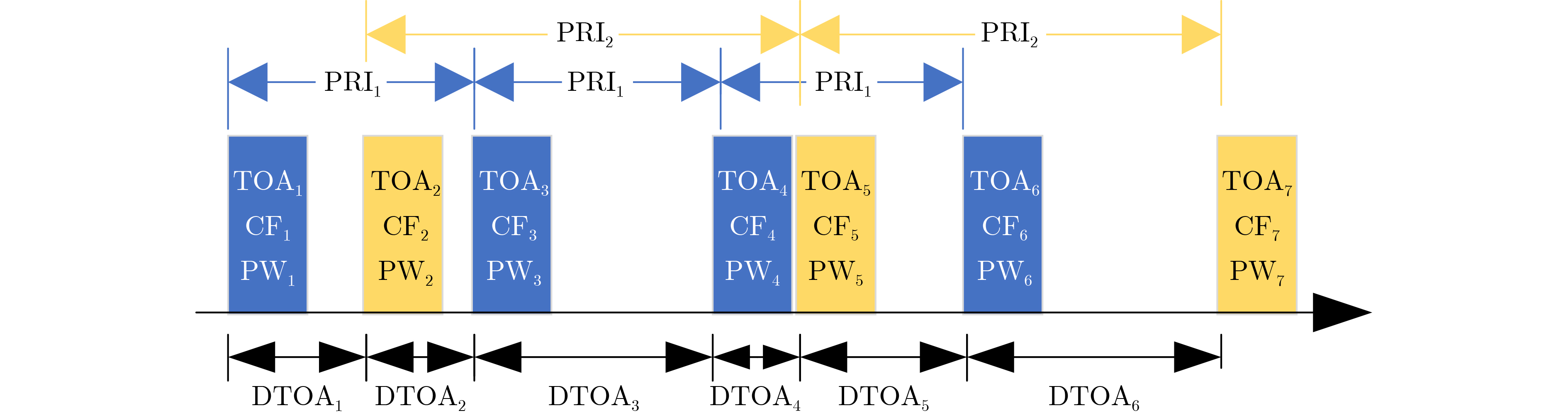
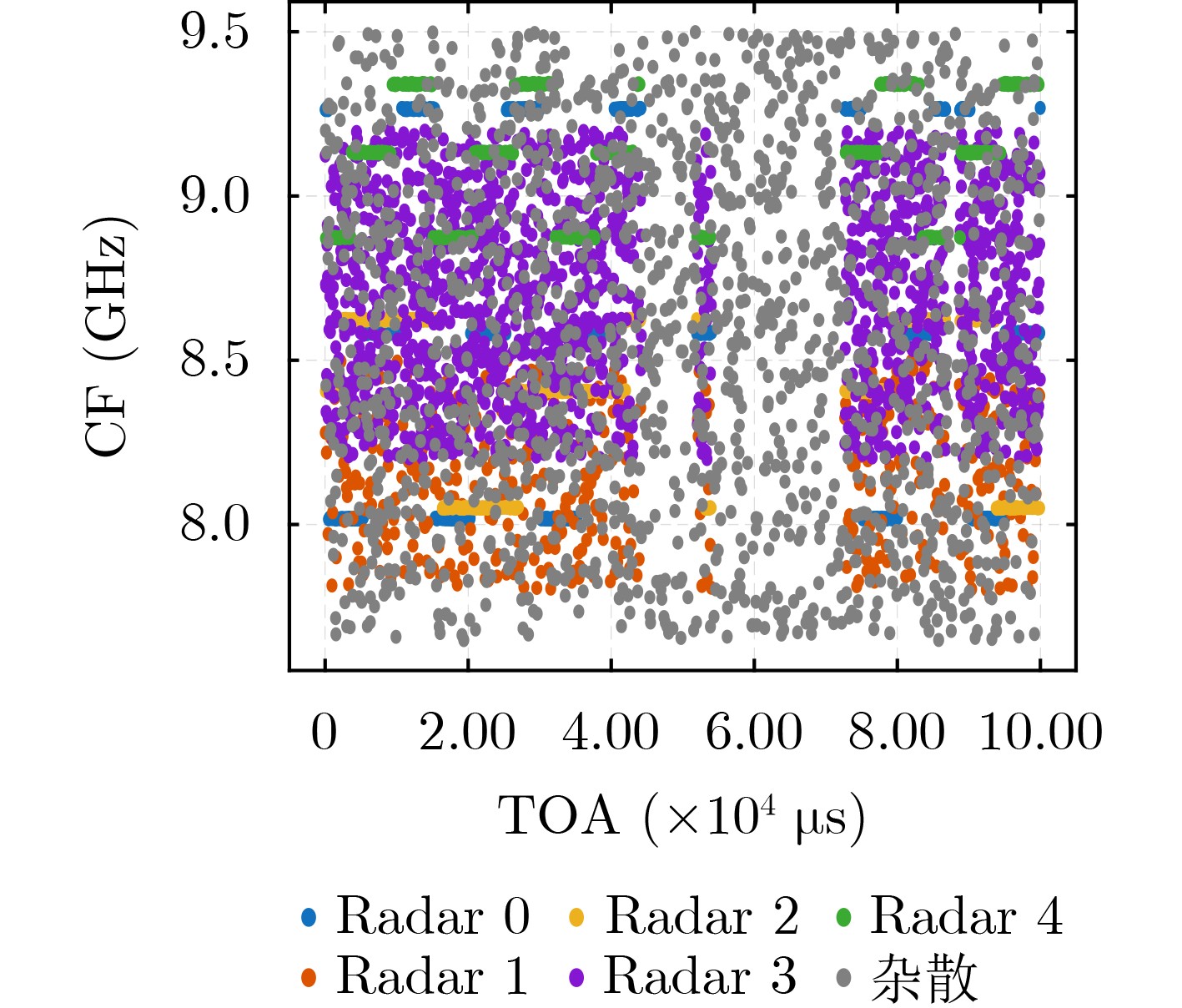
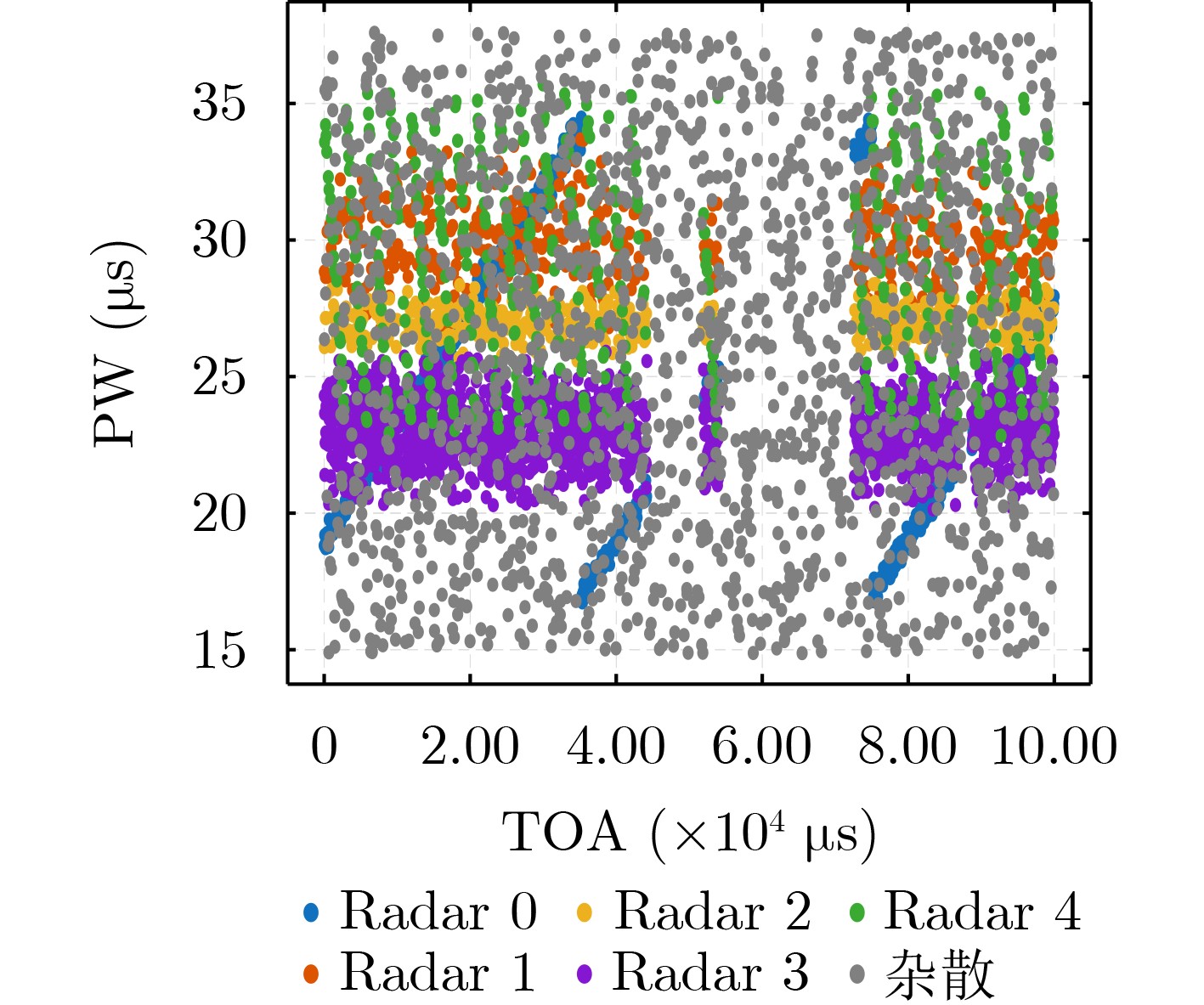
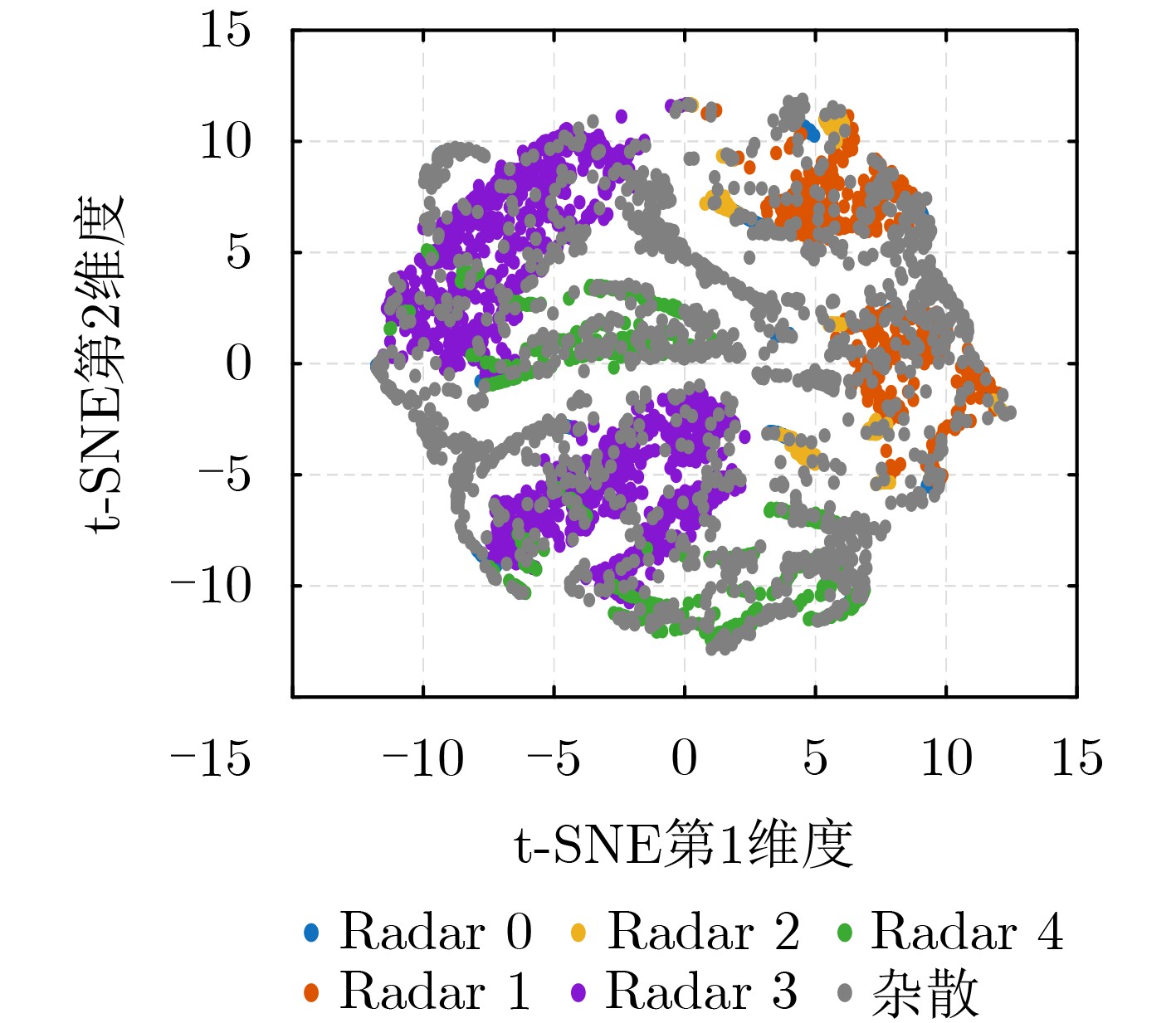
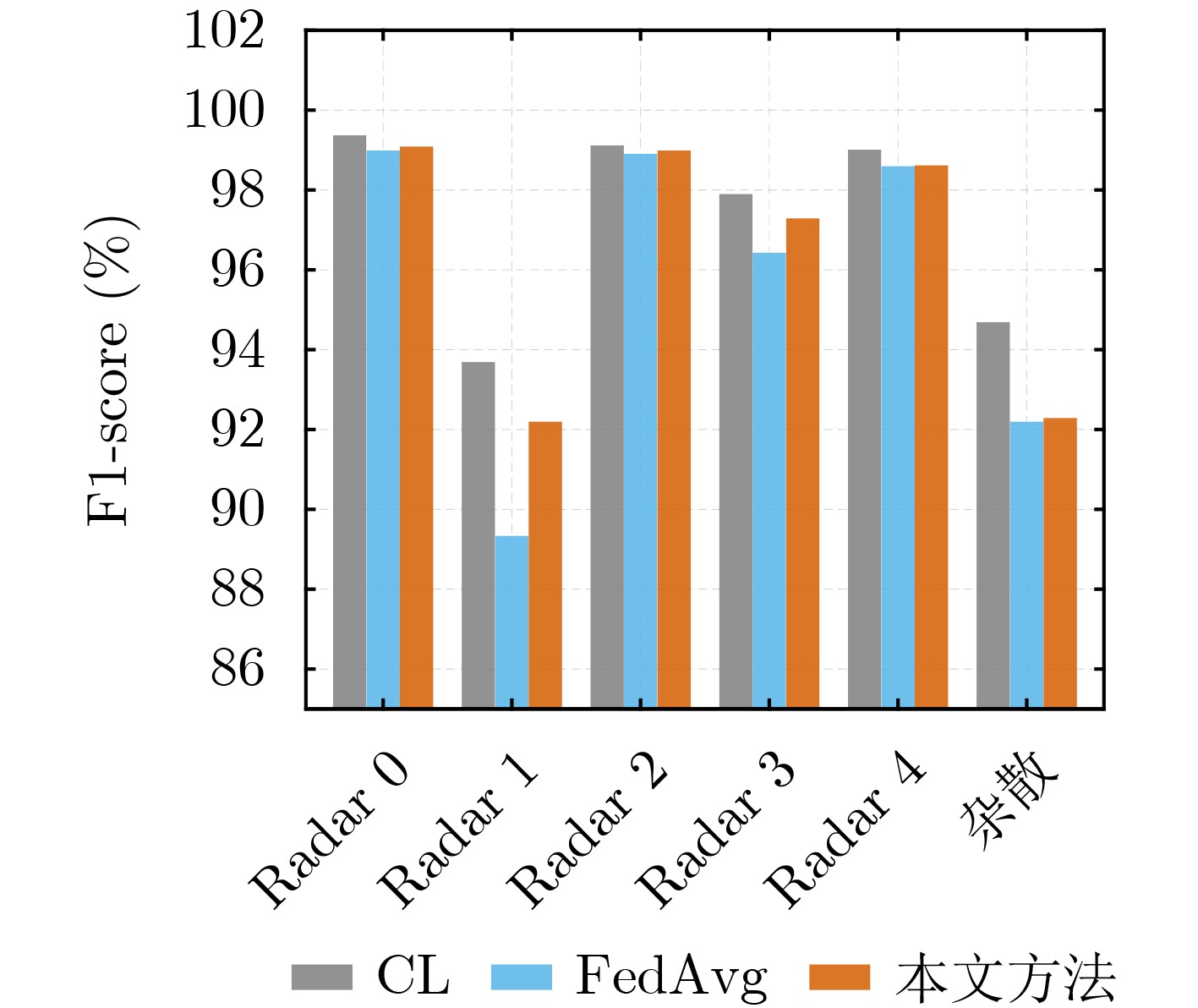
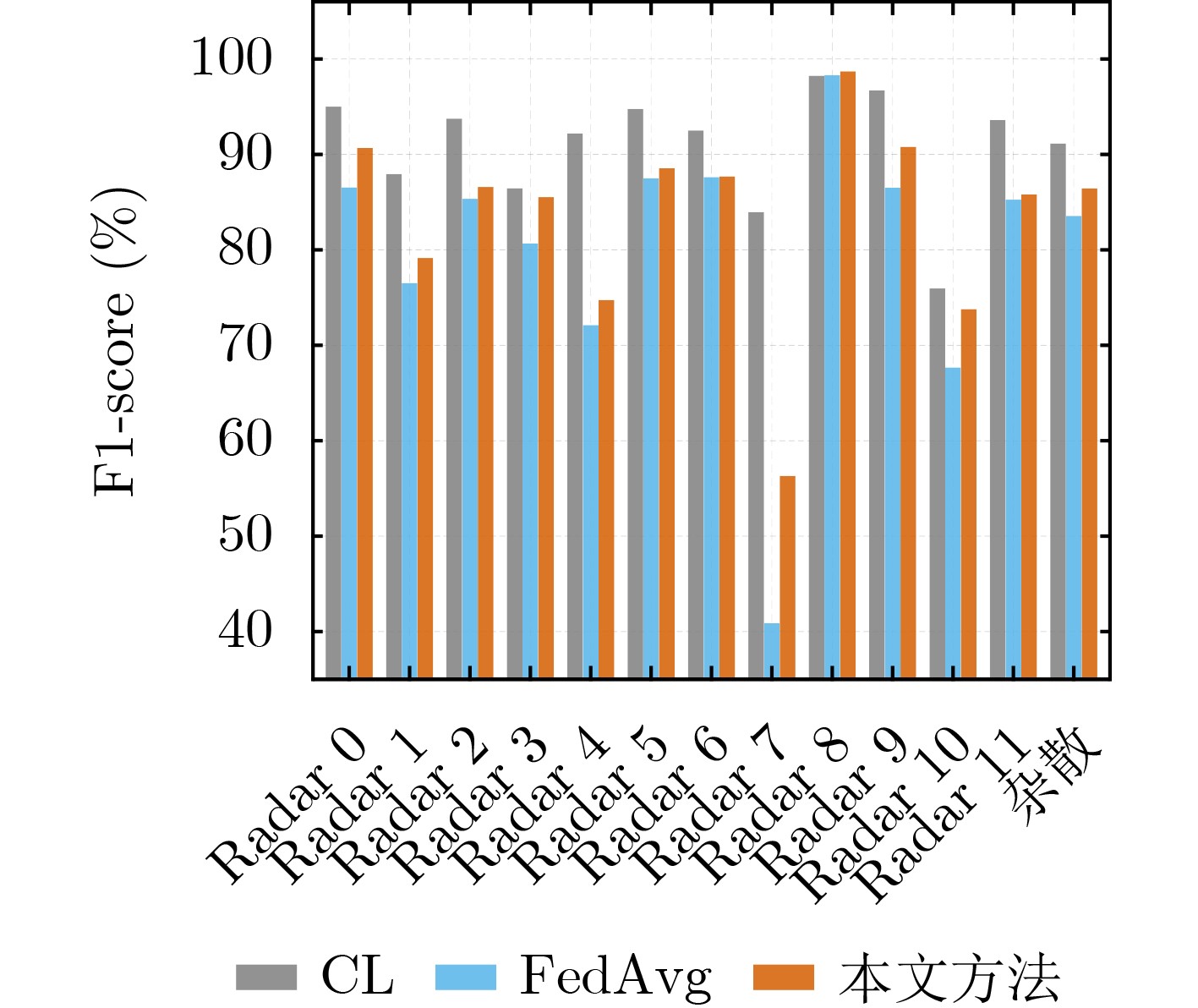
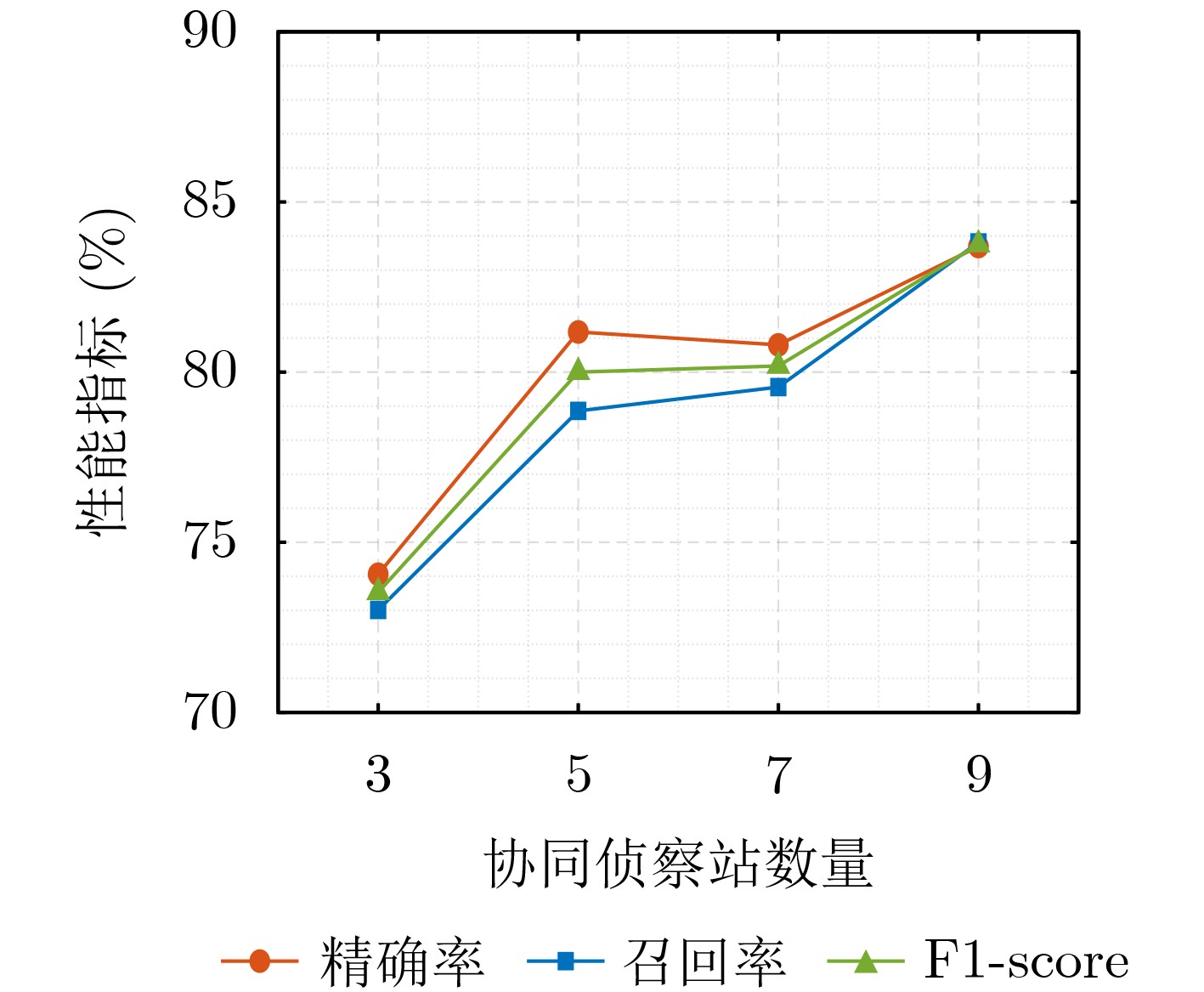
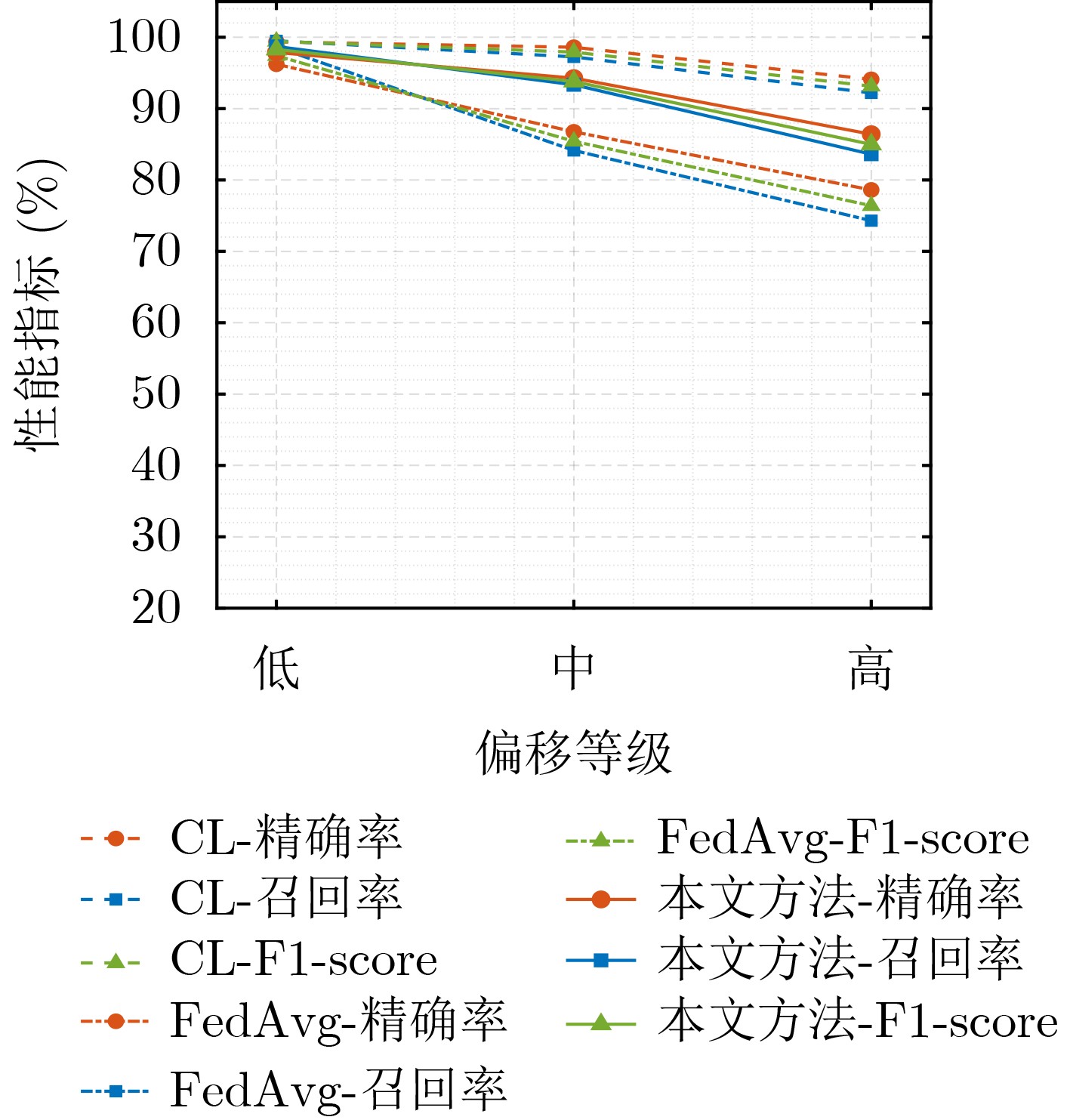
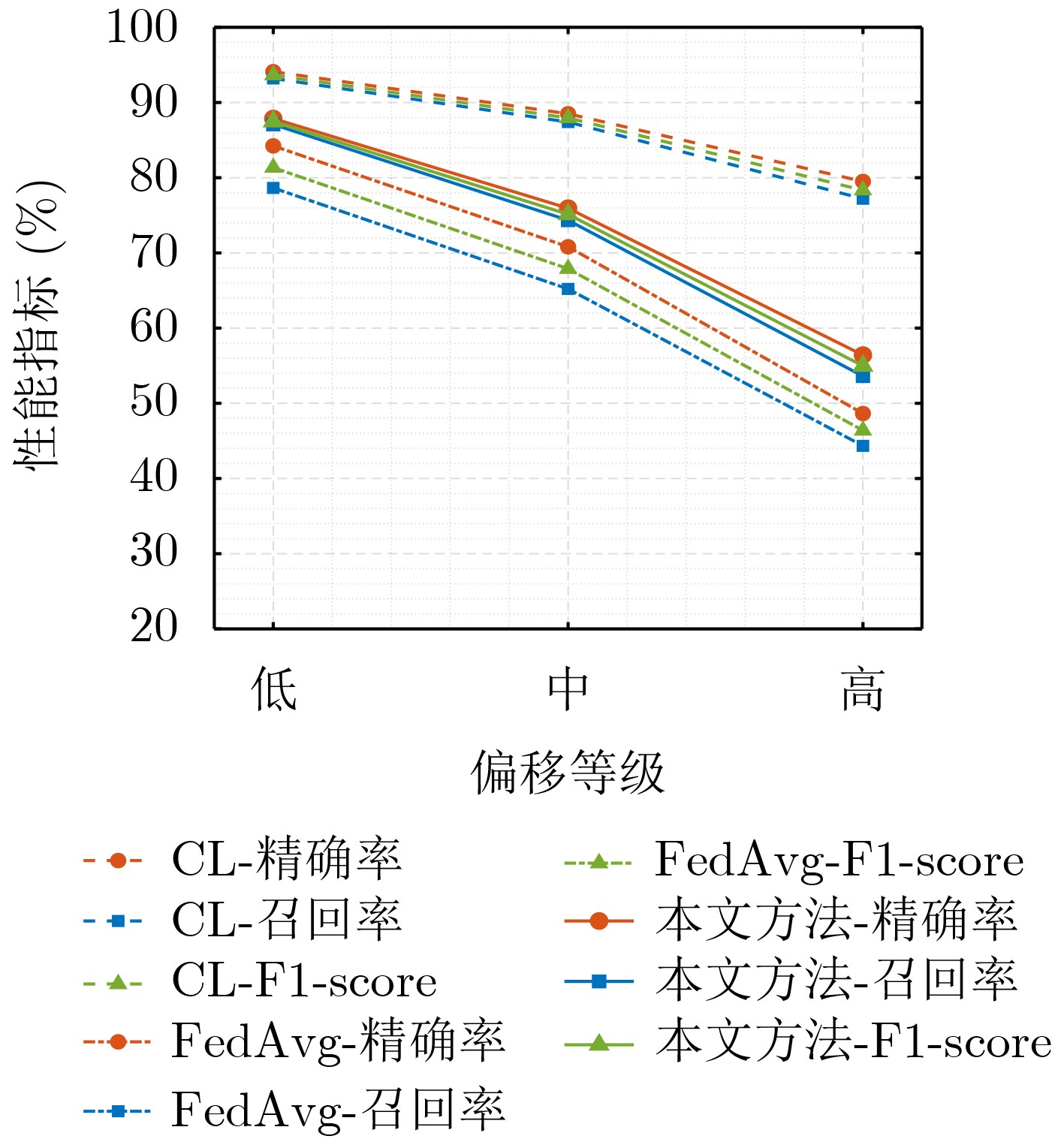
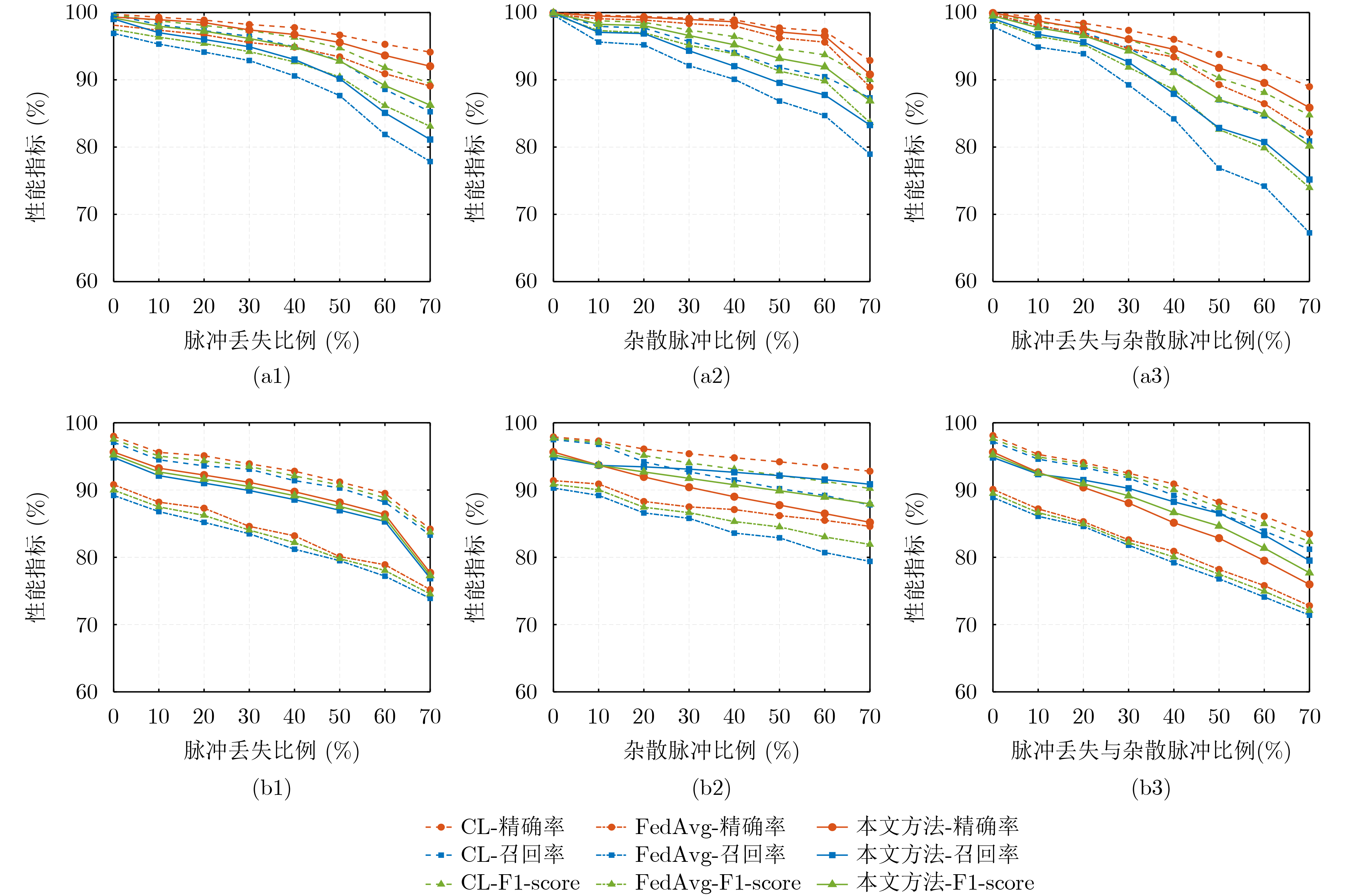
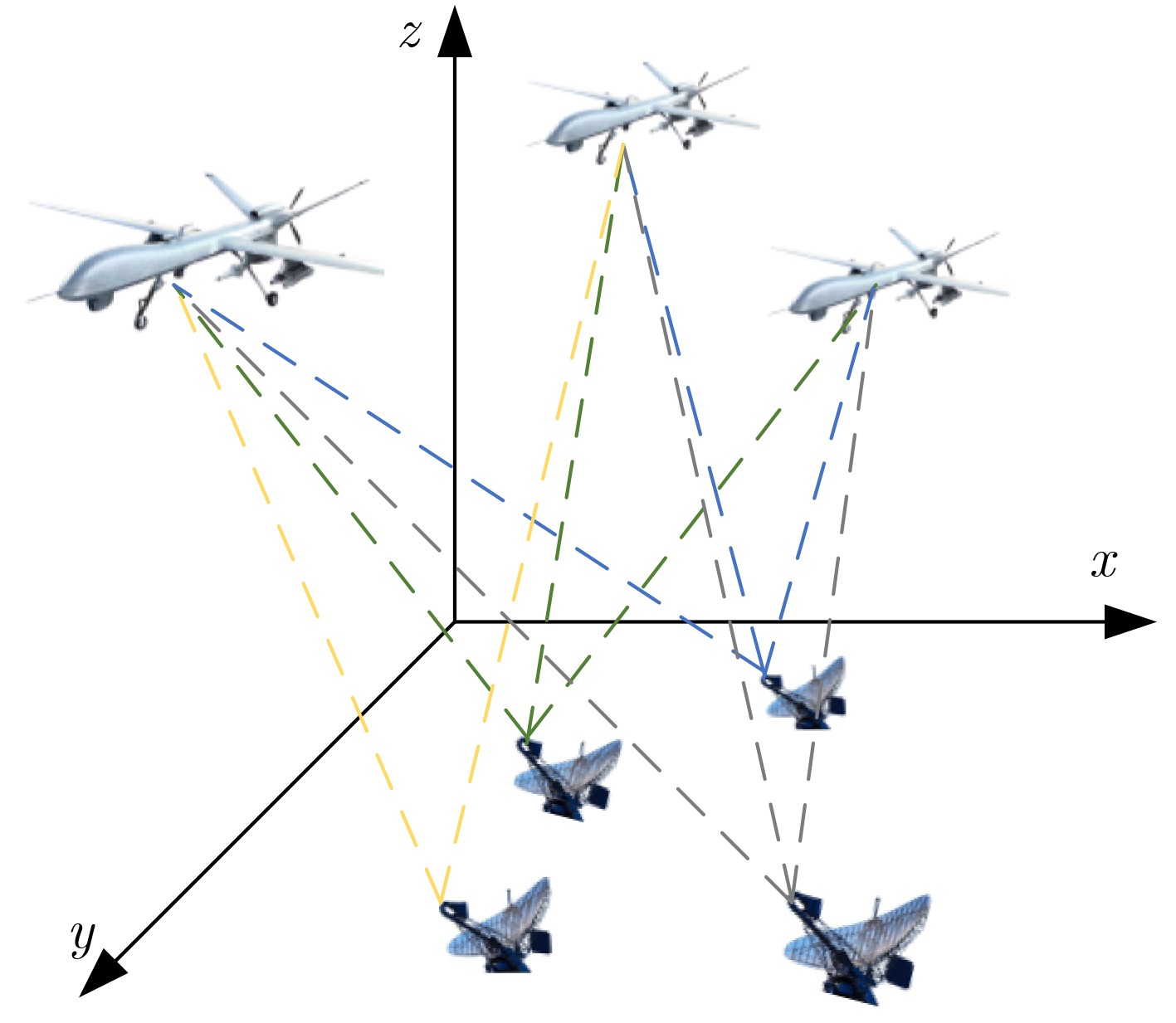
Objective Radar signal sorting is a critical step in electronic reconnaissance and battlefield situational awareness. It is used to accurately separate interleaved pulse streams in complex electromagnetic environments. Although multi-station cooperative reconnaissance systems provide spatial diversity gains that can mitigate the parameter ambiguity and aliasing problems of single-station systems, their practical deployment faces major challenges. Traditional centralized processing architectures require massive volumes of raw Pulse Description Word (PDW) data to be transmitted to a central server. This requirement leads to prohibitive communication bandwidth costs and increases the risk of leakage of sensitive electromagnetic spectrum intelligence. In addition, because stations are geographically distributed and differ in antenna scanning patterns, the data collected at different stations often show significant Non-Independent and Identically Distributed (Non-IID) characteristics. Such heterogeneity reduces the generalization ability of local models trained on isolated data islands. To resolve the conflict between data isolation and the need for collaborative intelligence, a multi-station collaborative radar signal sorting method is proposed based on a Federated Learning (FL) framework. Collaborative model training is enabled without exchange of raw data, so that data privacy is preserved, communication overhead is reduced, and sorting robustness is improved in heterogeneous and noisy battlefield environments. Methods A centralized federated sorting framework is constructed to coordinate multiple reconnaissance stations. The method contains three main components: feature preprocessing, a lightweight local temporal model, and a heterogeneity-aware aggregation strategy. First, in data preprocessing, the raw PDW parameters, including TOA, CF, and PW, are normalized to address substantial differences in scale. Specifically, TOA is transformed into first-order differential values to extract Pulse Repetition Interval (PRI) information, which prevents numerical saturation and captures periodic patterns effectively ( Fig. 3 ). Second, a local time-series sorting model is designed for the resource constraints of edge devices. A bidirectional Long Short-Term Memory (LSTM) network is used as the backbone to capture long-range dependencies and dynamic patterns in pulse sequences from both forward and backward directions. To accelerate convergence and prevent gradient vanishing, residual connections are added to fuse static and dynamic features. The extracted features are then mapped to the radiation source category space through a cascaded linear classification layer. Third, to address model drift caused by Non-IID data, including feature distribution shift and label distribution shift, a new aggregation strategy is proposed based on parameter decomposition and proximal regularization. Model parameters are decoupled into a feature extractor and a classifier. During federated aggregation, only the parameters of the generic feature extractor are uploaded and globally averaged, whereas the personalized classifier parameters are retained locally to adapt to the class distribution of each station. Furthermore, a proximal regularization term is added to the local loss function (Eq. 20). This constraint limits the deviation of local updates from the global model and ensures that the optimization direction does not diverge substantially because of local data heterogeneity, thereby improving the stability and convergence speed of the global model.Results and Discussions Extensive simulation experiments are conducted on core datasets with 3 stations and 5 radars, and on extended datasets with 9 stations and 12 radars, including complex modulation patterns such as jitter, sliding, and staggering. Quantitative analysis shows that the proposed method achieves sorting performance comparable to that of Centralized Learning (CL). On the core dataset, the Precision, Recall, and F1-score of the proposed method reach 96.51%, 96.35%, and 96.42%, respectively, exceeding those of FedAvg by approximately 0.67% in F1-score. On the more challenging extended dataset, the performance advantage becomes more significant, with an F1-score improvement of 3.86% over FedAvg ( Table 4 ). These results indicate that the parameter decomposition strategy effectively balances common feature learning with personalized decision-making. Analysis by class further shows that, for categories that are difficult to distinguish, such as Radar 7 and Radar 10, the proposed method improves recognition accuracy by up to 15% and 6%, respectively, compared with FedAvg (Fig. 7 andFig. 8 ). Robustness tests further demonstrate the adaptability of the method. When the number of participating stations increases from 3 to 9 (Fig. 9 ), the F1-score rises steadily from 73.53% to 83.75%. This result confirms that enlarging node scale in the FL framework produces collaborative gains through more diverse samples and reduced geographic statistical heterogeneity, which substantially improve model generalization and robustness. Under severe class skew conditions, the method maintains an F1-score above 80% on the core dataset (Fig. 10 andFig. 11 ). Furthermore, under extreme electromagnetic conditions characterized by high pulse loss rates of 70% and spurious pulse rates of 70%, the model maintains sorting performance above 75%, which demonstrates strong robustness against noise and interference (Fig. 12 ).Conclusions An FL-based framework is proposed for multi-station collaborative radar signal sorting to address data privacy and transmission constraints in distributed reconnaissance. By integrating a lightweight LSTM with a heterogeneity-aware aggregation mechanism, the method effectively captures temporal pulse features and mitigates model drift caused by Non-IID data. Experimental results verify that the approach achieves accuracy comparable to that of centralized methods and shows superior robustness under label skew and severe data degradation, including high pulse loss and spurious pulse rates. This study provides a privacy-preserving and efficient solution for intelligent signal processing in distributed electronic warfare systems. -
Key words:
- Radar signal sorting /
- Multi-station collaboration /
- Federated learning
-
表 1 接收站与辐射源坐标及仿真数据参数表
站编号 X(km) Y(km) Z(km) 辐射源编号 X(km) Y(km) Z(km) PRI($ \mu \text{s} $) CF(GHz) PW($ \mu \text{s} $) S0 20 0 0 Radar 0 100 120 120 70抖动 8.0~9.4 组变 15滑变 S1 0 –100 0 Radar 1 80 210 210 125/162/100参差 7.8~8.5 捷变 22抖动 S2 0 10 0 Radar 2 130 146 146 85滑变 7.6~8.7 组变 20 固定 S3 –40 80 0 Radar 3 150 30 30 40固定 8.2~9.2 捷变 18抖动 S4 60 –60 20 Radar 4 100 102 102 100/130/80参差 8.4~9.5 组变 23滑变 S5 –70 –30 –15 Radar 5 110 90 90 85抖动 8.6~9.6 组变 22抖动 S6 30 140 10 Radar 6 95 160 160 140/95/180参差 7.5~8.3 捷变 25固定 S7 –10 200 30 Radar 7 140 100 100 70滑变 8.1~9.0 组变 18滑变 S8 80 –120 –25 Radar 8 120 60 60 44固定 9.0~9.8 捷变 16抖动 Radar 9 105 130 130 90/120/150参差 7.9~8.8 组变 29滑变 Radar 10 115 110 110 95抖动 8.3~9.1 捷变 24固定 Radar 11 125 140 140 130滑变 8.5~9.4 组变 28固定  下载: 导出CSV
表 3 站间参数误差设置
编号 TOA(ns) CF(MHz) 编号 TOA(ns) CF(MHz) S0 5.0 1.0 S0 2.0 1.0 S1 10.0 0.5 S1 12.0 0.5 S2 50.0 5.0 S2 17.0 5.0 S3 23.0 2.0 S4 28.0 3.0 S5 10.0 0.8 S6 5.0 0.6 S7 3.0 0.4 S8 50.0 4.0
下载: 导出CSV
表 4 分选性能指标对比(%)
数据集 模型对照 精确率 召回率 F1-Score 核心集 CL 97.39 97.21 97.29 FedAvg 95.60 95.94 95.75 本文方法 96.51 96.35 96.42 相对CL –0.88 –0.86 –0.87 相对FedAvg +0.91 +0.41 +0.67 扩展集 CL 90.92 90.98 90.95 FedAvg 81.24 80.38 79.89 本文方法 83.69 83.81 83.75 相对CL –7.23 –7.17 –7.20 相对FedAvg +2.45 +3.43 +3.86
下载: 导出CSV
-
[1] 隋金坪, 刘振, 刘丽, 等. 雷达辐射源信号分选研究进展[J]. 雷达学报, 2022, 11(3): 418–433. doi: 10.12000/JR21147.SUI Jinping, LIU Zhen, LIU Li, et al. Progress in radar emitter signal deinterleaving[J]. Journal of Radars, 2022, 11(3): 418–433. doi: 10.12000/JR21147. [2] WANG Shiqiang, HU Guoping, ZHANG Qiliang, et al. The background and significance of radar signal sorting research in modern warfare[J]. Procedia Computer Science, 2019, 154: 519–523. doi: 10.1016/j.procs.2019.06.08. [3] 陈金立, 王延杰, 樊宇, 等. Dirichlet过程混合模型驱动的多站时差信号分选方法[J]. 电子与信息学报, 2025, 47(10): 3712–3722. doi: 10.11999/JEIT250191.CHEN Jinli, WANG Yanjie, FAN Yu, et al. Signal sorting method based on multi-station time difference and Dirichlet process mixture model[J]. Journal of Electronics & Information Technology, 2025, 47(10): 3712–3722. doi: 10.11999/JEIT250191. [4] 马爽, 吴海斌, 柳征, 等. 基于递归扩展直方图的辐射源时差分选方法[J]. 国防科技大学学报, 2012, 34(5): 83–89. doi: 10.3969/j.issn.1001-2486.2012.05.017.MA Shuang, WU Haibin, LIU Zheng, et al. Method for emitter TDOA sorting based on recursive extended histogram[J]. Journal of National University of Defense Technology, 2012, 34(5): 83–89. doi: 10.3969/j.issn.1001-2486.2012.05.017. [5] LU Yang and DENG Zhian. A recursive sorting method based on multi-station TDOA vector[C]. 2023 8th International Conference on Intelligent Computing and Signal Processing (ICSP), Xi'an, China, 2023: 1024–1027. doi: 10.1109/ICSP58490.2023.10248871. [6] ZHAO Zihao, ZHANG Huaguo, and GAN Lu. A multi-station signal sorting method based on TDOA grid clustering[C]. 2021 IEEE 6th International Conference on Signal and Image Processing (ICSIP), Nanjing, China, 2021: 773–778. doi: 10.1109/ICSIP52628.2021.9689025. [7] LESIEUR L, LE CAILLEC J M, KHENCHAF A, et al. An overview and classification of machine learning approaches for radar signal deinterleaving[J]. IEEE Access, 2025, 13: 28008–28028. doi: 10.1109/ACCESS.2025.3539589. [8] LANG Ping, FU Xiongjun, DONG Jian, et al. A novel radar signals sorting method via residual graph convolutional network[J]. IEEE Signal Processing Letters, 2023, 30: 753–757. doi: 10.1109/LSP.2023.3287404. [9] 姜在阳, 孙思月, 李华旺, 等. 一种基于JANET模型的雷达信号分选方法[J]. 中国科学院大学学报, 2021, 38(6): 825–831. doi: 10.7523/j.issn.2095-6134.2021.06.013.JIANG Zaiyang, SUN Siyue, LI Huawang, et al. A method for deinterleaving based on JANET[J]. Journal of University of Chinese Academy of Sciences, 2021, 38(6): 825–831. doi: 10.7523/j.issn.2095-6134.2021.06.013. [10] WAN Liangtian, LIU Rong, SUN Lu, et al. UAV swarm based radar signal sorting via multi-source data fusion: A deep transfer learning framework[J]. Information Fusion, 2022, 78: 90–101. doi: 10.1016/j.inffus.2021.09.007. [11] MCMAHAN B, MOORE E, RAMAGE D, et al. Communication-efficient learning of deep networks from decentralized data[C]. The 20th International Conference on Artificial Intelligence and Statistics, Fort Lauderdale, USA, 2017: 1273–1282. [12] WANG Haojian, TAO Zhenji, HE Jin, et al. Deinterleaving of intercepted radar pulse streams via temporal convolutional attention network[J]. IEEE Transactions on Aerospace and Electronic Systems, 2025, 61(4): 9327–9343. doi: 10.1109/TAES.2025.3555244. [13] LI Ziying, FU Xiongjun, DONG Jian, et al. Radar signal sorting via graph convolutional network and semi-supervised learning[J]. IEEE Signal Processing Letters, 2025, 32: 421–425. doi: 10.1109/LSP.2024.3519884. [14] LU Xilai. The limitations of linear parameter aggregation for BERT in federated learning[C]. 2025 10th International Conference on Intelligent Computing and Signal Processing (ICSP), Xi’an, China, 2025: 1166–1170. doi: 10.1109/ICSP65755.2025.11086688. [15] LI Tian, SAHU A K, ZAHEER M, et al. Federated optimization in heterogeneous networks[C]. The 3rd Conference on Machine learning and Systems, Austin, USA, 2020: 429–450. [16] DENG Yuchen and YAN Xin. Federated learning on heterogeneous opportunistic networks[C]. 2024 5th International Seminar on Artificial Intelligence, Networking and Information Technology (AINIT), Nanjing, China, 2024: 447–451. doi: 10.1109/AINIT61980.2024.10581819. -

 下载:
下载:

图(12) / 表(4)
计量
- 文章访问数: 573
- HTML全文浏览量: 334
- PDF下载量: 63
- 被引次数: 0
