




Single-Channel High-Precision Sparse DOA Estimation of GNSS Signals for Deception Suppression
-
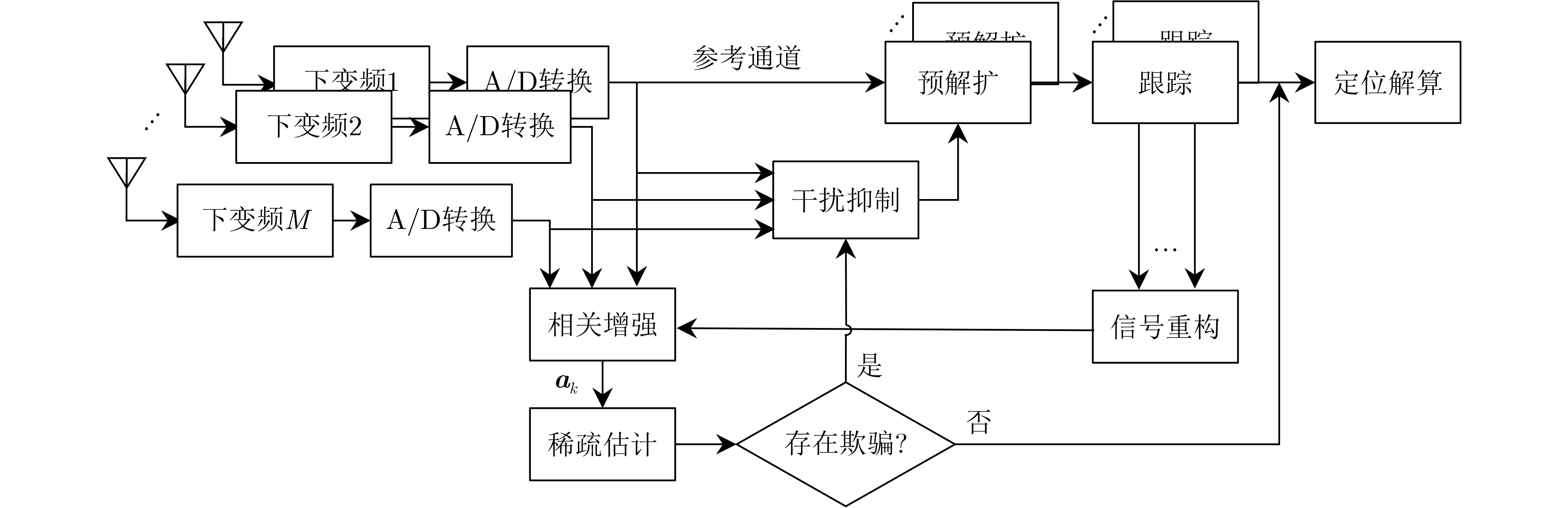
摘要: 针对全球导航卫星系统(GNSS)面临的欺骗攻击威胁,传统多天线阵列欺骗检测方法存在硬件复杂度高、低信噪比下估计精度不足等问题,该文提出了一种面向欺骗抑制的单通道高精度稀疏波达方向(DOA)估计方法,旨在降低欺骗检测的硬件成本并提升极低信噪比条件下的估计性能。首先,基于参考阵元跟踪环路参数重构数字中频信号,利用不同伪随机噪声码信号间的正交性,通过重构信号与原始阵列信号的相关处理显著提升解扩前信噪比,提取“纯净”导向矢量;其次,结合GNSS空域稀疏特性构建过完备字典,将DOA估计转化为导向矢量的稀疏重构;最后,采用交替方向乘子法求解优化模型,以实现高精度二维DOA估计。仿真表明该文方法在极低信噪比下较Unitary ESPRIT和Cyclic MUSIC算法的估计精度和分辨力提高明显,基于该文方法DOA估计的结果,LCMV波束形成器能够有效抑制欺骗信号。相较于信号载波相位检测的方法,该方法仅需处理单个阵元通道的信号,显著降低硬件复杂度,为空域欺骗检测与抑制提供了高效解决方案。
-
关键词:
- 卫星导航 /
- 欺骗检测 /
- 到达方向估计 /
- 稀疏重建 /
- 交替方向乘法器(ADMM)
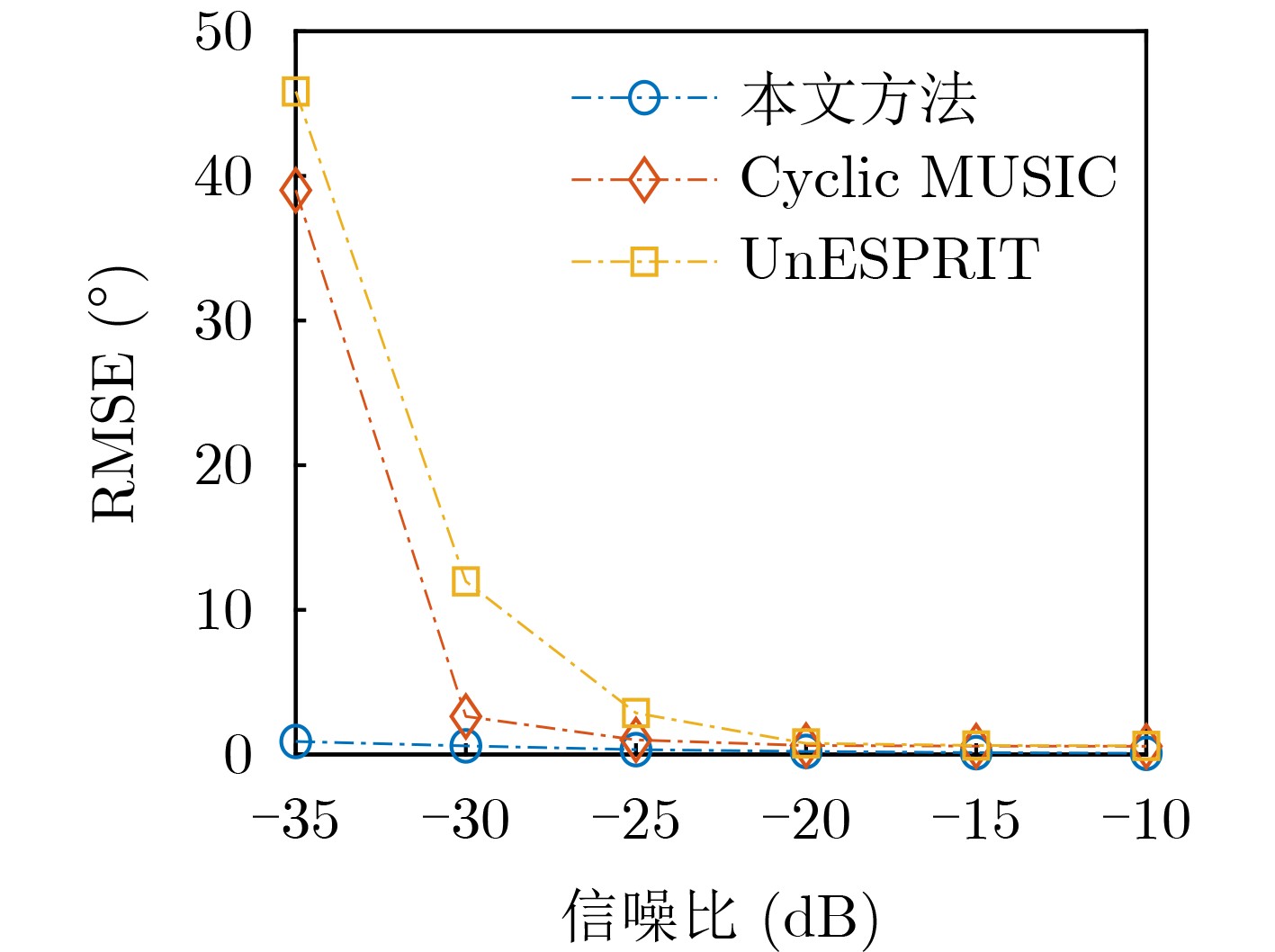
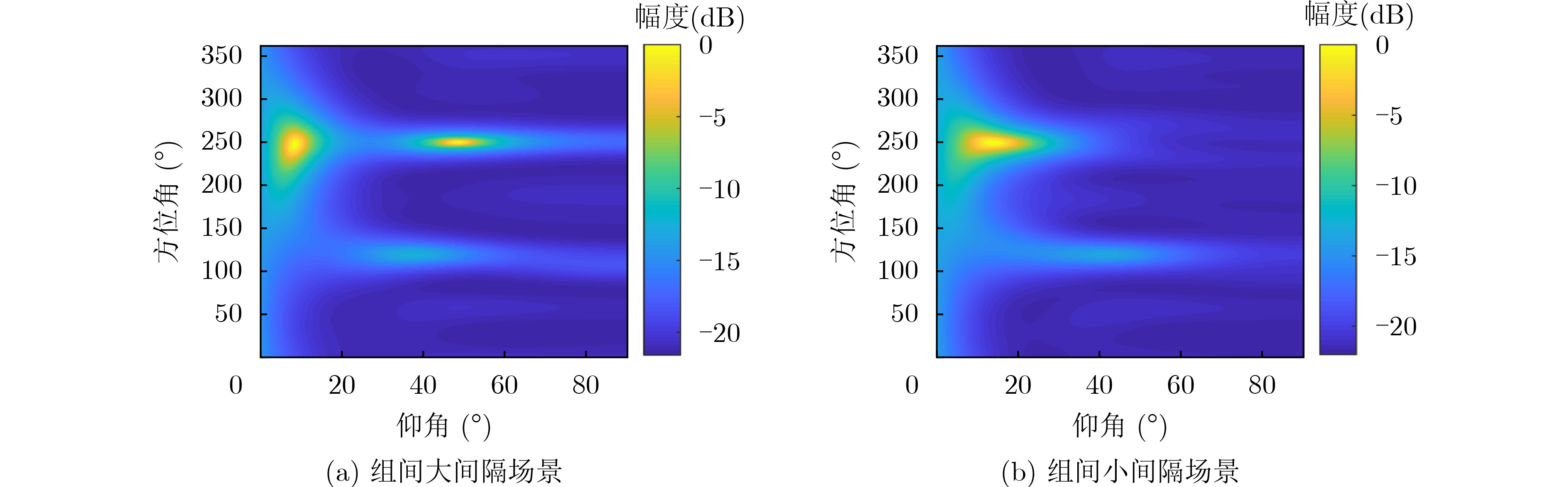
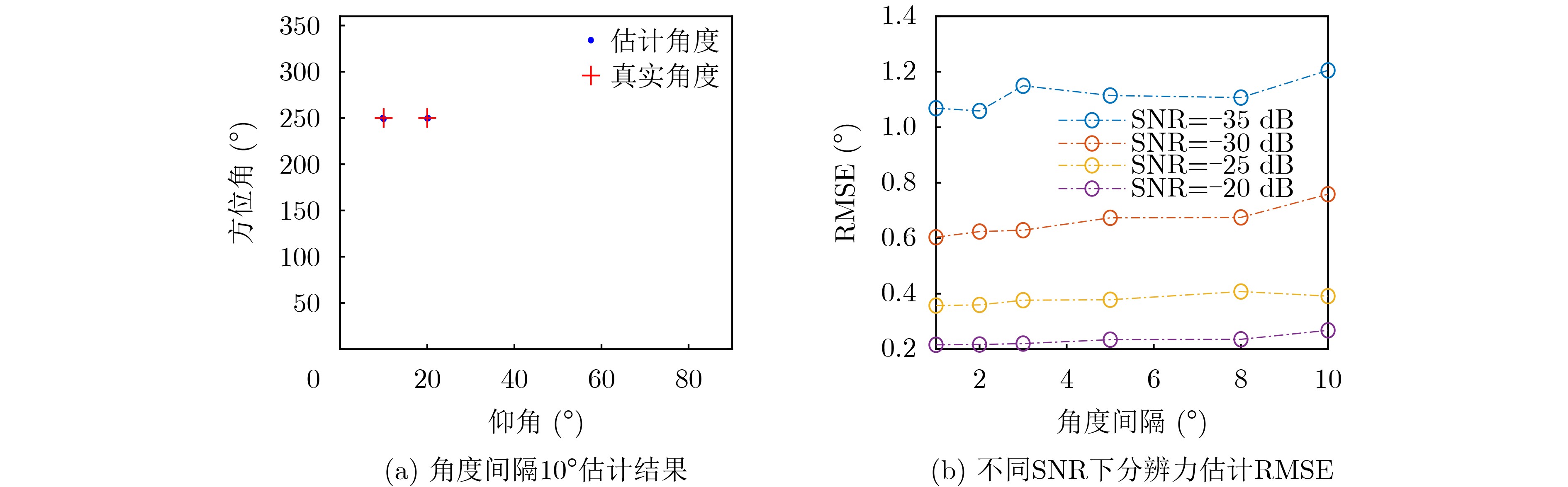
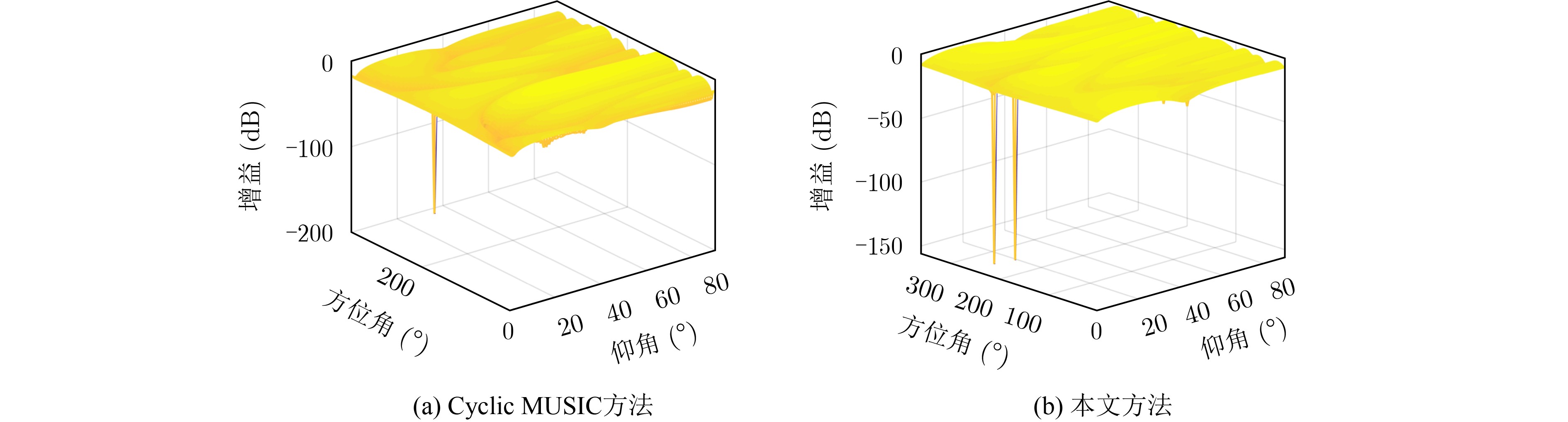
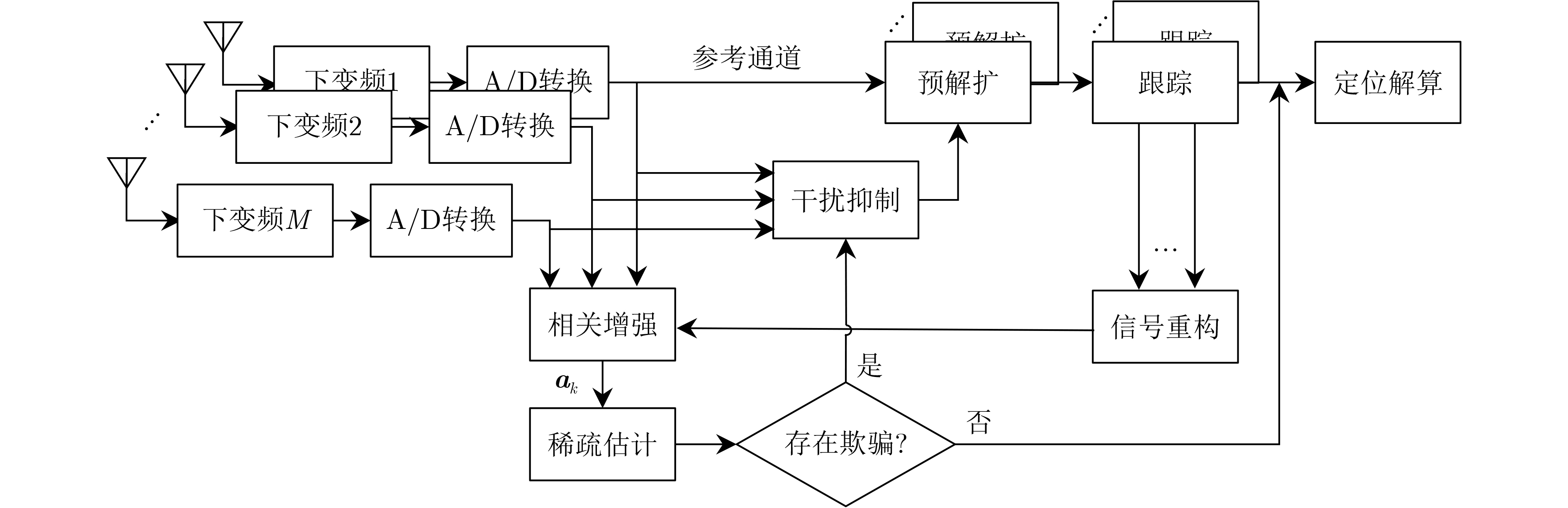
Abstract:Objective Spoofing attacks present a major threat to the reliability and security of Global Navigation Satellite System (GNSS) receivers used in civilian and military navigation. Conventional anti-spoofing approaches based on multi-antenna arrays require substantial hardware resources and show reduced estimation accuracy under low Signal-to-Noise Ratio (SNR) conditions, which limits their suitability for constrained or adverse environments. This study proposes a single-channel high-precision sparse Direction-of-Arrival (DOA) estimation method designed to suppress spoofing signals in GNSS receivers. The aim is to reduce hardware complexity and achieve accurate DOA estimation in very low SNR conditions. By using the spatial sparsity of GNSS signals and integrating advanced signal-processing techniques, the method provides a cost-efficient and robust approach for strengthening GNSS resilience against deceptive interference. Methods The proposed method uses a single-channel processing framework to estimate the DOA of GNSS signals with high precision through a multi-step strategy designed for spoofing suppression. The process begins by reconstructing the digital intermediate-frequency signal using tracking-loop parameters such as code phase and carrier Doppler obtained from a reference array element. This reconstruction uses the orthogonality of pseudo-random noise codes in GNSS signals and enables correlation between the reconstructed signal and the original array data to improve the SNR before despreading. This step isolates a clean steering vector and reduces noise and interference. The method then uses the spatial sparsity of GNSS signals, which results from the limited number of authentic satellites and potential spoofing sources in the angular domain. An overcomplete dictionary is formed from steering vectors corresponding to a grid of candidate azimuth and elevation angles. The DOA estimation is expressed as a sparse reconstruction problem in which the steering vector is represented as a sparse combination of dictionary elements. To solve this efficiently, the Alternating Direction Method of Multipliers (ADMM) is used to iteratively optimize a regularized objective that balances data fidelity and sparsity. A two-stage grid-refinement process, beginning with a coarse search followed by a finer resolution, reduces computational cost while preserving accuracy. After DOA estimates are obtained, spoofing signals are identified based on their angular proximity to authentic signals, and a Linearly Constrained Minimum Variance (LCMV) beamformer is applied to suppress these interferers while retaining legitimate signals. Results and Discussions Simulations were performed to evaluate the proposed method under a range of low SNR conditions using a 4×4 uniform planar array and Beidou B3I signals as the test case. The results show that the single-channel sparse DOA estimation method provides markedly higher accuracy and resolution than Unitary ESPRIT and Cyclic MUSIC. When the SNR is –35 dB, the method achieves Root Mean Square Errors (RMSE) for azimuth and elevation estimates below 1 degree ( Fig. 2 ), whereas the benchmark methods yield errors greater than 30 degrees. The method also resolves signals with angular separations as small as 1 degree (Fig. 4(a) ,Fig. 4(b) ), demonstrating its strong resolution capability. Using the accurate DOA estimates derived from the proposed method, LCMV beamforming then suppresses spoofing signals effectively. As shown inFig. 5(b) , the high-fidelity DOA estimates enable the beamformer to place deep nulls at the spoofing directions (for example, (10°, 250°) and (20°, 250°)) and to attenuate spoofers while retaining authentic signals. In contrast, the reduced DOA accuracy of Cyclic MUSIC (Fig. 5(a) ) leads to misaligned nulls and weaker suppression. These results confirm the practical value of accurate DOA estimation for robust spoofing mitigation.Conclusions This study presents a single-channel high-precision sparse DOA estimation method for GNSS spoofing suppression, addressing the limitations of conventional multi-antenna techniques related to hardware complexity and reduced performance under low-SNR conditions. By combining signal reconstruction, sparse modeling, and ADMM-based optimization, the method provides accurate and high-resolution DOA estimation in challenging environments, with simulations showing RMSE below 1 degree at –35 dB SNR. When used with LCMV beamforming, it suppresses spoofing signals effectively and improves GNSS reliability while requiring minimal hardware resources. This cost-efficient approach is well suited to applications with limited system capacity, as it reduces reliance on complex array configurations and maintains strong security performance. Future work may examine its performance in dynamic settings such as moving spoofers or multipath conditions, as well as its integration with other anti-spoofing strategies. This research offers a practical and high-performance framework for strengthening GNSS systems and has clear value for navigation safety and operational stability. -
表 1 不同方法计算复杂度对比
算法 计算复杂度 主要操作 本文方法 O(D3)+ O(TD2) ADMM迭代、矩阵求逆 UnESPRIT O(NM2)+O(M3) 实值特征值分解 Cyclic MUSIC O(NM2)+O(M3)+ O(GM(M-r)) 特征值分解、谱搜索  下载: 导出CSV
-
[1] ZHU Hai, CHEN Kejie, CHAI Haishan, et al. Characterizing extreme drought and wetness in Guangdong, China using global navigation satellite system and precipitation data[J]. Satellite Navigation, 2024, 5(1): 1. doi: 10.1186/s43020-023-00121-6. [2] CHEN Qijin, ZHANG Quan, NIU Xiaoji, et al. Semi-analytical assessment of the relative accuracy of the GNSS/INS in railway track irregularity measurements[J]. Satellite Navigation, 2021, 2(1): 25. doi: 10.1186/s43020-021-00057-9. [3] RADOŠ K, BRKIĆ M, and BEGUŠIĆ D. Recent advances on jamming and spoofing detection in GNSS[J]. Sensors, 2024, 24(13): 4210. doi: 10.3390/s24134210. [4] ROMANIUC A G, VASILE V C, BORDA M E, et al. Results on the impact of GNSS spoofing attack on GNSS sensors using RINEX data[C]. 2024 15th International Conference on Communications (COMM), Bucharest, Romania, 2024: 1–6. doi: 10.1109/COMM62355.2024.10741479. [5] HUMPHREYS T E, LEDVINA B M, PSIAKI M L, et al. Assessing the spoofing threat: Development of a portable GPS civilian spoofer[C]. The 21st International Technical Meeting of the Satellite Division of the Institute of Navigation (ION GNSS 2008), Savannah, USA, 2008: 2314–2325. [6] CECCATO M, FORMAGGIO F, LAURENTI N, et al. Generalized likelihood ratio test for GNSS spoofing detection in devices with IMU[J]. IEEE Transactions on Information Forensics and Security, 2021, 16: 3496–3509. doi: 10.1109/TIFS.2021.3083414. [7] GHORBANI K, OROUJI N, and MOSAVI M R. Navigation message authentication based on one-way hash chain to mitigate spoofing attacks for GPS L1[J]. Wireless Personal Communications, 2020, 113(4): 1743–1754. doi: 10.1007/s11277-020-07289-z. [8] 王环宇, 林红磊, 欧钢, 等. 利用部分可信信号的导航终端欺骗干扰检测方法[J]. 电子与信息学报, 2024, 46(10): 4053–4061. doi: 10.11999/JEIT240067.WANG Huanyu, LIN Honglei, OU Gang, et al. The spoofing detection method of navigation terminal using partial authenticated signals[J]. Journal of Electronics & Information Technology, 2024, 46(10): 4053–4061. doi: 10.11999/JEIT24006. doi: 10.11999/JEIT240067. [9] HE Li, LI Hong, and LU Mingquan. Dual-antenna GNSS spoofing detection method based on Doppler frequency difference of arrival[J]. GPS Solutions, 2019, 23(3): 78. doi: 10.1007/s10291-019-0868-5. [10] WANG Hao, LI Hong, ZHONG Minghan, et al. A space-time-ambiguity decomposition method for DOA estimation enhancing antispoofing via rotating dual antennas[J]. IEEE Transactions on Aerospace and Electronic Systems, 2024, 60(6): 7643–7662. doi: 10.1109/TAES.2024.3417434. [11] ZHANG Jiaqi, CUI Xiaowei, PENG Chenxi, et al. GNSS spoofing detection and mitigation based on the cyclic MUSIC algorithm[C]. The 32nd International Technical Meeting of the Satellite Division of the Institute of Navigation (ION GNSS+ 2019), Miami, USA, 2019: 3215–3229. [12] NI Shaojie, REN Binbin, CHEN Feiqiang, et al. GNSS spoofing suppression based on multi-satellite and multi-channel array processing[J]. Frontiers in Physics, 2022, 10: 905918. doi: 10.3389/fphy.2022.905918. [13] ZHAO Yuqing, SHEN Feng, XU Dingjie, et al. A coprime array-based technique for spoofing detection and DOA estimation in GNSS[J]. IEEE Sensors Journal, 2022, 22(23): 22828–22835. doi: 10.1109/JSEN.2022.3211024. [14] LIU Jinyuan, CHEN Feiqiang, XIE Yuchen, et al. Robust spoofing detection for GNSS array instrumentation based on C/N0 difference measurements[J]. IEEE Transactions on Instrumentation and Measurement, 2023, 72: 8507211. doi: 10.1109/TIM.2023.3328684. [15] LIU Jinyuan, CHEN Feiqiang, XIE Yuchen, et al. Robust spoofing detection for GNSS array receivers using the auxiliary reference element method[J]. IEEE Sensors Journal, 2024, 24(9): 14833–14843. doi: 10.1109/JSEN.2024.3379848. [16] VAN DER MERWE J R, RÜGAMER A, and LIPKA M. Enhanced spatial spoofing detection with and without direction of arrival estimation[J]. IEEE Transactions on Aerospace and Electronic Systems, 2023, 59(5): 5530–5540. doi: 10.1109/TAES.2023.3262455. [17] CHEN Jiajia, WANG Xueying, FANG Zhibo, et al. A real-time spoofing detection method using three low-cost antennas in satellite navigation[J]. Electronics, 2024, 13(6): 1134. doi: 10.3390/electronics13061134. -

 下载:
下载:

图(5) / 表(1)
计量
- 文章访问数: 886
- HTML全文浏览量: 394
- PDF下载量: 77
- 被引次数: 0
