




Power Allocation for Downlink Short Packet Transmission with Superimposed Pilots in Cell-free Massive MIMO
-
摘要: 无蜂窝大规模多输入多输出(CF-mMIMO)系统需要支持大量用户接入,这使得信道估计变得更加复杂。基于常规导频配置的信道估计方法占用较大开销,使得数据传输可用符号大大减少,导致传输速率下降,该问题在短包传输场景中尤为明显。对此,该文研究了CF-mMIMO系统中基于叠加导频(SP)的下行短包传输方案。首先,基于最大比传输预编码方案,在非完美信道状态信息下推导了下行可达速率的闭式表达式。为了减小SP配置下导频与数据之间的干扰,进一步提出基于几何规划和连续凸近似的迭代优化算法,以优化导频和数据间的功率分配。最后,仿真结果验证了下行可达速率闭式表达式的正确性,并表明所提SP功率优化算法能够显著提高短包传输性能。
-
关键词:
- 无蜂窝大规模MIMO /
- 叠加导频 /
- 短包传输 /
- 功率分配
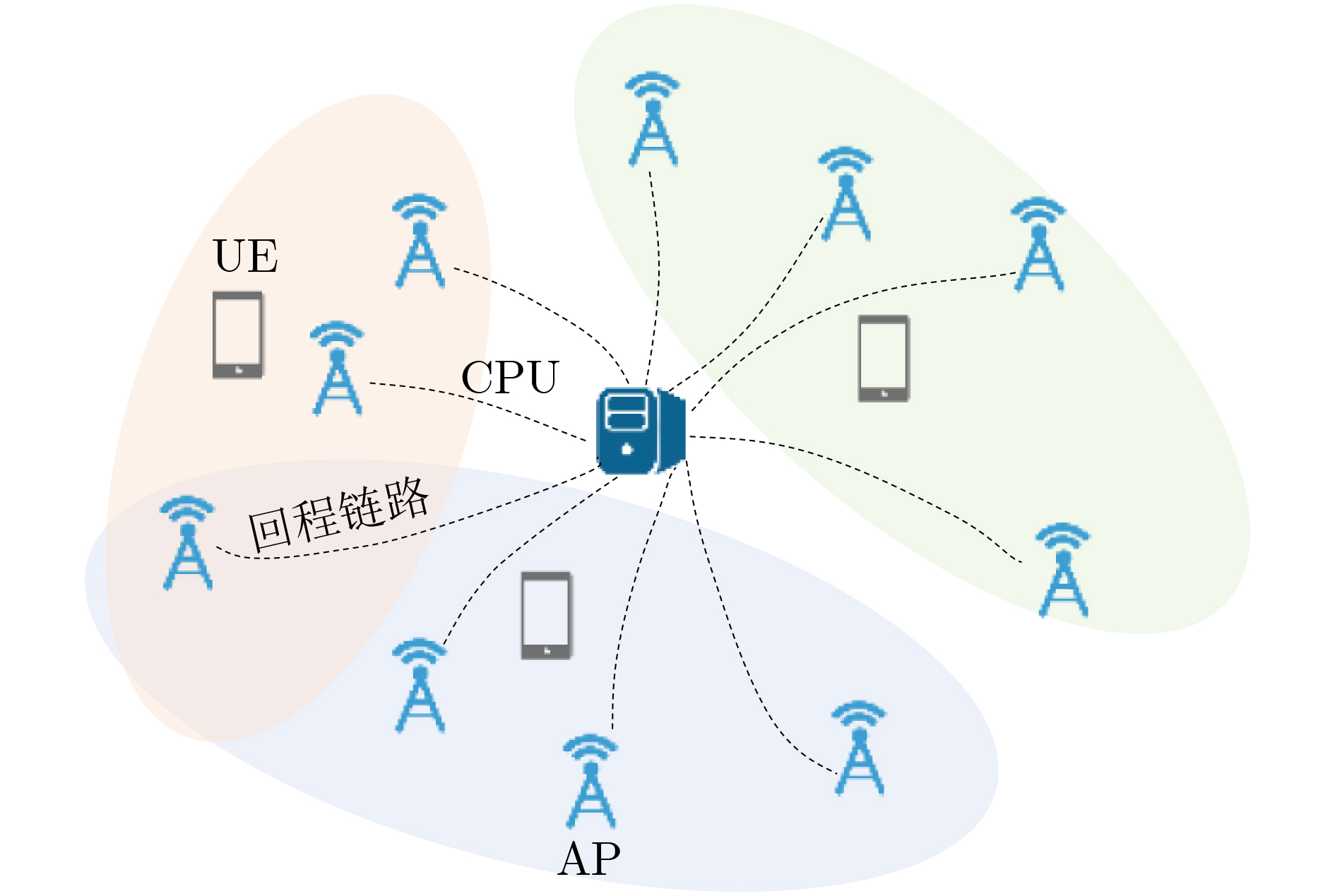
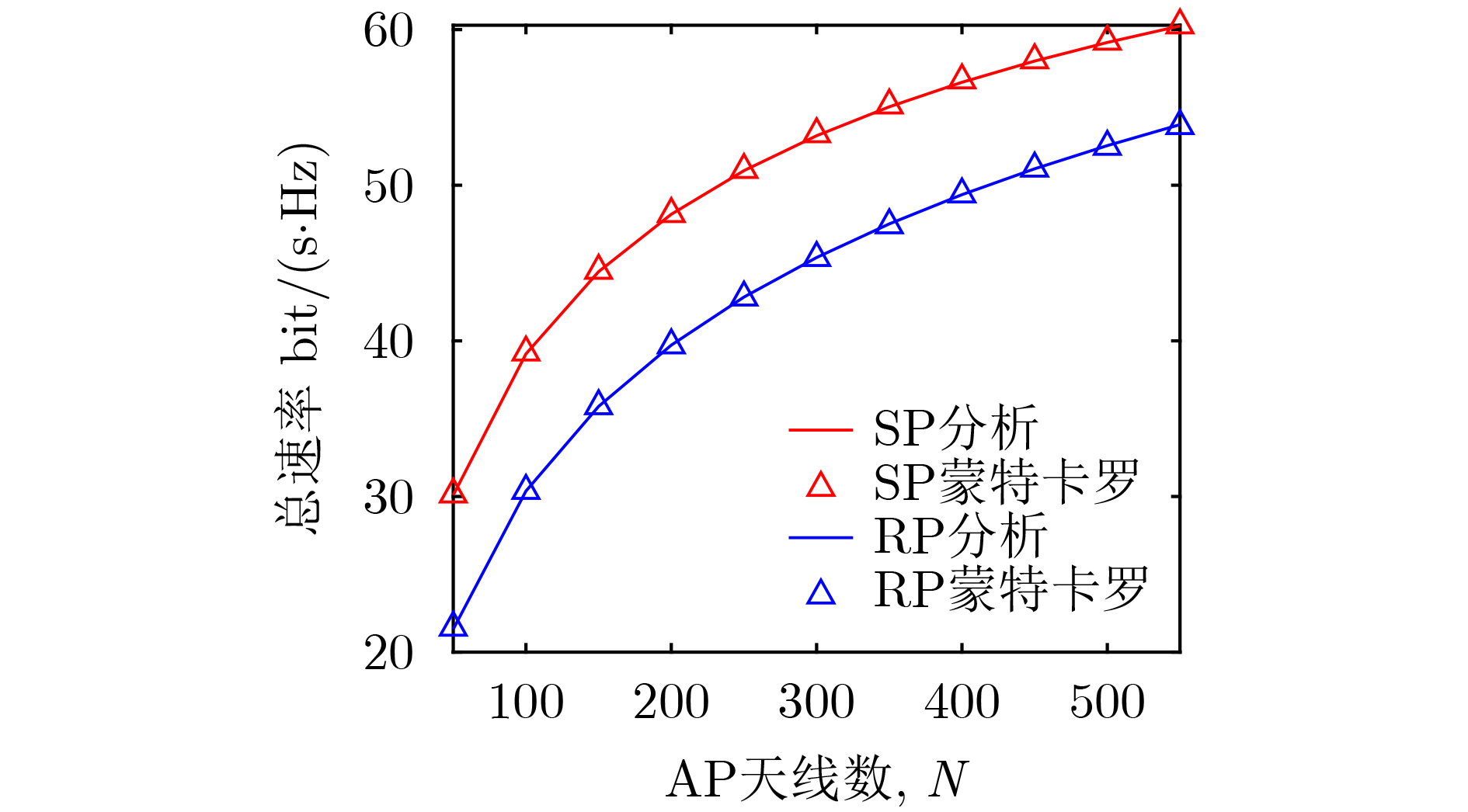
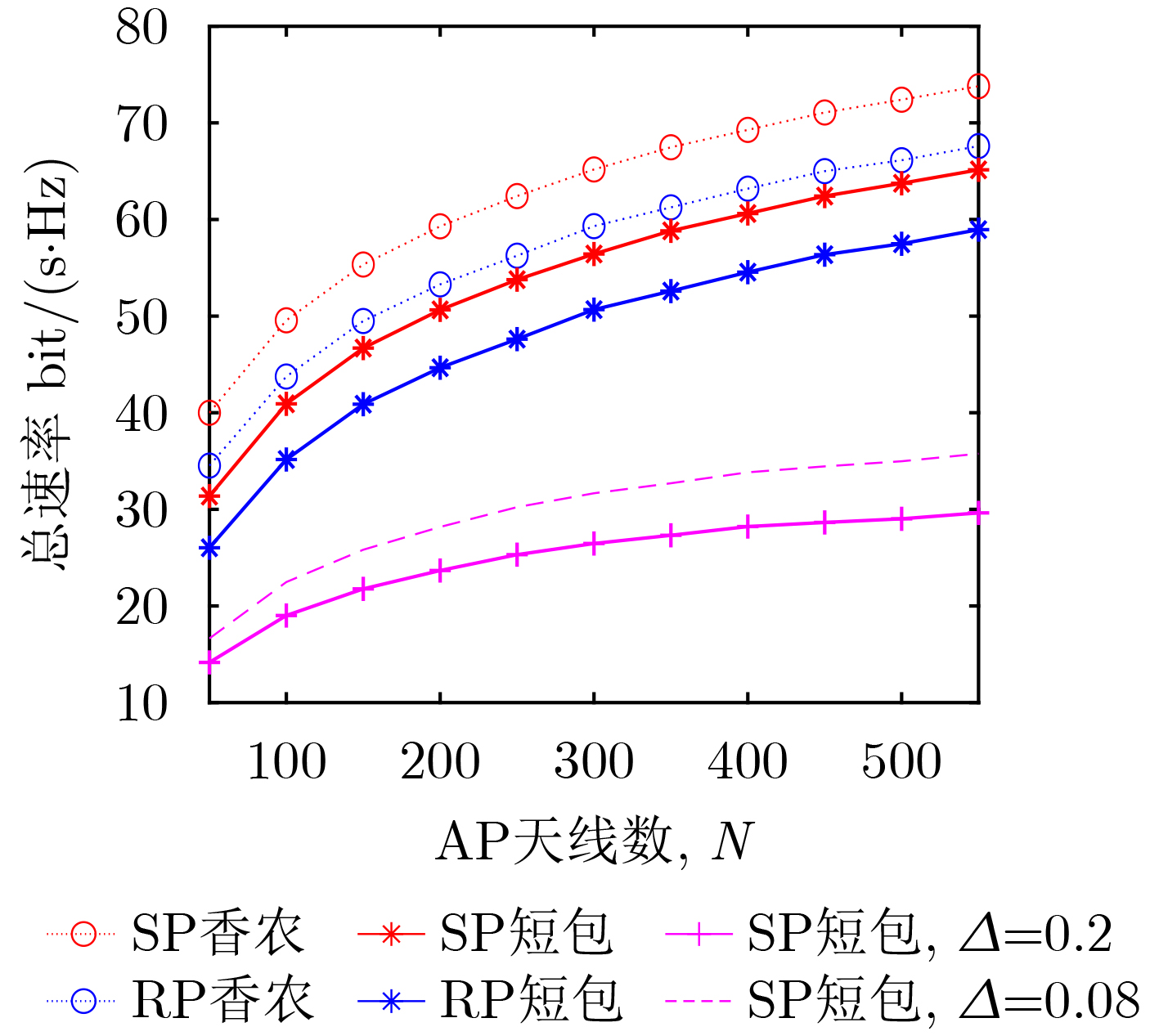
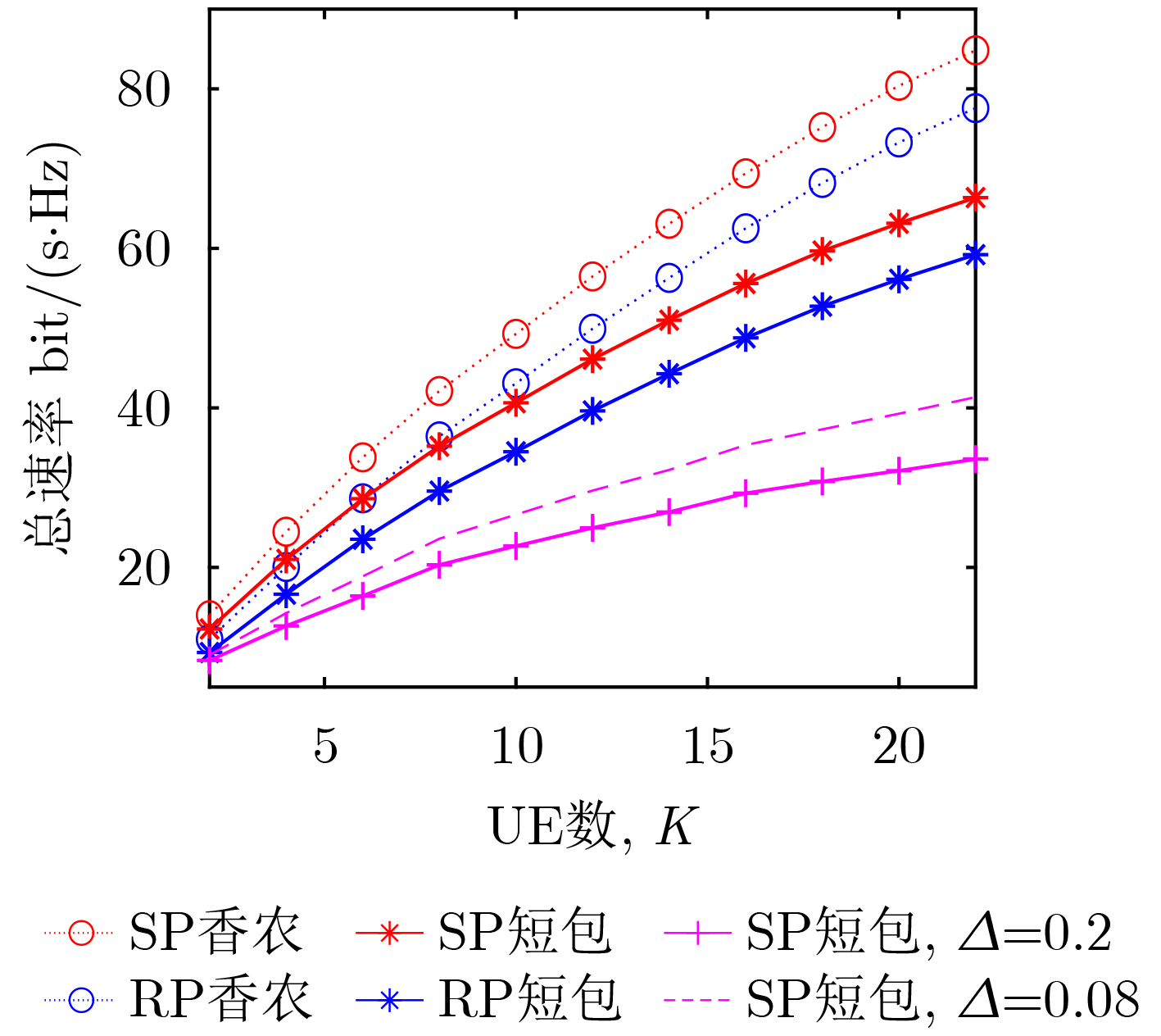
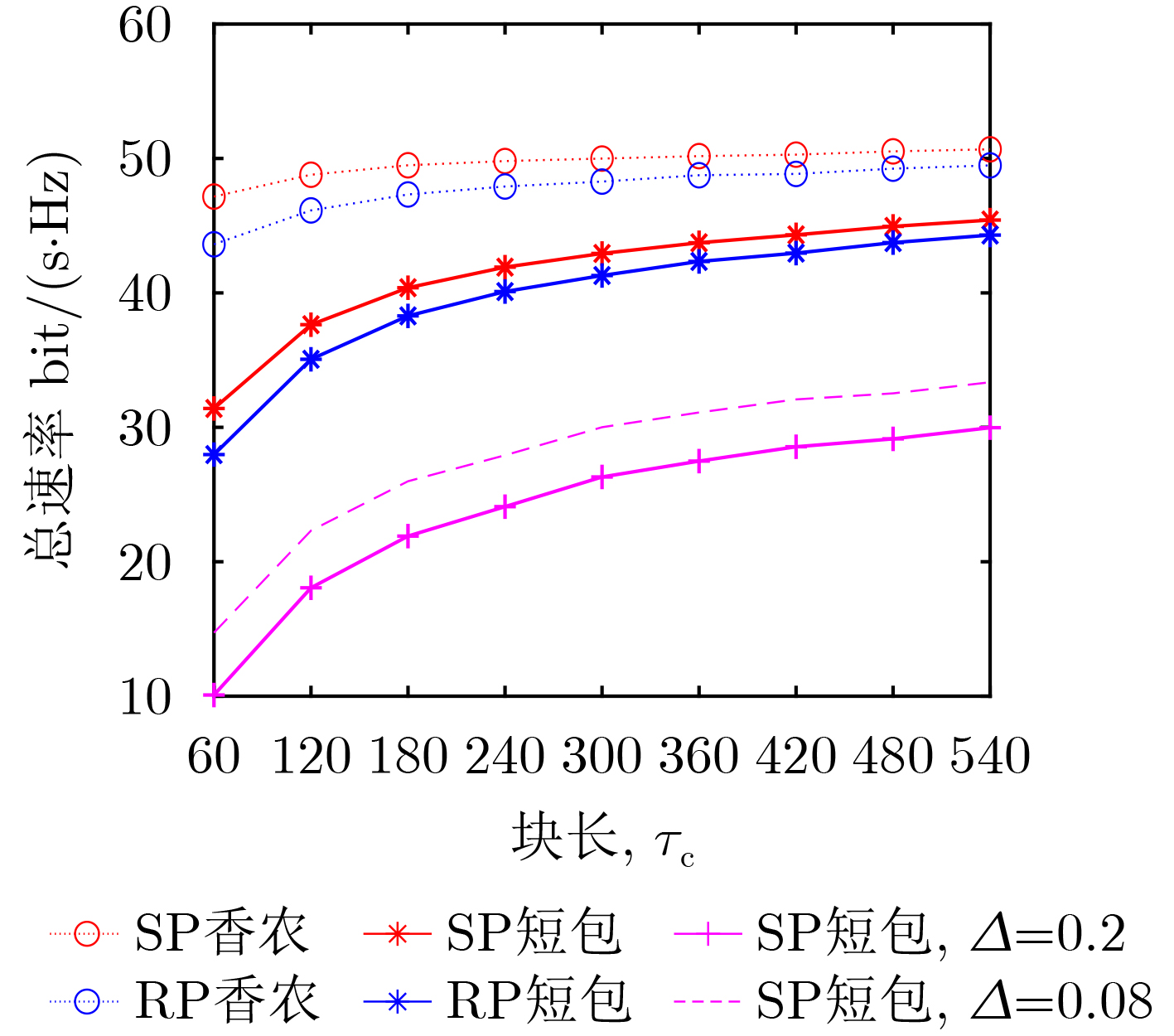
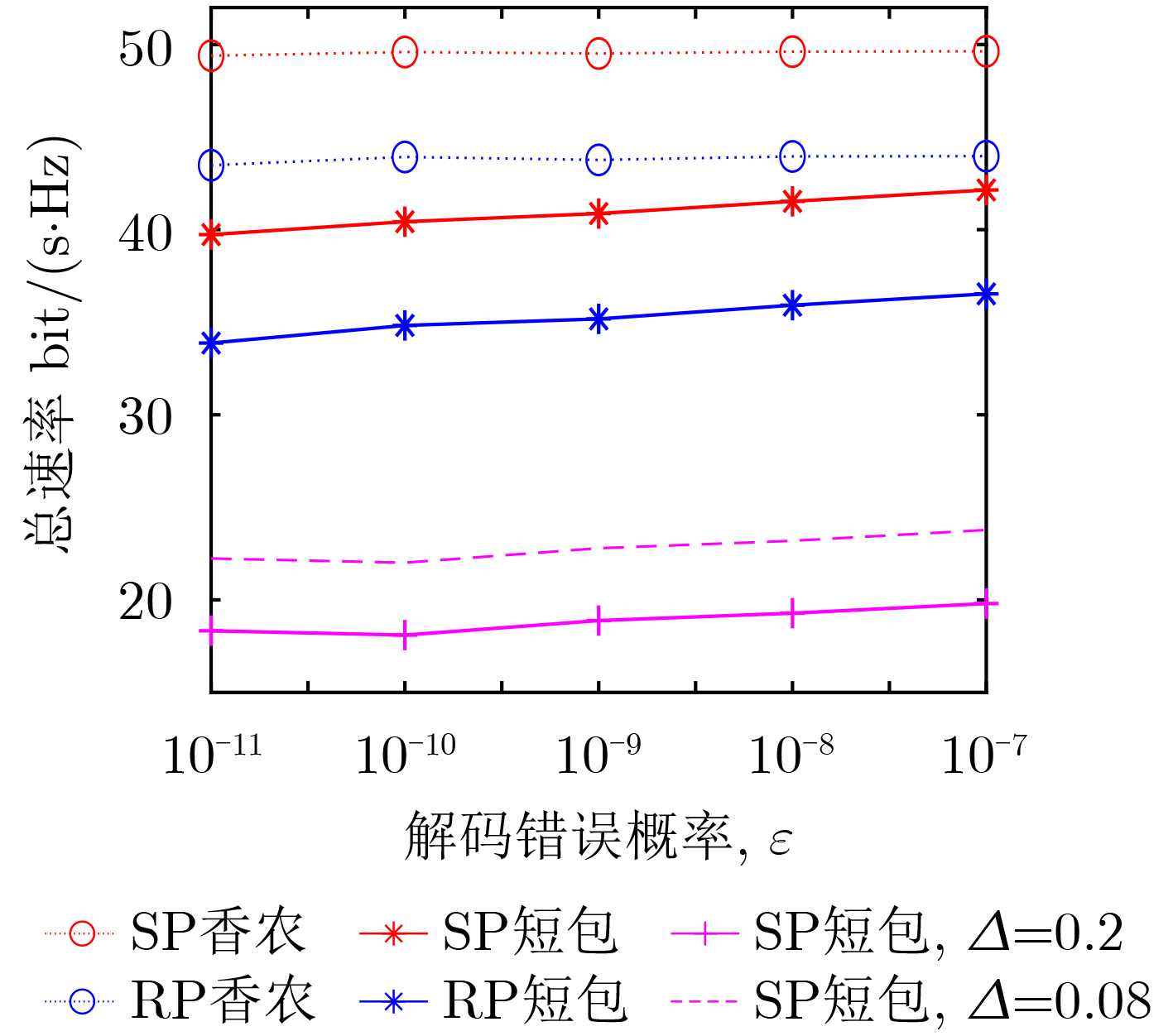
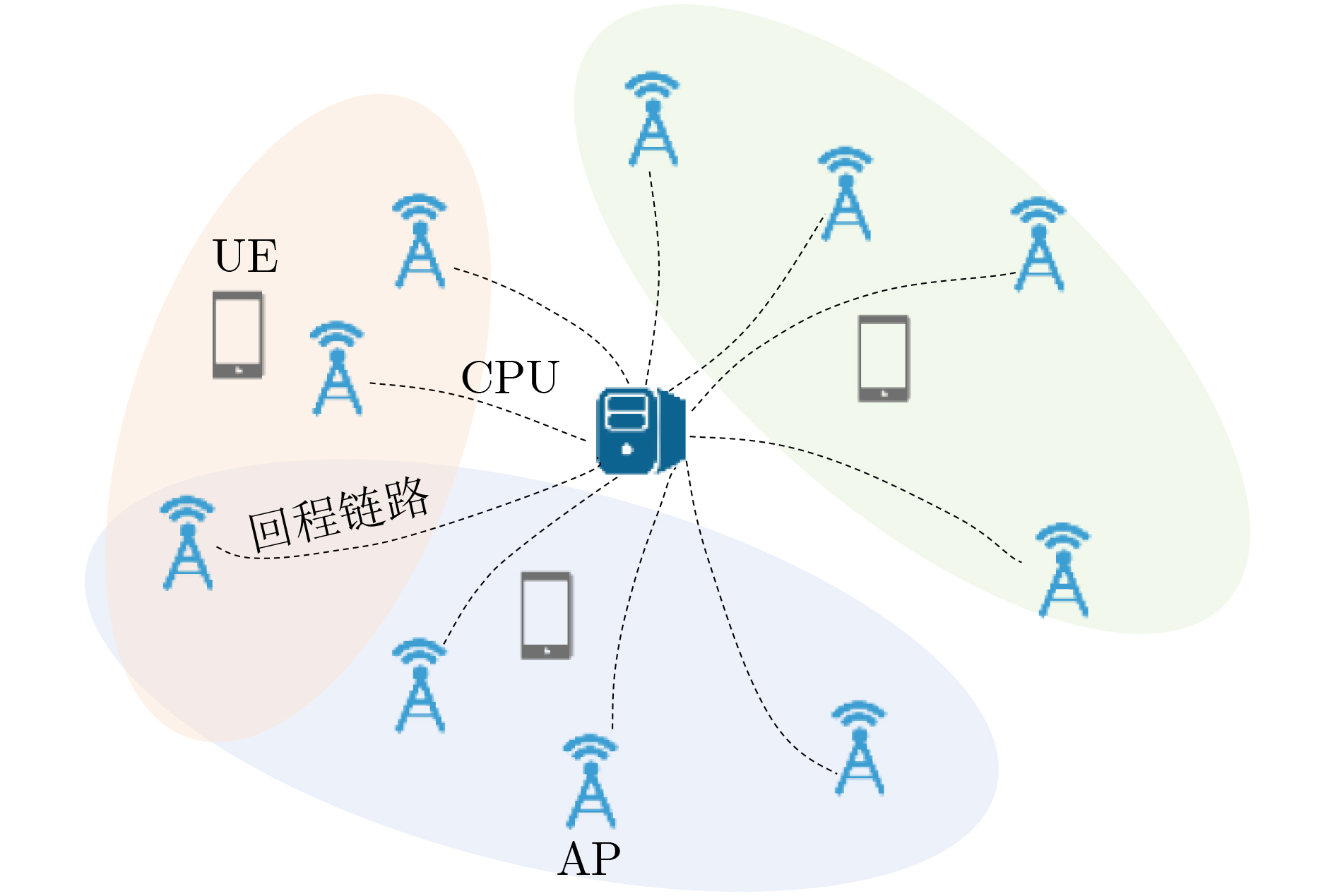
Abstract:Objective With the advancement of 5th Generation mobile communication, the volume of communication service interactions increases rapidly. To meet this growth in demand, Cell-Free Massive Multiple-Input Multiple-Output (CF-mMIMO) is regarded as a key technology. Multi-user access in CF-mMIMO systems creates complexity in channel estimation. Conventional methods based on Regular Pilots (RP) generate high overhead, which reduces the number of symbols available for data transmission. This reduction lowers the transmission rate, and the effect is stronger in short packet transmission. This study examines a downlink short packet transmission scheme based on Superimposed Pilots (SP) in CF-mMIMO systems to improve short packet transmission performance. Methods This study examines an SP-based downlink short packet transmission scenario in CF-mMIMO systems and proposes a power allocation algorithm. Considering energy consumption and resource constraints in practical settings, a User-Centric (UC) approach is used. Based on the Maximum Ratio Transmission (MRT) precoding scheme, a closed-form expression for the downlink achievable rate is derived under imperfect Channel State Information (CSI). Because pilot signals and data signals create cross-interference, an iterative optimization algorithm based on Geometric Programming (GP) and Successive Convex Approximation (SCA) is developed. The objective is to optimize the power allocation between pilot signals and data signals under the minimum data rate requirement and uplink and downlink power constraints. Using logarithmic function approximation and SCA, the non-convex optimization problem is converted into a GP problem, then an iterative algorithm is designed to obtain the solution. This study also compares the SP scheme with the RP scheme to show the superiority of the SP scheme and the proposed algorithm. Results and Discussions Simulation results confirm the accuracy of the closed-form expressions for the downlink sum rate under both SP and RP schemes ( Fig. 2 ). To assess the effectiveness of the proposed algorithm, a comparative analysis of weighted sum rate is conducted. The comparison considers the proposed power allocation algorithm under both the SP ansd RP schemes, as well as fixed power allocation under the SP scheme. The number of antennas of APs (Fig. 3 ), the number of UEs (Fig. 4 ), block length (Fig. 5 ), and decoding error probability (Fig. 6 ) are treated as variables. The results show that the weighted sum rate achieved with the proposed power allocation algorithm under the SP scheme is higher than that achieved with the RP scheme and the fixed power allocation scheme.Conclusions This paper investigates the downlink power allocation problem under the SP scheme in CF-mMIMO systems for short packet transmission. The UC scheme is adopted to derive a closed-form expression for the lower bound of the downlink transmission rate under imperfect CSI and MRT precoding. The downlink weighted sum-rate maximization problem for the SP scheme is then formulated, and the non-convex problem is converted into a solvable GP problem through the SCA method. An iterative algorithm is employed to obtain the solution. Simulation results confirm the correctness of the closed-form expression for the transmission rate and show the superiority of the proposed power allocation algorithm. -
表 1 仿真参数
参数设置 数值 参数设置 数值 载波频率$f$ 2.1 GHz 噪声功率谱密度 –174 dBm/Hz 信道带宽$B$ 20 MHz 解码错误概率$ \epsilon $ 10–9 $ h_{\mathrm{UE}} $ 1.5 m 上行链路功率限制$ P\mathrm{^{ul}} $ 50 mW $ h\mathrm{_{AP}} $ 15m 下行链路功率限制$ P\mathrm{^{dl}} $ 500 mW ${d_0}$ 10 m 上行链路块长$ \tau\mathrm{_{ul}} $ 100 ${d_1}$ 50 m 下行链路块长$ \tau\mathrm{_{dl}} $ 100 最小速率限制$ R\mathrm{^{req}} $ 1 bit/(s.Hz) RP导频长度${\tau _{\rm p}}$ 10 AP选择系数$\lambda $ 0.99 AP数M 5 每个AP的天线数N 100 UE数K 10  下载: 导出CSV
-
[1] BHUSHAN N, LI Junyi, MALLADI D, et al. Network densification: The dominant theme for wireless evolution into 5G[J]. IEEE Communications Magazine, 2014, 52(2): 82–89. doi: 10.1109/MCOM.2014.6736747. [2] KAMEL M, HAMOUDA W, and YOUSSEF A. Ultra-dense networks: A survey[J]. IEEE Communications Surveys & Tutorials, 2016, 18(4): 2522–2545. doi: 10.1109/COMST.2016.2571730. [3] ZHANG Zijian and DAI Linglong. A joint precoding framework for wideband reconfigurable intelligent surface-aided cell-free network[J]. IEEE Transactions on Signal Processing, 2021, 69: 4085–4101. doi: 10.1109/TSP.2021.3088755. [4] 俞观晔, 于佳, 陈沛, 等. 基于RIS辅助的RSMA无蜂窝上行通信系统和速率优化算法[J]. 南京邮电大学学报: 自然科学版, 2025, 45(5): 31–41. doi: 10.14132/j.cnki.1673-5439.2025.05.004.YU Guanye, YU Jia, CHEN Pei, et al. Sum-rate optimization for RIS-aided cell-free uplink communication systems with RSMA[J]. Journal of Nanjing University of Posts and Telecommunications: Natural Science, 2025, 45(5): 31–41. doi: 10.14132/j.cnki.1673-5439.2025.05.004. [5] 张广阳, 甄若亦, 李宇航, 等. RIS辅助的去蜂窝网络前传压缩与混合预编码设计[J/OL]. 物联网学报. https://link.cnki.net/urlid/10.1491.tp.20250425.1809.010, 2025.ZHANG Guangyang, ZHEN Ruoyi, LI Yuhang, et al. Fronthaul compression and hybrid precoding design for RIS-aidedcell-free networks[J/OL]. Chinese Journal on Internet of Things. https://link.cnki.net/urlid/10.1491.tp.20250425.1809.010, 2025. [6] BJÖRNSON E and SANGUINETTI L. Making cell-free massive MIMO competitive with MMSE processing and centralized implementation[J]. IEEE Transactions on Wireless Communications, 2020, 19(1): 77–90. doi: 10.1109/TWC.2019.2941478. [7] NAYEBI E, ASHIKHMIN A, MARZETTA T L, et al. Precoding and power optimization in cell-free massive MIMO systems[J]. IEEE Transactions on Wireless Communications, 2017, 16(7): 4445–4459. doi: 10.1109/TWC.2017.2698449. [8] HAN Tianyu, ZHU Yongxu, WONG K K, et al. Cell-free fluid antenna multiple access networks[J]. IEEE Transactions on Wireless Communications, 2025, 24(9): 7237–7251. doi: 10.1109/TWC.2025.3559441. [9] BUZZI S and D’ANDREA C. Cell-free massive MIMO: User-centric approach[J]. IEEE Wireless Communications Letters, 2017, 6(6): 706–709. doi: 10.1109/LWC.2017.2734893. [10] WEI Chen, XU Kui, XIA Xiaochen, et al. User-centric access point selection in cell-free massive MIMO systems: A game-theoretic approach[J]. IEEE Communications Letters, 2022, 26(9): 2225–2229. doi: 10.1109/LCOMM.2022.3186350. [11] ZOU J, XIAO J, MAO Q, et al. Deep receiver for multi-layer data transmission with superimposed pilots[C]. ICASSP 2025-2025 IEEE International Conference on Acoustics, Speech and Signal Processing (ICASSP), 2025, 1-5. doi: 10.1109/ICASSP49660.2025.10889025. [12] ZHANG Yao, QIAO Xu, YANG Longxiang, et al. Superimposed pilots are beneficial for mitigating pilot contamination in cell-free massive MIMO[J]. IEEE Communications Letters, 2021, 25(1): 279–283. doi: 10.1109/LCOMM.2020.3024705. [13] ZHANG Yao, ZHAO Haitao, XIA Wenchao, et al. Wireless-powered cell-free massive MIMO with superimposed pilot transmission[J]. IEEE Communications Letters, 2022, 26(7): 1688–1692. doi: 10.1109/LCOMM.2022.3169282. [14] HARITHA H, AMUDALA D N, BUDHIRAJA R, et al. Superimposed versus regular pilots for hardware impaired Rician-faded cell-free massive MIMO systems[J]. IEEE Transactions on Communications, 2024, 72(11): 6688–6706. doi: 10.1109/TCOMM.2024.3392780. [15] SUN Qiang, ZHOU Yu, SHEN Yushi, et al. Uplink performance of cell-free symbiotic radio with hardware impairments for IoT[J]. IEEE Internet of Things Journal, 2025, 12(13): 23418–23433. doi: 10.1109/JIOT.2025.3551768. [16] KIM D, VAN DER PERRE L, and CHOI W. Weighted-sum energy efficiency maximization in user-centric uplink cell-free massive MIMO[EB/OL]. https://arxiv.org/abs/2502.06211, 2025. [17] PENG Qihao, REN Hong, PAN Cunhua, et al. Resource allocation for cell-free massive MIMO-enabled URLLC downlink systems[J]. IEEE Transactions on Vehicular Technology, 2023, 72(6): 7669–7684. doi: 10.1109/TVT.2023.3243571. [18] POLYANSKIY Y, POOR H V, and VERDU S. Channel coding rate in the finite blocklength regime[J]. IEEE Transactions on Information Theory, 2010, 56(5): 2307–2359. doi: 10.1109/TIT.2010.2043769. [19] REN Hong, PAN Cunhua, DENG Yansha, et al. Joint pilot and payload power allocation for massive-MIMO-enabled URLLC IIoT networks[J]. IEEE Journal on Selected Areas in Communications, 2020, 38(5): 816–830. doi: 10.1109/JSAC.2020.2980910. [20] CHIANG M, TAN C W, PALOMAR D P, et al. Power control by geometric programming[J]. IEEE Transactions on Wireless Communications, 2007, 6(7): 2640–2651. doi: 10.1109/TWC.2007.05960. [21] MOBINI Z, NGO H Q, MATTHAIOU M, et al. Cell-free massive MIMO surveillance of multiple untrusted communication links[J]. IEEE Internet of Things Journal, 2024, 11(20): 33010–33026. doi: 10.1109/JIOT.2024.3422676. -

 下载:
下载:

图(6) / 表(1)
计量
- 文章访问数: 631
- HTML全文浏览量: 353
- PDF下载量: 186
- 被引次数: 0
