Advanced Search
Turn off MathJax
Article Contents
HOU Shuaikang, LIU Qinrang, LV Ping, LIU Zhengyu, XU Yuhang, LI Peijie, GUO Wei. Communication Performance and Fault Degradation Analysis of Boundary-Interface Configurations in 2.5D Chiplet Systems[J]. Journal of Electronics & Information Technology. doi: 10.11999/JEIT260633
Citation: HOU Shuaikang, LIU Qinrang, LV Ping, LIU Zhengyu, XU Yuhang, LI Peijie, GUO Wei. Communication Performance and Fault Degradation Analysis of Boundary-Interface Configurations in 2.5D Chiplet Systems[J]. Journal of Electronics & Information Technology. doi: 10.11999/JEIT260633

Communication Performance and Fault Degradation Analysis of Boundary-Interface Configurations in 2.5D Chiplet Systems

doi: 10.11999/JEIT260633 cstr: 32379.14.JEIT260633
Funds:  The National Key R&D Program of China (2023YFB4404200), Science and Technology Innovation Leading Talents Subsidy Project of Central Plains (264200510020)
  • Received Date: 2026-05-15
  • Accepted Date: 2026-07-29
  • Rev Recd Date: 2026-07-29
  • Available Online: 2026-08-08
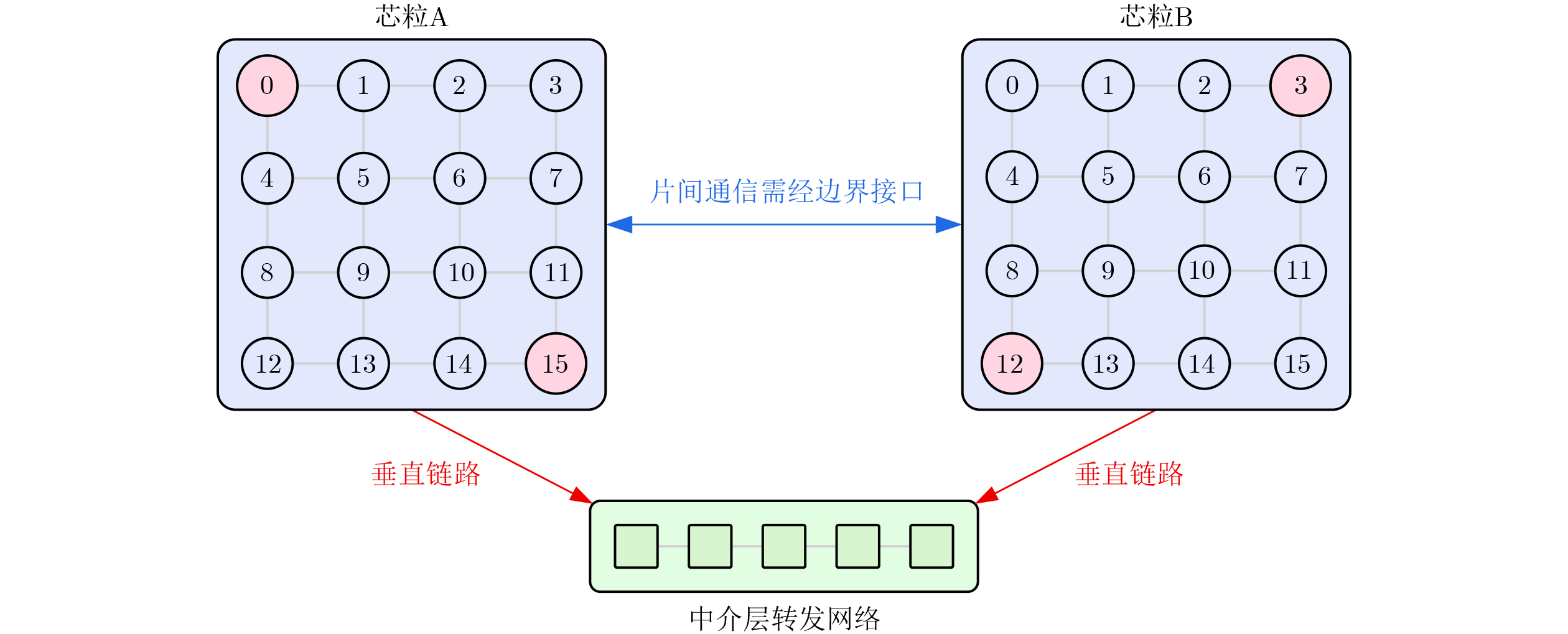
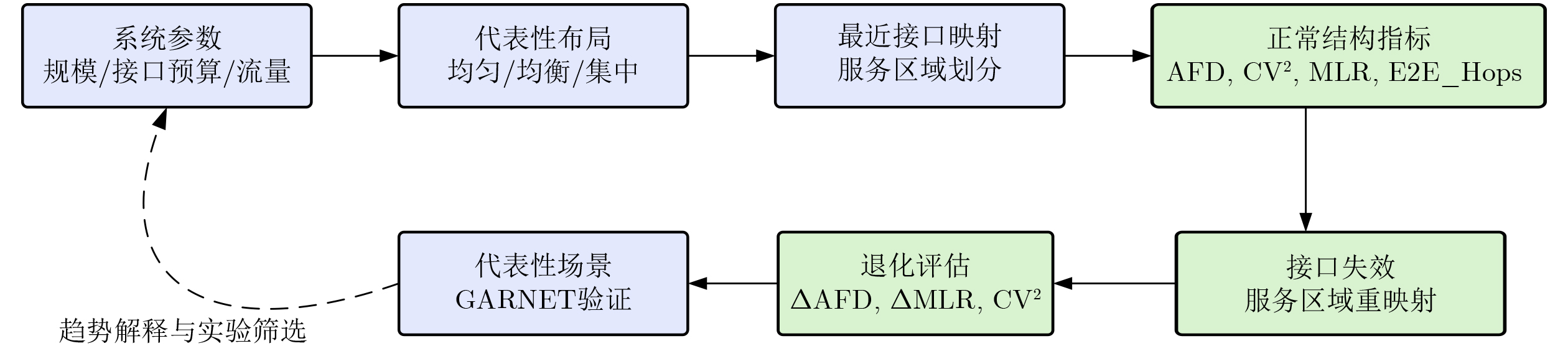
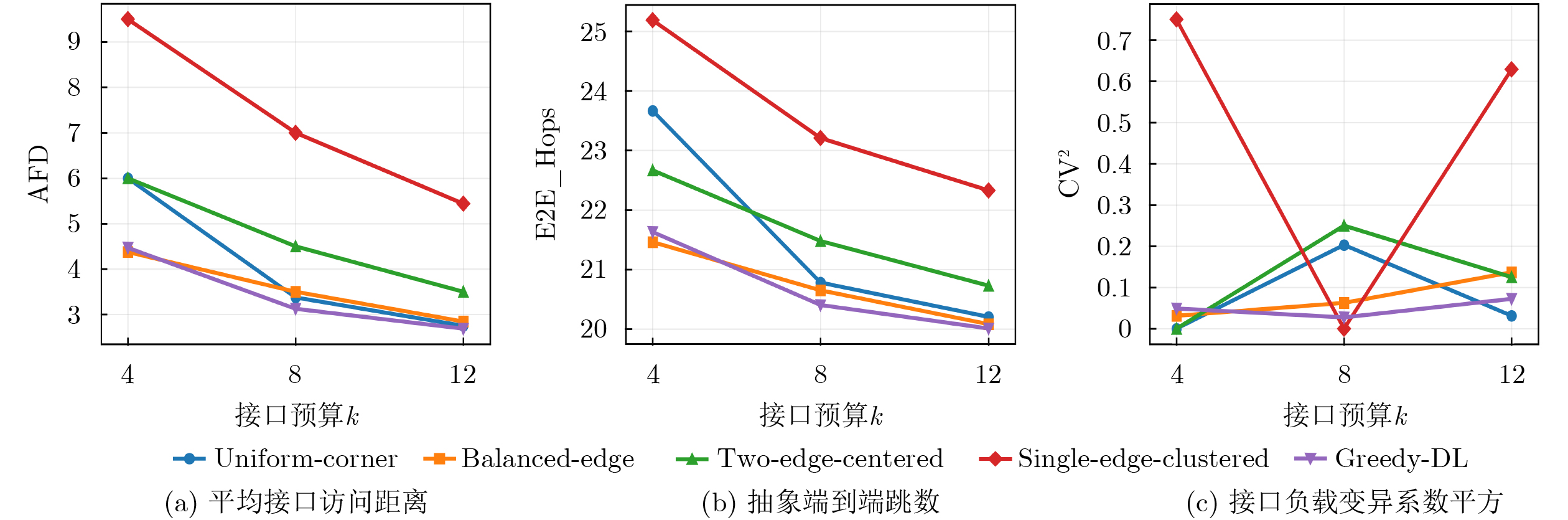
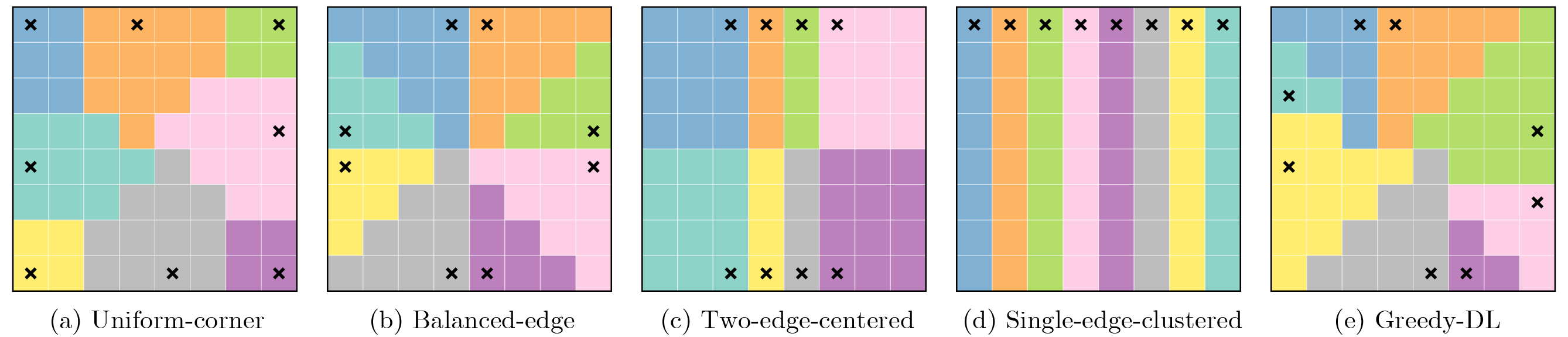
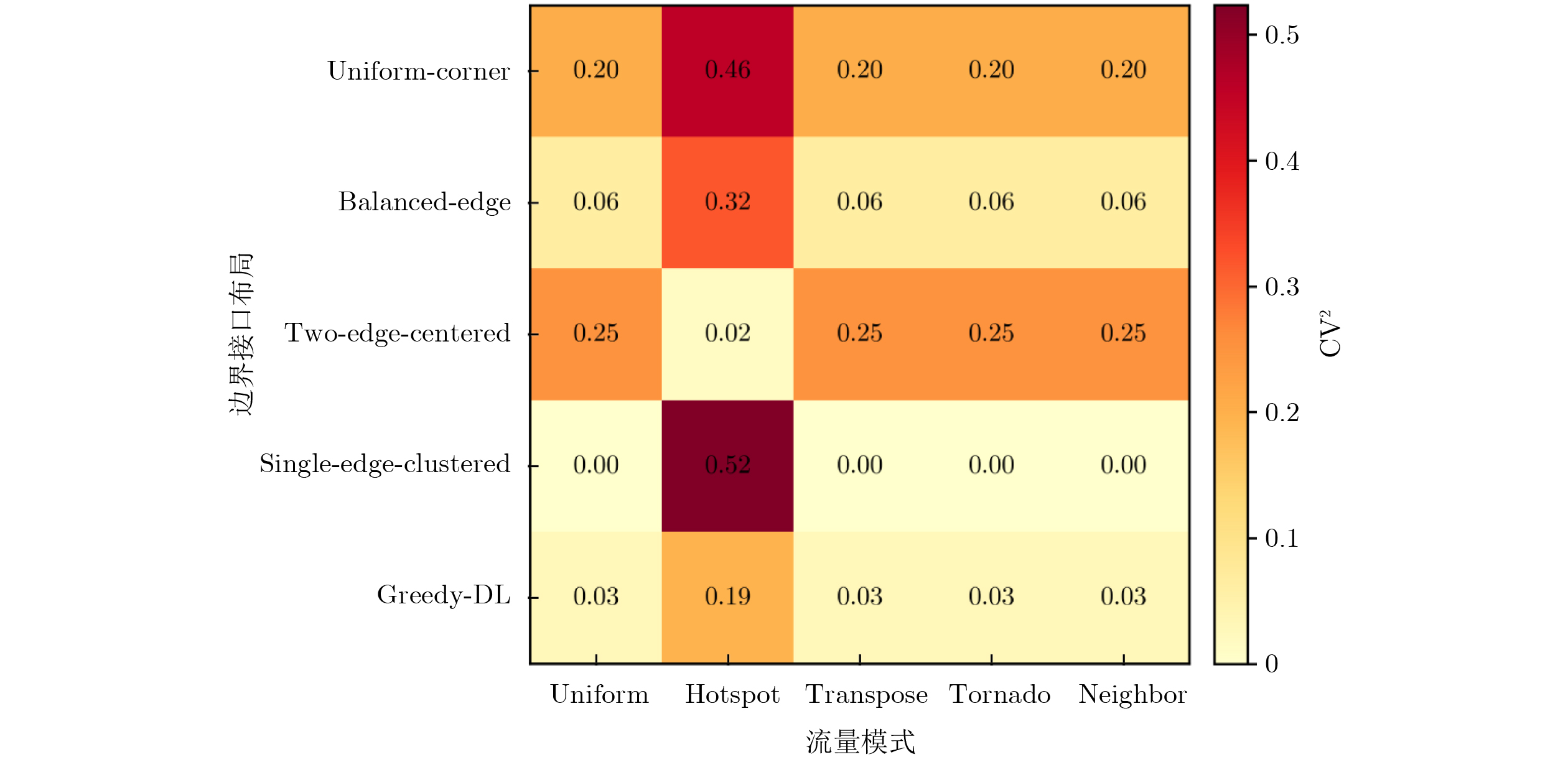
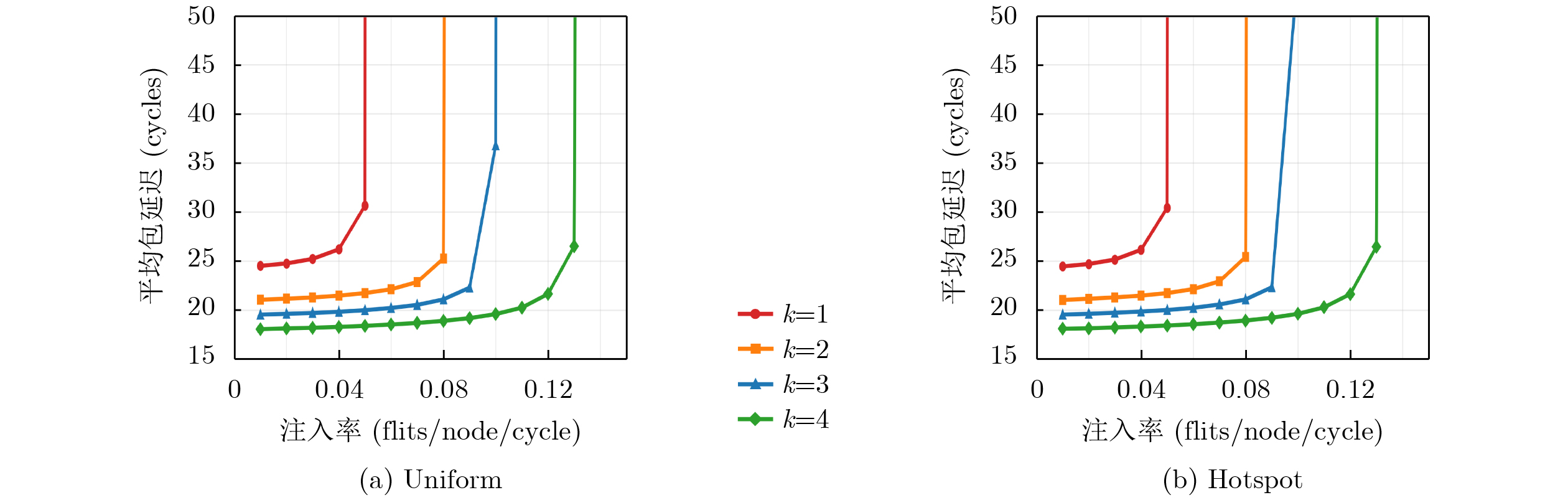
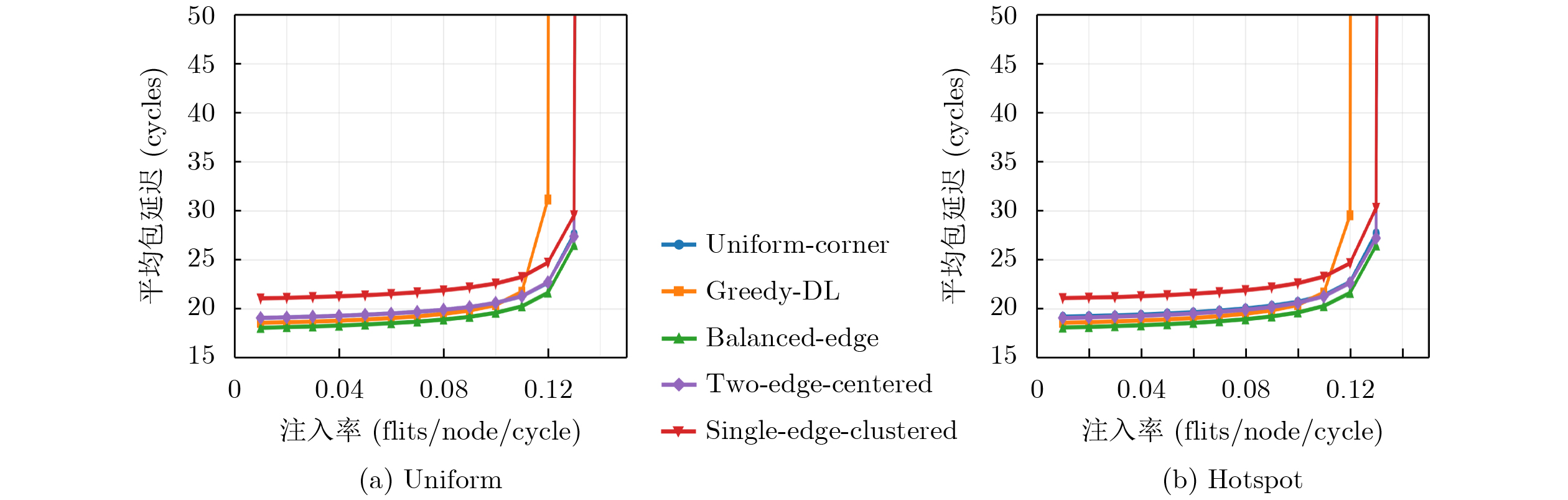
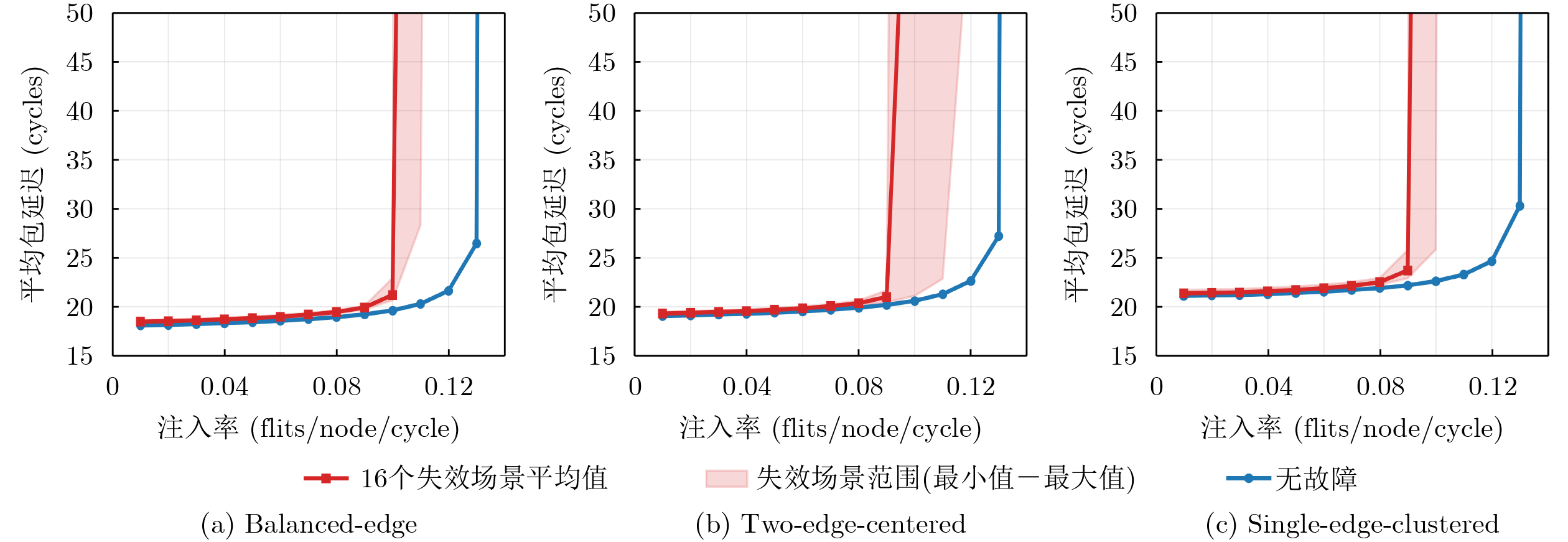
  •   Objective  Chiplet-based integration has emerged as an important approach for constructing large-scale heterogeneous systems. In a 2.5D chiplet system, inter-chiplet packets travel from a source node to a boundary interface in the source chiplet, traverse an interposer network, and enter the destination chiplet through a destination-side interface. Because packaging resources, micro-bump count, routing resources, and power and area budgets are limited, interfaces can be deployed only at a subset of boundary routers. Their number and distribution affect access distance, service-region formation, interface-load distribution, and traffic remapping after failures. Existing studies have addressed die-to-die standards, interposer architectures, placement, routing, simulation, and fault tolerance, but the independent structural impact of boundary-interface configuration remains insufficiently characterized. This work investigates how interface count, location, service-region partitioning, and failures affect communication performance and fault-induced degradation in 2.5D chiplet–interposer networks.  Methods  A graph-level structural model is developed for a 2.5D chiplet–interposer network. Each chiplet is modeled as an n×n mesh, and selected boundary routers serve as active interfaces. Each node is mapped to its nearest active interface, and nodes mapped to the same interface form a service region. Average interface-access distance, abstract end-to-end hop count, interface-load variation, maximum load ratio, and fault-induced degradation are evaluated. Three chiplet scales, n=4, 8, and 16, are considered, with interface budgets of k=2, 4, 6, k=4, 8, 12, and k=8, 16, 24, respectively. Five layouts are analyzed: Uniform-corner, Balanced-edge, Two-edge-centered, Single-edge-clustered, and Greedy-DL. Uniform, Hotspot, Transpose, Tornado, and Neighbor traffic patterns are considered. For fault analysis, each active interface is removed in turn, and affected nodes are remapped to their nearest healthy interfaces. A cycle-accurate gem5/Ruby GARNET model comprising four 4×4-mesh chiplets and a 4×4 interposer mesh is constructed. Uniform and Hotspot traffic are evaluated from 0.01 to 0.15 flits/node/cycle. The latency-based saturation injection rate is the first sampled rate at which average packet latency exceeds 50 cycles. This two-level evaluation separates structural effects from cycle-level network behavior and enables interface count, placement, traffic pattern, and fault location to be compared under consistent topology and routing assumptions for mechanism-oriented analysis.  Results and Discussions  Graph-level results show that increasing the number of boundary interfaces reduces average interface-access distance and abstract end-to-end hop count, while the marginal benefit diminishes as boundary coverage becomes sufficient (Fig. 3). Under a fixed interface budget, different interface locations induce distinct service-region partitions and interface-load distributions (Table 2, Fig. 4). For an 8×8 chiplet with k=8 under Uniform traffic, Greedy-DL achieves the smallest average interface-access distance of 3.125, while Balanced-edge provides a favorable compromise, with an access distance of 3.500 and a maximum load ratio of 1.250. Single-edge-clustered produces the largest access distance and abstract end-to-end hop count because its interfaces are concentrated on one boundary. Under Hotspot traffic, Two-edge-centered reduces interface-load variation to 0.016, but its access distance remains higher than those of Balanced-edge and Greedy-DL, confirming a trade-off between distance and load balance (Table 2, Fig. 5). Interface failures cause only moderate changes in average access distance but substantial load concentration at the remaining healthy interfaces. Under Hotspot traffic, the worst maximum-load-ratio degradation is 23.94% for Balanced-edge and 93.75% for both Two-edge-centered and Single-edge-clustered (Table 3), indicating that vulnerability is governed mainly by service-region migration and load reconcentration.The gem5 results further support the graph-level observations. When the interface count increases from k=1 to k=4, low-load latency decreases from 24.50/24.44 cycles to 18.05/18.09 cycles under Uniform and Hotspot traffic, respectively, while the latency-based saturation injection rate increases from 0.06 to 0.14 (Fig. 6). Across the k=4 layouts, Balanced-edge achieves low latency and hop count, whereas Single-edge-clustered has the highest baseline cost. Under Hotspot traffic, Balanced-edge reduces low-load latency by about 14.3% and average hop count by about 18.7% compared with Single-edge-clustered. Greedy-DL provides short low-load paths, but its saturation injection rate is 0.13, lower than the 0.14 achieved by Balanced-edge and several other layouts, showing that minimizing access distance alone does not guarantee stronger medium- and high-load behavior (Fig. 7). For fault validation, all 16 single-interface failure locations are traversed for each of three layouts, yielding 48 scenarios. The results show increases in latency and hop count, together with an earlier onset of congestion. The worst-case latency-based saturation injection rate decreases to 0.10–0.11, and Balanced-edge exhibits smaller average and worst-case degradation than the more concentrated layouts (Fig. 8, Table 5).  Conclusions  Boundary-interface configuration is a key structural parameter in 2.5D chiplet interconnect design. It affects interface-access distance, service-region formation, interface-load distribution, and fault-induced traffic remapping. Increasing interface count improves communication efficiency, but with diminishing benefit. Under the same interface budget, interface placement determines whether traffic remains balanced or becomes concentrated after mapping and remapping. The graph-level metrics support low-cost screening and mechanism analysis, while gem5/Ruby GARNET simulations provide cycle-accurate validation under buffering, arbitration, and flow-control effects. Therefore, interface count, location, load balance, and fault degradation should be evaluated jointly in 2.5D chiplet–interposer network design.
  • loading
  • [1]
    BENINI L and DE MICHELI G. Networks on chips: A new SoC paradigm[J]. Computer, 2002, 35(1): 70–78. doi: 10.1109/2.976921.
    [2]
    邬江兴, 刘勤让, 沈剑良, 等. 从SoC到SDSoW: 微电子发展的新范式[J]. 中国科学: 信息科学, 2024, 54(6): 1350–1368. doi: 10.1360/SSI-2023-0219.

    WU Jiangxing, LIU Qinrang, SHEN Jianliang, et al. From SoC to SDSoW: A new paradigm for microelectronics development[J]. Scientia Sinica Informationis, 2024, 54(6): 1350–1368. doi: 10.1360/SSI-2023-0219.
    [3]
    LIU Yafei, LI Xiangyu, and YIN Shouyi. Review of chiplet-based design: System architecture and interconnection[J]. Science China Information Sciences, 2024, 67(10): 200401. doi: 10.1007/s11432-023-3926-8.
    [4]
    王浩, 王勇, 冯长磊, 等. 芯粒互联技术综述[J]. 计算机研究与发展, 2025, 62(11): 2651–2662. doi: 10.7544/issn1000-1239.202440585.

    WANG Hao, WANG Yong, FENG Changlei, et al. Review of chiplet interconnection technology[J]. Journal of Computer Research and Development, 2025, 62(11): 2651–2662. doi: 10.7544/issn1000-1239.202440585.
    [5]
    ONUFRYK P and CHOUDHARY S. UCIe: Standard for an open chiplet ecosystem[J]. IEEE Micro, 2025, 45(1): 16–25. doi: 10.1109/MM.2024.3451532.
    [6]
    NAFFZIGER S, BECK N, BURD T, et al. Pioneering chiplet technology and design for the AMD EPYC™ and Ryzen™ processor families: Industrial product[C]. Proceedings of the 2021 ACM/IEEE 48th Annual International Symposium on Computer Architecture, Valencia, Spain, 2021: 57–70. doi: 10.1109/ISCA52012.2021.00014.
    [7]
    KANNAN A, ENRIGHT JERGER N, and LOH G H. Enabling interposer-based disintegration of multi-core processors[C]. Proceedings of the 48th International Symposium on Microarchitecture, Waikiki, USA, 2015: 546–558. doi: 10.1145/2830772.2830808.
    [8]
    ENRIGHT JERGER N, KANNAN A, LI Zimo, et al. NoC architectures for silicon interposer systems: Why pay for more wires when you can get them (from your interposer) for free?[C]. Proceedings of the 2014 47th Annual IEEE/ACM International Symposium on Microarchitecture, Cambridge, UK, 2014: 458–470. doi: 10.1109/MICRO.2014.61.
    [9]
    LI Fuping, WANG Ying, CHENG Yuanqing, et al. GIA: A reusable general interposer architecture for agile chiplet integration[C]. Proceedings of the 41st IEEE/ACM International Conference on Computer-Aided Design, San Diego, USA, 2022: 42. doi: 10.1145/3508352.3549464.
    [10]
    JIAO Bo, XU Lei, YU Xinyu, et al. FPIA: Communication-aware multi-chiplet integration with field-programmable interconnect fabric on reusable silicon interposer[J]. IEEE Transactions on Circuits and Systems I: Regular Papers, 2024, 71(9): 4156–4168. doi: 10.1109/TCSI.2024.3419579.
    [11]
    卢美璇, 许浩博, 王颖, 等. 芯粒集成芯片架构-封装协同设计[J]. 电子与信息学报, 2025, 47(9): 2994–3009. doi: 10.11999/JEIT250626.

    LU Meixuan, XU Haobo, WANG Ying, et al. Co-design of architecture and packaging in chiplet[J]. Journal of Electronics & Information Technology, 2025, 47(9): 2994–3009. doi: 10.11999/JEIT250626.
    [12]
    COSKUN A, ERIS F, JOSHI A, et al. Cross-layer co-optimization of network design and chiplet placement in 2.5-D systems[J]. IEEE Transactions on Computer-Aided Design of Integrated Circuits and Systems, 2020, 39(12): 5183–5196. doi: 10.1109/TCAD.2020.2970019.
    [13]
    ZHANG Jinming, FAN Xi, YE Yaoyao, et al. INDM: Chiplet-based interconnect network and dataflow mapping for DNN accelerators[J]. IEEE Transactions on Computer-Aided Design of Integrated Circuits and Systems, 2024, 43(4): 1107–1120. doi: 10.1109/TCAD.2023.3332832.
    [14]
    FENG Yinxiao, WEI Yuchen, XIANG Dong, et al. Evaluating chiplet-based large-scale interconnection networks via cycle-accurate packet-parallel simulation[C]. Proceedings of 2024 USENIX Conference on Usenix Annual Technical Conference, Santa Clara, USA, 2024: 45.
    [15]
    张聪武, 刘澳, 张科, 等. 面向通用处理器芯粒架构探索和评估的系统级模拟器[J]. 电子与信息学报, 2024, 46(12): 4575–4588. doi: 10.11999/JEIT240299.

    ZHANG Congwu, LIU Ao, ZHANG Ke, et al. A system-level exploration and evaluation simulator for chiplet-based CPU[J]. Journal of Electronics & Information Technology, 2024, 46(12): 4575–4588. doi: 10.11999/JEIT240299.
    [16]
    WANG Xiaohang, XU Miao, SINGH A K, et al. On optimizing inter- and intra-chiplet interconnection topologies for robust multi-chiplet systems[J]. IEEE Transactions on Computer-Aided Design of Integrated Circuits and Systems, 2025, 44(10): 3976–3989. doi: 10.1109/TCAD.2025.3550432.
    [17]
    周武, 倪天明, 徐冬雨, 等. 面向芯粒互连网络的故障与拥塞联合感知自适应路由算法[J]. 电子与信息学报, 2025, 47(9): 3155–3166. doi: 10.11999/JEIT250294.

    ZHOU Wu, NI Tianming, XU Dongyu, et al. A joint fault and congestion-aware adaptive routing algorithm for chiplet interconnect networks[J]. Journal of Electronics & Information Technology, 2025, 47(9): 3155–3166. doi: 10.11999/JEIT250294.
    [18]
    JIANG Nan, BECKER D U, MICHELOGIANNAKIS G, et al. A detailed and flexible cycle-accurate Network-on-Chip simulator[C]. Proceedings of 2013 IEEE International Symposium on Performance Analysis of Systems and Software, Austin, USA, 2013: 86–96. doi: 10.1109/ISPASS.2013.6557149.
    [19]
    AGARWAL N, KRISHNA T, PEH L S, et al. GARNET: A detailed on-chip network model inside a full-system simulator[C]. Proceedings of 2009 IEEE International Symposium on Performance Analysis of Systems and Software, Boston, USA, 2009: 33–42. doi: 10.1109/ISPASS.2009.4919636.
    [20]
    BINKERT N, BECKMANN B, BLACK G, et al. The gem5 simulator[J]. ACM SIGARCH Computer Architecture News, 2011, 39(2): 1–7. doi: 10.1145/2024716.2024718.
    [21]
    MAHMUD T and WANG Ke. A flexible hybrid interconnection design for high-performance and energy-efficient chiplet-based systems[J]. IEEE Computer Architecture Letters, 2024, 23(2): 215–218. doi: 10.1109/LCA.2024.3477253.
    [22]
    TAHERI E, PASRICHA S, and NIKDAST M. DeFT: A deadlock-free and fault-tolerant routing algorithm for 2.5D chiplet networks[C]. Proceedings of 2022 Design, Automation & Test in Europe Conference & Exhibition, Antwerp, Belgium, 2022: 1047–1052. doi: 10.23919/DATE54114.2022.9774617.
    [23]
    EHRETT P, AUSTIN T, and BERTACCO V. SiPterposer: A fault-tolerant substrate for flexible system-in-package design[C]. Proceedings of 2019 Design, Automation & Test in Europe Conference & Exhibition, Florence, Italy, 2019: 510–515. doi: 10.23919/DATE.2019.8714998.
    [24]
    MARINISSEN E J, EVANS A, CHUANG P Y, et al. New standard-under-development for chiplet interconnect test and repair: IEEE Std P3405[C]. Proceedings of 2024 IEEE European Test Symposium, The Hague, Netherlands, 2024: 1–10. doi: 10.1109/ETS61313.2024.10567355.
    [25]
    BHOUMIK P, CHAUDHURI A, GOEL S K, et al. Fault modeling and testing of chiplet-to-chiplet interconnects in fan-out wafer-level packaging[C]. Proceedings of 2025 IEEE International Test Conference, San Diego, USA, 2025: 357–366. doi: 10.1109/ITC58126.2025.00043.
    [26]
    王知非, 黄之闻, 叶天辰, 等. 面向芯粒互连的单端64 Gb/s全双工收发机设计[J]. 电子与信息学报, 2025, 47(9): 2979–2993. doi: 10.11999/JEIT250506.

    WANG Zhifei, HUANG Zhiwen, YE Tianchen, et al. A 64 Gb/s single-ended simultaneous bi-directional transceiver for die-to-die interfaces[J]. Journal of Electronics & Information Technology, 2025, 47(9): 2979–2993. doi: 10.11999/JEIT250506.
  • 加载中

Catalog

    通讯作者: 陈斌, bchen63@163.com
    • 1. 

      沈阳化工大学材料科学与工程学院 沈阳 110142

    1. 本站搜索
    2. 百度学术搜索
    3. 万方数据库搜索
    4. CNKI搜索

    Figures(8)  / Tables(5)

    Article Metrics

    Article views (29) PDF downloads(2) Cited by()
    Proportional views
    Related

    /

    DownLoad:  Full-Size Img  PowerPoint
    Return
    Return