Advanced Search
Turn off MathJax
Article Contents
TAN Chang, NIE Lihai, ZHAO Wenyu, LI Tong. CuSyn: A Customizable Differential Privacy Data Synthesis Framework for Multi-User and Multiple Data Publishing Scenarios[J]. Journal of Electronics & Information Technology. doi: 10.11999/JEIT260503
Citation: TAN Chang, NIE Lihai, ZHAO Wenyu, LI Tong. CuSyn: A Customizable Differential Privacy Data Synthesis Framework for Multi-User and Multiple Data Publishing Scenarios[J]. Journal of Electronics & Information Technology. doi: 10.11999/JEIT260503

CuSyn: A Customizable Differential Privacy Data Synthesis Framework for Multi-User and Multiple Data Publishing Scenarios

doi: 10.11999/JEIT260503 cstr: 32379.14.JEIT260503
Funds:  The National Natural Science Foundation of China (62272251, 62402248)
  • Received Date: 0202-04-27
  • Accepted Date: 2026-09-15
  • Rev Recd Date: 2026-09-14
  • Available Online: 2026-10-10
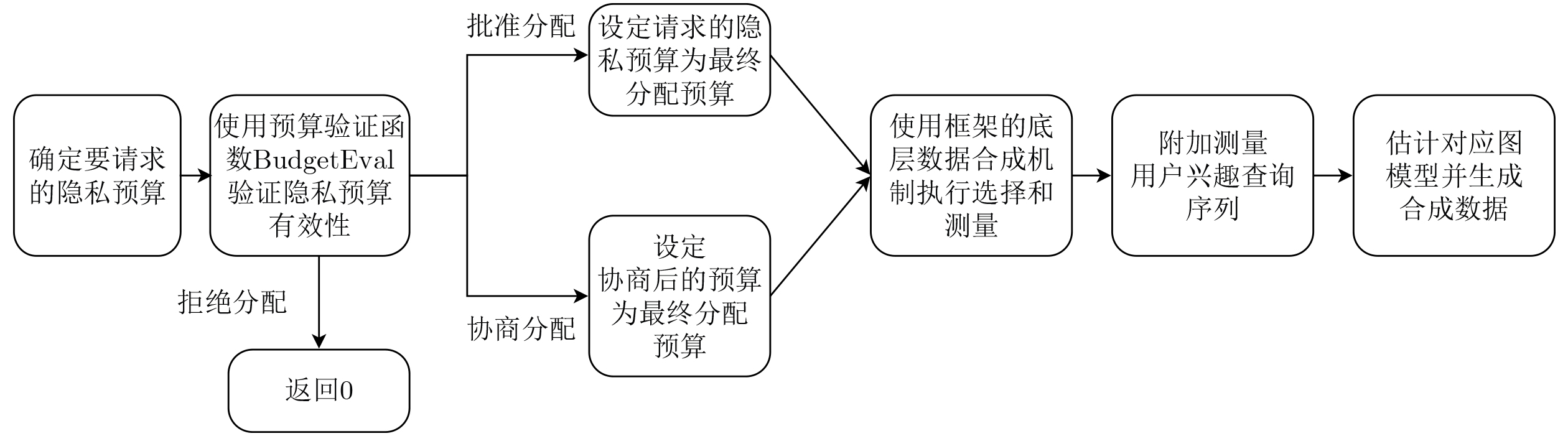
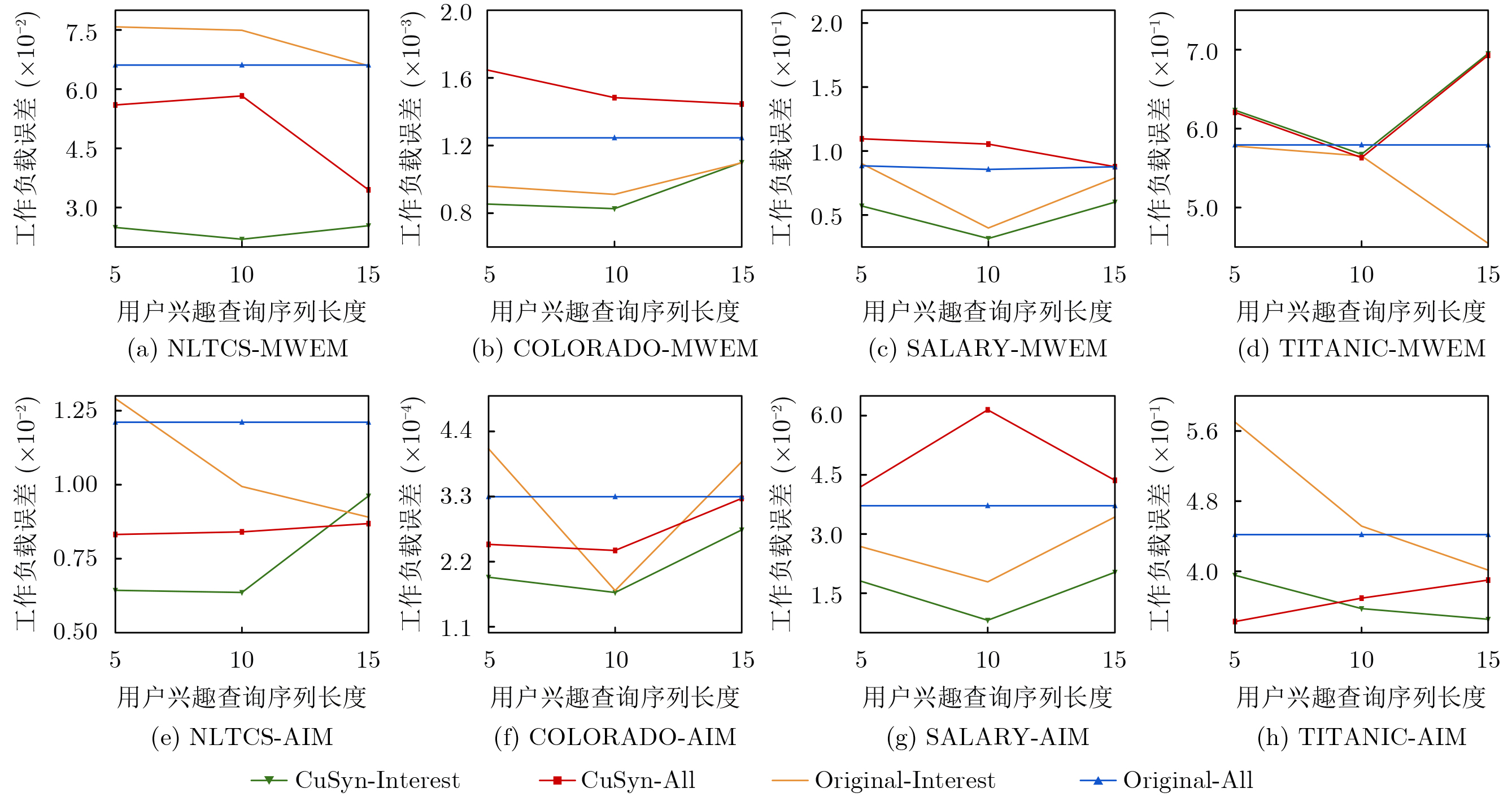
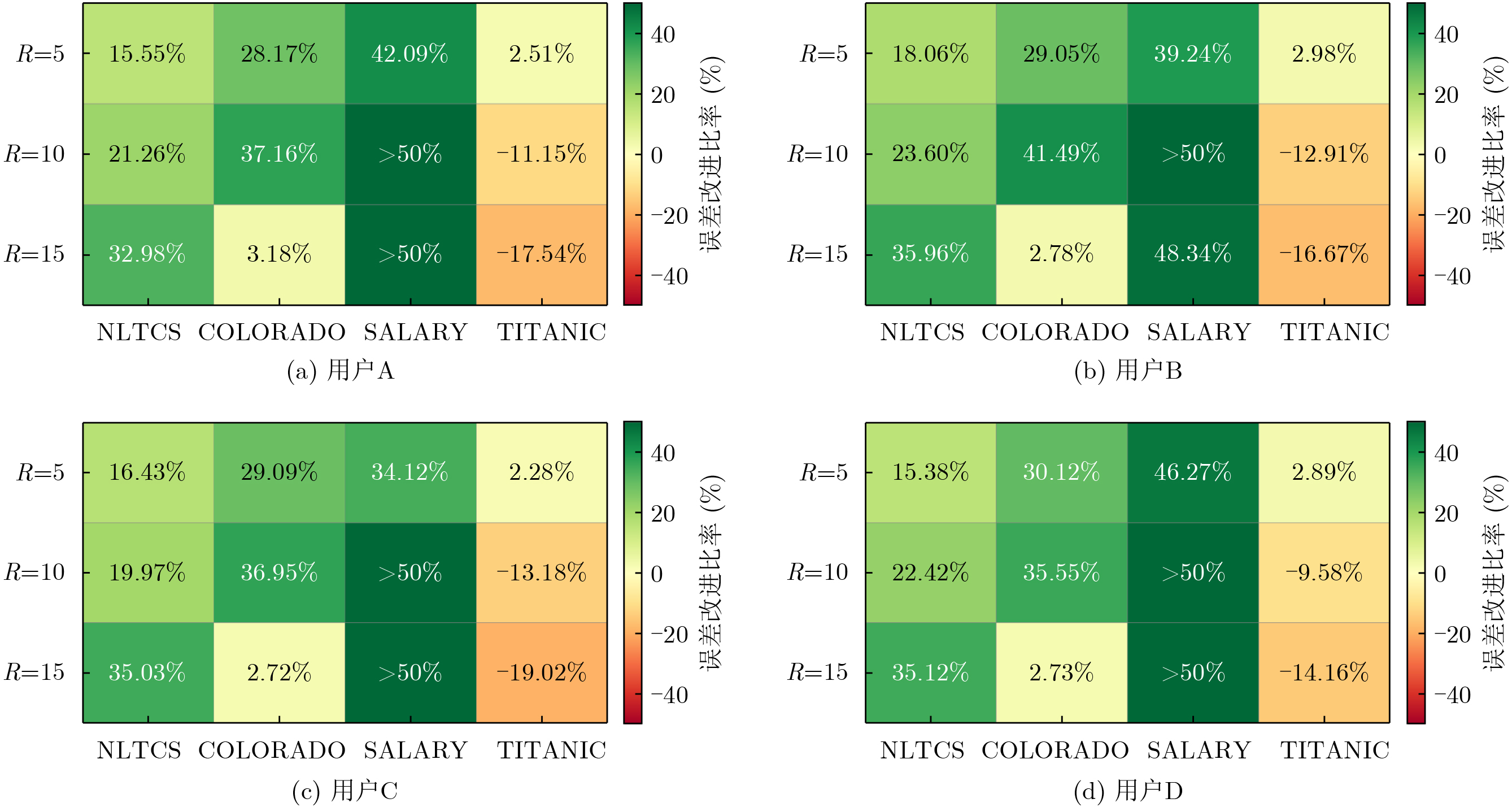
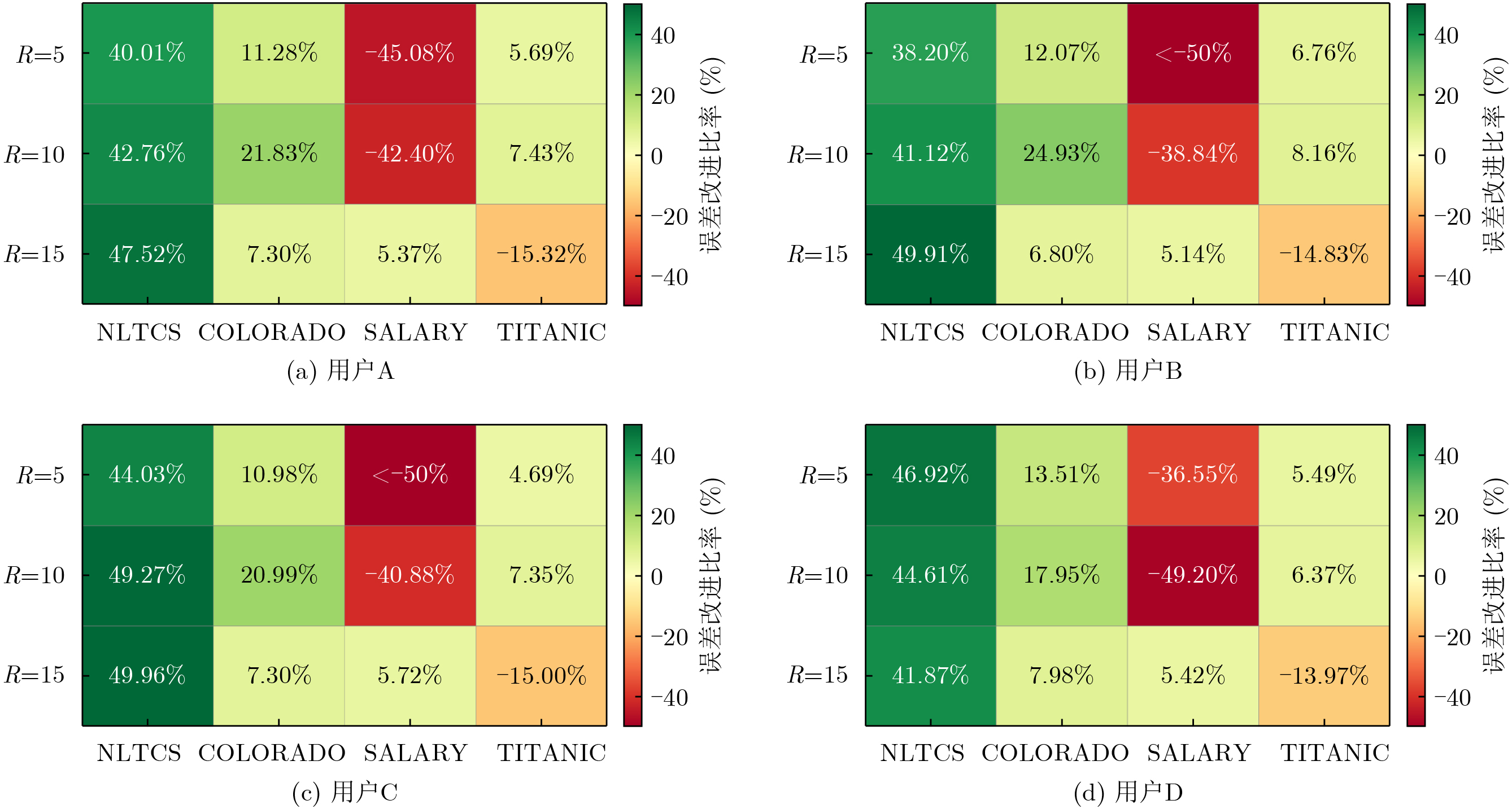
  •   Objective  With the rapid expansion of data-driven services and increasing concerns over privacy protection, publishing privacy-preserving synthetic data has become an important task for balancing analytical utility and individual confidentiality. While numerous Differential Privacy (DP) data synthesis mechanisms have been proposed to generate high-utility datasets, they are mainly designed for single-user and single-release scenarios. Applying these methods to multi-user and multiple data publishing scenarios still faces two major challenges: (1) the lack of systematic privacy budget tracking and fine-grained management mechanisms, which makes cumulative privacy risks across multiple releases difficult to control and audit; and (2) the inability to customize synthetic data according to the specific analytical queries of different users, resulting in reduced utility for targeted analyses. Therefore, an effective framework is required to achieve hierarchical privacy budget management and on-demand data synthesis while ensuring both privacy protection and data utility in complex multi-user publishing scenarios.  Methods  A customizable differential privacy data synthesis framework, CuSyn, is proposed for multi-user and multiple data publishing scenarios. CuSyn integrates customization requirements into the standard select-measure-generate paradigm through well-defined interfaces and consists of two key components. First, a scalable pool-based privacy budget management strategy is designed to provide strict and traceable control over privacy expenditure. For each original dataset, a dedicated privacy budget pool is maintained and initialized with a predefined global limit, and a user-level privacy budget pool can be maintained for each authorized user to support differentiated access control. A BudgetEval function is developed to validate and allocate the budget of each synthesis request (Algorithm 1) through a configurable four-level budget constraint system, including the per-synthesis budget limit, the per-request user budget limit, the remaining budget of the dataset budget pool, and the remaining budget of the user budget pool. This hierarchical management mechanism provides multi-level control from the global system level to the user level and dataset level, ensuring that cumulative privacy leakage across all users and releases remains bounded even under worst-case collusion. When a request exceeds some constraints but remains partially feasible, the function adaptively negotiates the maximum admissible budget instead of directly rejecting the request. A formal privacy composition analysis is conducted under the zero-Concentrated Differential Privacy (zCDP) framework. Each approved budget is converted into a zCDP parameter, and the cumulative privacy loss of all synthesis operations is bounded by the sum of these parameters. Since the privacy budget pool is never refilled, the cumulative privacy loss cannot exceed the privacy guarantee derived from the predefined global budget and remains independent of user identities, making the guarantee valid even when users collude and combine their synthetic datasets. Second, a customizable synthesis mechanism is developed to extend the standard synthesis pipeline. Users submit user interest query sequences, and CuSyn first performs standard iterative query selection and measurement to capture general statistical characteristics, followed by additional measurements on user interest queries (Algorithm 2 and Algorithm 3). The noisy measurements from both stages are jointly used to estimate the final Probabilistic Graphical Model (PGM) and generate customized synthetic datasets. The allocated budget is shared between the iterative process and user interest query measurements, and the Gaussian noise scale is adjusted accordingly, enabling customization without additional privacy cost. For long user interest query sequences, the number of standard iterations can be reduced to avoid excessive budget dilution and maintain query accuracy.  Results and Discussions  The performance of CuSyn is evaluated on multiple real-world datasets with different characteristics and scales (Table 1) and compared with two state-of-the-art probabilistic graphical model (PGM)-based mechanisms, AIM and MWEM-PGM. Three experiments are conducted: varying the length of the user interest query sequence (LEN), varying the privacy budget (BGT), and simulating multiple data publishing by multiple users under a shared privacy budget pool (MUL), with the experimental settings summarized in Table 2. The user interest queries of each user are randomly selected from the workload containing all two-dimensional marginal queries of each dataset. In the LEN experiments (Fig. 2), CuSyn achieves lower error on user interest queries than the baseline mechanisms across most datasets and sequence length settings. For example, on the NLTCS dataset with a user interest query sequence length of 10, the error of user interest queries is reduced by approximately 67% compared with the baseline, while the error on the overall workload remains comparable to that of the baseline methods. In some configurations, such as the NLTCS dataset with a sequence length of 15, the overall workload error is also reduced substantially. However, increasing the number of user interest queries does not always reduce the error because the privacy budget is shared between the standard iterative phase and the user interest query measurement phase. When the user interest query sequence occupies a large proportion of the workload, the available budget for capturing general statistical characteristics decreases, resulting in higher overall workload error. Therefore, the sequence length should balance the utility of user interest queries and overall data availability. In the BGT experiments (Fig. 3), CuSyn maintains similar advantages under different privacy budget levels. The average workload error over all attributes decreases as the privacy budget increases, and the utility of user interest queries is higher than that of the baseline methods in most settings. For AIM, the adaptive budget allocation strategy reduces the influence of different privacy budget levels on performance, whereas CuSyn maintains improved utility on user interest queries while preserving overall workload accuracy. In the MUL experiments (Fig. 4 and Fig. 5), four independent users with different user interest query sequences are simulated under a shared total budget limit. CuSyn maintains its utility advantage on user interest queries over 5, 10, and 15 rounds of multiple data publishing, while the overall workload error remains comparable to that of the single-round synthesis case on most datasets. The results demonstrate that CuSyn provides an effective balance between user-specific query utility and overall synthetic data quality, confirming its capability to customize synthetic data for targeted analyses in multi-user and multiple data publishing scenarios. The current privacy budget allocation strategy is static, and all synthesis operations are treated as new releases. Future work will focus on adaptive privacy budget allocation strategies based on data sensitivity and user query patterns, as well as more efficient budget recovery mechanisms for incremental publishing.  Conclusions  A customizable differential privacy data synthesis framework, CuSyn, is proposed to address privacy-preserving data publishing in multi-user and multiple data publishing scenarios. The pool-based privacy budget management strategy provides a practical and provably secure approach for fine-grained hierarchical management of privacy expenditure and reduces the risk of cumulative privacy leakage. The customizable synthesis mechanism incorporates user interest queries into the data generation process, improving the utility of synthetic data for targeted analytical tasks. Experimental results demonstrate that CuSyn improves utility on user interest queries while maintaining comparable or better performance on the overall workload in both single-round and multiple data publishing scenarios. The proposed framework provides an effective solution for privacy-preserving synthetic data publishing in complex multi-user environments.
  • loading
  • [1]
    CHEN Chaochao, WU Huiwen, SU Jiajie, et al. Differential private knowledge transfer for privacy-preserving cross-domain recommendation[C]. The ACM Web Conference 2022, Lyon, France, 2022: 1455–1465. doi: 10.1145/3485447.3512192.
    [2]
    MCKENNA R, MULLINS B, SHELDON D, et al. AIM: An adaptive and iterative mechanism for differentially private synthetic data[J]. Proceedings of the VLDB Endowment, 2022, 15(11): 2599–2612. doi: 10.14778/3551793.3551817.
    [3]
    CAI Kuntai, LEI Xiaoyu, WEI Jianxin, et al. Data synthesis via differentially private Markov random fields[J]. Proceedings of the VLDB Endowment, 2021, 14(11): 2190–2202. doi: 10.14778/3476249.3476272.
    [4]
    DWORK C and ROTH A. The algorithmic foundations of differential privacy[J]. Foundations and Trends® in Theoretical Computer Science, 2014, 9(3/4): 211–407. doi: 10.1561/0400000042.
    [5]
    BUN M and STEINKE T. Concentrated differential privacy: Simplifications, extensions, and lower bounds[C]. The 14th International Conference on Theory of Cryptography, Beijing, China, 2016: 635–658. doi: 10.1007/978-3-662-53641-4_24.
    [6]
    MCKENNA R, MIKLAU G, and SHELDON D. Winning the NIST Contest: A scalable and general approach to differentially private synthetic data[J]. Journal of Privacy and Confidentiality, 2021, 11(3): 1–30. doi: 10.29012/jpc.778.
    [7]
    MCKENNA R and LIU T. A simple recipe for private synthetic data generation[EB/OL]. https://differentialprivacy.org/synth-data-1/, 2022.
    [8]
    MCKENNA R, SHELDON D, and MIKLAU G. Graphical-model based estimation and inference for differential privacy[C]. International Conference on Machine Learning, Long Beach, USA, 2019: 4435–4444.
    [9]
    CORMODE G, MADDOCK S, ULLAH E, et al. Synthetic tabular data: Methods, attacks and defenses[C]. The 31st ACM SIGKDD Conference on Knowledge Discovery and Data Mining, Toronto, Canada, 2025: 5989–5998. doi: 10.1145/3711896.3736562.
    [10]
    FENG Shuya, MOHAMMADY M, WANG Han, et al. DPI: Ensuring strict differential privacy for infinite data streaming[C]. 2024 IEEE Symposium on Security and Privacy (SP), San Francisco, USA, 2024: 1009–1027. doi: 10.1109/SP54263.2024.00124.
    [11]
    WANG Xiujun, MO Lei, ZHENG Xiao, et al. Streaming histogram publication over weighted sliding windows under differential privacy[J]. Tsinghua Science and Technology, 2024, 29(6): 1674–1693. doi: 10.26599/TST.2023.9010083.
    [12]
    LI Xiaochen, LI Tianyu, CHENG Yitian, et al. Spas: Continuous release of data streams under w-event differential privacy[J]. Proceedings of the ACM on Management of Data, 2025, 3(1): 78a. doi: 10.1145/3714420.
    [13]
    LIU Xiang, GUO Yuchun, CHEN Yishuai, et al. Trajectory privacy protection on spatial streaming data with differential privacy[C]. 2018 IEEE Global Communications Conference (GLOBECOM), Abu Dhabi, UAE, 2018: 1–7. doi: 10.1109/GLOCOM.2018.8647918.
    [14]
    HU Yujia, DU Yuntao, ZHANG Zhikun, et al. Real-time trajectory synthesis with local differential privacy[C]. 2024 IEEE 40th International Conference on Data Engineering (ICDE), Utrecht, Netherlands, 2024: 1685–1698. doi: 10.1109/ICDE60146.2024.00137.
    [15]
    LIU Weiming, ZHENG Xiaolin, CHEN Chaochao, et al. Reducing item discrepancy via differentially private robust embedding alignment for privacy-preserving cross domain recommendation[C]. 41st International Conference on Machine Learning, Vienna, Austria, 2024: 1317. doi: 10.5555/3692070.3693387.
    [16]
    ALSHANTTI A, VARAGNOLO D, RASHEED A, et al. CasTGAN: Cascaded generative adversarial network for realistic tabular data synthesis[J]. IEEE Access, 2024, 12: 13213–13232. doi: 10.1109/ACCESS.2024.3356913.
    [17]
    KATO F, TAKAHASHI T, TAKAGI S, et al. HDPView: Differentially private materialized view for exploring high dimensional relational data[J]. Proceedings of the VLDB Endowment, 2022, 15(9): 1766–1778. doi: 10.14778/3538598.3538601.
    [18]
    魏立斐, 张无忌, 张蕾, 等. 基于本地差分隐私的异步横向联邦安全梯度聚合方案[J]. 电子与信息学报, 2024, 46(7): 3010–3018. doi: 10.11999/JEIT230923.

    WEI Lifei, ZHANG Wuji, ZHANG Lei, et al. A secure gradient aggregation scheme based on local differential privacy in asynchronous horizontal federated learning[J]. Journal of Electronics & Information Technology, 2024, 46(7): 3010–3018. doi: 10.11999/JEIT230923.
    [19]
    张朋飞, 程俊, 张治坤, 等. 满足本地差分隐私的混合噪音感知的模糊C均值聚类算法[J]. 电子与信息学报, 2025, 47(3): 739–757. doi: 10.11999/JEIT241067.

    ZHANG Pengfei, CHENG Jun, ZHANG Zhikun, et al. Fuzzy C-means clustering algorithm based on mixed noise-aware under local differential privacy[J]. Journal of Electronics & Information Technology, 2025, 47(3): 739–757. doi: 10.11999/JEIT241067.
    [20]
    张朋飞, 安建隆, 程祥, 等. 本地差分隐私下基于混合分布的真值发现算法[J]. 电子与信息学报, 2025, 47(6): 1896–1910. doi: 10.11999/JEIT240936.

    ZHANG Pengfei, AN Jianlong, CHENG Xiang, et al. Mixture distribution-based truth discovery algorithm under local differential privacy[J]. Journal of Electronics & Information Technology, 2025, 47(6): 1896–1910. doi: 10.11999/JEIT240936.
    [21]
    方贤进, 甄雅茹, 张朋飞, 等. 本地差分隐私下技能感知的任务分配算法研究[J]. 电子与信息学报, 2025, 47(11): 4429–4439. doi: 10.11999/JEIT250425.

    FANG Xianjin, ZHEN Yaru, ZHANG Pengfei, et al. Research on skill-aware task assignment algorithm under local differential privacy[J]. Journal of Electronics & Information Technology, 2025, 47(11): 4429–4439. doi: 10.11999/JEIT250425.
  • 加载中

Catalog

    通讯作者: 陈斌, bchen63@163.com
    • 1. 

      沈阳化工大学材料科学与工程学院 沈阳 110142

    1. 本站搜索
    2. 百度学术搜索
    3. 万方数据库搜索
    4. CNKI搜索

    Figures(5)  / Tables(5)

    Article Metrics

    Article views (101) PDF downloads(5) Cited by()
    Proportional views
    Related

    /

    DownLoad:  Full-Size Img  PowerPoint
    Return
    Return