Advanced Search
Turn off MathJax
Article Contents
WANG Xuye, ZHAO Wenbo, BAI Yuanchao, WANG Kai, LIU Xianming. LINC: Lightweight Implicit Inter-Frame Coding Framework for Near-Lossless Medical Image Compression[J]. Journal of Electronics & Information Technology. doi: 10.11999/JEIT260244
Citation: WANG Xuye, ZHAO Wenbo, BAI Yuanchao, WANG Kai, LIU Xianming. LINC: Lightweight Implicit Inter-Frame Coding Framework for Near-Lossless Medical Image Compression[J]. Journal of Electronics & Information Technology. doi: 10.11999/JEIT260244

LINC: Lightweight Implicit Inter-Frame Coding Framework for Near-Lossless Medical Image Compression

doi: 10.11999/JEIT260244 cstr: 32379.14.JEIT260244
Funds:  The National Natural Science Foundation of China (62401176)
  • Received Date: 2026-03-06
  • Accepted Date: 2026-10-28
  • Rev Recd Date: 2026-10-20
  • Available Online: 2026-10-31
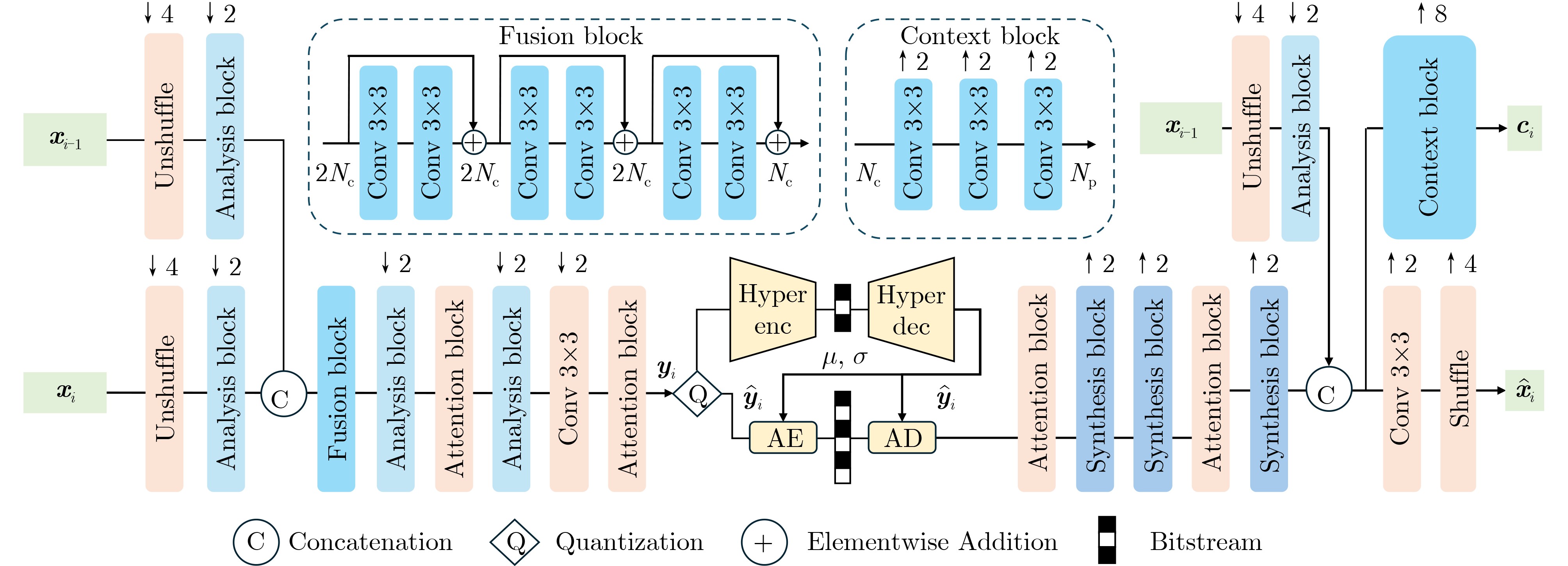
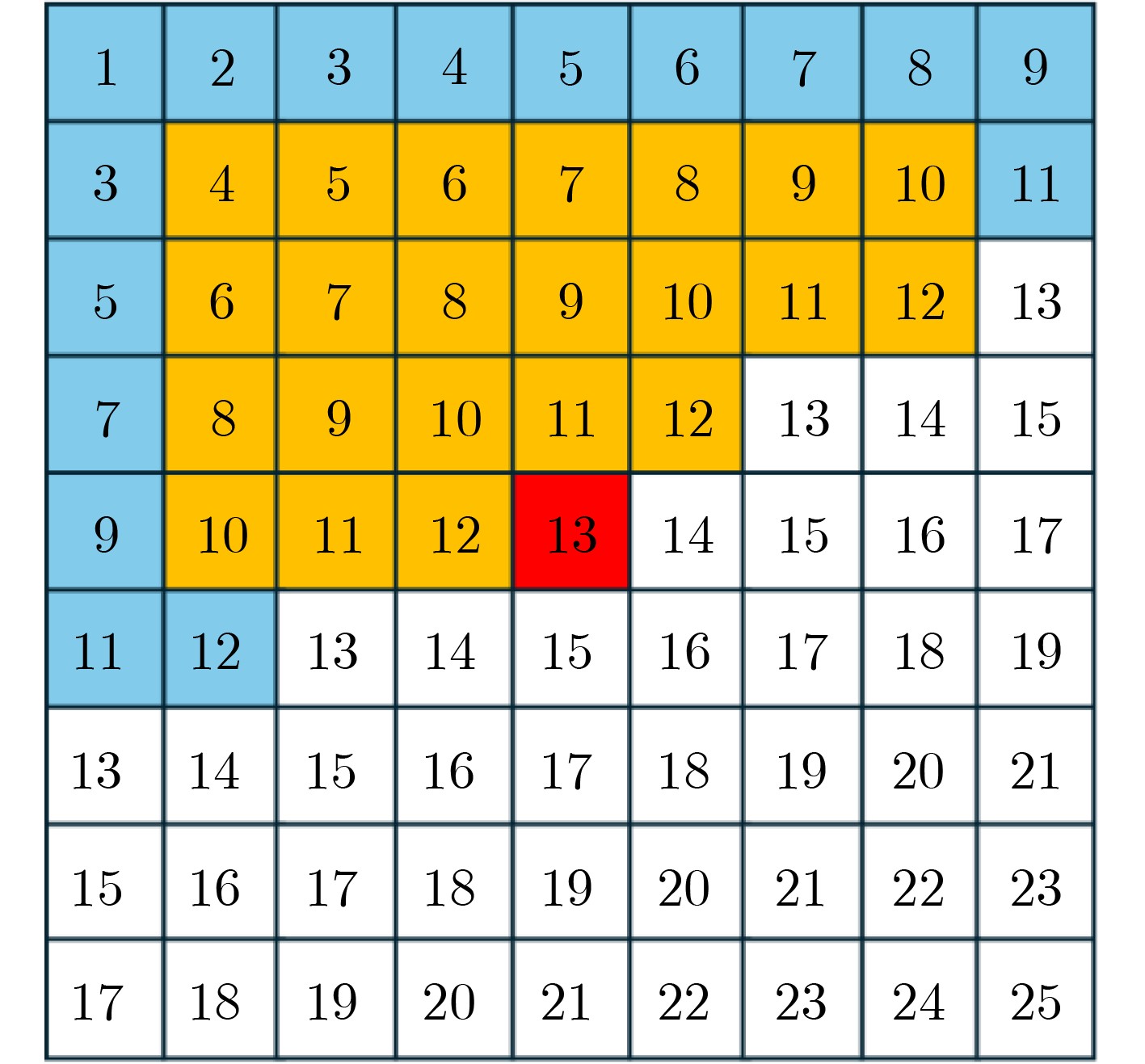
  •   Objective  With the rapid advancement of Artificial Intelligence (AI)-enabled healthcare systems and high-speed communication networks, the growing volume of medical imaging data generated by large-scale Computed Tomography (CT) and Magnetic Resonance Imaging (MRI) examinations places substantial demands on storage and transmission infrastructures. Unlike natural images, medical images require high diagnostic fidelity. Therefore, lossy compression may be unsuitable when irreversible errors compromise clinically relevant details and pose potential clinical risks. Although lossless compression guarantees exact reconstruction, its coding efficiency is fundamentally constrained by the entropy lower bound, resulting in limited compression ratios. Near-lossless compression relaxes this constraint by limiting the absolute reconstruction error at each pixel to a predefined threshold τ, thereby improving coding efficiency while preserving diagnostic reliability. However, existing near-lossless methods typically model each frame independently and do not fully exploit inter-frame correlations in volumetric medical image sequences. To address this limitation, a Lightweight Implicit Near-lossless Compression (LINC) framework based on implicit inter-frame coding is proposed. The framework integrates lossy coding and near-lossless residual coding within a unified probabilistic modeling approach while exploiting temporal dependencies between adjacent slices.  Methods  Given a medical image sequence, LINC aims to achieve near-lossless compression under a strict per-pixel reconstruction error bound τ while maintaining low model complexity. The proposed framework comprises two stages: lossy inter-frame coding and near-lossless residual coding. In the lossy stage, the previously decoded frame serves as a reference for cross-frame conditional modeling. Rather than compressing image blocks independently, full-frame feature fusion is performed to capture long-range structural correlations. Inter-frame dependencies are implicitly represented through learned features and conditional probability distributions, without explicitly estimating or transmitting motion vectors, optical flow, or deformation fields. A lightweight encoder–decoder architecture incorporating attention modules extracts fused representations from the current and reference frames (Fig. 2). A hyperprior model estimates latent-variable distributions, and arithmetic coding is used to encode quantized latent representations. The total coding rate is decomposed into the latent representation cost and the conditional residual cost (Eqs. 4–5). The lossy reconstruction is then rescaled to the original pixel scale, rounded to the nearest integer, and clipped to the valid pixel range before residual calculation (Eq. 6). The residual is partitioned into blocks of size L×L to enable parallel processing. To satisfy the near-lossless constraint, interval quantization is applied (Eq. 7), ensuring that the reconstruction error does not exceed τ. Within each block, a parallel autoregressive scanning strategy is adopted (Fig. 3), and masked convolution extracts contextual information from previously encoded residuals. The conditional Probability Mass Function (PMF) of the residuals is modeled using a discretized logistic mixture model (Eq. 9), and the near-lossless PMF is derived through interval aggregation (Eq. 10). Arithmetic coding is then used to encode the quantized residuals. At the decoder, the recovered quantized residuals are added to the integer-valued lossy reconstruction, and the result is clipped to the valid pixel range without increasing the reconstruction error. During training, both lossless and near-lossless branches are retained to stabilize probability estimation (Eqs. 12–13). During deployment, a fixed Group of Pictures (GOP) structure (I–P–P–…–P) with a length of S = 8 is adopted. Each GOP consists of one Intra-coded frame (I-frame) followed by seven Predictive frames (P-frames). I-frames are encoded using a pretrained single-frame model, whereas P-frames are encoded using LINC. Dynamic residual range adjustment is introduced to accelerate entropy coding.  Result and Discussion   Extensive experiments are conducted on four medical imaging datasets: MosMed, CHAOS, MRNet, and ACDC (Section 4.1). Near-lossless compression performance at τ = 1–4 is compared with that of JPEG-LS, the Context-based Adaptive Lossless Image Codec (CALIC), and the Deep Lossy Plus Residual (DLPR) method (Table 1). The proposed method consistently achieves the lowest average bits per pixel (bpp) across all tested error thresholds. Across these thresholds, the average bpp of DLPR is approximately 15% higher than that of LINC. Performance gains vary across datasets according to differences in inter-frame correlation. Visualization of adjacent-frame differences and reconstruction residuals (Fig. 4) reveals weaker inter-frame correlation in the selected MRNet example than in the MosMed example, consistent with the smaller improvement observed on MRNet. The measured maximum absolute reconstruction errors remain within the prescribed thresholds across all four medical imaging datasets. In strict lossless mode, comparisons with JPEG2000, JPEG-XL, High Efficiency Video Coding (HEVC), JPEG-LS, CALIC, and DLPR show that LINC achieves the lowest average bpp, with the average bpp of DLPR approximately 7.6% higher than that of LINC (Table 2). These results further demonstrate the effectiveness of the framework in both compression modes. Complexity and resource analyses (Table 3) show that LINC has more parameters and higher peak Graphics Processing Unit (GPU) memory usage than DLPR, while requiring fewer floating-point operations for lossy encoding and slightly more for lossy decoding. Nevertheless, its measured average encoding and decoding times are shorter than those of DLPR (Table 4). Rate allocation analysis (Table 5) further indicates that inter-frame modeling reduces both latent and residual coding costs in P-frames. An ablation study of residual block size (Table 6) reveals a trade-off between parallel processing efficiency and modeling accuracy. Increasing the block size from 64 to 256 reduces residual bpp by only approximately 0.09%, while increasing residual encoding and decoding times by approximately 279% and 283%, respectively. Therefore, L = 64 is selected as a practical compromise between efficiency and compression performance. Boundary and non-boundary regions exhibit similar Mean Absolute Error (MAE) and Peak Signal-to-Noise Ratio (PSNR) values on the evaluated CHAOS sequence, with no pronounced concentration of reconstruction errors at block boundaries (Table 7). Further ablation experiments show that full-frame modeling without inter-frame information improves compression relative to DLPR. Introducing inter-frame information into either stage provides additional gains, whereas using it in both stages achieves the lowest average bpp (Table 8). Experiments on BVI-DVC, JHMDB, and Xiph show that LINC consistently achieves lower bpp than DLPR across all tested error thresholds. However, on Xiph, LINC achieves higher bpp than CALIC at τ = 1–4, indicating limitations in its applicability to natural video compression (Table 9).  Conclusions  This study proposes LINC, a lightweight framework for implicit inter-frame near-lossless compression of medical images. By integrating lossy coding and near-lossless residual coding within a probabilistic framework and introducing cross-frame conditional modeling, LINC effectively exploits temporal redundancy in medical image sequences. Experimental results show that LINC achieves lower average bpp and shorter average encoding and decoding times than DLPR, although it requires more parameters and higher peak GPU memory usage. Furthermore, the framework supports strict lossless compression and achieves measurable coding-efficiency gains. Although improvements over DLPR are also observed on natural video datasets, LINC’s competitiveness against traditional codecs remains dataset-dependent. The proposed method provides an efficient solution for large-scale medical image storage and transmission under strict per-pixel reconstruction error constraints.
  • loading
  • [1]
    WALLACE G K. The JPEG still picture compression standard[J]. Communications of the ACM, 1991, 34(4): 30–44. doi: 10.1145/103085.103089.
    [2]
    SULLIVAN G J, OHM J R, HAN W J, et al. Overview of the high efficiency video coding (HEVC) standard[J]. IEEE Transactions on Circuits and Systems for Video Technology, 2012, 22(12): 1649–1668. doi: 10.1109/TCSVT.2012.2221191.
    [3]
    CHEN Yue, MURHERJEE D, HAN Jingning, et al. An overview of core coding tools in the AV1 video codec[C]. The 2018 Picture Coding Symposium, San Francisco, USA, 2018: 41–45. doi: 10.1109/PCS.2018.8456249.
    [4]
    盛庆华, 陶泽浩, 黄小芳, 等. 一种面向AV1粗模式决策的高吞吐量硬件设计方法[J]. 电子与信息学报, 2025, 47(4): 1202–1214. doi: 10.11999/JEIT240823.

    SHENG Qinghua, TAO Zehao, HUANG Xiaofang, et al. A high-throughput hardware design for AV1 rough mode decision[J]. Journal of Electronics & Information Technology, 2025, 47(4): 1202–1214. doi: 10.11999/JEIT240823.
    [5]
    唐述, 周广义, 谢显中, 等. 一种快速的多尺度多输入编码树单元互补分类网络[J]. 电子与信息学报, 2024, 46(9): 3646–3653. doi: 10.11999/JEIT240223.

    TANG Shu, ZHOU Guangyi, XIE Xianzhong, et al. A multi-scale-multi-input complementation classification network for fast coding tree unit partition[J]. Journal of Electronics & Information Technology, 2024, 46(9): 3646–3653. doi: 10.11999/JEIT240223.
    [6]
    SHANNON C E. A mathematical theory of communication[J]. The Bell System Technical Journal, 1948, 27(3): 379–423. doi: 10.1002/j.1538-7305.1948.tb01338.x.
    [7]
    WEINBERGER M J, SEROUSSI G, and SAPIRO G. The LOCO-I lossless image compression algorithm: Principles and standardization into JPEG-LS[J]. IEEE Transactions on Image Processing, 2000, 9(8): 1309–1324. doi: 10.1109/83.855427.
    [8]
    WU Xiaolin and MEMON N. CALIC-a context based adaptive lossless image codec[C]. The 1996 IEEE International Conference on Acoustics, Speech, and Signal Processing Conference Proceedings, Atlanta, USA, 1996: 1890–1893. doi: 10.1109/ICASSP.1996.544819.
    [9]
    柏园超, 刘文昌, 江俊君, 等. 深度神经网络图像压缩方法进展综述[J]. 电子与信息学报, 2025, 47(11): 4112–4128. doi: 10.11999/JEIT250567.

    BAI Yuanchao, LIU Wenchang, JIANG Junjun, et al. Advances in deep neural network based image compression: A survey[J]. Journal of Electronics & Information Technology, 2025, 47(11): 4112–4128. doi: 10.11999/JEIT250567.
    [10]
    LIAO Hengrui and LI Yue. LFC-UNet: Learned lossless medical image fast compression with U-Net[J]. PeerJ Computer Science, 2024, 10: e1924. doi: 10.7717/peerj-cs.1924.
    [11]
    ZHANG Zhe, WANG Huairui, CHEN Zhenzhong, et al. Learned lossless image compression based on bit plane slicing[C]. The 2024 IEEE/CVF Conference on Computer Vision and Pattern Recognition, Seattle, USA, 2024: 27569–27578. doi: 10.1109/CVPR52733.2024.02604.
    [12]
    LI Daxin, BAI Yuanchao, WANG Kai, et al. CALLIC: Content adaptive learning for lossless image compression[C]. The 39th Annual AAAI Conference on Artificial Intelligence, Philadelphia, USA, 2025: 4679–4688. doi: 10.1609/aaai.v39i5.32494.
    [13]
    WANG Kai, BAI Yuanchao, LI Daxin, et al. Learning lossless compression for high bit-depth volumetric medical image[J]. IEEE Transactions on Image Processing, 2025, 34: 113–125. doi: 10.1109/TIP.2024.3513156.
    [14]
    CHEN Jietao, CHEN Weijie, XING Qianjian, et al. Multi-scale contextual coding for human-machine vision of volumetric medical images[J]. IEEE Access, 2025, 13: 145663–145679. doi: 10.1109/ACCESS.2025.3597008.
    [15]
    LIU Xiangrui, WANG Meng, WANG Shiqi, et al. Bilateral context modeling for residual coding in lossless 3D medical image compression[J]. IEEE Transactions on Image Processing, 2024, 33: 2502–2513. doi: 10.1109/TIP.2024.3378910.
    [16]
    XUE Dongmei, MA Haichuan, LI Li, et al. aiWave: Volumetric image compression with 3-D trained affine wavelet-like transform[J]. IEEE Transactions on Medical Imaging, 2023, 42(3): 606–618. doi: 10.1109/TMI.2022.3212780.
    [17]
    WANG Kai, BAI Yuanchao, LI Daxin, et al. 3D-SLARM: Practical lossless volumetric image compression via a 3D-scanning lightweight autoregressive model[J]. IEEE Transactions on Image Processing, 2026, 35: 1174–1189. doi: 10.1109/TIP.2025.3648557.
    [18]
    黄胜, 向思皓, 胡峰, 等. 自适应不规则纹理的胶囊内镜图像无损压缩[J]. 计算机工程, 2022, 48(10): 21–27,36. doi: 10.19678/j.issn.1000-3428.0063208.

    HUANG Sheng, XIANG Sihao, HU Feng, et al. Adaptive lossless compression of capsule endoscopy image with irregular texture[J]. Computer Engineering, 2022, 48(10): 21–27,36. doi: 10.19678/j.issn.1000-3428.0063208.
    [19]
    薛冬梅. 基于类小波变换的生物医学图像和视频智能编码研究[D]. [博士论文], 中国科学技术大学, 2025. doi: 10.27517/d.cnki.gzkju.2025.000809.

    XUE Dongmei. Research on biomedical image and video intelligent coding based on wavelet-like transform[D]. [Ph. D. dissertation], University of Science and Technology of China, 2025. doi: 10.27517/d.cnki.gzkju.2025.000809.
    [20]
    BAI Yuanchao, LIU Xianming, WANG Kai, et al. Deep lossy plus residual coding for lossless and near-lossless image compression[J]. IEEE Transactions on Pattern Analysis and Machine Intelligence, 2024, 46(5): 3577–3594. doi: 10.1109/TPAMI.2023.3348486.
    [21]
    KINGMA D P and WELLING M. Auto-encoding variational bayes[C]. The 2nd International Conference on Learning Representations, Banff, Canada, 2014.
    [22]
    JIA Zhaoyang, LI Bin, LI Jiahao, et al. Towards practical real-time neural video compression[C]. The 2025 IEEE/CVF Conference on Computer Vision and Pattern Recognition, Nashville, USA, 2025: 12543–12552. doi: 10.1109/CVPR52734.2025.01170.
    [23]
    LIU Ze, LIN Yutong, CAO Yue, et al. Swin transformer: Hierarchical vision transformer using shifted windows[C]. The 2021 IEEE/CVF International Conference on Computer Vision, Montreal, Canada, 2021: 9992–10002. doi: 10.1109/ICCV48922.2021.00986.
    [24]
    BALLÉ J, MINNEN D, SINGH S, et al. Variational image compression with a scale hyperprior[C]. The 6th International Conference on Learning Representations, Vancouver, Canada, 2018.
    [25]
    SALIMANS T, KARPATHY A, CHEN Xi, et al. PixelCNN++: Improving the PixelCNN with discretized logistic mixture likelihood and other modifications[C]. The 5th International Conference on Learning Representations, Toulon, France, 2017.
    [26]
    MOROZOV S P, ANDREYCHENKO A E, BLOKHIN I A, et al. MosMedData: Data set of 1110 chest CT scans performed during the COVID-19 epidemic[J]. Digital Diagnostics, 2020, 1(1): 49–59. doi: 10.17816/DD46826.
    [27]
    KAVUR A E, GEZER N S, BARIŞ M, et al. CHAOS challenge-combined (CT-MR) healthy abdominal organ segmentation[J]. Medical Image Analysis, 2021, 69: 101950. doi: 10.1016/j.media.2020.101950.
    [28]
    BIEN N, RAJPURKAR P, BALL R L, et al. Deep-learning-assisted diagnosis for knee magnetic resonance imaging: Development and retrospective validation of MRNet[J]. PLoS Medicine, 2018, 15(11): e1002699. doi: 10.1371/journal.pmed.1002699.
    [29]
    BERNARD O, LALANDE A, ZOTTI C, et al. Deep learning techniques for automatic MRI cardiac multi-structures segmentation and diagnosis: Is the problem solved?[J]. IEEE Transactions on Medical Imaging, 2018, 37(11): 2514–2525. doi: 10.1109/TMI.2018.2837502.
    [30]
    SKODRAS A, CHRISTOPOULOS C, and EBRAHIMI T. The JPEG 2000 still image compression standard[J]. IEEE Signal Processing Magazine, 2001, 18(5): 36–58. doi: 10.1109/79.952804.
    [31]
    ALAKUIJALA J, VAN ASSELDONK R, BOUKORTT S, et al. JPEG XL next-generation image compression architecture and coding tools[C]. SPIE 11137, Applications of Digital Image Processing XLII, San Diego, USA, 2019: 111370K. doi: 10.1117/12.2529237.
    [32]
    MA Di, ZHANG Fan, and BULL D R. BVI-DVC: A training database for deep video compression[J]. IEEE Transactions on Multimedia, 2022, 24: 3847–3858. doi: 10.1109/TMM.2021.3108943.
    [33]
    JHUANG H, GALL J, ZUFFI S, et al. Towards understanding action recognition[C]. The 2013 IEEE International Conference on Computer Vision, Sydney, Australia, 2013: 3192–3199. doi: 10.1109/ICCV.2013.396.
    [34]
    Xiph. org Foundation. Xiph. org Video test media: Derf’s collection[EB/OL]. https://media.xiph.org/video/derf/, 2026. (查阅网上资料,未找到本条文献年份信息,请确认).
  • 加载中

Catalog

    通讯作者: 陈斌, bchen63@163.com
    • 1. 

      沈阳化工大学材料科学与工程学院 沈阳 110142

    1. 本站搜索
    2. 百度学术搜索
    3. 万方数据库搜索
    4. CNKI搜索

    Figures(4)  / Tables(9)

    Article Metrics

    Article views (57) PDF downloads(6) Cited by()
    Proportional views
    Related

    /

    DownLoad:  Full-Size Img  PowerPoint
    Return
    Return