Advanced Search
Turn off MathJax
Article Contents
ZHANG Guangchi, GUO Xuan, WANG Luyao, CUI Miao, FU Hao. Research on Energy Efficiency Optimization of Rotatable Hybrid Intelligent Reflecting Surface Communication[J]. Journal of Electronics & Information Technology. doi: 10.11999/JEIT260119
Citation: ZHANG Guangchi, GUO Xuan, WANG Luyao, CUI Miao, FU Hao. Research on Energy Efficiency Optimization of Rotatable Hybrid Intelligent Reflecting Surface Communication[J]. Journal of Electronics & Information Technology. doi: 10.11999/JEIT260119

Research on Energy Efficiency Optimization of Rotatable Hybrid Intelligent Reflecting Surface Communication

doi: 10.11999/JEIT260119 cstr: 32379.14.JEIT260119
Funds:  Guangdong Basic and Applied Basic Research Foundation (2026A1515011208), Guangdong Science and Technology Plan Project (2022A0505050023)
  • Accepted Date: 2026-04-23
  • Rev Recd Date: 2026-04-23
  • Available Online: 2026-05-16
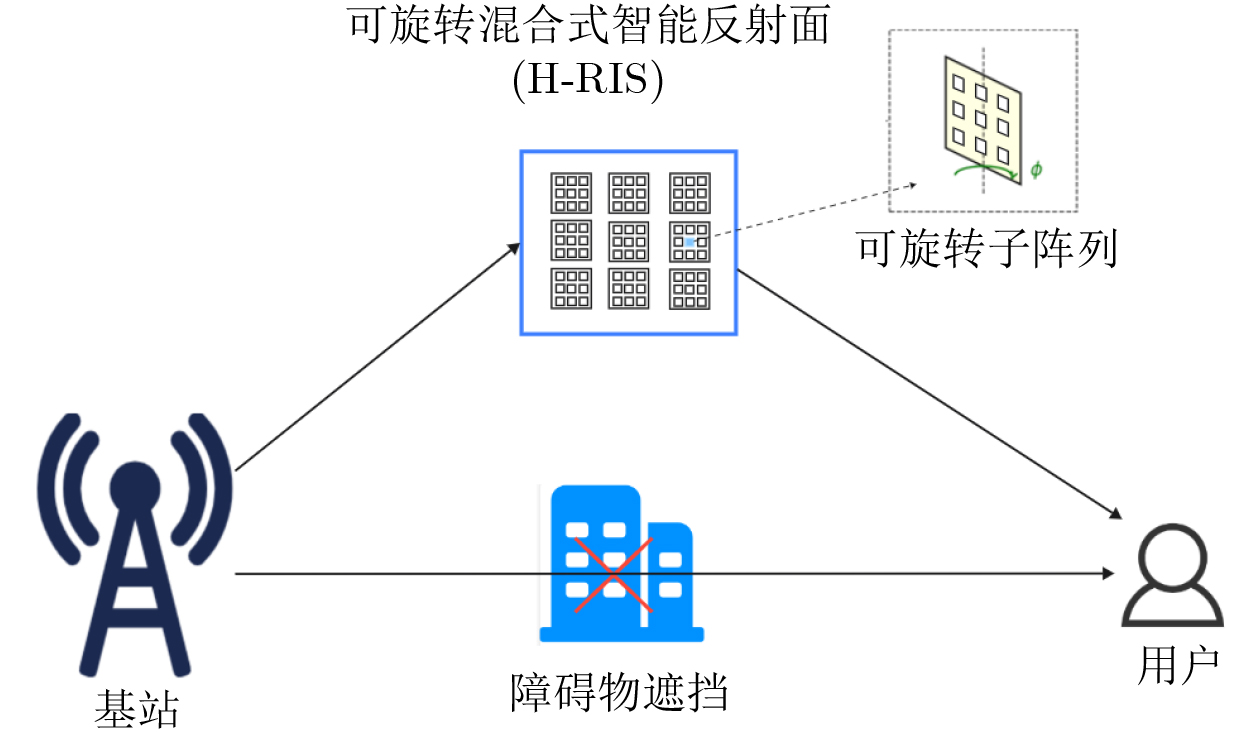
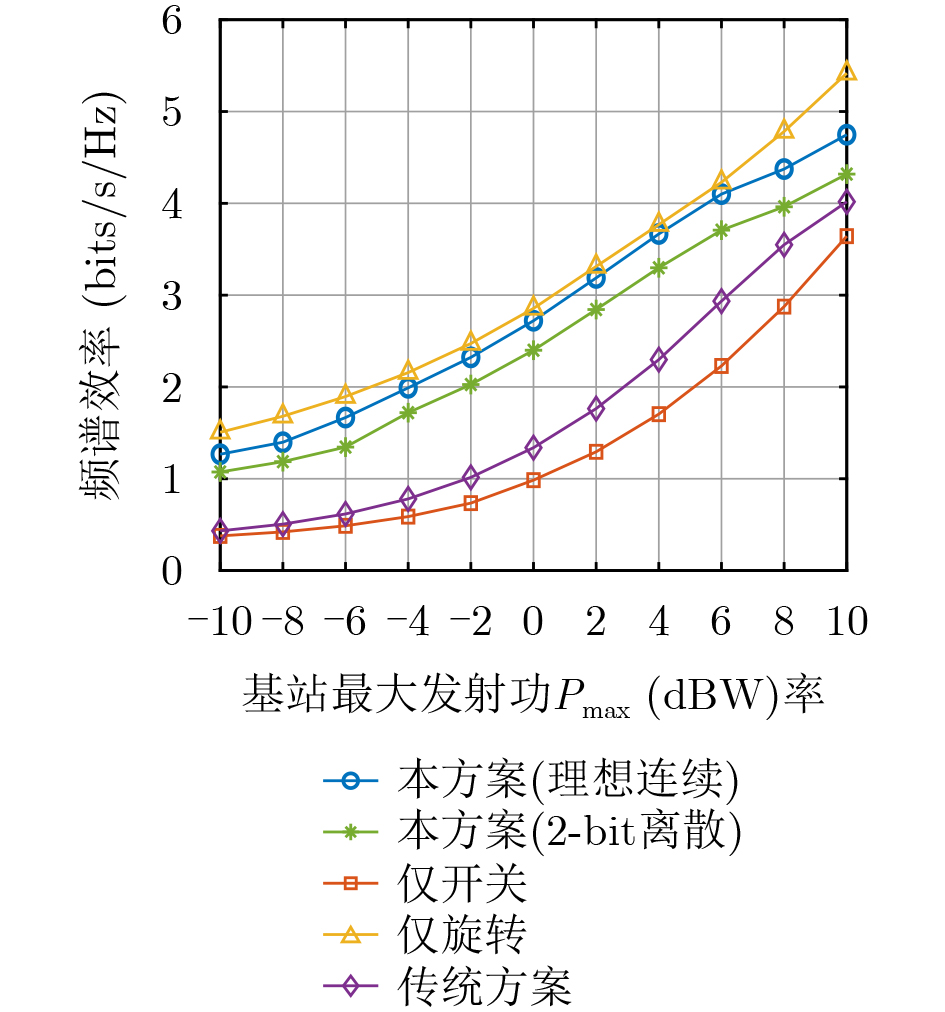
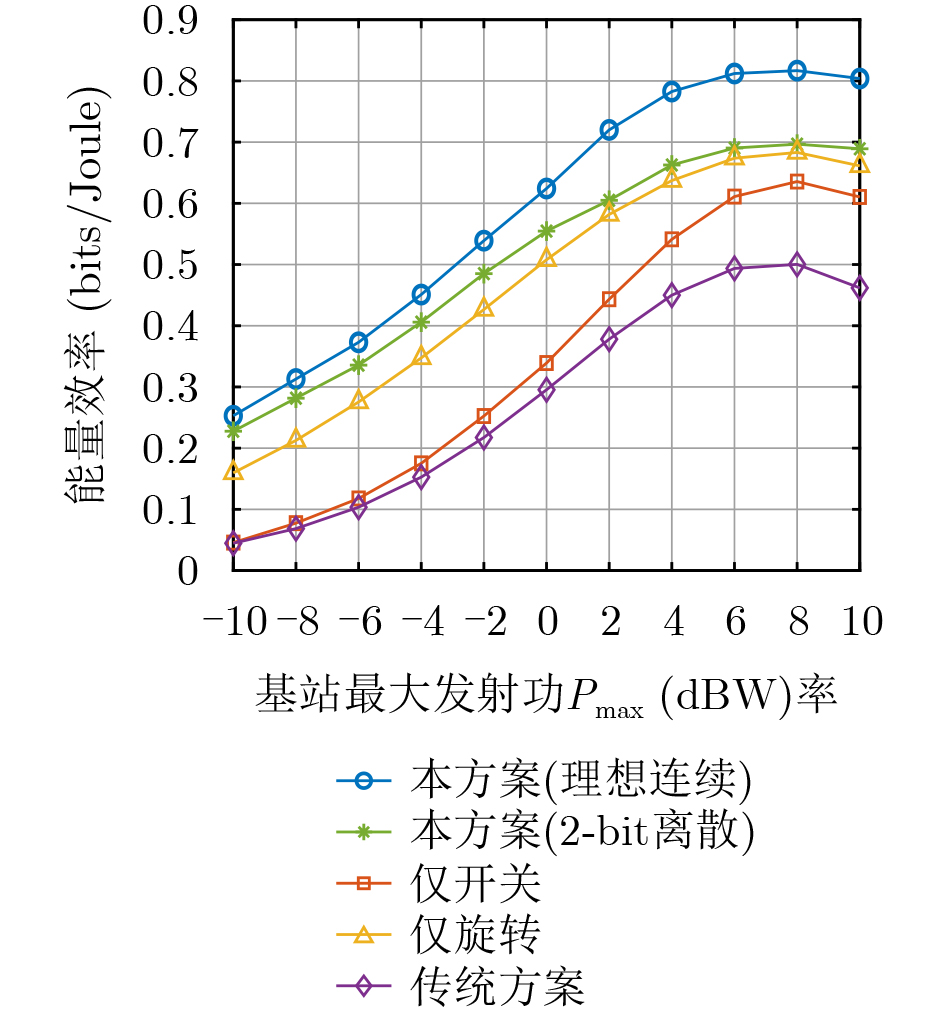
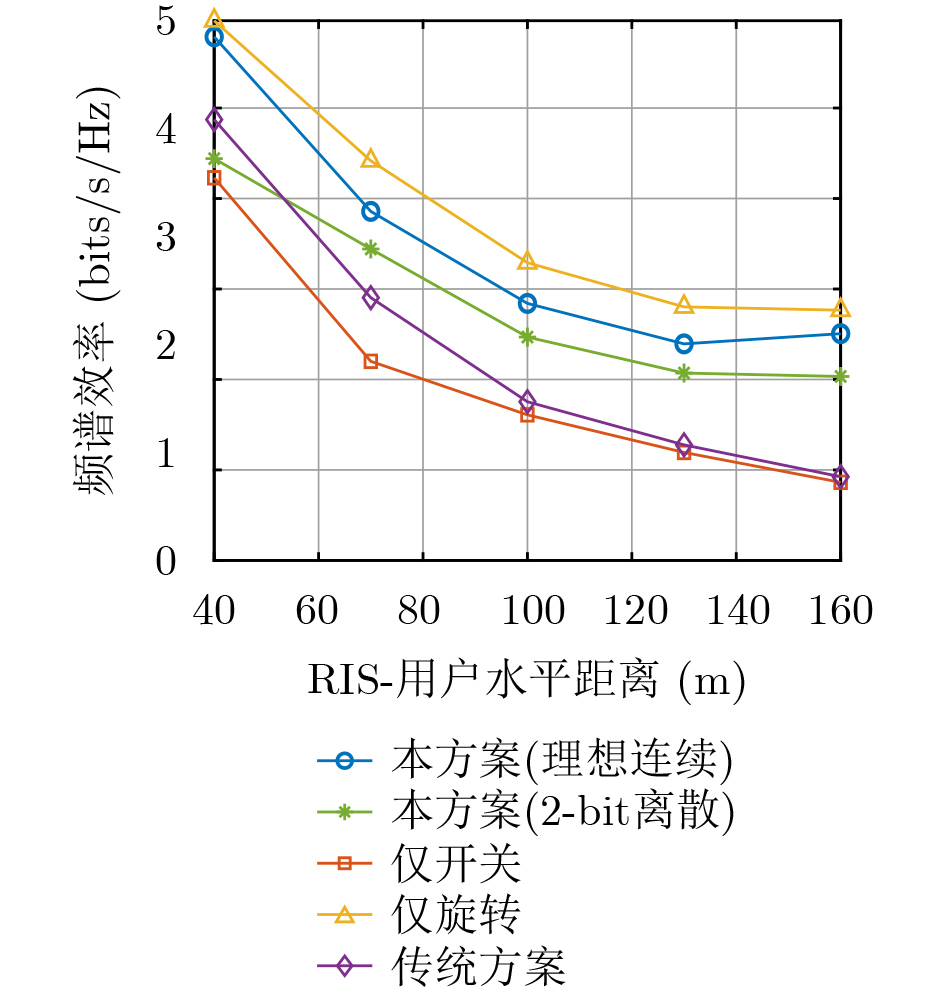
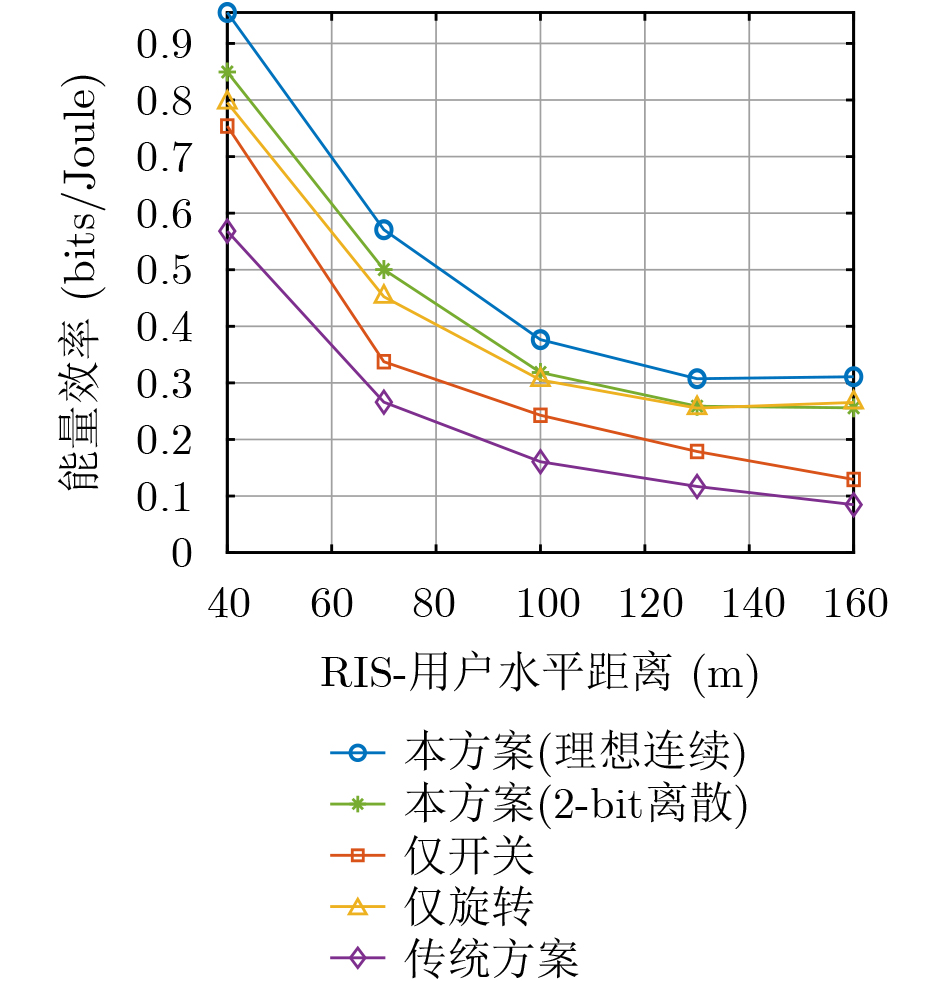
  •   Objective  With the evolution of 6G communication networks, reconfigurable intelligent surfaces (RIS) have emerged as a pivotal technology for reshaping wireless environments and enhancing spectral efficiency. However, conventional fixed RIS architectures face two critical challenges in practical deployment: the “angle mismatch” loss, where the effective aperture significantly diminishes when users are located at large angles from the RIS normal, and the “energy consumption bottleneck,” caused by the high cumulative power consumption of radio frequency (RF) circuits and static control elements in large-scale arrays. Existing research often treats mechanical rotation and element switching in isolation, lacking a unified framework to balance the trade-off between mechanical/circuit energy consumption and communication gain. To address these limitations, this paper investigates a rotatable and switchable hybrid RIS (H-RIS) assisted downlink communication system. The primary objective is to maximize the system’s energy efficiency (EE) by jointly optimizing the base station transmit power, subarray activation states, physical rotation angles, and electronic phase shifts. This approach aims to introduce mechanical rotation degrees of freedom to compensate for path loss and employ dynamic switching mechanisms to reduce redundant power consumption, thereby achieving sustainable green communication.  Methods  A joint optimization framework is established for the H-RIS aided single-user multiple-input single-output (MISO) system. The system model explicitly accounts for the dynamic power consumption induced by mechanical rotation and the static power consumption of active subarrays. The resulting optimization problem is formulated as a non-convex mixed-Integer non-linear programming (MINLP) problem, involving coupled binary variables (activation status) and continuous variables (power, angles, phases). To solve this challenging problem, a block coordinate descent (BCD)-based alternating optimization (AO) algorithm is proposed to decouple the variables into three sub-problems.Firstly, to tackle the exponential complexity caused by binary switching variables, a channel contribution-based ranking strategy is developed. By performing eigenvalue decomposition on the cascaded channel correlation matrix, the priority of each subarray is quantified, reducing the search space from exponential to linear.Secondly, for the power allocation sub-problem, the non-convex fractional objective function is transformed into a parametric subtractive form using the Dinkelbach algorithm, which is then solved via the interior-point method.Thirdly, for the physical rotation and electronic phase optimization, the problem is decomposed into single-variable sub-problems. A Golden Section Search algorithm is employed to iteratively find the optimal rotation angle and phase shift for each subarray within bounded constraints, ensuring the monotonic convergence of the objective function.  Results and Discussions  Extensive simulations are conducted to evaluate the performance of the proposed H-RIS scheme compared with benchmark schemes, including “Only-Rotation” (always on), “Only-Switching” (fixed angle), and “Conventional” (fixed and always on).The simulation results regarding the maximum transmit power Pmax(Fig. 2 and Fig. 3) demonstrate that the proposed method achieves the highest energy efficiency across the entire power range. Specifically, in the low power regime, the proposed algorithm intelligently turns off redundant subarrays where the rate gain cannot offset the circuit power cost, thereby significantly outperforming the “Only-Rotation” scheme which suffers from high static power consumption.The impact of user distance is also analyzed (Fig. 4 and Fig. 5). Results indicate that the proposed scheme maintains high spectral efficiency comparable to the “Only-Rotation” scheme by dynamically adjusting the rotation angles to align with the Line-of-Sight (LoS) path, effectively compensating for the angle mismatch loss observed in the “Only-Switching” and “Conventional” schemes.Furthermore, the activation pattern of the subarray varies in a “U” shape with distance (Table 1), which allows for flexible adjustment of array size and orientation according to user-RIS geometry.  Conclusions  This paper proposes an energy-efficient transmission scheme for H-RIS aided communication systems by integrating mechanical rotation and dynamic switching capabilities. A low-complexity BCD-based algorithm is developed to jointly optimize the transceiver design. The results confirm that introducing mechanical rotation significantly mitigates the angle mismatch loss, while the proposed channel contribution-based switching strategy effectively eliminates redundant energy consumption. The proposed H-RIS architecture offers a superior trade-off between spectral efficiency and energy efficiency compared to traditional fixed RIS architectures, providing a viable solution for future green 6G networks.
  • loading
  • [1]
    LU Haiquan, ZENG Yong, YOU Changsheng, et al. A tutorial on near-field XL-MIMO communications toward 6G[J]. IEEE Communications Surveys & Tutorials, 2024, 26(4): 2213–2257. doi: 10.1109/COMST.2024.3387749.
    [2]
    CUI Miao, ZHANG Guangchi, and ZHANG Rui. Secure wireless communication via intelligent reflecting surface[J]. IEEE Wireless Communications Letters, 2019, 8(5): 1410–1414. doi: 10.1109/LWC.2019.2919685.
    [3]
    DI RENZO M, ZAPPONE A, DEBBAH M, et al. Smart radio environments empowered by reconfigurable intelligent surfaces: How it works, state of research, and the road ahead[J]. IEEE Journal on Selected Areas in Communications, 2020, 38(11): 2450–2525. doi: 10.1109/JSAC.2020.3007211.
    [4]
    WU Qingqing and ZHANG Rui. Towards smart and reconfigurable environment: Intelligent reflecting surface aided wireless network[J]. IEEE Communications Magazine, 2020, 58(1): 106–112. doi: 10.1109/MCOM.001.1900107.
    [5]
    DONG Zhenjun and ZENG Yong. Near-field spatial correlation for extremely large-scale array communications[J]. IEEE Communications Letters, 2022, 26(7): 1534–1538. doi: 10.1109/LCOMM.2022.3170735.
    [6]
    CHANG Hengtai, WANG Chengxiang, BIAN Ji, et al. A novel 3D beam domain channel model for UAV massive MIMO communications[J]. IEEE Transactions on Wireless Communications, 2023, 22(8): 5431–5445. doi: 10.1109/TWC.2023.3233961.
    [7]
    WANG Jinghe, TANG Wankai, LIANG Jingcheng, et al. Reconfigurable intelligent surface: Power consumption modeling and practical measurement validation[J]. IEEE Transactions on Communications, 2024, 72(9): 5720–5734. doi: 10.1109/TCOMM.2024.3382332.
    [8]
    LI Zhiyi, ZHANG Jida, ZHU Jieao, et al. RIS energy efficiency optimization with practical power models[C]. 2023 International Wireless Communications and Mobile Computing (IWCMC), Marrakesh, Morocco, 2023: 1172–1177. doi: 10.1109/IWCMC58020.2023.10183034.
    [9]
    CHEN Weicong, YANG Xinyi, WEN Chaokai, et al. Rotatable block-controlled RIS: Bridging the performance gap to element-controlled systems[J]. IEEE Communications Letters, 2025, 29(1): 185–189. doi: 10.1109/LCOMM.2024.3508848.
    [10]
    WANG Junbo, ZHU Bingqian, PAN Yijin, et al. Power control and passive beamforming for the STAR-RIS with rotatable angles[J]. IEEE Transactions on Vehicular Technology, 2024, 73(8): 12121–12125. doi: 10.1109/TVT.2024.3369617.
    [11]
    XU Shuqing, GUO Haiyan, DONG Wen, et al. Optimal elevation and azimuth rotation for RIS-assisted wireless transmission[J]. IEEE Communications Letters, 2024, 28(12): 2909–2913. doi: 10.1109/LCOMM.2024.3477957.
    [12]
    TAHERI Z and SOLEYMANI M R. Optimizing energy efficiency in large RIS-aided multi-user MISO communication systems[C]. 2024 IEEE 100th Vehicular Technology Conference (VTC2024-Fall), Washington, USA, 2024: 1–5. doi: 10.1109/VTC2024-Fall63153.2024.10757578.
    [13]
    YANG Xinyi, CHEN Weicong, LI Xiao, et al. Performance evaluation for subarray-based reconfigurable intelligent surface-aided wireless communication systems[C]. GLOBECOM 2023 - 2023 IEEE Global Communications Conference, Kuala Lumpur, Malaysia, 2023: 2027–2032. doi: 10.1109/GLOBECOM54140.2023.10437470.
    [14]
    YANG Wanning, LI Ming, and LIU Qian. A practical channel estimation strategy for XL-MIMO communication systems[J]. IEEE Communications Letters, 2023, 27(6): 1580–1583. doi: 10.1109/LCOMM.2023.3266821.
    [15]
    ZHAO Boqun, OUYANG Chongjun, LIU Yuanwei, et al. Modeling and analysis of near-field ISAC[J]. IEEE Journal of Selected Topics in Signal Processing, 2024, 18(4): 678–693. doi: 10.1109/JSTSP.2024.3386054.
    [16]
    LI Jin, ZHOU Gui, GONG Tantao, et al. A framework for mutual information-based MIMO integrated sensing and communication beamforming design[J]. IEEE Transactions on Vehicular Technology, 2024, 73(6): 8352–8366. doi: 10.1109/TVT.2024.3355899.
    [17]
    QU Kaiqian, GUO Shuaishuai, SAEED N, et al. Near-field integrated sensing and communication: Performance analysis and beamforming design[J]. IEEE Open Journal of the Communications Society, 2024, 5: 6353–6366. doi: 10.1109/OJCOMS.2024.3470844.
    [18]
    ZHU Lipeng, MA Wenyan, and ZHANG Rui. Modeling and performance analysis for movable antenna enabled wireless communications[J]. IEEE Transactions on Wireless Communications, 2024, 23(6): 6234–6250. doi: 10.1109/TWC.2023.3330887.
    [19]
    DINKELBACH W. On nonlinear fractional programming[J]. Management Science, 1967, 13(7): 492–498.
    [20]
    ZHAO Mingmin, WU Qingqing, ZHAO Minjian, et al. Intelligent reflecting surface enhanced wireless networks: Two-timescale beamforming optimization[J]. IEEE Transactions on Wireless Communications, 2021, 20(1): 2–17. doi: 10.1109/TWC.2020.3022297.
  • 加载中

Catalog

    通讯作者: 陈斌, bchen63@163.com
    • 1. 

      沈阳化工大学材料科学与工程学院 沈阳 110142

    1. 本站搜索
    2. 百度学术搜索
    3. 万方数据库搜索
    4. CNKI搜索

    Figures(5)  / Tables(2)

    Article Metrics

    Article views (61) PDF downloads(3) Cited by()
    Proportional views
    Related

    /

    DownLoad:  Full-Size Img  PowerPoint
    Return
    Return