Advanced Search
Turn off MathJax
Article Contents
CHONG Penghao, ZHENG Yunlong, YANG Aosong, GUO Mengci, LI Shifeng. Household Appliance Plastics Identification by Fusing Multi-Level Feature Enhancement and Hierarchical Classification[J]. Journal of Electronics & Information Technology. doi: 10.11999/JEIT260084
Citation: CHONG Penghao, ZHENG Yunlong, YANG Aosong, GUO Mengci, LI Shifeng. Household Appliance Plastics Identification by Fusing Multi-Level Feature Enhancement and Hierarchical Classification[J]. Journal of Electronics & Information Technology. doi: 10.11999/JEIT260084

Household Appliance Plastics Identification by Fusing Multi-Level Feature Enhancement and Hierarchical Classification

doi: 10.11999/JEIT260084 cstr: 32379.14.JEIT260084
Funds:  Scientific Research Project of the Education Department of Hebei Province(QN2024142)
  • Received Date: 2026-01-22
  • Accepted Date: 2026-04-17
  • Rev Recd Date: 2026-04-17
  • Available Online: 2026-04-30
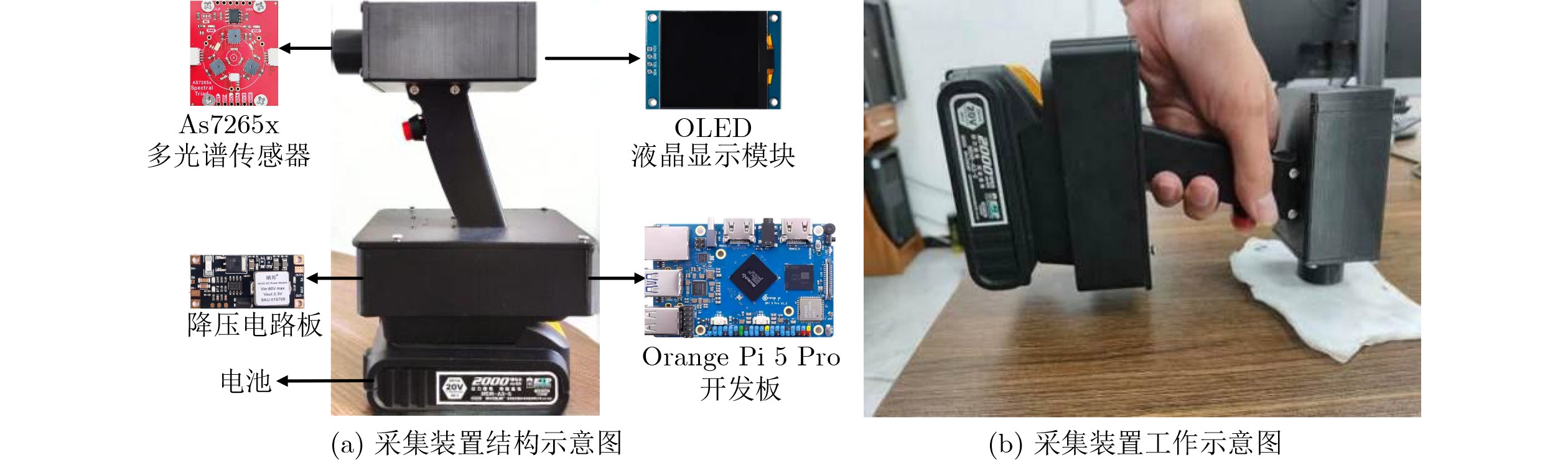
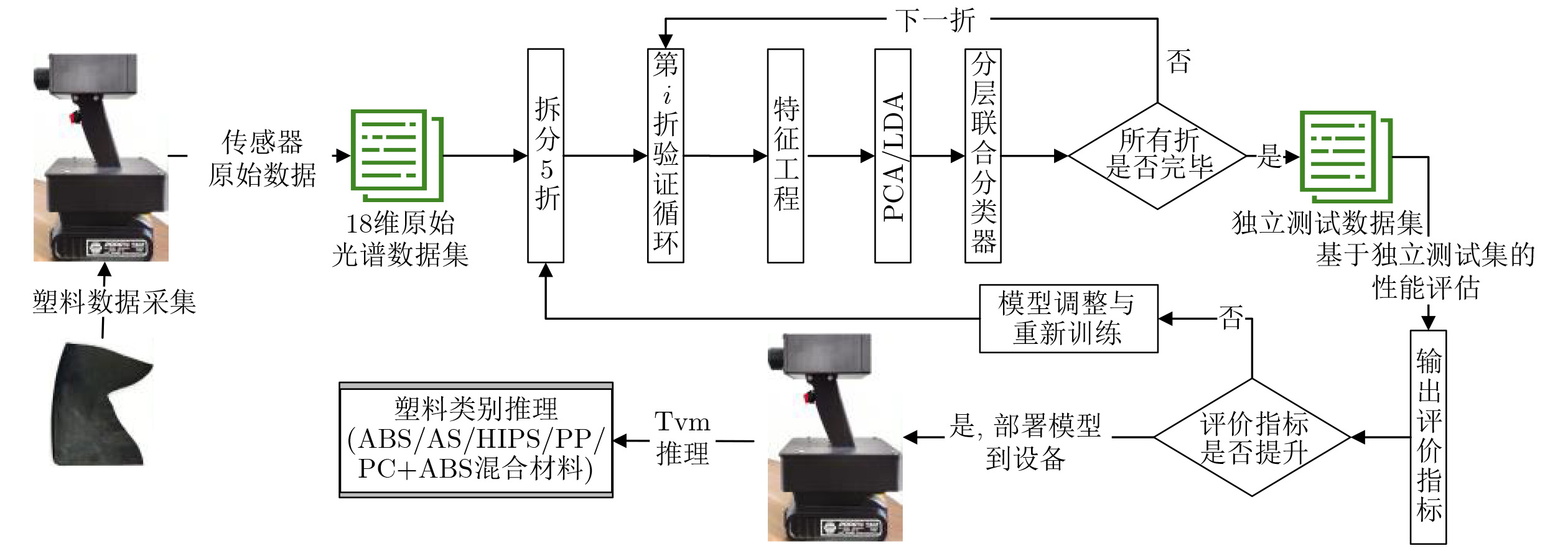
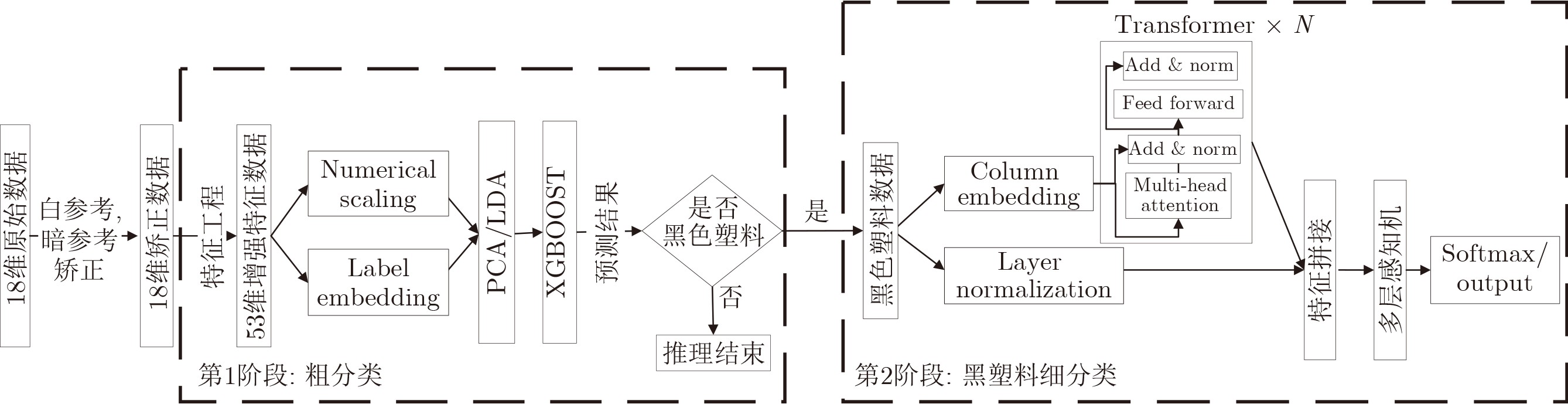
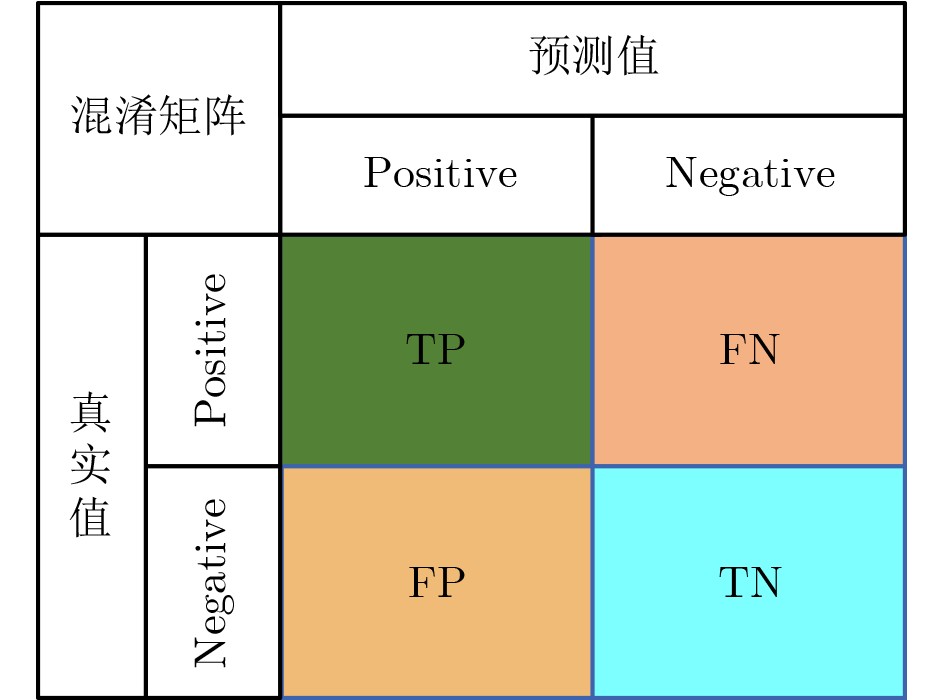
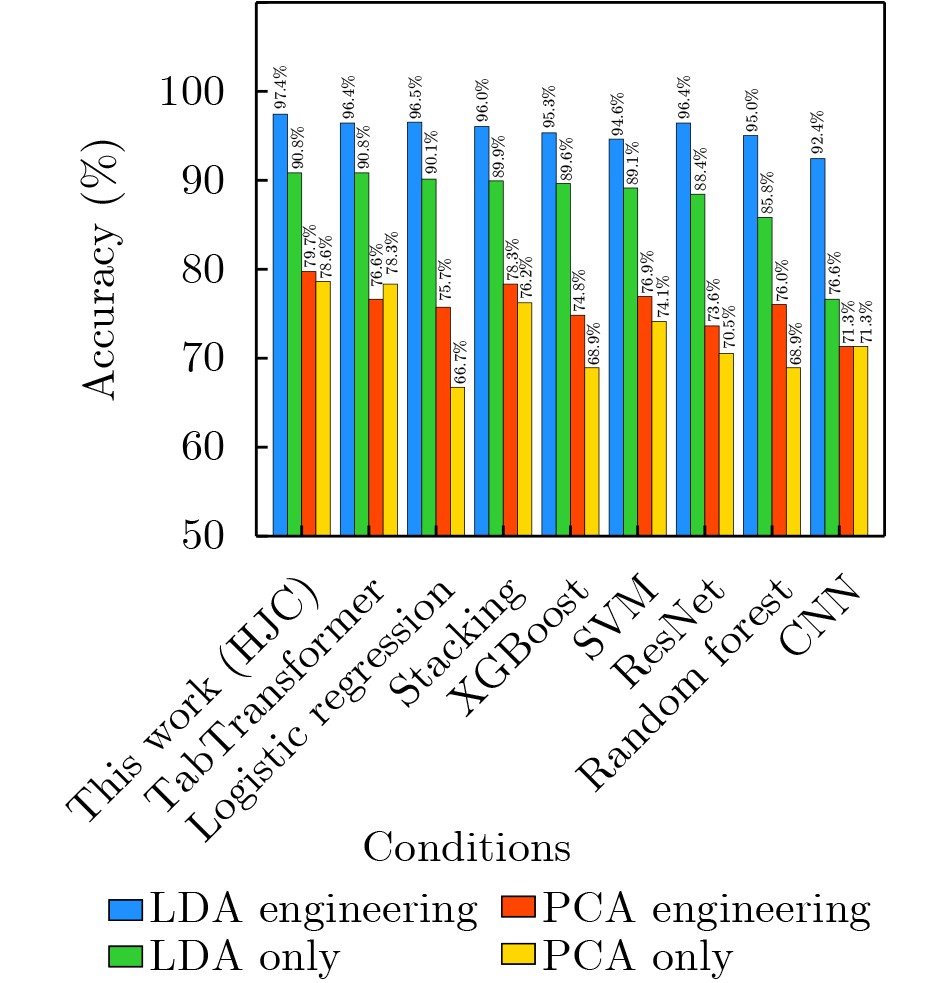
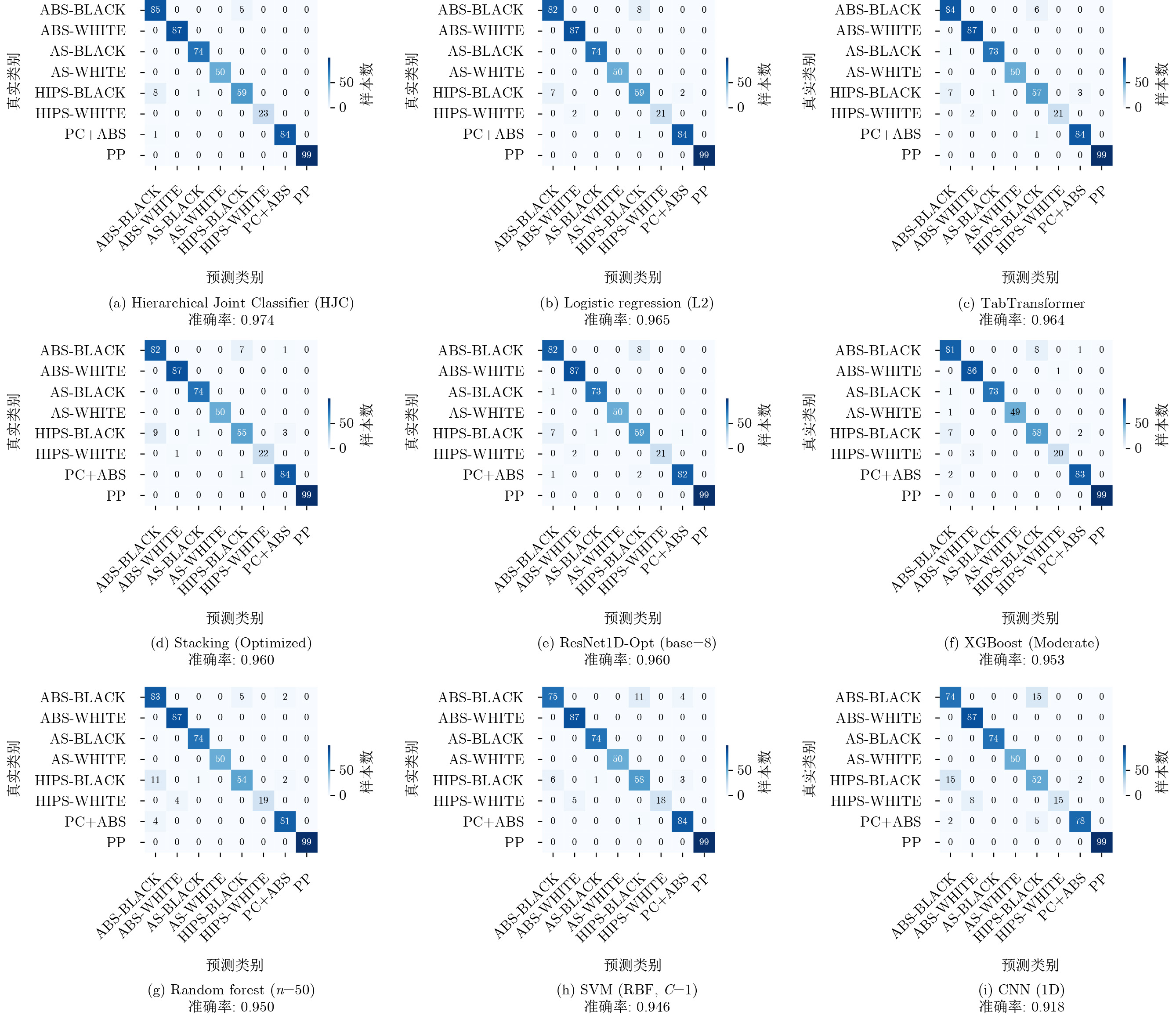
  •   Objective  Accurate identification of plastics in waste household appliance recycling remains challenging under low-resolution spectral conditions. In practical recycling environments, plastics often exhibit complex compositions, surface contamination, and aging effects, which increase classification difficulty. In particular, black plastics show strong light absorption and spectral overlap in the visible and near infrared (Vis–NIR) range, leading to reduced feature separability and degraded classification performance. Under such conditions, conventional single-stage classification models are often unable to maintain stable accuracy. To address this problem, an automated identification method for low dimensional multispectral feature spaces is proposed, aiming to improve the discriminative capability of limited spectral information and enhance classification accuracy for complex plastic categories.  Methods  A compact Vis–NIR multispectral acquisition system based on the AS7265x sensor is used to collect 18 channel reflectance data within the 410–940 nm range. A handheld acquisition device with a controlled optical structure is designed to reduce environmental interference and ensure measurement consistency (Fig.3). A total of 576 samples from five typical appliance plastics, including ABS, high-impact polystyrene (HIPS), polypropylene (PP), acrylonitrile styrene copolymer (AS), and PC/ABS blends, are collected from waste household appliances and subjected to preliminary surface cleaning prior to spectral acquisition. To improve feature representation, a multi-level feature engineering strategy is adopted. It integrates original spectral intensity features, nonlinear polynomial expansion features, and adjacent channel ratio features to characterize both global and local spectral information. The nonlinear expansion enhances reflectance variation representation, while the ratio features capture local spectral shape changes and reduce external disturbances. These features are combined into a 53-dimensional feature vector. Linear Discriminant Analysis (LDA) is then applied to enhance inter class separability. To handle spectral overlap and class imbalance, a Hierarchical Joint Classifier (HJC) is constructed. The HJC adopts a two stage classification framework: an XGBoost based primary classifier performs coarse classification to separate easily distinguishable samples and group spectrally similar black plastics, while a TabTransformer based secondary classifier is used for fine grained classification of difficult samples (Fig. 6). This hierarchical design reduces classification complexity and improves discrimination for challenging categories. Model performance is evaluated using five fold cross validation and an independent test set. Evaluation metrics, including accuracy, precision, recall, and F1 score, are calculated based on confusion matrices (Fig. 7). Comparative experiments are conducted with traditional machine learning methods, ensemble learning models, and deep learning approaches under different feature processing strategies (Fig. 8, Fig. 9).  Results and Discussions  The proposed HJC achieves a classification accuracy of 97.4% under five fold cross validation and 93.1% on the independent test set (Table 4). Compared with single stage classifiers and methods without feature enhancement, the proposed method shows improved performance and stability under low resolution spectral conditions. Comparative results indicate that the proposed method outperforms baseline approaches such as PCA combined with CNN, which achieves approximately 71.3% accuracy under the same dataset (Fig. 8). This improvement indicates that the proposed feature engineering strategy effectively enhances the discriminative capability of low dimensional spectral data. In addition, combining LDA with feature engineering further improves class separability compared with conventional PCA based methods. Confusion matrix analysis shows that misclassifications are mainly concentrated between spectrally similar black ABS and black HIPS samples, while other categories achieve high classification accuracy (Fig. 9). This result suggests that spectral overlap remains the main challenge under low resolution conditions. The hierarchical classification strategy mitigates this issue by focusing classification on difficult samples, thereby improving the overall generalization capability of the model. Overall, the proposed method demonstrates robustness under practical conditions, including spectral noise, limited channel resolution, and material heterogeneity, indicating its suitability for real world recycling applications.  Conclusions  A hierarchical classification method with multi-level spectral feature engineering is developed for plastic identification under low-resolution Vis–NIR conditions. Nonlinear and morphological features are incorporated into a two-stage framework to improve performance on spectrally similar materials. The results show consistent accuracy across different plastic types. The method is suitable for automated sorting in waste appliance recycling and can be applied to other material identification tasks with limited spectral information.
  • loading
  • [1]
    Organisation for Economic Co-operation and Development (OECD). Global plastics outlook: Policy scenarios to 2060[R]. 2022. (查阅网上资料, 未找到本条文献的报告编号, 请核对).
    [2]
    United Nations Environment Programme (UNEP). From pollution to solution: A global assessment of marine litter and plastic pollution[R]. 2021. (查阅网上资料, 未找到本条文献的报告编号, 请核对).
    [3]
    蔡毅, 田晖, 谢淼雪. 废旧家用电器塑料资源化利用及发展趋势[J]. 中国塑料, 2021, 35(8): 77–83. doi: 10.19491/j.issn.1001-9278.2021.08.010.

    CAI Yi, TIAN Hui, and XIE Miaoxue. Utilization and development trend of waste plastics from household electrical appliances as resources[J]. China Plastics, 2021, 35(8): 77–83. doi: 10.19491/j.issn.1001-9278.2021.08.010.
    [4]
    ZHENG Xuqing, DENG Mike, JIA Hao, et al. Surface modification of intumescent flame retardant and its application in polypropylene with excellent fire performance and water resistance[J]. Polymers, 2025, 17(3): 399. doi: 10.3390/polym17030399.
    [5]
    DENG Mike, ZHANG Zhihao, SUN Jun, et al. Improving the flame retardancy and water resistance of polypropylene by introducing microcapsule flame retardant system and modified zinc oxide[J]. Polymer Degradation and Stability, 2024, 221: 110668. doi: 10.1016/j.polymdegradstab.2024.110668.
    [6]
    DE OLIVEIRA SILVA R J, GRAF K, and LEITE RIBEIRO OKIMOTO M L. Plastic waste recycling: An overview of the mechanical, chemical, and thermal technologies[J]. Journal of Engineering and Applied Science, 2025, 72(1): 251. doi: 10.1186/s44147-025-00799-2.
    [7]
    LUBONGO C, BIN DAEJ M A A, and ALEXANDRIDIS P. Recent developments in technology for sorting plastic for recycling: The emergence of artificial intelligence and the rise of the robots[J]. Recycling, 2024, 9(4): 59. doi: 10.3390/recycling9040059.
    [8]
    ZHENG Yan, BAI Jiarui, XU Jingna, et al. A discrimination model in waste plastics sorting using NIR hyperspectral imaging system[J]. Waste Management, 2018, 72: 87–98. doi: 10.1016/j.wasman.2017.10.015.
    [9]
    KISSEL A, NOGOWSKI A, KIENLE A, et al. Flow Raman spectroscopy for the detection and identification of small microplastics[J]. Sensors, 2025, 25(5): 1390. doi: 10.3390/s25051390.
    [10]
    VÁZQUEZ-GUARDADO A, MONEY M, MCKINNEY N, et al. Multi-spectral infrared spectroscopy for robust plastic identification[J]. Applied Optics, 2015, 54(24): 7396–7405. doi: 10.1364/AO.54.007396.
    [11]
    胡锡敦, 尹禄, 杨钦晨, 等. 基于近红外高光谱成像技术的塑料分类(特邀)[J]. 激光与光电子学进展, 2024, 61(2): 0211031. doi: 10.3788/LOP232402.

    HU Xidun, YIN Lu, YANG Qinchen, et al. Classification of plastics based on near-infrared hyperspectral imaging technology (Invited)[J]. Laser & Optoelectronics Progress, 2024, 61(2): 0211031. doi: 10.3788/LOP232402.
    [12]
    SINGH A R, NEO E R K, LAI C M, et al. Deep learning-based plastic classification using spectroscopic data[J]. Journal of Cleaner Production, 2025, 530: 146793. doi: 10.1016/j.jclepro.2025.146793.
    [13]
    赵凤, 耿苗苗, 刘汉强, 等. 卷积神经网络与视觉Transformer联合驱动的跨层多尺度融合网络高光谱图像分类方法[J]. 电子与信息学报, 2024, 46(5): 2237–2248. doi: 10.11999/JEIT231209.

    ZHAO Feng, GENG Miaomiao, LIU Hanqiang, et al. Convolutional neural network and vision transformer-driven cross-layer multi-scale fusion network for hyperspectral image classification[J]. Journal of Electronics & Information Technology, 2024, 46(5): 2237–2248. doi: 10.11999/JEIT231209.
    [14]
    VAN HOORN H, POURMOHAMMADI F, DE LEEUW A W, et al. Machine learning-based identification of plastic types using handheld spectrometers[J]. Sensors, 2025, 25(12): 3777. doi: 10.3390/s25123777.
    [15]
    MARTINEZ-HERNANDEZ U, WEST G, and ASSAF T. Low-cost recognition of plastic waste using deep learning and a multi-spectral near-infrared sensor[J]. Sensors, 2024, 24(9): 2821. doi: 10.3390/s24092821.
    [16]
    RANI M, MARCHESI C, FEDERICI S, et al. Miniaturized near-infrared (MicroNIR) spectrometer in plastic waste sorting[J]. Materials, 2019, 12(17): 2740. doi: 10.3390/ma12172740.
    [17]
    蔡轶珩, 谭美伶, 潘建军, 等. 基于多尺度非对称密集网络的高光谱图像分类[J]. 电子与信息学报, 2024, 46(4): 1448–1457. doi: 10.11999/JEIT230651.

    CAI Yiheng, TAN Meiling, PAN Jianjun, et al. Hyperspectral image classification based on multi-scale asymmetric dense network[J]. Journal of Electronics & Information Technology, 2024, 46(4): 1448–1457. doi: 10.11999/JEIT230651.
    [18]
    刘晓敏, 余梦君, 乔振壮, 等. 面向多源遥感数据分类的尺度自适应融合网络[J]. 电子与信息学报, 2024, 46(9): 3693–3702. doi: 10.11999/JEIT240178.

    LIU Xiaomin, YU Mengjun, QIAO Zhenzhuang, et al. Scale adaptive fusion network for multimodal remote sensing data classification[J]. Journal of Electronics & Information Technology, 2024, 46(9): 3693–3702. doi: 10.11999/JEIT240178.
    [19]
    肖振久, 田昊, 张杰浩, 等. 融合动态特征增强的遥感建筑物分割[J]. 光电工程, 2025, 52(3): 240231. doi: 10.12086/oee.2025.240231.

    XIAO Zhenjiu, TIAN Hao, ZHANG Jiehao, et al. Fusion of dynamic features enhances remote sensing building segmentation[J]. Opto-Electronic Engineering, 2025, 52(3): 240231. doi: 10.12086/oee.2025.240231.
    [20]
    吕鹏远, 兰金江, 曾学仁, 等. 基于特征增强与融合的红外目标检测算法[J]. 红外技术, 2024, 46(7): 782–790.

    LÜ Pengyuan, LAN Jinjiang, ZENG Xueren, et al. Infrared object detection algorithm based on feature enhancement and fusion[J]. Infrared Technology, 2024, 46(7): 782–790.
  • 加载中

Catalog

    通讯作者: 陈斌, bchen63@163.com
    • 1. 

      沈阳化工大学材料科学与工程学院 沈阳 110142

    1. 本站搜索
    2. 百度学术搜索
    3. 万方数据库搜索
    4. CNKI搜索

    Figures(9)  / Tables(6)

    Article Metrics

    Article views (86) PDF downloads(9) Cited by()
    Proportional views
    Related

    /

    DownLoad:  Full-Size Img  PowerPoint
    Return
    Return