Advanced Search
Turn off MathJax
Article Contents
LI Tuo, WANG Changhong, CHENG Chao, LI Guoqing, LI Nanjun. V-Agent: A Protocol-Driven Multi-Agent Framework for RISC-V Custom Arithmetic IP Integration[J]. Journal of Electronics & Information Technology. doi: 10.11999/JEIT260073
Citation: LI Tuo, WANG Changhong, CHENG Chao, LI Guoqing, LI Nanjun. V-Agent: A Protocol-Driven Multi-Agent Framework for RISC-V Custom Arithmetic IP Integration[J]. Journal of Electronics & Information Technology. doi: 10.11999/JEIT260073

V-Agent: A Protocol-Driven Multi-Agent Framework for RISC-V Custom Arithmetic IP Integration

doi: 10.11999/JEIT260073 cstr: 32379.14.JEIT260073
  • Accepted Date: 2026-09-17
  • Rev Recd Date: 2026-09-17
  • Available Online: 2026-09-24
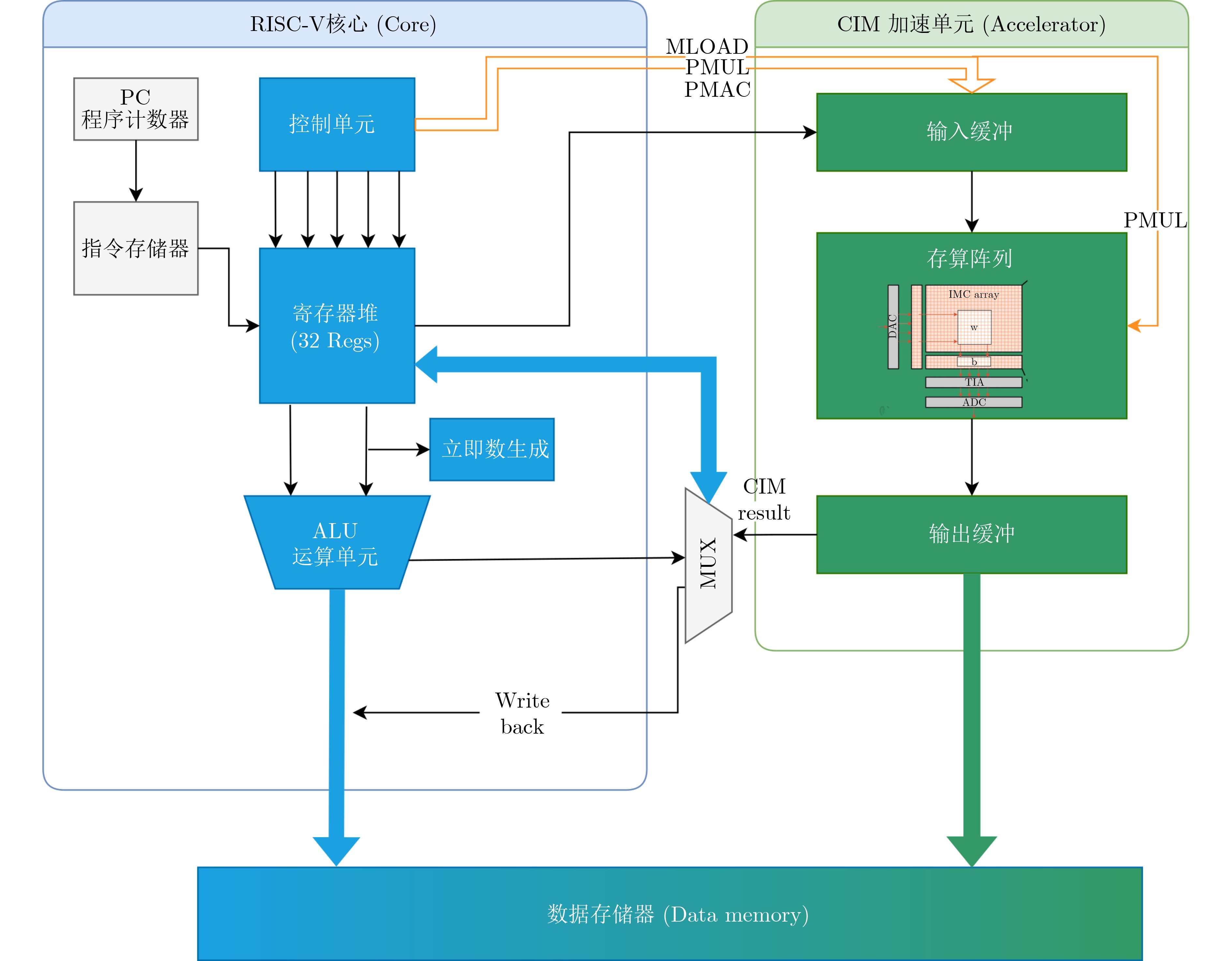
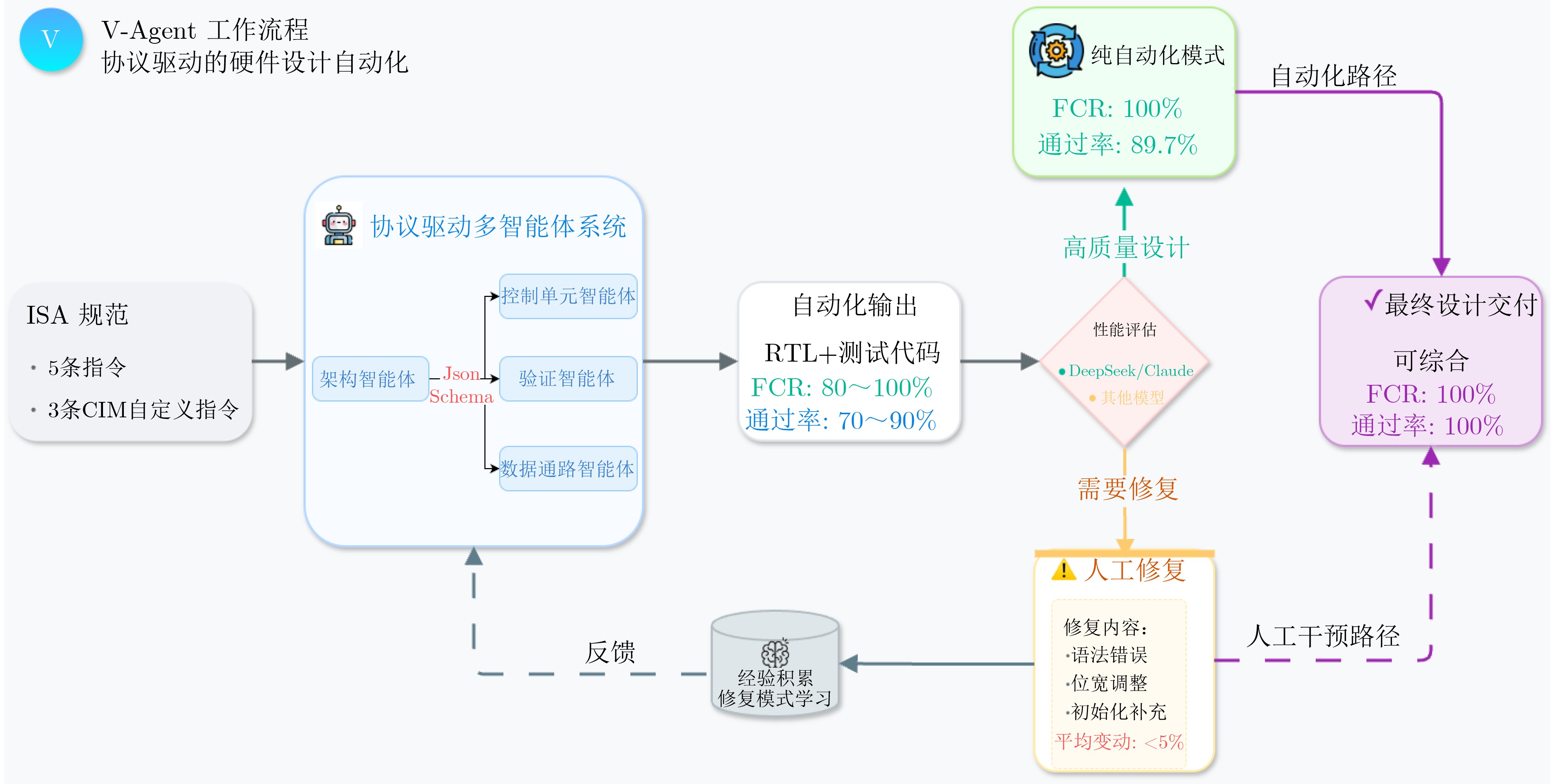
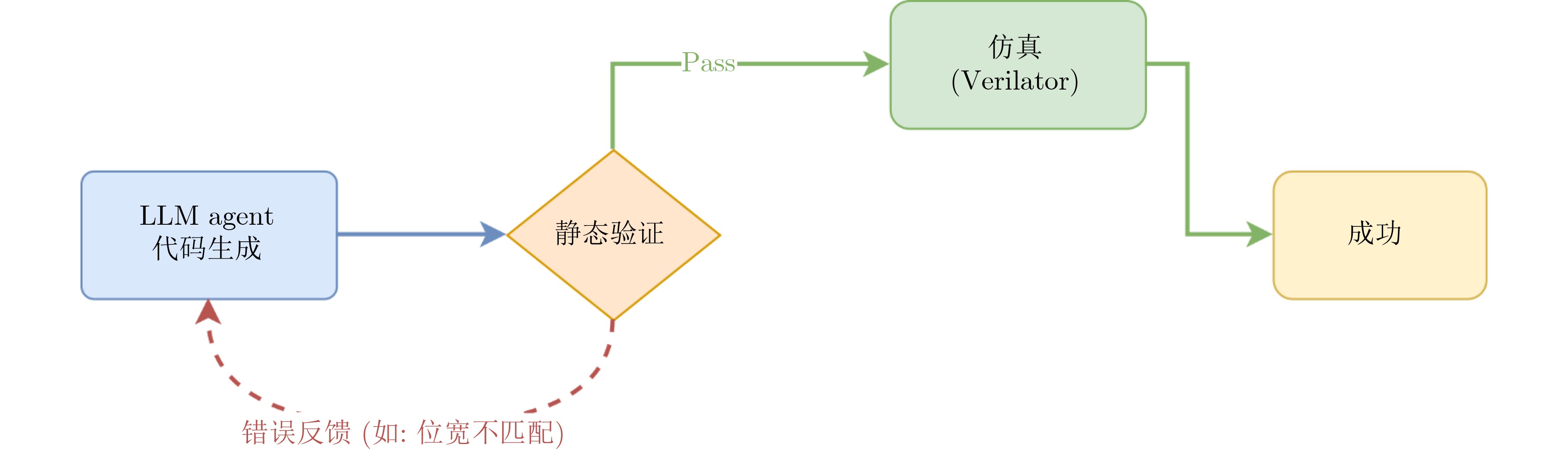
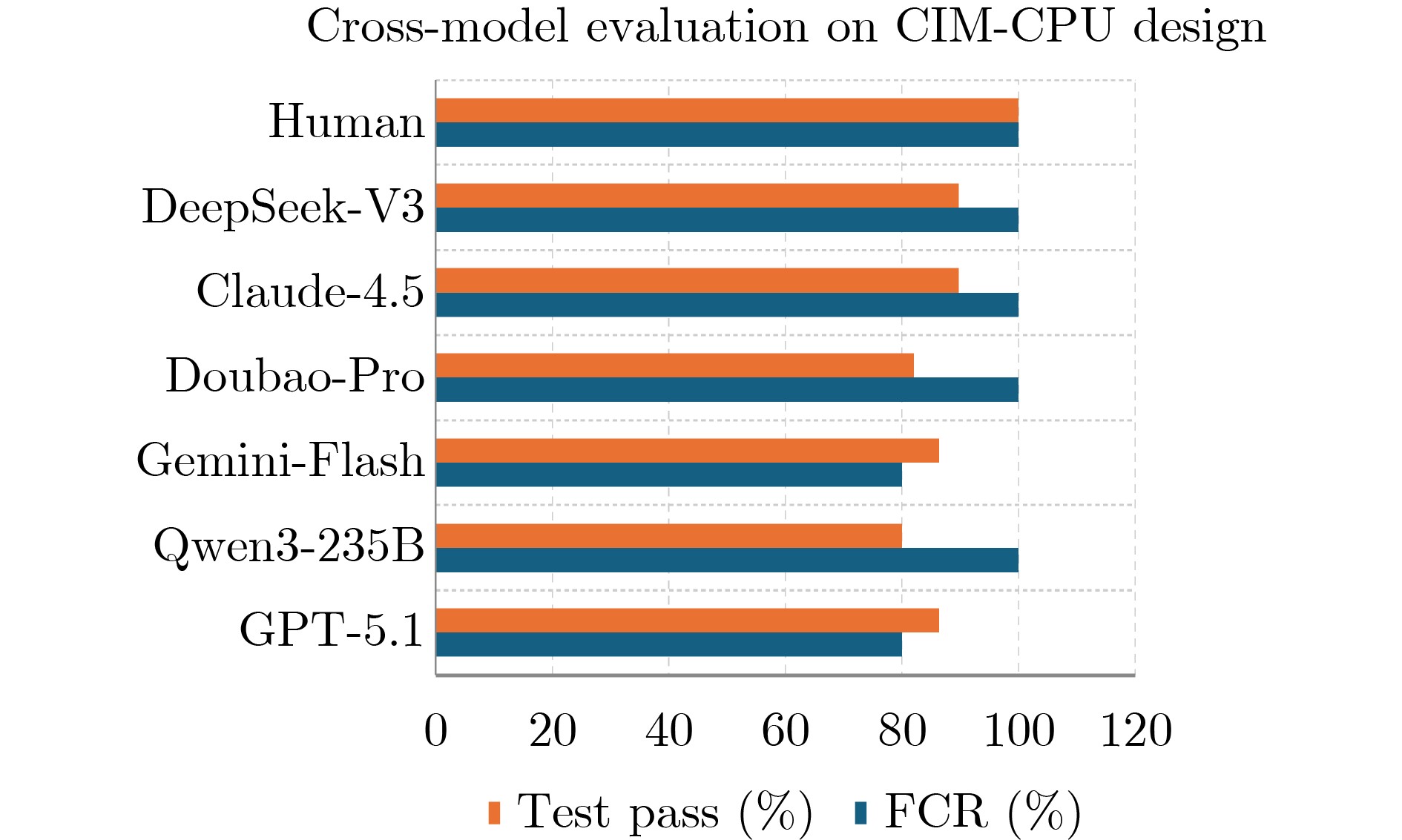
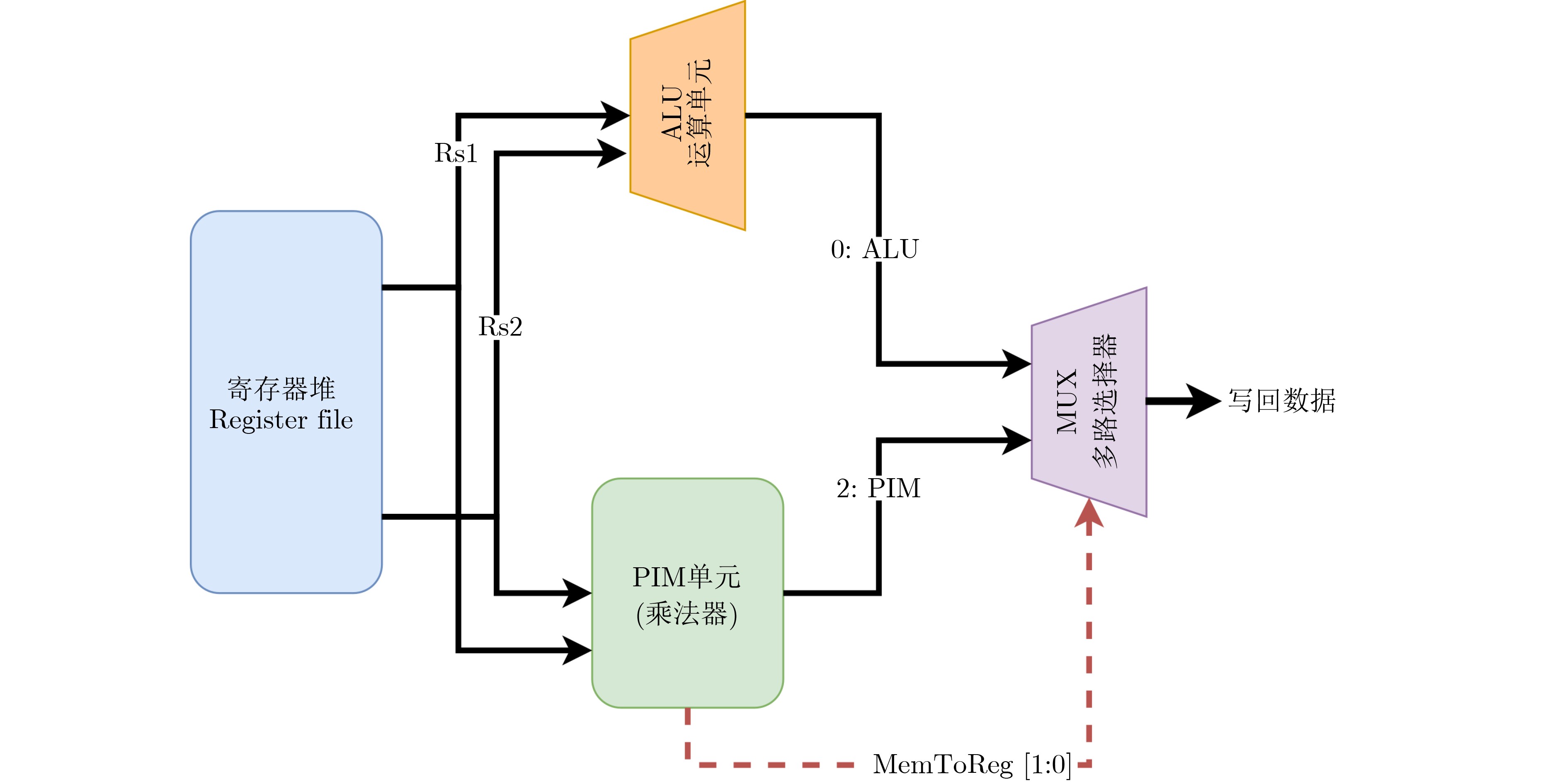
  •   Objective  Large language models (LLMs) can assist register-transfer-level (RTL) generation, but processor-level designs require coordination among independently generated control, datapath, top-level, and verification modules. Inconsistent port names, directions, widths, or signal types can block compilation and make repair dependent on manual diagnosis. V-Agent is proposed as a protocol-driven multi-agent framework that converts such interface assumptions into explicit, machine-checkable contracts and routes tool diagnostics back to the responsible generator. Four specialized agents handle architecture specification, control logic, datapath integration, and verification. A single-cycle RISC-V processor integrating a predefined 32-bit signed combinational multiplier IP is used as a controlled task to evaluate multi-module generation, localized error correction, and differences among LLM backends. The workflow therefore targets the integration gap between isolated code generation and executable processor-level verification, with emphasis on whether structural assumptions can be exposed early enough to support bounded, module-local regeneration.  Methods  V-Agent receives a hierarchical JavaScript Object Notation (JSON) configuration containing the selected LLM backend, generation and retry parameters, architecture attributes, task operations, data widths, and test cases. The Architect Agent generates top-level ports, control signals, datapath components, and operation-code mappings; the Control Unit Agent produces synthesizable decoding and control logic; the Datapath Agent generates arithmetic, register-file, program-counter, routing, and top-level integration logic and instantiates the fixed multiplier IP; and the Verification Agent produces memory models, testbenches, Verilator drivers, and execution scripts. The processor and accelerator organization is shown in Fig. 1, and the multi-agent and verification feedback loops are summarized in Figs. 2 and 3. Port names, directions, widths, and types are recorded in JSON interface contracts. A static analyzer parses the Verilog abstract syntax tree (AST) and compares generated port signatures with the contracts. Compilation and simulation add syntax, connection, and functional diagnostics. Failed checks are returned to the responsible agent and trigger regeneration, with max_retries set to 3. A fallback template is used only when repeated generation reaches the retry limit, allowing the remaining integration and verification steps to continue. The task implements two standard instructions and three experimental custom operations, MLOAD, PMUL, and PMAC. Six LLM backends—DeepSeek-V3, Claude Sonnet 4.5, Doubao-1.5 Pro, Gemini 1.5 Flash, Qwen3-235B, and GPT-5.1—are evaluated using module compilation, automatic tests, Code Quality Score, line-level repair changes, and backend power-performance-area (PPA) outputs. Fully automated results are recorded before manual modification, whereas human-in-the-loop (HITL) results are measured after localized repair.  Results and Discussions  The monolithic one-shot baseline outputs fail system-level compilation because of context, interface, connection, or incomplete-state-logic problems, whereas the V-Agent pipeline produces samples that can enter system-level compilation (Table 4). This observation is limited to the present benchmark. In fully automated evaluation, DeepSeek-V3 and Claude-4.5 complete all five task operations, compile all eight RTL modules, and pass 70 of 78 automatic tests (Table 6). Doubao-Pro and Gemini-Flash compile 6 of 8 modules, GPT-5.1 compiles 7 of 8, and Qwen3-235B compiles 4 of 8. Because executable automatic-test workloads differ among generated outputs, raw counts and denominators are retained rather than treated as a uniform benchmark; completion and test-pass ratios are shown in Fig. 4. A width-mismatch case demonstrates the feedback mechanism: the Datapath Agent initially generates a one-bit MemToReg signal, while the additional multiplier result path requires a two-bit selector. Contract checking identifies the mismatch, returns the diagnostic to the responsible agent, and completes regeneration in approximately 15 s before compilation and testing pass (Table 7). In the complete case study, the four agents generate eight RTL modules and 17 verification files in about 5 min; all eight modules compile, and four system-level programs produce the expected final register states and waveforms. The generated arithmetic execution and writeback path is shown in Fig. 5. After localized HITL edits, all six designs compile 8 of 8 modules and pass the same 78 tests. The average line-level code-change rate is 4.37%, ranging from 1.3% to 9.5% (Table 9). Backend analysis shows that Claude, DeepSeek, and Gemini complete synthesis and timing analysis, while GPT-5.1 does not converge because of a combinational loop and the unusually small Doubao and Qwen implementations exhibit synthesis pruning (Table 8). Among 126 classified generation- and compilation-stage errors, 54 are Verilog semantic errors, 36 are interface-width errors, 26 are cascading failures, and 10 are custom-operation semantic errors (Table 10).  Conclusions  V-Agent organizes processor RTL generation as cooperation among specialized agents connected by explicit interface contracts and tool feedback. The evaluated RISC-V arithmetic-IP task shows that structural interface mismatches can be localized and corrected without regenerating the complete design, while HITL results separate initial generation quality from engineering repairability. The principal contribution is a coordination mechanism that turns cross-module assumptions into checkable contracts and returns AST, compilation, and simulation diagnostics to the responsible generator, rather than a replacement for established synthesis, simulation, high-level synthesis, or verification tools. The evidence is limited to a single-cycle RISC-V core, a fixed 32-bit multiplier IP, 5–15 task operations, and nonuniform executable test workloads. Verilator cannot expose every timing defect, and the PPA study requires more complete activity, supply, and netlist conditions. Future work will extend the workflow to pipelined processors and coverage-guided automated repair.
  • loading
  • [1]
    MIRHOSEINI A, GOLDIE A, YAZGAN M, et al. A graph placement methodology for fast chip design[J]. Nature, 2021, 594(7862): 207–212. doi: 10.1038/s41586-021-03544-w.
    [2]
    MOLESKY S, LIN Zin, PIGGOTT A Y, et al. Inverse design in nanophotonics[J]. Nature Photonics, 2018, 12(11): 659–670. doi: 10.1038/s41566-018-0246-9.
    [3]
    PATTERSON D A and HENNESSY J L. Computer Organization and Design RISC-V Edition: The Hardware Software Interface[M]. San Francisco: Morgan Kaufmann Publishers Inc. , 2017. (查阅网上资料, 未找到本条文献页码信息, 请补充).
    [4]
    BREUER M A, FRIEDMAN A D, and IOSUPOVICZ A. A survey of the state of the art of design automation[J]. Computer, 1981, 14(10): 58–75. doi: 10.1109/C-M.1981.220210.
    [5]
    XILINX. Vivado design suite user guide: High-level synthesis[R]. UG902 (v2020.1), 2021.
    [6]
    CHEN M, TWOREK J, JUN H, et al. Evaluating large language models trained on code[EB/OL]. https://arxiv.org/abs/2107.03374, 2021.
    [7]
    BROWN T B, MANN B, RYDER N, et al. Language models are few-shot learners[C]. Proceedings of the 34th International Conference on Neural Information Processing Systems, Vancouver, Canada, 2020: 159. doi: 10.5555/3495724.3495883.
    [8]
    THAKUR S, BLOCKLOVE J, PEARCE H, et al. AutoChip: Automating HDL generation using LLM feedback[EB/OL]. https://arxiv.org/abs/2311.04887, 2023.
    [9]
    BLOCKLOVE J, GARG S, KARRI R, et al. Chip-Chat: Challenges and opportunities in conversational hardware design[C]. Proceedings of the 2023 ACM/IEEE 5th Workshop on Machine Learning for CAD, Snowbird, USA, 2023: 1–6. doi: 10.1109/MLCAD58807.2023.10299874.
    [10]
    SANGIOVANNI-VINCENTELLI A, DAMM W, and PASSERONE R. Taming Dr. Frankenstein: Contract-based design for cyber-physical systems[J]. European Journal of Control, 2012, 18(3): 217–238. doi: 10.3166/ejc.18.217-238.
    [11]
    CANIS A, CHOI J, ALDHAM M, et al. LegUp: High-level synthesis for FPGA-based processor/accelerator systems[C]. Proceedings of the 19th ACM/SIGDA International Symposium on Field Programmable Gate Arrays, Monterey, USA, 2011: 33–36. doi: 10.1145/1950413.1950423.
    [12]
    SIEMENS EDA. Catapult high-level synthesis and verification[EB/OL]. https://eda.sw.siemens.com/en-US/eda-cloud-solutions/ic/catapult-high-level-synthesis/, 2026.
    [13]
    LIU Shang, FANG Wenji, LU Yao, et al. RTLCoder: Fully open-source and efficient LLM-assisted RTL code generation technique[J]. IEEE Transactions on Computer-Aided Design of Integrated Circuits and Systems, 2025, 44(4): 1448–1461. doi: 10.1109/TCAD.2024.3483089.
    [14]
    CHANG Kaiyan, WANG Ying, REN Haimeng, et al. ChipGPT: How far are we from natural language hardware design[EB/OL]. https://arxiv.org/abs/2305.14019, 2023.
    [15]
    THAKUR S, AHMAD B, PEARCE H, et al. VeriGen: A large language model for Verilog code generation[J]. ACM Transactions on Design Automation of Electronic Systems, 2024, 29(3): 46. doi: 10.1145/3643681.
    [16]
    QIAN Chen, LIU Wei, LIU Hongzhang, et al. ChatDev: Communicative agents for software development[C]. Proceedings of the 62nd Annual Meeting of the Association for Computational Linguistics, Bangkok, Thailand, 2024: 15174–15186. doi: 10.18653/v1/2024.acl-long.810.
    [17]
    HONG Sirui, ZHUGE Mingchen, CHEN J, et al. MetaGPT: Meta programming for a multi-agent collaborative framework[C]. Proceedings of the 12th International Conference on Learning Representations, Vienna, Austria, 2024.
    [18]
    RICHARDS T. AutoGPT: An autonomous GPT-4 experiment[EB/OL]. https://github.com/Significant-Gravitas/AutoGPT, 2026.
    [19]
    QIN Haiyan, FENG Jiahao, FENG Xiaotong, et al. Towards optimal circuit generation: Multi-agent collaboration meets collective intelligence[EB/OL]. https://arxiv.org/abs/2504.14625, 2025.
    [20]
    QIN Haiyan, KOU Jing, ZHANG Liang, et al. Multi-agent yield analysis for circuit design[C]. Proceedings of the 62nd ACM/IEEE Design Automation Conference, San Francisco, USA, 2025: 1–7. doi: 10.1109/DAC63849.2025.11133334.
    [21]
    TASNIA K, GARCIA A, FARHEEN T, et al. VeriOpt: PPA-aware high-quality Verilog generation via multi-role LLMs[C]. Proceedings of the 2025 IEEE/ACM International Conference on Computer Aided Design, Munich, Germany, 2025: 1–9. doi: 10.1109/ICCAD66269.2025.11240771.
    [22]
    陈溪源, 姜宇轩, 夏莹杰, 等. VCodePPA: 面向集成电路物理约束优化的Verilog代码数据集[J]. 电子与信息学报, 2025, 47(11): 4606–4619. doi: 10.11999/JEIT250449.

    CHEN Xiyuan, JIANG Yuxuan, XIA Yingjie, et al. VCodePPA: A large-scale Verilog dataset with PPA annotations[J]. Journal of Electronics & Information Technology, 2025, 47(11): 4606–4619. doi: 10.11999/JEIT250449.
    [23]
    MIN K, CHO K, JANG J, et al. REvolution: An evolutionary framework for RTL generation driven by large language models[C]. Proceedings of the 2026 31st Asia and South Pacific Design Automation Conference, Lantau, China, 2026: 282–288. doi: 10.1109/ASP-DAC66049.2026.11420420.
    [24]
    LIU Mingjie, PINCKNEY N R, KHAILANY B, et al. Invited paper: VerilogEval: Evaluating large language models for Verilog code generation[C]. Proceedings of the 2023 IEEE/ACM International Conference on Computer Aided Design, San Francisco, USA, 2023: 1–8. doi: 10.1109/ICCAD57390.2023.10323812.
    [25]
    CHEN Zhirong, CHANG Kaiyan, LI Zhuolin, et al. ChipSeek-R1: Generating human-surpassing RTL with LLM via hierarchical reward-driven reinforcement learning[EB/OL]. https://arxiv.org/html/2507.04736v1, 2025.
    [26]
    WANG Yiting, YE Wanghao, GUO Ping, et al. SymRTLO: Enhancing RTL code optimization with LLMs and neuron-inspired symbolic reasoning[C]. Proceedings of the 39th Conference on Neural Information Processing Systems, San Diego, USA, 2025: 55809–55834. doi: 10.52202/085713-1670.
    [27]
    TSAI Y, LIU Mingjie, and REN Haoxing. RTLFixer: Automatically fixing RTL syntax errors with large language models[C]. Proceedings of the 61st ACM/IEEE Design Automation Conference, San Francisco, USA, 2024: 53. doi: 10.1145/3649329.3657353.
    [28]
    于斌, 闵玉新, 张自豪, 等. 基于RISC-V指令扩展的双线性对协处理器设计[J]. 电子与信息学报, 2025, 47(9): 3137–3145. doi: 10.11999/JEIT250367.

    YU Bin, MIN Yuxin, ZHANG Zihao, et al. Design of a bilinear pairing coprocessor based on RISC-V instruction extension[J]. Journal of Electronics & Information Technology, 2025, 47(9): 3137–3145. doi: 10.11999/JEIT250367.
    [29]
    唐时博, 朱嘉诚, 慕德俊, 等. RISC-V处理器权限正确性验证与提权漏洞自动挖掘方法[J]. 电子与信息学报, 2025, 47(9): 3081–3092. doi: 10.11999/JEIT250362.

    TANG Shibo, ZHU Jiacheng, MU Dejun, et al. Verification of privilege correctness and automated exploitation of privilege escalation vulnerabilities in RISC-V processors[J]. Journal of Electronics & Information Technology, 2025, 47(9): 3081–3092. doi: 10.11999/JEIT250362.
    [30]
    WOLF C. Yosys open SYnthesis suite[EB/OL]. https://yosyshq.net/yosys/, 2026.
  • 加载中

Catalog

    通讯作者: 陈斌, bchen63@163.com
    • 1. 

      沈阳化工大学材料科学与工程学院 沈阳 110142

    1. 本站搜索
    2. 百度学术搜索
    3. 万方数据库搜索
    4. CNKI搜索

    Figures(5)  / Tables(10)

    Article Metrics

    Article views (25) PDF downloads(1) Cited by()
    Proportional views
    Related

    /

    DownLoad:  Full-Size Img  PowerPoint
    Return
    Return