Advanced Search
Turn off MathJax
Article Contents
YU Xiaofan, ZOU Lanlan, GU Wenqi, CAI Jun, KANG Bin, DING Kang. Unsupervised 3D Medical Image Segmentation With Sparse Radiation Measurement[J]. Journal of Electronics & Information Technology. doi: 10.11999/JEIT250841
Citation: YU Xiaofan, ZOU Lanlan, GU Wenqi, CAI Jun, KANG Bin, DING Kang. Unsupervised 3D Medical Image Segmentation With Sparse Radiation Measurement[J]. Journal of Electronics & Information Technology. doi: 10.11999/JEIT250841

Unsupervised 3D Medical Image Segmentation With Sparse Radiation Measurement

doi: 10.11999/JEIT250841 cstr: 32379.14.JEIT250841
Funds:  The National Natural Science Foundation of China (62171232), The Key Projects of the Jiangsu Provincial Clinical Medicine Innovation Center for Anorectal Diseases (GC-CXZX-2021), The Key Projects of the Nanjing Municipal Special Fund for Health Science and Technology Development (ZKX24046), The TCM Monitoring and Statistics from the National Administration of Traditional Chinese Medicine Statistics Center (2025JCTJE2), National Administration of Traditional Chinese Medicine Planning and Finance Department Project (GZY-GCS-2025-006)
  • Received Date: 2025-09-01
  • Accepted Date: 2025-11-05
  • Rev Recd Date: 2025-11-05
  • Available Online: 2025-11-15
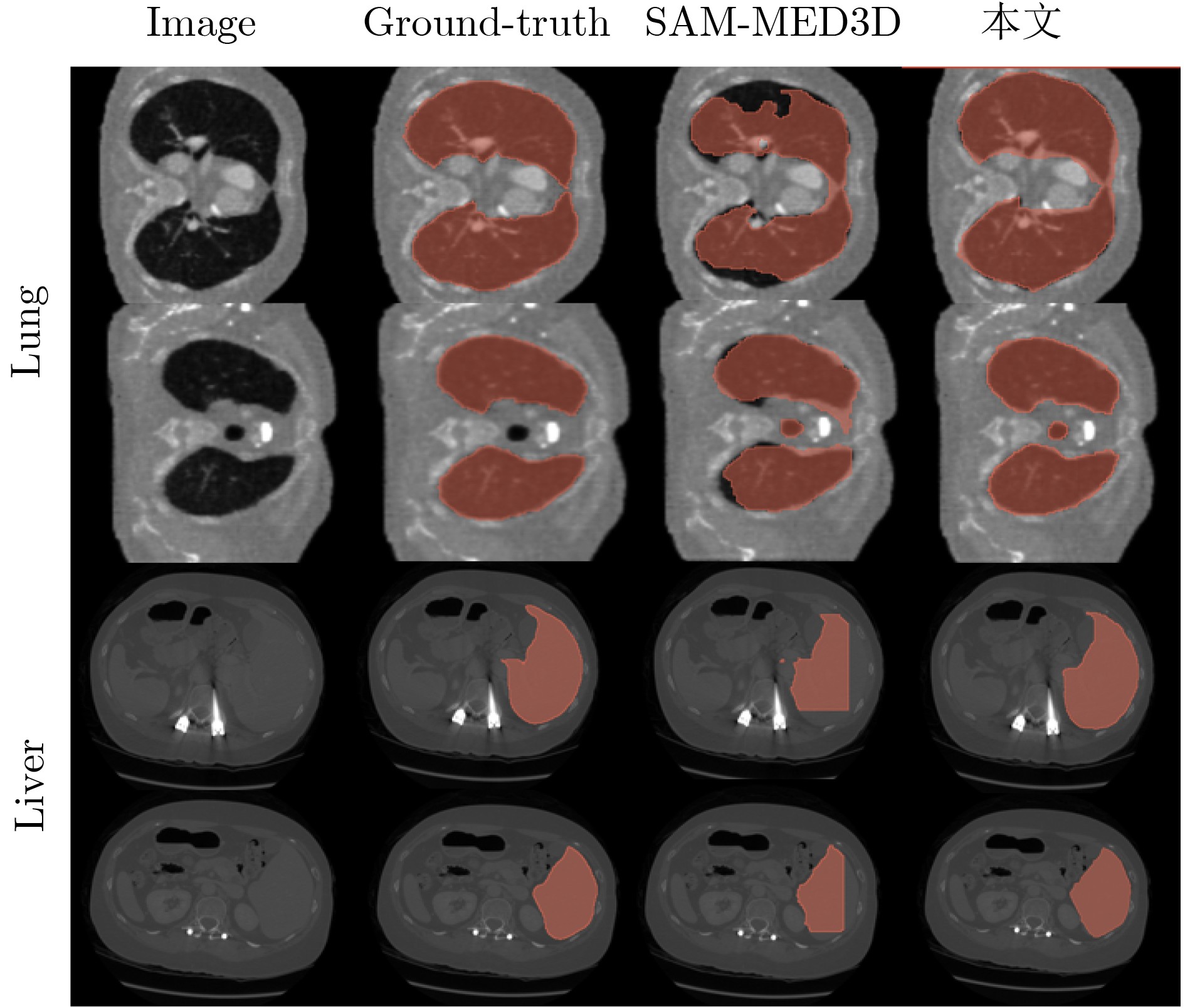
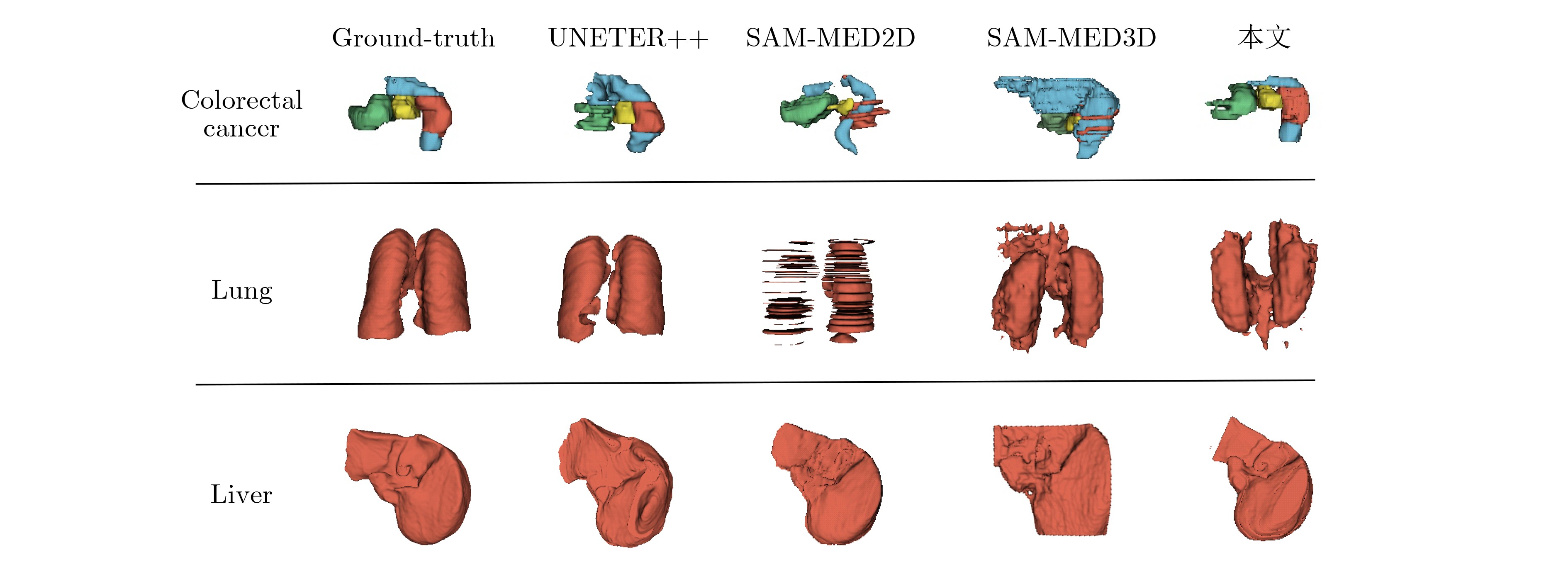
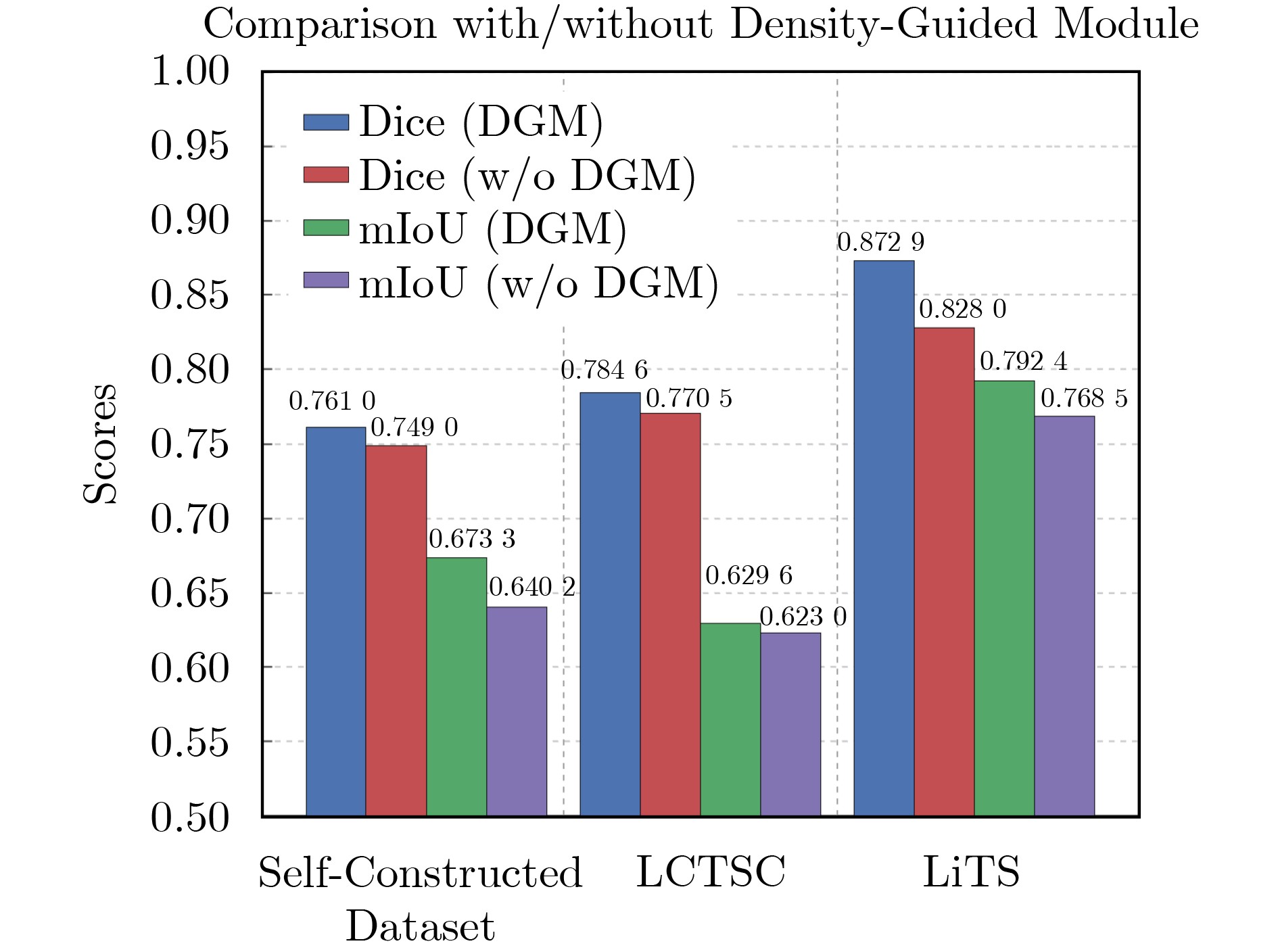
  •   Objective  Three-dimensional medical image segmentation is a central task in medical image analysis. Compared with two-dimensional imaging, it captures organ and lesion morphology more completely and provides detailed structural information, supporting early disease screening, personalized surgical planning, and treatment assessment. With advances in artificial intelligence, three-dimensional segmentation is viewed as a key technique for diagnostic support, precision therapy, and intraoperative navigation. However, methods such as SwinUNETR-v2 and UNETR++ depend on extensive voxel-level annotations, which create high annotation costs and restrict clinical use. High-quality segmentation also often requires multi-view projections to recover full volumetric information, increasing radiation exposure and patient burden. Segmentation under sparse radiation measurements is therefore an important challenge. Neural Attenuation Fields (NAF) have recently been introduced for low-dose reconstruction by recovering linear attenuation coefficient fields from sparse views, yet their suitability for three-dimensional segmentation remains insufficiently examined. To address this limitation, a unified framework termed NA-SAM3D is proposed, integrating NAF-based reconstruction with interactive segmentation to enable unsupervised three-dimensional segmentation under sparse-view conditions, reduce annotation dependence, and improve boundary perception.  Methods  The framework is designed in two stages. In the first stage, sparse-view reconstruction is performed with NAF to generate a continuous three-dimensional attenuation coefficient tensor from sparse X-ray projections. Ray sampling and positional encoding are applied to arbitrary three-dimensional points, and the encoded features are forwarded to a Multi-Layer Perceptron (MLP) to predict linear attenuation coefficients that serve as input for segmentation. In the second stage, interactive segmentation is performed. A three-dimensional image encoder extracts high-dimensional features from the attenuation coefficient tensor, and clinician-provided point prompts specify regions of interest. These prompts are embedded into semantic features by an interactive user module and fused with image features to guide the mask decoder in producing initial masks. Because point prompts provide only local positional cues, boundary ambiguity and mask expansion may occur. To address these issues, a Density-Guided Module (DGM) is introduced at the decoder output stage. NAF-derived attenuation coefficients are transformed into a density-aware attention map, which is fused with the initial masks to strengthen tissue-boundary perception and improve segmentation accuracy in complex anatomical regions.  Results and Discussions  NA-SAM3D is evaluated on a self-constructed colorectal cancer dataset comprising 299 patient cases (collected in collaboration with Nanjing Hospital of Traditional Chinese Medicine) and on two public benchmarks: the Lung CT Segmentation Challenge (LCTSC) and the Liver Tumor Segmentation Challenge (LiTS). The results show that NA-SAM3D achieves overall better performance than mainstream unsupervised three-dimensional segmentation methods based on full radiation observation (SAM-MED series) and reaches accuracy comparable to, or in some cases higher than, the fully supervised SwinUNETR-v2. Compared with SAM-MED3D, NA-SAM3D increases the Dice on the LCTSC dataset by more than 3%, while HD95 and ASD decrease by 5.29 mm and 1.32 mm, respectively, indicating improved boundary localization and surface consistency. Compared with the sparse-field-based method SA3D, NA-SAM3D achieves higher Dice scores on all three datasets (Table 1). Compared with the fully supervised SwinUNETR-v2, NA-SAM3D reduces HD95 by 1.28 mm, and the average Dice is only 0.3% lower. Compared with SA3D, NA-SAM3D increases the average Dice by about 6.6% and reduces HD95 by about 11 mm, further confirming its capacity to restore structural details and boundary information under sparse-view conditions (Table 2). Although the overall performance remains slightly lower than that of the fully supervised UNETR++ model, NA-SAM3D still shows strong competitiveness and good generalization under label-free inference. Qualitative analysis shows that in complex pelvic and intestinal regions, NA-SAM3D produces clearer boundaries and higher contour consistency (Fig. 3). On public datasets, segmentation of the lung and liver also shows superior boundary localization and contour integrity (Fig. 4). Three-dimensional visualization further confirms that in colorectal, lung, and liver regions, NA-SAM3D achieves stronger structural continuity and boundary preservation than SAM-MED2D and SAM-MED3D (Fig. 5). The DGM further enhances boundary sensitivity, increasing Dice and mIoU by 1.20% and 3.31% on the self-constructed dataset, and by 4.49 and 2.39 percentage points on the LiTS dataset (Fig. 6).  Conclusions  An unsupervised three-dimensional medical image segmentation framework, NA-SAM3D, is presented, integrating NAF-based reconstruction with interactive segmentation to achieve high-precision segmentation under sparse radiation measurements. The DGM effectively uses attenuation coefficient priors to enhance boundary recognition in complex lesion regions. Experimental results show that the framework approaches the performance of fully supervised methods under unsupervised inference and yields an average Dice improvement of 2.0%, indicating strong practical value and clinical potential for low-dose imaging and complex anatomical segmentation. Future work will refine the model for additional anatomical regions and assess its practical use in preoperative planning.
  • loading
  • [1]
    EMRE T, CHAKRAVARTY A, RIVAIL A, et al. 3DTINC: Time-equivariant non-contrastive learning for predicting disease progression from longitudinal OCTs[J]. IEEE Transactions on Medical Imaging, 2024, 43(9): 3200–3210. doi: 10.1109/TMI.2024.3391215.
    [2]
    ZHU Pengfei, WANG Tingmin, YANG Fan, et al. A transformer-based multi-scale deep learning model for lung cancer surgery optimization[J]. IEEE Access, 2025, 13: 70044–70054. doi: 10.1109/ACCESS.2025.3561948.
    [3]
    WU Junde, ZHANG Yu, FANG Huihui, et al. Calibrate the inter-observer segmentation uncertainty via diagnosis-first principle[J]. IEEE Transactions on Medical Imaging, 2024, 43(9): 3331–3342. doi: 10.1109/TMI.2024.3394045.
    [4]
    MA Yuxi, WANG Jiacheng, YANG Jing, et al. Model-heterogeneous semi-supervised federated learning for medical image segmentation[J]. IEEE Transactions on Medical Imaging, 2024, 43(5): 1804–1815. doi: 10.1109/TMI.2023.3348982.
    [5]
    HE Yufan, NATH V, YANG Dong, et al. SwinUNETR-V2: Stronger swin transformers with stagewise convolutions for 3D medical image segmentation[C]. The 26th International Conference on Medical Image Computing and Computer Assisted Intervention, Vancouver, Canada, 2023: 416–426. doi: 10.1007/978-3-031-43901-8_40.
    [6]
    SHAKER A, MAAZ M, RASHEED H, et al. UNETR++: Delving into efficient and accurate 3D medical image segmentation[J]. IEEE Transactions on Medical Imaging, 2024, 43(9): 3377–3390. doi: 10.1109/TMI.2024.3398728.
    [7]
    PERERA S, NAVARD P, YILMAZ A, et al. SegFormer3D: An efficient transformer for 3D medical image segmentation[C]. IEEE/CVF Conference on Computer Vision and Pattern Recognition Workshops, Seattle, USA, 2024: 4981–4988. doi: 10.1109/CVPRW63382.2024.00503.
    [8]
    TOWLE B, CHEN Xin, and ZHOU Ke. SimSAM: Zero-shot medical image segmentation via simulated interaction[C]. The 2024 IEEE International Symposium on Biomedical Imaging, Athens, Greece, 2024: 1–5. doi: 10.1109/ISBI56570.2024.10635227.
    [9]
    BUI N T, HOANG D H, TRAN M T, et al. SAM3D: Segment anything model in volumetric medical images[C]. 2024 IEEE International Symposium on Biomedical Imaging, Athens, Greece, 2024: 1–4. doi: 10.1109/ISBI56570.2024.10635844.
    [10]
    YAMAGISHI Y, HANAOKA S, KIKUCHI T, et al. Using segment anything model 2 for zero-shot 3D segmentation of abdominal organs in computed tomography scans to adapt video tracking capabilities for 3D medical imaging: Algorithm development and validation[J]. JMIR AI, 2025, 4(1): e72109. doi: 10.2196/72109.
    [11]
    MILDENHALL B, SRINIVASAN P P, TANCIK M, et al. NeRF: Representing scenes as neural radiance fields for view synthesis[J]. Communications of the ACM, 2021, 65(1): 99–106. doi: 10.1145/3503250.
    [12]
    ZHA Ruyi, ZHANG Yanhao, LI Hongdong, et al. NAF: Neural attenuation fields for sparse-view CBCT reconstruction[C]. The 25th International Conference on Medical Image Computing and Computer Assisted Intervention, Singapore, 2022: 442–452. doi: 10.1007/978-3-031-16446-0_42.
    [13]
    TAN Pinhuang, GENG Mengxiao, LU Jingya, et al. MSDiff: Multi-scale diffusion model for ultra-sparse view CT reconstruction[J]. arXiv preprint arXiv: 2405.05814, 2024. doi: 10.48550/arXiv.2405.05814.
    [14]
    SONG Bowen, HU J, LUO Zhaoxu, et al. DiffusionBlend: Learning 3D image prior through position-aware diffusion score blending for 3D computed tomography reconstruction[C]. The 38th International Conference on Neural Information Processing Systems, Vancouver, Canada, 2024: 2844.
    [15]
    ZHAO Xuzhi, DU Yi, YUE Haizhen, et al. Deep learning-based projection synthesis for low-dose cone-beam computed tomography imaging in image-guided radiotherapy[J]. Quantitative Imaging in Medicine and Surgery, 2024, 14(1): 23150–23250. doi: 10.21037/qims-23-759.
    [16]
    YANG Liutao, HUANG Jiahao, YANG Guang, et al. CT-SDM: A sampling diffusion model for sparse-view CT reconstruction across various sampling rates[J]. IEEE Transactions on Medical Imaging, 2025, 44(6): 2581–2593. doi: 10.1109/TMI.2025.3541491.
    [17]
    KANG E, CHANG W, YOO J, et al. Deep convolutional framelet denosing for low-dose CT via wavelet residual network[J]. IEEE Transactions on Medical Imaging, 2018, 37(6): 1358–1369. doi: 10.1109/TMI.2018.2823756.
    [18]
    CHENG Junlong, YE Jin, DENG Zhongying, et al. SAM-Med2D[J]. arXiv preprint arXiv: 2308.16184, 2023. doi: 10.48550/arXiv.2308.16184.
    [19]
    LEI Wenhui, XU Wei, LI Kang, et al. MedLSAM: Localize and segment anything model for 3D CT images[J]. Medical Image Analysis, 2025, 99: 103370. doi: 10.1016/j.media.2024.103370.
    [20]
    GONG Shizhan, ZHONG Yuan, MA Wenao, et al. 3DSAM-Adapter: Holistic adaptation of SAM from 2D to 3D for promptable tumor segmentation[J]. Medical Image Analysis, 2024, 98: 103324. doi: 10.1016/j.media.2024.103324.
    [21]
    CEN Jiazhong, FANG Jiemin, ZHOU Zanwei, et al. Segment anything in 3D with radiance fields[J]. International Journal of Computer Vision, 2025, 133(8): 5138–5160. doi: 10.1007/s11263-025-02421-7.
    [22]
    WANG Haoyu, GUO Sizheng, YE Jin, et al. SAM-Med3D: Towards general-purpose segmentation models for volumetric medical images[C]. The European Conference on Computer Vision, Milan, Italy, 2024: 51–67. doi: 10.1007/978-3-031-91721-9_4.
    [23]
    YANG J, SHARP G, VEERARAGHAVAN H, et al. Data from Lung CT Segmentation Challenge (LCTSC) (Version 3)[M]. The Cancer Imaging Archive, 2017.
    [24]
    BILIC P, CHRIST P, LI H B, et al. The Liver Tumor Segmentation benchmark (LiTS)[J]. Medical Image Analysis, 2023, 84: 102680. doi: 10.1016/j.media.2022.102680.
    [25]
    FELDKAMP L A, DAVIS L C, and KRESS J W. Practical cone-beam algorithm[J]. Journal of the Optical Society of America A, 1984, 1(6): 612–619. doi: 10.1364/JOSAA.1.000612.
    [26]
    ANDERSEN A H and KAK A C. Simultaneous Algebraic Reconstruction Technique (SART): A superior implementation of the ART algorithm[J]. Ultrasonic Imaging, 1984, 6(1): 81–94. doi: 10.1177/016173468400600107.
    [27]
    CAI Yuanhao, WANG Jiahao, YUILLE A, et al. Structure-aware sparse-view X-ray 3D reconstruction[C]. IEEE/CVF Conference on Computer Vision and Pattern Recognition, Seattle, USA, 2024: 11174–11183. doi: 10.1109/CVPR52733.2024.01062.
  • 加载中

Catalog

    通讯作者: 陈斌, bchen63@163.com
    • 1. 

      沈阳化工大学材料科学与工程学院 沈阳 110142

    1. 本站搜索
    2. 百度学术搜索
    3. 万方数据库搜索
    4. CNKI搜索

    Figures(9)  / Tables(4)

    Article Metrics

    Article views (132) PDF downloads(22) Cited by()
    Proportional views
    Related

    /

    DownLoad:  Full-Size Img  PowerPoint
    Return
    Return