Advanced Search
Turn off MathJax
Article Contents
ZHU Jun, XU Qi, ZHANG Fujun, WANG Yongjie, ZOU Tao, LONG Keping. Flexible Network Modal Packet Processing Pipeline Construction Mechanism for Cloud-Network Convergence Environment[J]. Journal of Electronics & Information Technology. doi: 10.11999/JEIT250806
Citation: ZHU Jun, XU Qi, ZHANG Fujun, WANG Yongjie, ZOU Tao, LONG Keping. Flexible Network Modal Packet Processing Pipeline Construction Mechanism for Cloud-Network Convergence Environment[J]. Journal of Electronics & Information Technology. doi: 10.11999/JEIT250806

Flexible Network Modal Packet Processing Pipeline Construction Mechanism for Cloud-Network Convergence Environment

doi: 10.11999/JEIT250806 cstr: 32379.14.JEIT250806
Funds:  The National Natural Science Foundation of China (U22A2005), Key R&D Program of Zhejiang (2024SSYS0001)
  • Received Date: 2025-08-27
  • Accepted Date: 2025-11-03
  • Rev Recd Date: 2025-11-03
  • Available Online: 2025-11-11
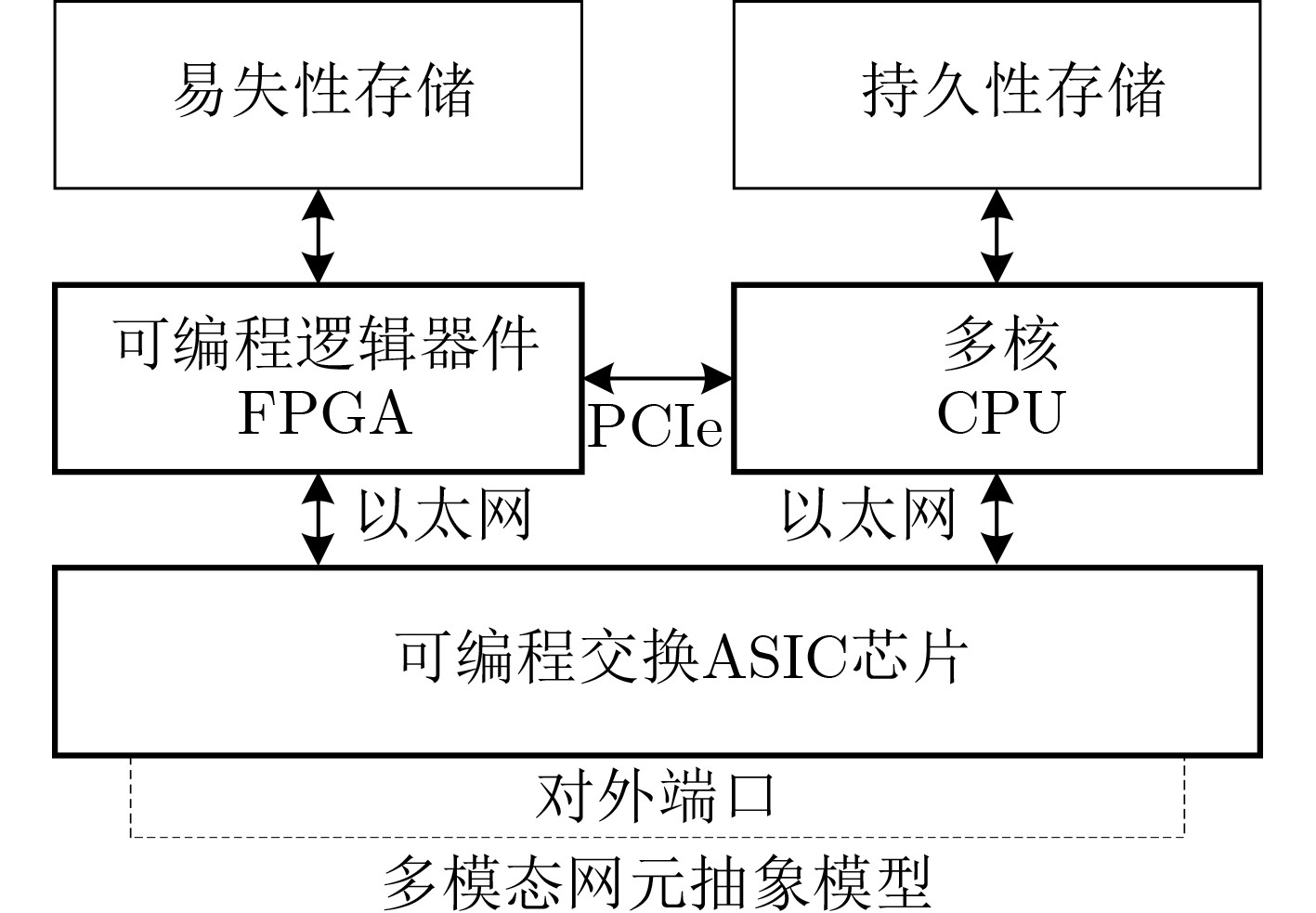
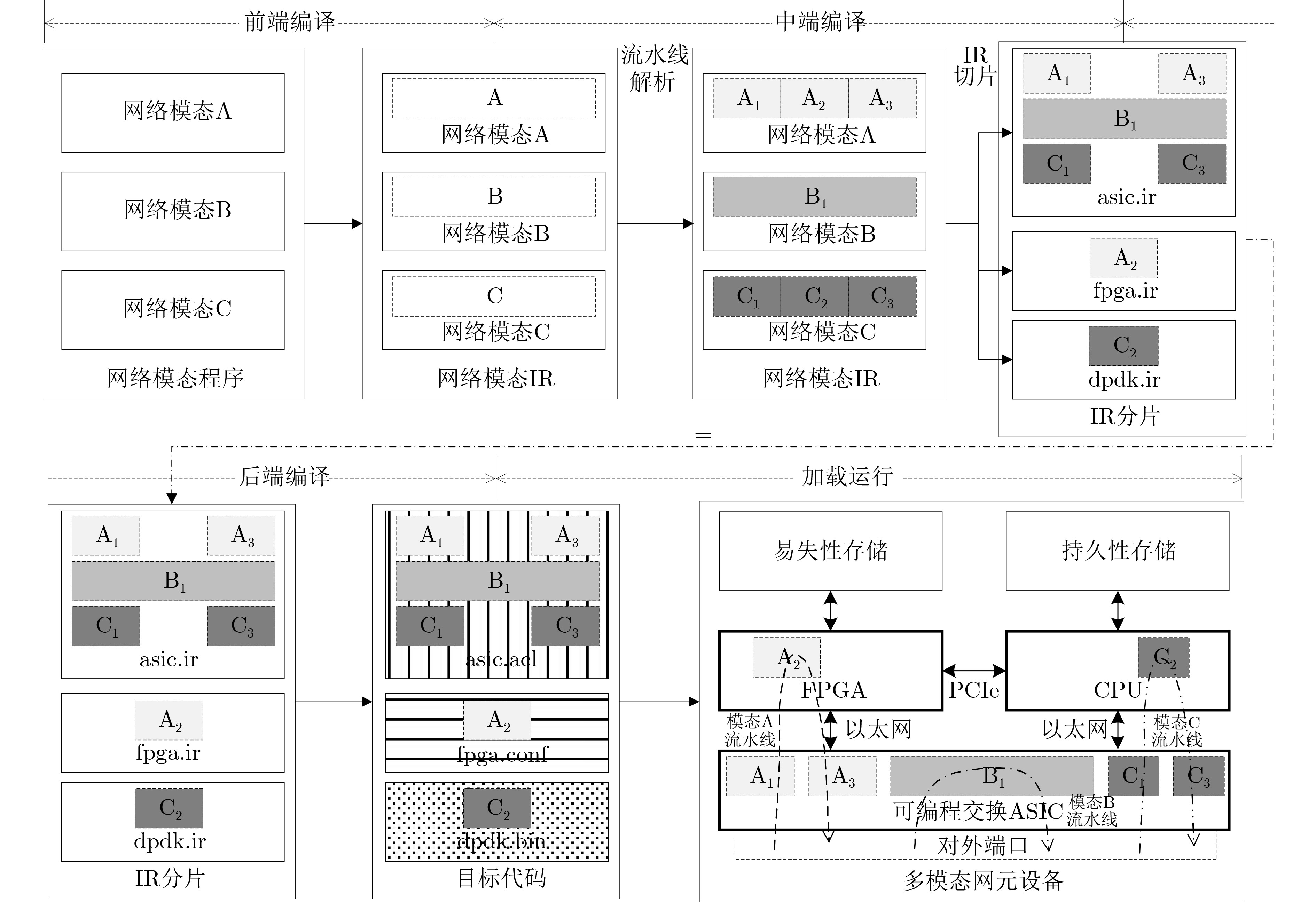
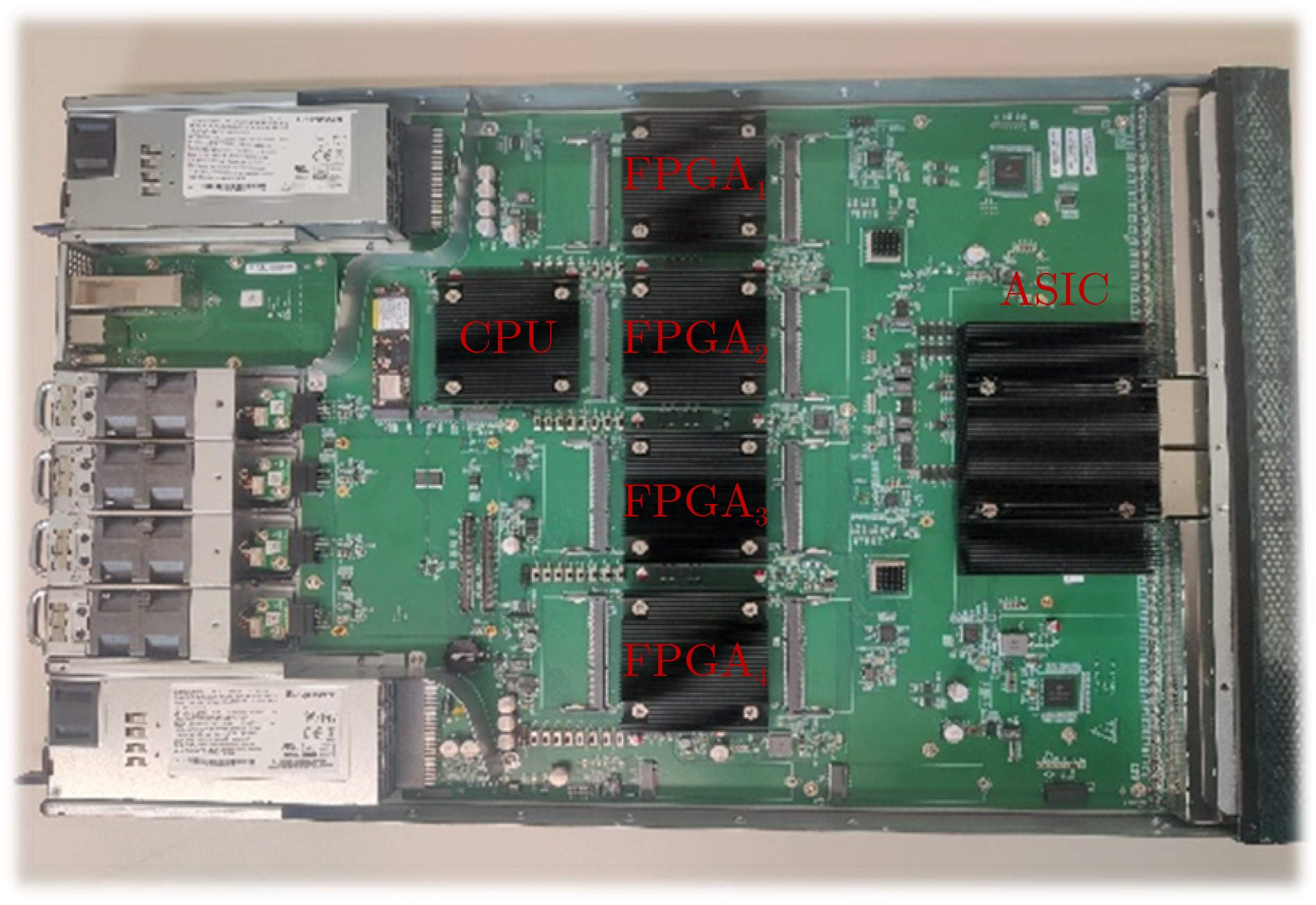
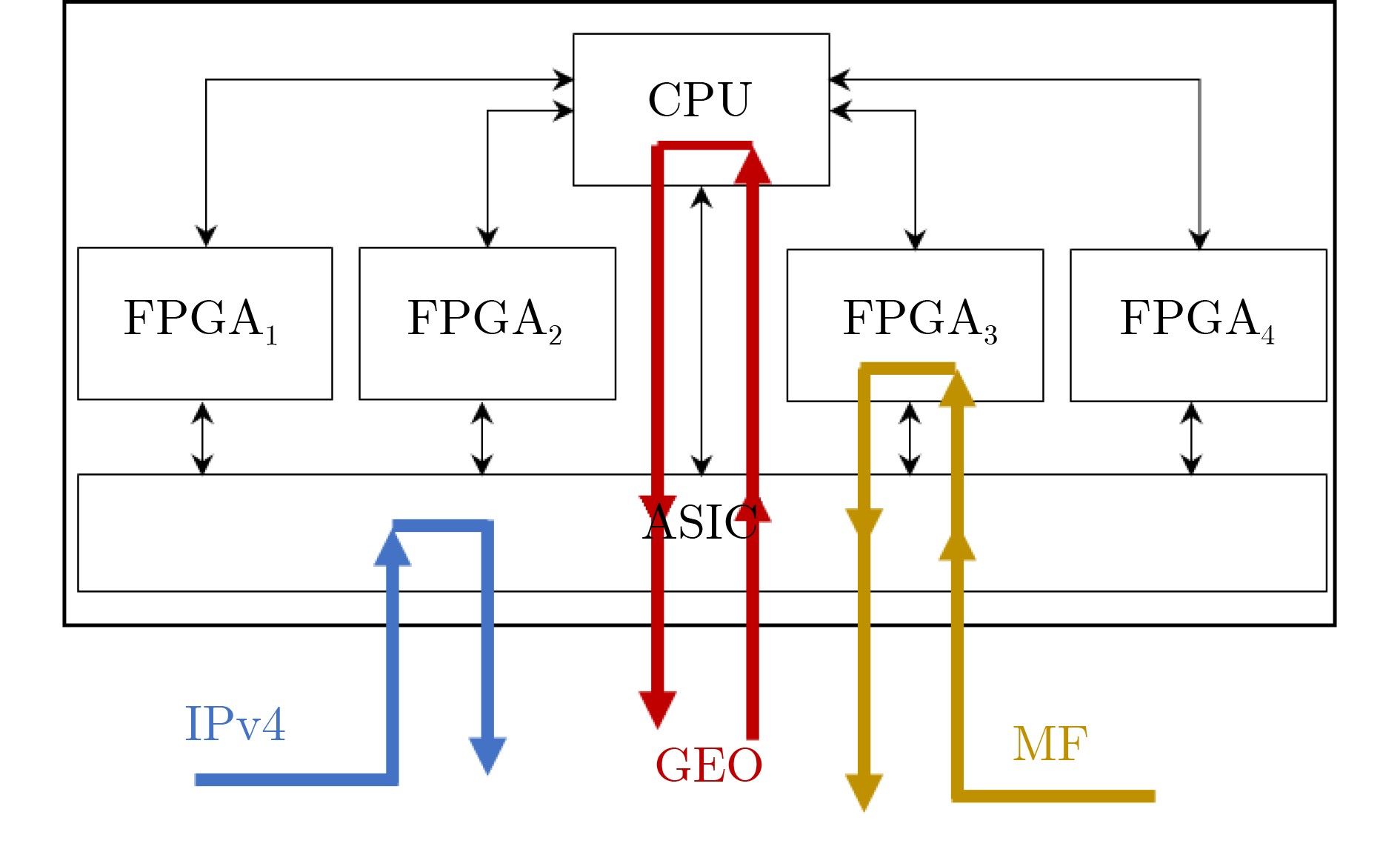
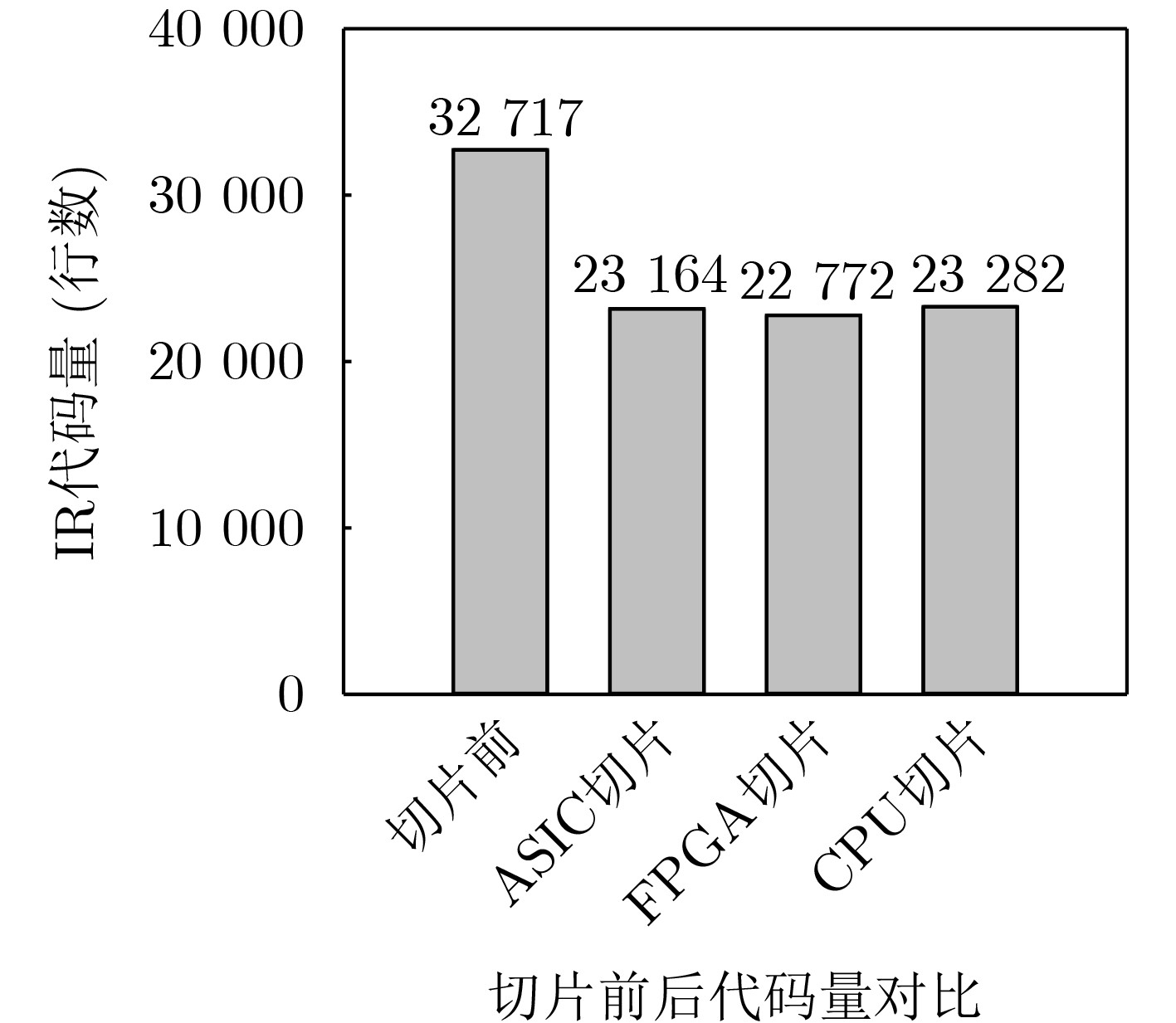
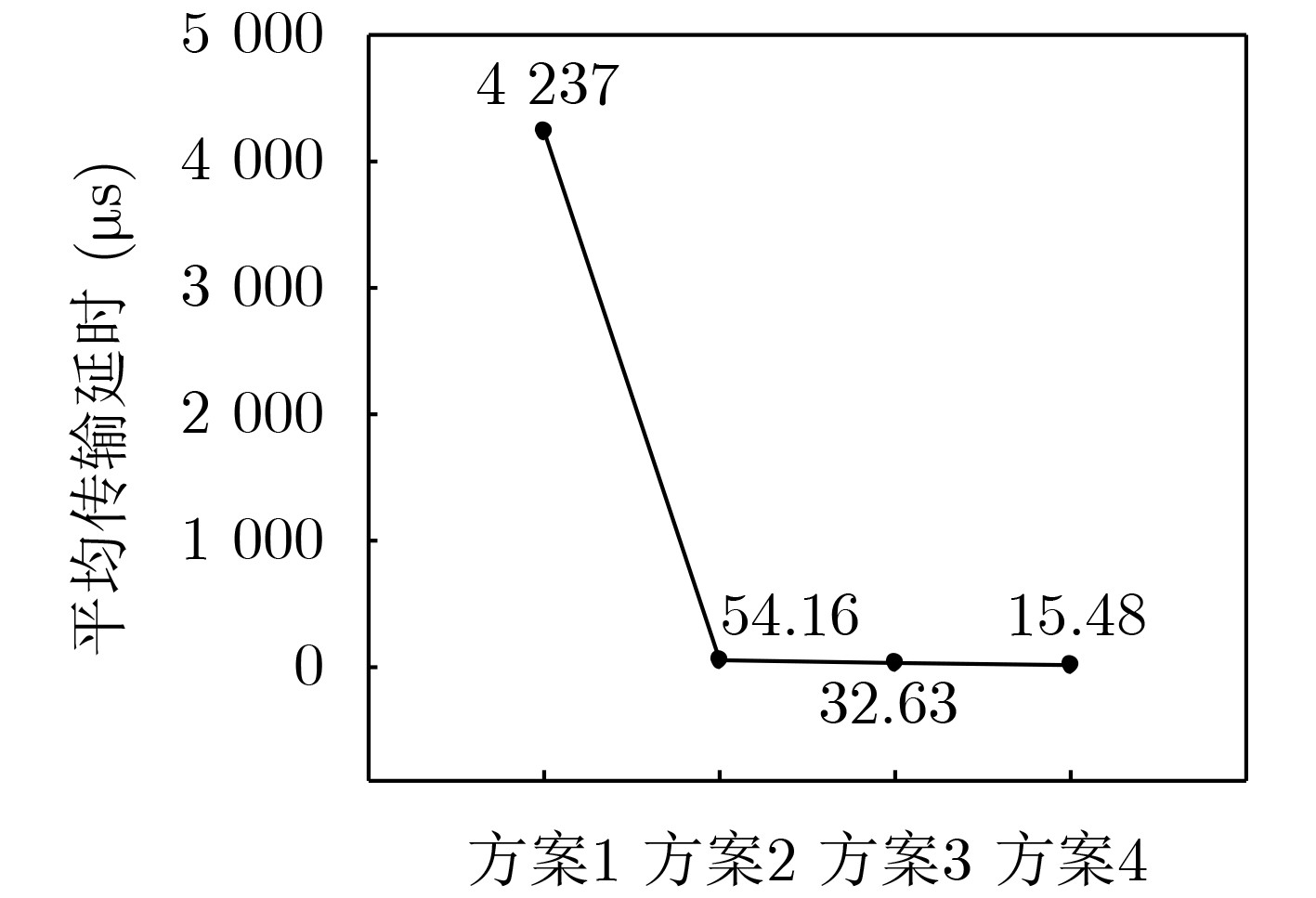
  •   Objective  With the deep integration of information network technologies and vertical application domains, the demand for cloud–network convergence infrastructure becomes increasingly significant, and the boundaries between cloud computing and network technologies are gradually fading. The advancement of cloud–network convergence technologies gives rise to diverse network service requirements, creating new challenges for the flexible processing of multimodal network packets. The device-level network modal packet processing flexible pipeline construction mechanism is essential for realizing an integrated environment that supports multiple network technologies. This mechanism establishes a flexible protocol packet processing pipeline architecture that customizes a sequence of operations such as packet parsing, packet editing, and packet forwarding according to different network modalities and service demands. By enabling dynamic configuration and adjustment of the processing flow, the proposed design enhances network adaptability and meets both functional and performance requirements across heterogeneous transmission scenarios.  Methods  Constructing a device-level flexible pipeline faces two primary challenges: (1) it must flexibly process diverse network modal packet protocols across polymorphic network element devices. This requires coordination of heterogeneous resources to enable rapid identification, accurate parsing, and correct handling of packets in various formats; (2) the pipeline construction must remain flexible, offering a mechanism to dynamically generate and configure pipeline structures that can adjust not only the number of stages but also the specific functions of each stage. To address these challenges, this study proposes a polymorphic network element abstraction model that integrates heterogeneous resources. The model adopts a hyper-converged hardware architecture that combines high-performance switching ASIC chips with more programmable but less computationally powerful FPGA and CPU devices. The coordinated operation of hardware and software ensures unified and flexible support for custom network protocols. Building upon the abstraction model, a protocol packet flexible processing compilation mechanism is designed to construct a configurable pipeline architecture that meets diverse network service transmission requirements. This mechanism adopts a three-stage compilation structure consisting of front-end, mid-end, and back-end processes. In response to adaptation issues between heterogeneous resources and differentiated network modal demands, a flexible pipeline technology based on Intermediate Representation (IR) slicing is further proposed. This technology decomposes and reconstructs the integrated IR of multiple network modalities into several IR subsets according to specific optimization methods, preserving original functionality and semantics. By applying the IR slicing algorithm, the mechanism decomposes and maps the hybrid processing logic of multimodal networks onto heterogeneous hardware resources, including ASICs, FPGAs, and CPUs. This process enables flexible customization of network modal processing pipelines and supports adaptive pipeline construction for different transmission scenarios.  Results and Discussions  To demonstrate the construction effectiveness of the proposed flexible pipeline, a prototype verification system for polymorphic network elements is developed. As shown in Fig. 6, the system is equipped with Centec CTC8180 switch chips, multiple domestic FPGA chips, and domestic multi-core CPU chips. On this polymorphic network element prototype platform, protocol processing pipelines for IPv4, GEO, and MF network modalities are constructed, compiled, and deployed. As illustrated in Fig. 7, packet capture tests verify that different network modalities operate through distinct packet processing pipelines. To further validate the core mechanism of network modal flexible pipeline construction, the IR code size before and after slicing is compared across the three network modalities and allocation strategies described in Section 6.2. The integrated P4 code for the three modalities, after front-end compilation, produces an unsliced intermediate code containing 32,717 lines. During middle-end compilation, slicing is performed according to the modal allocation scheme, generating IR subsets for ASIC, CPU, and FPGA with code sizes of 23,164, 23,282, and 22,772 lines, respectively. The performance of multimodal protocol packet processing is then assessed, focusing on the effects of different traffic allocation strategies on network protocol processing performance. As shown in Fig. 9, the average packet processing delay in Scheme 1 is significantly higher than in the other schemes, reaching 4.237 milliseconds. In contrast, the average forwarding delays in Schemes 2, 3, and 4 decrease to 54.16 microseconds, 32.63 microseconds, and 15.48 microseconds, respectively. These results demonstrate that adjusting the traffic allocation strategy, particularly the distribution of CPU resources for GEO and MF modalities, effectively mitigates processing bottlenecks and markedly improves the efficiency of multimodal network communication.  Conclusions  Experimental evaluations verify the superiority of the proposed flexible pipeline in construction effectiveness and functional capability. The results indicate that the method effectively addresses complex network environments and diverse service demands, demonstrating stable and high performance. Future work focuses on further optimizing the architecture and expanding its applicability to provide more robust and flexible technical support for protocol packet processing in hyper-converged cloud–network environments.
  • loading
  • [1]
    WANG Guohui and NG T S E. The impact of virtualization on network performance of amazon EC2 data center[C]. 2010 Proceedings IEEE INFOCOM, San Diego, USA, 2010: 1–9. doi: 10.1109/INFCOM.2010.5461931.
    [2]
    DUAN Qiang, YAN Yuhong, and VASILAKOS A V. A survey on service-oriented network virtualization toward convergence of networking and cloud computing[J]. IEEE Transactions on Network and Service Management, 2012, 9(4): 373–392. doi: 10.1109/TNSM.2012.113012.120310.
    [3]
    胡宇翔, 伊鹏, 孙鹏浩, 等. 全维可定义的多模态智慧网络体系研究[J]. 通信学报, 2019, 40(8): 1–12. doi: 10.11959/j.issn.1000-436x.2019192.

    HU Yuxiang, YI Peng, SUN Penghao, et al. Research on the full-dimensional defined polymorphic smart network[J]. Journal on Communications, 2019, 40(8): 1–12. doi: 10.11959/j.issn.1000-436x.2019192.
    [4]
    HU Yuxiang, LI Dan, SUN Penghao, et al. Polymorphic smart network: An open, flexible and universal architecture for future heterogeneous networks[J]. IEEE Transactions on Network Science and Engineering, 2020, 7(4): 2515–2525. doi: 10.1109/tnse.2020.3006249.
    [5]
    支婷, 刘颖, 周华春, 等. 智慧标识网络服务机理研究进展及安全性分析[J]. 电子学报, 2021, 49(8): 1653–1664. doi: 10.12263/DZXB.20200416.

    ZHI Ting, LIU Ying, ZHOU Huachun, et al. Research progress and security analysis of the service mechanism in smart identifier network[J]. Acta Electronica Sinica, 2021, 49(8): 1653–1664. doi: 10.12263/DZXB.20200416.
    [6]
    WU Jiangxing. Thoughts on the development of novel network technology[J]. Science China Information Sciences, 2018, 61(10): 101301. doi: 10.1007/s11432-018-9456-x.
    [7]
    邬江兴. 论网络技术体制发展范式的变革——网络之网络[J]. 电信科学, 2022, 38(6): 3–12. doi: 10.11959/j.issn.1000-0801.2022140.

    WU Jiangxing. Revolution of the development paradigm of network technology system—network of networks[J]. Telecommunications Science, 2022, 38(6): 3–12. doi: 10.11959/j.issn.1000-0801.2022140.
    [8]
    BRANDINO B and GRAMPÍN E. Network data plane programming languages: A survey[J]. Computers, 2024, 13(12): 314. doi: 10.3390/computers13120314.
    [9]
    胡宇翔, 崔子熙, 田乐, 等. 面向垂直行业定制的多模态网络编程技术[J]. 信息通信技术, 2024, 18(4): 51–56. doi: 10.3969/j.issn.1674-1285.2024.04.008.

    HU Yuxiang, CUI Zixi, TIAN Le, et al. Polymorphic network programming technologies customized for vertical industries[J]. Information and Communications Technologies, 2024, 18(4): 51–56. doi: 10.3969/j.issn.1674-1285.2024.04.008.
    [10]
    崔子熙, 田乐, 崔鹏帅, 等. 支持增量式编程的多模态网络环境[J]. 电子学报, 2024, 52(4): 1230–1238. doi: 10.12263/DZXB.20230852.

    CUI Zixi, TIAN Le, CUI Pengshuai, et al. Enabling incremental programming in PINet environment[J]. Acta Electronica Sinica, 2024, 52(4): 1230–1238. doi: 10.12263/DZXB.20230852.
    [11]
    王劲林, 井丽南, 陈晓, 等. 面向多模态网络的可编程数据处理方法及系统设计[J]. 通信学报, 2022, 43(4): 14–25. doi: 10.11959/j.issn.1000−436x.2022070.

    WANG Jinlin, JING Linan, CHEN Xiao, et al. Programmable data processing method and system design for polymorphic network[J]. Journal on Communications, 2022, 43(4): 14–25. doi: 10.11959/j.issn.1000−436x.2022070.
    [12]
    SONI H, RIFAI M, KUMAR P, et al. Composing dataplane programs with μP4[C]. Proceedings of the Annual Conference of the ACM Special Interest Group on Data Communication on the Applications, Technologies, Architectures, and Protocols for Computer Communication, USA, 2020: 329–343. doi: 10.1145/3387514.3405872.
    [13]
    GAO Jiaqi, ZHAI Ennan, LIU H H, et al. Lyra: A cross-platform language and compiler for data plane programming on heterogeneous ASICs[C]. Proceedings of the Annual Conference of the ACM Special Interest Group on Data Communication on the Applications, Technologies, Architectures, and Protocols for Computer Communication, USA, 2020: 435–450. doi: 10.1145/3387514.3405879.
    [14]
    KUMAZOE K, KAWAHARA K, and TSURU M. Evaluation of essential functions for data-plane programming on P4 hardware switch[M]. BAROLLI L. Advances in Internet, Data and Web Technologies: Proceedings of the 13th International Conference on Emerging Internet, Data and Web Technologies (EIDWT 2025). Cham: Springer, 2025: 398–408. doi: 10.1007/978-3-031-86149-9_38.
  • 加载中

Catalog

    通讯作者: 陈斌, bchen63@163.com
    • 1. 

      沈阳化工大学材料科学与工程学院 沈阳 110142

    1. 本站搜索
    2. 百度学术搜索
    3. 万方数据库搜索
    4. CNKI搜索

    Figures(10)  / Tables(4)

    Article Metrics

    Article views (53) PDF downloads(4) Cited by()
    Proportional views
    Related

    /

    DownLoad:  Full-Size Img  PowerPoint
    Return
    Return